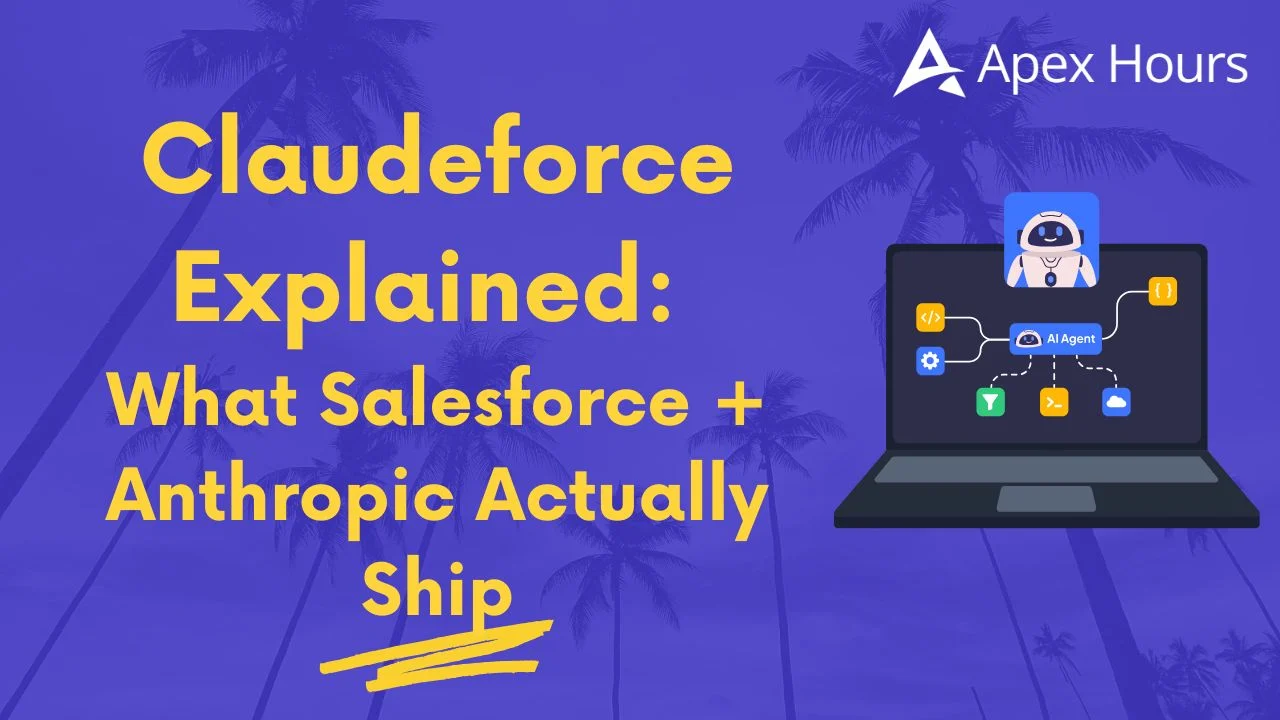
Salesforce and Anthropic did not just announce a partnership. They named it.
That distinction matters more than it sounds. Most partnership announcements follow the same pattern: a press release, a joint quote, a few weeks of coverage, then nothing. The name fades because there is nothing to hold onto.
Claudeforce is different. It borrowed Claude's brand equity, added Salesforce's "force" suffix — the first time Salesforce has ever given that suffix to another company's product name — and created something that sounds like a product line rather than a deal memo. Announced on the same day as Salesforce's Q2 earnings, with CRM stock jumping 12–14% after hours. Then Matthew McConaughey showed up in the ad. Everything landed at once.
The strategic bet underneath the branding: if you use Claude, you now have a reason to lean into Salesforce. If you use Salesforce, you have a reason to lean into Claude. Benioff's exact framing was "probabilistic intelligence alone doesn't run a company, and deterministic systems don't reason." He called it the SaaSpocalypse being over — the idea that AI tools would replace enterprise software rather than fuse with it.
What Claudeforce actually ships: Salesforce inside Claude as a plugin with 37 prebuilt sales skills, Claude as the default reasoning model inside Agentforce, and Claude as the default model powering Slackbot.
For B2B marketers, the naming lesson holds regardless of the product. Start with the headline. Work backwards to what's achievable. A name that sounds like a product is a campaign in itself — and it's the one thing competitors cannot copy the same week.
https://www.salesforceben.com/salesforce-and-anthropic-announce-claudeforce-in-q2-27-earnings/#B2BMarketing#AIStrategy…more
Smashburger with Marcelo today!
Years of friendship, and somehow every story we tell starts the same way... a motorcycle.
The crazy ones. The stupid ones. The ones we probably shouldn't repeat in public.
And today there's a new one for the pile — Marcelo completed the Baja rally and came home with the King of the Cactus award. Congratulations, my friend!
Here's the thing about Baja. You can't talk your way through it. You can't negotiate with the desert. You prepare, you show up, and then you keep going long after the fun part ends. (Marcelo was the only one to finish - out of 9 riders.)
I’ve taken my moto all the way to the tip of Baja and it’s not easy.
I've watched Marcelo do exactly that for years. And it's the same thing I keep seeing in the people I work with now — coaches, consultants, folks who walked away from a title to build a practice of their own.
You don't get to control the outcome. You get to control whether you prepare, whether you show up, and whether you finish.
Marcelo finished. King of the Cactus… and he wouldn’t even let me buy the burgers.
Who's the friend who taught you what finishing actually looks like?
#GoingIndependent#Solopreneur#Coaching#IndependentConsultant#PersonalBrand…more
Organization focused on AI leadership and innovation for the Fourth Industrial Revolution, based in Silicon Valley
· LinkedIn
·
Two AI Stumbles in One Week: Why Values-Based Leadership Must Be Distributed
In the space of just three days this month, two major AI companies highlighted a critical weakness in how leadership is practiced today.
On July 10, Apple filed a lawsuit alleging that OpenAI's hardware division, led by former Apple executive Tang Tan, engaged in a coordinated effort to steal trade secrets. Just three days earlier, Meta launched a feature in its new Muse Image tool that allowed users to generate AI images of people by simply tagging their public Instagram accounts — with the feature turned on by default and no notification to the person whose likeness was used. Meta removed the feature days later after widespread backlash.
These incidents are very different in nature. The allegations against OpenAI, if true, point to something deeper than a miscalculation. They suggest a potential breakdown in ethical boundaries at a leadership level inside a high-growth organization. Meta's case, while serious, looks more like a failure of judgment — moving fast under competitive pressure without properly accounting for user expectations around consent and likeness rights.
What connects both cases is this: when the financial and competitive stakes are extremely high, internal pressure can distort decision-making. Even experienced leaders are influenced by the culture and incentives around them. Company culture is not neutral — it either reinforces ethical guardrails or makes it easier to overlook them.
In my book AI L4IR: Leadership and the 4th Industrial Revolution, I argue that ethical leadership in this era cannot remain concentrated at the top. It must be highly distributed — embedded in how product teams, engineers, recruiters, and middle managers make decisions every day.
When billions of dollars and strategic positioning are on the line, relying on a small group of senior leaders to catch every ethical risk is unrealistic. Organizations that build cultures where people at all levels feel empowered (and expected) to ask "Should we?" — not just "Can we?" — will be far better positioned to innovate responsibly and maintain trust.
I explore both incidents and the broader leadership implications in more detail here:
https://kentkaufman.substack.com/p/two-ai-stumbles-in-one-week-why-values
How are you thinking about building stronger ethical decision-making into your teams as AI capabilities continue to advance? …more
When Pope Leo XIV released his first encyclical, Magnifica Humanitas, he deliberately connected the Church's response to artificial intelligence with the 135th anniversary of Rerum Novarum.
He calls for AI to be "disarmed" of logics of domination, insists that lethal decisions must never be fully delegated to machines, and contrasts the prideful Tower of Babel with the patient, collaborative rebuilding of Jerusalem — where every person contributes their section of the wall.
This is not only a religious document. It is a profound leadership text for our time.
In the Second Edition of my book, AI L4IR: Leadership and the Fourth Industrial Revolution – How Did We Get Here and Where Are We Going? (releasing later in 2026), I've expanded Chapter 14 to explore the powerful convergence between Pope Leo XIV's vision and the model of highly distributed ethical leadership that runs throughout the book.
Both traditions — one rooted in formal religious teaching, the other in secular ethical reasoning — arrive at the same essential conclusion: Human agency must remain central. Truth must be actively protected. Responsibility must be widely shared. And technological power must be oriented toward human flourishing rather than domination.
As we move deeper into the cognitive industrial revolution, leaders will need more than technical skill. We will need moral clarity, critical thinking, and the humility to keep asking: What kind of humanity are we building?
I'm excited to share the full Second Edition later this year.
What are your thoughts on the intersection of faith traditions, ethical leadership, and AI governance?
#AI#Leadership#Ethics#ArtificialIntelligence#FourthIndustrialRevolution
"Good Judgment Required" https://www.axios.com/2026/09/08/googles-gemini-enterprise-legal-halimah-delaine-prado
1 big thing: Google's general counsel just drew the line every enterprise AI buyer needs to understand
AI can democratize access to good legal advice. It cannot replace the exercise of good judgment. Google's own general counsel said so — while launching an AI product built for law firms.
Why it matters: The same principle applies to B2B marketing. AI can surface information faster, draft more efficiently, and scale content production. It cannot replace the judgment that decides which of two reasonable-sounding strategies will actually move pipeline.
Driving the news:
Google launched Gemini Enterprise for Legal, an AI platform for law firms and in-house legal teams covering briefs, contract management, regulatory monitoring, and data discovery.
→ General counsel Halimah DeLaine Prado: "The practice of law will always fundamentally rise and fall on the exercise of good judgment"
→ More than 2,000 cases involving AI-generated hallucinations have been identified by legal researcher Damien Charlotin — lawyers sanctioned for false citations, misattributed quotes, and misrepresented cases
Zoom in:
Goldman Sachs CIO Marco Argenti argued enterprises should not rule out open-weight models — including Chinese models — so long as they follow a four-layer security framework: model testing, secure inference environments, monitored agent permissions, and controlled data access.
Yes, but: Goldman's current open-model usage is mostly US-based. The framework exists precisely because the risk is real.
Be smart: The legal sector's AI hallucination problem is a preview of what happens in any professional domain when speed replaces judgment. Build the review layer before you need it, not after.
The bottom line: AI gives you more time to think. Use it.
https://www.axios.com/2026/09/08/googles-gemini-enterprise-legal-halimah-delaine-prado#AIGovernance#B2BMarketing…more
This is how you create great content for your customers - be specific, generous, and valuable.
Elizabeth Greenfield runs a functional wellness practice. Her ideal clients are people dealing with exhaustion, weight gain, and feeling wired despite doing everything right. Classic signs of chronic stress.
She could post generic wellness tips. Drink more water. Get more sleep. Eat better.
Instead, she publishes content that connects stress to something most people don't know about: how cortisol alters DNA methylation and accelerates biological aging at the cellular level.
That level of specificity does two things.
First, it signals expertise. It shows she understands the root cause, not just the symptoms.
Second, it attracts the right people. Someone who's tried everything and still feels terrible is going to stop scrolling when they see content that explains why nothing has worked.
This is the pattern I see in content that actually converts.
It's not about being everywhere or posting every day. It's about understanding your audience well enough to name the problem they're experiencing in a way that makes them feel seen.
If you're struggling to figure out what to post, start here:
What's the specific problem your ideal customer is dealing with right now? Not the surface-level frustration. The underlying issue they might not even have words for yet.
Then create content that connects the dots.
You don't need a big budget or a content team. You need clarity on what your audience is trying to solve.
If you want help translating that into a repeatable content workflow, comment and I'll reach out.
https://www.lizgreenfield.com/blog-1-1/h08r5dhgllb0kfyalh0zrty7ukbgic…more
I've launched four companies. Each one taught me something different about marketing.
But the lesson that shows up every single time is this: the product rarely loses. The story does.
At my second company, we had a genuinely better product than the competition. Better features, better pricing, better support. We still struggled to get traction for the first year.
When I finally sat down and rewrote our messaging, I realized what was wrong. Everything we said described what we built. None of it named the problem our customer was already losing sleep over.
The fix was simple but not obvious: lead with the pain, not the product.
Before: "We help companies manage distributed teams more efficiently."
After: "Your best people are burning out because they're spending half their day coordinating instead of building."
Same product. Completely different response.
The rule I now follow for every piece of marketing copy: if you could put your competitor's logo on it and it would still make sense, rewrite it. Your message should only work for you.
What's the last message you changed that had a bigger impact than you expected?
The post that earns a hundred likes from other consultants is often the same one that wins zero clients.
When you're new to being visible, you write toward the approval that feels safest. Other people in your field. Former colleagues. The peers whose respect you spent a career earning. They understand your shorthand. They nod at the clever framework. They leave the generous comment that makes posting feel worth it.
But the client you want is almost never in that room.
It looks like a content problem. It's actually a customer-understanding problem. Writing for your friends, you reach for what impresses people who already know the field. Writing for your customer, you reach for the thing keeping them up at 2am — described in the plain words they'd actually use, not the vocabulary of your profession.
Those two audiences want opposite things. Your peers want to see how much you know. Your customer wants to feel understood. The more you optimize for the first, the more invisible you become to the second, because sophistication reads as noise to someone who just wants their problem named.
Read your last five posts and ask who would nod hardest. If it's people who could do your job, you're writing for the wrong room. If it's people who'd hire you, you're getting warm.
The fix isn't louder or more polished. It's a smaller, clearer picture of one person you're trying to help, and the discipline to write to them even when the applause comes from somewhere else.
When you catch yourself writing for the room instead of the client, what usually pulls you back?
#IndependentConsultant#Coaching#Positioning#CustomerDiscovery#ThoughtLeadership
The Multilingual Mind helps schools and education teams close the gap between what they know they want to do and what their people actually have the time, training, tools, systems, and support to impl
· LinkedIn
·
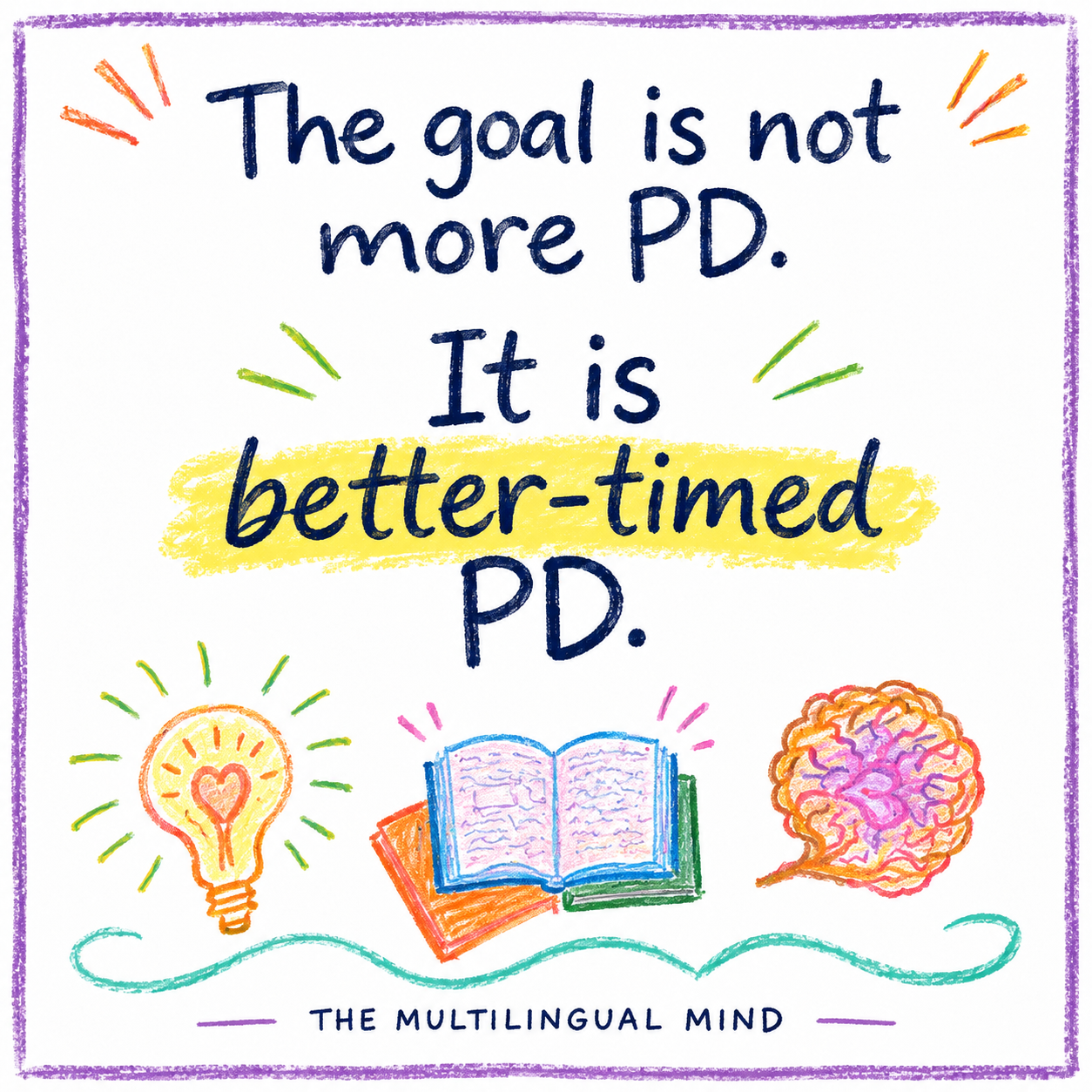
I do not think schools necessarily need more professional development.
I think we often need better-timed professional development.
There are things that make almost no sense in August because teachers have not yet encountered the problem the training is supposed to help them solve.
Then three weeks later, the same idea could land completely differently.
Now there is a student in mind.
A routine that is breaking down.
A curriculum question.
A team tension.
A real example.
The teacher has something to attach the learning to.
So instead of trying to front-load everything, what if some professional learning intentionally followed this rhythm?
Introduce.
Try.
Notice.
Return.
Model.
Practice.
Get feedback.
Adjust.
Try again.
The goal is not to stretch PD endlessly across the year.
It is to place learning closer to the moments when people can actually use it. …more
Organization focused on AI leadership and innovation for the Fourth Industrial Revolution, based in Silicon Valley
· LinkedIn
·
Update: The U.S. Government's Export Control Order on Fable 5 & Mythos 5
In the days since my original post, the situation has escalated. On June 12, the U.S. government issued an unprecedented export control directive ordering Anthropic to block all foreign nationals from accessing Claude Fable 5 and Mythos 5. Because real-time citizenship verification at scale is not feasible, Anthropic had no choice but to shut down both models globally — just three days after their public launch.
Anthropic has complied with the order but is pushing back hard. The company disputes the severity of the reported jailbreak, argues that the government's process lacked transparency, and has warned that this approach could effectively halt new frontier model deployments across the entire industry. Meanwhile, Anthropic executives have been in active negotiations in Washington with senior officials, including Commerce Secretary Howard Lutnick.
Reports indicate that the security findings that triggered the government's rapid response originated from researchers at Amazon, with CEO Andy Jassy reportedly raising the issue directly with the White House.
I've added a detailed Post Script to the original article covering Anthropic's response, the administration's position, Amazon's role, and the broader implications for AI governance and organizational strategy.
🔗 Read the updated post with the new Post Script here:
https://kentkaufman.substack.com/p/from-mythos-to-fable-and-now-to-government
This episode underscores how quickly access to frontier AI capabilities can change due to geopolitical decisions. How is your organization preparing for this new level of model access uncertainty? …more
Samsung's instinct when Apple announced the iPhone Duo foldable was exactly right. Capitalize on a competitor's weak moment. They've been selling foldables since 2019, Apple just joined — "Let us know when you're done reheating our leftovers" wrote itself.
The execution missed.
"Reheating our leftovers" reads like it was written by someone who is not in the room with the people they're trying to reach. Clever on paper. Doesn't land. The follow-up posts were more of the same — four tweets that felt like a brief was checked rather than a reaction that was felt.
What they should have done: an actor in a studio within 30 minutes of the announcement, filming a fake Apple keynote, making the whole thing so absurd that anyone holding an iPhone Duo felt the joke. Make it visual. Make it shareable. Make it something people forward into group chats. That's the move.
The brand banter playbook is not "post a witty line." It is "move faster than anyone expected, with something that genuinely makes people laugh rather than nod politely."
Whenever you have a moment to take market share from a competitor, you have to jump on it. Samsung knew the moment was there. They just didn't hit it hard enough.
For B2B brands watching competitor moves, the lesson is the same. It's not enough to react. You have to react in a way that makes the other side look like they're playing in your leftovers — not you.
https://rollingout.com/2026/09/10/samsung-trolls-apple-foldable-iphone-duo/#B2BMarketing#ContentStrategy…more
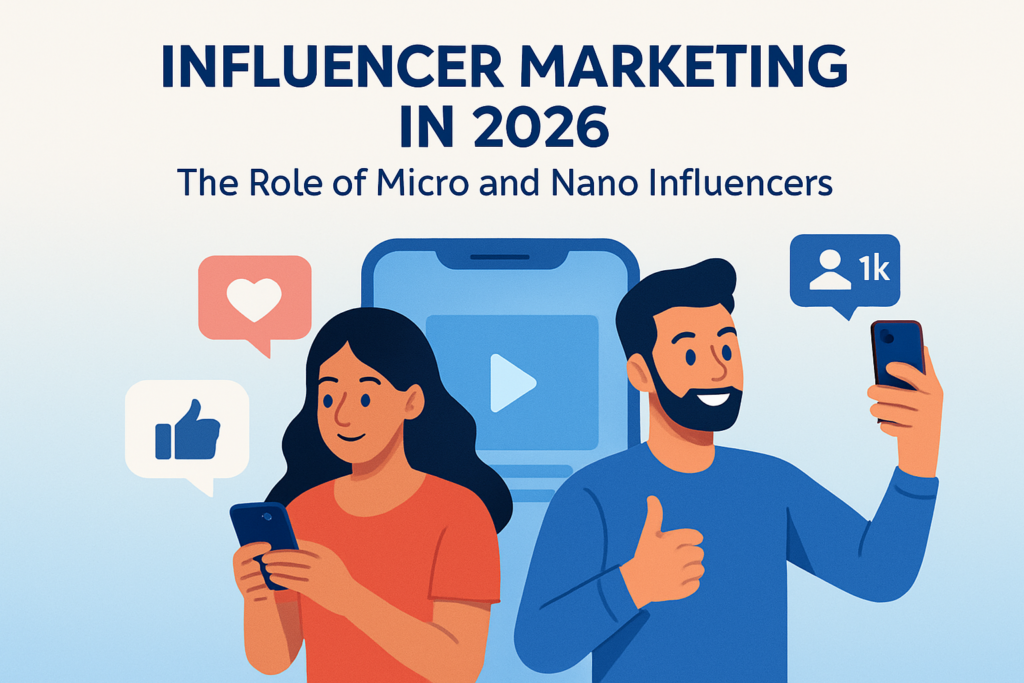
In 2026, 45% of B2B influencer marketing spend is going to creators under 20,000 followers. In 2021, that number was 19%.
That's not a trend. That's a structural reallocation of budget — and the reasons behind it are more interesting than the stat.
Macro-influencer deals feel safe because the audience numbers look impressive in a deck. But spending $50,000 on one creator with 500,000 followers is a single high-risk bet. One bad month for that creator, one off-brand take, one campaign that doesn't land — and your entire influencer budget is gone.
Spreading that same $50,000 across 20 micro-creators at roughly $400 per post does something different. It hedges your risk, drives higher feed saturation across multiple communities, and lowers your whitelisting ad costs because smaller audiences are cheaper to promote behind.
The deeper reason this is working: creators under 20,000 followers have fewer sponsored brand deals cluttering their feed. Their audience trusts them more per impression. Engagement per view is higher. The signal-to-noise ratio is better.
But the most interesting reason isn't about trust. It's about Answer Engine Optimization.
B2B CMOs are now using distributed networks of micro-creators across LinkedIn and X to post targeted keyword content at scale. That text footprint — dozens of posts across dozens of accounts hitting the same topics — is what gets brands cited inside AI answer engines like Claude, ChatGPT, and Gemini. AEO isn't just an SEO play anymore. It's an influencer play.
The allocation that's working right now: 50% of budget to macro-creators to anchor baseline brand awareness, 50% to micro-creators to drive repeated trust signals and keyword saturation across feeds.
The audience size that matters isn't the biggest one. It's the right one, repeated enough times.
#B2BMarketing#InfluencerMarketing…more
Air hired a CMO named Eric Tota at noon. He resigned by 6 PM.
The whole thing was a mockumentary. The "resignation" introduced Air's new AI agent for creative tasks.
On LinkedIn: 180 likes. On Instagram: 10,000+.
Most people called that a LinkedIn flop. I'd push back.
LinkedIn was where the stunt happened. Not where it spread. The like count undersells the views, and the views don't include everyone who saw it in their feed and said nothing.
More importantly: the entire marketing industry spent a day talking about Air. That's not a failure. That's the point.
The critique isn't the stunt. It's the platform split. If you design a LinkedIn moment that only works on Instagram, you've either picked the wrong platform or the wrong format.
The smarter version: a LinkedIn-native stunt that travels. The fake hire worked. The medium didn't match the message.
Would you have done the same stunt differently?
#B2BMarketing#BrandStrategy…more
Organization focused on AI leadership and innovation for the Fourth Industrial Revolution, based in Silicon Valley
· LinkedIn
·
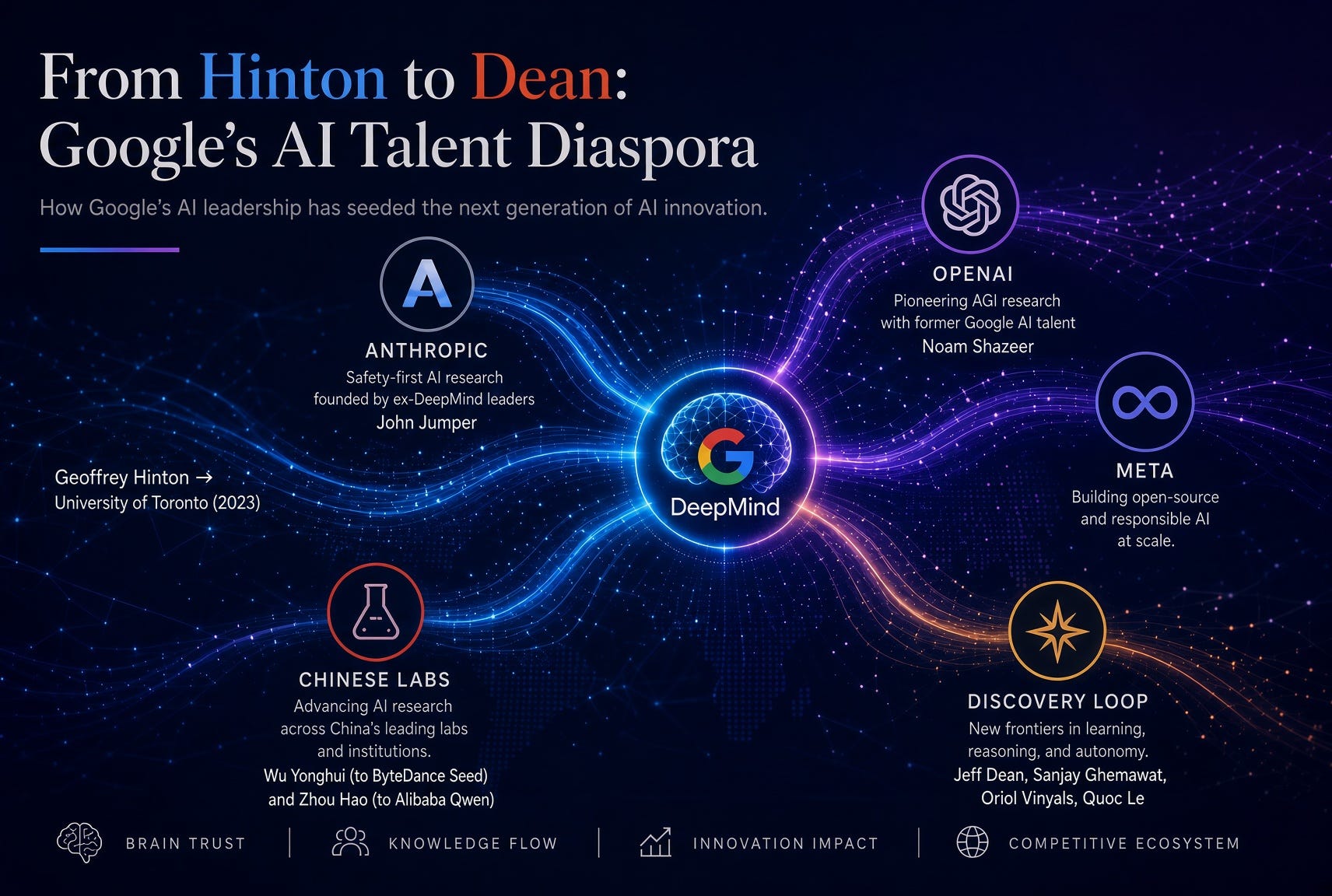
From Hinton to Dean: Google's AI Talent Diaspora
Jeff Dean is one of the true legends in the field. When people of that caliber leave to start something new, talent follows. Discovery Loop (Dean + Sanjay Ghemawat + Oriol Vinyals + Quoc Le) is already proving the point — reports this week put them in talks for ~$1B at a ~$10B valuation while still in the earliest stage and just beginning to hire.
This is not a new pattern. It is the acceleration of one I covered in AI L4IR.
Geoffrey Hinton left Google in 2023 so he could speak freely about AI risks. The original Transformer authors all eventually left. In the more recent wave we have seen clear directional flows: multiple high-profile researchers (including Nobel laureate John Jumper and key Gemini/AlphaFold contributors) to Anthropic; Noam Shazeer and others to OpenAI; and researchers such as Denny Zhou and Dawn Song to Meta's Superintelligence efforts. Some have even moved beyond the first destination — Shazeer being the clearest serial case (Google → Character.AI → back to Google → OpenAI).
Every major lab has now either lost or gained from the concentrated pool Google spent years building. Pure-play labs, companies like Cohere, and Chinese efforts all benefit when deep expertise becomes more distributed. The result is faster diffusion of systems knowledge, research taste, and experimental methods — which compresses gaps even as competition intensifies.
For Google, this can still be a useful crisis if treated that way.
Visible high-profile exits force the hard questions: Are we fast enough? Is ownership and focus real enough inside the walls? Is compute allocation clear? The organizations that treat talent loss as pure damage usually keep losing. The ones that use it as a forcing function to raise the internal bar often come out sharper on velocity and retention.
Google still has residual depth, infrastructure, and the ability to back the people who leave (as it is doing with Discovery Loop). The test is whether the new leadership structure and the pressure from these exits produce a genuine step-up — or whether the pattern simply continues.
Legends leaving doesn't just create competitors. It raises the competitive temperature for everyone, including the place they left. …more
My AI writes well. It just doesn't remember who I'm writing for.
The writing part is mostly solved. Ask ChatGPT or Claude for a post and you'll get clean sentences in seconds.
What it doesn't have is everything around the sentence... who you help, what you offer, how you sound, what you said last week, what's already on the calendar. Start a new chat and most of that is gone. So you explain it all again, or you settle for something generic.
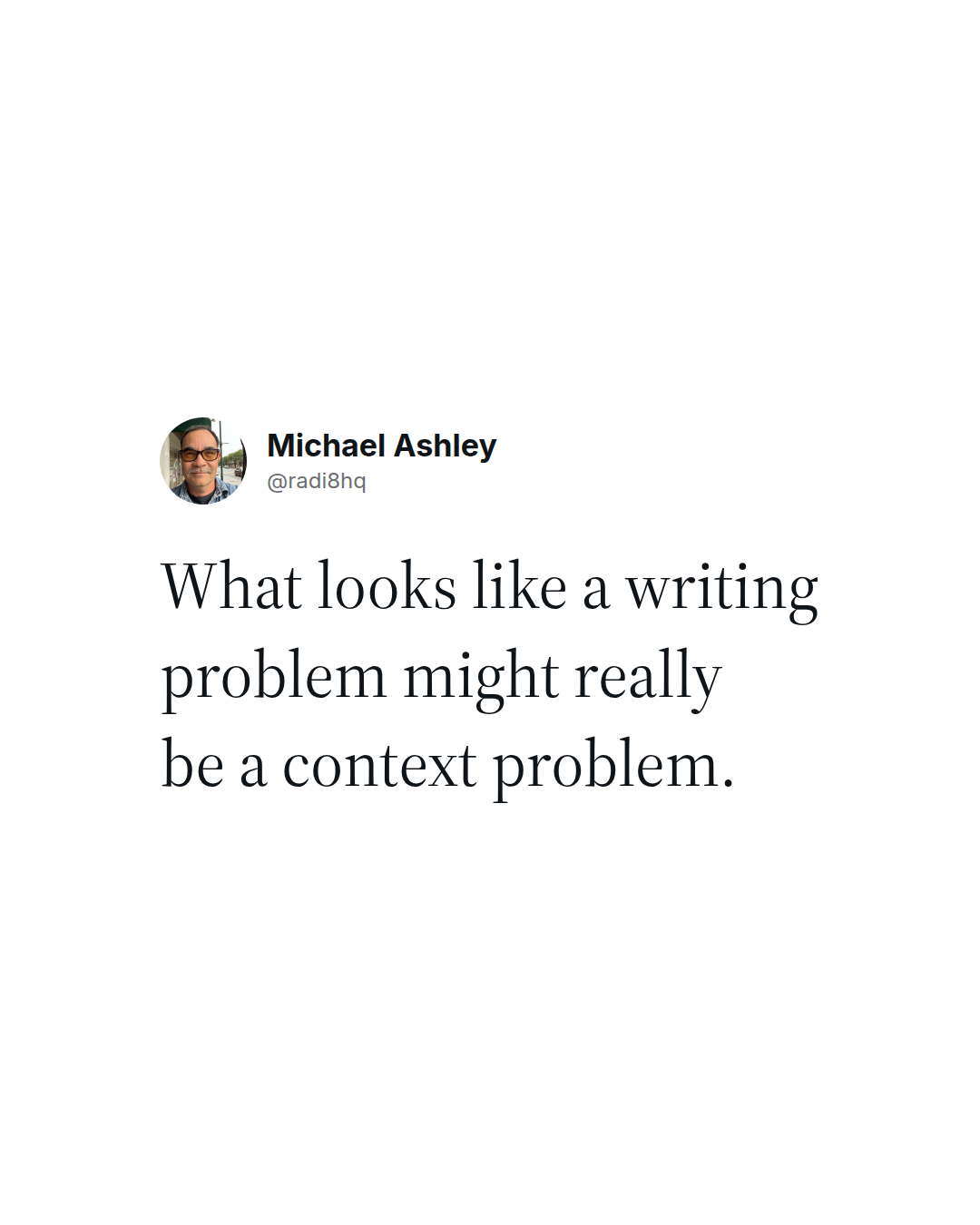
What looks like a writing problem might really be a context problem.
That's a big part of why I'm building Radi8 the way I am. I think chat may become the interface for a lot of software, and the specialized app's job is to supply what general AI can't hold on to by itself: memory, context, state, and the ability to actually do things, like save a draft or line up a week of posts.
You describe the outcome in a sentence. The app brings what it knows about you. Fewer dashboards to learn.
I'm still testing this thesis, and I might be wrong about how fast it happens... but I'd rather build toward it and learn from what breaks.
If you use AI in your business, what do you find yourself re-explaining every single time?
#Founders#Startups#AI#AINativeSoftware#ProductDesign#BuildingInPublic#Entrepreneurship#SmallBusinessOwner#IndependentConsultant#Coaching…more
I don't think anyone needs a better AI writer anymore.
ChatGPT and Claude already write well. Clean sentences, decent structure, fast. When a post still comes out sounding off, I don't think the writing is what broke.
What looks like a writing problem might really be a context problem. The AI doesn't know who you help, the problem you solve for them, why they'd care, what you said last week, or what you're actually offering. So every new chat starts from zero... and you either explain yourself all over again, or settle for something that sounds like everybody else.
My bet is that the chat becomes the interface. You describe the outcome you want instead of learning another dashboard. The specialized apps underneath supply what a general AI can't hold onto by itself: what it knows about you, a memory of what's already happened, where things stand right now, and the ability to actually get it done.
That's the bet I'm testing while building Radi8 inside ChatGPT and Claude. I don't have it all figured out... I'm learning as I go, same as everyone building with this stuff.
So I'm curious. When AI writes something for you and it misses, what's it usually missing?
#Founders#AI


'/%3E%3Cpath fill='%23fff' d='M12 7.3A4.7 4.7 0 1 0 16.7 12 4.7 4.7 0 0 0 12 7.3Zm0 7.8A3.1 3.1 0 1 1 15.1 12 3.1 3.1 0 0 1 12 15.1Zm5-8a1.1 1.1 0 1 0 1.1 1.1A1.1 1.1 0 0 0 17 7.1Zm-5 1.5c-1.5 0-1.7 0-2.3.1a3.8 3.8 0 0 0-1.3.2 2.2 2.2 0 0 0-.8.5 2.2 2.2 0 0 0-.5.8 3.8 3.8 0 0 0-.2 1.3c-.1.6-.1.8-.1 2.3s0 1.7.1 2.3a3.8 3.8 0 0 0 .2 1.3 2.2 2.2 0 0 0 .5.8 2.2 2.2 0 0 0 .8.5 3.8 3.8 0 0 0 1.3.2c.6.1.8.1 2.3.1s1.7 0 2.3-.1a3.8 3.8 0 0 0 1.3-.2 2.5 2.5 0 0 0 1.3-1.3 3.8 3.8 0 0 0 .2-1.3c.1-.6.1-.8.1-2.3s0-1.7-.1-2.3a3.8 3.8 0 0 0-.2-1.3 2.2 2.2 0 0 0-.5-.8 2.2 2.2 0 0 0-.8-.5 3.8 3.8 0 0 0-1.3-.2c-.6-.1-.8-.1-2.3-.1Zm0-1.6c1.5 0 1.7 0 2.4.1a5.5 5.5 0 0 1 1.8.3 3.8 3.8 0 0 1 2.2 2.2 5.5 5.5 0 0 1 .3 1.8c.1.7.1.9.1 2.4s0 1.7-.1 2.4a5.5 5.5 0 0 1-.3 1.8 3.8 3.8 0 0 1-2.2 2.2 5.5 5.5 0 0 1-1.8.3c-.7.1-.9.1-2.4.1s-1.7 0-2.4-.1a5.5 5.5 0 0 1-1.8-.3 3.8 3.8 0 0 1-2.2-2.2 5.5 5.5 0 0 1-.3-1.8C4 13.7 4 13.5 4 12s0-1.7.1-2.4a5.5 5.5 0 0 1 .3-1.8 3.8 3.8 0 0 1 2.2-2.2 5.5 5.5 0 0 1 1.8-.3C10.3 5 10.5 5 12 5Z'/%3E%3C/svg%3E)


 View on LinkedIn
Also on