The CEO product demo is officially replacing the B2B press release.
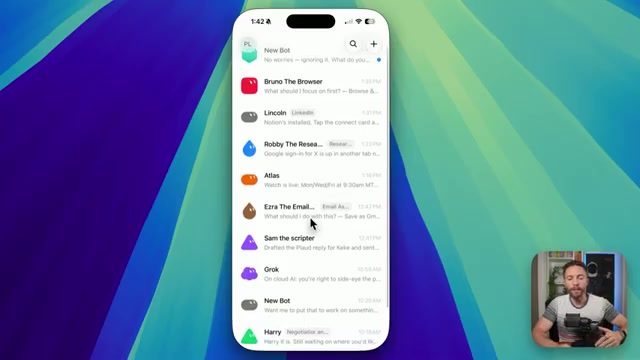
Henry Schuck, CEO of ZoomInfo — $1.2B revenue, 3,000+ employees — posted a 45-second screen recording showing how to enrich company lists inside Claude without ever leaving the tool. It hit over 3,000 likes on LinkedIn and went viral across internal Slack channels company-wide.
That's not a coincidence. It's a format shift.
For incumbent B2B software companies, buyer perception freezes in time. Your product ships updates quarterly. Your audience's mental model of what your product does updates maybe once a year — if you're lucky. A 45-second CEO demo cuts through that gap faster than any press release, analyst brief, or product blog post ever will.
Getting the executive off their pedestal for a 20-minute recording session humanizes the brand and signals real AI commitment without a single press release or analyst call.
Here's the playbook if you want to run this:
→ Hijack high-heat platforms. Connect your workflow to trending AI tools like Claude or ChatGPT to tap into existing organic momentum. The AI feed is already primed. Show up in it.
→ Visual framing matters. Make sure the executive's face is prominent in the thumbnail and within the first few frames. LinkedIn autoplay renders the initial frame immediately. Don't waste it on a screen recording without a face.
→ Sell pain, not features. Focus on one specific user problem rather than a generic feature tour. That's what makes viewers forward it into Slack. Nobody pastes a feature list into Slack. They paste "this is exactly our problem."
→ Retarget with persona hooks. Let organic run for a few days, then put paid spend behind the post using hooks tailored to specific personas. CROs respond to different language than RevOps. Run them separately.
The distribution channel already exists. The content format is proven. The only thing missing is your CEO and 20 minutes.
https://www.linkedin.com/posts/henryschuck_im-a-few-weeks-into-using-claude-for-work-activity-7312496745592369152-SMWG/#B2BMarketing#ContentStrategy…more
I stayed up until 2AM the night Grokbot launched. Not because I was using it to write content — because I couldn't stop having fun using it to research.
That's the distinction most people miss.
Using AI to write your posts gets you average posts. Average hooks. Average takes. We're on a podcast literally talking about LinkedIn adding an "AI slop" button — that's where the road leads.
But using AI to surface what's worth talking about? That's where the real leverage is.
Here's how I use Grokbot: I have a podcast digest agent that pulls top moments from every podcast I'd normally listen to and summarizes what's relevant to my work. Agents for competitive monitoring, outlier post analysis, research. I take those inputs and write myself.
The result: my screen time is way down because I'm not scrolling to find signal. I let the agents find it. Then I put my own experience and perspective on it and post.
You and I are the example of this right now on the podcast. We used research tools to find the stories. But the takes come from years in the field. AI can't replicate that, and it shouldn't try.
Use AI to do more with less time. Use your brain to make it worth reading.
https://www.ayautomate.com/blog/grok-bot-xai-ai-agents-explained#AIMarketing#B2BMarketing…more
Air hired a CMO named Eric Tota at noon. He resigned by 6 PM.
The whole thing was a mockumentary. The "resignation" introduced Air's new AI agent for creative tasks.
On LinkedIn: 180 likes. On Instagram: 10,000+.
Most people called that a LinkedIn flop. I'd push back.
LinkedIn was where the stunt happened. Not where it spread. The like count undersells the views, and the views don't include everyone who saw it in their feed and said nothing.
More importantly: the entire marketing industry spent a day talking about Air. That's not a failure. That's the point.
The critique isn't the stunt. It's the platform split. If you design a LinkedIn moment that only works on Instagram, you've either picked the wrong platform or the wrong format.
The smarter version: a LinkedIn-native stunt that travels. The fake hire worked. The medium didn't match the message.
Would you have done the same stunt differently?
#B2BMarketing#BrandStrategy…more
LinkedIn just added a button to flag AI slop. Then quietly nerfed two things creators have relied on for years: comment-for-lead-magnet posts and CTAs asking for reshares.
I've seen it firsthand. Posts that normally hit half a million views in a week getting capped at 500. Removed the CTA and watched it climb to 20,000.
My take on the lead magnet suppression: it's the wrong call. The only people commenting on those posts are people who actually want what you're offering. That's not spam — that's an engaged audience self-selecting. LinkedIn should think twice.
But the broader signal? It's good for those of us who do the work.
LinkedIn's own CPO called AI slop a "top priority." Over a million people clicked the new button in two weeks. Views on flagged content dropped 40%. The platform is enforcing quality now — and that means posting five times a week is only an advantage if what you're posting is worth reading.
AI can help you research, find angles, and organize your thinking. But the post itself needs to come from your brain.
Do epic things. Write about them. That's still the playbook — and now LinkedIn is enforcing it.
https://fortune.com/2026/07/31/linkedin-seems-like-ai-slop-button-billions-automated-comments-attempts/#LinkedIn#B2BMarketing…more


 View on LinkedIn
Also on