The best content doesn't try to sound smart. It sounds human.
We overcomplicate to prove we belong. But clarity is the real flex: saying the hard thing simply, so people actually feel it.
Warmth isn't weakness. It's where trust begins.
#B2B
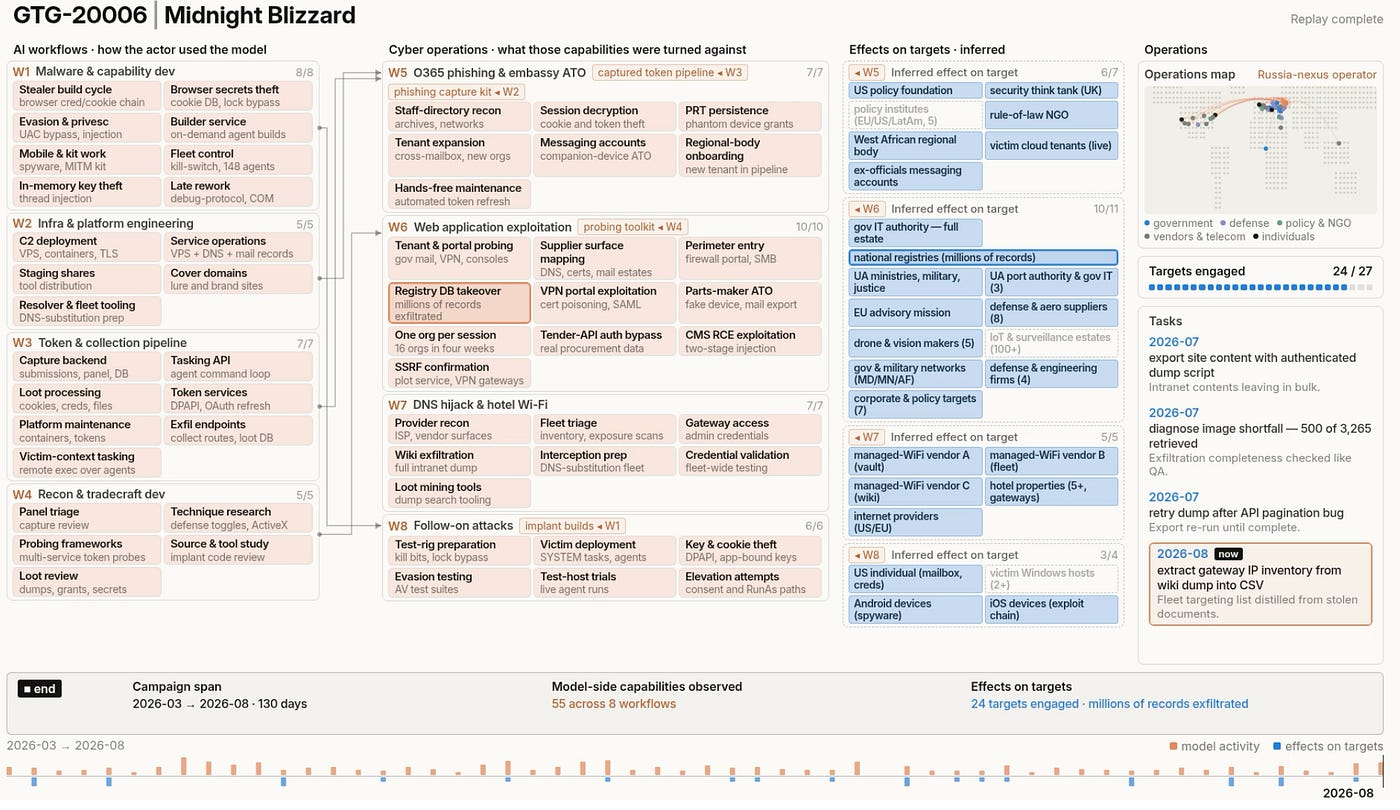
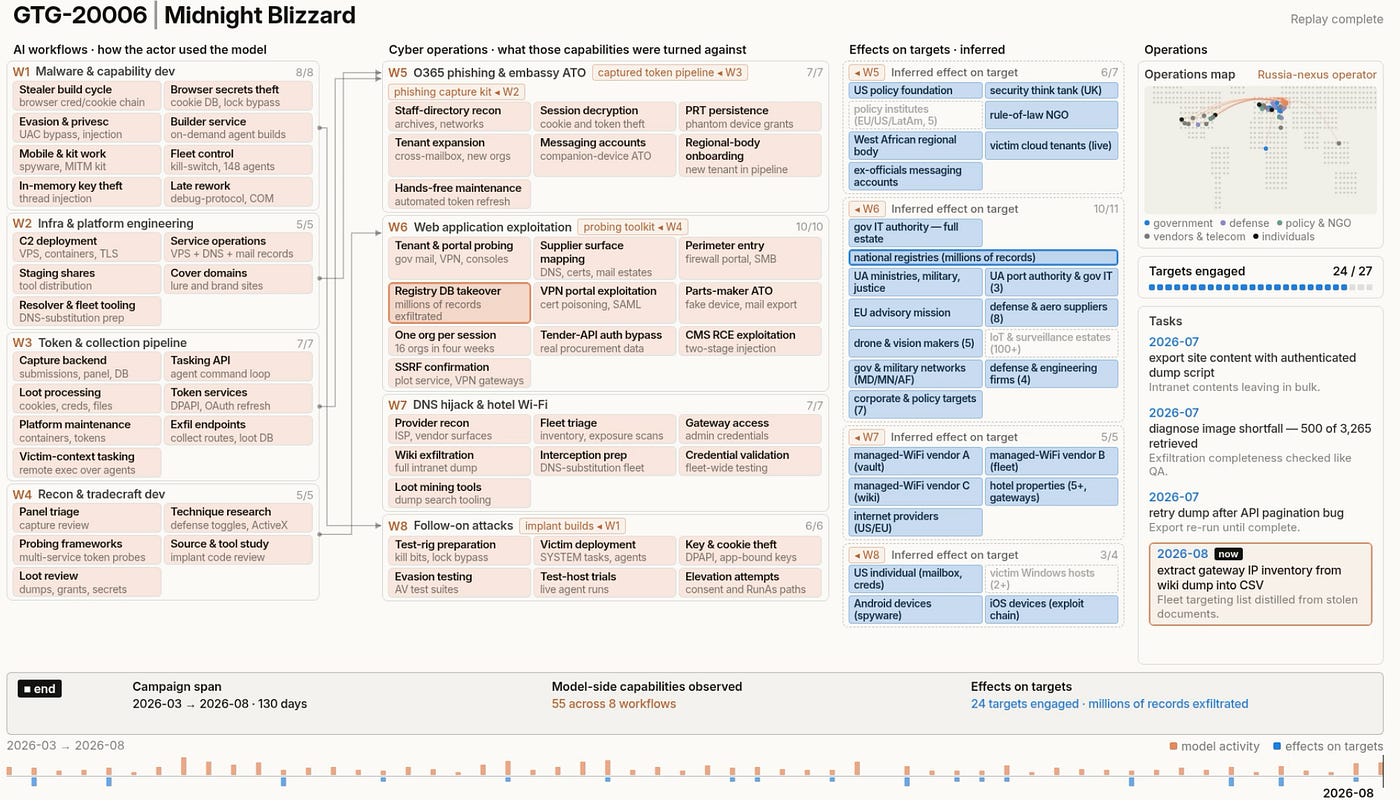
https://www.generativeaipub.com/p/anthropics-new-ai-threat-report-is …more
Content Marketing
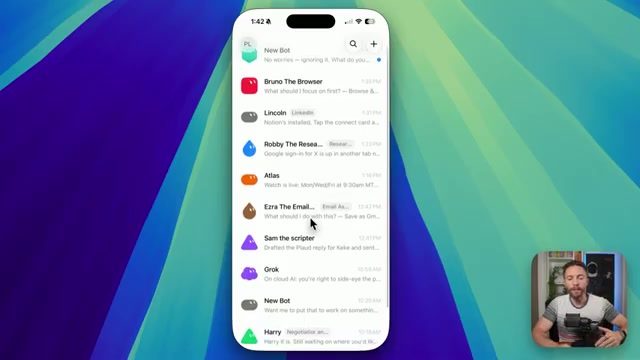
I stayed up until 2AM the night Grokbot launched. Not because I was using it to write content — because I couldn't stop having fun using it to research.
That's the distinction most people miss.
Using AI to write your posts gets you average posts. Average hooks. Average takes. We're on a podcast literally talking about LinkedIn adding an "AI slop" button — that's where the road leads.
But using AI to surface what's worth talking about? That's where the real leverage is.
Here's how I use Grokbot: I have a podcast digest agent that pulls top moments from every podcast I'd normally listen to and summarizes what's relevant to my work. Agents for competitive monitoring, outlier post analysis, research. I take those inputs and write myself.
The result: my screen time is way down because I'm not scrolling to find signal. I let the agents find it. Then I put my own experience and perspective on it and post.
You and I are the example of this right now on the podcast. We used research tools to find the stories. But the takes come from years in the field. AI can't replicate that, and it shouldn't try.
Use AI to do more with less time. Use your brain to make it worth reading.
https://www.ayautomate.com/blog/grok-bot-xai-ai-agents-explained
#AIMarketing #B2BMarketing …more
Meta's launch playbook for Muse is worth studying regardless of whether you care about AI agents.
Ten days after launch, Muse is the number one free iPhone app in America, ahead of ChatGPT, Gemini, Claude, and Instagram. That did not happen because Meta outspent everyone on traditional advertising. It happened because Meta's chief AI officer Alexandr Wang and his Superintelligence Labs team flooded X with sometimes 30-plus posts a day, without any of the corporate guardrails a Fortune 100 company would normally put in place. User wins spread alongside them — flight refunds, lower phone bills, real results from real people.
This is the playbook. And Meta did not invent it. OpenAI and Anthropic employees do the same thing every time a major model ships. Even newcomers like Instinct, a Muse competitor that is three weeks old, ran waitlists, referral codes, and VC influencers on X to build serious word of mouth without a fraction of Meta's budget.
The lesson for B2B brands is not "spend more." It is the opposite. Spending money scales. Creativity does not always. But micro-creators posting for $100 to $200 can still go if the post is genuinely good. A distributed network of real voices talking about real use cases will outlast any single splashy campaign.
There is a harder question underneath the launch numbers: does Muse have the depth to hold those downloads? One massive day of buzz is not a strategy if there is no reason to keep using the product. The real retention work starts now.
For B2B marketers, the model is clear. Build your employee network. Let people talk without the corporate script. Then earn the user stories by actually building something worth sharing.
https://www.forbes.com/sites/codyluongo/2026/09/20/employeeand-user-generated-content-are-winning-attention-users-for-ai-products-on-x/
#B2BMarketing #ContentStrategy …more
M
Michael Ashley
Founder at Radi8 // Executive Coach // Host of the Inspiring Founders Podcast
“Vitamin or pain killer?” - advisors love to ask this question about your product. And they love to tell you it has to be a pain killer, because it’s easier to sell. But the truth is less about pain and more about understanding your customer.
When I was 23 I worked at Threshold, one of the largest distributors of vitamins and supplements to the industry. They easily sold hundreds of millions of dollars every year into supplement stores all over the country.
What made them special wasn’t their inventory. It was their sales organization.
Every sales rep would spend time on the phone with their customers, they knew them by name, they talked like old friends. But more than that they spent time educating. And in turn their customers, the shop owners, educated their own customers.
What they created was an environment of conscious empathy and learning for people who didn’t want pain killers.
So here’s the question for your business: Are you chasing the same customers as all your competitors? The ones looking for pain killers?
Or are you building a community that’s tired of popping pills and wants a real, long-term solution?
Selling “vitamins” isn’t bad, it’s just very different from selling “pain killers” …more
M
Michael Ashley
Founder at Radi8 // Executive Coach // Host of the Inspiring Founders Podcast
Fast Pencil didn't win because of one clever innovation. It won because four technologies grew up at exactly the same moment — and we happened to be paying attention.
Back in 2007, four enabling layers matured almost simultaneously:
— E-books went mainstream (Kindle launched)
— Print-on-demand made a single copy economical
— Digital distribution meant you didn't need a warehouse or a bookstore
— Real-time online collaboration arrived (early Google Docs)
Any one of those, on its own, was interesting. A neat feature. A "someday" bet.
All four together created a category that couldn't have existed the year before: self-publishing for everyone. Right time, right place, right convergence — and a window that opened wide and then closed fast.
That's the lesson I keep coming back to for founders evaluating a new market. Most people scan for individual trends: "AI is hot," "video is growing," "this platform is exploding." Trends are easy to spot and easy to chase. The durable businesses get built somewhere harder to see — at the intersection, where several enabling layers reach maturity at the same time and suddenly make a hard thing cheap, obvious, and possible.
As I told Julia Lucidi on her Founder Tactics podcast: "being aware of the convergence of technology is huge."
So the real skill isn't spotting the trend everyone's already talking about. It's noticing when three or four separate things quietly cross the line from "almost possible" to "possible" at once. That's the timing window. And it rarely announces itself.
What convergence are you watching right now that others are treating as separate trends? Worth thinking about.
🎙️ From my conversation with Julia Lucidi on the Founder Tactics podcast. Full episode: https://youtu.be/M58Dnn2UAlM
#Founders #Startups #Entrepreneurship #GoToMarket #GrowthStrategy …more
M
Michael Ashley
Founder at Radi8 // Executive Coach // Host of the Inspiring Founders Podcast
Oops!! I made a mistake.
The Content Marketing with AI workshop starts at 10am, not 11. Same Zoom, same registration link.
If you were already planning to join, move it an hour earlier on your calendar. We'll get into where AI actually fits in a content workflow — where it amplifies clear positioning and customer understanding, and where it just amplifies the confusion if the strategy underneath isn't there yet.
Already registered? Just show up at 10. Not yet? The link's still open — it's in the comments. Grab a spot and I'll see you on Zoom.
#Founders #Startups #Entrepreneurship #AIforBusiness #MarketingSystems …more
M
Michael Ashley
Founder at Radi8 // Executive Coach // Host of the Inspiring Founders Podcast
Back in 2007 my mom wrote a book, and no one would publish it.
It's called "Butterfly Girl" — the story of a little girl lost in a storm and her long journey home. She wrote it for one reader: my daughter. She wanted her granddaughter to know where she came from, in her own words. The traditional publishers all passed. A beautiful, personal story about one family's journey wasn't a big enough market for them.
So I told her not to wait for anyone's permission. We'd do it ourselves.
What I didn't fully understand until we were in it: self-publishing back then was brutal. Formatting, printing, distribution, ISBNs, cover files — every step was manual, expensive, and built to make you quit. We pushed through it anyway, and she held her book in her hands. That moment was the whole point.
Then Christmas came. And at the table, one relative after another leaned in and said some version of the same thing: "You know, I have a book in me too. How did you do it?"
That's when it clicked. The pain I'd just spent months fighting through wasn't my mom's problem. It was everyone's problem. As I put it later:
"there's a million other moms out there hundred million other moms you know actually billions of people out there who think they have a book in them and will never publish so it was the business model"
That became FastPencil — an online writing and publishing platform. It didn't start with a market analysis or a TAM slide. It started with one person I loved, one urgent human problem, and a Christmas dinner full of people stuck behind the exact same wall.
I've come to believe this is one of the most underrated sources of a great idea: proximity. Not brainstorming what the market wants in the abstract, but solving something real for someone you actually care about — then noticing how many other people are quietly living the same frustration. The narrow, personal problem is often the universal one wearing a disguise.
So here's my question for you:
Is there a version of this in your own story — a problem you solved for someone close to you that turned out to be universal?
🎙️ From my conversation with Julia Lucidi on the Founder Tactics podcast. Full episode: https://youtu.be/M58Dnn2UAlM …more

Generating an image for your post should not steal creative time. Radi8 generates quote cards in your brand so you stay in the writing flow. …more
M
Michael Ashley
Founder at Radi8 // Executive Coach // Host of the Inspiring Founders Podcast
I’m running another Digital Marketing Internship program this summer (starts in May; 6 or 12 week micro-projects). Send me a message. #internship …more
Channel names and logos are trademarks of their respective owners.