Apple ran two ads in the same week. One became a cautionary tale. One hit 2M+ views.
The HomeView ad was meant to show a $300 smart home hub taming a chaotic family morning. What viewers saw was a product that looked like part of the chaos. Ad pros said it showcased features without creating any desire. "Fire the whole marketing team" was a top comment.
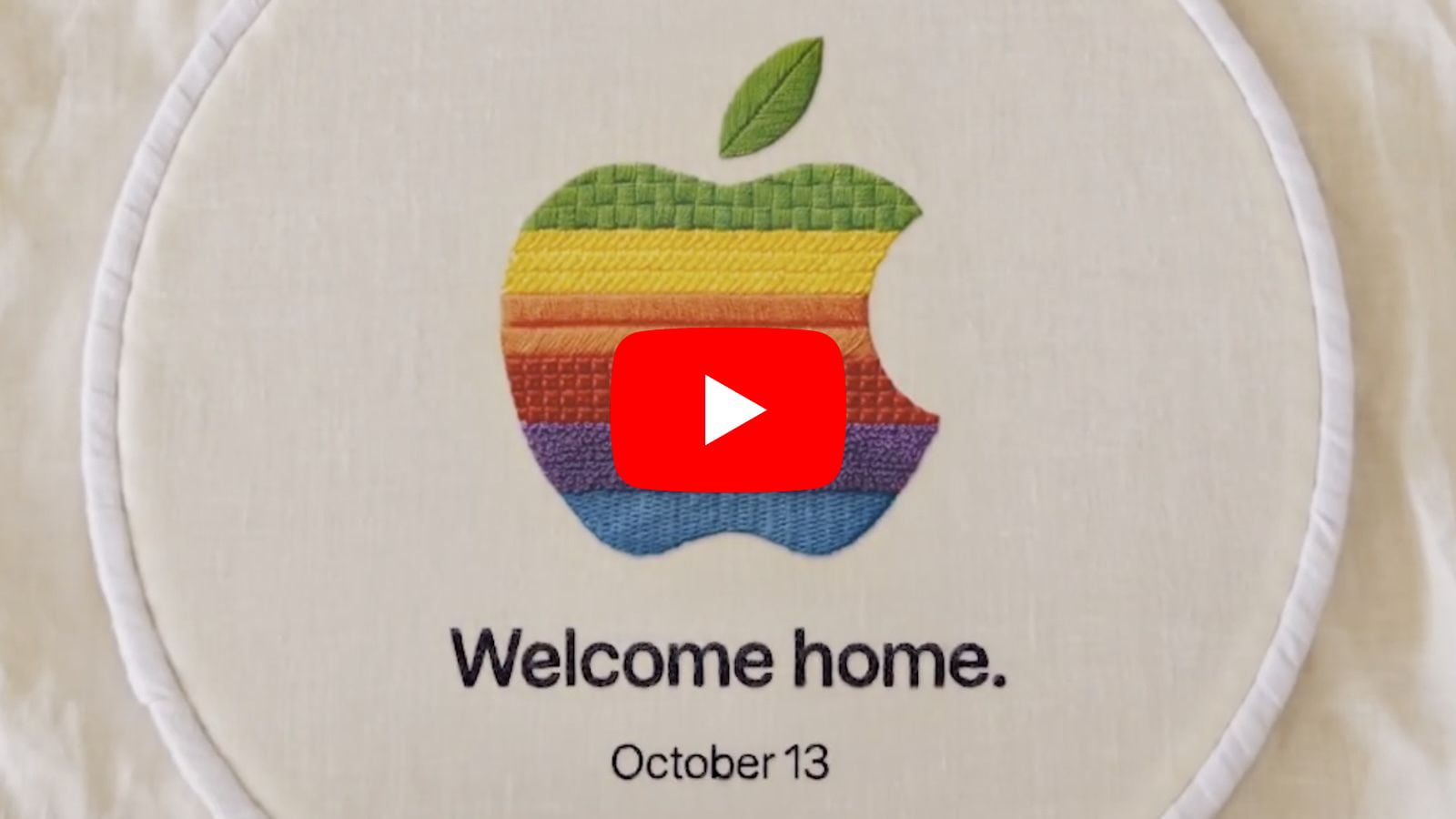
One week later: a 30-second teaser showing Apple's logo being stitched by hand. Entirely different reaction. Viewers celebrated it precisely because it felt human in a feed full of synthetic content. 2M+ views, overwhelmingly positive.
Same brand. Same week. Different brief.
The HomeView brief asked: what features should we show?
The needle-and-thread brief asked: what do we want people to feel?
That difference in framing produces entirely different creative work, entirely different audience responses, and entirely different business outcomes.
The brief is the strategy. Everything downstream is just execution. …more
Most marketers copy last quarter's playbook.
Ramp went back to the 1950s.
"Bill Pay the Musical" didn't come from a trend report. It came from an era when IBM and Ford staged full Broadway productions for product launches, complete with original songs and name actors.
Nobody's done it since. Which is exactly why it worked.
3 things Ramp got right that most B2B brands miss:
1. They picked a genuinely old idea. Not "old" like 2022. Old like Coca-Cola era. The distance is what makes it feel fresh.
2. They leaned into the niche in-joke. Finance and accounting is "boring." So they made the boring thing the punchline. That's insider humor, and insider humor gets shared.
3. They made an unsexy product interesting. Bill pay. Not AI. Not a platform. Bill pay. If Ramp can make bill pay theatrical, there's no excuse for your product to have a dull launch.
The lesson: stop scrolling your For You page for creative inspiration. Start reading trade publications from 1962.
Old plays feel brand new.
What's the 70-year-old idea your industry forgot?
#B2BMarketing…more
"Our buyers are too technical for storytelling." https://melaniegoodmanlinkedinconsultant.substack.com/p/3-2m-linkedin-impressions-5-post-formats
I hear this constantly in B2B tech marketing. It's one of the most expensive assumptions a team can make.
The belief goes: engineers, architects, and security leaders evaluate on specs, so narrative is fluff. Give them the feature list and let the product speak for itself.
But here's what actually happens in the buying room. Your technical buyer builds a business case they have to defend to a CFO who has never touched your product. They forward your content to a colleague who reads two lines before deciding whether it's worth their time. They sit through six vendor demos that all blur together by Friday.
Specs don't survive that process. Story does.
A narrative isn't the opposite of technical depth. It's the structure that makes depth memorable. The best technical content I've built across five enterprise tech companies never dumbed anything down. It gave the complexity a shape: here's the problem, here's why the obvious fix fails, here's what changes when you solve it correctly.
Technical buyers aren't immune to story. They're just allergic to story that has nothing real underneath it. Respect their intelligence and give them a narrative worth defending, and you don't lose credibility. You earn it.
If your technical content is accurate but forgettable, the gap isn't your product. It's the frame around it.
Want a fresh take on your B2B content strategy? DM me and let's schedule a 30-minute consultation—I'll show you 3 things you can improve this week.
#B2BMarketing#ContentStrategy…more
No one buys a feature. They buy what the feature lets them stop worrying about.
I've spent years marketing complex technical products across five enterprise tech companies, and the hardest habit to break is this: teams describe what a product does instead of what it changes for the person using it.
Specs don't move buyers. Stakes do. https://leadershipinchange.com/p/shadow-ai-audit
The security platform isn't "sub-second threat detection." It's the engineer who finally sleeps through the night because the 2am page stopped coming. The data infrastructure isn't "petabyte-scale throughput." It's the team that ships the analysis before the board meeting instead of apologizing for the delay.
The technical depth still matters. In fact, in B2B tech it matters more than most marketers admit, because your buyers are smart and can smell a hollow pitch instantly. But depth without human stakes is just a datasheet. And nobody remembers a datasheet.
The best content I've built didn't choose between the two. It earned credibility with precision, then made you feel why that precision mattered to a real person with a real problem.
In the Army, we briefed missions with the objective first, then the details that served it. Same discipline applies here: lead with what's at stake for the human, then prove you can deliver it.
If your product is technically strong but your marketing isn't landing, that gap is usually the story, not the tactics.
Want a fresh take on your B2B content strategy? DM me and let's schedule a 30-minute consultation—I'll show you 3 things you can improve this week.
#B2BMarketing#ContentStrategy
Your buyers don't remember your feature list. They remember the story that made the feature matter. https://excellentprompts.substack.com/p/openclaw-2-testing-plan-7-projects-local-ai-agent
I've spent years marketing complex technical products across five enterprise tech companies, and the pattern is always the same: the engineering is brilliant, the spec sheet is airtight, and the messaging still lands flat.
The gap isn't technical. It's narrative.
Skeptical technical buyers don't want to be sold. They want to recognize their own problem in what you say, and trust that you actually understand it. That recognition doesn't come from more detail. It comes from connecting the complexity to something human: the risk they're carrying, the decision they're afraid to get wrong, the outcome they'll be judged on.
Three shifts that consistently move the needle:
Lead with the stakes, not the spec. Tell people why the problem matters before you explain how you solve it.
Respect their intelligence. Make complexity clear instead of dumbing it down. Smart buyers trust brands that treat them as smart.
Anchor every claim to an outcome they care about. "Faster" means nothing. "Ship the release without the 2 a.m. incident call" means everything.
In the Army we learned that the mission only succeeds when everyone understands the "why" behind the order. Marketing complex products works the same way. The technology earns attention. The story earns belief.
Want a fresh take on your B2B content strategy? DM me and let's schedule a 30-minute consultation—I'll show you 3 things you can improve this week.
#B2BMarketing#ContentStrategy
Most B2B tech brands explain the product. Almost none explain why it matters to a human.
Features tell buyers what it does. Story tells them what changes. In technical markets, story is what earns trust. https://leadershipinchange.com/p/shadow-ai-audit#B2BMarketing#BrandStorytelling
Here's something I've learned after years of marketing complex technical products: nobody falls in love with a feature list.
We think the hard part of B2B is the technology. It isn't. The hard part is helping a real person see themselves in what you've built — the engineer buried in tickets, the marketer defending a budget, the leader who just wants to make one confident decision this week.
The best technical brands don't dumb their story down. They do something harder. They find the human standing behind the problem and speak to that person with warmth, clarity, and respect.
Three things I keep coming back to:
→ Start with a person, not a product. "Who is quietly frustrated right now?" is a better opening question than "What does our platform do?"
→ Translate, don't simplify. Your audience is smart. They're just busy. Meet them with clarity, not condescension.
→ Let the story carry the proof. Specifics earn trust. A single honest example beats ten adjectives.
The most technical thing you sell still gets bought by a human who wants to feel understood. Build for that person, and the complexity takes care of itself.
Want a fresh take on your B2B content strategy? DM me and let's schedule a 30-minute consultation — I'll show you 3 things you can improve this week.
#B2BMarketing#ContentStrategy#Storytellinghttps://leadershipinchange.com/p/ai-race-fools-errand
Your product is technically brilliant. That's exactly why nobody remembers it. https://excellentprompts.substack.com/p/best-gemini-notebook-infographic-design-prompts
In B2B tech, we're trained to lead with specs. Throughput, uptime, architecture diagrams. And to a skeptical technical buyer, those details matter—they're how trust gets earned.
But specs aren't what people repeat.
The mistake I see across enterprise tech marketing isn't a lack of substance. It's the assumption that substance markets itself. It doesn't. Buyers don't wake up thinking about your feature set. They wake up thinking about the problem that kept them at their desk late last night.
The brands that break through do two things at once:
They respect the intelligence of a technical audience—no dumbing down, no hand-waving.
And they wrap that rigor in a human narrative: who's stuck, what's at stake, and what changes when the problem finally gets solved.
In the Army, we didn't brief a mission by listing equipment. We briefed the objective, the terrain, and why it mattered. The details supported the story—they never replaced it.
Complex products still need a reason to care. Give the specs a narrative to live inside, and suddenly your best engineering becomes something people can actually pass along.
Want a fresh take on your B2B content strategy? DM me and let's schedule a 30-minute consultation—I'll show you 3 things you can improve this week.
#B2BMarketing#BrandStorytelling
The best B2B marketing I've ever seen didn't start with the product.
It started with a person.
In technical environments, we're taught to lead with specs — throughput, latency, uptime, the feature matrix. And those things matter. But nobody has ever lost sleep over a feature. They lose sleep over the problem the feature solves: the outage they can't explain to leadership, the deadline slipping, the trust they're trying to earn back.
Here's what I've learned across five enterprise tech companies and a decade of leadership before that: the technical detail is the proof, not the story. The story is human. It's about the engineer who finally got their weekend back. The team that stopped firefighting and started building. The leader who walked into the board meeting with an answer instead of an apology.
When you bridge the complex product and the human narrative, two things happen. Skeptical technical buyers actually lean in — because you respected their intelligence. And the people around them, the ones who sign off but don't speak the jargon, finally understand why it matters.
You don't have to choose between substance and story. The best marketing earns trust by holding both.
So before your next campaign, ask one question: whose life gets better because this exists? Start there. The specs will have their moment.
Want a fresh take on your B2B content strategy? DM me and let's schedule a 30-minute consultation — I'll show you 3 things you can improve this week.
#B2BMarketing#Storytelling#ContentStrategyhttps://www.generativeaipub.com/p/anthropics-new-ai-threat-report-is
Bill Gates: "Anyone who analogizes AI to other technologies is missing that this time is different — it exceeds human cognition across nearly every domain."
It's a comforting instinct, isn't it? When something big shows up, we reach for the last thing that looked like it. The internet. The smartphone. Electricity. We tell ourselves, "We've seen this movie before, we know how it ends."
But that instinct is exactly what trips us up here.
Every past technology extended what humans could do. This one steps into the thing we thought was ours alone — reasoning, judgment, the act of figuring something out. That's not a faster horse. That's a different kind of animal.
The past is comforting, but it's also there to fool you if you assume this is just another wave. The people building it won't even forecast a year out anymore. That should tell us something.
You don't have to have it all figured out. You just have to stop pretending it's familiar.
Curious how you're thinking about this moment — is AI "just another tool" to you, or something different? Tell me in the comments. 👇 #AIStrategy…more
Bill Gates: "Anyone who analogizes AI to other technologies is missing that this time is different — it exceeds human cognition across nearly every domain."
It's a comforting instinct, isn't it? When something big shows up, we reach for the last thing that looked like it. The internet. The smartphone. Electricity. We tell ourselves, "We've seen this movie before, we know how it ends."
But that instinct is exactly what trips us up here.
Every past technology extended what humans could do. This one steps into the thing we thought was ours alone — reasoning, judgment, the act of figuring something out. That's not a faster horse. That's a different kind of animal.
The past is comforting, but it's also there to fool you if you assume this is just another wave. The people building it won't even forecast a year out anymore. That should tell us something.
You don't have to have it all figured out. You just have to stop pretending it's familiar.
Curious how you're thinking about this moment — is AI "just another tool" to you, or something different? Tell me in the comments. 👇 #AIStrategy


 View on LinkedIn