The best content doesn't try to sound smart. It sounds human.
We overcomplicate to prove we belong. But clarity is the real flex: saying the hard thing simply, so people actually feel it.
Warmth isn't weakness. It's where trust begins.
#B2B
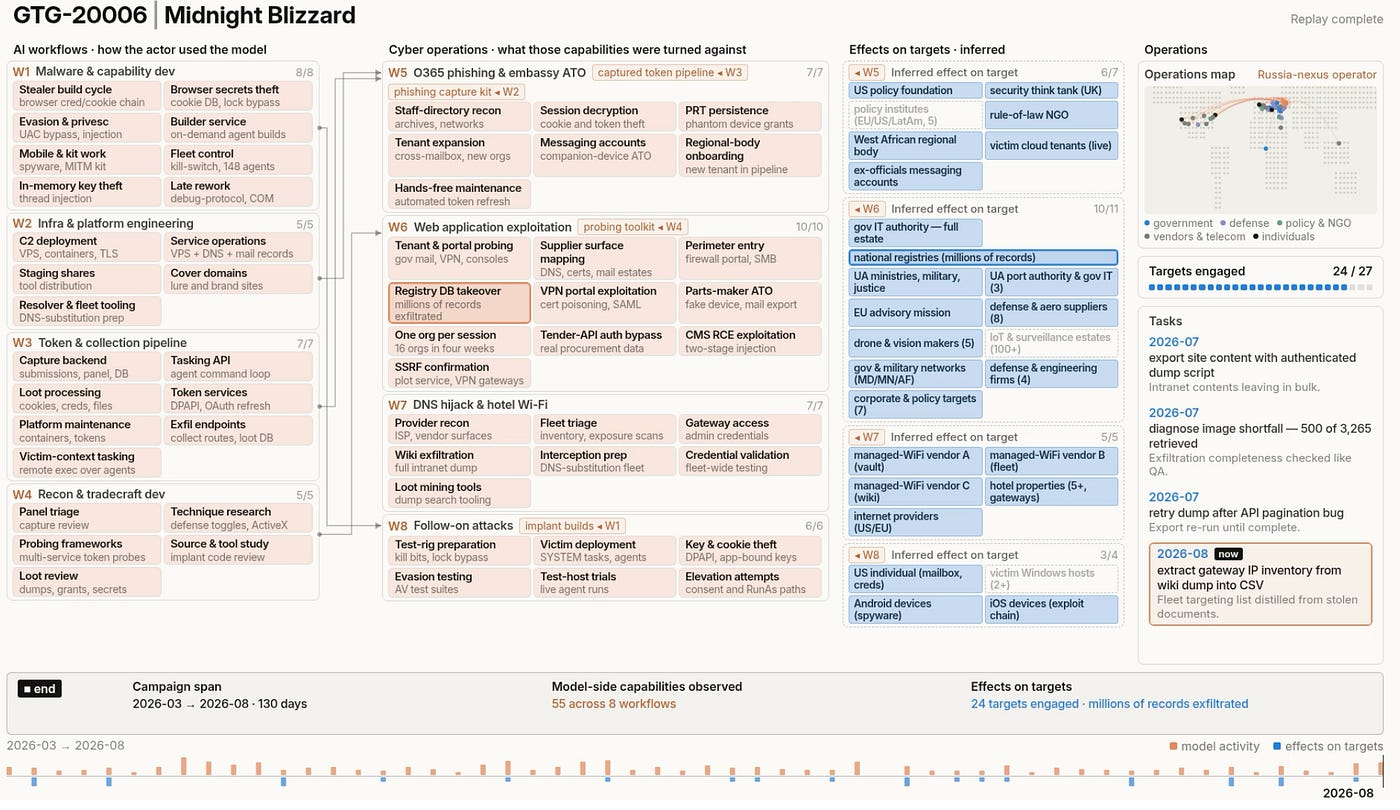
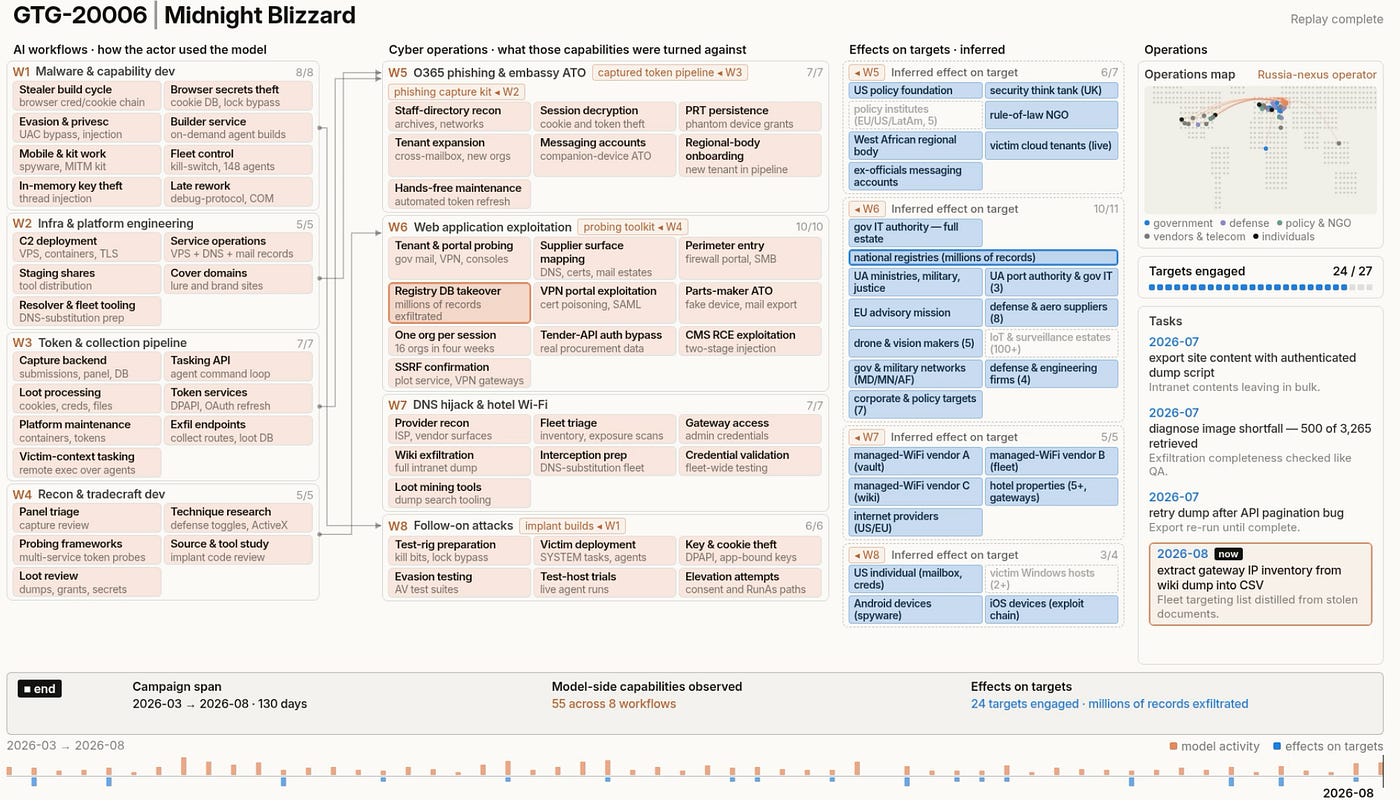
https://www.generativeaipub.com/p/anthropics-new-ai-threat-report-is …more
B2B Content
"The New Claude Can Take On a Whole Project, Not Just a Task"
https://newsletter.futurepedia.io/p/the-new-claude-can-take-on-a-whole-project-not-just-a-task-09-04-2026
1 big thing: How Fable 5.1 changes what B2B marketers can hand off to AI
The real change in Fable 5.1 is not the benchmark score. It is sustained attention across long, multi-part work.
Why it matters: Most AI tools stall partway through a complex task — requiring you to re-prompt, re-orient, and re-explain. Fable 5.1 is tuned to hold focus across long coding tasks, deep research, and multi-step document work without needing constant steering. For B2B marketing teams, that changes what you can actually delegate.
Driving the news:
Fable 5.1 is now the top model in Claude's apps, designed for big multi-step jobs: long coding tasks, research with many moving parts, and full document or presentation builds.
→ It costs less than the model it replaces, making sustained high-quality output more affordable
→ Available now on web, desktop, and mobile
Zoom in:
Perplexity separately launched Hybrid Compute for Mac — a feature that keeps sensitive file details on your device while only sending safe portions to the cloud for processing.
→ Available now for Perplexity Pro, Max, and Enterprise members on Apple silicon Macs
Yes, but: Fable 5.1 costs 20% more on max-effort tasks because the model writes roughly 1.7x the text. Benchmark your actual workloads before assuming the cost savings apply universally.
Be smart: The shift from prompt-by-prompt to project-level delegation is real. The teams that redesign their workflows around it now will have a compounding productivity advantage.
The bottom line: AI just got a longer attention span. Use it for the work that used to require yours.
#AIMarketing #B2BMarketing …more

Told 3 times, Sep 26, 2026 – Sep 27, 2026
· X · Open
People ask me which podcasts I like... @NoPriorsPod
Guo & Gil's 2026 call most B2B teams missed: AI stops waiting for prompts, it goes proactive, surfacing tasks & handling the first pass before you ask.
https://www.youtube.com/@NoPriorsPodcast
#AIStrategy
· LinkedIn · Open
People always ask me which podcasts I listen to... Sarah Guo and Elad Gil see a lot of AI companies. They back the best ones.
Their 2026 prediction that most B2B teams missed: "AI will stop being a reactive tool that waits for us to prompt it."
Proactive. Integrated. Already knowing what tasks you need to work on. Completing them before you ask.
That is not 2030. That is the trajectory right now.
For marketing and sales teams, the implication is not abstract. The workflows you build today assume a human initiates every task. The workflows being built by the fastest-moving teams assume the AI surfaces what needs doing and handles the first pass without being asked.
The difference between those two designs is not a tool. It's a mindset shift about what the AI is for.
Guo and Gil also made a point worth flagging for anyone buying or building AI products: private evaluations are now a company's most important strategic asset. Not the model they use. The evals they've built to measure whether it's working.
You can't improve what you're not measuring. And right now, most teams are not measuring.
https://podcasts.apple.com/us/podcast/no-priors-artificial-intelligence-technology-startups/id1668002688
#AIStrategy #B2BMarketing
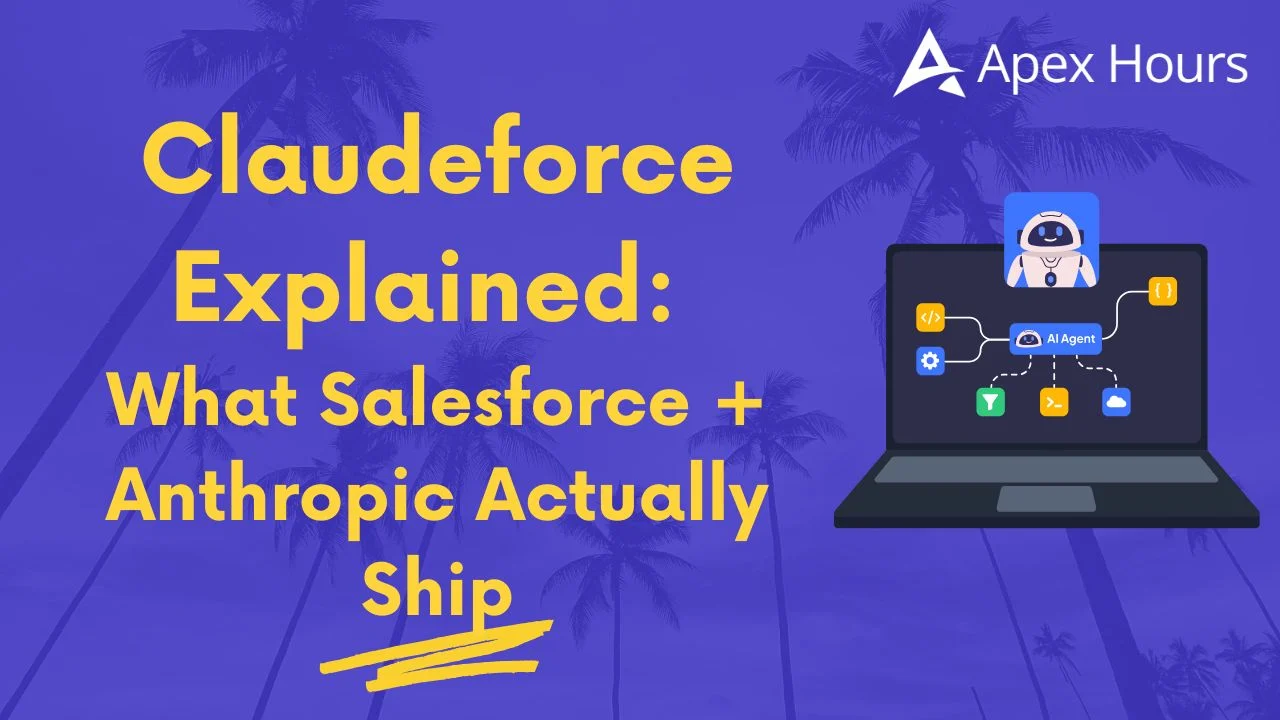
Salesforce and Anthropic did not just announce a partnership. They named it.
That distinction matters more than it sounds. Most partnership announcements follow the same pattern: a press release, a joint quote, a few weeks of coverage, then nothing. The name fades because there is nothing to hold onto.
Claudeforce is different. It borrowed Claude's brand equity, added Salesforce's "force" suffix — the first time Salesforce has ever given that suffix to another company's product name — and created something that sounds like a product line rather than a deal memo. Announced on the same day as Salesforce's Q2 earnings, with CRM stock jumping 12–14% after hours. Then Matthew McConaughey showed up in the ad. Everything landed at once.
The strategic bet underneath the branding: if you use Claude, you now have a reason to lean into Salesforce. If you use Salesforce, you have a reason to lean into Claude. Benioff's exact framing was "probabilistic intelligence alone doesn't run a company, and deterministic systems don't reason." He called it the SaaSpocalypse being over — the idea that AI tools would replace enterprise software rather than fuse with it.
What Claudeforce actually ships: Salesforce inside Claude as a plugin with 37 prebuilt sales skills, Claude as the default reasoning model inside Agentforce, and Claude as the default model powering Slackbot.
For B2B marketers, the naming lesson holds regardless of the product. Start with the headline. Work backwards to what's achievable. A name that sounds like a product is a campaign in itself — and it's the one thing competitors cannot copy the same week.
https://www.salesforceben.com/salesforce-and-anthropic-announce-claudeforce-in-q2-27-earnings/
#B2BMarketing #AIStrategy …more
This got 39 million views. More than the Claude Fable launch.
I've never seen anything like it — and here's exactly why it worked.
Diogo Almeida co-invented ChatGPT. That's the first sentence of his launch post for TypeSafe AI. Before he says anything about the product, he's already established that you should stop scrolling and pay attention.
That's not a hook. That's authority weaponized as a hook. And it's the hardest kind to compete with.
Then he stacked three more things on top of it:
He built something genuinely novel. A new type of reinforcement learning called RLCD and a new frontier model called Jev.
The value proposition is borderline insane. 20–200x faster. 40–400x cheaper, with output tokens free.
And he fit all of that into the hook.
I've been studying launch content for a long time. I have never seen one post pack more value into a stronger opening. I saw it in my feed and there was no way I was skipping it. The moment I read "co-founder of ChatGPT," I was locked in.
The lesson for B2B marketers: authority isn't what you say you've done. It's what you've done that makes people stop mid-scroll. Diogo didn't explain his credibility. He dropped it in one line and moved on.
Start with the headline. Work backwards to everything else.
#B2BMarketing #ContentStrategy …more
This post has video.
Watch it on the channel.
Told 2 times, Sep 25, 2026
· LinkedIn · Open
This got 39 million views. More than the Claude Fable launch.
I've never seen anything like it — and here's exactly why it worked.
Diogo Almeida co-invented ChatGPT. That's the first sentence of his launch post for TypeSafe AI. Before he says anything about the product, he's already established that you should stop scrolling and pay attention.
That's not a hook. That's authority weaponized as a hook. And it's the hardest kind to compete with.
Then he stacked three more things on top of it:
He built something genuinely novel. A new type of reinforcement learning called RLCD and a new frontier model called Jev.
The value proposition is borderline insane. 20–200x faster. 40–400x cheaper, with output tokens free.
And he fit all of that into the hook.
I've been studying launch content for a long time. I have never seen one post pack more value into a stronger opening. I saw it in my feed and there was no way I was skipping it. The moment I read "co-founder of ChatGPT," I was locked in.
The lesson for B2B marketers: authority isn't what you say you've done. It's what you've done that makes people stop mid-scroll. Diogo didn't explain his credibility. He dropped it in one line and moved on.
Start with the headline. Work backwards to everything else.
#B2BMarketing #ContentStrategy
Here's a discipline I've come to love: writing the short version first.
The brief that started this post was one line — "make the X post fit in 280 characters." A tiny constraint. But it's a great reminder of something bigger.
1 big thing: Brevity isn't the enemy of depth. It's proof you understand your idea.
Why it matters: In B2B, we mistake length for rigor. Long decks, long posts, long explanations — as if more words signal more thought. Usually the opposite is true. The person who can say it in one clear line is the one who actually gets it.
Zoom in: A hard character limit forces three good things:
→ You cut what you were never sure about
→ You lead with the one point that matters
→ You respect the reader's time enough to do the work yourself
Yes, but: Short isn't the same as simple. It takes longer to write the tight version. That's the trade — you spend the effort so your audience doesn't have to.
Be smart: Next time you're stuck on a message, try writing it in 280 characters first. If it survives the squeeze, it's ready to grow. If it doesn't, you found the weak spot before your audience did.
The bottom line: Clarity is a kindness. The shorter you can make it, the more you probably understand.
Want a fresh take on your B2B content strategy? DM me and let's schedule a 30-minute consultation — I'll show you 3 things you can improve this week.
#B2BMarketing #ContentStrategy
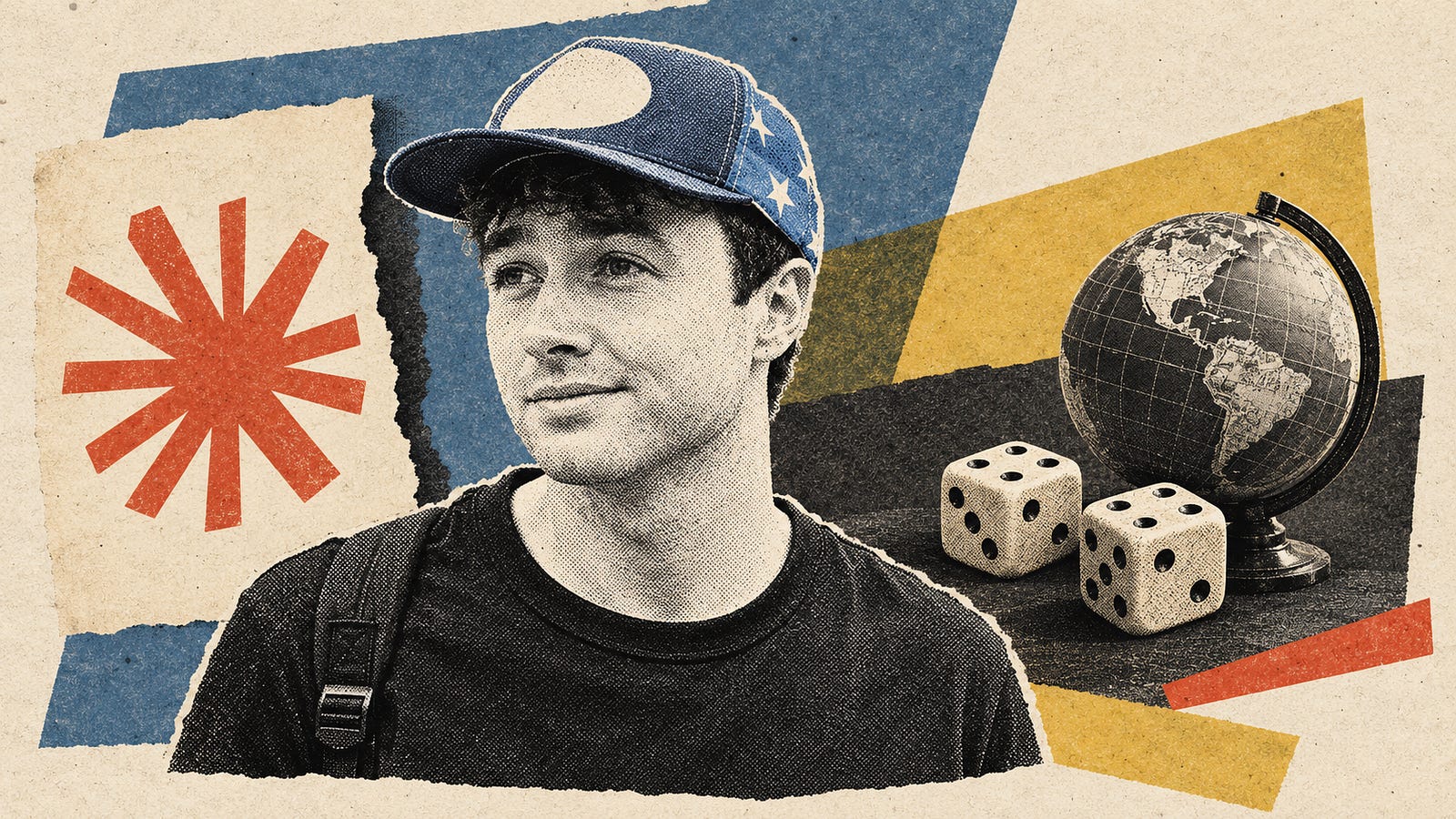
https://www.generativeaipub.com/p/ai-researcher-jacob-coxon-fears-that …more
I've watched enterprise tech brands spend six figures on content that got zero pipeline. Same mistake: they built for engagement, not skepticism. Your B2B audience doesn't need more noise. They need proof.
https://www.contrarianthinking.co/newsletter-articles/how-to-rewire-your-brain-for-business-success …more
Most B2B marketers believe LinkedIn growth requires daily posting.
The real lever isn't consistency for consistency's sake—it's batching content in focused blocks so you're not reacting to the platform all day.
https://www.radi8.com/blog/grow-your-business-on-linkedin-without-living-on-social-media-all-day …more
Most B2B tech marketers hit a ceiling. Not from lack of effort. From optimizing the wrong variables.
I've seen this across five enterprise tech companies. A team will grind for months on a content strategy that isn't working. More blog posts. More social activity. More webinars. The output increases, but the results stay flat.
The problem isn't execution. It's what they're measuring.
Three variables I see teams optimize that rarely move the needle:
Content volume instead of resonance. Publishing 20 generic pieces won't outperform 5 that genuinely address the technical skepticism your audience brings to every vendor conversation. When you're marketing to people who evaluate infrastructure decisions or security platforms, they can smell surface-level content immediately. Optimize for depth and credibility, not frequency.
Channel spread instead of concentration. I watched a marketing team stretch across seven platforms because a framework told them to be everywhere. Their audience was almost entirely on LinkedIn and in niche technical communities. When they pulled back and focused, engagement doubled in six weeks. Your audience isn't everywhere. Find where they actually pay attention and go deep there.
Simplification instead of respect for intelligence. The instinct in B2B tech is to make everything simple. But your buyers are smart. They want to understand how your product works, not just what it does. The best content I've built didn't dumb things down. It made complexity clear and connected it to business outcomes they cared about.
When I work with teams stuck at this ceiling, the shift isn't about doing more. It's about reframing what success looks like and aligning effort with variables that actually matter.
If your content strategy feels like pushing a boulder uphill, I'm offering 30-minute strategy consultations where I'll review your current approach and give you three actionable improvements you can implement this week. DM me and we'll schedule it.
https://www.contrarianthinking.co/newsletter-articles/youre-asking-the-wrong-question …more
Told 3 times, Jun 16, 2026 – Jun 19, 2026
· LinkedIn · Open
Most marketers hit a ceiling not because the opportunity isn't there, but because they're solving $10M problems with $1M strategies.
I see this pattern constantly in B2B tech marketing. Teams grinding harder on the same content approaches, churning out more blog posts, more social updates, more campaigns. The effort is there. The results aren't.
The issue isn't execution. It's operating system.
Your brain defaults to what worked before. Pattern recognition kept our ancestors alive, but it keeps modern marketers stuck. When you face a complex technical product that needs to reach skeptical enterprise buyers, your brain reaches for familiar tactics because they feel safe.
But safe doesn't break through noise in saturated markets.
The companies I've worked with that actually cut through are the ones willing to rewire how they approach the problem. They stop asking "what content should we create?" and start asking "what belief do we need our audience to adopt, and what would make them question their current assumptions?"
That shift requires challenging your own mental models. It means stepping back from the content calendar long enough to question whether your strategy is actually designed to scale or just designed to keep you busy.
In the military, we had a saying: slow is smooth, smooth is fast. Rushing into execution with the wrong strategy just gets you to failure faster. The same applies to marketing complex technical products.
If you're running harder but not seeing breakthrough results, the answer isn't another tactic. It's rewiring your approach to the problem itself.
Want a fresh take on your B2B content strategy? DM me and let's schedule a 30-minute consultation—I'll show you 3 things you can improve this week.
#B2BMarketing #ContentStrategy
https://www.contrarianthinking.co/newsletter-articles/how-to-rewire-your-brain-for-business-success
· LinkedIn · Open
The biggest obstacle to effective B2B tech marketing isn't a lack of tactics. It's the mental model you bring to the work.
I've seen talented marketers stuck in the same pattern: they know their product is complex, their audience is skeptical, and the buying cycle is long. So they default to feature lists, technical jargon, and safe messaging that checks boxes but changes nothing.
The problem isn't what they know. It's how they think about the challenge.
You can't solve $10M problems with $1M thinking. You need to fundamentally shift your operating system.
In content strategy for technical B2B, that shift looks like this:
Stop optimizing for coverage. Most marketers want content across every channel, addressing every persona, hitting every stage of the funnel. The result is diluted messaging that resonates with no one.
Start optimizing for impact. Identify the one narrative that actually matters to your audience and go deep. Build your content system around that single insight until it breaks through the noise.
This requires rewiring how you prioritize. It means saying no to requests that don't serve the core narrative. It means resisting the pressure to be everywhere and instead committing to be unforgettable in one place.
I've applied this across five enterprise tech companies. The results are always the same: fewer pieces of content, higher engagement, more qualified conversations.
The tactics matter. But the thinking behind the tactics matters more.
Want a fresh take on your B2B content strategy? DM me and let's schedule a 30-minute consultation—I'll show you 3 things you can improve this week.
#B2BMarketing #ContentStrategy
https://www.contrarianthinking.co/newsletter-articles/how-to-rewire-your-brain-for-business-success
In the Army, we had a saying: amateurs talk strategy, professionals talk logistics.
The same is true for personal branding.
Everyone has ideas. Most people don't have a system.
I've been using Radi8 to bring some operational discipline to my content — planning, scheduling, and keeping my brand context consistent across everything I publish.
For someone who's spent their career helping enterprise tech companies tell better stories, it's been a useful forcing function to apply the same rigor to my own.
Check it out if you're building your brand in the B2B space. 🎯 …more
Channel names and logos are trademarks of their respective owners.