I don't think AI can do your marketing for you.
A client asked me this week if they should use AI to do their marketing. Fair question, and I'm building an AI tool myself, so I'm not here to talk anyone out of it.
I read an honest comparison recently on hiring a social media manager vs. using AI. My answer starts one step earlier... do you want to hand your marketing off, or run it yourself and stay in control? Either can work. Neither one does the thinking for you.
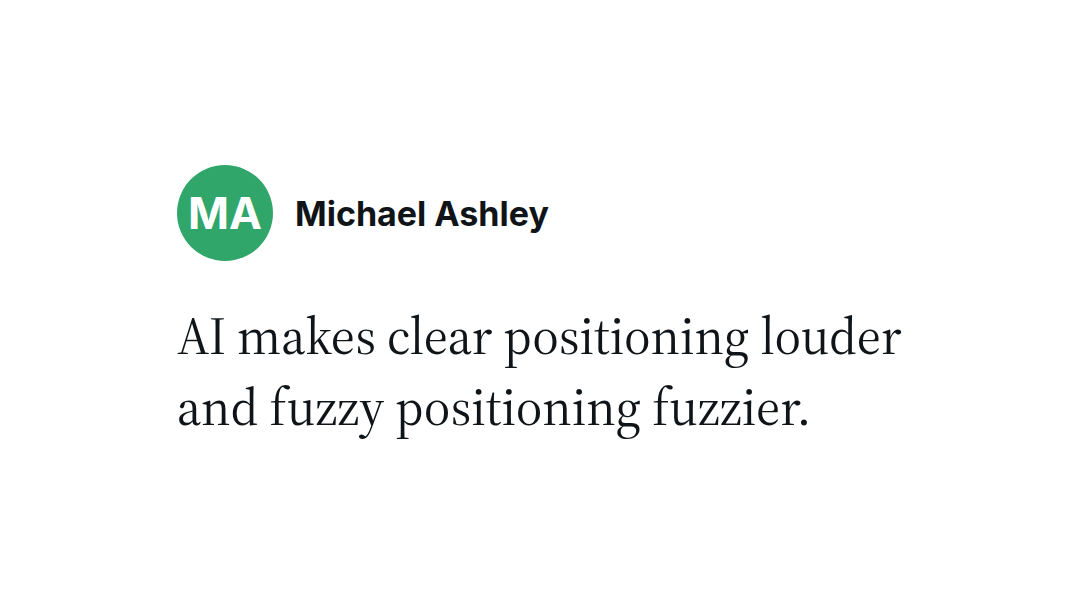
AI makes clear positioning louder and fuzzy positioning fuzzier.
So for coaches and consultants, the first job might not be picking a tool at all. It might be getting clear on who you help, the problem you solve for them, and what they actually care about. Get the thinking right first, then let AI amplify it. I catch myself reaching for the tool before the thinking too.
There's a video in the first comment for anyone weighing this right now.
Where has AI actually helped your practice... and where did it just make more noise?
#Coaching#IndependentConsultant#Positioning#Marketing…more
I use AI every day. Writing isn’t the hard part.
The model already knows how to write. What it doesn't know is you... who you're for, what you've promised, what you've already said, what you'd never say.
That gap shows up well beyond marketing tools. When a founder or CEO gets generic copy back, the tool usually takes the blame. The problem under the problem might be that the positioning was never sharp enough to hand over. And if you're taking a company into the US, AI knows even less about which of your home-market assumptions still hold here.
I'm not immune to this. When the output sounds like anyone, it's usually because I gave it too little of me.
If you can't say who you're for in one sentence, no model will say it for you.
What does your team hand AI before it writes a word?
I was a guest on a podcast and got to think out loud for far longer than any post allows: https://youtu.be/M58Dnn2UAlM?is=hzrAl7LB9vuXVJ7U#Founders#CEO#Positioning#GoToMarket
Pushing harder probably isn't what's missing. Before you add more hours, ask whether you're working on the right problem.
Founders are usually very good at solving problems... the trouble is we're often solving the wrong ones.
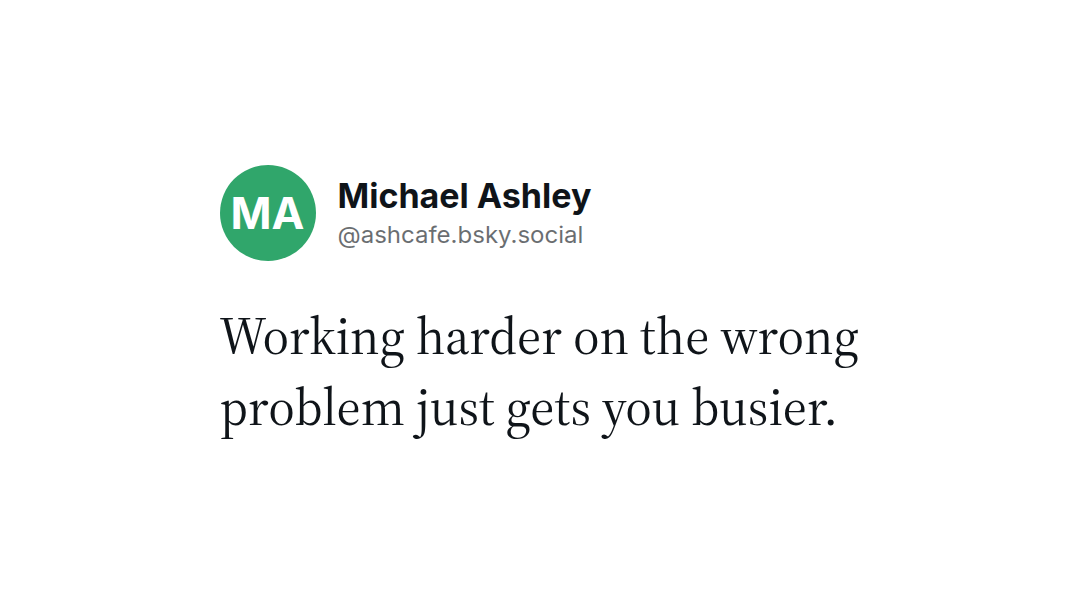
Working harder on the wrong problem just gets you busier.
I still forget this. I catch myself pushing harder first and asking the question second.
Thanks to a guest post on Annie Duke's Substack, about the time and money we lose every day, for the nudge.
What are you pushing hardest on right now... and is it the right problem?
#Founders#Startups#FirstTimeFounder#Entrepreneurship#SmallBusinessOwner#DecisionMaking#Focus#Prioritization…more
A question worth answering before you touch your copy again: is your data even real?
I spent weeks rewriting my homepage. Changed the headline, changed it back, moved things around, sure the words were the problem. I kept treating the copy as the thing that wasn't working.
Then I found it. My own browsing was being counted as real traffic. The reports were telling me people were showing up, when a lot of "them" was just me. The signal was corrupted before I ever read it, and I wasn't getting enough genuine human visitors to draw any conclusion from the copy in the first place.
I used Claude in Chrome to get Google Analytics configured properly and my reports set up right. After that I could finally see where people actually came from, what they did on the site, and which campaigns were working.
The reframe I landed on: the first question worth asking isn't "is my copy working?" It's "is my data real?"
I'd been working hard on the wrong problem the whole time... and working hard on the wrong problem just gets you busier. I watch coaches and consultants do the exact same thing to their own businesses.
What's a number on your own site you've been trusting that you've never actually checked?
#Coaching#IndependentConsultant#Solopreneur#ThoughtLeadership
I find the real problem by asking what sits under the one you brought.
When a coach or consultant tells me what's wrong, I write it down first. Then I ask what might be underneath it.
That second answer is usually closer to the real thing. Not enough clients might really be positioning. Posts that go nowhere might start with not knowing exactly who you help. A list that never gets shorter might just mean nobody has picked what comes first.
Then we find the simplest next step in the right direction, and you take it this week. No magic in it... focus, and one quick win you can act on. I'm not immune either. Left alone, I'll happily solve the first problem someone hands me.
Bring your hardest question to people who've been there. The link in the first comment goes to Inspiring Founders, where I bring founders together with the coaches and consultants who serve them... so your network includes your future clients.
#Coaching#IndependentConsultant#Positioning
Founders tell me "I need more leads"... and I ask about the offer first.
More leads might just mean more people saying no to an offer that isn't landing.
The message I get most from people just starting out on their own goes something like: "I know I need to start... I just don't know where."
Getting started rarely stalls on the work you know... it stalls on what to say, who it's for, and where to be seen.
It usually comes down to one of four sticking points:
- What to say, so it actually lands when you say it.
- Who it's for, the specific person, not everyone.
- Where to be seen, where those people already are.
- Whether the offer is even the right one.
Any one of these can quietly hold up all the rest. And working harder on the wrong one just makes you busier.
I'll be in the comments, replying to as many as I can.
So, genuine question: which of the four is slowing you down most right now?
#GoingIndependent#Coaching#IndependentConsultant#Solopreneur#CustomerDiscovery
I write down the first problem a founder names, then dig under it.
Working harder can hide the real problem, and numbers that look fine may not be measuring it.
Where founders dig under theirs: https://inspiringfounders.com
I wouldn't put a fourth team on it. When different people keep hitting the same wall, the wall might be how the problem is framed. Ask each team what they were solving. Three answers? Start there. One answer? Then test the idea. How I dig for the real problem: https://mashley.com
A quick way to tell whether your practice has a pipeline... or just a head start.
Coaches and consultants often tell me their first clients came through word of mouth.
When you were employed, the work found you and the company's brand vouched for you. Then you went out on your own, and the people who already trusted you showed up first.
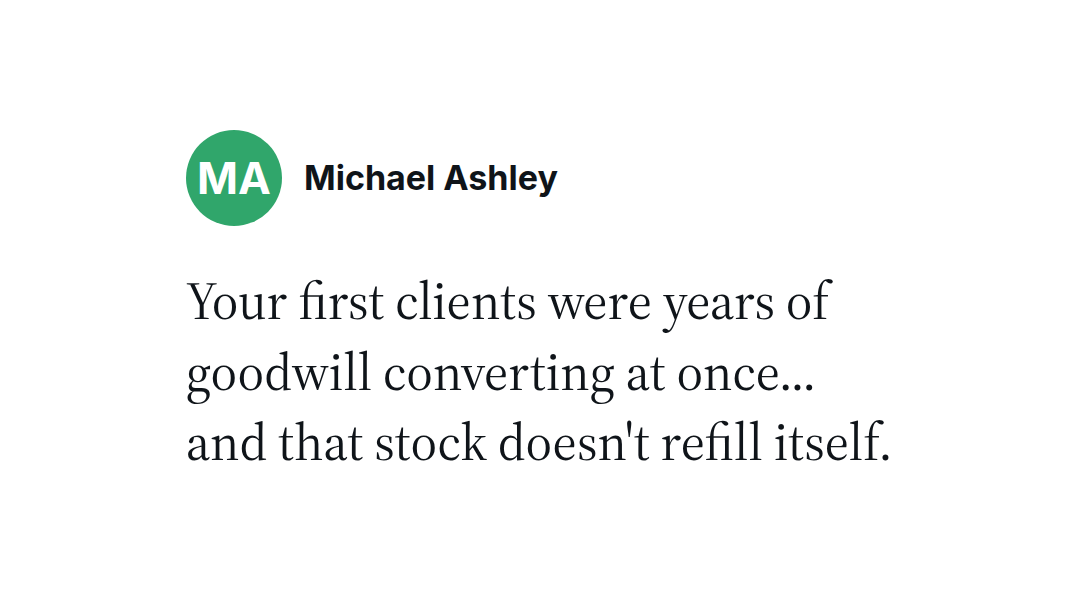
Your first clients were years of goodwill converting at once... and that stock doesn't refill itself.
So try this. List every client you've had and how they found you. If nearly all of them trace back to people who knew you before, you're spending down a head start, and that's usually when feast-or-famine begins.
What looks like a pipeline problem might really be positioning. Two things refill it: a clear way of saying what you do that other people can repeat, and a body of work people outside the old circle can actually see.
My booking page is in the first comment... 30 minutes, and we'll look at which of the two is missing for you.
What refilled your pipeline after the first wave?
#IndependentConsultant#GoingIndependent#Positioning#Coaching#GoToMarket…more
I've watched coaches get hired by their old network... then the calls stop.
Goodwill lands your first clients, then runs out; content marketing is what keeps work flowing.
That second part is why I'm building Radi8: https://www.radi8.com
I don't think word of mouth is a pipeline.
For coaches and consultants, first clients come from goodwill you built up... and it runs out.
Two things refill it: positioning people can repeat, and work they can see.
Even today, I'm a 100% referral-based practice.
Referrals tell me the work is good. On their own, they're a waiting strategy... on someone else's timing.
Why that's not a growth plan: https://youtu.be/vXDMfaJVcNQ
A founder tells me growth stalled after a strong start. I ask where the first customers came from... often, people who knew them.
The first wave of customers is goodwill converting all at once, and it has to be refilled on purpose.
Who's hearing your story now that hasn't met you?
I ask a founder whose growth stalled where the first customers came from.
Often... people who knew them. Goodwill converting all at once, and it won't refill itself.
Who's hearing your story that hasn't met you?
"I didn't know how to run a business."
Liz Greenfield, after 25 years as a nurse, in her first stretch out on her own.
She's honest on this episode about all of it. The morning she rolled out of bed and realized the paycheck had stopped. Undervaluing herself. A speaking coach telling her, point blank, that she wasn't ready.
None of that is a nursing problem. It's the half nobody teaches you inside an organization.
Watch the episode:
https://youtu.be/vXDMfaJVcNQ
Like it, comment, subscribe... it genuinely helps the show reach the next person who needs to hear it. All episodes at inspiringfounders.com
#IndependentConsultant#GoingIndependent#Positioning#CoachingBusiness…more
Someone I respect had great outcomes and people happy to spread the word... and figured that was enough.
It wasn't. Running the business turned out to be its own job.
Founders past early traction, what did you have to learn that the product couldn't teach you?
Founders tell me proudly: every customer came by referral.
Growing only by referral says the work is good... and leaves you waiting on other people's timing.
Why it worries me: https://youtu.be/vXDMfaJVcNQ…more
"I need more leads."
That's often the first thing a consultant says to me when we sit down. It sounds like the right problem... honestly, I'd probably start there too.
So the funnel gets tweaked. The LinkedIn profile gets rewritten. The sales call gets rehearsed, again.
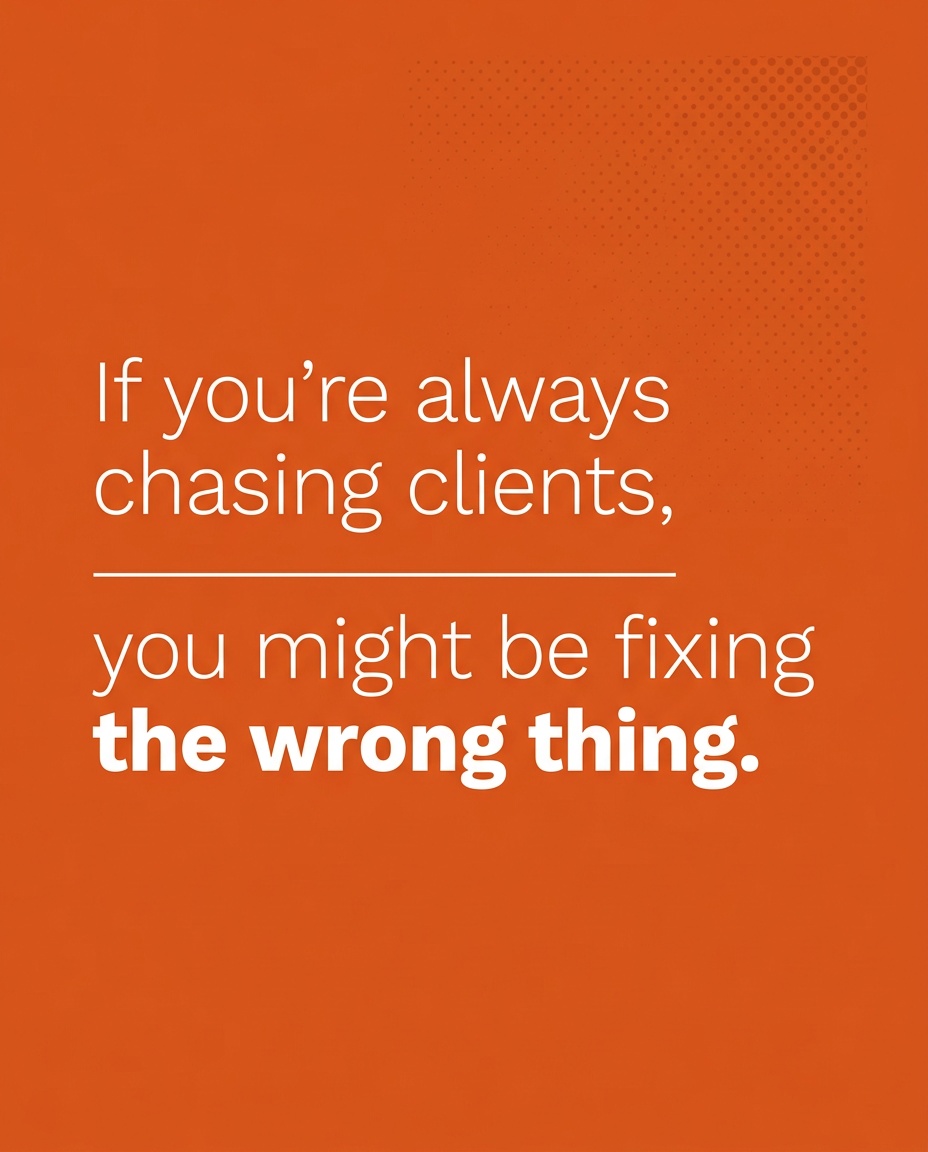
If you're always chasing clients, you might be fixing the wrong thing.
The marketing, the network, the sales call, the funnel... those might be symptoms. What looks like a lead problem might really be the offer underneath all of it: what you're selling and how it's structured.
When the offer describes an outcome someone already wants, the right buyers tend to find you more easily, and the chasing starts to quiet down.
So before you touch the funnel again, ask one question: does my offer describe an outcome... or a list of what I can do?
If you're not sure which one yours is, my booking page is in the first comment. Bring your offer, and in 30 minutes we'll read it the way a buyer would.
#IndependentConsultant#Consulting#Positioning#GoToMarket…more
I've watched founders rebuild the funnel and rewrite the sales call... and still chase every deal.
If you have to chase every customer, the problem might be the offer, not the marketing.
When a coach or consultant tells me their marketing isn't working, the marketing is almost never the problem.
I hear it weekly. "I'm posting. I'm networking. I redid the website. Nothing's landing." The instinct is to fix the visible thing — better content, a new funnel, more activity. But activity was never the issue.
Here's the pattern I've seen across 25 years of building companies and advising businesses. Weak results almost always trace to something upstream. Fuzzy positioning, so you can't say what you do and who it's for in one sentence that lands. Thin customer understanding, so you describe your work in your words instead of your client's. No focus, so you speak to everyone and reach no one.
Marketing amplifies whatever you feed it. Feed it a blurry message and you get blurry results, faster.
Try this test. Describe what you do to a stranger in one sentence. If their next question is "so, what do you actually do?" then you don't have a marketing problem. You have a positioning problem. More posting won't fix that. It just makes the confusion more visible.
The good news: positioning is fixable, and usually fixable fast. It's one clear decision about who you serve and what changes for them, made with real customer evidence instead of guesses. Once that decision is sharp, the same marketing effort starts working, because it finally has something clear to carry.
So a question worth sitting with: if I asked your last three clients what you do, would their answers match each other? And would they match yours?
#IndependentConsultant#Coaching#Positioning#Messaging
"I just need more marketing" rarely fixes a feast-or-famine pipeline. Revenue and followers are downstream... they look fine right up until they don't. The root is usually positioning or a misaligned offer. I dig into it here: https://youtu.be/bb9n-CnDGVA
A founder tells me they need more marketing. I ask who it's for... and the answer often takes a while.
That pause might be the real problem, and it isn't one you can hand off.
What's your one line for who you help?
When a consultant says they need more leads, I read their offer first.
What looks like a lead problem might really be the offer: does it describe an outcome, or a list of what you can do?
Check yours before you fix the funnel.
I've sat with leaders who fixed the funnel, the network, the sales call... and were still chasing every client.
Constant client-chasing might be an offer problem sitting under the marketing.
Why I look there first: https://youtu.be/M58Dnn2UAlM?is=hzrAl7LB9vuXVJ7U
When the clients aren't coming yet, the first move is almost always cosmetic. A new logo. A cleaner website. Fresh business cards. I did the same thing early on... convinced the next redesign was the one that would finally land it.
It almost never is. A website is where your positioning becomes visible to the market, and that's the real work it's quietly doing. When a first site falls flat, it usually isn't the design. It's that the message underneath is still fuzzy, you can't yet say in one plain sentence what you do and who it's for, so even a lovely site ends up saying it lovely and vague.
Get the words right first and the site gets easy... it nearly builds itself once you know what it's supposed to say. That's the part worth slowing down for.
If that's the part you keep circling, book a free 30 minutes with me and ask me anything about your positioning. Link's in the first comment.
How would you explain what you do, in one sentence?
#Positioning#IndependentConsultant#Coaching#GoToMarket#Solopreneur
Why isn't your marketing working?
Before you rewrite the copy again or try another channel, consider that marketing is usually the symptom, not the problem.
When posts don't land and outreach goes quiet, the instinct is to fix the marketing — new hook, new platform, more volume. But if the market can't quickly say who you help and why you, no amount of activity rescues that. Unclear positioning shows up as weak marketing.
I see this with coaches and consultants who are brilliant at the work. The message feels fuzzy, so every campaign has to work twice as hard. Sharpen who you're for, and the marketing gets easier, because now there's something clear to say.
If your marketing feels like a grind, book 30 minutes with me and we'll find the real bottleneck. No pitch, just a clearer read on what's actually stuck: https://calendly.com/foclarity/30min#IndependentConsultant#Coaching#Positioning#GoToMarket
Funnels, platforms, strategy... not first. Elizabeth Greenfield's advice for going independent: get clear on your message. You can't market what you can't articulate. More: https://mashley.com
When a consultant tells me they need more leads, I read their offer first.
Outcome, or a list of what you can do? Check that before you fix the funnel.
I talk through it here: https://youtu.be/vXDMfaJVcNQ
After 25 years building companies, I look at the offer first.
Constant customer-chasing might be an offer problem under the marketing, sales and network fixes.
Tell me the move you're making... 30 minutes to see what's under it: https://calendly.com/foclarity
When a founder tells me they need more leads, I ask about the offer.
More leads might be the wrong fix... the problem under the pipeline is often the offer itself.
Founders, when did you last look hard at yours?
"I need more leads."
Consultants often open with that. What looks like a lead problem might really be the offer.
It sounds like the right problem... I'd probably start there too. So the funnel gets tweaked, the profile rewritten, the sales call rehearsed.
If you're always chasing clients, you might be fixing the wrong thing.
Look under all of it, at what you're selling and how it's structured.
Before you touch the funnel again, ask: does my offer describe an outcome... or a list of what I can do?
#IndependentConsultant#Consulting#Consultants#Coaching#GoingIndependent#Positioning#Solopreneur#FractionalExecutive#GoToMarket
When a founder says they're always chasing customers, I look at the offer first.
Constant chasing might be an offer problem, under the marketing, network, sales call and funnel fixes.
Tell me the move you're making... 30 minutes to look under it: https://calendly.com/foclarity/30min
When a founder tells me they need more leads, I ask about the offer.
"I need more leads" might be a misdiagnosis... the problem under the pipeline is often the offer itself.
How I find the problem under the problem: https://mashley.com
So many coaches I talk to open with "I need marketing."
I get it. You're showing up, posting, updating the website, and it isn't turning into conversations with the right clients. So the obvious fix is more content, more lead gen, more activity.
But what looks like a marketing problem might really be positioning... or not understanding the customer well enough yet. Marketing without clear positioning is just noise, and more of it is louder noise.
That part is the job. Who you help, the problem you solve for them, what they actually care about... you can't hand that off, because nobody knows your clients the way you do. Get that clear first and the marketing finally has something to say.
I still catch myself reaching for more activity before doing that thinking.
So, coaches and consultants... what's the one line you use to describe who you help?
#Coaching#IndependentConsultant#Positioning#Marketing
When everything feels urgent, "what should I do next?" is usually the wrong question.
It hands me whatever's loudest... and I still catch myself asking it.
Better: what step today moves me toward the people I most want to help?
How I find that step with founders: https://mashley.com…more
Someone I admire shared how she gets centered.
Her rule, roughly: when everything feels urgent, ask which step today actually moves you toward the people you most want to serve.
I still catch myself asking "what's next?" instead... which one do you ask?
Someone I admire shared how she gets centered when it all feels urgent.
She asks which step today moves her toward the people she most wants to help.
I still default to "what's next?" Which do you ask?
I use one question when everything on my list feels urgent.
In the middle of a big move... a launch, a new market, a startup that's finally scaling... everything starts to feel urgent at once. The usual question is "what should I do next?" and I've asked it plenty myself. The trouble is it tends to hand you whatever is loudest, the inbox, the fire, the meeting someone moved, and you end the day busier and not much further along.
So I ask a different one, and I still catch myself forgetting to:
When everything feels urgent, ask what step today moves you toward serving the people you most want to help.
It points back at the customer, which might be where the real problem was hiding all along. Then I find the simplest version of that step and take it... today, not after the list is clear.
Founders and CEOs, what question do you use to recentre when everything feels urgent?
#Founders#CEO#Leadership#Strategy
How to turn what lives in your head into an offer that compounds... start by looking back at the work you've already done.
I did the same work informally for two decades before I named it. Coaching, the newest part of my practice, is what finally gave it a name... and it took me a long time to notice.
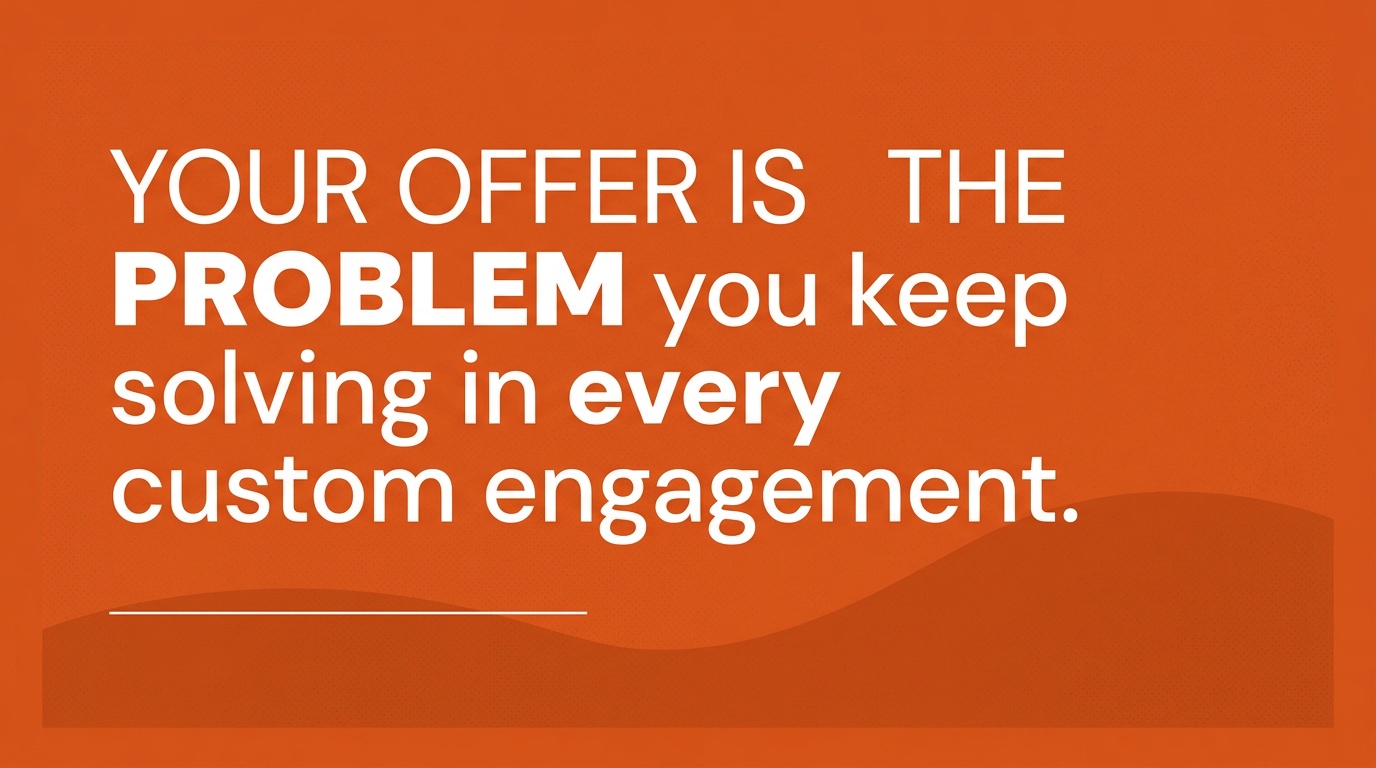
Your offer is the problem you keep solving in every custom engagement.
Coaches and consultants, pull up your last handful of client engagements. Ignore what each one was called when it started, the requests usually look different. Ask what problem you ended up solving underneath. If the same one keeps showing up, that might be your offer.
Then name it, in words a client would actually use. And give it the same shape every time... the same first question, the same steps, the same thing they walk away with.
That shape is what lets each engagement teach the next one something.
Curious what yours might be? Bring a few past engagements to a 30-minute call and we'll look for it together. The link to book is in the first comment.
#IndependentConsultant#Coaching#GoingIndependent#Positioning…more
It took me two decades to name what I do with founders.
The problem under the problem. Once named, it became my platform... how I advise, what I write, what I teach.
Radi8, what I'm building, keeps it in view: https://www.radi8.com
After FastPencil sold, every consulting win I had lived in my head.
One custom project at a time.
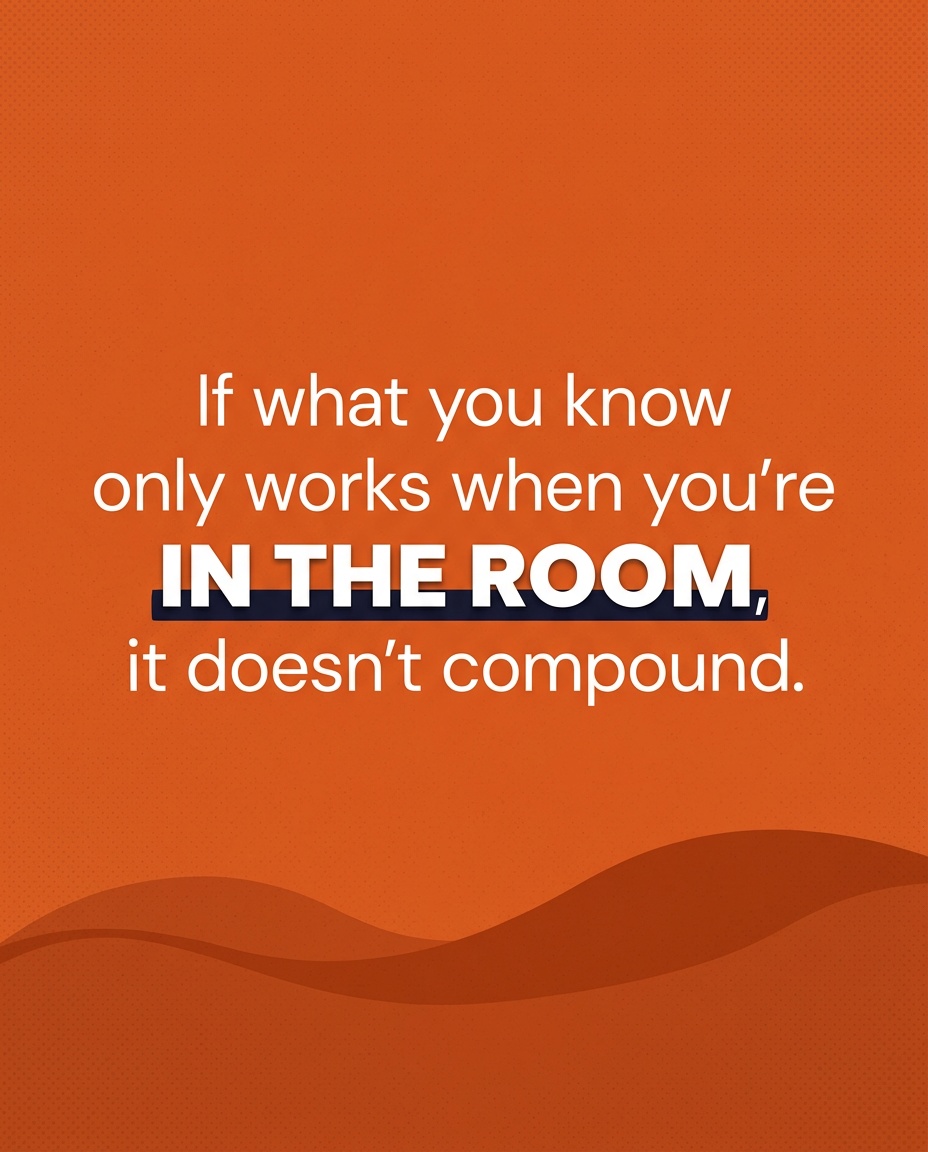
If what you know only works when you're in the room, it doesn't compound.
How I work with founders and CEOs now: https://mashley.com…more
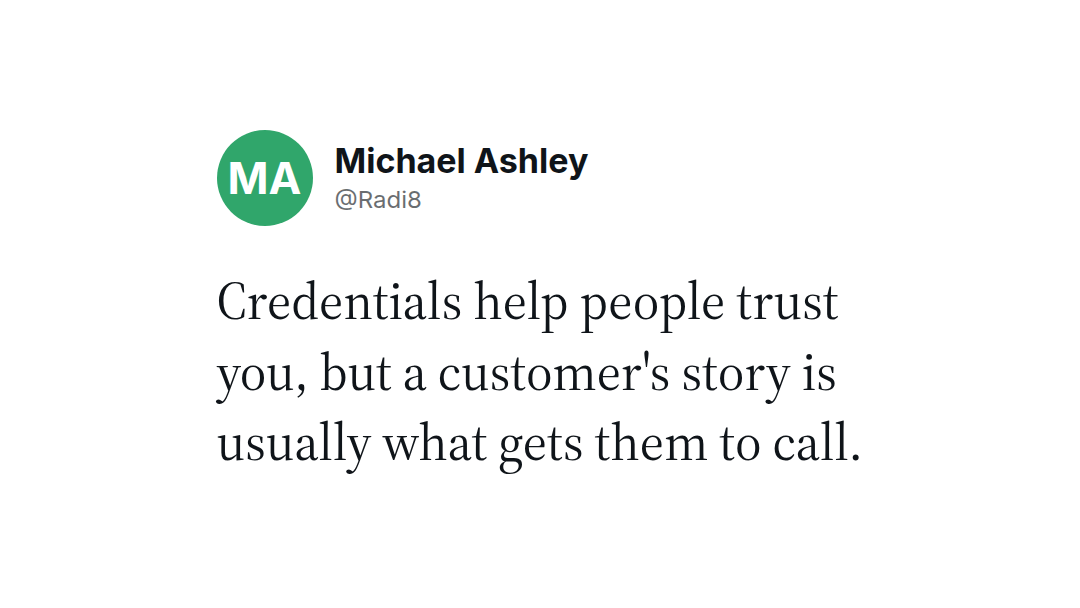
Credentials help people trust you, but a customer's story is usually what gets them to call.
Ask a happy customer for permission, then ask: where were you when we started, what changed, where are you now? Write it in their words. Use it on your site, in posts, in emails to new leads.
Whose story would you tell first? …more
Your credentials help people trust you, but they're rarely the reason someone picks up the phone.
I learned this slowly. My instinct is always the facts and the data... and I miss the story every time.
People buy when they can see themselves in someone else's before and after. So the best marketing a small business has is usually sitting in its customer list, waiting to be asked.
Getting it is simple. Pick a happy customer and ask permission to tell their story. Then ask: where were you when we started, what changed along the way, where are you now? Write it down in their words, not yours. Use it on your website, in a post, in the email you send new leads.
One real story usually does more than an About page full of credentials.
Whose story would you tell first?
#SmallBusiness#Marketing#Storytelling
Credentials help, but people buy when they see themselves in someone's before and after. Ask a happy customer for permission, then: where were you when we started, what changed, where are you now? Write it in their words. That story will do more than your About page.
25 years building, and my brain still jumps to the data and misses the story.
A similar client's story, where they started, what changed, where they landed, beats any list of facts, and it's more honest.
Curious what I'm building? Radi8: https://www.radi8.com
One decision.
Elizabeth told me the most valuable decision she made for her business wasn't a tactic or a tool. It was leaving her day job to go all in on her practice.
While she was still in that job, she said, she wasn't all in. Now she is.
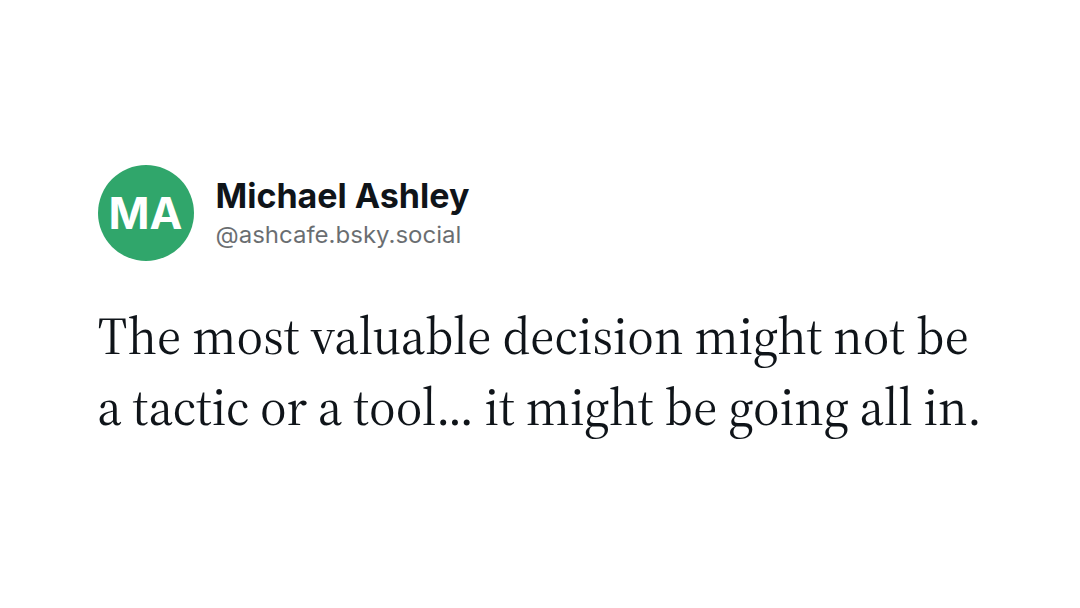
The most valuable decision might not be a tactic or a tool... it might be going all in.
Practitioners, I can't tell you whether that's the right call for you, and I'd never pretend it's an easy one. But it might be worth looking at where you're still hedging... the plan B you keep open, the second thing that quietly gets half your attention.
Thank you, Elizabeth, for saying it so plainly!
Where are you still hedging?
If you want to work out your own version of that decision, the first comment links to my site, where I help founders figure out exactly what to do next.
#GoingIndependent#Solopreneur#Entrepreneurship…more
Liz Greenfield told me this one gives her goosebumps, every time. When a client finally commits to putting themselves first, their external world starts to ease up.
Her words: "once they get to that point that they realize like, I'm actually not going to make progress until I commit to myself, everything in their external world starts to ease up."
Took me a long time to trust it. But I see the business version constantly: a half-committed practice hedges, keeps a fallback, quietly warns everyone it might not last. Full commitment changes what you notice, what you chase, and what you let people see.
What would full commitment to your practice look like — no hedging, no fallback plan? Tell me below.
#Coaching#ExecutiveCoach#CoachingBusiness#IndependentConsultant#ConsultingBusiness#GoingIndependent#Solopreneur#ThoughtLeadership
How to find your highest-leverage decision: look for where you're still hedging.
Elizabeth told me hers was leaving her day job to go all in on her practice.
The most valuable decision might not be a tactic or a tool... it might be going all in.
The one decision that moved Elizabeth Greenfield's practice more than any funnel: going all-in. Half-in is a half-result. She names the hinge moment herself... worth a watch: https://youtu.be/vXDMfaJVcNQ
A 100% referral-based practice can look like a finished business... every client arriving through word of mouth, no marketing required. Usually it means the work is genuinely good, because people don't refer you unless you've earned it.
But it's a position you can't forecast. You can't schedule referrals, speed them up, or refill them on command... they arrive on their own timing, in their own volume, and you're not the one holding the dial.
A reputation the market can actually find does two jobs at once. It makes the referrals you've already earned move faster, and it lets new clients reach you directly... without waiting for someone to make the introduction.
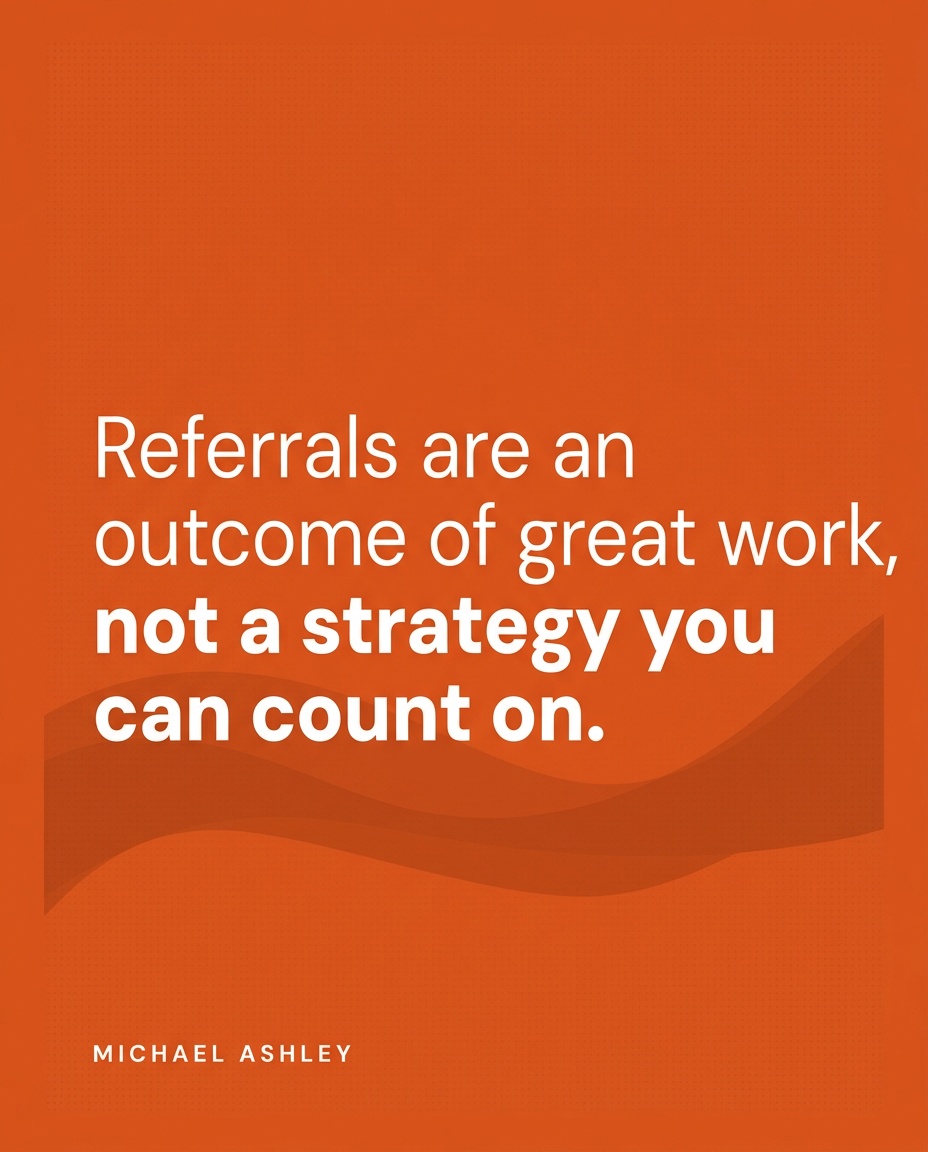
Referrals are an outcome of great work, not a strategy you can count on.
One question I'd ask: if your referrals went quiet for 60 days, what would you do? That answer tells you how much proactive strategy you actually have.
My community where coaches and consultants get in the room with the founders they want as clients is linked in the first comment.
#Coaching#IndependentConsultant#GoingIndependent#Positioning#ConsultingBusiness…more
A coach I interviewed told me, "even to this day I'm a 100% referral-based practice." That reflects genuinely great work. It's also a risk you can't forecast... you can't speed referrals up, control their timing, or refill them on command.
A reputation the market can find does two things at once: it makes referrals accelerate, and it lets new clients reach you directly.
Referrals are an outcome of great work, not a strategy you can count on.
If your referrals went quiet for 60 days, what would you do? That answer tells you how much proactive strategy you actually have.
#ExecutiveCoach#CoachingBusiness#IndependentConsultant#ConsultingBusiness#GoingIndependent#Positioning#PersonalBrand#Solopreneur#SmallBusinessOwner#BusinessGrowth


 View on LinkedIn
'/%3E%3Cpath fill='%23fff' d='M12 7.3A4.7 4.7 0 1 0 16.7 12 4.7 4.7 0 0 0 12 7.3Zm0 7.8A3.1 3.1 0 1 1 15.1 12 3.1 3.1 0 0 1 12 15.1Zm5-8a1.1 1.1 0 1 0 1.1 1.1A1.1 1.1 0 0 0 17 7.1Zm-5 1.5c-1.5 0-1.7 0-2.3.1a3.8 3.8 0 0 0-1.3.2 2.2 2.2 0 0 0-.8.5 2.2 2.2 0 0 0-.5.8 3.8 3.8 0 0 0-.2 1.3c-.1.6-.1.8-.1 2.3s0 1.7.1 2.3a3.8 3.8 0 0 0 .2 1.3 2.2 2.2 0 0 0 .5.8 2.2 2.2 0 0 0 .8.5 3.8 3.8 0 0 0 1.3.2c.6.1.8.1 2.3.1s1.7 0 2.3-.1a3.8 3.8 0 0 0 1.3-.2 2.5 2.5 0 0 0 1.3-1.3 3.8 3.8 0 0 0 .2-1.3c.1-.6.1-.8.1-2.3s0-1.7-.1-2.3a3.8 3.8 0 0 0-.2-1.3 2.2 2.2 0 0 0-.5-.8 2.2 2.2 0 0 0-.8-.5 3.8 3.8 0 0 0-1.3-.2c-.6-.1-.8-.1-2.3-.1Zm0-1.6c1.5 0 1.7 0 2.4.1a5.5 5.5 0 0 1 1.8.3 3.8 3.8 0 0 1 2.2 2.2 5.5 5.5 0 0 1 .3 1.8c.1.7.1.9.1 2.4s0 1.7-.1 2.4a5.5 5.5 0 0 1-.3 1.8 3.8 3.8 0 0 1-2.2 2.2 5.5 5.5 0 0 1-1.8.3c-.7.1-.9.1-2.4.1s-1.7 0-2.4-.1a5.5 5.5 0 0 1-1.8-.3 3.8 3.8 0 0 1-2.2-2.2 5.5 5.5 0 0 1-.3-1.8C4 13.7 4 13.5 4 12s0-1.7.1-2.4a5.5 5.5 0 0 1 .3-1.8 3.8 3.8 0 0 1 2.2-2.2 5.5 5.5 0 0 1 1.8-.3C10.3 5 10.5 5 12 5Z'/%3E%3C/svg%3E) View on Instagram




 View on Facebook