
A practical way to decide what to work on first, when everything on your list has a real claim on your time:
Elizabeth Greenfield described feeling scattered — content, speaking development, client work, all legitimate, all competing for the same hour. Then she named the question she returns to.
Her words: "I try to get centered and ask myself like what step today is actually going to help me serve more women one-on-one."
Some days the answer is a business-development task. Some days it's serving a current client better. The question doesn't choose for you... it makes the priority visible.
And it only works when you're clear on who you serve and how. Without that, every option feels equal, so you spread yourself across all of them and end the day busy and behind.
Write down your version of that question, tailored to your practice. Then answer it before you open your task list tomorrow.
Want to hear how Elizabeth put it? Link in the first comment.
#Coaching #IndependentConsultant #Solopreneur #Positioning …more

Michael Ashley
Founder at Radi8 // Executive Coach
Active Creator • 1-week run


'/%3E%3Cpath fill='%23fff' d='M12 7.3A4.7 4.7 0 1 0 16.7 12 4.7 4.7 0 0 0 12 7.3Zm0 7.8A3.1 3.1 0 1 1 15.1 12 3.1 3.1 0 0 1 12 15.1Zm5-8a1.1 1.1 0 1 0 1.1 1.1A1.1 1.1 0 0 0 17 7.1Zm-5 1.5c-1.5 0-1.7 0-2.3.1a3.8 3.8 0 0 0-1.3.2 2.2 2.2 0 0 0-.8.5 2.2 2.2 0 0 0-.5.8 3.8 3.8 0 0 0-.2 1.3c-.1.6-.1.8-.1 2.3s0 1.7.1 2.3a3.8 3.8 0 0 0 .2 1.3 2.2 2.2 0 0 0 .5.8 2.2 2.2 0 0 0 .8.5 3.8 3.8 0 0 0 1.3.2c.6.1.8.1 2.3.1s1.7 0 2.3-.1a3.8 3.8 0 0 0 1.3-.2 2.5 2.5 0 0 0 1.3-1.3 3.8 3.8 0 0 0 .2-1.3c.1-.6.1-.8.1-2.3s0-1.7-.1-2.3a3.8 3.8 0 0 0-.2-1.3 2.2 2.2 0 0 0-.5-.8 2.2 2.2 0 0 0-.8-.5 3.8 3.8 0 0 0-1.3-.2c-.6-.1-.8-.1-2.3-.1Zm0-1.6c1.5 0 1.7 0 2.4.1a5.5 5.5 0 0 1 1.8.3 3.8 3.8 0 0 1 2.2 2.2 5.5 5.5 0 0 1 .3 1.8c.1.7.1.9.1 2.4s0 1.7-.1 2.4a5.5 5.5 0 0 1-.3 1.8 3.8 3.8 0 0 1-2.2 2.2 5.5 5.5 0 0 1-1.8.3c-.7.1-.9.1-2.4.1s-1.7 0-2.4-.1a5.5 5.5 0 0 1-1.8-.3 3.8 3.8 0 0 1-2.2-2.2 5.5 5.5 0 0 1-.3-1.8C4 13.7 4 13.5 4 12s0-1.7.1-2.4a5.5 5.5 0 0 1 .3-1.8 3.8 3.8 0 0 1 2.2-2.2 5.5 5.5 0 0 1 1.8-.3C10.3 5 10.5 5 12 5Z'/%3E%3C/svg%3E)


I’ve spent the better part of 25 years trying to understand two things: which problems are worth solving, and what is the simplest way to solve them. That pursuit has led me to start companies, build products, teach entrepreneurship, coach hundreds of founders, and participate in four startup exits—one as a founder and three as an advisor. Along the way, I noticed a pattern. Founders are usually very good at solving problems. The trouble is that we’re often solving the wrong ones. What looks like a sales problem might really be positioning. A marketing problem might begin with not understanding the customer. An execution problem might simply be too many priorities competing for attention. I came to think of this as finding the problem under the problem. When you find it, complicated decisions get simpler, teams align, and a surprising amount of work disappears. Today I coach founders and startup teams around the world to do exactly that. Sometimes it’s a team scaling a company worth billions. Sometimes it’s one person turning what they know into a consulting business. The scale changes, but the work is remarkably similar. Find the problem worth solving. Find the simplest way through it. Then get on with the work that matters.
Saeed Amidi's one filter for founders: what's your Plan B? A good one, he passes. Coaches and consultants still half-in on your practice... half-in is a strategy for half-results. Hear him: https://inspiringfounders.com …more
Told 2 times, Sep 30, 2026 – Oct 9, 2026
· X · Open
The one decision that moved Elizabeth Greenfield's practice more than any funnel: going all-in. Half-in is a half-result. She names the hinge moment herself... worth a watch: https://youtu.be/vXDMfaJVcNQ
A question worth answering before you touch your copy again: is your data even real?
I spent weeks rewriting my homepage. Changed the headline, changed it back, moved things around, sure the words were the problem. I kept treating the copy as the thing that wasn't working.
Then I found it. My own browsing was being counted as real traffic. The reports were telling me people were showing up, when a lot of "them" was just me. The signal was corrupted before I ever read it, and I wasn't getting enough genuine human visitors to draw any conclusion from the copy in the first place.
I used Claude in Chrome to get Google Analytics configured properly and my reports set up right. After that I could finally see where people actually came from, what they did on the site, and which campaigns were working.
The reframe I landed on: the first question worth asking isn't "is my copy working?" It's "is my data real?"
I'd been working hard on the wrong problem the whole time... and working hard on the wrong problem just gets you busier. I watch coaches and consultants do the exact same thing to their own businesses.
What's a number on your own site you've been trusting that you've never actually checked?
#Coaching #IndependentConsultant #Solopreneur #ThoughtLeadership …more
 View on LinkedIn
Also on
View on LinkedIn
Also on
Is getting visible actually worth the effort, or just more noise?
A practitioner I work with 1:1 asked me a version of that before we started. Brilliant at her craft, mission-driven, the kind of person you'd want in your corner. And almost invisible to the market she wanted to serve.
It looked like a visibility problem. It was really a clarity problem. So we didn't start with tactics. We started with her voice and her offer: who she serves, what she actually helps them do, and how to say it in plain words. Once that was clear, consistency did the rest — showing up, in her own voice, again and again.
The change was real. More of the right people found her, and they engaged, because the work was finally legible. Yours won't look identical. The clarity is what travels, not the numbers.
#Coaching #IndependentConsultant #Positioning #GoingIndependent #CustomerDiscovery …more
Told 6 times, Jul 22, 2026 – Oct 8, 2026
· LinkedIn · Open
When the clients aren't coming yet, the first move is almost always cosmetic. A new logo. A cleaner website. Fresh business cards. I did the same thing early on... convinced the next redesign was the one that would finally land it.
It almost never is. A website is where your positioning becomes visible to the market, and that's the real work it's quietly doing. When a first site falls flat, it usually isn't the design. It's that the message underneath is still fuzzy, you can't yet say in one plain sentence what you do and who it's for, so even a lovely site ends up saying it lovely and vague.
Get the words right first and the site gets easy... it nearly builds itself once you know what it's supposed to say. That's the part worth slowing down for.
If that's the part you keep circling, book a free 30 minutes with me and ask me anything about your positioning. Link's in the first comment.
How would you explain what you do, in one sentence?
#Positioning #IndependentConsultant #Coaching #GoToMarket #Solopreneur
· LinkedIn · Open
Why isn't your marketing working?
Before you rewrite the copy again or try another channel, consider that marketing is usually the symptom, not the problem.
When posts don't land and outreach goes quiet, the instinct is to fix the marketing — new hook, new platform, more volume. But if the market can't quickly say who you help and why you, no amount of activity rescues that. Unclear positioning shows up as weak marketing.
I see this with coaches and consultants who are brilliant at the work. The message feels fuzzy, so every campaign has to work twice as hard. Sharpen who you're for, and the marketing gets easier, because now there's something clear to say.
If your marketing feels like a grind, book 30 minutes with me and we'll find the real bottleneck. No pitch, just a clearer read on what's actually stuck: https://calendly.com/foclarity/30min
#IndependentConsultant #Coaching #Positioning #GoToMarket
· LinkedIn · Open
When a coach or consultant tells me their marketing isn't working, the marketing is almost never the problem.
I hear it weekly. "I'm posting. I'm networking. I redid the website. Nothing's landing." The instinct is to fix the visible thing — better content, a new funnel, more activity. But activity was never the issue.
Here's the pattern I've seen across 25 years of building companies and advising businesses. Weak results almost always trace to something upstream. Fuzzy positioning, so you can't say what you do and who it's for in one sentence that lands. Thin customer understanding, so you describe your work in your words instead of your client's. No focus, so you speak to everyone and reach no one.
Marketing amplifies whatever you feed it. Feed it a blurry message and you get blurry results, faster.
Try this test. Describe what you do to a stranger in one sentence. If their next question is "so, what do you actually do?" then you don't have a marketing problem. You have a positioning problem. More posting won't fix that. It just makes the confusion more visible.
The good news: positioning is fixable, and usually fixable fast. It's one clear decision about who you serve and what changes for them, made with real customer evidence instead of guesses. Once that decision is sharp, the same marketing effort starts working, because it finally has something clear to carry.
So a question worth sitting with: if I asked your last three clients what you do, would their answers match each other? And would they match yours?
#IndependentConsultant #Coaching #Positioning #Messaging
· X · Open
"I just need more marketing" rarely fixes a feast-or-famine pipeline. Revenue and followers are downstream... they look fine right up until they don't. The root is usually positioning or a misaligned offer. I dig into it here: https://youtu.be/bb9n-CnDGVA
· X · Open
Funnels, platforms, strategy... not first. Elizabeth Greenfield's advice for going independent: get clear on your message. You can't market what you can't articulate. More: https://mashley.com
Radi8 got accepted into the Claude for Startups program this week, and our Radi8 connector was approved for Claude's directory.
Add it here: https://claude.ai/directory/radi8
I'm a little giddy about this one!
Here's what it means if you're running a practice on your own. You can add Radi8 to Claude from the connector directory, and the chat you already have open becomes the place your social happens. Ask Claude for a LinkedIn post and it already knows your voice, your audience, your strategy, and what you've posted before, because Radi8 hands it all of that. Then it drafts the post and schedules it, mid-conversation, without opening another tab.
Nothing publishes without your approval. That part doesn't change.
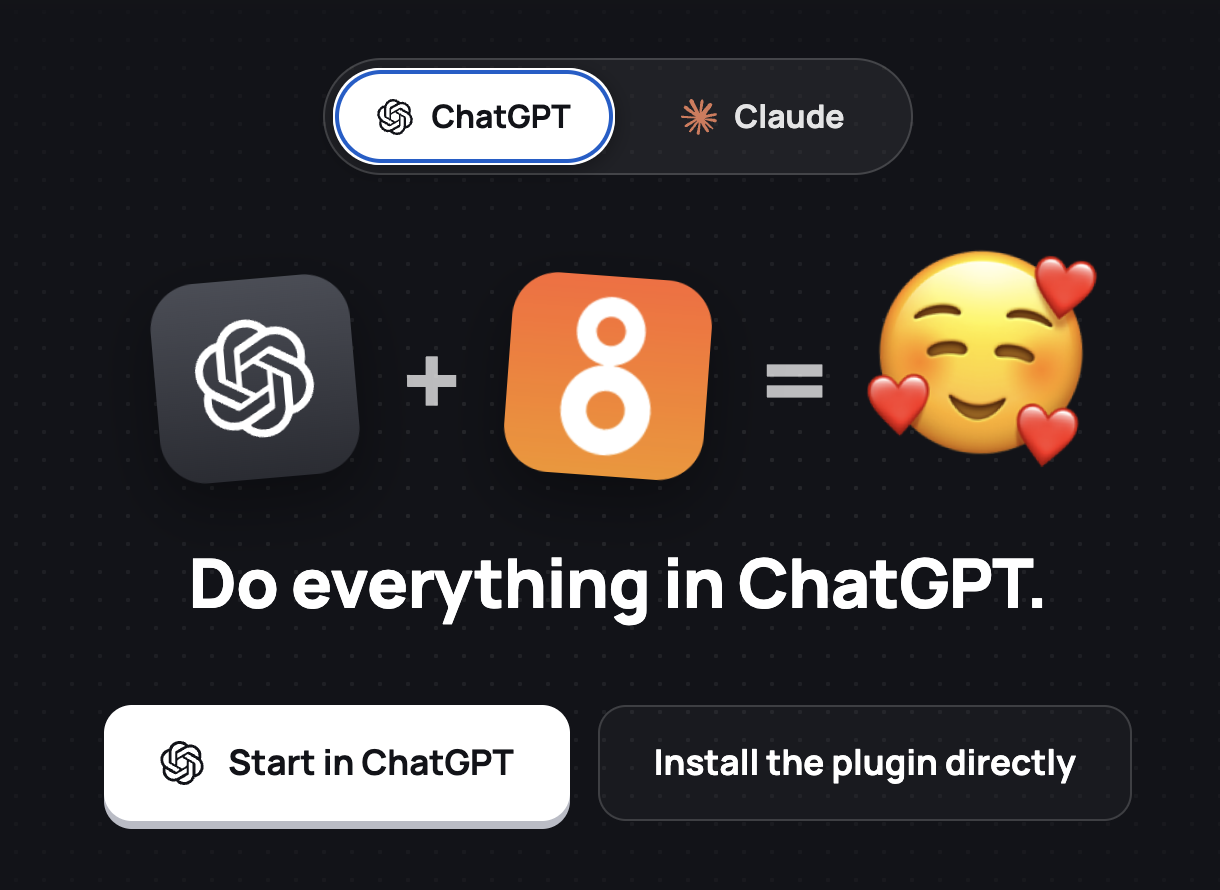
We built Radi8 connectors so you can do social in chat. We have one for ChatGPT too!! …more
Chat + Radi8 = 🥰
Took me a while to admit it. I've spent 25 years around software, and most of it asks the same thing of you first: learn the tool. Find the right menu. Remember where the setting lives. Click through four screens to do one thing, then get to the actual work.
Then I started using Radi8 inside ChatGPT and Claude, and something flipped. I stopped learning software and just... said what I wanted. In a sentence. And the sentence was the interface.
That sounds small. It isn't. For a coach or a consultant, the quiet problem with most tools is that they hand you a second job: you were great at the work, and now you're also supposed to master the software to do the work. The tool becomes one more thing standing between you and the client.
Describing an outcome is a different act than operating a machine. "Help me write a post to promote my next workshop" is a request you say in chat... No dashboard required.
It's the game changer... honestly, I can't imagine doing work any other way now.
#IndependentConsultant #Coaching #Solopreneur #AIforBusiness #ThoughtLeadership
https://www.radi8.com …more
 View on LinkedIn
Also on
View on LinkedIn
Also on
Here's a practical way to handle customer input without being led around by it: treat what you hear as raw material, not instructions.
I built a feature in Radi8 to surface the real questions people were asking online, so coaches and consultants could answer them publicly and get seen. I shipped it and watched it work.
It worked, and it was wrong. The questions came back the wrong shape... too specific, too tangled in one person's context to actually build a post on. So I rebuilt it to generate questions from your own audience and positioning instead of scraping them. Under 24 hours from shipping to changing course.
"Go talk to customers" is right. But raw input is raw material, not a spec. The skill is knowing which part of what you heard to build on. Ignore it and you're guessing; follow it literally and you build the wrong thing.
Genuine question — what's something a client asked you for that you were right not to give them exactly?
More on how we chew on this inside Inspiring Founders. Link in the first comment.
#Coaching #IndependentConsultant #GoingIndependent #CustomerDiscovery …more
“I don’t have to learn how Radi8 works. I tell my AI what I’m trying to do.”
Software has traditionally encoded the workflow into the interface. The designer decides there should be a campaign screen, a calendar, a composer, a settings page... and the user learns how those pieces fit together.
AI chat reverses that.
You describe the outcome. AI assembles the workflow.
Old SaaS apps: learn my product so you can operate it.
AI Chat apps: tell me what you’re trying to accomplish.
If the second model works, software gets dramatically more accessible without becoming dramatically simpler underneath.
That’s where I think Radi8 gets really interesting. AI chat handles intent. The Radi8 Plugin provides context, state and actions.
You get results. That's the magic of Radi8 inside ChatGPT and Claude. All of the power of Radi8 understanding your brand, your strategy, your voice, your past content, your future content, and all of your channels... combined with the simplicity of ChatGPT or Claude, where you're already spending your day. …more
Told 2 times, Oct 5, 2026
· Facebook · Open
“I don’t want another dashboard.”
I suspect we’re going to hear some version of that sentence a lot more.
For twenty years, software has mostly been somewhere you go. Need CRM? Go to the CRM. Need analytics? Open analytics. Need social media? Open the scheduler.
But if ChatGPT or Claude is already where I’m thinking, writing, researching and making decisions, why should I leave it just to operate another piece of software?
New subscribers are using Radi8 specifically because it works inside ChatGPT and Claude.
The connector isn’t merely convenient distribution, it IS the product.
AI becomes the interface and Radi8 becomes the specialized application underneath it.
This changes everything.
I just helped another customer fall in love with using Radi8 inside Claude. And this morning a new subscriber came directly from our new ChatGPT Plugin.
They all say the same thing: Using Radi8 inside chat makes everything so much easier and more powerful.
If you haven’t tried it yet, go to Radi8.com and create an account. Then install it inside ChatGPT or Claude.
Let me know how it works for you! …more
I keep having the same conversation.
Someone who's genuinely great at what they do, and brand new to getting seen for it. That's the part nobody ever taught them.
So, an offer. Give me 30 minutes. Bring the idea you keep circling, the positioning you can't quite put into words, the page you've rewritten four times. I'll listen, tell you honestly what I think, and hand you a quick win or two and a few ideas for where to start.
It isn't a scripted discovery call, and it isn't a pitch. Think of it as a feel for what working together is actually like.
I've spent 25 years building things and figuring out the next step, mostly by learning the expensive lessons myself. Happy to save you a few of them.
Grab 30 minutes... the link is in the first comment.
Before you do, tell me: what's the one thing you'd want a second opinion on?
#IndependentConsultant #Coaching #Solopreneur #GoingIndependent #PersonalBrand …more
Told 2 times, Oct 1, 2026 – Oct 5, 2026
· LinkedIn · Open
Here's a simple way to pressure-test an idea before you pour months into it: say it out loud to someone who's built things and has no reason to flatter you.
Not a friend who'll nod along. Not a prospect you're trying to win. Someone who'll tell you the truth about where the idea holds up... and where it doesn't.
Most coaches and consultants I talk to don't need more encouragement. They're brilliant at the work. What's missing is an honest read from outside their own head, before the sunk cost makes it hard to change course.
So, plainly: bring me whatever you're working on and I'll give you my honest feedback. No pitch, no discovery interrogation... just 30 minutes on your actual business.
If you've been circling the same question for weeks, that's exactly the thing to bring. Link in the first comment.
#Coaching #IndependentConsultant #GoingIndependent
We like to think clients can't feel the gap between what we teach and how we live. They can. Elizabeth Greenfield saw it in herself... coaching on stress while still in a high-stress hospital. Naming it is where change starts. More: https://inspiringfounders.com …more
Most coaches and consultants I talk to think visibility comes in two flavors, and they hate both.
Flavor one: stay invisible. Do great work, keep your head down, hope the right clients somehow trip over you.
Flavor two: become a "LinkedIn person." Hot takes, humble-brags, a carousel about your morning routine, everything engineered for reach. For a mission-driven practitioner, that's the nightmare. It feels like performing a version of yourself you don't even like.
So they pick invisible. Because if those are the only two options, invisible at least feels honest.
Here's the thing though. That's a false choice.
There's a third option, and it's the one that actually earns trust: a body of work. Not reach-chasing. Not a highlight reel. Just your real thinking, shared consistently, so people can see how you decide before they ever reach out.
And you already produce this thinking. Every week you're diagnosing a client's real problem, talking someone off a bad decision, spotting the pattern they couldn't see. That's not content you have to manufacture. It's work you're already doing in private. Making it visible isn't performing — it's letting the right people watch how you think.
Performative posting optimizes for who's watching this week. A body of work is evidence that accumulates. Buyers don't trust claims. They trust judgment they can see demonstrated over time.
You don't have to choose between hiding and turning into someone you'd mute.
So I'm curious. What holds you back more — not knowing what to say, or not wanting to sound like a "LinkedIn person"?
#IndependentConsultant #Coaching #GoingIndependent #PersonalBrand #ThoughtLeadership …more
This post has video.
Watch it on the channel.
Told 4 times, Jun 24, 2026 – Oct 4, 2026
· LinkedIn · Open
Why founder-led content isn't marketing.
At least not primarily.
For consultants, advisors, founders, coaches, and experts, founder-led content serves a different purpose.
It's reputation.
Every post is a tiny piece of evidence about how you think.
Your judgment.
Your experience.
Your perspective.
One post rarely matters.
But hundreds do.
Over time, people begin to recognize your name.
They understand your philosophy.
They trust your approach.
By the time they reach out, they've often already decided you're someone worth talking to.
That's not marketing.
That's reputation compounding in public.
The strongest founder-led content isn't trying to go viral.
It's helping the right people understand how you think.
· LinkedIn · Open
Most coaches and consultants I work with hate self-promotion. Good news: what actually builds a practice is something else entirely.
Self-promotion means making claims about yourself. I'm great, hire me. Nobody wants to write that, and nobody wants to read it. A reputation gets built on evidence instead — showing your thinking in public, consistently, until people can see how you work before they ever talk to you.
One is bragging. The other is teaching.
When you share how you'd approach a problem, what a client situation taught you, or the question you'd ask before a big decision, you're demonstrating judgment. The reader draws their own conclusion, which was always the only conclusion that mattered. People trust a pattern they've watched form far more than any claim.
So "I'm uncomfortable promoting myself" doesn't have to hold your practice back. The real assignment is visibility, and visibility runs on teaching, which you already do every day. If you can explain something to a client across the table, you can explain it in a post. Same act, bigger room.
The discomfort is real. I've watched dozens of brilliant people wrestle with it. Notice what it's usually attached to, though: a picture of marketing as boasting. Replace the picture, and the rest gets easier. Evidence, shared consistently, in your own voice.
What's one thing you explained to a client this week that would have been worth sharing with a hundred more people just like them?
#IndependentConsultant #Coaching #PersonalBrand #ThoughtLeadership
· LinkedIn · Open
Here's a way to start showing up when self-promotion feels like it's "not who I am."
Share one thing you already know. Then do it again next week. That's it... no big budget, no perfect plan required.
Most of the coaches and consultants I talk to aren't short on ability. They're brilliant at the work. That "who am I to post?" feeling might be less about whether you're good enough, and more about the title you set down when you went out on your own... the org that vouched for you, the name that said "she's the expert" before she walked in the room. Losing that stings. It isn't proof you're not ready.
Getting seen isn't bragging... it's just sharing what you know, consistently, until there's a body of work behind you. Evidence instead of claims.
I got into all of this on a recent podcast, worth a listen if you're wrestling with it. Link in the first comment.
So what's actually holding you back from posting?
#Coaching #IndependentConsultant #GoingIndependent #ThoughtLeadership #PersonalBrand
Channel names and logos are trademarks of their respective owners.