Someone told me to swap a sales mindset for a mindset of service.
Their line, not mine... and better than anything I'd have come up with.
A lot of founders and CEOs dread the selling part. Fair enough, "selling" can feel like taking something from someone. So the calls get put off, the follow-up gets softened, and a launch or a US expansion that should be moving sits waiting on conversations nobody wants to have.
Service changes the question you walk in with. "How do I close this?" becomes "What's actually going on for this person, and can I help?" Sometimes the honest answer is no, and saying so early is part of the service.
It's how I try to run my own first conversations: 30 minutes to see whether I'm the right person to help. If I'm not, I'd rather say it.
When go-to-market stalls, the problem under it might be how the team feels about the conversations themselves.
What shifted how you think about selling?
#Founders#GoToMarket#Leadership…more
I keep picturing one buyer, right now, asking AI who to call.
"Somewhere right now a person who needs exactly what your company sells is looking for an answer, but they're not on Google, they're asking AI."
If you're scaling a startup or taking a company into a new market, that's a revenue problem already, and it's a quiet one.
The chain runs like this... the buyer skips the search page and asks a question, the AI answers with two or three names instead of a page of links, and if your company isn't in what it learned or what it can find, you aren't one of those names. Then nothing tells you it happened. No click, no visit, no lost-deal report. They just went elsewhere.
Invisible to AI is the default for most companies, and it only changes when someone fixes it on purpose.
The full talk is about generating revenue with content marketing without the AI slop, worth a watch: https://youtu.be/UBdWhQDHkP0
Then try this. Ask ChatGPT or Perplexity who they'd recommend for what you do. What did it say?
#Founders#CEO#GoToMarket#GrowthStrategy…more
a buyer who needs what you sell is asking AI, not searching Google.
If go-to-market feels quiet, the problem under it might be that AI never names you.
https://youtu.be/UBdWhQDHkP0
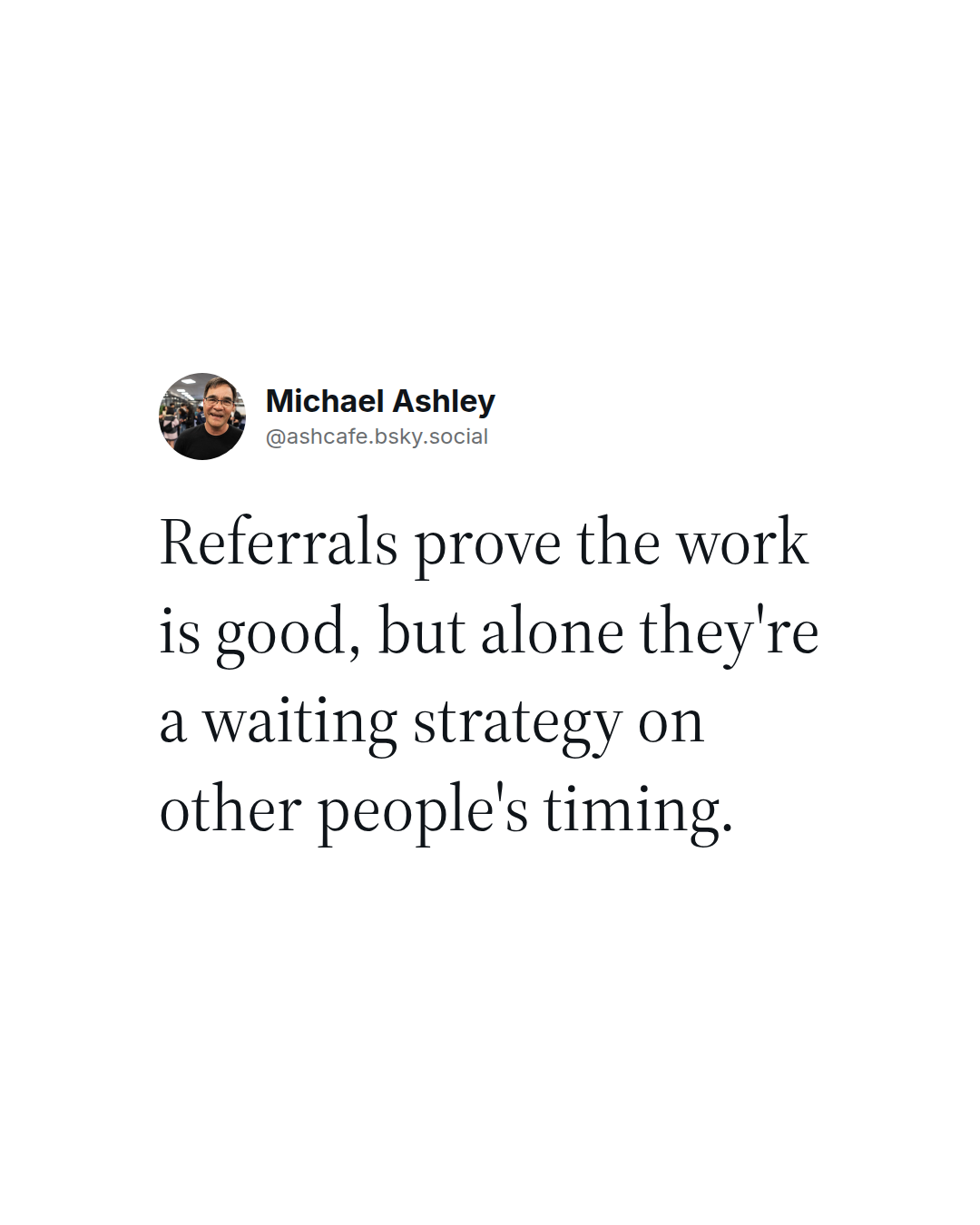
A founder tells me every customer came by referral. Good... earned.
Then I ask what a quiet quarter looks like.
Referrals prove the work is good, but alone they're a waiting strategy on other people's timing.
Bring me your quiet quarter... 30 minutes: https://calendly.com/foclarity/30min…more
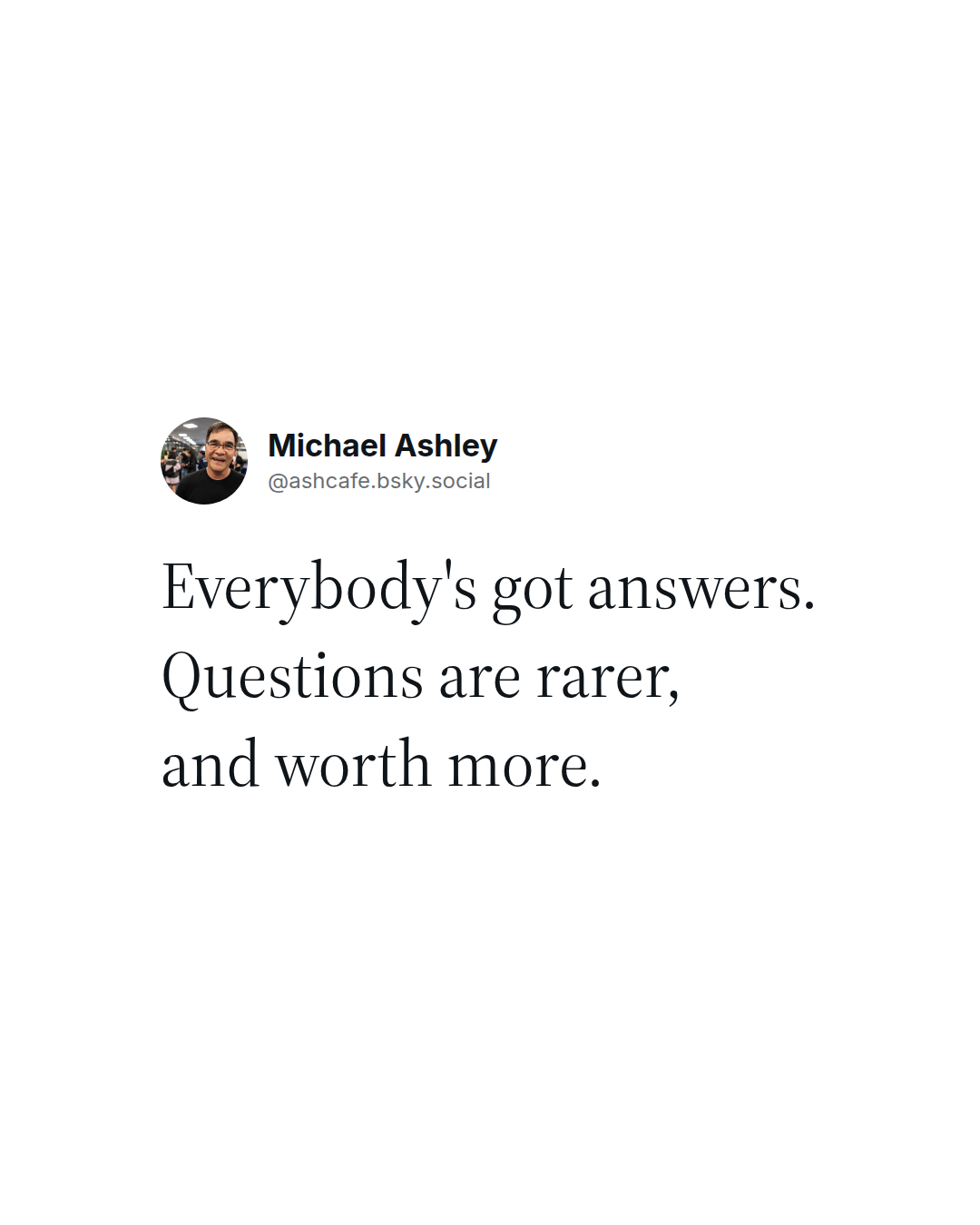
Tom Shen's old boss gave him a rule he built teams around.
Everybody's got answers. Questions are rarer, and worth more.
I still catch myself reaching for the answer first... Tom on how the rule shaped his culture: https://youtu.be/M58Dnn2UAlM?is=hzrAl7LB9vuXVJ7U…more
A teacher thought I was dealing drugs from my locker. It was Hubba Bubba!
My mom's math... 25 cents a pack, 25 cents a piece.
Entrepreneurship is finding where you can add value and bringing it closer to the people who want it.
My LinkedIn impressions went up 185% in 90 days.
Impressions on their own don't pay anyone. I care about that number for a different reason... it tells me the work is visible.
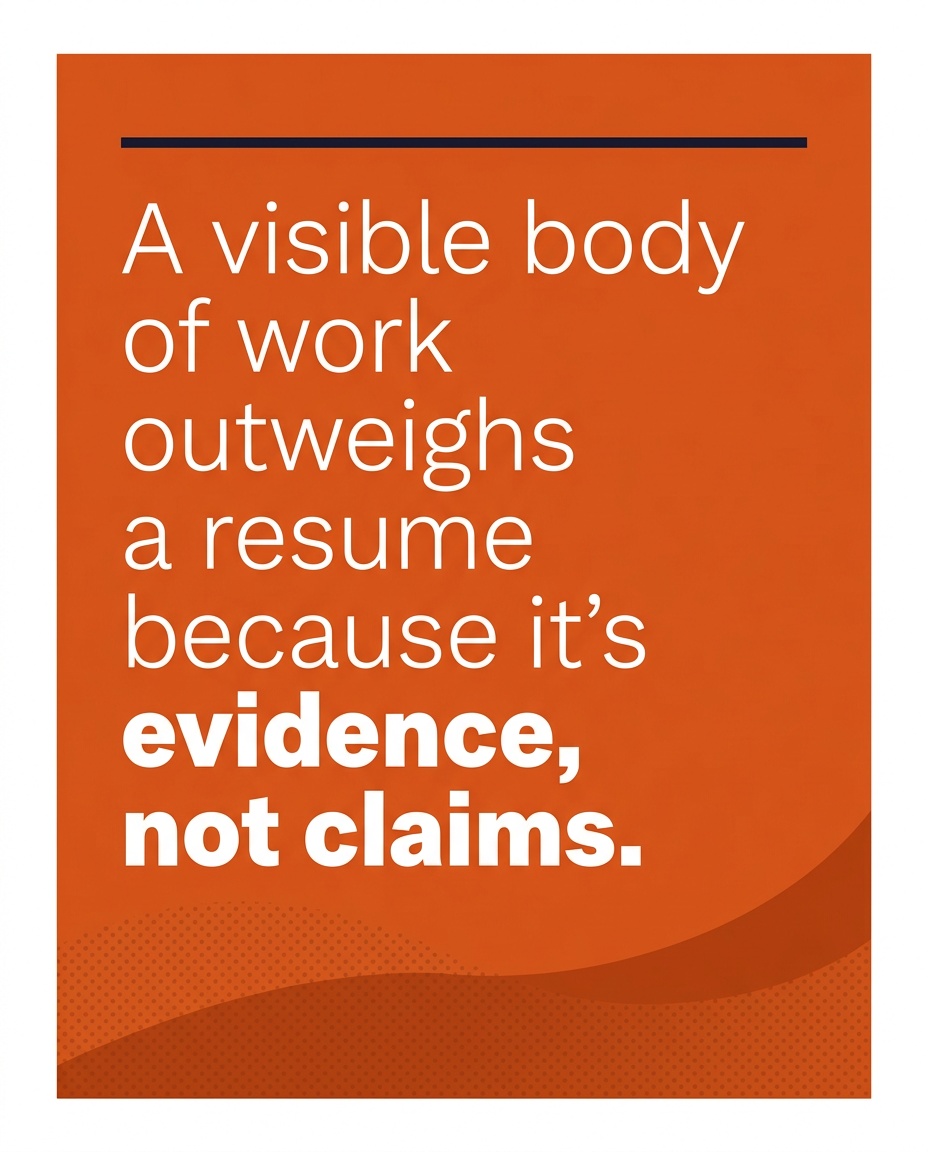
Your brand is your promise. A visible body of work outweighs a resume because it's evidence, not claims.
That matters most when you're making a big move. Launch a new product, or take an established company into the US, and the reputation you built at home mostly stays there. The customers and partners you need next might never have heard of you. Many of them will look for evidence of how you think before they take the meeting.
So give them somewhere to find it. A real website, a steady body of work, something that shows how you think about the problems they have.
Start with the simplest version you can actually do... then do it.
If you're making a move like that, tell me about it. 30 minutes to see whether I'm the right person to help.
#Founders#MarketExpansion#GoToMarket…more
I'm building Radi8 inside ChatGPT and Claude, not behind a dashboard.
I use it every day, and somewhere along the way I noticed what I actually want from software... I don't want another dashboard. I don't want another login, another menu, another screen to learn.
I want to say what I need in a sentence and have it done.
The sentence is the interface.
That changes what the product is for. General AI brings the intelligence. The specialized software has to bring everything the AI can't: who you are, what happened last time, where things stand, and the ability to actually take action.
I might be wrong about how fast this arrives. I'm testing it on myself first, which is the only way I know how to learn anything.
For founders and CEOs launching a product right now, it might be worth asking: if your customers never opened your app again, what would they still pay you for?
#Founders#GoToMarket#AI…more
We still picture software as screens to learn. When people can just type what they want, the sentence becomes the interface.
Building Radi8 inside ChatGPT and Claude showed me this... and it took me longer than I'd like to admit to notice.
Startup founders, that might change what's worth building. I'm still testing it, and I could be wrong about how fast it arrives.
#Founders#Startups#FirstTimeFounder#StartupFounder#BuildInPublic#AI#ProductStrategy#GoToMarket#Entrepreneurship
I'm building Radi8 to live inside ChatGPT and Claude.
The chat is smart. It can write, reason, and talk you through almost anything. But start a new conversation and it doesn't know your voice, your offers, who you're writing for, or what you posted last week.
That part has to live somewhere. In Radi8 it lives in the app... the brand context, the strategy, the posts already published, and the ability to actually save a draft instead of just talking about one.
So the chat brings the intelligence, and the app brings the memory, the context, and the ability to act. Nobody has to learn another dashboard. You say what you want in a sentence, and the sentence becomes the interface.
I'm still figuring out how far this goes, and I could be wrong about parts of it.
Founders building software right now, it might be worth asking what your app knows that the chat never will... that might be the part worth building.
If you're building or using AI tools, what's something you'd rather describe in a sentence than click through?
#Founders#AI
"Funnel" is one of those words that makes small business owners think they need new software, an agency, and a long email sequence.
For most small businesses, a funnel comes down to one question: when someone finds you, what's the obvious next step, and what happens after they take it?
Try this. Walk through your own business the way a stranger would. Find yourself on Google or LinkedIn. Land on your site. Is there one clear thing to do next... call, book, buy, sign up? Do it. Then wait. Does anything happen? Does anyone follow up?
Often the gap is plain once you look: no clear next step, or a next step that goes nowhere.
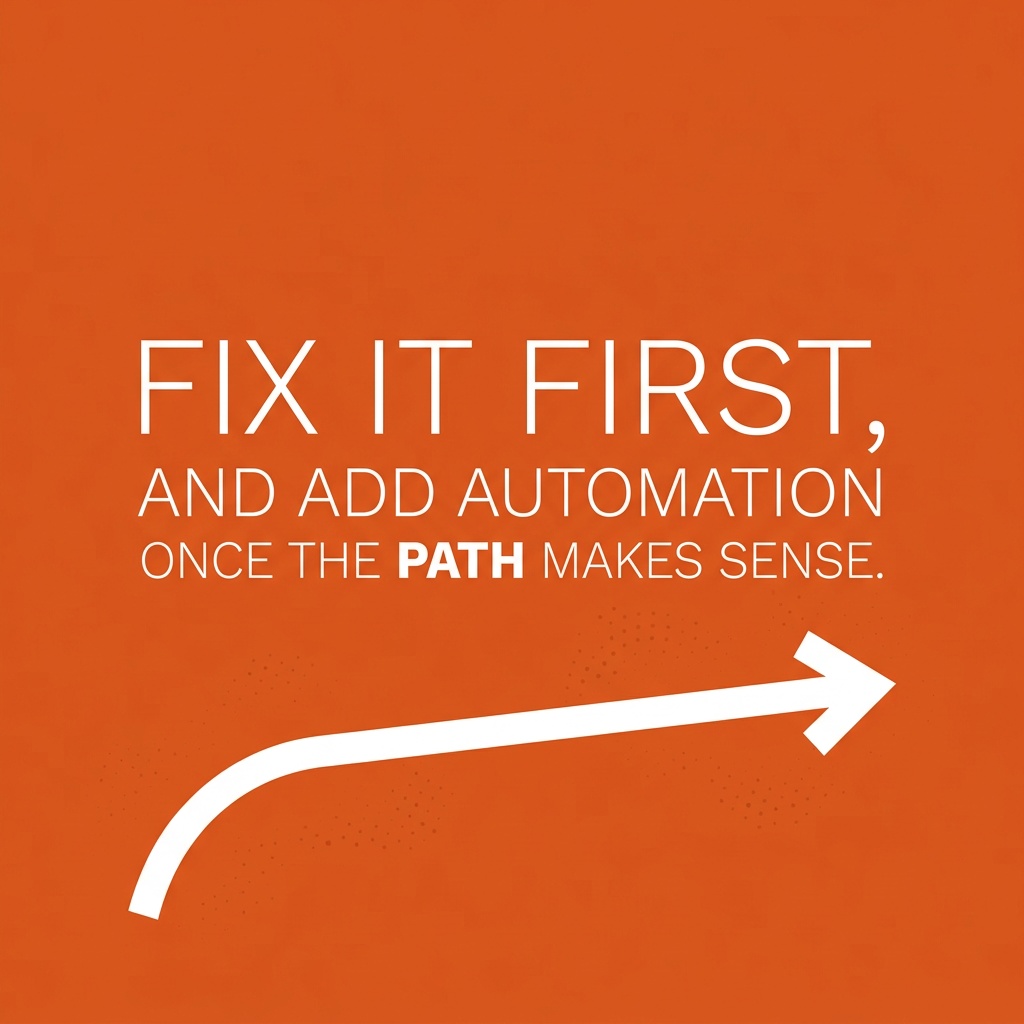
Fix that first. The automation can come later, and it works a lot better on top of a path that already makes sense.
What happens right now when a stranger fills out your contact form?
#SmallBusiness#Marketing#Sales…more
For SBDC advisors and mentors: before a client spends on more marketing, ask three things. Can they say who they help in one sentence? Do they know where customers drop off? Are their analytics counting real visitors? A "not sure" is the problem to fix first. …more
When a small business owner tells me they need more marketing, the first thing I want to know is where their customers are getting stuck.
The theory of constraints, in plain terms: every process has a bottleneck, and nothing you do anywhere else speeds it up. Pour soda from a bottle and the neck sets the pace. A bigger glass doesn't help. Shaking it definitely doesn't help!
Your customers move along a path too. They find out you exist, they compare you, they buy, they start using what you sell, and if it goes well they tell people. Somewhere on that path is your bottleneck... and it's different for every business.
If nobody knows you exist, a better website won't fix it. If people visit but never call, more posts won't fix it. If customers buy once and disappear, more ads just pour more people into a leaky step.
It's easy to spend months on the stage that feels productive instead of the one that's stuck. I've done it. Find the stuck one first, then put everything there.
Where do your customers drop off?
#SmallBusiness#Marketing…more
How far are you making a future client travel to find you? I spent years asking people to come to me... took me too long to just go where they already are. That's Inspiring Founders — the room your clients are already in: https://inspiringfounders.com…more
I understood distribution before I'd ever heard the word. I was a kid selling gum out of a locker.
Entrepreneurship isn't a boardroom skill. It's noticing where you can add value — and most founders were doing it long before they had a name for it. …more
"Our marketing isn't working." I've heard that in almost every company I've been part of. It's rarely where the problem actually lives.
Years ago I watched a startup tear itself apart over exactly this. Sales blamed marketing for weak leads. Marketing blamed sales for fumbling the ones they sent. Both were sure, both were loud, and both were wrong.
The real problem was two doors down, in the product.
The UX team had rolled out a new version built on a new mental model. The old product worked like email: you create a message, attach a big file, hit send. Everyone already knew how to do that. The new one worked like a shared, collaborative file system — cleaner on paper, but it asked users to think in a way they didn't yet think. They opened it and didn't get it.
That confusion didn't show up with a label that said "mental-model mismatch." It showed up as soft demos, stalled trials, and a sales team and a marketing team pointing at each other. The symptom surfaced at the front of the funnel. The cause was sitting in engineering.
Once we accepted that and reshaped the experience to feel like email again — meeting people inside the mental model they already had, instead of the one we wished they had — it unlocked everything.
This pattern shows up in the data too. When CB Insights studied hundreds of failed startups, the headline cause was "ran out of money." But they were careful to call that the final event, not the reason. The real reasons lived upstream — the product didn't fit how the market actually thought. The empty bank account was just where it finally became visible.
Marketing and sales are usually the windows, not the wound. When they're both struggling, I've learned to stop refereeing the fight at the window and go find the wound.
What's the visible problem you keep trying to fix — and what might actually be underneath it? …more


 View on LinkedIn
Also on