Founder at Radi8 // Executive Coach // Host of the Inspiring Founders Podcast
· LinkedIn
·
When a Facebook Page connection failed in Radi8, my software told people the same thing every time: you don't have the right admin role.
It was right... sometimes. But under that one message were three different failures, and two had nothing to do with anyone's permissions. So the message sent people off to fix something that wasn't broken — and quietly told them the problem was them.
I went looking for the real cause. Now it names which of the three actually hit. Fixes like that land in hours, not release cycles.
This isn't really about software. When your process fails a client, whose fault does your language imply? "You didn't send the intake form" and "my intake form is confusing" are the same event described by two different people. Default blame is a design choice... usually one nobody examined.
Genuine question — where does your process quietly blame a client for something you could have made clearer?
Link in the first comment.
#IndependentConsultant#Coaching#Solopreneur#CustomerDiscovery#Positioning…more
The best content doesn't try to sound smart. It sounds human.
We overcomplicate to prove we belong. But clarity is the real flex: saying the hard thing simply, so people actually feel it.
Warmth isn't weakness. It's where trust begins.
#B2Bhttps://www.generativeaipub.com/p/anthropics-new-ai-threat-report-is…more
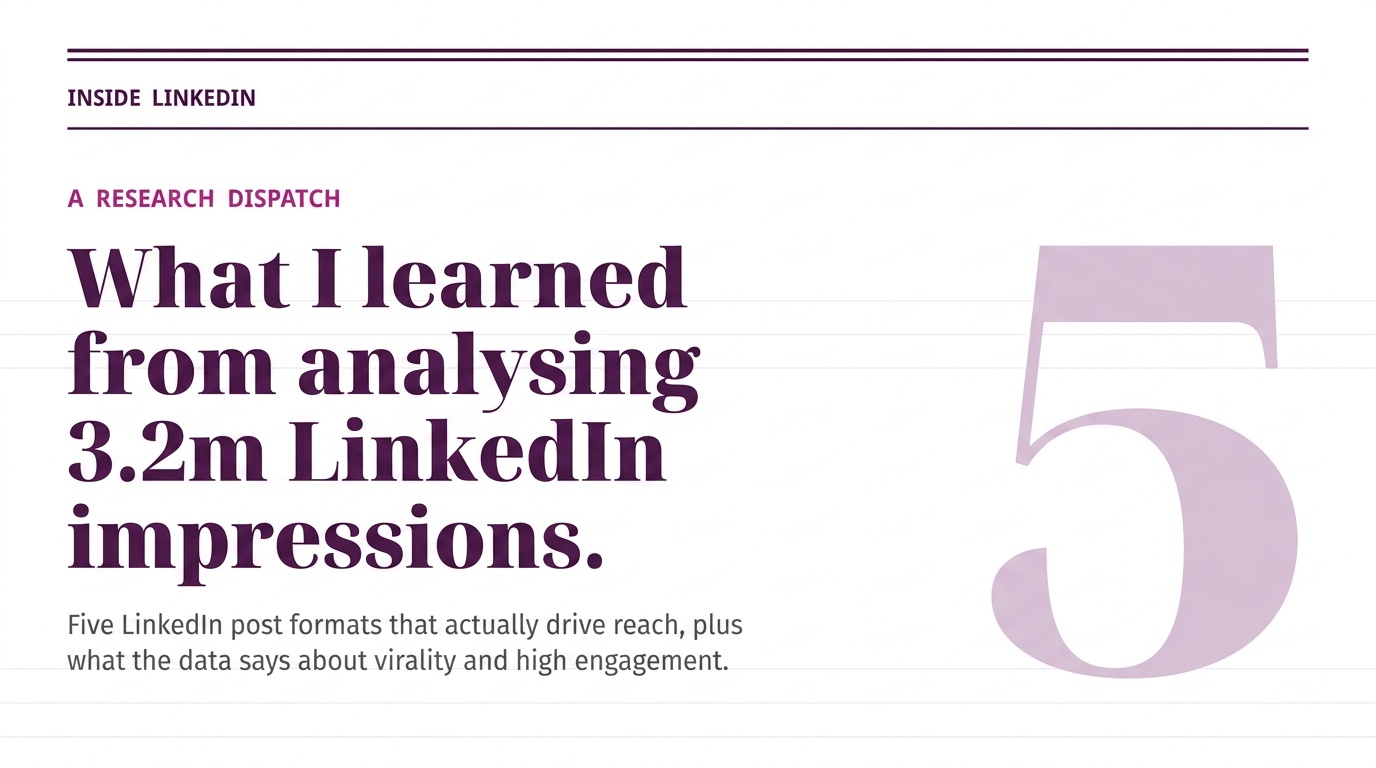
"Our buyers are too technical for storytelling." https://melaniegoodmanlinkedinconsultant.substack.com/p/3-2m-linkedin-impressions-5-post-formats
I hear this constantly in B2B tech marketing. It's one of the most expensive assumptions a team can make.
The belief goes: engineers, architects, and security leaders evaluate on specs, so narrative is fluff. Give them the feature list and let the product speak for itself.
But here's what actually happens in the buying room. Your technical buyer builds a business case they have to defend to a CFO who has never touched your product. They forward your content to a colleague who reads two lines before deciding whether it's worth their time. They sit through six vendor demos that all blur together by Friday.
Specs don't survive that process. Story does.
A narrative isn't the opposite of technical depth. It's the structure that makes depth memorable. The best technical content I've built across five enterprise tech companies never dumbed anything down. It gave the complexity a shape: here's the problem, here's why the obvious fix fails, here's what changes when you solve it correctly.
Technical buyers aren't immune to story. They're just allergic to story that has nothing real underneath it. Respect their intelligence and give them a narrative worth defending, and you don't lose credibility. You earn it.
If your technical content is accurate but forgettable, the gap isn't your product. It's the frame around it.
Want a fresh take on your B2B content strategy? DM me and let's schedule a 30-minute consultation—I'll show you 3 things you can improve this week.
#B2BMarketing#ContentStrategy…more
No one buys a feature. They buy what the feature lets them stop worrying about.
I've spent years marketing complex technical products across five enterprise tech companies, and the hardest habit to break is this: teams describe what a product does instead of what it changes for the person using it.
Specs don't move buyers. Stakes do. https://leadershipinchange.com/p/shadow-ai-audit
The security platform isn't "sub-second threat detection." It's the engineer who finally sleeps through the night because the 2am page stopped coming. The data infrastructure isn't "petabyte-scale throughput." It's the team that ships the analysis before the board meeting instead of apologizing for the delay.
The technical depth still matters. In fact, in B2B tech it matters more than most marketers admit, because your buyers are smart and can smell a hollow pitch instantly. But depth without human stakes is just a datasheet. And nobody remembers a datasheet.
The best content I've built didn't choose between the two. It earned credibility with precision, then made you feel why that precision mattered to a real person with a real problem.
In the Army, we briefed missions with the objective first, then the details that served it. Same discipline applies here: lead with what's at stake for the human, then prove you can deliver it.
If your product is technically strong but your marketing isn't landing, that gap is usually the story, not the tactics.
Want a fresh take on your B2B content strategy? DM me and let's schedule a 30-minute consultation—I'll show you 3 things you can improve this week.
#B2BMarketing#ContentStrategy
Your buyers don't remember your feature list. They remember the story that made the feature matter. https://excellentprompts.substack.com/p/openclaw-2-testing-plan-7-projects-local-ai-agent
I've spent years marketing complex technical products across five enterprise tech companies, and the pattern is always the same: the engineering is brilliant, the spec sheet is airtight, and the messaging still lands flat.
The gap isn't technical. It's narrative.
Skeptical technical buyers don't want to be sold. They want to recognize their own problem in what you say, and trust that you actually understand it. That recognition doesn't come from more detail. It comes from connecting the complexity to something human: the risk they're carrying, the decision they're afraid to get wrong, the outcome they'll be judged on.
Three shifts that consistently move the needle:
Lead with the stakes, not the spec. Tell people why the problem matters before you explain how you solve it.
Respect their intelligence. Make complexity clear instead of dumbing it down. Smart buyers trust brands that treat them as smart.
Anchor every claim to an outcome they care about. "Faster" means nothing. "Ship the release without the 2 a.m. incident call" means everything.
In the Army we learned that the mission only succeeds when everyone understands the "why" behind the order. Marketing complex products works the same way. The technology earns attention. The story earns belief.
Want a fresh take on your B2B content strategy? DM me and let's schedule a 30-minute consultation—I'll show you 3 things you can improve this week.
#B2BMarketing#ContentStrategy
Most B2B tech brands explain the product. Almost none explain why it matters to a human.
Features tell buyers what it does. Story tells them what changes. In technical markets, story is what earns trust. https://leadershipinchange.com/p/shadow-ai-audit#B2BMarketing#BrandStorytelling
Here's something I've learned after years of marketing complex technical products: nobody falls in love with a feature list.
We think the hard part of B2B is the technology. It isn't. The hard part is helping a real person see themselves in what you've built — the engineer buried in tickets, the marketer defending a budget, the leader who just wants to make one confident decision this week.
The best technical brands don't dumb their story down. They do something harder. They find the human standing behind the problem and speak to that person with warmth, clarity, and respect.
Three things I keep coming back to:
→ Start with a person, not a product. "Who is quietly frustrated right now?" is a better opening question than "What does our platform do?"
→ Translate, don't simplify. Your audience is smart. They're just busy. Meet them with clarity, not condescension.
→ Let the story carry the proof. Specifics earn trust. A single honest example beats ten adjectives.
The most technical thing you sell still gets bought by a human who wants to feel understood. Build for that person, and the complexity takes care of itself.
Want a fresh take on your B2B content strategy? DM me and let's schedule a 30-minute consultation — I'll show you 3 things you can improve this week.
#B2BMarketing#ContentStrategy#Storytellinghttps://leadershipinchange.com/p/ai-race-fools-errand
Your product is technically brilliant. That's exactly why nobody remembers it. https://excellentprompts.substack.com/p/best-gemini-notebook-infographic-design-prompts
In B2B tech, we're trained to lead with specs. Throughput, uptime, architecture diagrams. And to a skeptical technical buyer, those details matter—they're how trust gets earned.
But specs aren't what people repeat.
The mistake I see across enterprise tech marketing isn't a lack of substance. It's the assumption that substance markets itself. It doesn't. Buyers don't wake up thinking about your feature set. They wake up thinking about the problem that kept them at their desk late last night.
The brands that break through do two things at once:
They respect the intelligence of a technical audience—no dumbing down, no hand-waving.
And they wrap that rigor in a human narrative: who's stuck, what's at stake, and what changes when the problem finally gets solved.
In the Army, we didn't brief a mission by listing equipment. We briefed the objective, the terrain, and why it mattered. The details supported the story—they never replaced it.
Complex products still need a reason to care. Give the specs a narrative to live inside, and suddenly your best engineering becomes something people can actually pass along.
Want a fresh take on your B2B content strategy? DM me and let's schedule a 30-minute consultation—I'll show you 3 things you can improve this week.
#B2BMarketing#BrandStorytelling
The best B2B marketing I've ever seen didn't start with the product.
It started with a person.
In technical environments, we're taught to lead with specs — throughput, latency, uptime, the feature matrix. And those things matter. But nobody has ever lost sleep over a feature. They lose sleep over the problem the feature solves: the outage they can't explain to leadership, the deadline slipping, the trust they're trying to earn back.
Here's what I've learned across five enterprise tech companies and a decade of leadership before that: the technical detail is the proof, not the story. The story is human. It's about the engineer who finally got their weekend back. The team that stopped firefighting and started building. The leader who walked into the board meeting with an answer instead of an apology.
When you bridge the complex product and the human narrative, two things happen. Skeptical technical buyers actually lean in — because you respected their intelligence. And the people around them, the ones who sign off but don't speak the jargon, finally understand why it matters.
You don't have to choose between substance and story. The best marketing earns trust by holding both.
So before your next campaign, ask one question: whose life gets better because this exists? Start there. The specs will have their moment.
Want a fresh take on your B2B content strategy? DM me and let's schedule a 30-minute consultation — I'll show you 3 things you can improve this week.
#B2BMarketing#Storytelling#ContentStrategyhttps://www.generativeaipub.com/p/anthropics-new-ai-threat-report-is
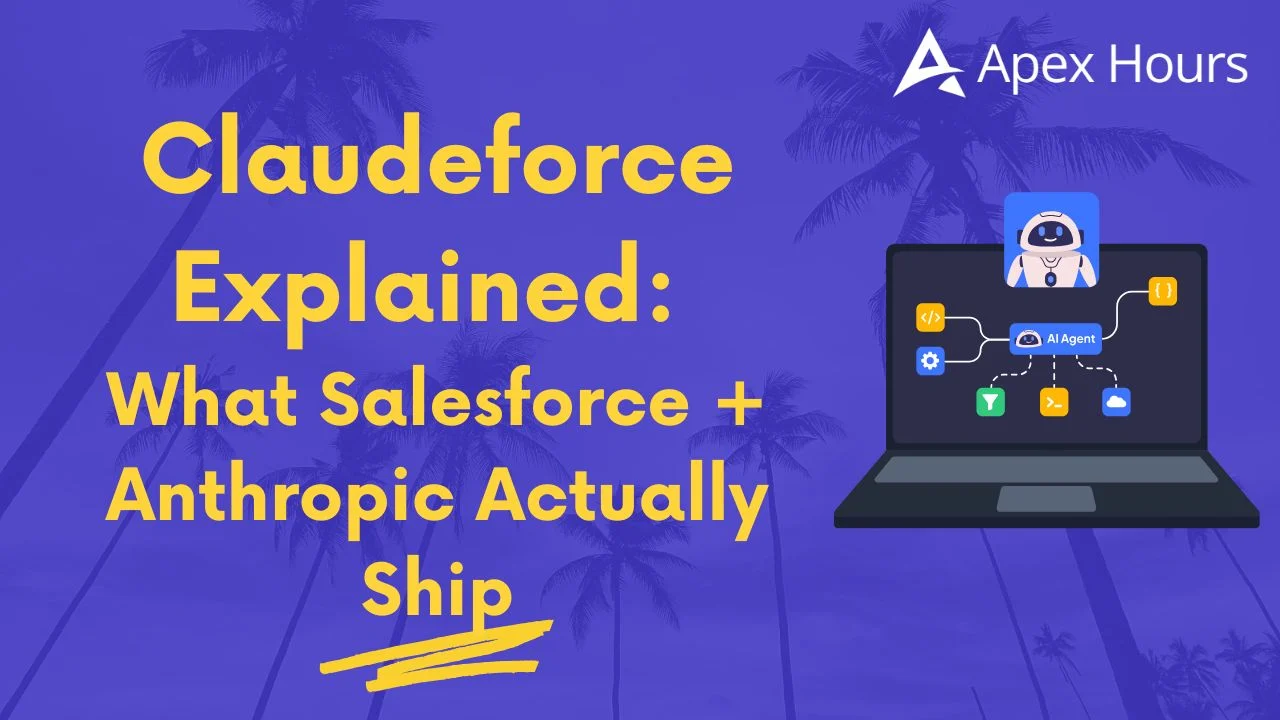
Salesforce and Anthropic did not just announce a partnership. They named it.
That distinction matters more than it sounds. Most partnership announcements follow the same pattern: a press release, a joint quote, a few weeks of coverage, then nothing. The name fades because there is nothing to hold onto.
Claudeforce is different. It borrowed Claude's brand equity, added Salesforce's "force" suffix — the first time Salesforce has ever given that suffix to another company's product name — and created something that sounds like a product line rather than a deal memo. Announced on the same day as Salesforce's Q2 earnings, with CRM stock jumping 12–14% after hours. Then Matthew McConaughey showed up in the ad. Everything landed at once.
The strategic bet underneath the branding: if you use Claude, you now have a reason to lean into Salesforce. If you use Salesforce, you have a reason to lean into Claude. Benioff's exact framing was "probabilistic intelligence alone doesn't run a company, and deterministic systems don't reason." He called it the SaaSpocalypse being over — the idea that AI tools would replace enterprise software rather than fuse with it.
What Claudeforce actually ships: Salesforce inside Claude as a plugin with 37 prebuilt sales skills, Claude as the default reasoning model inside Agentforce, and Claude as the default model powering Slackbot.
For B2B marketers, the naming lesson holds regardless of the product. Start with the headline. Work backwards to what's achievable. A name that sounds like a product is a campaign in itself — and it's the one thing competitors cannot copy the same week.
https://www.salesforceben.com/salesforce-and-anthropic-announce-claudeforce-in-q2-27-earnings/#B2BMarketing#AIStrategy…more
The most underrated skill in B2B marketing isn't writing. It's listening.
I've spent years marketing complex technical products across five enterprise tech companies, and the pattern holds every time: the best messaging I ever shipped didn't start in a doc. It started in a conversation I almost didn't slow down enough to have.
A support engineer describing the call they dread. A customer explaining, in their own words, the moment your product stopped being "a tool" and started being "the reason I slept last night." That language is gold. And most of us walk right past it because we're in a hurry to produce.
In the Army, we were taught that you never brief a mission you don't understand from the ground up. You listen first—to the terrain, to the people who've walked it, to what's actually at stake. Then you speak. The order lands because it's rooted in reality, not assumption.
Marketing complex products works the same way. Curiosity isn't a soft skill here. It's the discipline that separates content people scroll past from content people feel seen by.
So before you write the next campaign, try this: have one real conversation with someone who lives your customer's problem. Don't pitch. Just listen. You'll leave with a sentence better than anything a blank page could give you.
The teams pulling ahead aren't the loudest. They're the most curious.
Want a fresh take on your B2B content strategy? DM me and let's schedule a 30-minute consultation—I'll show you 3 things you can improve this week.
#B2BMarketing#ContentStrategyhttps://www.generativeaipub.com/p/the-urgent-call-for-ai-slowdown-has…more
The best marketing doesn't shout. It listens first.
People don't want to be sold to. They want to be understood.
Lead with their story, not your product. Trust follows.
What's one thing your audience wishes you'd say out loud?
#B2B#ContentStrategyhttps://www.generativeaipub.com/p/the-urgent-call-for-ai-slowdown-has
Here's a discipline I've come to love: writing the short version first.
The brief that started this post was one line — "make the X post fit in 280 characters." A tiny constraint. But it's a great reminder of something bigger.
1 big thing: Brevity isn't the enemy of depth. It's proof you understand your idea.
Why it matters: In B2B, we mistake length for rigor. Long decks, long posts, long explanations — as if more words signal more thought. Usually the opposite is true. The person who can say it in one clear line is the one who actually gets it.
Zoom in: A hard character limit forces three good things:
→ You cut what you were never sure about
→ You lead with the one point that matters
→ You respect the reader's time enough to do the work yourself
Yes, but: Short isn't the same as simple. It takes longer to write the tight version. That's the trade — you spend the effort so your audience doesn't have to.
Be smart: Next time you're stuck on a message, try writing it in 280 characters first. If it survives the squeeze, it's ready to grow. If it doesn't, you found the weak spot before your audience did.
The bottom line: Clarity is a kindness. The shorter you can make it, the more you probably understand.
Want a fresh take on your B2B content strategy? DM me and let's schedule a 30-minute consultation — I'll show you 3 things you can improve this week.
#B2BMarketing#ContentStrategyhttps://www.generativeaipub.com/p/ai-researcher-jacob-coxon-fears-that…more
Founder at Radi8 // Executive Coach // Host of the Inspiring Founders Podcast
· X
·
A client asked me this week: how do I explain what I do? The fix is rarely fancier words. Name the problem you solve, and who it's for... not your process. Clarity beats clever. Want to sharpen yours? https://calendly.com/foclarity/30min…more
Founder at Radi8 // Executive Coach // Host of the Inspiring Founders Podcast
· LinkedIn
·
Is getting visible actually worth the effort, or just more noise?
A practitioner I work with 1:1 asked me a version of that before we started. Brilliant at her craft, mission-driven, the kind of person you'd want in your corner. And almost invisible to the market she wanted to serve.
It looked like a visibility problem. It was really a clarity problem. So we didn't start with tactics. We started with her voice and her offer: who she serves, what she actually helps them do, and how to say it in plain words. Once that was clear, consistency did the rest — showing up, in her own voice, again and again.
The change was real. More of the right people found her, and they engaged, because the work was finally legible. Yours won't look identical. The clarity is what travels, not the numbers.
#Coaching#IndependentConsultant#Positioning#GoingIndependent#CustomerDiscovery…more
Why isn't your marketing working?
Before you rewrite the copy again or try another channel, consider that marketing is usually the symptom, not the problem.
When posts don't land and outreach goes quiet, the instinct is to fix the marketing — new hook, new platform, more volume. But if the market can't quickly say who you help and why you, no amount of activity rescues that. Unclear positioning shows up as weak marketing.
I see this with coaches and consultants who are brilliant at the work. The message feels fuzzy, so every campaign has to work twice as hard. Sharpen who you're for, and the marketing gets easier, because now there's something clear to say.
If your marketing feels like a grind, book 30 minutes with me and we'll find the real bottleneck. No pitch, just a clearer read on what's actually stuck: https://calendly.com/foclarity/30min#IndependentConsultant#Coaching#Positioning#GoToMarket
When a coach or consultant tells me their marketing isn't working, the marketing is almost never the problem.
I hear it weekly. "I'm posting. I'm networking. I redid the website. Nothing's landing." The instinct is to fix the visible thing — better content, a new funnel, more activity. But activity was never the issue.
Here's the pattern I've seen across 25 years of building companies and advising businesses. Weak results almost always trace to something upstream. Fuzzy positioning, so you can't say what you do and who it's for in one sentence that lands. Thin customer understanding, so you describe your work in your words instead of your client's. No focus, so you speak to everyone and reach no one.
Marketing amplifies whatever you feed it. Feed it a blurry message and you get blurry results, faster.
Try this test. Describe what you do to a stranger in one sentence. If their next question is "so, what do you actually do?" then you don't have a marketing problem. You have a positioning problem. More posting won't fix that. It just makes the confusion more visible.
The good news: positioning is fixable, and usually fixable fast. It's one clear decision about who you serve and what changes for them, made with real customer evidence instead of guesses. Once that decision is sharp, the same marketing effort starts working, because it finally has something clear to carry.
So a question worth sitting with: if I asked your last three clients what you do, would their answers match each other? And would they match yours?
#IndependentConsultant#Coaching#Positioning#Messaging
Founder at Radi8 // Executive Coach // Host of the Inspiring Founders Podcast
· LinkedIn
·
When a coach or consultant tells me their positioning is fuzzy, they usually want to fix the words. A better tagline. A sharper sentence. A cleverer hook. That almost never works, because vague positioning isn't a writing problem.
It's a customer-understanding gap.
You can't describe who you help clearly when you're not yet clear on who they are. No amount of wordsmithing rescues a message you haven't earned by knowing the person on the other end. Positioning is an output of customer discovery, not a copywriting exercise.
So when someone's stuck, I don't ask "what do you do?" That question sends people straight back into their own head — to titles, methods, and adjectives. I ask two different ones instead.
Who is this actually for? Not a demographic. A person you could name, with a problem they'd describe in their own words.
And what were they doing about it before they found you? The workarounds, the half-measures, the thing they already tried that didn't stick. That's where the real language lives — the words your best clients use for their own problem, before you dress them up.
Answer those two honestly and the positioning tends to write itself. You stop reaching for clever and start repeating what you've actually heard. Evidence beats invention. A sentence built from a real client's words lands because someone already lived it.
The clever version impresses you. The accurate version gets remembered by the person it's for.
So here's the question I'd genuinely like you to answer: what's the one client you do your best work for — and what were they doing before they found you?
#IndependentConsultant#Coaching#Positioning#CustomerDiscovery#IdealClient…more
Founder at Radi8 // Executive Coach // Host of the Inspiring Founders Podcast
· LinkedIn
·
This is how you create great content for your customers - be specific, generous, and valuable.
Elizabeth Greenfield runs a functional wellness practice. Her ideal clients are people dealing with exhaustion, weight gain, and feeling wired despite doing everything right. Classic signs of chronic stress.
She could post generic wellness tips. Drink more water. Get more sleep. Eat better.
Instead, she publishes content that connects stress to something most people don't know about: how cortisol alters DNA methylation and accelerates biological aging at the cellular level.
That level of specificity does two things.
First, it signals expertise. It shows she understands the root cause, not just the symptoms.
Second, it attracts the right people. Someone who's tried everything and still feels terrible is going to stop scrolling when they see content that explains why nothing has worked.
This is the pattern I see in content that actually converts.
It's not about being everywhere or posting every day. It's about understanding your audience well enough to name the problem they're experiencing in a way that makes them feel seen.
If you're struggling to figure out what to post, start here:
What's the specific problem your ideal customer is dealing with right now? Not the surface-level frustration. The underlying issue they might not even have words for yet.
Then create content that connects the dots.
You don't need a big budget or a content team. You need clarity on what your audience is trying to solve.
If you want help translating that into a repeatable content workflow, comment and I'll reach out.
https://www.lizgreenfield.com/blog-1-1/h08r5dhgllb0kfyalh0zrty7ukbgic…more
I've launched four companies. Each one taught me something different about marketing.
But the lesson that shows up every single time is this: the product rarely loses. The story does.
At my second company, we had a genuinely better product than the competition. Better features, better pricing, better support. We still struggled to get traction for the first year.
When I finally sat down and rewrote our messaging, I realized what was wrong. Everything we said described what we built. None of it named the problem our customer was already losing sleep over.
The fix was simple but not obvious: lead with the pain, not the product.
Before: "We help companies manage distributed teams more efficiently."
After: "Your best people are burning out because they're spending half their day coordinating instead of building."
Same product. Completely different response.
The rule I now follow for every piece of marketing copy: if you could put your competitor's logo on it and it would still make sense, rewrite it. Your message should only work for you.
What's the last message you changed that had a bigger impact than you expected?
The post that earns a hundred likes from other consultants is often the same one that wins zero clients.
When you're new to being visible, you write toward the approval that feels safest. Other people in your field. Former colleagues. The peers whose respect you spent a career earning. They understand your shorthand. They nod at the clever framework. They leave the generous comment that makes posting feel worth it.
But the client you want is almost never in that room.
It looks like a content problem. It's actually a customer-understanding problem. Writing for your friends, you reach for what impresses people who already know the field. Writing for your customer, you reach for the thing keeping them up at 2am — described in the plain words they'd actually use, not the vocabulary of your profession.
Those two audiences want opposite things. Your peers want to see how much you know. Your customer wants to feel understood. The more you optimize for the first, the more invisible you become to the second, because sophistication reads as noise to someone who just wants their problem named.
Read your last five posts and ask who would nod hardest. If it's people who could do your job, you're writing for the wrong room. If it's people who'd hire you, you're getting warm.
The fix isn't louder or more polished. It's a smaller, clearer picture of one person you're trying to help, and the discipline to write to them even when the applause comes from somewhere else.
When you catch yourself writing for the room instead of the client, what usually pulls you back?
#IndependentConsultant#Coaching#Positioning#CustomerDiscovery#ThoughtLeadership
Founder at Radi8 // Executive Coach // Host of the Inspiring Founders Podcast
· X
·
Founders spend weeks building campaigns.
Then discover the message doesn't resonate.
I've learned to do the opposite.
Test the message first.
5 conversations will teach you more than 50 hours of campaign planning. …more
Founder at Radi8 // Executive Coach // Host of the Inspiring Founders Podcast
· LinkedIn
·
I've worked with hundreds of founders through my accelerator and peer groups. And when I look at why their marketing isn't converting, it almost always comes down to the same thing.
They built the campaign before they validated the message.
Here's what that looks like in practice: they spend two or three weeks building out a content calendar, designing assets, writing emails, setting up scheduling. Then they launch. And then they find out — through low engagement, no clicks, no replies — that the message doesn't resonate.
All of that work, wasted. Not because the campaign was bad. Because the message was untested.
The fix is simpler than most people think.
Before you build a campaign, send 5 DMs or have 3 sales conversations using your core message. Pay attention to the responses. Do people light up? Do they ask follow-up questions? Do they forward it to someone else?
Or do they politely change the subject?
What you learn in those conversations is worth more than any A/B test you'll run later. Real humans responding to a real message in real time will tell you everything you need to know about whether your campaign is worth building.
Build the conversation first. Build the campaign second.
Book a free audit with me — I'll look at your current messaging and tell you exactly where I'd focus first. …more


 View on LinkedIn



 View on X