
Go-To-Market
I understood distribution before I'd ever heard the word. I was a kid selling gum out of a locker.
Entrepreneurship isn't a boardroom skill. It's noticing where you can add value — and most founders were doing it long before they had a name for it. …more
M

Michael Ashley
Founder at Radi8 // Executive Coach // Host of the Inspiring Founders Podcast
"Our marketing isn't working." I've heard that in almost every company I've been part of. It's rarely where the problem actually lives.
Years ago I watched a startup tear itself apart over exactly this. Sales blamed marketing for weak leads. Marketing blamed sales for fumbling the ones they sent. Both were sure, both were loud, and both were wrong.
The real problem was two doors down, in the product.
The UX team had rolled out a new version built on a new mental model. The old product worked like email: you create a message, attach a big file, hit send. Everyone already knew how to do that. The new one worked like a shared, collaborative file system — cleaner on paper, but it asked users to think in a way they didn't yet think. They opened it and didn't get it.
That confusion didn't show up with a label that said "mental-model mismatch." It showed up as soft demos, stalled trials, and a sales team and a marketing team pointing at each other. The symptom surfaced at the front of the funnel. The cause was sitting in engineering.
Once we accepted that and reshaped the experience to feel like email again — meeting people inside the mental model they already had, instead of the one we wished they had — it unlocked everything.
This pattern shows up in the data too. When CB Insights studied hundreds of failed startups, the headline cause was "ran out of money." But they were careful to call that the final event, not the reason. The real reasons lived upstream — the product didn't fit how the market actually thought. The empty bank account was just where it finally became visible.
Marketing and sales are usually the windows, not the wound. When they're both struggling, I've learned to stop refereeing the fight at the window and go find the wound.
What's the visible problem you keep trying to fix — and what might actually be underneath it? …more

Told 2 times, Jul 3, 2026
· X · Open
Marketing and sales are the windows, not the wound. When both are struggling, stop refereeing at the window — go find the wound.
Founders spend weeks building campaigns.
Then discover the message doesn't resonate.
I've learned to do the opposite.
Test the message first.
5 conversations will teach you more than 50 hours of campaign planning. …more
M
Michael Ashley
Founder at Radi8 // Executive Coach // Host of the Inspiring Founders Podcast
I've worked with hundreds of founders through my accelerator and peer groups. And when I look at why their marketing isn't converting, it almost always comes down to the same thing.
They built the campaign before they validated the message.
Here's what that looks like in practice: they spend two or three weeks building out a content calendar, designing assets, writing emails, setting up scheduling. Then they launch. And then they find out — through low engagement, no clicks, no replies — that the message doesn't resonate.
All of that work, wasted. Not because the campaign was bad. Because the message was untested.
The fix is simpler than most people think.
Before you build a campaign, send 5 DMs or have 3 sales conversations using your core message. Pay attention to the responses. Do people light up? Do they ask follow-up questions? Do they forward it to someone else?
Or do they politely change the subject?
What you learn in those conversations is worth more than any A/B test you'll run later. Real humans responding to a real message in real time will tell you everything you need to know about whether your campaign is worth building.
Build the conversation first. Build the campaign second.
Book a free audit with me — I'll look at your current messaging and tell you exactly where I'd focus first. …more

Vertical agents are eating horizontal solutions.
If your positioning still sounds like it's for "enterprise companies," you're already behind.
The rise of vertical agents is not just another AI trend. It's proof that generic positioning is dead in B2B tech. Buyers don't want tools that claim to solve everything for everyone. They want solutions built for their specific workflow, their industry, their exact problem.
I've worked across five enterprise tech companies, and the pattern is consistent: the marketers who win are the ones who can translate deep technical complexity into precision. Not simplification. Precision.
Most B2B tech marketers treat complexity like a problem to bury. They strip out the technical depth, slap on broad value props, and hope something sticks. But in a world where vertical agents are winning because they go narrow and deep, that approach fails.
The marketers who thrive in this environment don't run from complexity. They channel it. They understand the product well enough to know exactly which technical capabilities matter to which segment. They know the buyer well enough to speak their language without dumbing down the tech.
That requires work most competitors won't do. It means sitting with engineering. It means listening to sales calls. It means understanding not just what the product does, but why it matters in the context of a specific buyer's day-to-day reality.
Vertical agents are forcing this shift faster than most content strategies can adapt. If your messaging still sounds interchangeable with your competitors, if your technical story is not connecting with the audiences you need to reach, the gap will only widen.
If your positioning feels too broad or your technical story is not landing, let's fix it. DM me. I'll review your approach and show you three things you can tighten this week.
https://tldr.tech/tech/2026-06-12 …more

 View on LinkedIn
Also on
View on LinkedIn
Also on

One audience.
One message.
One channel.
One CTA.
Run it for 30 days.
Most startup marketing problems aren't caused by too little effort.
They're caused by too many simultaneous experiments. …more
M
Michael Ashley
Founder at Radi8 // Executive Coach // Host of the Inspiring Founders Podcast
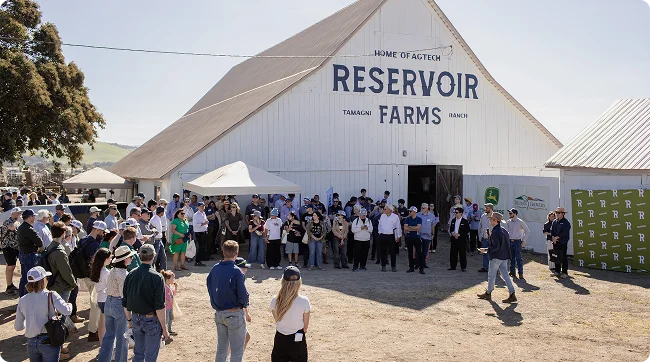
Congratulations to Western Growers and Reservoir Farms on this $1.5 million commitment.
This partnership is worth paying attention to—not because of the funding amount, but because of the structure.
Western Growers is giving its members exclusive access to robotics field trials across Salinas, Wine Country, and the Central Valley. They're not waiting for perfect technology. They're building a bridge between prototype and commercial adoption.
That's a go-to-market strategy.
Most early-stage founders I work with struggle with the same problem: they have a working product, maybe even some pilot customers, but no clear path from validation to revenue at scale.
The gap isn't always the product. It's access to the right testing ground and the right early adopters who can give real feedback under real conditions.
Western Growers is solving that for agtech companies. They're creating a repeatable environment where technology can be tested, refined, and proven before it hits the broader market. That cuts years off the adoption timeline.
If you're building a B2B product, the principle is the same.
You need a structured way to get your solution in front of the people who will actually use it. Not in a demo. Not in a pitch deck. In their workflow, solving their real problem.
That means identifying your early access group—the customers who have the problem acutely, who are willing to test, and who have enough influence to move others when it works.
Then you build the program around them. You give them something exclusive. You make the feedback loop tight. You document what works and what breaks. And you use that as proof for everyone else.
This is how you move from prototype to repeatable sales: not by perfecting the product in isolation, but by proving it works in the field.
If you're stuck between pilot customers and real traction, book a free 15-minute marketing audit and we'll map out who your early access group should be and how to structure the program around them.
https://www.radi8.com/free-audit?utm_source=linkedin&utm_campaign=free_audit&utm_content=post_id
https://www.santacruzworks.org/news/reservoir-the-field-is-the-lab …more
 View on LinkedIn
Also on
View on LinkedIn
Also on
M
Michael Ashley
Founder at Radi8 // Executive Coach // Host of the Inspiring Founders Podcast
I love seeing this.
West Sacramento just cut the ribbon on community-funded EV charging infrastructure. Not a government grant. Not a big utility play. Grassroots clean energy, funded by the people who will use it.
Here's what caught my attention: they didn't wait for permission or perfect conditions. They validated demand with the community first, then built the solution.
That's exactly how early traction works.
Most founders think they need all the resources lined up before they can make a move. Full budget. Perfect messaging. Complete product. But momentum doesn't start that way.
It starts when you validate a real problem with the people who feel it most, then build the smallest version that solves it.
The West Sacramento project didn't need top-down approval or a five-year roadmap. They identified a local gap, rallied the people who needed the solution, and moved forward with what they had.
If you're stuck waiting for the perfect conditions to launch your next campaign, refine your positioning, or start building visibility, this is your reminder: traction comes from action, not preparation.
Find the smallest group that feels your solution. Validate that it matters to them. Build for that group first.
The infrastructure comes after the momentum, not before.
If you're wrestling with early go-to-market strategy or how to build traction before you have all the resources, let's talk. I run free 15-minute marketing audits for founders. Comment below and I'll send you the link.
https://www.santacruzworks.org/news/powered-by-climatize-community-funded-ev-charging-comes-to-west-sacramento …more
 View on LinkedIn
Also on
View on LinkedIn
Also on
M
Michael Ashley
Founder at Radi8 // Executive Coach // Host of the Inspiring Founders Podcast
Juicero raised $120 million and shut down four years later.
The product was impressive. A beautifully engineered juicer that squeezed proprietary juice packs. The pitch was compelling. Fresh, cold-pressed juice at home with zero mess.
But none of that mattered because they misjudged the market.
They built a $400 machine for a customer who didn't exist at scale. Worse, when reporters discovered you could squeeze the packs by hand and get the same result, the entire value proposition collapsed.
This wasn't a failure of execution. It was a failure of go-to-market strategy.
If you're a small business owner handling your own marketing, the same mistake shows up in smaller ways every day.
You build something without validating whether your audience actually wants it. You position a feature instead of a benefit. You invest time creating content that sounds good internally but doesn't connect with the people you're trying to reach.
The fix starts with three questions before you build or launch anything:
Who is this for, specifically? Not a broad market. A real person with a real problem.
What job are they hiring this to do? Juicero thought people wanted convenience. Turns out they wanted juice, and convenience meant not buying a $400 machine.
How will they discover this solves their problem? If your positioning doesn't make the value obvious in seconds, you're asking too much of your audience.
Juicero had the funding, the team, and the product. What they didn't have was a clear understanding of their customer or a go-to-market strategy grounded in reality.
You don't need $120 million to learn this lesson. You just need to ask the right questions before you spend time and money on the wrong strategy.
If you're not sure whether your positioning and content strategy are connecting with your audience, book a free 15-20 minute marketing audit. I'll walk you through where to focus first.
https://www.radi8.com/free-audit?utm_source=linkedin&utm_campaign=free_audit&utm_content=post_id
Case study: https://www.smartwareadvisors.com/blogs/insights/case-study-juicero-overbuilt-mvp-amp-misjudged-market …more
 View on LinkedIn
Also on
View on LinkedIn
Also on
M
Michael Ashley
Founder at Radi8 // Executive Coach // Host of the Inspiring Founders Podcast
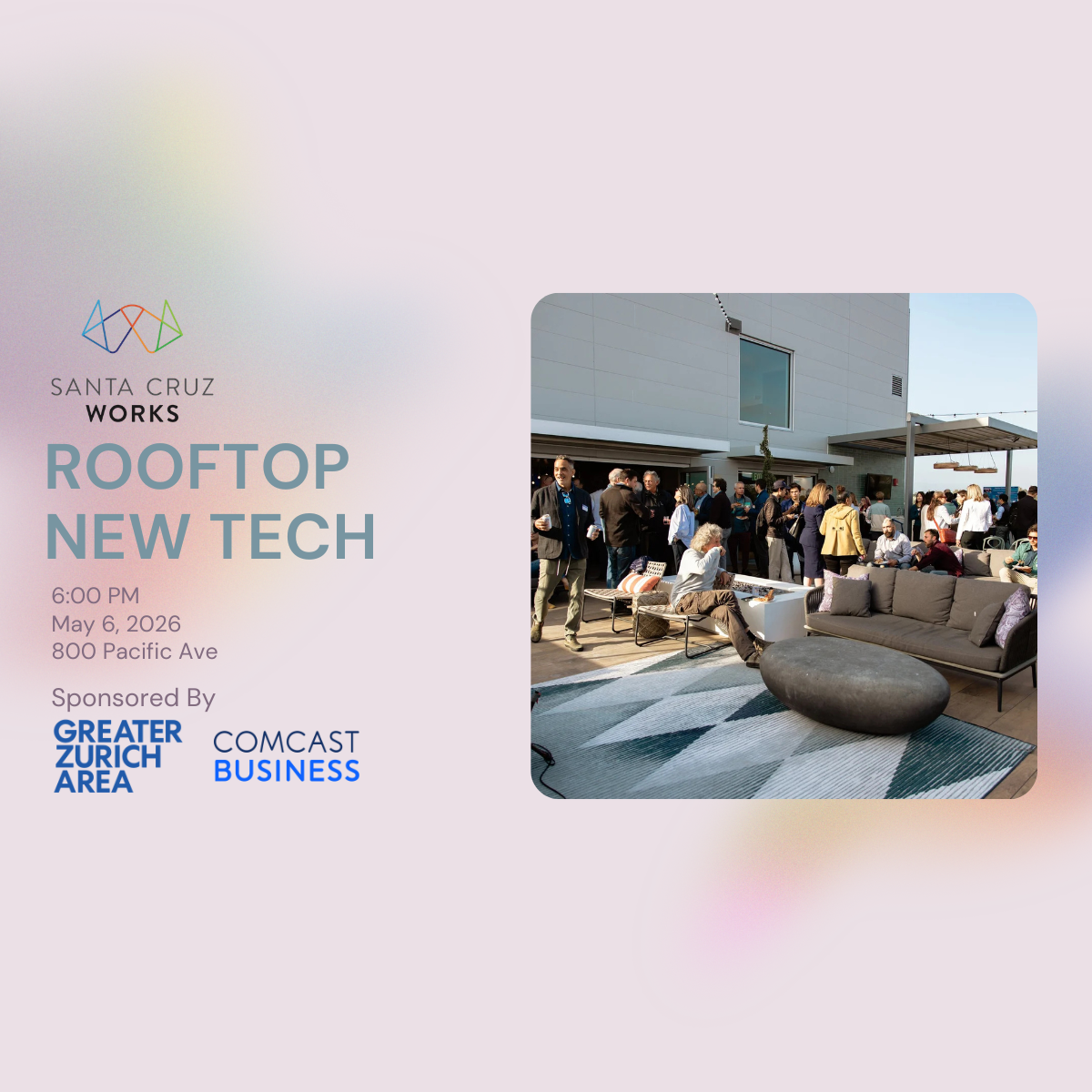
Santa Cruz Works Rooftop New Tech is back on May 6, and I'll be there.
If you're a founder working on something in tech, this is one of the best nights to show up. Six startups will present on the rooftop at Anton Pacific. Solid food and drinks. Great views. Real conversations with other builders.
I've advised and invested in startups for years. Three of those companies had billion-dollar exits. I've also launched three of my own, with one major acquisition. The early stages are hard when you're doing everything yourself—go-to-market, messaging, content—all while trying to build product.
The best part of events like this isn't the presentations. It's the conversations between them. The founder who's stuck on messaging and finally gets clarity. The team that's been guessing at go-to-market and walks away with a plan.
I'll be there between presentations. If you want to talk through your go-to-market strategy, your messaging, or how to build a content system that doesn't eat your week, come find me. I'm happy to walk through what's working and where you can get a quick win.
https://www.santacruzworks.org/news/santa-cruz-works-rooftop-new-tech-may-6 …more
 View on LinkedIn
Also on
View on LinkedIn
Also on
M
Michael Ashley
Founder at Radi8 // Executive Coach // Host of the Inspiring Founders Podcast
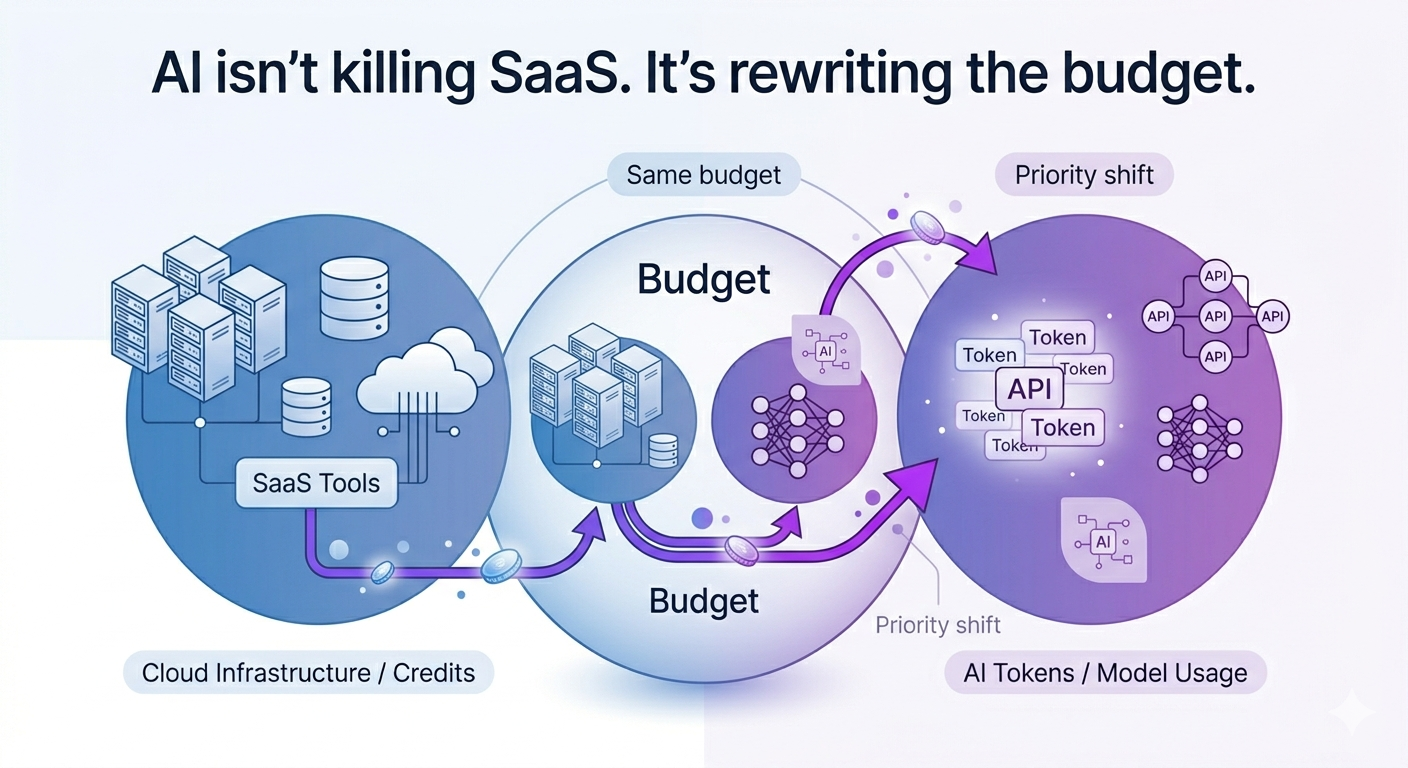
AI isn’t killing SaaS. It’s rewriting buyer budgets.
Founders I talk to say their product is better and still relied on, yet deals slow, expansions stall, and seats disappear. The gap is buyer priorities, not product.
Three quick moves:
1. Reframe messaging to quantify time and cost savings versus AI alternatives.
2. Offer short, low-friction pilots or outcome-based trials.
3. Publish 30-day ROI case studies to shorten evaluation cycles.
Radi8 helps founders create these assets faster and at lower cost than hiring consultants. Send me a message and I’ll reach out.
https://www.santacruzworks.org/news/ai-isnt-killing-saas-its-rewriting-the-budget
#SaaS …more
Told 3 times, Mar 31, 2026 – Apr 3, 2026
· LinkedIn · Open
AI isn’t killing SaaS. It’s rewriting buyer budgets.
Founders I talk to say their product is better and still relied on, yet deals slow, expansions stall, and seats disappear. The gap is buyer priorities, not product.
Three quick moves:
1. Reframe messaging to quantify time and cost savings versus AI alternatives.
2. Offer short, low-friction pilots or outcome-based trials.
3. Publish 30-day ROI case studies to shorten evaluation cycles.
Radi8 helps founders create these assets faster and at lower cost than hiring consultants. Send me a message and I’ll reach out.
https://www.santacruzworks.org/news/ai-isnt-killing-saas-its-rewriting-the-budget
#SaaS
· LinkedIn · Open
AI isn’t killing SaaS. It’s rewriting buyer budgets.
Founders I talk to say their product is better and still relied on, yet deals slow, expansions stall, and seats disappear. The gap is buyer priorities, not product.
Three quick moves:
1. Reframe messaging to quantify time and cost savings versus AI alternatives.
2. Offer short, low-friction pilots or outcome-based trials.
3. Publish 30-day ROI case studies to shorten evaluation cycles.
Radi8 helps founders create these assets faster and at lower cost than hiring consultants. Send me a message and I’ll reach out.
https://www.santacruzworks.org/news/ai-isnt-killing-saas-its-rewriting-the-budget
#SaaS
Channel names and logos are trademarks of their respective owners.