I don't think AI can do your marketing for you.
A client asked me this week if they should use AI to do their marketing. Fair question, and I'm building an AI tool myself, so I'm not here to talk anyone out of it.
I read an honest comparison recently on hiring a social media manager vs. using AI. My answer starts one step earlier... do you want to hand your marketing off, or run it yourself and stay in control? Either can work. Neither one does the thinking for you.
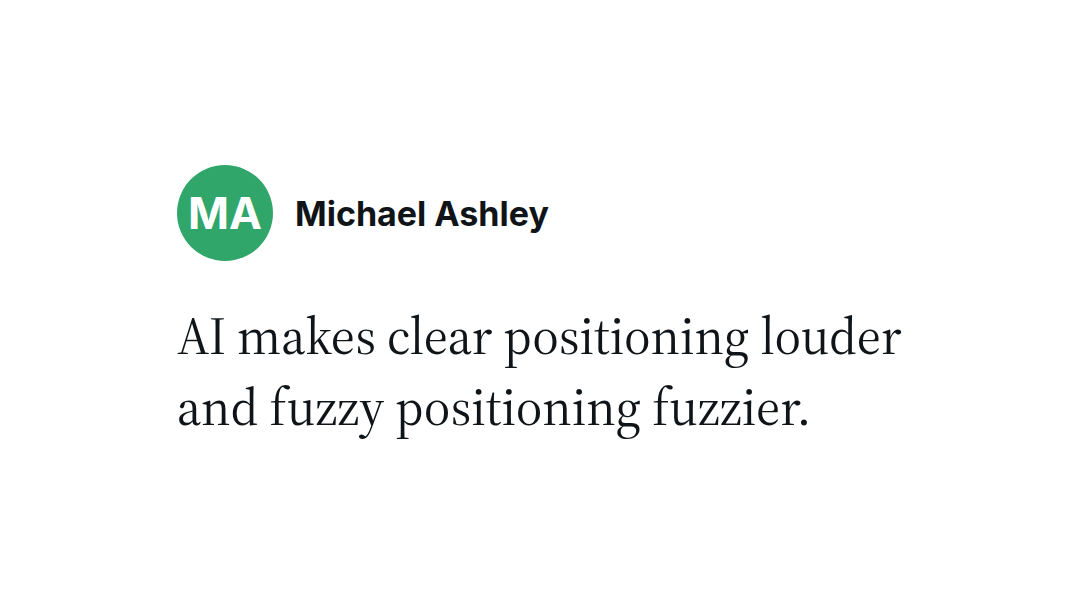
AI makes clear positioning louder and fuzzy positioning fuzzier.
So for coaches and consultants, the first job might not be picking a tool at all. It might be getting clear on who you help, the problem you solve for them, and what they actually care about. Get the thinking right first, then let AI amplify it. I catch myself reaching for the tool before the thinking too.
There's a video in the first comment for anyone weighing this right now.
Where has AI actually helped your practice... and where did it just make more noise?
#Coaching#IndependentConsultant#Positioning#Marketing…more
I use AI every day. Writing isn’t the hard part.
The model already knows how to write. What it doesn't know is you... who you're for, what you've promised, what you've already said, what you'd never say.
That gap shows up well beyond marketing tools. When a founder or CEO gets generic copy back, the tool usually takes the blame. The problem under the problem might be that the positioning was never sharp enough to hand over. And if you're taking a company into the US, AI knows even less about which of your home-market assumptions still hold here.
I'm not immune to this. When the output sounds like anyone, it's usually because I gave it too little of me.
If you can't say who you're for in one sentence, no model will say it for you.
What does your team hand AI before it writes a word?
I was a guest on a podcast and got to think out loud for far longer than any post allows: https://youtu.be/M58Dnn2UAlM?is=hzrAl7LB9vuXVJ7U#Founders#CEO#Positioning#GoToMarket
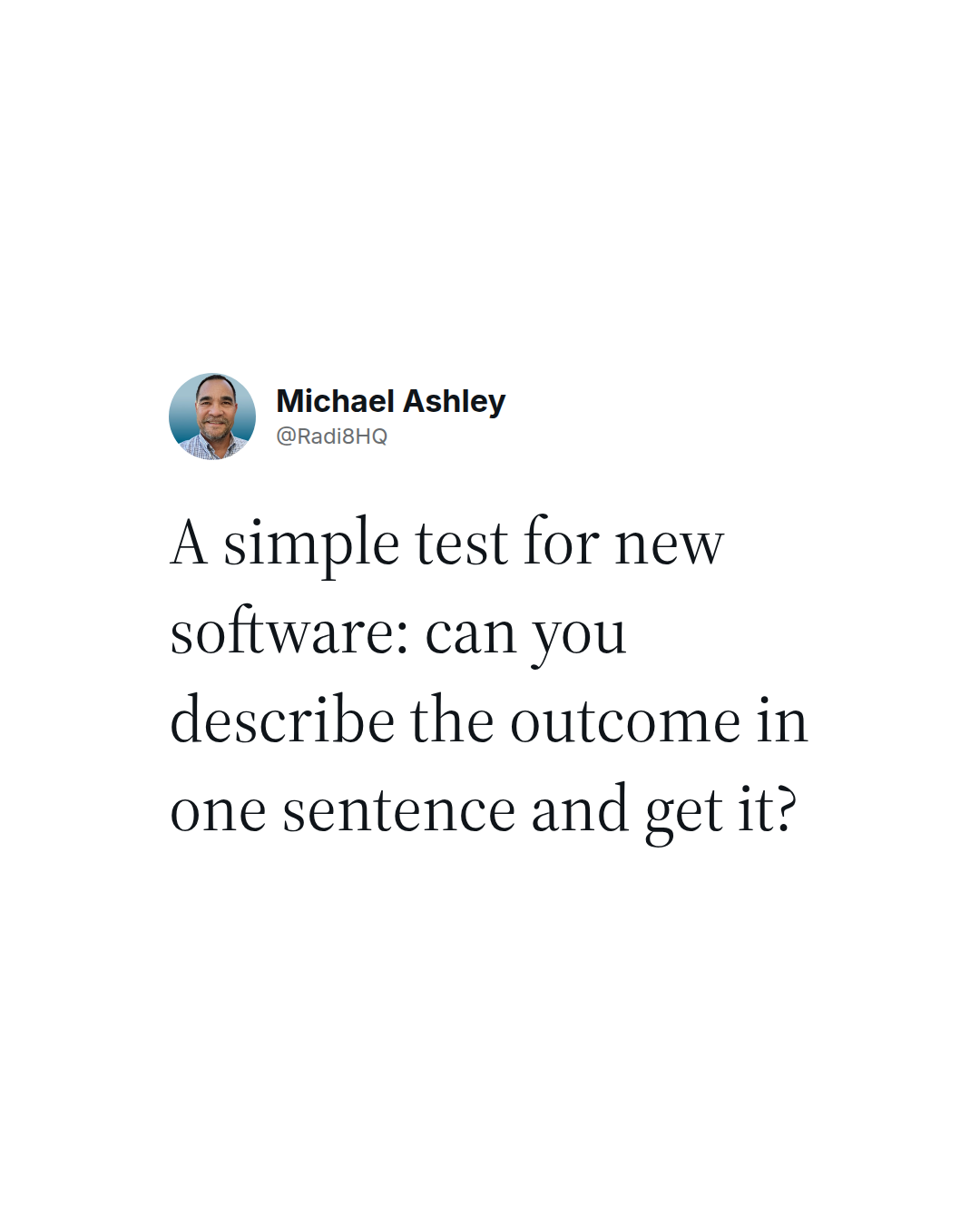
A simple test for new software: can you describe the outcome in one sentence and get it?
I don't want another dashboard... that test is what I'm building Radi8 around: https://www.radi8.com…more
A quick way to tell whether your practice has a pipeline... or just a head start.
Coaches and consultants often tell me their first clients came through word of mouth.
When you were employed, the work found you and the company's brand vouched for you. Then you went out on your own, and the people who already trusted you showed up first.
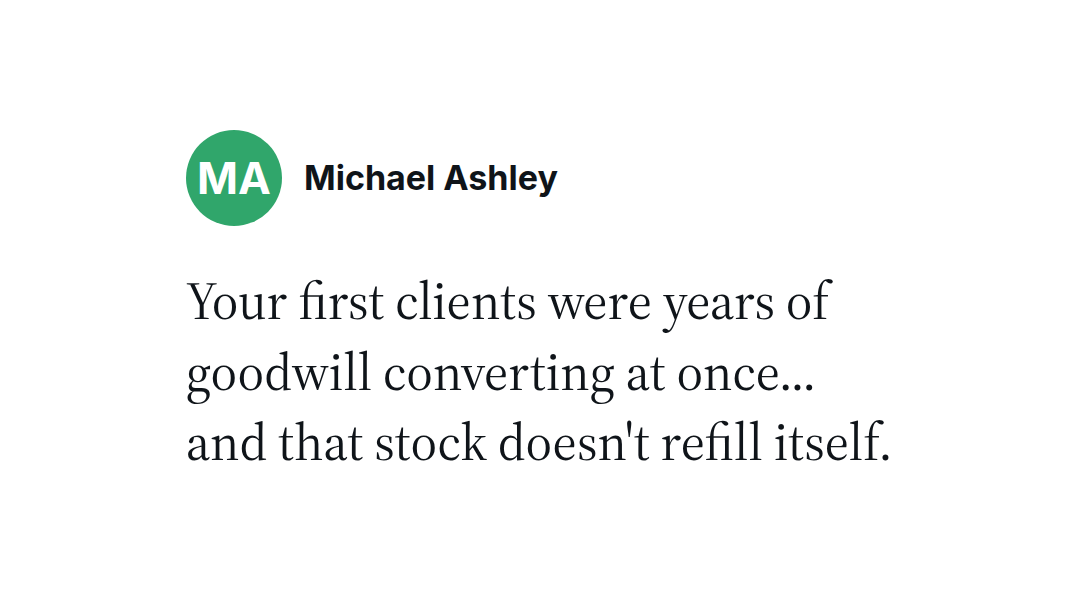
Your first clients were years of goodwill converting at once... and that stock doesn't refill itself.
So try this. List every client you've had and how they found you. If nearly all of them trace back to people who knew you before, you're spending down a head start, and that's usually when feast-or-famine begins.
What looks like a pipeline problem might really be positioning. Two things refill it: a clear way of saying what you do that other people can repeat, and a body of work people outside the old circle can actually see.
My booking page is in the first comment... 30 minutes, and we'll look at which of the two is missing for you.
What refilled your pipeline after the first wave?
#IndependentConsultant#GoingIndependent#Positioning#Coaching#GoToMarket…more
I've watched coaches get hired by their old network... then the calls stop.
Goodwill lands your first clients, then runs out; content marketing is what keeps work flowing.
That second part is why I'm building Radi8: https://www.radi8.com
I don't think word of mouth is a pipeline.
For coaches and consultants, first clients come from goodwill you built up... and it runs out.
Two things refill it: positioning people can repeat, and work they can see.
Even today, I'm a 100% referral-based practice.
Referrals tell me the work is good. On their own, they're a waiting strategy... on someone else's timing.
Why that's not a growth plan: https://youtu.be/vXDMfaJVcNQ
A founder tells me growth stalled after a strong start. I ask where the first customers came from... often, people who knew them.
The first wave of customers is goodwill converting all at once, and it has to be refilled on purpose.
Who's hearing your story now that hasn't met you?
I ask a founder whose growth stalled where the first customers came from.
Often... people who knew them. Goodwill converting all at once, and it won't refill itself.
Who's hearing your story that hasn't met you?
"I need more leads."
That's often the first thing a consultant says to me when we sit down. It sounds like the right problem... honestly, I'd probably start there too.
So the funnel gets tweaked. The LinkedIn profile gets rewritten. The sales call gets rehearsed, again.
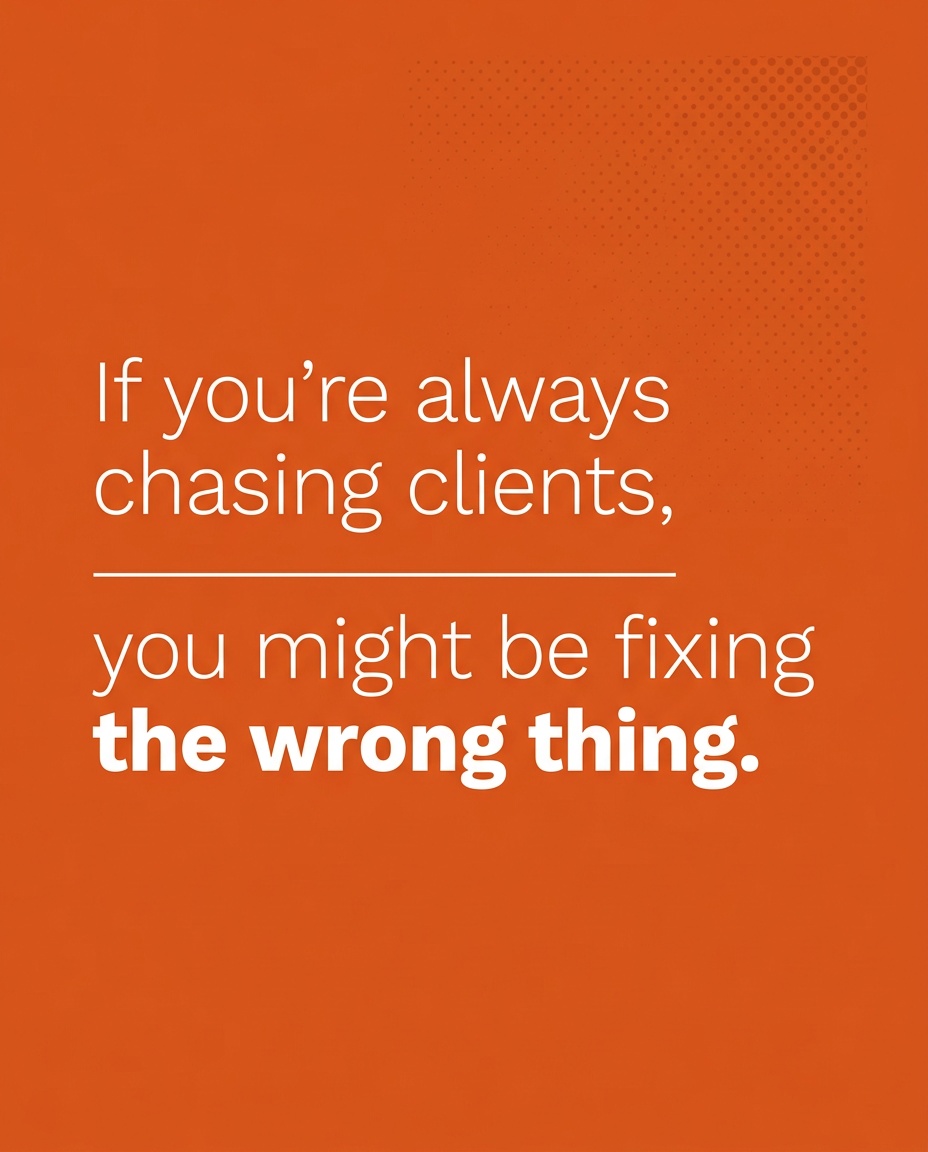
If you're always chasing clients, you might be fixing the wrong thing.
The marketing, the network, the sales call, the funnel... those might be symptoms. What looks like a lead problem might really be the offer underneath all of it: what you're selling and how it's structured.
When the offer describes an outcome someone already wants, the right buyers tend to find you more easily, and the chasing starts to quiet down.
So before you touch the funnel again, ask one question: does my offer describe an outcome... or a list of what I can do?
If you're not sure which one yours is, my booking page is in the first comment. Bring your offer, and in 30 minutes we'll read it the way a buyer would.
#IndependentConsultant#Consulting#Positioning#GoToMarket…more
I've watched founders rebuild the funnel and rewrite the sales call... and still chase every deal.
If you have to chase every customer, the problem might be the offer, not the marketing.
When a coach or consultant tells me their marketing isn't working, the marketing is almost never the problem.
I hear it weekly. "I'm posting. I'm networking. I redid the website. Nothing's landing." The instinct is to fix the visible thing — better content, a new funnel, more activity. But activity was never the issue.
Here's the pattern I've seen across 25 years of building companies and advising businesses. Weak results almost always trace to something upstream. Fuzzy positioning, so you can't say what you do and who it's for in one sentence that lands. Thin customer understanding, so you describe your work in your words instead of your client's. No focus, so you speak to everyone and reach no one.
Marketing amplifies whatever you feed it. Feed it a blurry message and you get blurry results, faster.
Try this test. Describe what you do to a stranger in one sentence. If their next question is "so, what do you actually do?" then you don't have a marketing problem. You have a positioning problem. More posting won't fix that. It just makes the confusion more visible.
The good news: positioning is fixable, and usually fixable fast. It's one clear decision about who you serve and what changes for them, made with real customer evidence instead of guesses. Once that decision is sharp, the same marketing effort starts working, because it finally has something clear to carry.
So a question worth sitting with: if I asked your last three clients what you do, would their answers match each other? And would they match yours?
#IndependentConsultant#Coaching#Positioning#Messaging
"I just need more marketing" rarely fixes a feast-or-famine pipeline. Revenue and followers are downstream... they look fine right up until they don't. The root is usually positioning or a misaligned offer. I dig into it here: https://youtu.be/bb9n-CnDGVA
A founder tells me they need more marketing. I ask who it's for... and the answer often takes a while.
That pause might be the real problem, and it isn't one you can hand off.
What's your one line for who you help?
When a consultant says they need more leads, I read their offer first.
What looks like a lead problem might really be the offer: does it describe an outcome, or a list of what you can do?
Check yours before you fix the funnel.
I've sat with leaders who fixed the funnel, the network, the sales call... and were still chasing every client.
Constant client-chasing might be an offer problem sitting under the marketing.
Why I look there first: https://youtu.be/M58Dnn2UAlM?is=hzrAl7LB9vuXVJ7U
When the clients aren't coming yet, the first move is almost always cosmetic. A new logo. A cleaner website. Fresh business cards. I did the same thing early on... convinced the next redesign was the one that would finally land it.
It almost never is. A website is where your positioning becomes visible to the market, and that's the real work it's quietly doing. When a first site falls flat, it usually isn't the design. It's that the message underneath is still fuzzy, you can't yet say in one plain sentence what you do and who it's for, so even a lovely site ends up saying it lovely and vague.
Get the words right first and the site gets easy... it nearly builds itself once you know what it's supposed to say. That's the part worth slowing down for.
If that's the part you keep circling, book a free 30 minutes with me and ask me anything about your positioning. Link's in the first comment.
How would you explain what you do, in one sentence?
#Positioning#IndependentConsultant#Coaching#GoToMarket#Solopreneur
Why isn't your marketing working?
Before you rewrite the copy again or try another channel, consider that marketing is usually the symptom, not the problem.
When posts don't land and outreach goes quiet, the instinct is to fix the marketing — new hook, new platform, more volume. But if the market can't quickly say who you help and why you, no amount of activity rescues that. Unclear positioning shows up as weak marketing.
I see this with coaches and consultants who are brilliant at the work. The message feels fuzzy, so every campaign has to work twice as hard. Sharpen who you're for, and the marketing gets easier, because now there's something clear to say.
If your marketing feels like a grind, book 30 minutes with me and we'll find the real bottleneck. No pitch, just a clearer read on what's actually stuck: https://calendly.com/foclarity/30min#IndependentConsultant#Coaching#Positioning#GoToMarket
Funnels, platforms, strategy... not first. Elizabeth Greenfield's advice for going independent: get clear on your message. You can't market what you can't articulate. More: https://mashley.com
When a consultant tells me they need more leads, I read their offer first.
Outcome, or a list of what you can do? Check that before you fix the funnel.
I talk through it here: https://youtu.be/vXDMfaJVcNQ
After 25 years building companies, I look at the offer first.
Constant customer-chasing might be an offer problem under the marketing, sales and network fixes.
Tell me the move you're making... 30 minutes to see what's under it: https://calendly.com/foclarity
When a founder tells me they need more leads, I ask about the offer.
More leads might be the wrong fix... the problem under the pipeline is often the offer itself.
Founders, when did you last look hard at yours?
"I need more leads."
Consultants often open with that. What looks like a lead problem might really be the offer.
It sounds like the right problem... I'd probably start there too. So the funnel gets tweaked, the profile rewritten, the sales call rehearsed.
If you're always chasing clients, you might be fixing the wrong thing.
Look under all of it, at what you're selling and how it's structured.
Before you touch the funnel again, ask: does my offer describe an outcome... or a list of what I can do?
#IndependentConsultant#Consulting#Consultants#Coaching#GoingIndependent#Positioning#Solopreneur#FractionalExecutive#GoToMarket
When a founder says they're always chasing customers, I look at the offer first.
Constant chasing might be an offer problem, under the marketing, network, sales call and funnel fixes.
Tell me the move you're making... 30 minutes to look under it: https://calendly.com/foclarity/30min
When a founder tells me they need more leads, I ask about the offer.
"I need more leads" might be a misdiagnosis... the problem under the pipeline is often the offer itself.
How I find the problem under the problem: https://mashley.com
So many coaches I talk to open with "I need marketing."
I get it. You're showing up, posting, updating the website, and it isn't turning into conversations with the right clients. So the obvious fix is more content, more lead gen, more activity.
But what looks like a marketing problem might really be positioning... or not understanding the customer well enough yet. Marketing without clear positioning is just noise, and more of it is louder noise.
That part is the job. Who you help, the problem you solve for them, what they actually care about... you can't hand that off, because nobody knows your clients the way you do. Get that clear first and the marketing finally has something to say.
I still catch myself reaching for more activity before doing that thinking.
So, coaches and consultants... what's the one line you use to describe who you help?
#Coaching#IndependentConsultant#Positioning#Marketing
When everything feels urgent, "what should I do next?" is usually the wrong question.
It hands me whatever's loudest... and I still catch myself asking it.
Better: what step today moves me toward the people I most want to help?
How I find that step with founders: https://mashley.com…more
Someone I admire shared how she gets centered.
Her rule, roughly: when everything feels urgent, ask which step today actually moves you toward the people you most want to serve.
I still catch myself asking "what's next?" instead... which one do you ask?
Someone I admire shared how she gets centered when it all feels urgent.
She asks which step today moves her toward the people she most wants to help.
I still default to "what's next?" Which do you ask?
I use one question when everything on my list feels urgent.
In the middle of a big move... a launch, a new market, a startup that's finally scaling... everything starts to feel urgent at once. The usual question is "what should I do next?" and I've asked it plenty myself. The trouble is it tends to hand you whatever is loudest, the inbox, the fire, the meeting someone moved, and you end the day busier and not much further along.
So I ask a different one, and I still catch myself forgetting to:
When everything feels urgent, ask what step today moves you toward serving the people you most want to help.
It points back at the customer, which might be where the real problem was hiding all along. Then I find the simplest version of that step and take it... today, not after the list is clear.
Founders and CEOs, what question do you use to recentre when everything feels urgent?
#Founders#CEO#Leadership#Strategy
For SBDC advisors and anyone who mentors small business owners, these are the marketing worries I hear most:
What do I write about? How do I set up all these channels? How do I use AI for marketing? How do I do that without it looking like AI slop? My website isn't good enough. My brand isn't clear. How do I build a funnel?
They sound like seven different problems. I don't think they usually are.
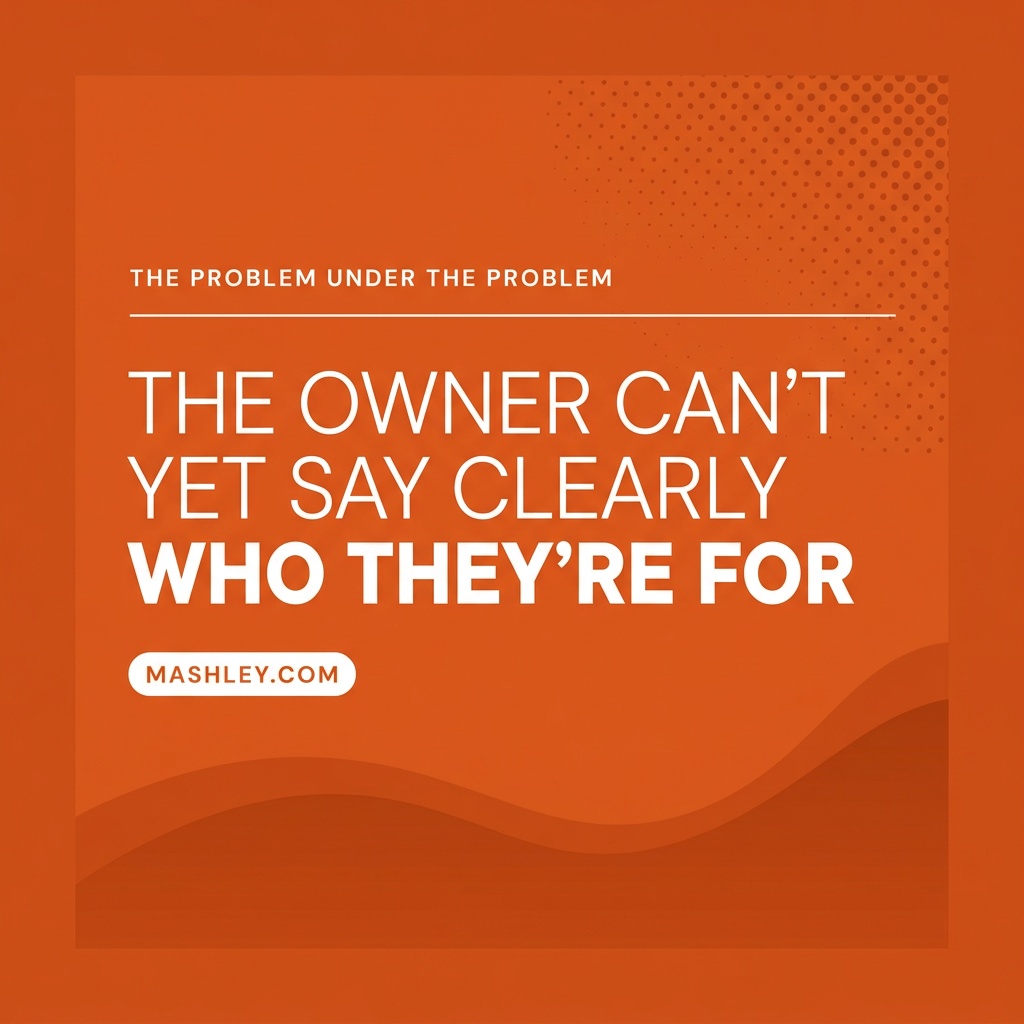
When I dig in, most of them come back to one thing: the owner can't yet say clearly who they're for and what changes for those customers. Without that, every channel feels like a chore, every AI draft sounds generic, and the website can't decide what it's about. Once it's clear, a lot of the rest gets easier... sometimes almost obvious.
So when a client brings you one of these, it might be worth asking the brand question first, before the tools.
What's the marketing worry your clients bring you most?
#SBDC#SmallBusiness#Marketing…more
I've watched great companies lose deals to a simpler pitch.
Twenty-five years of it... the better product might lose to the clearer one more often than founders want to admit.
Look at your website's services page. If it's a menu of everything you can do, customers have to figure out which one fixes their problem. Most won't bother.
Pick the one problem you solve best. Write one plain sentence about who it's for and what changes for them, and put it at the top. Everything else can live further down.
Does your homepage describe an outcome, or a list?
How to turn what lives in your head into an offer that compounds... start by looking back at the work you've already done.
I did the same work informally for two decades before I named it. Coaching, the newest part of my practice, is what finally gave it a name... and it took me a long time to notice.
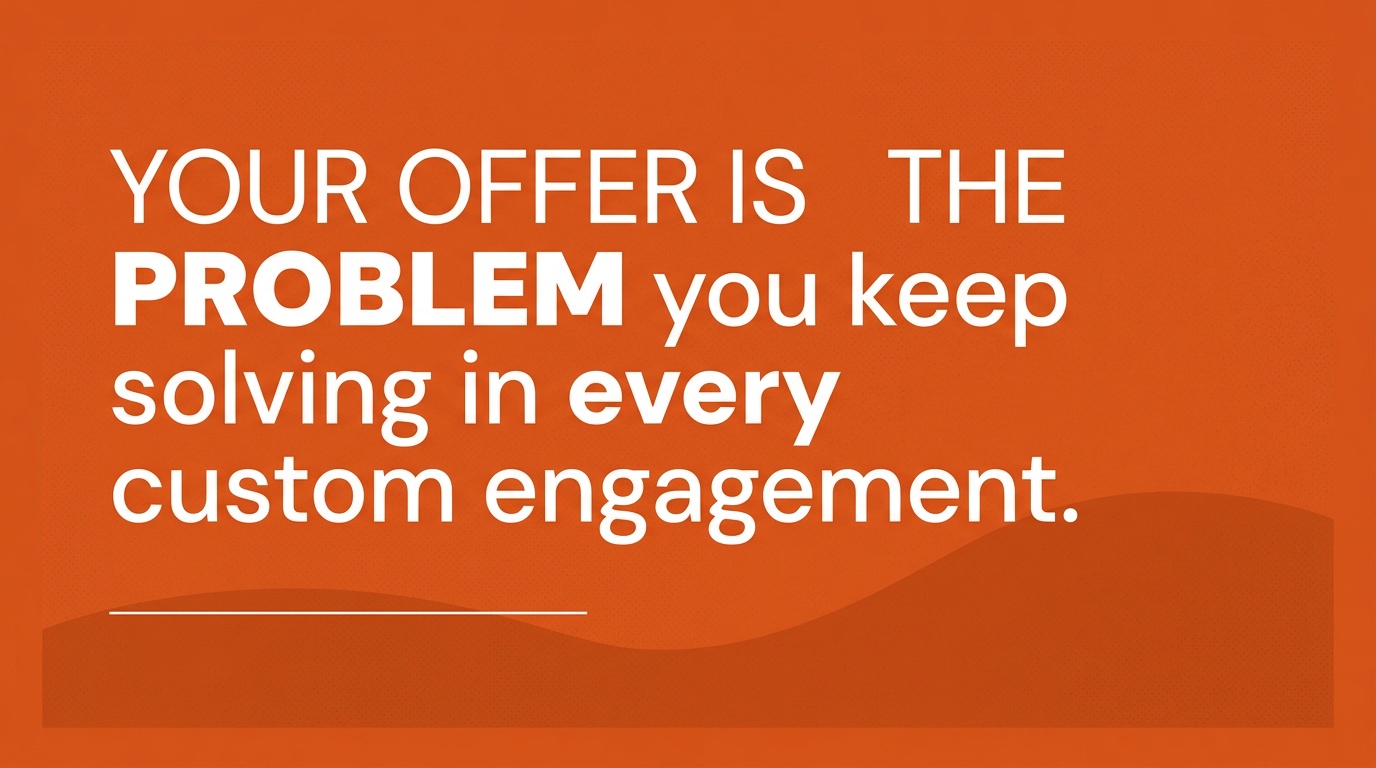
Your offer is the problem you keep solving in every custom engagement.
Coaches and consultants, pull up your last handful of client engagements. Ignore what each one was called when it started, the requests usually look different. Ask what problem you ended up solving underneath. If the same one keeps showing up, that might be your offer.
Then name it, in words a client would actually use. And give it the same shape every time... the same first question, the same steps, the same thing they walk away with.
That shape is what lets each engagement teach the next one something.
Curious what yours might be? Bring a few past engagements to a 30-minute call and we'll look for it together. The link to book is in the first comment.
#IndependentConsultant#Coaching#GoingIndependent#Positioning…more
It took me two decades to name what I do with founders.
The problem under the problem. Once named, it became my platform... how I advise, what I write, what I teach.
Radi8, what I'm building, keeps it in view: https://www.radi8.com
Coaches and consultants, broad positioning probably isn't keeping your options open. If you can't explain who it's for, the market can't repeat it... so it mostly goes unseen. …more
Wrong messaging or wrong list?
This is a common problem with startups and new businesses - is your messaging a reflection of you or your customer? If all your messaging describes you, it doesn’t matter what list you use. If your messaging describes your customer in the pain you solve, and they’re still not responding, it’s probably your list. Here’s a story I just heard from a small business owner. She got featured on a national tv show and thought it would drive sales. After the show aired she got one phone call from a guy who would never be her customer… turns out the people that watch that show are more interested in the drama of business and not her ideal customer profile. …more
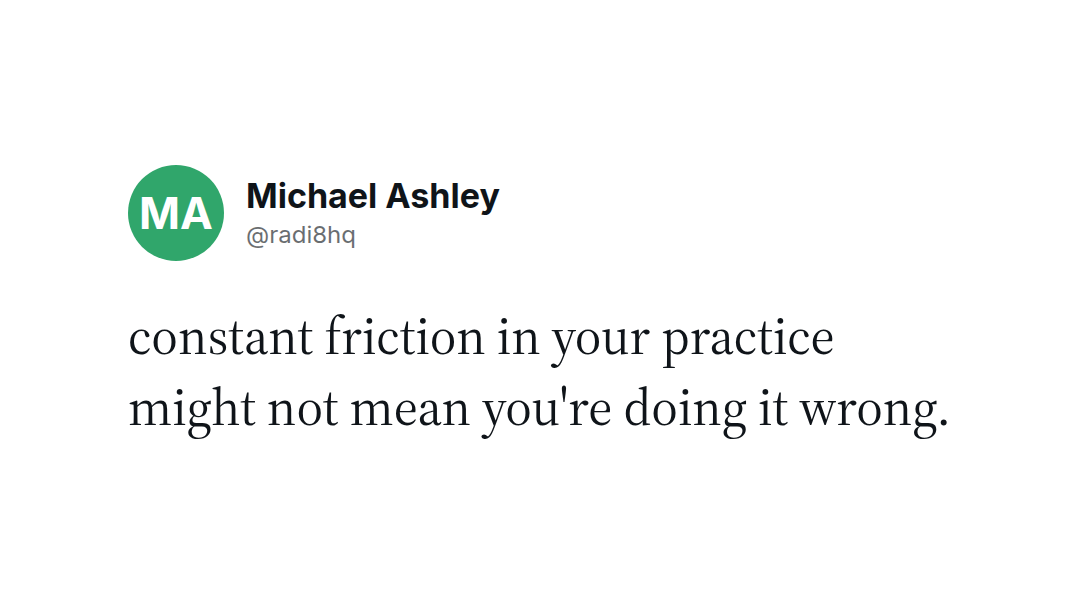
Coaches and consultants... constant friction in your practice might not mean you're doing it wrong. It might be feedback.
Elizabeth Greenfield told me: "I do believe that symptoms will show up and or the external experience is going to feel hard until we start getting in alignment with what we really want."
The friction you keep hitting might be pointing at your positioning, your audience, or your offer.
What's a recurring difficulty in your practice right now that might be pointing you somewhere?
#Coaching#CoachingBusiness#IndependentConsultant#Consultants#Solopreneur#GoingIndependent#Positioning#BuildingAPractice…more
I saved a piece from GaryVee's Substack: wine's best decade could still be ahead... if it gets out of a 1996 mentality.
I'm no wine expert, I'll admit it. But small business owners will recognize the shape of this one.
What looks like a sales problem might really be that you're still selling to the customer you had years ago.
Before you change the offer or the price, it might be worth asking who's actually buying from you now... and how they decide.
When did you last ask a customer why they chose you?
#SmallBusiness#SmallBusinessOwner#CustomerDiscovery#Positioning#Marketing#Sales#BusinessGrowth#Entrepreneurship…more
Coaches and consultants often treat persuasion as the gross part of the job... I'm not convinced it's the problem.
Guy Kawasaki's Substack has a piece on lessons from Robert Cialdini and Zoe Chance about influence you can feel good about. It sent me looking under the discomfort.
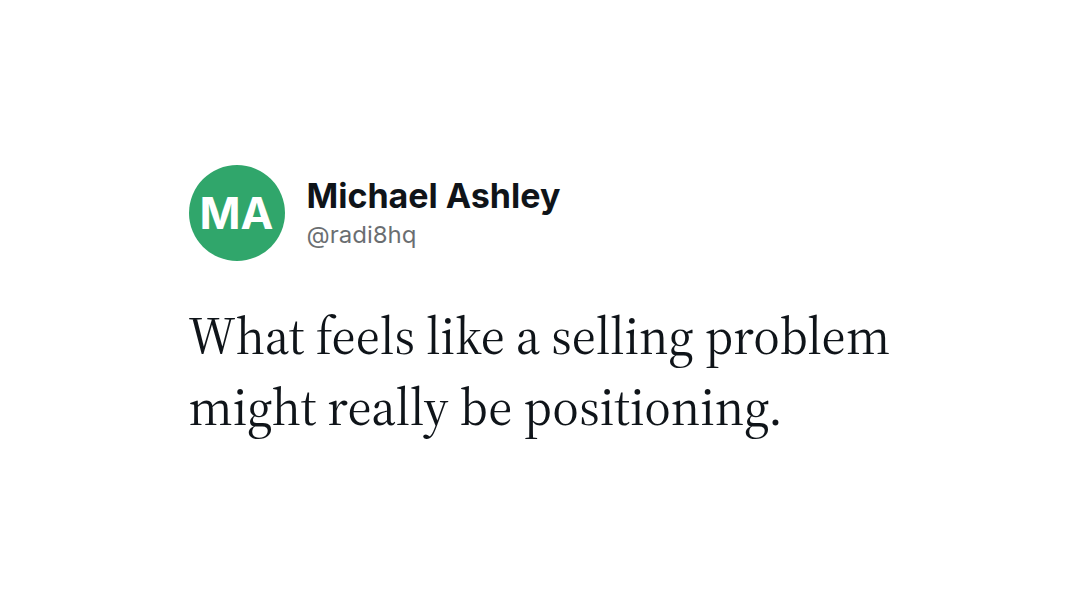
What feels like a selling problem might really be positioning. When you can't say who you help and why, every ask can start to feel like a trick.
If they saw exactly how you got the yes, would you still feel good about it?
Where does the discomfort show up for you?
#IndependentConsultant#ExecutiveCoach#CoachingBusiness#ConsultingBusiness#Positioning#GoingIndependent#Solopreneur#SmallBusinessOwner#PersonalBrand…more


 View on LinkedIn
 View on X


'/%3E%3Cpath fill='%23fff' d='M12 7.3A4.7 4.7 0 1 0 16.7 12 4.7 4.7 0 0 0 12 7.3Zm0 7.8A3.1 3.1 0 1 1 15.1 12 3.1 3.1 0 0 1 12 15.1Zm5-8a1.1 1.1 0 1 0 1.1 1.1A1.1 1.1 0 0 0 17 7.1Zm-5 1.5c-1.5 0-1.7 0-2.3.1a3.8 3.8 0 0 0-1.3.2 2.2 2.2 0 0 0-.8.5 2.2 2.2 0 0 0-.5.8 3.8 3.8 0 0 0-.2 1.3c-.1.6-.1.8-.1 2.3s0 1.7.1 2.3a3.8 3.8 0 0 0 .2 1.3 2.2 2.2 0 0 0 .5.8 2.2 2.2 0 0 0 .8.5 3.8 3.8 0 0 0 1.3.2c.6.1.8.1 2.3.1s1.7 0 2.3-.1a3.8 3.8 0 0 0 1.3-.2 2.5 2.5 0 0 0 1.3-1.3 3.8 3.8 0 0 0 .2-1.3c.1-.6.1-.8.1-2.3s0-1.7-.1-2.3a3.8 3.8 0 0 0-.2-1.3 2.2 2.2 0 0 0-.5-.8 2.2 2.2 0 0 0-.8-.5 3.8 3.8 0 0 0-1.3-.2c-.6-.1-.8-.1-2.3-.1Zm0-1.6c1.5 0 1.7 0 2.4.1a5.5 5.5 0 0 1 1.8.3 3.8 3.8 0 0 1 2.2 2.2 5.5 5.5 0 0 1 .3 1.8c.1.7.1.9.1 2.4s0 1.7-.1 2.4a5.5 5.5 0 0 1-.3 1.8 3.8 3.8 0 0 1-2.2 2.2 5.5 5.5 0 0 1-1.8.3c-.7.1-.9.1-2.4.1s-1.7 0-2.4-.1a5.5 5.5 0 0 1-1.8-.3 3.8 3.8 0 0 1-2.2-2.2 5.5 5.5 0 0 1-.3-1.8C4 13.7 4 13.5 4 12s0-1.7.1-2.4a5.5 5.5 0 0 1 .3-1.8 3.8 3.8 0 0 1 2.2-2.2 5.5 5.5 0 0 1 1.8-.3C10.3 5 10.5 5 12 5Z'/%3E%3C/svg%3E) View on Instagram