
Founder-Led Content

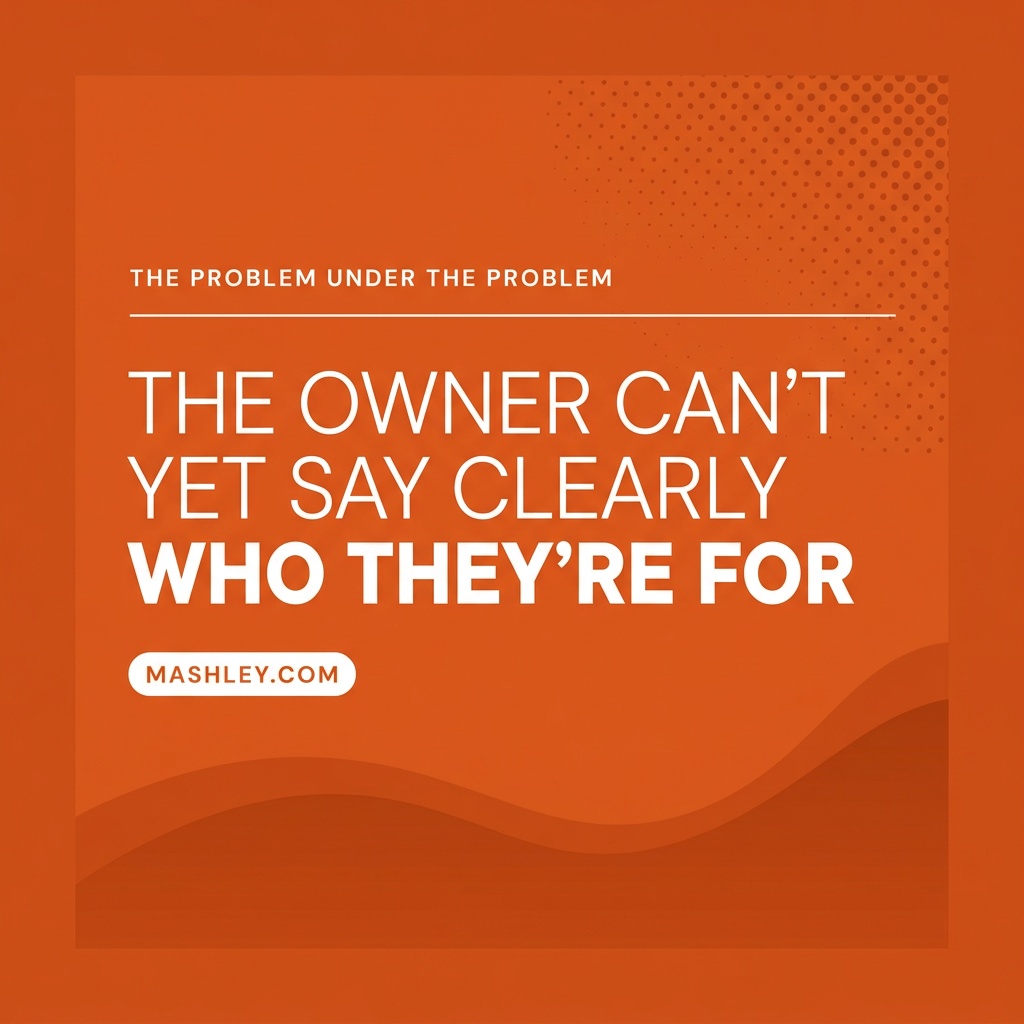
For SBDC advisors and anyone who mentors small business owners, these are the marketing worries I hear most:
What do I write about? How do I set up all these channels? How do I use AI for marketing? How do I do that without it looking like AI slop? My website isn't good enough. My brand isn't clear. How do I build a funnel?
They sound like seven different problems. I don't think they usually are.
When I dig in, most of them come back to one thing: the owner can't yet say clearly who they're for and what changes for those customers. Without that, every channel feels like a chore, every AI draft sounds generic, and the website can't decide what it's about. Once it's clear, a lot of the rest gets easier... sometimes almost obvious.
So when a client brings you one of these, it might be worth asking the brand question first, before the tools.
What's the marketing worry your clients bring you most?
#SBDC #SmallBusiness #Marketing …more
 View on LinkedIn
Also on


Told 4 times, Oct 21, 2026 – Nov 19, 2026
· X · Open
I've watched great companies lose deals to a simpler pitch.
Twenty-five years of it... the better product might lose to the clearer one more often than founders want to admit.
· X · Open
If your website lists everything you do, customers have to figure out which service solves their problem. Most won't.
· Facebook · Open
Look at your website's services page. If it's a menu of everything you can do, customers have to figure out which one fixes their problem. Most won't bother.
Pick the one problem you solve best. Write one plain sentence about who it's for and what changes for them, and put it at the top. Everything else can live further down.
Does your homepage describe an outcome, or a list?
Building Radi8, it took me a while to see I'd rather type the outcome than learn a screen.
Founders, your customers might too... worth knowing before the next feature.
Tell me the move you're making... 30 minutes to look under it: https://calendly.com/foclarity/30min …more
I'm building Radi8 inside ChatGPT and Claude, not behind a dashboard.
I use it every day, and somewhere along the way I noticed what I actually want from software... I don't want another dashboard. I don't want another login, another menu, another screen to learn.
I want to say what I need in a sentence and have it done.
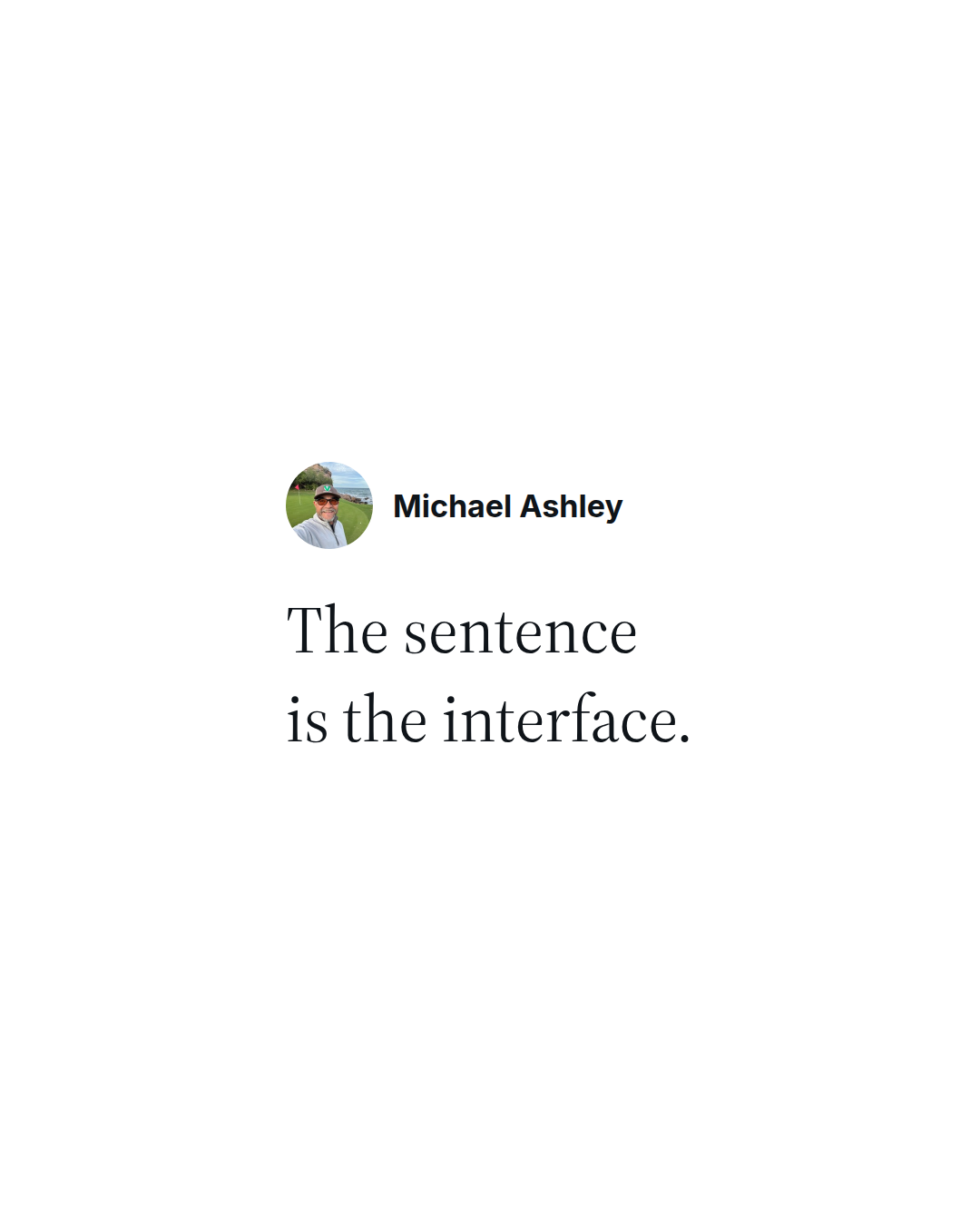
The sentence is the interface.
That changes what the product is for. General AI brings the intelligence. The specialized software has to bring everything the AI can't: who you are, what happened last time, where things stand, and the ability to actually take action.
I might be wrong about how fast this arrives. I'm testing it on myself first, which is the only way I know how to learn anything.
For founders and CEOs launching a product right now, it might be worth asking: if your customers never opened your app again, what would they still pay you for?
#Founders #GoToMarket #AI …more
 View on LinkedIn
Also on
Told 3 times, Nov 5, 2026 – Nov 17, 2026
· Instagram · Open
We still picture software as screens to learn. When people can just type what they want, the sentence becomes the interface.
Building Radi8 inside ChatGPT and Claude showed me this... and it took me longer than I'd like to admit to notice.
Startup founders, that might change what's worth building. I'm still testing it, and I could be wrong about how fast it arrives.
#Founders #Startups #FirstTimeFounder #StartupFounder #BuildInPublic #AI #ProductStrategy #GoToMarket #Entrepreneurship
· Facebook · Open
I'm building Radi8 to live inside ChatGPT and Claude.
The chat is smart. It can write, reason, and talk you through almost anything. But start a new conversation and it doesn't know your voice, your offers, who you're writing for, or what you posted last week.
That part has to live somewhere. In Radi8 it lives in the app... the brand context, the strategy, the posts already published, and the ability to actually save a draft instead of just talking about one.
So the chat brings the intelligence, and the app brings the memory, the context, and the ability to act. Nobody has to learn another dashboard. You say what you want in a sentence, and the sentence becomes the interface.
I'm still figuring out how far this goes, and I could be wrong about parts of it.
Founders building software right now, it might be worth asking what your app knows that the chat never will... that might be the part worth building.
If you're building or using AI tools, what's something you'd rather describe in a sentence than click through?
#Founders #AI
I've written positioning at my desk that didn't survive customers.
It took me a long time to stop doing it. A desk is a comfortable place to decide what customers care about... and it's often wrong, especially when you're launching a product or taking a company into a new market where your assumptions haven't been tested yet.
The clearer version is almost always in how customers describe the problem themselves. Their words, not my framing.
So before I touch the messaging, I ask a few plain questions:
Tell me about the last time this came up.
What did you try?
What did that cost you?
How would you explain the problem to someone on your team?
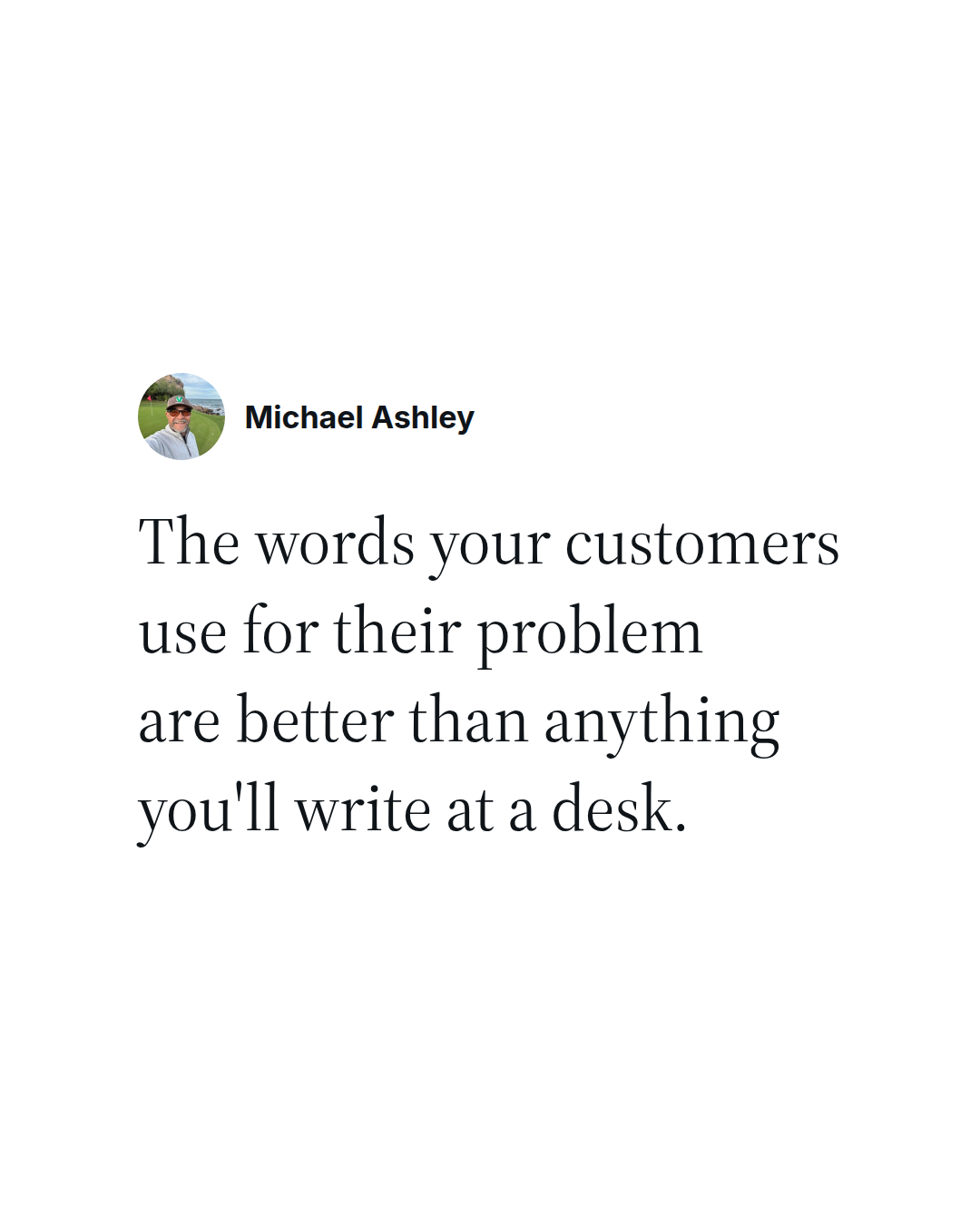
Then I listen, and I write down the exact phrases they use. The words your customers use for their problem are better than anything you'll write at a desk.
Pick three customers this week and ask them.
What's a phrase a customer used that changed how you describe what you do?
#Founders #CEO #GoToMarket #Positioning …more
 View on LinkedIn
Also on
My AI writes well. It just doesn't remember who I'm writing for.
The writing part is mostly solved. Ask ChatGPT or Claude for a post and you'll get clean sentences in seconds.
What it doesn't have is everything around the sentence... who you help, what you offer, how you sound, what you said last week, what's already on the calendar. Start a new chat and most of that is gone. So you explain it all again, or you settle for something generic.
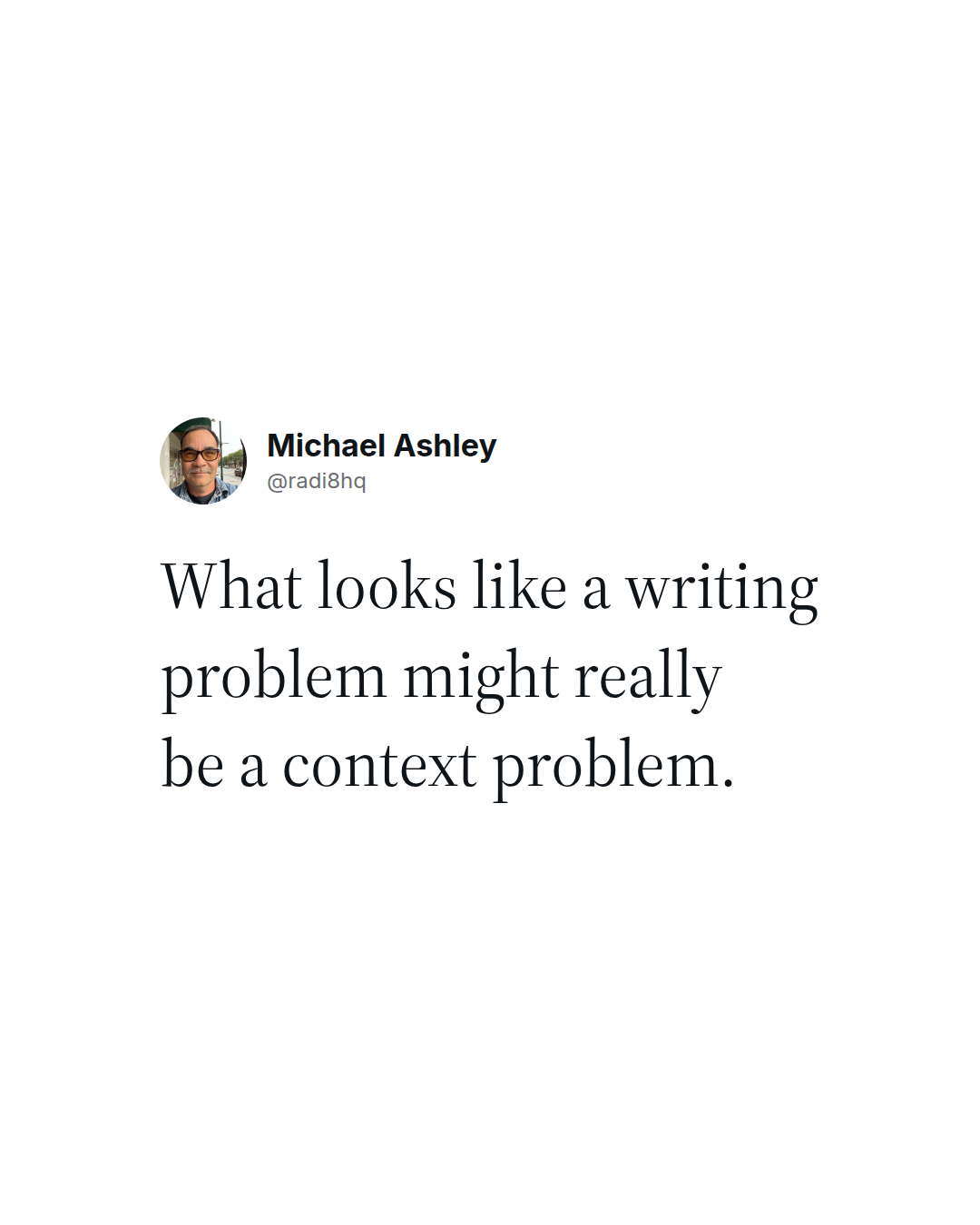
What looks like a writing problem might really be a context problem.
That's a big part of why I'm building Radi8 the way I am. I think chat may become the interface for a lot of software, and the specialized app's job is to supply what general AI can't hold on to by itself: memory, context, state, and the ability to actually do things, like save a draft or line up a week of posts.
You describe the outcome in a sentence. The app brings what it knows about you. Fewer dashboards to learn.
I'm still testing this thesis, and I might be wrong about how fast it happens... but I'd rather build toward it and learn from what breaks.
If you use AI in your business, what do you find yourself re-explaining every single time?
#Founders #Startups #AI #AINativeSoftware #ProductDesign #BuildingInPublic #Entrepreneurship #SmallBusinessOwner #IndependentConsultant #Coaching …more
'/%3E%3Cpath fill='%23fff' d='M12 7.3A4.7 4.7 0 1 0 16.7 12 4.7 4.7 0 0 0 12 7.3Zm0 7.8A3.1 3.1 0 1 1 15.1 12 3.1 3.1 0 0 1 12 15.1Zm5-8a1.1 1.1 0 1 0 1.1 1.1A1.1 1.1 0 0 0 17 7.1Zm-5 1.5c-1.5 0-1.7 0-2.3.1a3.8 3.8 0 0 0-1.3.2 2.2 2.2 0 0 0-.8.5 2.2 2.2 0 0 0-.5.8 3.8 3.8 0 0 0-.2 1.3c-.1.6-.1.8-.1 2.3s0 1.7.1 2.3a3.8 3.8 0 0 0 .2 1.3 2.2 2.2 0 0 0 .5.8 2.2 2.2 0 0 0 .8.5 3.8 3.8 0 0 0 1.3.2c.6.1.8.1 2.3.1s1.7 0 2.3-.1a3.8 3.8 0 0 0 1.3-.2 2.5 2.5 0 0 0 1.3-1.3 3.8 3.8 0 0 0 .2-1.3c.1-.6.1-.8.1-2.3s0-1.7-.1-2.3a3.8 3.8 0 0 0-.2-1.3 2.2 2.2 0 0 0-.5-.8 2.2 2.2 0 0 0-.8-.5 3.8 3.8 0 0 0-1.3-.2c-.6-.1-.8-.1-2.3-.1Zm0-1.6c1.5 0 1.7 0 2.4.1a5.5 5.5 0 0 1 1.8.3 3.8 3.8 0 0 1 2.2 2.2 5.5 5.5 0 0 1 .3 1.8c.1.7.1.9.1 2.4s0 1.7-.1 2.4a5.5 5.5 0 0 1-.3 1.8 3.8 3.8 0 0 1-2.2 2.2 5.5 5.5 0 0 1-1.8.3c-.7.1-.9.1-2.4.1s-1.7 0-2.4-.1a5.5 5.5 0 0 1-1.8-.3 3.8 3.8 0 0 1-2.2-2.2 5.5 5.5 0 0 1-.3-1.8C4 13.7 4 13.5 4 12s0-1.7.1-2.4a5.5 5.5 0 0 1 .3-1.8 3.8 3.8 0 0 1 2.2-2.2 5.5 5.5 0 0 1 1.8-.3C10.3 5 10.5 5 12 5Z'/%3E%3C/svg%3E) View on Instagram
Also on
Told 2 times, Nov 15, 2026
· Facebook · Open
I don't think anyone needs a better AI writer anymore.
ChatGPT and Claude already write well. Clean sentences, decent structure, fast. When a post still comes out sounding off, I don't think the writing is what broke.
What looks like a writing problem might really be a context problem. The AI doesn't know who you help, the problem you solve for them, why they'd care, what you said last week, or what you're actually offering. So every new chat starts from zero... and you either explain yourself all over again, or settle for something that sounds like everybody else.
My bet is that the chat becomes the interface. You describe the outcome you want instead of learning another dashboard. The specialized apps underneath supply what a general AI can't hold onto by itself: what it knows about you, a memory of what's already happened, where things stand right now, and the ability to actually get it done.
That's the bet I'm testing while building Radi8 inside ChatGPT and Claude. I don't have it all figured out... I'm learning as I go, same as everyone building with this stuff.
So I'm curious. When AI writes something for you and it misses, what's it usually missing?
#Founders #AI
When someone tells me they need VC, I say: go to the bank right now.
Before you chase investors, ask your bank about a credit line... it might be the simplest next step.
I say it with more energy here: https://youtu.be/M58Dnn2UAlM?is=hzrAl7LB9vuXVJ7U …more
 View on X
Also on
Told 2 times, Nov 13, 2026 – Nov 14, 2026
· X · Open
I got asked how to show a track record without a highlight reel.
Keep a decision log: five big calls, what you knew, what you chose, what happened. Include one you got wrong... the miss shows how you think.
I say more here: https://youtu.be/M58Dnn2UAlM?is=hzrAl7LB9vuXVJ7U
Most coaches and consultants I talk to think visibility comes in two flavors, and they hate both.
Flavor one: stay invisible. Do great work, keep your head down, hope the right clients somehow trip over you.
Flavor two: become a "LinkedIn person." Hot takes, humble-brags, a carousel about your morning routine, everything engineered for reach. For a mission-driven practitioner, that's the nightmare. It feels like performing a version of yourself you don't even like.
So they pick invisible. Because if those are the only two options, invisible at least feels honest.
Here's the thing though. That's a false choice.
There's a third option, and it's the one that actually earns trust: a body of work. Not reach-chasing. Not a highlight reel. Just your real thinking, shared consistently, so people can see how you decide before they ever reach out.
And you already produce this thinking. Every week you're diagnosing a client's real problem, talking someone off a bad decision, spotting the pattern they couldn't see. That's not content you have to manufacture. It's work you're already doing in private. Making it visible isn't performing — it's letting the right people watch how you think.
Performative posting optimizes for who's watching this week. A body of work is evidence that accumulates. Buyers don't trust claims. They trust judgment they can see demonstrated over time.
You don't have to choose between hiding and turning into someone you'd mute.
So I'm curious. What holds you back more — not knowing what to say, or not wanting to sound like a "LinkedIn person"?
#IndependentConsultant #Coaching #GoingIndependent #PersonalBrand #ThoughtLeadership …more
This post has video.
Watch it on the channel.
Told 5 times, Jun 24, 2026 – Nov 3, 2026
· LinkedIn · Open
Why founder-led content isn't marketing.
At least not primarily.
For consultants, advisors, founders, coaches, and experts, founder-led content serves a different purpose.
It's reputation.
Every post is a tiny piece of evidence about how you think.
Your judgment.
Your experience.
Your perspective.
One post rarely matters.
But hundreds do.
Over time, people begin to recognize your name.
They understand your philosophy.
They trust your approach.
By the time they reach out, they've often already decided you're someone worth talking to.
That's not marketing.
That's reputation compounding in public.
The strongest founder-led content isn't trying to go viral.
It's helping the right people understand how you think.
· Bluesky · Open
One page per expert, every post exactly as published, linked to the original... that's Radi8 Social, which we introduced on the Radi8 blog.
A visible body of work outweighs a resume because it's evidence, not claims.
What would yours show?
· LinkedIn · Open
Most coaches and consultants I work with hate self-promotion. Good news: what actually builds a practice is something else entirely.
Self-promotion means making claims about yourself. I'm great, hire me. Nobody wants to write that, and nobody wants to read it. A reputation gets built on evidence instead — showing your thinking in public, consistently, until people can see how you work before they ever talk to you.
One is bragging. The other is teaching.
When you share how you'd approach a problem, what a client situation taught you, or the question you'd ask before a big decision, you're demonstrating judgment. The reader draws their own conclusion, which was always the only conclusion that mattered. People trust a pattern they've watched form far more than any claim.
So "I'm uncomfortable promoting myself" doesn't have to hold your practice back. The real assignment is visibility, and visibility runs on teaching, which you already do every day. If you can explain something to a client across the table, you can explain it in a post. Same act, bigger room.
The discomfort is real. I've watched dozens of brilliant people wrestle with it. Notice what it's usually attached to, though: a picture of marketing as boasting. Replace the picture, and the rest gets easier. Evidence, shared consistently, in your own voice.
What's one thing you explained to a client this week that would have been worth sharing with a hundred more people just like them?
#IndependentConsultant #Coaching #PersonalBrand #ThoughtLeadership
· LinkedIn · Open
Here's a way to start showing up when self-promotion feels like it's "not who I am."
Share one thing you already know. Then do it again next week. That's it... no big budget, no perfect plan required.
Most of the coaches and consultants I talk to aren't short on ability. They're brilliant at the work. That "who am I to post?" feeling might be less about whether you're good enough, and more about the title you set down when you went out on your own... the org that vouched for you, the name that said "she's the expert" before she walked in the room. Losing that stings. It isn't proof you're not ready.
Getting seen isn't bragging... it's just sharing what you know, consistently, until there's a body of work behind you. Evidence instead of claims.
I got into all of this on a recent podcast, worth a listen if you're wrestling with it. Link in the first comment.
So what's actually holding you back from posting?
#Coaching #IndependentConsultant #GoingIndependent #ThoughtLeadership #PersonalBrand
You did the podcast recording, congrats. Did you promote it well?
All that material, one lap around your channels, and then silence.
That was me with the Inspiring Founders Podcast. I'd interview a founder, get the show up on YouTube and Spotify, promote it on LinkedIn, Facebook, X, and Bluesky... and then move on to the next one. The conversations were good, the founders were generous with what they knew, and most of it never got heard again after launch week. It took me longer than I'd like to admit to notice I was doing the hardest part and skipping the part that gets it heard.
So now I drop the YouTube URL into Radi8. It gives me a list of topics and ideas from the episode. I pick the ones I want, generate post ideas, then draft and schedule them. One episode becomes a month of posts across all my channels, each one sending people back to the original show.
You already did the hard part.
If you've got a podcast episode sitting there after its one lap, drop the link in the comments and I'll give you a live demo of how it works.
#Podcasting #Founders #Marketing …more
The question I hear most from small business owners about marketing: "What do I even write about?"
Every question a customer has asked you is a post. The thing you explain on every first call. The mistake you see new customers make. If one person asked, others are wondering too.
Keep a note on your phone and write each question down in their words. Then answer one a week, like they're sitting across the table from you.
What's the question you answer most often? …more
View on Facebook
Also on
Told 2 times, Oct 27, 2026
· Bluesky · Open
The question I hear most from small business owners: what do I even write about? Every question a customer has asked you is a post. Keep a note on your phone, write each one down in their words, then answer one a week like they're sitting across from you.
I’m not that great at making LinkedIn videos… but I’m getting better.
I’m trying to do the selfie video thing so I can have content that’s clearly not AI - and since AI creates mostly perfect images and even video now, I figured seeing my amateur attempts will add some HUMAN to your day.
If you’re up for it, I’d love to see your videos too. Don’t worry if they suck. It’s way more interesting than a perfectly written manifesto on getting rich quick. …more
This post has video.
Watch it on the channel.
What's actually being evaluated when someone decides to hire you?
It isn't your resume. A resume is a list of claims, and everyone's list reads impressive. What people trust is evidence... the posts, the talks, the work they can watch you do before they ever pay you. That's the part that compounds. A good piece keeps working a year later, sitting next to the next one, and the next.
I learned this the slow way. For years I trusted the work to find me, because inside a company it did. On your own, nobody vouches for you but the body of work you've made public.
If you're building a practice and you want to be in a room with people making the same leap, click through and see who's inside Inspiring Founders: https://inspiringfounders.com
It's the room where the reputations get built out loud. Come start yours. …more
This post has video.
Watch it on the channel.
Channel names and logos are trademarks of their respective owners.