
Founder-Led Content

 View on X
I'll be honest: I've never been someone who enjoys scrolling LinkedIn or crafting the perfect post.
But I've built four companies, and I know that consistent visibility is not optional if you're trying to build pipeline without a big marketing budget.
So a few years ago I stopped trying to enjoy it and started trying to systematize it.
Here's what changed everything: I stopped thinking in posts and started thinking in presence.
The insight is this — you don't need to post every day to build an audience. You need to post consistently on a rhythm your audience can predict. Two high-quality posts a week, every week, will outperform seven mediocre ones every time. Consistency at a sustainable cadence compounds. Intensity that burns out doesn't.
My system:
- One Monday morning session per week, about an hour
- I pick a theme for the week (one idea, not five)
- I draft all posts from that theme while I'm in "planning mode"
- I schedule everything before I close the laptop
- I don't touch it again until next Monday
The key is separating thinking from writing from scheduling. When you collapse them into one frantic "I need to post something" moment, it feels hard every single time.
How often are you actually posting vs. how often you think you should be? Curious what that gap looks like for people — drop it in the comments. …more
 View on LinkedIn
Told 4 times, Jun 22, 2026 – Aug 26, 2026
· X · Open
After 25+ years building companies, here's a lesson I wish I'd learned sooner:
Consistency beats intensity.
Two good posts every week for a year will outperform a burst of daily posting followed by silence.
Visibility compounds. Burnout doesn't.
· LinkedIn · Open
How do you stay visible without posting every single day?
A client asked me that this week. She's a coach, brilliant at the work, and convinced consistency meant a daily grind she couldn't keep up around real client work.
Here's what I told her. It looks like a volume problem. It's actually a system problem. Showing up consistently isn't about posting more. It's about setting your voice once, planning a few weeks ahead, and drafting in minutes so a busy stretch doesn't knock you off the map. Consistency beats frequency. Three good posts a week you can sustain will always outrun a daily sprint you abandon by Thursday.
That's the reason Radi8 exists for solo experts: to make showing up practical instead of exhausting.
Want to map a cadence that actually fits your practice? Book 30 minutes with me and we'll work it out, no pitch: https://calendly.com/foclarity/30min
What's your realistic cadence — and what makes it stick when you're busy with client work?
#PersonalBrand #Coaching #IndependentConsultant #ThoughtLeadership #AIforBusiness
· X · Open
Coaches and consultants: does staying visible really mean posting daily? It doesn't. Clients trust judgment they see over time, not volume. See how peers keep it consistent in my community: https://inspiringfounders.com
Most people going independent think visibility is a numbers game. It isn't. It's a memory game.
Your brand is a promise, and a promise only means something once someone has watched you keep it. That's the part the follower count misses. Likes and impressions tell you a post traveled. They say nothing about whether anyone now trusts how you think. Those are two different accomplishments, and only one of them wins clients.
Here's what I've seen over 25 years of building companies and advising people who are great at the work: reach is a symptom, judgment is the asset. When you left the org, you didn't just lose the title. You lost the thing that used to vouch for your judgment — the brand behind you, the internal reputation that meant the work found you. Now you're building that proof from scratch, in public, one decision at a time.
So the goal isn't to be seen more. It's to be seen thinking. When you share how you'd approach a messy client situation, the question you'd ask before a big call, what a project taught you the hard way — you're not chasing attention. You're compounding evidence. A prospect who has watched you reason through six real problems doesn't need a sales pitch. They already know how you'd handle theirs.
That's why the vanity metrics are a poor scoreboard. A post that reaches 10,000 strangers and changes no one's mind is worth less than one that reaches 200 of the right people and makes three of them think, "I want this person in the room when I decide." Demonstrated judgment, consistently, over time — that's a reputation the market can actually see, and it's the one that outlasts any single post.
So a question worth sitting with: when you look back at what you've shared this year, does it show people how you think — or just prove that you posted?
#IndependentConsultant #Coaching #PersonalBrand #ThoughtLeadership #GoingIndependent …more

Told 2 times, Jul 23, 2026 – Aug 22, 2026
· X · Open
People don't buy when they trust you. They buy when they've already seen how you think. What have you let them see lately?
The blank page is not a creativity problem.
It is a starting problem. And for most independent consultants, coaches, and advisors trying to build visibility on their own, the starting problem wins more often than it should.
You know what you want to say. You have the thinking. What you do not have is a first draft — and without one, the post never gets written, the video never gets recorded, and another week passes without showing up where your future clients can find you.
Radi8 removes that specific barrier.
Before it generates anything, Radi8 learns your brand, your voice, your positioning, and your marketing goals. That matters. It means the draft it produces is not a generic content block you have to tear apart and rebuild. It is a working document — shaped by your strategy — that you review, adjust, and approve.
Editing a draft is a fundamentally different task than creating from nothing. It is faster, lower friction, and far more likely to actually get done.
From there, the path is straightforward. Open the built-in teleprompter, read your approved script, and record once. Radi8 handles video compression and adds captions automatically. Then schedule it, and Radi8 publishes to your channels.
One session. One take. Content across your platforms.
Visibility does not require a production team or a content manager. It requires removing the part that stops most people: the blank page.
If getting visible and staying consistent has been the goal but the execution keeps stalling, try Radi8. The trial is a practical way to see whether a tool that knows your brand before it writes a word changes how you show up.
#IndependentConsultant #ThoughtLeadership …more
This post has video.
Watch it on the channel.
Have you ever wanted to record videos with a Teleprompter? Well now you can because there is a Teleprompter built into the Radi8 app. But this is a special Teleprompter because it pauses when you pause, and it picks up when you are ready to start talking again. Give it a try or send me a message and I’ll show you a demo. …more
This post has video.
Watch it on the channel.
I built a teleprompter into Radi8 because of one conversation.
A customer told me she can write all day. Put a camera in front of her and it falls apart. She's not alone in that, and I'm not immune to it either.
Here's what I think is actually going on. People assume video is a confidence problem. It's usually a script problem. You sit down to record, you know roughly what you want to say, and somewhere in the second sentence you lose the thread. So you start over. Then you start over again. Twenty minutes later you close the app and tell yourself you'll get to it next week.
The workflow made it worse. Your post lives in one place, your script in another, the recording on your phone, the file somewhere in between. Four tools to add sixty seconds of video to something you already wrote.
So we put it inside the draft.
Write your post in Radi8. Click the teleprompter button. It turns your post into a script that fits the length you choose: 30, 60, 90 seconds, or set your own. You record right in the browser. Nothing to install. Save it, attach it to the post, schedule it. Works for LinkedIn, Instagram, Facebook, and X.
I recorded videos for every post going out this week. Took about 30 minutes.
A body of work is evidence. Your face and your voice on that work is better evidence, because people get to see how you think before they ever talk to you.
Demo video in the first comment.
For those of you who've been avoiding video: is it the camera, or is it not knowing what to say once it's rolling? …more
Told 2 times, Aug 17, 2026
· X · Open
Video isn't a confidence problem. It's a script problem. Radi8 now fixes the script part: https://www.youtube.com/watch?v=yj5yhE37USM
How do you make your track record legible to the right clients without it turning into a highlight reel?
You spent a career making good calls. Now you're out on your own, and here's the trap: a list of wins is a highlight reel, and coaches and consultants who go independent learn fast that buyers are suspicious of those. A highlight reel shows outcomes. It hides what a prospective client actually wants to see — how you think.
Your judgment is what you're really selling. So show the calls, not just the trophies. The bet you made when the data was thin. The client you turned away. The problem you named before anyone else saw it. When you narrate the decision — the options, the reasoning, what you'd do again — a stranger can watch how you decide. That's credibility someone can verify, not applause they take on faith.
Want help turning your judgment into a body of work the right clients can actually read? Start here: https://mashley.com
#IndependentConsultant #Coaching #GoingIndependent #ThoughtLeadership #Positioning …more
This post has video.
Watch it on the channel.
This is how you create great content for your customers - be specific, generous, and valuable.
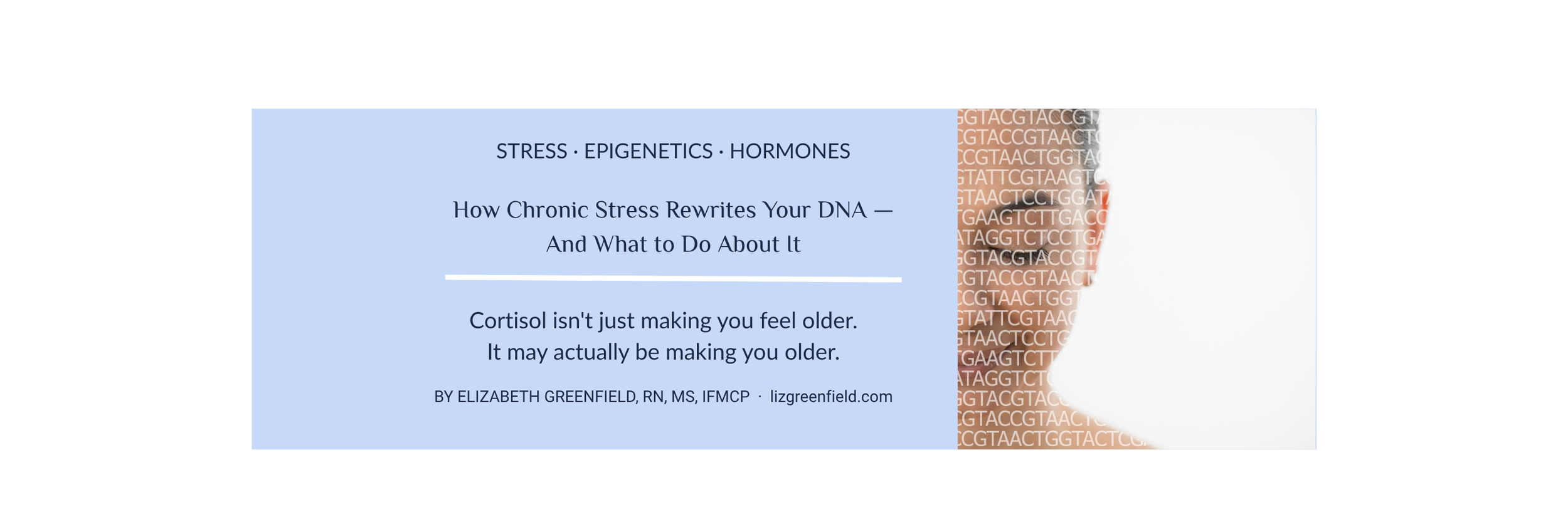
Elizabeth Greenfield runs a functional wellness practice. Her ideal clients are people dealing with exhaustion, weight gain, and feeling wired despite doing everything right. Classic signs of chronic stress.
She could post generic wellness tips. Drink more water. Get more sleep. Eat better.
Instead, she publishes content that connects stress to something most people don't know about: how cortisol alters DNA methylation and accelerates biological aging at the cellular level.
That level of specificity does two things.
First, it signals expertise. It shows she understands the root cause, not just the symptoms.
Second, it attracts the right people. Someone who's tried everything and still feels terrible is going to stop scrolling when they see content that explains why nothing has worked.
This is the pattern I see in content that actually converts.
It's not about being everywhere or posting every day. It's about understanding your audience well enough to name the problem they're experiencing in a way that makes them feel seen.
If you're struggling to figure out what to post, start here:
What's the specific problem your ideal customer is dealing with right now? Not the surface-level frustration. The underlying issue they might not even have words for yet.
Then create content that connects the dots.
You don't need a big budget or a content team. You need clarity on what your audience is trying to solve.
If you want help translating that into a repeatable content workflow, comment and I'll reach out.
https://www.lizgreenfield.com/blog-1-1/h08r5dhgllb0kfyalh0zrty7ukbgic …more
Told 3 times, May 20, 2026 – Aug 4, 2026
· LinkedIn · Open
I've launched four companies. Each one taught me something different about marketing.
But the lesson that shows up every single time is this: the product rarely loses. The story does.
At my second company, we had a genuinely better product than the competition. Better features, better pricing, better support. We still struggled to get traction for the first year.
When I finally sat down and rewrote our messaging, I realized what was wrong. Everything we said described what we built. None of it named the problem our customer was already losing sleep over.
The fix was simple but not obvious: lead with the pain, not the product.
Before: "We help companies manage distributed teams more efficiently."
After: "Your best people are burning out because they're spending half their day coordinating instead of building."
Same product. Completely different response.
The rule I now follow for every piece of marketing copy: if you could put your competitor's logo on it and it would still make sense, rewrite it. Your message should only work for you.
What's the last message you changed that had a bigger impact than you expected?
· LinkedIn · Open
The post that earns a hundred likes from other consultants is often the same one that wins zero clients.
When you're new to being visible, you write toward the approval that feels safest. Other people in your field. Former colleagues. The peers whose respect you spent a career earning. They understand your shorthand. They nod at the clever framework. They leave the generous comment that makes posting feel worth it.
But the client you want is almost never in that room.
It looks like a content problem. It's actually a customer-understanding problem. Writing for your friends, you reach for what impresses people who already know the field. Writing for your customer, you reach for the thing keeping them up at 2am — described in the plain words they'd actually use, not the vocabulary of your profession.
Those two audiences want opposite things. Your peers want to see how much you know. Your customer wants to feel understood. The more you optimize for the first, the more invisible you become to the second, because sophistication reads as noise to someone who just wants their problem named.
Read your last five posts and ask who would nod hardest. If it's people who could do your job, you're writing for the wrong room. If it's people who'd hire you, you're getting warm.
The fix isn't louder or more polished. It's a smaller, clearer picture of one person you're trying to help, and the discipline to write to them even when the applause comes from somewhere else.
When you catch yourself writing for the room instead of the client, what usually pulls you back?
#IndependentConsultant #Coaching #Positioning #CustomerDiscovery #ThoughtLeadership
A resume is a list of claims. A body of work is evidence. The market has quietly stopped trusting the first and started reading the second.
For most of your career, your judgment was vouched for by things around you. The title said you were senior. The company's name meant the work found you and the brand stood behind it. Your reputation lived inside the building, in the heads of the people who watched you do the work. A resume was enough because it pointed back to institutions that carried the weight for you.
Then you left. The title, the brand, the internal reputation — that whole apparatus stayed behind. And a resume, on its own, is a set of assertions a stranger has no reason to believe.
Here's the shift underneath it. Professional identity moved from private to public. People used to bring you in on the strength of where you'd been. Now they want to see how you think before they ever reach out. Not a claim that you're good. Evidence, out in the open, that they can read for themselves.
That's what a body of work is. A post that walks through how you'd approach a messy problem. A talk. A teardown of something in your field. Each one is a small piece of proof, and over time they add up to something a resume can't produce: a picture of your judgment that the right client can study before they spend a dollar.
This is why visibility isn't vanity. You're not performing. You're building the evidence that used to be someone else's job to provide, so the right people can see how you think and decide they want you in the room.
What's one piece of work that brought you a client — a post, a talk, a teardown? And what made it land?
#IndependentConsultant #Coaching #GoingIndependent #PersonalBrand #ThoughtLeadership …more
A short one to close the month.
I've spent July writing about positioning, focus, and what it takes to turn what you know into a business that wins clients. So here's the question I'd actually like you to answer:
What did you have to unlearn when you went out on your own?
The habits that made you great inside an organization — trusting the work to find you, staying modest about your wins, letting the company's brand do the talking — are often the exact habits that stall an independent practice.
I'll go first: I had to unlearn building quietly. For years my work spoke through companies and products. On my own, invisible good work is just invisible.
Your turn. What did you have to unlearn — or what are you still unlearning? I'll read and reply to every answer.
#IndependentConsultant #Coaching #GoingIndependent #PersonalBrand …more
Hashtags are a small thing that quietly tells you something bigger: most founders are still managing their presence one post at a time, in their head, instead of turning what they've learned into a system.
Here's what I mean. Every channel has its own unspoken rules. LinkedIn suppresses reach on posts that push people off-platform, so links belong in the first comment, not the body. Hashtags work differently on LinkedIn than they do on X — a handful of categorization tags at the end here, almost none there. None of that is complicated. It's just a set of preferences you have to remember and apply, every single time, forever. That's exactly the kind of repetitive judgment that never gets done consistently when it lives only in your head.
So I recorded a short walk-through of how I actually run this inside Claude.ai, driving Radi8 directly. In it I check how I've been using hashtags, set hashtag preferences per channel, walk through my scheduled LinkedIn and X posts to add them, and turn "move the LinkedIn link into the first comment" into a standing preference so I never have to think about it again.
The point isn't the tool. It's the shift underneath it. I'm not asking AI to decide what to say or how to sound — that's mine. I'm asking it to remember my rules and apply them the same way every time, so consistency stops depending on my memory on a busy Tuesday. AI amplifies the preferences, focus, and voice you feed it. It doesn't invent them. That's why the founders getting real leverage from it aren't the ones automating the most — they're the ones who got clear on their own rules first, then handed the execution off.
I am the founder of Radi8, so this is me sharing the journey in public, not a pitch. Happy to point anyone who's curious in the right direction.
For the founders here: how much of how you show up online lives as an actual repeatable system versus a decision you re-make from scratch every time you post?
#Founders #Startups #Entrepreneurship #AIforBusiness #MarketingSystems …more
This post has video.
Watch it on the channel.
Told 4 times, May 30, 2026 – Jul 30, 2026
· LinkedIn · Open
Thursday I was in San Jose facilitating a workshop on AI and social media marketing.
I pivoted about ten minutes in.
The room was full of aspiring and early-stage business owners — people who've been pouring everything into getting their business off the ground. As I looked around, it became obvious the AI demo wasn't what they needed most.
So we went back to basics. Brand and voice. Defining your customer. Understanding what a marketing funnel actually does — and why none of the tools matter until that foundation is solid.
After the session, several people came up and shared their stories. One founder had been trying to get his business off the ground for 18 months and couldn't figure out why nothing was gaining traction. He hadn't yet clearly defined who his customer was, what problem he was solving, or why anyone should choose him over the alternative.
I've seen this pattern for 25 years. These aren't rookie mistakes. They're the gaps that never get addressed when you're just trying to survive the launch.
The most sophisticated AI in the world won't fix a messaging problem. It'll just make the wrong message louder.
If you're an early-stage founder who needs a room of people who get it — join the Inspiring Founders community on Skool. Free, no pitch, just founders helping founders.
👇 https://www.skool.com/inspiring-founders-5861/about
· LinkedIn · Open
When Claude has an outage, I book a tee time.
That's half a joke. The other half is the actual point.
My LinkedIn presence runs on an AI system now. It drafts in my voice, stays on brand, and keeps me visible on the weeks I'm heads-down with clients. When the model goes down for an hour, nothing urgent breaks. I go hit a few balls, and it's back before I've three-putted.
Here's the part people miss when they hear that. The AI isn't what makes it work. What makes it work is everything underneath it: a clear picture of who I serve, the problems they'd describe in their own words, the way I think about their work. Feed a tool that, and it amplifies it. Feed it a vague "I help people grow," and you get vague content, faster.
I watch a lot of coaches and consultants reach for AI hoping it will hand them a strategy. It won't. It can't decide who you're for or what you stand for. That's still your job, and it's the part nobody taught you inside the org, where the brand behind you did the vouching. Get that decision sharp, and a tool can turn it into consistent visibility while you do the work you're actually great at.
The tee time is real. So is the reason I can take it.
If you've tried using AI for your own content: did it save you time, or mostly make the missing message more obvious?
#IndependentConsultant #Coaching #AIforBusiness #Positioning #PersonalBrand
· LinkedIn · Open
Most founders I talk to already know they should be more visible. What they can't do is make it sustainable.
You write one good post, it lands, and then three weeks vanish because the actual business needs you. The intention was never the problem. The system was.
I've watched this quietly stall otherwise strong companies — not because the founder has nothing worth saying, but because turning hard-won expertise into a consistent, on-brand body of work is real work, and it's the first thing to fall off a busy week.
AI changes the math here, though not the way most people assume. It won't invent your positioning or your point of view. Feed it a blurry message and it will produce blurry content faster. But once you're clear on your promise and your voice, it can take the part that used to eat your week — drafting, designing, scheduling — and compress it into something you can actually keep up with.
That's what I'm walking through in a live workshop.
📅 July 23rd, 11am
💻 Online — join from anywhere
Hands-on, we'll cover:
• Generating posts that sound like you, not like a robot
• Creating brand-aligned images without a designer
• Scheduling a full month of content in about 30 minutes
It's built for founders who are tired of starting from zero every week and want a repeatable system — not another burst of activity that never compounds.
Seats are limited. Register with the link in the comments.
#Founders #Startups #Entrepreneurship #AIforBusiness #MarketingSystems
Visibility has become part of the job.
I don't think most founders have accepted this yet.
Twenty years ago, you could build a successful business with very little public presence.
Today, that's becoming harder.
Not because people want influencers.
Because people need signals.
Before they buy.
Before they refer.
Before they trust.
They want evidence.
How do you think?
What do you believe?
Have you solved this problem before?
The market used to discover expertise through institutions.
Today, it increasingly discovers expertise through content.
That's why visibility isn't vanity.
It's discoverability.
And for expertise-driven businesses, discoverability is becoming a competitive advantage. …more
Channel names and logos are trademarks of their respective owners.