My AI writes well. It just doesn't remember who I'm writing for.
The writing part is mostly solved. Ask ChatGPT or Claude for a post and you'll get clean sentences in seconds.
What it doesn't have is everything around the sentence... who you help, what you offer, how you sound, what you said last week, what's already on the calendar. Start a new chat and most of that is gone. So you explain it all again, or you settle for something generic.
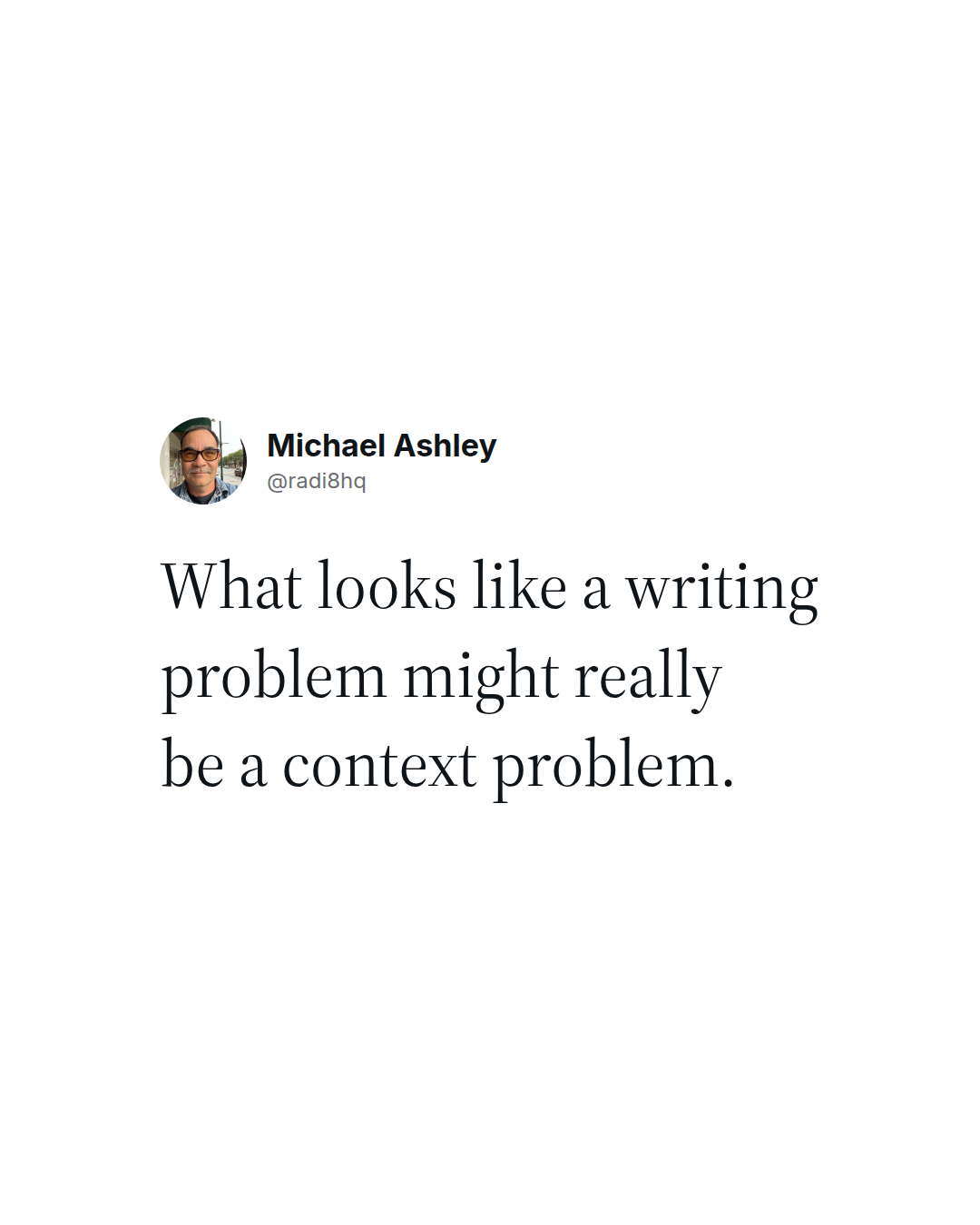
What looks like a writing problem might really be a context problem.
That's a big part of why I'm building Radi8 the way I am. I think chat may become the interface for a lot of software, and the specialized app's job is to supply what general AI can't hold on to by itself: memory, context, state, and the ability to actually do things, like save a draft or line up a week of posts.
You describe the outcome in a sentence. The app brings what it knows about you. Fewer dashboards to learn.
I'm still testing this thesis, and I might be wrong about how fast it happens... but I'd rather build toward it and learn from what breaks.
If you use AI in your business, what do you find yourself re-explaining every single time?
#Founders#Startups#AI#AINativeSoftware#ProductDesign#BuildingInPublic#Entrepreneurship#SmallBusinessOwner#IndependentConsultant#Coaching…more
I don't think anyone needs a better AI writer anymore.
ChatGPT and Claude already write well. Clean sentences, decent structure, fast. When a post still comes out sounding off, I don't think the writing is what broke.
What looks like a writing problem might really be a context problem. The AI doesn't know who you help, the problem you solve for them, why they'd care, what you said last week, or what you're actually offering. So every new chat starts from zero... and you either explain yourself all over again, or settle for something that sounds like everybody else.
My bet is that the chat becomes the interface. You describe the outcome you want instead of learning another dashboard. The specialized apps underneath supply what a general AI can't hold onto by itself: what it knows about you, a memory of what's already happened, where things stand right now, and the ability to actually get it done.
That's the bet I'm testing while building Radi8 inside ChatGPT and Claude. I don't have it all figured out... I'm learning as I go, same as everyone building with this stuff.
So I'm curious. When AI writes something for you and it misses, what's it usually missing?
#Founders#AI
A lot of founders ask me how I use Claude and Radi8 together. Here's the honest answer: I don't really "use Claude" anymore. Not the way most people think.
I don't write prompts. I don't paste in context. I don't explain my audience or my voice or my offers every time I sit down to create content.
Radi8 handles all of that.
My brand context, my strategy, my campaign plan, my voice, my proof points — it's all stored in Radi8. When Claude works inside Radi8, it already knows everything it needs to know. It's not starting from scratch. It's starting from me.
The workflow:
1. Open Radi8 and pull up my campaign plan for the month
2. Pick the piece of content I'm working on — the brief is already there
3. Generate — Claude writes from my brief, my brand, my voice
4. One quick edit pass, maybe 5 minutes
5. Schedule
That's it. No prompt engineering. No re-explaining yourself every session. No output that sounds like it could have come from anyone.
The insight most people miss about AI content tools: the problem was never the AI. It was the setup. When the AI knows your business as well as you do, it stops feeling like a tool and starts feeling like a collaborator.
That's what I built Radi8 to do.
DM me "workflow" and I'll show you how it works. …more
Most people think AI content sounds generic because AI isn't good enough.
Wrong.
AI sounds generic because you're giving it generic context.
The quality of the output is usually a reflection of the quality of the input.
Context > prompts.
After 25+ years building and exiting startups, I've noticed a pattern.
The founders who stay visible and grow aren't spending more time on marketing. They've built better systems and made better strategic decisions.
Here's something most people miss about AI marketing tools: the output quality has nothing to do with the tool and everything to do with the input.
If you paste a blank prompt into Claude and ask it to write a LinkedIn post, you'll get something generic. That's not an AI problem. That's a context problem.
What changed for me was building my brand context into Radi8 first — my audience, my voice, my offers, what I never say. Now when I generate content, it sounds like I wrote it. Because in a real sense, I did. I just did it once, systematically, instead of re-explaining myself every time.
The lesson isn't "use AI."
It's that better tools rarely fix a strategy problem.
Whether it's AI, marketing, sales, or customer acquisition, the quality of the outcome is usually constrained by the quality of the thinking that comes before it.
How much context are you giving AI before you ask it to create content?


'/%3E%3Cpath fill='%23fff' d='M12 7.3A4.7 4.7 0 1 0 16.7 12 4.7 4.7 0 0 0 12 7.3Zm0 7.8A3.1 3.1 0 1 1 15.1 12 3.1 3.1 0 0 1 12 15.1Zm5-8a1.1 1.1 0 1 0 1.1 1.1A1.1 1.1 0 0 0 17 7.1Zm-5 1.5c-1.5 0-1.7 0-2.3.1a3.8 3.8 0 0 0-1.3.2 2.2 2.2 0 0 0-.8.5 2.2 2.2 0 0 0-.5.8 3.8 3.8 0 0 0-.2 1.3c-.1.6-.1.8-.1 2.3s0 1.7.1 2.3a3.8 3.8 0 0 0 .2 1.3 2.2 2.2 0 0 0 .5.8 2.2 2.2 0 0 0 .8.5 3.8 3.8 0 0 0 1.3.2c.6.1.8.1 2.3.1s1.7 0 2.3-.1a3.8 3.8 0 0 0 1.3-.2 2.5 2.5 0 0 0 1.3-1.3 3.8 3.8 0 0 0 .2-1.3c.1-.6.1-.8.1-2.3s0-1.7-.1-2.3a3.8 3.8 0 0 0-.2-1.3 2.2 2.2 0 0 0-.5-.8 2.2 2.2 0 0 0-.8-.5 3.8 3.8 0 0 0-1.3-.2c-.6-.1-.8-.1-2.3-.1Zm0-1.6c1.5 0 1.7 0 2.4.1a5.5 5.5 0 0 1 1.8.3 3.8 3.8 0 0 1 2.2 2.2 5.5 5.5 0 0 1 .3 1.8c.1.7.1.9.1 2.4s0 1.7-.1 2.4a5.5 5.5 0 0 1-.3 1.8 3.8 3.8 0 0 1-2.2 2.2 5.5 5.5 0 0 1-1.8.3c-.7.1-.9.1-2.4.1s-1.7 0-2.4-.1a5.5 5.5 0 0 1-1.8-.3 3.8 3.8 0 0 1-2.2-2.2 5.5 5.5 0 0 1-.3-1.8C4 13.7 4 13.5 4 12s0-1.7.1-2.4a5.5 5.5 0 0 1 .3-1.8 3.8 3.8 0 0 1 2.2-2.2 5.5 5.5 0 0 1 1.8-.3C10.3 5 10.5 5 12 5Z'/%3E%3C/svg%3E) View on Instagram
Also on

 View on LinkedIn