"I need more leads."
That's often the first thing a consultant says to me when we sit down. It sounds like the right problem... honestly, I'd probably start there too.
So the funnel gets tweaked. The LinkedIn profile gets rewritten. The sales call gets rehearsed, again.
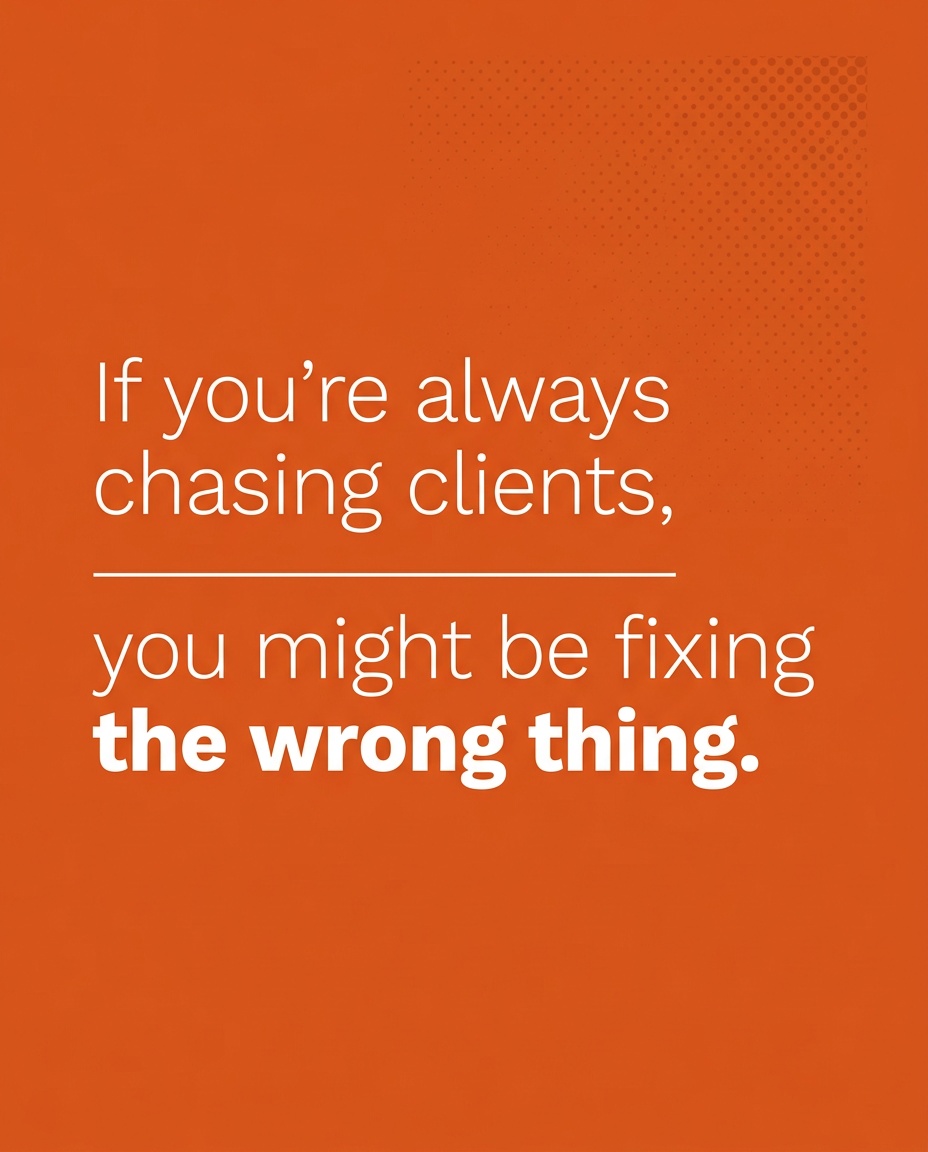
If you're always chasing clients, you might be fixing the wrong thing.
The marketing, the network, the sales call, the funnel... those might be symptoms. What looks like a lead problem might really be the offer underneath all of it: what you're selling and how it's structured.
When the offer describes an outcome someone already wants, the right buyers tend to find you more easily, and the chasing starts to quiet down.
So before you touch the funnel again, ask one question: does my offer describe an outcome... or a list of what I can do?
If you're not sure which one yours is, my booking page is in the first comment. Bring your offer, and in 30 minutes we'll read it the way a buyer would.
#IndependentConsultant#Consulting#Positioning#GoToMarket…more
When a coach or consultant tells me their marketing isn't working, the marketing is almost never the problem.
I hear it weekly. "I'm posting. I'm networking. I redid the website. Nothing's landing." The instinct is to fix the visible thing — better content, a new funnel, more activity. But activity was never the issue.
Here's the pattern I've seen across 25 years of building companies and advising businesses. Weak results almost always trace to something upstream. Fuzzy positioning, so you can't say what you do and who it's for in one sentence that lands. Thin customer understanding, so you describe your work in your words instead of your client's. No focus, so you speak to everyone and reach no one.
Marketing amplifies whatever you feed it. Feed it a blurry message and you get blurry results, faster.
Try this test. Describe what you do to a stranger in one sentence. If their next question is "so, what do you actually do?" then you don't have a marketing problem. You have a positioning problem. More posting won't fix that. It just makes the confusion more visible.
The good news: positioning is fixable, and usually fixable fast. It's one clear decision about who you serve and what changes for them, made with real customer evidence instead of guesses. Once that decision is sharp, the same marketing effort starts working, because it finally has something clear to carry.
So a question worth sitting with: if I asked your last three clients what you do, would their answers match each other? And would they match yours?
#IndependentConsultant#Coaching#Positioning#Messaging
"I just need more marketing" rarely fixes a feast-or-famine pipeline. Revenue and followers are downstream... they look fine right up until they don't. The root is usually positioning or a misaligned offer. I dig into it here: https://youtu.be/bb9n-CnDGVA
When the clients aren't coming yet, the first move is almost always cosmetic. A new logo. A cleaner website. Fresh business cards. I did the same thing early on... convinced the next redesign was the one that would finally land it.
It almost never is. A website is where your positioning becomes visible to the market, and that's the real work it's quietly doing. When a first site falls flat, it usually isn't the design. It's that the message underneath is still fuzzy, you can't yet say in one plain sentence what you do and who it's for, so even a lovely site ends up saying it lovely and vague.
Get the words right first and the site gets easy... it nearly builds itself once you know what it's supposed to say. That's the part worth slowing down for.
If that's the part you keep circling, book a free 30 minutes with me and ask me anything about your positioning. Link's in the first comment.
How would you explain what you do, in one sentence?
#Positioning#IndependentConsultant#Coaching#GoToMarket#Solopreneur
Why isn't your marketing working?
Before you rewrite the copy again or try another channel, consider that marketing is usually the symptom, not the problem.
When posts don't land and outreach goes quiet, the instinct is to fix the marketing — new hook, new platform, more volume. But if the market can't quickly say who you help and why you, no amount of activity rescues that. Unclear positioning shows up as weak marketing.
I see this with coaches and consultants who are brilliant at the work. The message feels fuzzy, so every campaign has to work twice as hard. Sharpen who you're for, and the marketing gets easier, because now there's something clear to say.
If your marketing feels like a grind, book 30 minutes with me and we'll find the real bottleneck. No pitch, just a clearer read on what's actually stuck: https://calendly.com/foclarity/30min#IndependentConsultant#Coaching#Positioning#GoToMarket
Funnels, platforms, strategy... not first. Elizabeth Greenfield's advice for going independent: get clear on your message. You can't market what you can't articulate. More: https://mashley.com
"I need more leads."
Consultants often open with that. What looks like a lead problem might really be the offer.
It sounds like the right problem... I'd probably start there too. So the funnel gets tweaked, the profile rewritten, the sales call rehearsed.
If you're always chasing clients, you might be fixing the wrong thing.
Look under all of it, at what you're selling and how it's structured.
Before you touch the funnel again, ask: does my offer describe an outcome... or a list of what I can do?
#IndependentConsultant#Consulting#Consultants#Coaching#GoingIndependent#Positioning#Solopreneur#FractionalExecutive#GoToMarket
So many coaches I talk to open with "I need marketing."
I get it. You're showing up, posting, updating the website, and it isn't turning into conversations with the right clients. So the obvious fix is more content, more lead gen, more activity.
But what looks like a marketing problem might really be positioning... or not understanding the customer well enough yet. Marketing without clear positioning is just noise, and more of it is louder noise.
That part is the job. Who you help, the problem you solve for them, what they actually care about... you can't hand that off, because nobody knows your clients the way you do. Get that clear first and the marketing finally has something to say.
I still catch myself reaching for more activity before doing that thinking.
So, coaches and consultants... what's the one line you use to describe who you help?
#Coaching#IndependentConsultant#Positioning#Marketing
I don't think AI can do your marketing for you.
A client asked me this week if they should use AI to do their marketing. Fair question, and I'm building an AI tool myself, so I'm not here to talk anyone out of it.
I read an honest comparison recently on hiring a social media manager vs. using AI. My answer starts one step earlier... do you want to hand your marketing off, or run it yourself and stay in control? Either can work. Neither one does the thinking for you.
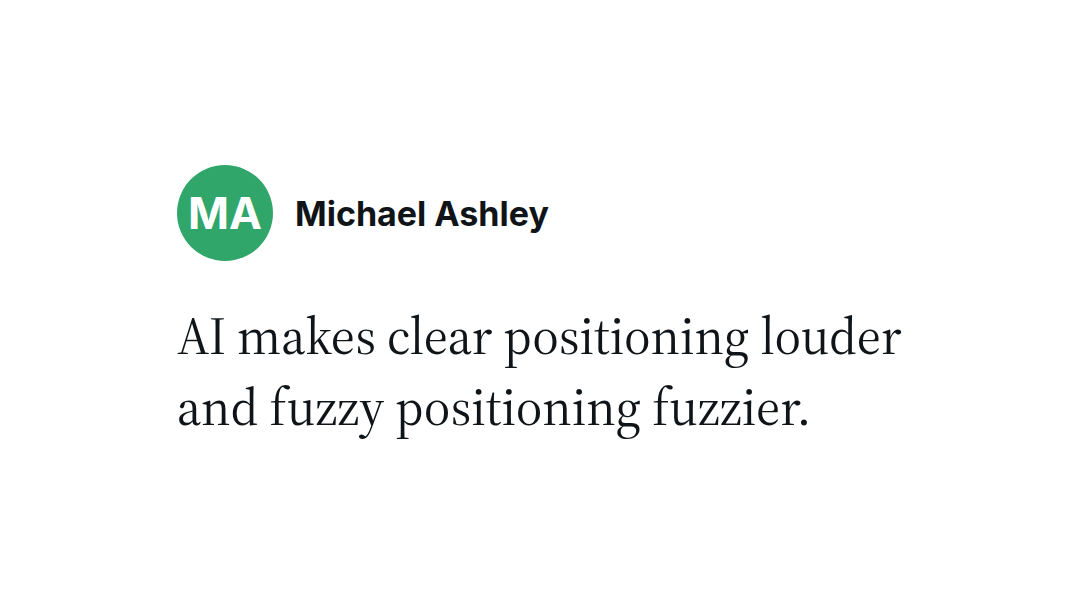
AI makes clear positioning louder and fuzzy positioning fuzzier.
So for coaches and consultants, the first job might not be picking a tool at all. It might be getting clear on who you help, the problem you solve for them, and what they actually care about. Get the thinking right first, then let AI amplify it. I catch myself reaching for the tool before the thinking too.
There's a video in the first comment for anyone weighing this right now.
Where has AI actually helped your practice... and where did it just make more noise?
#Coaching#IndependentConsultant#Positioning#Marketing…more
The State of AI Report 2026 dropped this week. 244 slides. Here's what actually matters for anyone building with AI right now.
OpenAI and Anthropic combined revenue hit ~$105B run rate by August 2026. Up from ~$30B in January. That's not hype, that's adoption.
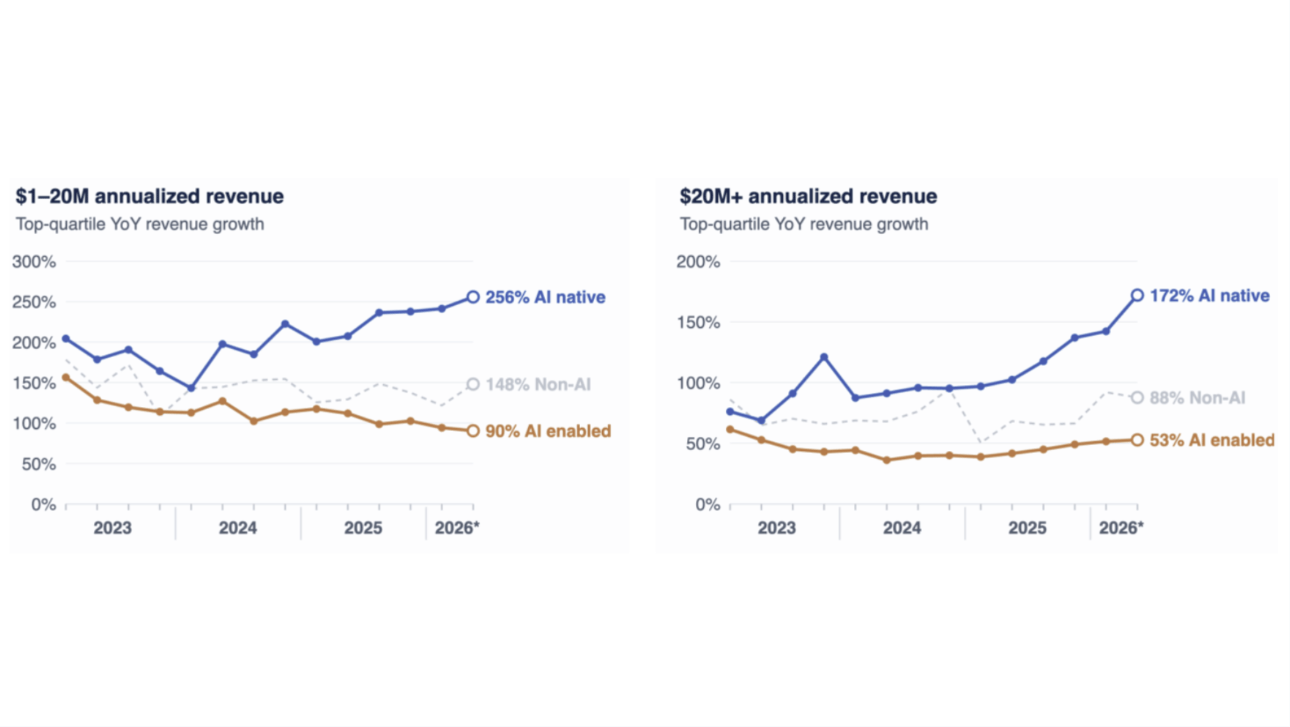
Top-quartile AI-native companies with $20M+ in revenue grew at 172% per year. Companies adding AI to existing software: 53%. The gap between building AI-native versus bolting AI on is already measurable in growth rates.
The cost to reach a given level of AI performance has halved every quarter since 2023. It's now about 13x cheaper per year than it was.
Here's the one that should change how you think about competitive advantage: better tools, context, and feedback lifted one model's success rate on coding tasks from 52.5% to 65.5% without changing the model at all.
The model is increasingly commoditized. Everyone can rent the same frontier capability. The advantage is the scaffolding you build around it. That's the part competitors can't easily copy. …more
State of AI 2026: better tools, context and feedback lifted a model's coding success from 52.5% to 65.5% without changing the model.
The model is commoditized. Everyone rents the same frontier capability.
The advantage is the scaffolding around it.
https://www.stateof.ai/State-of-AI-Report-2026.pdf
How to turn what lives in your head into an offer that compounds... start by looking back at the work you've already done.
I did the same work informally for two decades before I named it. Coaching, the newest part of my practice, is what finally gave it a name... and it took me a long time to notice.
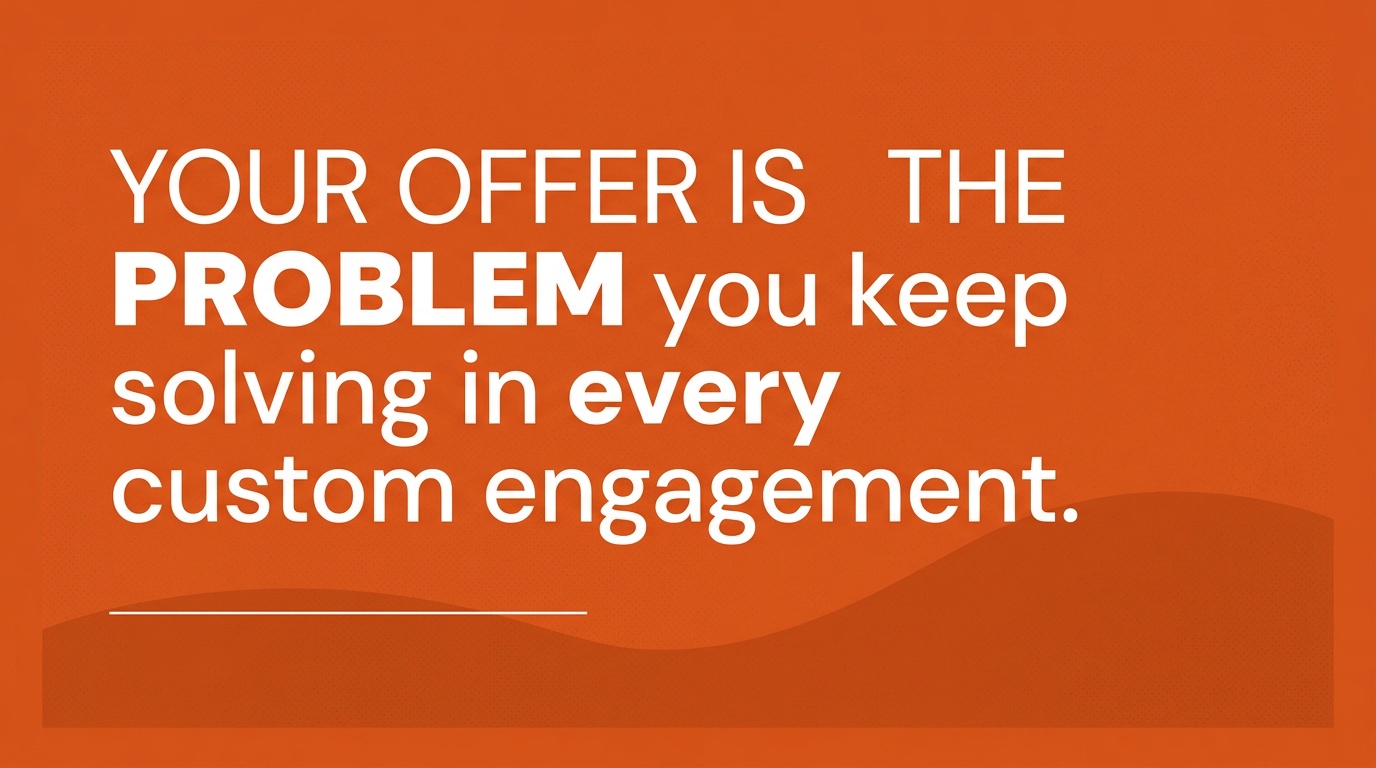
Your offer is the problem you keep solving in every custom engagement.
Coaches and consultants, pull up your last handful of client engagements. Ignore what each one was called when it started, the requests usually look different. Ask what problem you ended up solving underneath. If the same one keeps showing up, that might be your offer.
Then name it, in words a client would actually use. And give it the same shape every time... the same first question, the same steps, the same thing they walk away with.
That shape is what lets each engagement teach the next one something.
Curious what yours might be? Bring a few past engagements to a 30-minute call and we'll look for it together. The link to book is in the first comment.
#IndependentConsultant#Coaching#GoingIndependent#Positioning…more
Coaches and consultants, broad positioning probably isn't keeping your options open. If you can't explain who it's for, the market can't repeat it... so it mostly goes unseen. …more
A quick way to tell whether your practice has a pipeline... or just a head start.
Coaches and consultants often tell me their first clients came through word of mouth.
When you were employed, the work found you and the company's brand vouched for you. Then you went out on your own, and the people who already trusted you showed up first.
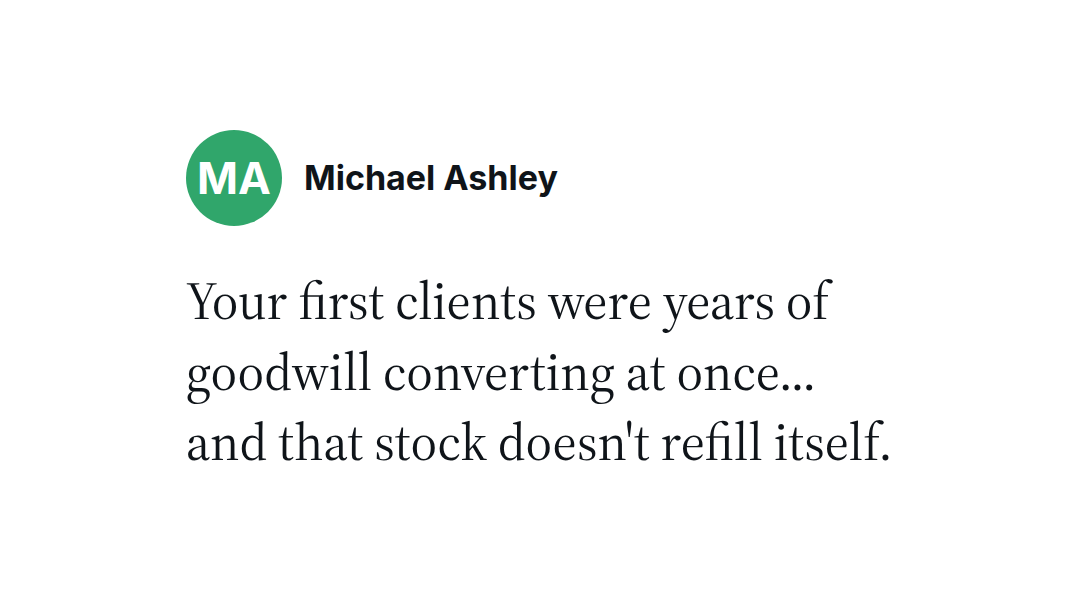
Your first clients were years of goodwill converting at once... and that stock doesn't refill itself.
So try this. List every client you've had and how they found you. If nearly all of them trace back to people who knew you before, you're spending down a head start, and that's usually when feast-or-famine begins.
What looks like a pipeline problem might really be positioning. Two things refill it: a clear way of saying what you do that other people can repeat, and a body of work people outside the old circle can actually see.
My booking page is in the first comment... 30 minutes, and we'll look at which of the two is missing for you.
What refilled your pipeline after the first wave?
#IndependentConsultant#GoingIndependent#Positioning#Coaching#GoToMarket…more
Wrong messaging or wrong list?
This is a common problem with startups and new businesses - is your messaging a reflection of you or your customer? If all your messaging describes you, it doesn’t matter what list you use. If your messaging describes your customer in the pain you solve, and they’re still not responding, it’s probably your list. Here’s a story I just heard from a small business owner. She got featured on a national tv show and thought it would drive sales. After the show aired she got one phone call from a guy who would never be her customer… turns out the people that watch that show are more interested in the drama of business and not her ideal customer profile. …more
For SBDC advisors and anyone who mentors small business owners, these are the marketing worries I hear most:
What do I write about? How do I set up all these channels? How do I use AI for marketing? How do I do that without it looking like AI slop? My website isn't good enough. My brand isn't clear. How do I build a funnel?
They sound like seven different problems. I don't think they usually are.
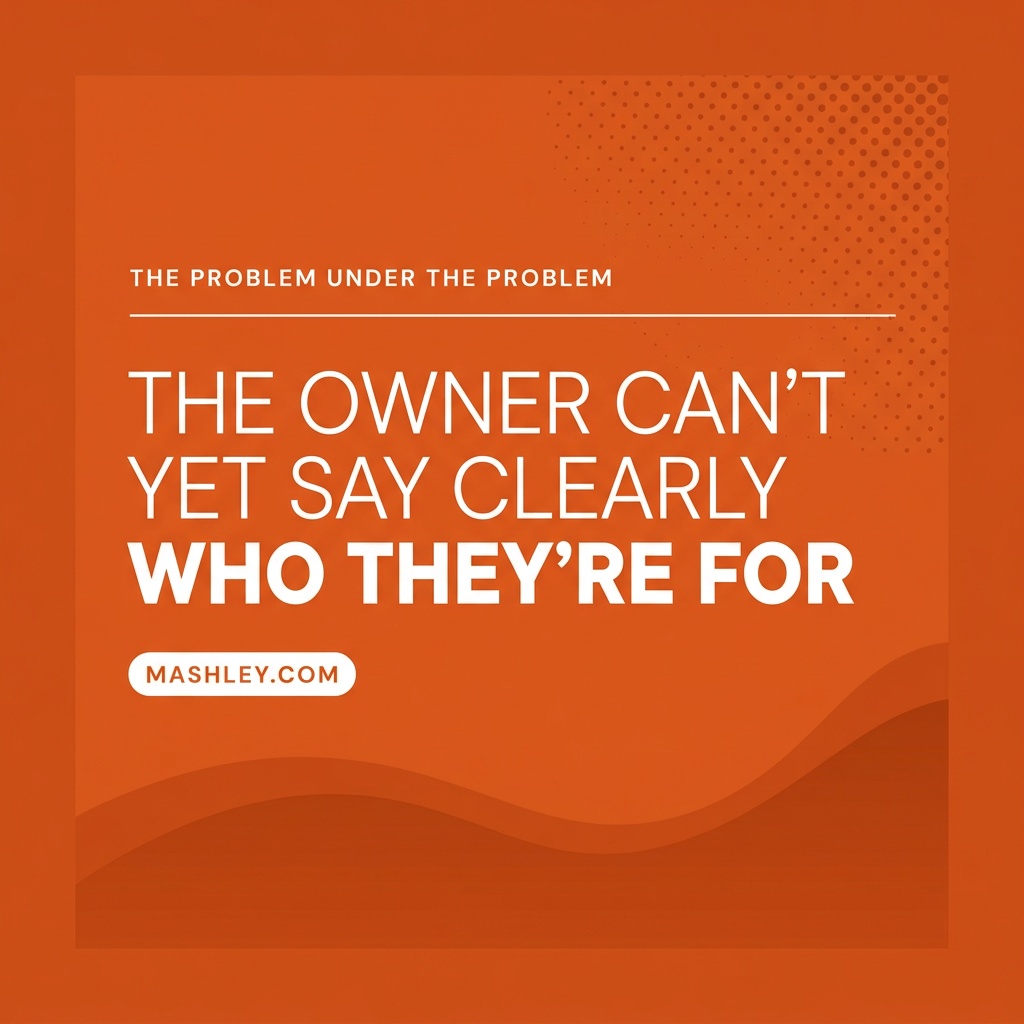
When I dig in, most of them come back to one thing: the owner can't yet say clearly who they're for and what changes for those customers. Without that, every channel feels like a chore, every AI draft sounds generic, and the website can't decide what it's about. Once it's clear, a lot of the rest gets easier... sometimes almost obvious.
So when a client brings you one of these, it might be worth asking the brand question first, before the tools.
What's the marketing worry your clients bring you most?
#SBDC#SmallBusiness#Marketing…more
Look at your website's services page. If it's a menu of everything you can do, customers have to figure out which one fixes their problem. Most won't bother.
Pick the one problem you solve best. Write one plain sentence about who it's for and what changes for them, and put it at the top. Everything else can live further down.
Does your homepage describe an outcome, or a list?
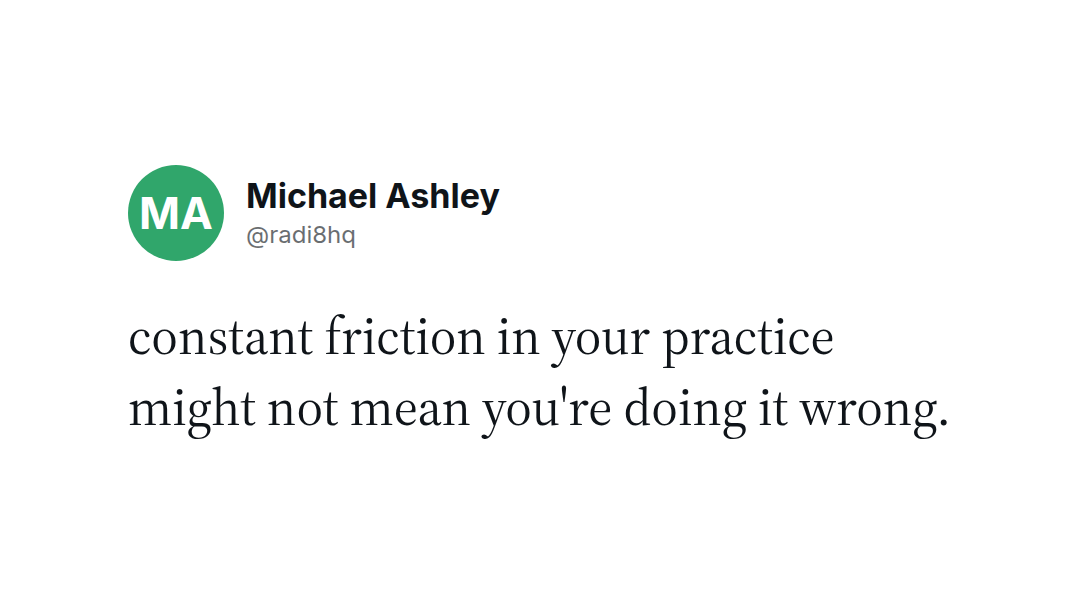
Coaches and consultants... constant friction in your practice might not mean you're doing it wrong. It might be feedback.
Elizabeth Greenfield told me: "I do believe that symptoms will show up and or the external experience is going to feel hard until we start getting in alignment with what we really want."
The friction you keep hitting might be pointing at your positioning, your audience, or your offer.
What's a recurring difficulty in your practice right now that might be pointing you somewhere?
#Coaching#CoachingBusiness#IndependentConsultant#Consultants#Solopreneur#GoingIndependent#Positioning#BuildingAPractice…more
I saved a piece from GaryVee's Substack: wine's best decade could still be ahead... if it gets out of a 1996 mentality.
I'm no wine expert, I'll admit it. But small business owners will recognize the shape of this one.
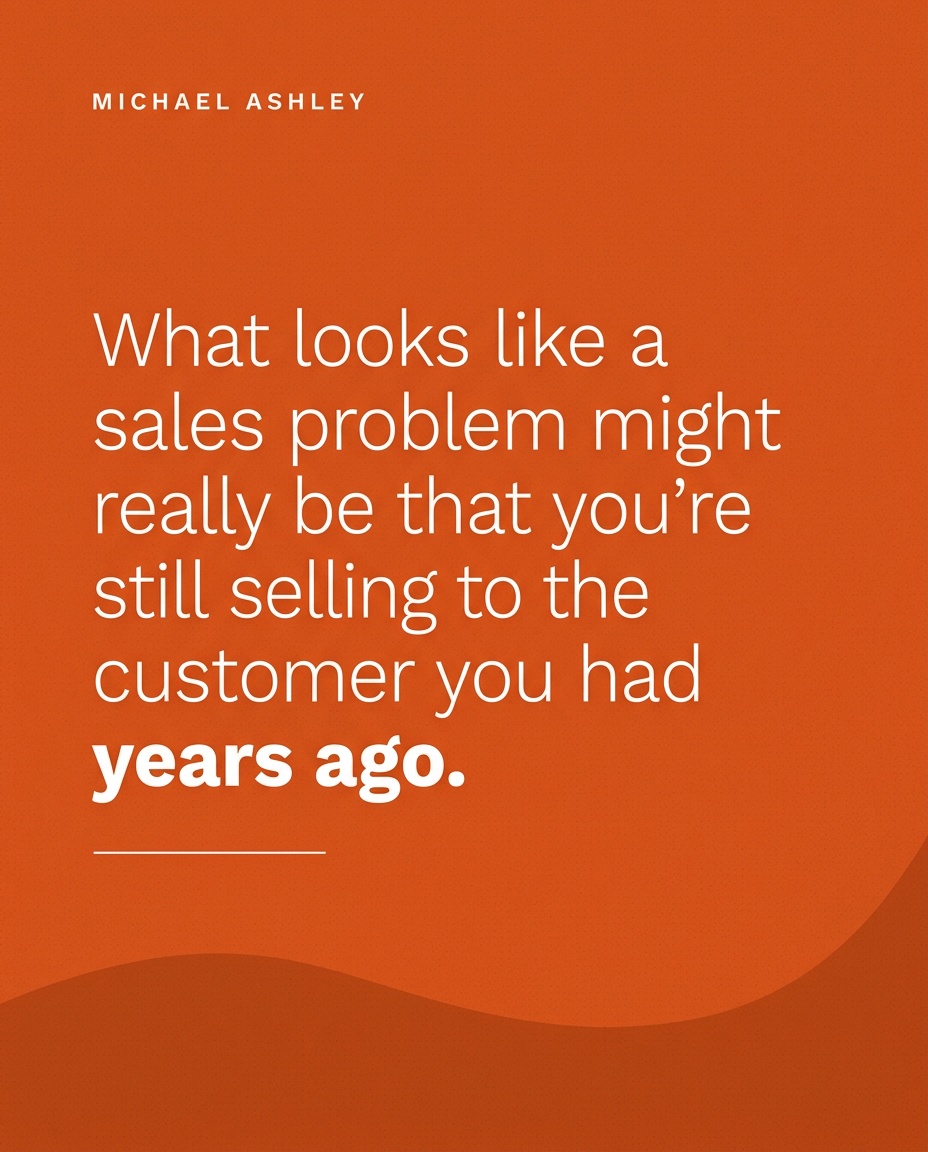
What looks like a sales problem might really be that you're still selling to the customer you had years ago.
Before you change the offer or the price, it might be worth asking who's actually buying from you now... and how they decide.
When did you last ask a customer why they chose you?
#SmallBusiness#SmallBusinessOwner#CustomerDiscovery#Positioning#Marketing#Sales#BusinessGrowth#Entrepreneurship…more
Coaches and consultants often treat persuasion as the gross part of the job... I'm not convinced it's the problem.
Guy Kawasaki's Substack has a piece on lessons from Robert Cialdini and Zoe Chance about influence you can feel good about. It sent me looking under the discomfort.
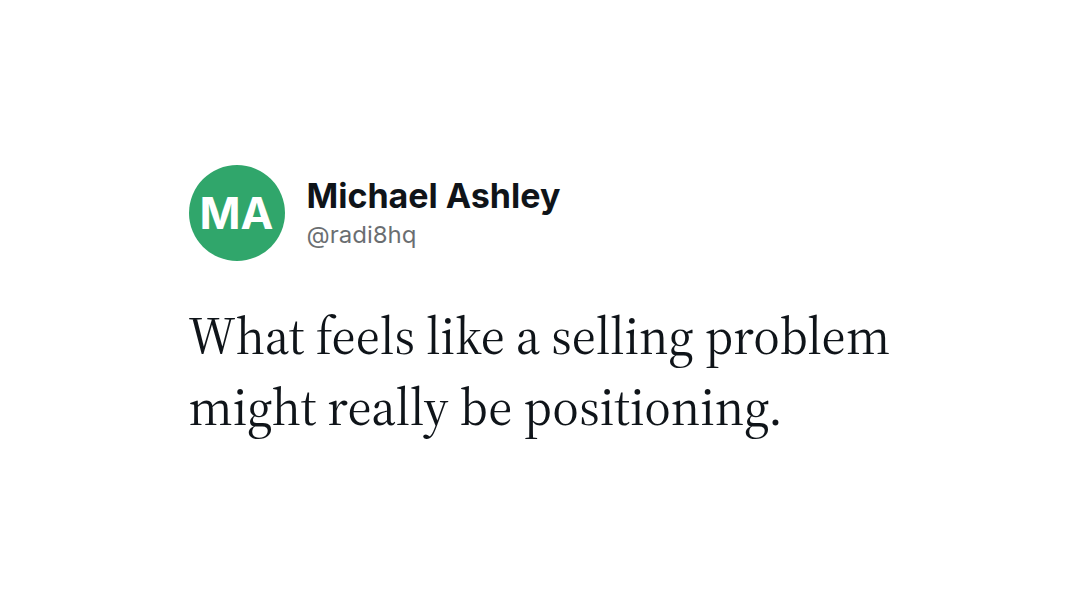
What feels like a selling problem might really be positioning. When you can't say who you help and why, every ask can start to feel like a trick.
If they saw exactly how you got the yes, would you still feel good about it?
Where does the discomfort show up for you?
#IndependentConsultant#ExecutiveCoach#CoachingBusiness#ConsultingBusiness#Positioning#GoingIndependent#Solopreneur#SmallBusinessOwner#PersonalBrand…more
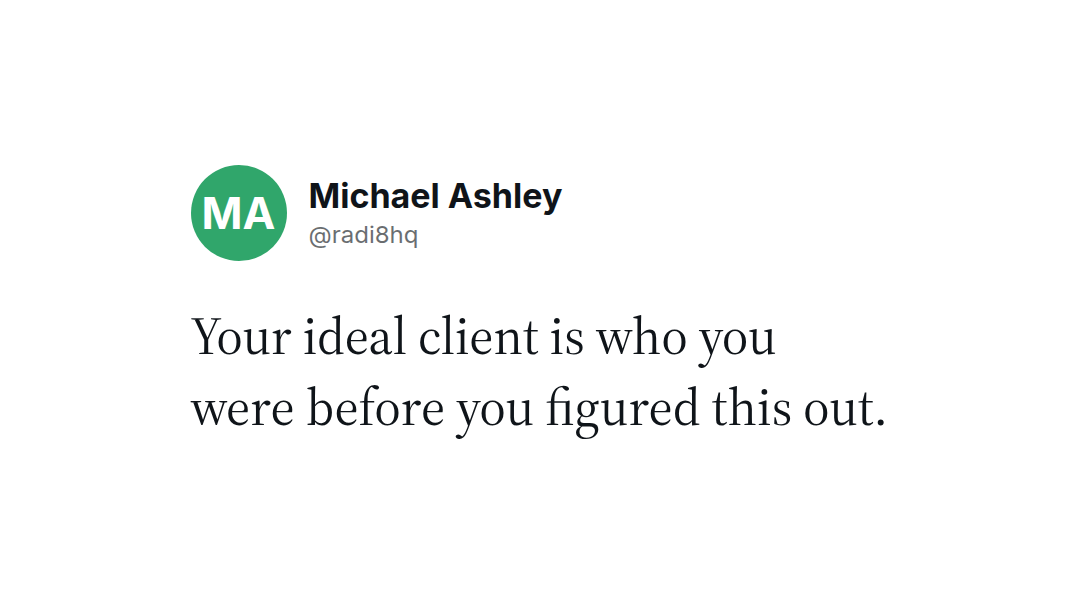
A faster way to find your niche: look backward, not outward. Your ideal client is who you were before you figured this out.
The problem you once had and couldn't find anyone to solve in a way that actually worked... that gap is often the thing only you can fill. You already know what that person needs, because you needed it. You know what they're afraid of. You know what nobody explained.
So think back. Who were you before you knew what you know now? What did that person need most? Start there.
#Coaching#IndependentConsultant#CoachingBusiness#ConsultingBusiness#GoingIndependent#Positioning#CustomerDiscovery#IdealClient#Solopreneur#PersonalBrand…more


 View on LinkedIn
Also on




'/%3E%3Cpath fill='%23fff' d='M12 7.3A4.7 4.7 0 1 0 16.7 12 4.7 4.7 0 0 0 12 7.3Zm0 7.8A3.1 3.1 0 1 1 15.1 12 3.1 3.1 0 0 1 12 15.1Zm5-8a1.1 1.1 0 1 0 1.1 1.1A1.1 1.1 0 0 0 17 7.1Zm-5 1.5c-1.5 0-1.7 0-2.3.1a3.8 3.8 0 0 0-1.3.2 2.2 2.2 0 0 0-.8.5 2.2 2.2 0 0 0-.5.8 3.8 3.8 0 0 0-.2 1.3c-.1.6-.1.8-.1 2.3s0 1.7.1 2.3a3.8 3.8 0 0 0 .2 1.3 2.2 2.2 0 0 0 .5.8 2.2 2.2 0 0 0 .8.5 3.8 3.8 0 0 0 1.3.2c.6.1.8.1 2.3.1s1.7 0 2.3-.1a3.8 3.8 0 0 0 1.3-.2 2.5 2.5 0 0 0 1.3-1.3 3.8 3.8 0 0 0 .2-1.3c.1-.6.1-.8.1-2.3s0-1.7-.1-2.3a3.8 3.8 0 0 0-.2-1.3 2.2 2.2 0 0 0-.5-.8 2.2 2.2 0 0 0-.8-.5 3.8 3.8 0 0 0-1.3-.2c-.6-.1-.8-.1-2.3-.1Zm0-1.6c1.5 0 1.7 0 2.4.1a5.5 5.5 0 0 1 1.8.3 3.8 3.8 0 0 1 2.2 2.2 5.5 5.5 0 0 1 .3 1.8c.1.7.1.9.1 2.4s0 1.7-.1 2.4a5.5 5.5 0 0 1-.3 1.8 3.8 3.8 0 0 1-2.2 2.2 5.5 5.5 0 0 1-1.8.3c-.7.1-.9.1-2.4.1s-1.7 0-2.4-.1a5.5 5.5 0 0 1-1.8-.3 3.8 3.8 0 0 1-2.2-2.2 5.5 5.5 0 0 1-.3-1.8C4 13.7 4 13.5 4 12s0-1.7.1-2.4a5.5 5.5 0 0 1 .3-1.8 3.8 3.8 0 0 1 2.2-2.2 5.5 5.5 0 0 1 1.8-.3C10.3 5 10.5 5 12 5Z'/%3E%3C/svg%3E) View on Instagram