

Positioning
'/%3E%3Cpath fill='%23fff' d='M12 7.3A4.7 4.7 0 1 0 16.7 12 4.7 4.7 0 0 0 12 7.3Zm0 7.8A3.1 3.1 0 1 1 15.1 12 3.1 3.1 0 0 1 12 15.1Zm5-8a1.1 1.1 0 1 0 1.1 1.1A1.1 1.1 0 0 0 17 7.1Zm-5 1.5c-1.5 0-1.7 0-2.3.1a3.8 3.8 0 0 0-1.3.2 2.2 2.2 0 0 0-.8.5 2.2 2.2 0 0 0-.5.8 3.8 3.8 0 0 0-.2 1.3c-.1.6-.1.8-.1 2.3s0 1.7.1 2.3a3.8 3.8 0 0 0 .2 1.3 2.2 2.2 0 0 0 .5.8 2.2 2.2 0 0 0 .8.5 3.8 3.8 0 0 0 1.3.2c.6.1.8.1 2.3.1s1.7 0 2.3-.1a3.8 3.8 0 0 0 1.3-.2 2.5 2.5 0 0 0 1.3-1.3 3.8 3.8 0 0 0 .2-1.3c.1-.6.1-.8.1-2.3s0-1.7-.1-2.3a3.8 3.8 0 0 0-.2-1.3 2.2 2.2 0 0 0-.5-.8 2.2 2.2 0 0 0-.8-.5 3.8 3.8 0 0 0-1.3-.2c-.6-.1-.8-.1-2.3-.1Zm0-1.6c1.5 0 1.7 0 2.4.1a5.5 5.5 0 0 1 1.8.3 3.8 3.8 0 0 1 2.2 2.2 5.5 5.5 0 0 1 .3 1.8c.1.7.1.9.1 2.4s0 1.7-.1 2.4a5.5 5.5 0 0 1-.3 1.8 3.8 3.8 0 0 1-2.2 2.2 5.5 5.5 0 0 1-1.8.3c-.7.1-.9.1-2.4.1s-1.7 0-2.4-.1a5.5 5.5 0 0 1-1.8-.3 3.8 3.8 0 0 1-2.2-2.2 5.5 5.5 0 0 1-.3-1.8C4 13.7 4 13.5 4 12s0-1.7.1-2.4a5.5 5.5 0 0 1 .3-1.8 3.8 3.8 0 0 1 2.2-2.2 5.5 5.5 0 0 1 1.8-.3C10.3 5 10.5 5 12 5Z'/%3E%3C/svg%3E) View on Instagram
For SBDC advisors and mentors: before a client spends on more marketing, ask three things. Can they say who they help in one sentence? Do they know where customers drop off? Are their analytics counting real visitors? A "not sure" is the problem to fix first. …more
 View on Bluesky
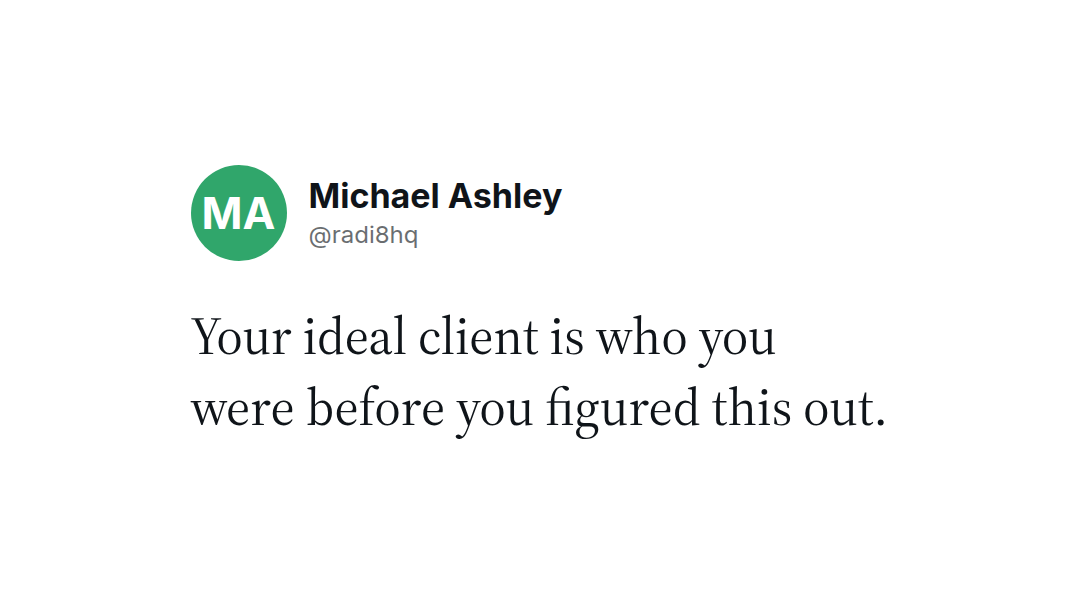
Look at your website's services page. If it lists everything you can do, a menu for customers to pick from, it might be costing you the customers you actually want.
I get why it happens. Saying yes to everything feels safe when you're building something. Committing to one outcome feels like turning work away.
But a menu hands the customer the hardest job: figuring out which of your services solves their problem. Most won't do that work. They'll go with whoever names their problem plainly on the first screen.
The fix is smaller than a redesign. Pick the one problem you're best at solving and love solving. Write one sentence about who it's for and what changes for them. Put it at the top of the page. Everything else can live further down.
Does your homepage describe an outcome, or a list of things you do?
#SmallBusiness #Positioning #Marketing …more
 View on LinkedIn
Also on

Told 2 times, Oct 21, 2026
· Bluesky · Open
Look at your services page. If it's a menu of everything you can do, customers have to work out which service fixes their problem. Most won't. Pick the one problem you solve best, write one plain sentence about who it's for, and put it at the top.
E
Erika Sanneman
The Multilingual Mind helps schools and education teams close the gap between what they know they want to do and what their people actually have the time, training, tools, systems, and support to impl
What does an educational consultant actually do, and when would a school hire one?
I’m Erika Sanneman, founder of The Multilingual Mind, based in Sugar Land in the Houston area.
My work includes teacher coaching, curriculum and professional development design, Spanish immersion support, team collaboration, and practical school systems.
Sometimes the request is specific: help a teacher practice a positive intervention, work through a differentiation question, or clarify responsibilities in a shared classroom.
Sometimes that conversation reveals something wider. A teacher may need practice and feedback, while the schedule, materials, or team agreements also need attention.
That is where I start: what support does this person need, and what needs to change around them for that support to work?
The engagement can then include diagnosis, design, initial training, and coaching as people put the work into practice. The scope depends on what we find.
How does that compare with a larger professional-learning provider?
I’d compare the actual scope, not just the size of the organization. If a school needs a broad program, a large delivery team, or a particular licensed model, those requirements should guide the choice. If it needs focused work on one team, practice, or workflow, a bounded consulting engagement is worth discussing.
I want clients to leave with usable tools, clearer decisions, and more capacity to continue the work.
If you lead a school or education organization and have a specific problem in mind, tell me what you want people to be able to do and what is getting in the way. We can discuss whether my support is a fit. …more

Three jobs your positioning has to do: serving clients, marketing, speaking. A bio can't carry all three. A book can.
I put off writing mine for years. What surprised me: nothing else I've made travels like it. It works while I sleep, and the right reader finishes it already understanding who I am and what I stand for.
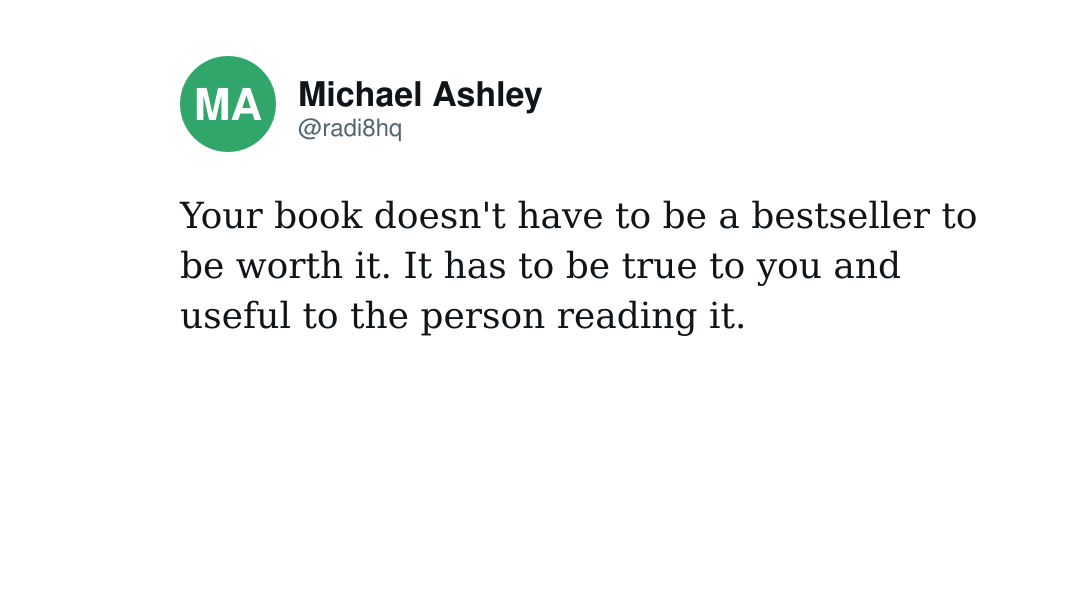
Your book doesn't have to be a bestseller to be worth it. It has to be true to you and useful to the person reading it.
If your book existed today, what would it be called? Try it in the comments... the title reveals your positioning.
#IndependentConsultant #ExecutiveCoach #CoachingBusiness #ConsultingBusiness #GoingIndependent #Positioning #PersonalBrand #ThoughtLeadership #SmallBusinessOwner #BusinessGrowth …more
You think you need more work. You don't.
If you're saying yes to every client, it's usually fear talking... fear of what happens if you don't. So you take all of it, and you end up exhausted, doing work you don't even love. It was never your ideal work, so no amount of it ever feels like enough.
Ideal work comes from the opposite move. Get clear on your offer. Get laser focused on the one solution you love to deliver. Once you do, you take on less, you make more per engagement, and you deliver more valuable results for the clients you keep.
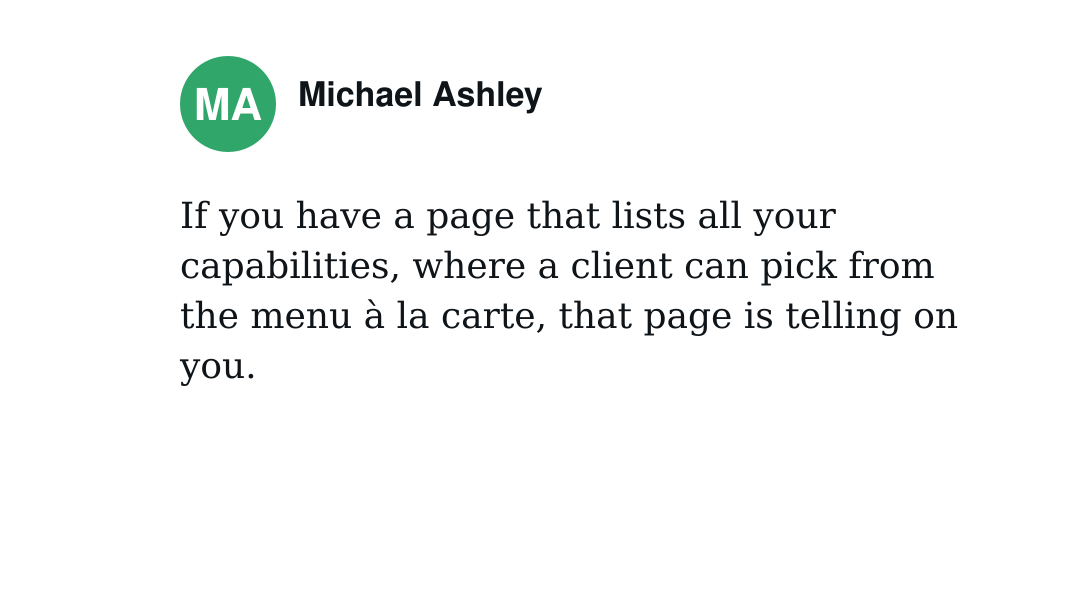
Look at your website. If you have a page that lists all your capabilities, where a client can pick from the menu à la carte, that page is telling on you. It means you're scared to commit to an outcome, so you list activities instead... some you may not even be very good at.
The fix is smaller than it sounds. One page. One offer. The solution you're actually selling. Fix that and the chasing stops... not because you got better at sales, but because qualified buyers start finding you.
So, honestly: does your offer describe an outcome, or a capability list?
#IndependentConsultant #Coaching #Positioning #GoToMarket #Solopreneur …more
My friend Joao de Brito is an artist, and he's the reason I rebuilt a page in Radi8 last week.
I showed him the new Create feature. It makes images, you can touch up a photo or drop your work into a different gallery with AI, and Joao started using it right away. Then he kept pasting his photo captions in as prompts and couldn't understand why the thing was behaving so strangely.
He wasn't doing it wrong. Create meant something different to him than I had intended it to mean. He read it as where you go to create a post, which is an entirely reasonable thing to read it as, and once I saw it happen in front of me I started seeing it everywhere, the same wrong turn at the same spot.
For about a week before that I'd been treating it as a labeling problem. Clearer heading, better button. People kept doing it anyway.
That's the moment that used to cost me months. You know what you designed, you can explain it, the explanation is even correct... and being correct is completely beside the point, because the people using it have already decided what it's for.
So I stopped defending the design and rebuilt the page to do the whole job.
This is why you talk to customers regularly, and why you shouldn't be afraid to let them complain! Joao never filed a bug report. He just got confused in front of me, which is about the most valuable thing a customer can do for you.
The signal is rarely in what people say, it's in what they keep trying to do after you've told them not to.
Where are your clients repeatedly trying to use you for something that isn't on your services page?
#IndependentConsultant #Coaching #CustomerDiscovery #Positioning …more
Told 3 times, Sep 1, 2026 – Oct 12, 2026
· X · Open
I built Radi8 as a dashboard. 9/10 users never open it. Radi8 brings your whole brand into the chat, so they never need to.
· LinkedIn · Open
I built Radi8 as a dashboard. A place you'd go to run your social: a calendar, a composer, a plan, settings. I spent a long time making that place good.
Then I actually looked at how people use it. Nine out of ten Radi8 users do all of their work from inside chat... ChatGPT or Claude. They almost never open the dashboard I built.
I'll admit that stung for about a day. I built the house and everyone's living in the yard.
Then it stopped stinging, because here's what's really going on, and it's not what it looks like. The value was never "use AI to write posts." Any chatbot will do that, badly, because it doesn't know you. The value is that Radi8 brings your whole brand into that chat: your voice, your audience, your strategy, your channels, your calendar, what you've already posted, and the automation that actually publishes and schedules it for you.
So when you say "draft a LinkedIn post about this and schedule it for Tuesday," it isn't a generic AI guessing. It's your brand engine, working in your words, on your plan, pushing to your connected channels. The chat is just the doorway. Radi8 is the thing standing behind it carrying everything that makes the post yours.
That's why people don't open the dashboard. They don't have to. The whole product came to meet them where they already were.
If you're a coach or consultant running your own practice, this is the part worth noticing: the tool that gets used is the one that brings its full value to where you already work, instead of asking you to go somewhere else to get it.
Where does your work actually happen now... in the apps, or in the chat?
I keep having the same conversation.
Someone who's genuinely great at what they do, and brand new to getting seen for it. That's the part nobody ever taught them.
So, an offer. Give me 30 minutes. Bring the idea you keep circling, the positioning you can't quite put into words, the page you've rewritten four times. I'll listen, tell you honestly what I think, and hand you a quick win or two and a few ideas for where to start.
It isn't a scripted discovery call, and it isn't a pitch. Think of it as a feel for what working together is actually like.
I've spent 25 years building things and figuring out the next step, mostly by learning the expensive lessons myself. Happy to save you a few of them.
Grab 30 minutes... the link is in the first comment.
Before you do, tell me: what's the one thing you'd want a second opinion on?
#IndependentConsultant #Coaching #Solopreneur #GoingIndependent #PersonalBrand …more
Told 2 times, Oct 1, 2026 – Oct 5, 2026
· LinkedIn · Open
Here's a simple way to pressure-test an idea before you pour months into it: say it out loud to someone who's built things and has no reason to flatter you.
Not a friend who'll nod along. Not a prospect you're trying to win. Someone who'll tell you the truth about where the idea holds up... and where it doesn't.
Most coaches and consultants I talk to don't need more encouragement. They're brilliant at the work. What's missing is an honest read from outside their own head, before the sunk cost makes it hard to change course.
So, plainly: bring me whatever you're working on and I'll give you my honest feedback. No pitch, no discovery interrogation... just 30 minutes on your actual business.
If you've been circling the same question for weeks, that's exactly the thing to bring. Link in the first comment.
#Coaching #IndependentConsultant #GoingIndependent

Lex Fridman asked who's winning the AI race.
Sebastian Raschka: no company has exclusive access to any technology.
The moat isn't the model. It's how fast you build before competitors do.
Models converge. Implementation gaps widen.
https://www.youtube.com/watch?v=dGqhTpsu_5Y
#AIStrategy …more
Jensen Huang gave the AI buildout its cleanest definition yet: "We now need a new type of infrastructure — an AI factory. Energy comes in; intelligence comes out."
His math is the part worth sitting with. Out of a $100 trillion economy, roughly $15 trillion is work that would benefit from more intelligence. Every company will tap into it. That's the real reason data centers are going up everywhere — not hype, but demand for a raw material almost every business now wants.
Here's the shift for those of us marketing complex technical products.
For years we sold intelligence as a scarce, premium thing. Something you bought carefully, deployed slowly, and defended in the budget. Huang is describing a world where intelligence behaves more like electricity — a utility you plug into, metered and abundant.
When the input gets commoditized, the story can't be "we have the smart thing." Everyone will have the smart thing.
The differentiation moves to judgment: what problem you point that intelligence at, how well you understand the human on the other end of it, and whether you can explain — in plain language — why it matters to their work this quarter.
The factory produces intelligence. It doesn't decide what's worth building. That part is still ours.
Want a fresh take on your B2B content strategy? DM me and let's schedule a 30-minute consultation — I'll show you 3 things you can improve this week.
#B2BMarketing #AIStrategy …more
This post has video.
Watch it on the channel.
Samsung's instinct when Apple announced the iPhone Duo foldable was exactly right. Capitalize on a competitor's weak moment. They've been selling foldables since 2019, Apple just joined — "Let us know when you're done reheating our leftovers" wrote itself.
The execution missed.
"Reheating our leftovers" reads like it was written by someone who is not in the room with the people they're trying to reach. Clever on paper. Doesn't land. The follow-up posts were more of the same — four tweets that felt like a brief was checked rather than a reaction that was felt.
What they should have done: an actor in a studio within 30 minutes of the announcement, filming a fake Apple keynote, making the whole thing so absurd that anyone holding an iPhone Duo felt the joke. Make it visual. Make it shareable. Make it something people forward into group chats. That's the move.
The brand banter playbook is not "post a witty line." It is "move faster than anyone expected, with something that genuinely makes people laugh rather than nod politely."
Whenever you have a moment to take market share from a competitor, you have to jump on it. Samsung knew the moment was there. They just didn't hit it hard enough.
For B2B brands watching competitor moves, the lesson is the same. It's not enough to react. You have to react in a way that makes the other side look like they're playing in your leftovers — not you.
https://rollingout.com/2026/09/10/samsung-trolls-apple-foldable-iphone-duo/
#B2BMarketing #ContentStrategy …more
View on LinkedIn
Also on
Which room are you the most knowledgeable person in?
Passion isn't enough anymore. AI already knows the generalist version of what you know, and it answers instantly, which means the floor just rose for everyone. Broad knowledge is a commodity now, and the coaches and consultants who trade only on enthusiasm and general competence are getting squeezed between a search bar and a subscription.
What AI can't replicate is genuine mastery. Saeed Amidi put the bar where it belongs: "you have to be the most knowledgeable person in the room for sure more knowledge than my and George's 150 people." Not the most passionate. The most knowledgeable... deeper on your specific domain than a large, capable team.
That's the moat. Passion gets you started, depth is what a market can't get anywhere else, and it's the one thing you can defend.
Want help sharpening exactly that positioning? Click the link in the first comment to visit my site.
#IndependentConsultant #Coaching #Positioning #GoingIndependent …more
Channel names and logos are trademarks of their respective owners.