Ramp spent serious money on "Bill Pay the Musical." https://www.insidehook.com/tech/did-we-really-need-ramp-bill-pay-musical-broadway/amp
Billy Porter. Billy Zane. The composer of Book of Mormon. A full Broadway production.
It got covered everywhere. People remembered the show. The question nobody's asking: did they remember Ramp?
If your audience walks away humming the song but can't name the product, you've produced great entertainment. Not great marketing.
Here's what was missing:
Gate the livestream behind an email. You've just created a massive top-of-funnel moment. Capture it. Every person who wants to watch is a qualified lead.
Clip the best 60 seconds. Then the best 90. Then the funniest line. You shot a Broadway musical. You have weeks of content sitting unused.
Tie the stunt back to the product. The bit works. Now make it work for pipeline.
Big creative swings deserve big afterplay. If you spend like a CMO on the stunt and think like an intern about what comes after, you've left the most valuable part on the table.
The rule: plan the afterplay before you spend the budget.
What would you have done differently?
#B2BMarketing#ContentStrategy…more
Talking with Oracle co-CEO Clay Magouyrk, Sam Altman described working with the latest AI tools as managing a factory inside your computer.
The tedious work gets automated. Ideas move forward without the usual roadblocks. And we’re edging closer to the old sci-fi picture: you talk to the computer about your idea, and the AI handles the execution.
Sounds great. Here’s the part nobody puts on the slide.
A factory doesn’t run itself. Someone decides what gets built, writes the spec, and checks what comes off the line. Remove that person and you don’t get a faster factory. You get a faster way to make the wrong thing.
For marketing teams, the shift looks like this:
Execution stops being the bottleneck. Ideas become the bottleneck. Weak strategy now ships at scale.
The brief is the product. If you can’t explain the idea clearly to a human, AI won’t fix it. It’ll just execute the confusion faster.
The job moves from maker to plant manager. Fewer hands on keyboards, more judgment on output.
The sci-fi part was never the talking computer. It was assuming everyone has ideas worth executing.
If your team had the factory tomorrow, what would you actually build? …more
This got 39 million views. More than the Claude Fable launch.
I've never seen anything like it — and here's exactly why it worked.
Diogo Almeida co-invented ChatGPT. That's the first sentence of his launch post for TypeSafe AI. Before he says anything about the product, he's already established that you should stop scrolling and pay attention.
That's not a hook. That's authority weaponized as a hook. And it's the hardest kind to compete with.
Then he stacked three more things on top of it:
He built something genuinely novel. A new type of reinforcement learning called RLCD and a new frontier model called Jev.
The value proposition is borderline insane. 20–200x faster. 40–400x cheaper, with output tokens free.
And he fit all of that into the hook.
I've been studying launch content for a long time. I have never seen one post pack more value into a stronger opening. I saw it in my feed and there was no way I was skipping it. The moment I read "co-founder of ChatGPT," I was locked in.
The lesson for B2B marketers: authority isn't what you say you've done. It's what you've done that makes people stop mid-scroll. Diogo didn't explain his credibility. He dropped it in one line and moved on.
Start with the headline. Work backwards to everything else.
#B2BMarketing#ContentStrategy…more
Diego Almeida launched an AI model called Jev and hit 30M+ views on X, 95,000 new followers, and 150,000 waitlist signups in under 24 hours.
Here's exactly what they did right:
1. The authority hook.
The post opened: "After co-inventing ChatGPT..." That's not bragging. That's context. It stops the scroll before you've read the second word.
2. A novel product.
Jev doesn't generate text. It outputs confidence-weighted decisions at 100x lower cost than standard LLMs. Novel tech plus lower cost equals instant viral interest.
3. Value prop in the first line.
Not buried in paragraph three. Line one. If your product's killer feature takes two paragraphs to reach, you've already lost most of your audience.
4. Frictionless lead capture.
The waitlist link was in the post itself. No forms to find. No landing page to hunt down. 150,000 signups in less than a day.
5. Community over traffic.
Instead of letting the launch spike die, Diego immediately launched a Discord and ran live AMAs. One-time visitors became a developer community. That's the difference between a viral moment and a business.
Every B2B marketer should save this breakdown. The tactics are portable.
What part of this are you stealing first?
#ProductLaunch#B2BMarketing
This got 39 million views. More than the Claude Fable launch.
I've never seen anything like it — and here's exactly why it worked.
Diogo Almeida co-invented ChatGPT. That's the first sentence of his launch post for TypeSafe AI. Before he says anything about the product, he's already established that you should stop scrolling and pay attention.
That's not a hook. That's authority weaponized as a hook. And it's the hardest kind to compete with.
Then he stacked three more things on top of it:
He built something genuinely novel. A new type of reinforcement learning called RLCD and a new frontier model called Jev.
The value proposition is borderline insane. 20–200x faster. 40–400x cheaper, with output tokens free.
And he fit all of that into the hook.
I've been studying launch content for a long time. I have never seen one post pack more value into a stronger opening. I saw it in my feed and there was no way I was skipping it. The moment I read "co-founder of ChatGPT," I was locked in.
The lesson for B2B marketers: authority isn't what you say you've done. It's what you've done that makes people stop mid-scroll. Diogo didn't explain his credibility. He dropped it in one line and moved on.
Start with the headline. Work backwards to everything else.
#B2BMarketing#ContentStrategy
Air hired a CMO named Eric Tota at noon. He resigned by 6 PM.
The whole thing was a mockumentary. The "resignation" introduced Air's new AI agent for creative tasks.
On LinkedIn: 180 likes. On Instagram: 10,000+.
Most people called that a LinkedIn flop. I'd push back.
LinkedIn was where the stunt happened. Not where it spread. The like count undersells the views, and the views don't include everyone who saw it in their feed and said nothing.
More importantly: the entire marketing industry spent a day talking about Air. That's not a failure. That's the point.
The critique isn't the stunt. It's the platform split. If you design a LinkedIn moment that only works on Instagram, you've either picked the wrong platform or the wrong format.
The smarter version: a LinkedIn-native stunt that travels. The fake hire worked. The medium didn't match the message.
Would you have done the same stunt differently?
#B2BMarketing#BrandStrategy…more
LinkedIn just added a button to flag AI slop. Then quietly nerfed two things creators have relied on for years: comment-for-lead-magnet posts and CTAs asking for reshares.
I've seen it firsthand. Posts that normally hit half a million views in a week getting capped at 500. Removed the CTA and watched it climb to 20,000.
My take on the lead magnet suppression: it's the wrong call. The only people commenting on those posts are people who actually want what you're offering. That's not spam — that's an engaged audience self-selecting. LinkedIn should think twice.
But the broader signal? It's good for those of us who do the work.
LinkedIn's own CPO called AI slop a "top priority." Over a million people clicked the new button in two weeks. Views on flagged content dropped 40%. The platform is enforcing quality now — and that means posting five times a week is only an advantage if what you're posting is worth reading.
AI can help you research, find angles, and organize your thinking. But the post itself needs to come from your brain.
Do epic things. Write about them. That's still the playbook — and now LinkedIn is enforcing it.
https://fortune.com/2026/07/31/linkedin-seems-like-ai-slop-button-billions-automated-comments-attempts/#LinkedIn#B2BMarketing…more
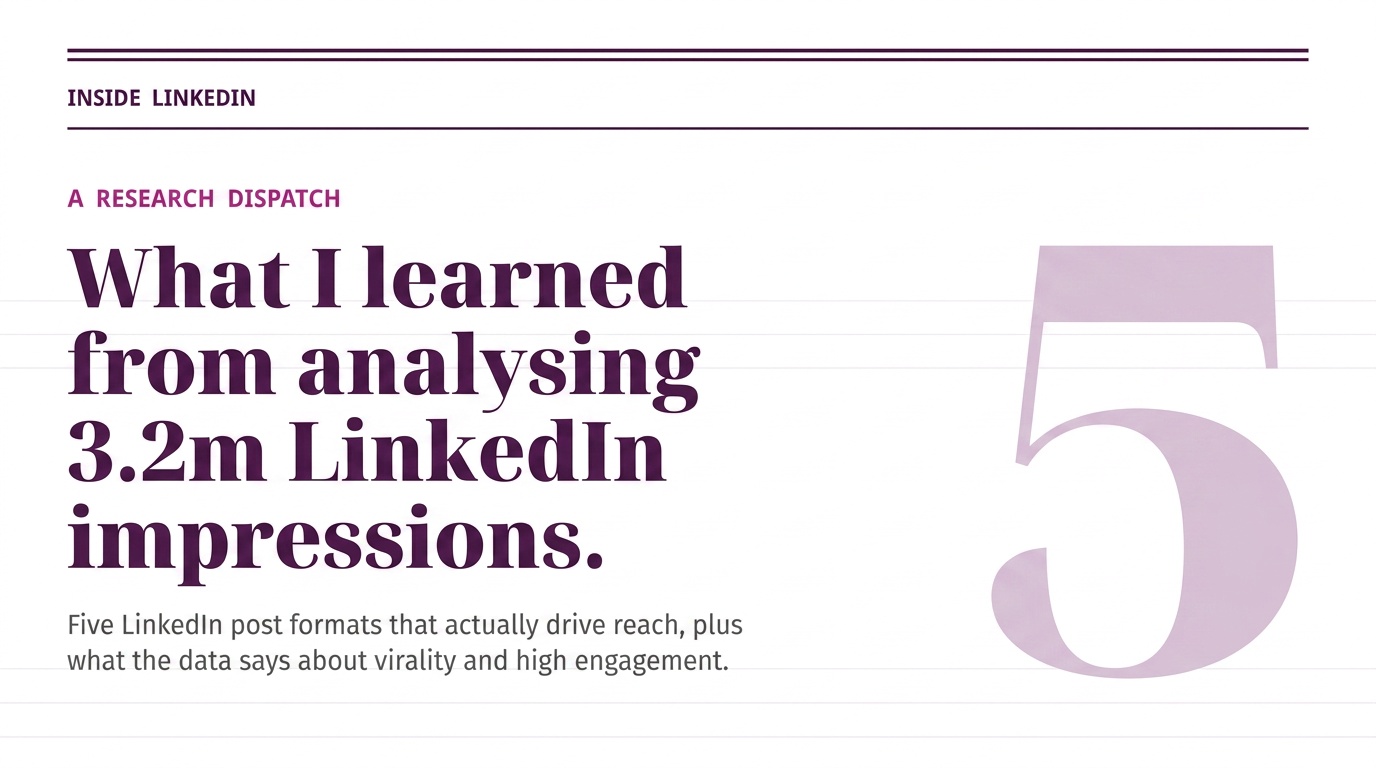
"Our buyers are too technical for storytelling." https://melaniegoodmanlinkedinconsultant.substack.com/p/3-2m-linkedin-impressions-5-post-formats
I hear this constantly in B2B tech marketing. It's one of the most expensive assumptions a team can make.
The belief goes: engineers, architects, and security leaders evaluate on specs, so narrative is fluff. Give them the feature list and let the product speak for itself.
But here's what actually happens in the buying room. Your technical buyer builds a business case they have to defend to a CFO who has never touched your product. They forward your content to a colleague who reads two lines before deciding whether it's worth their time. They sit through six vendor demos that all blur together by Friday.
Specs don't survive that process. Story does.
A narrative isn't the opposite of technical depth. It's the structure that makes depth memorable. The best technical content I've built across five enterprise tech companies never dumbed anything down. It gave the complexity a shape: here's the problem, here's why the obvious fix fails, here's what changes when you solve it correctly.
Technical buyers aren't immune to story. They're just allergic to story that has nothing real underneath it. Respect their intelligence and give them a narrative worth defending, and you don't lose credibility. You earn it.
If your technical content is accurate but forgettable, the gap isn't your product. It's the frame around it.
Want a fresh take on your B2B content strategy? DM me and let's schedule a 30-minute consultation—I'll show you 3 things you can improve this week.
#B2BMarketing#ContentStrategy…more
No one buys a feature. They buy what the feature lets them stop worrying about.
I've spent years marketing complex technical products across five enterprise tech companies, and the hardest habit to break is this: teams describe what a product does instead of what it changes for the person using it.
Specs don't move buyers. Stakes do. https://leadershipinchange.com/p/shadow-ai-audit
The security platform isn't "sub-second threat detection." It's the engineer who finally sleeps through the night because the 2am page stopped coming. The data infrastructure isn't "petabyte-scale throughput." It's the team that ships the analysis before the board meeting instead of apologizing for the delay.
The technical depth still matters. In fact, in B2B tech it matters more than most marketers admit, because your buyers are smart and can smell a hollow pitch instantly. But depth without human stakes is just a datasheet. And nobody remembers a datasheet.
The best content I've built didn't choose between the two. It earned credibility with precision, then made you feel why that precision mattered to a real person with a real problem.
In the Army, we briefed missions with the objective first, then the details that served it. Same discipline applies here: lead with what's at stake for the human, then prove you can deliver it.
If your product is technically strong but your marketing isn't landing, that gap is usually the story, not the tactics.
Want a fresh take on your B2B content strategy? DM me and let's schedule a 30-minute consultation—I'll show you 3 things you can improve this week.
#B2BMarketing#ContentStrategy
Your buyers don't remember your feature list. They remember the story that made the feature matter. https://excellentprompts.substack.com/p/openclaw-2-testing-plan-7-projects-local-ai-agent
I've spent years marketing complex technical products across five enterprise tech companies, and the pattern is always the same: the engineering is brilliant, the spec sheet is airtight, and the messaging still lands flat.
The gap isn't technical. It's narrative.
Skeptical technical buyers don't want to be sold. They want to recognize their own problem in what you say, and trust that you actually understand it. That recognition doesn't come from more detail. It comes from connecting the complexity to something human: the risk they're carrying, the decision they're afraid to get wrong, the outcome they'll be judged on.
Three shifts that consistently move the needle:
Lead with the stakes, not the spec. Tell people why the problem matters before you explain how you solve it.
Respect their intelligence. Make complexity clear instead of dumbing it down. Smart buyers trust brands that treat them as smart.
Anchor every claim to an outcome they care about. "Faster" means nothing. "Ship the release without the 2 a.m. incident call" means everything.
In the Army we learned that the mission only succeeds when everyone understands the "why" behind the order. Marketing complex products works the same way. The technology earns attention. The story earns belief.
Want a fresh take on your B2B content strategy? DM me and let's schedule a 30-minute consultation—I'll show you 3 things you can improve this week.
#B2BMarketing#ContentStrategy
Most B2B tech brands explain the product. Almost none explain why it matters to a human.
Features tell buyers what it does. Story tells them what changes. In technical markets, story is what earns trust. https://leadershipinchange.com/p/shadow-ai-audit#B2BMarketing#BrandStorytelling
Here's something I've learned after years of marketing complex technical products: nobody falls in love with a feature list.
We think the hard part of B2B is the technology. It isn't. The hard part is helping a real person see themselves in what you've built — the engineer buried in tickets, the marketer defending a budget, the leader who just wants to make one confident decision this week.
The best technical brands don't dumb their story down. They do something harder. They find the human standing behind the problem and speak to that person with warmth, clarity, and respect.
Three things I keep coming back to:
→ Start with a person, not a product. "Who is quietly frustrated right now?" is a better opening question than "What does our platform do?"
→ Translate, don't simplify. Your audience is smart. They're just busy. Meet them with clarity, not condescension.
→ Let the story carry the proof. Specifics earn trust. A single honest example beats ten adjectives.
The most technical thing you sell still gets bought by a human who wants to feel understood. Build for that person, and the complexity takes care of itself.
Want a fresh take on your B2B content strategy? DM me and let's schedule a 30-minute consultation — I'll show you 3 things you can improve this week.
#B2BMarketing#ContentStrategy#Storytellinghttps://leadershipinchange.com/p/ai-race-fools-errand
Your product is technically brilliant. That's exactly why nobody remembers it. https://excellentprompts.substack.com/p/best-gemini-notebook-infographic-design-prompts
In B2B tech, we're trained to lead with specs. Throughput, uptime, architecture diagrams. And to a skeptical technical buyer, those details matter—they're how trust gets earned.
But specs aren't what people repeat.
The mistake I see across enterprise tech marketing isn't a lack of substance. It's the assumption that substance markets itself. It doesn't. Buyers don't wake up thinking about your feature set. They wake up thinking about the problem that kept them at their desk late last night.
The brands that break through do two things at once:
They respect the intelligence of a technical audience—no dumbing down, no hand-waving.
And they wrap that rigor in a human narrative: who's stuck, what's at stake, and what changes when the problem finally gets solved.
In the Army, we didn't brief a mission by listing equipment. We briefed the objective, the terrain, and why it mattered. The details supported the story—they never replaced it.
Complex products still need a reason to care. Give the specs a narrative to live inside, and suddenly your best engineering becomes something people can actually pass along.
Want a fresh take on your B2B content strategy? DM me and let's schedule a 30-minute consultation—I'll show you 3 things you can improve this week.
#B2BMarketing#BrandStorytelling
The best B2B marketing I've ever seen didn't start with the product.
It started with a person.
In technical environments, we're taught to lead with specs — throughput, latency, uptime, the feature matrix. And those things matter. But nobody has ever lost sleep over a feature. They lose sleep over the problem the feature solves: the outage they can't explain to leadership, the deadline slipping, the trust they're trying to earn back.
Here's what I've learned across five enterprise tech companies and a decade of leadership before that: the technical detail is the proof, not the story. The story is human. It's about the engineer who finally got their weekend back. The team that stopped firefighting and started building. The leader who walked into the board meeting with an answer instead of an apology.
When you bridge the complex product and the human narrative, two things happen. Skeptical technical buyers actually lean in — because you respected their intelligence. And the people around them, the ones who sign off but don't speak the jargon, finally understand why it matters.
You don't have to choose between substance and story. The best marketing earns trust by holding both.
So before your next campaign, ask one question: whose life gets better because this exists? Start there. The specs will have their moment.
Want a fresh take on your B2B content strategy? DM me and let's schedule a 30-minute consultation — I'll show you 3 things you can improve this week.
#B2BMarketing#Storytelling#ContentStrategyhttps://www.generativeaipub.com/p/anthropics-new-ai-threat-report-is
Samsung's instinct when Apple announced the iPhone Duo foldable was exactly right. Capitalize on a competitor's weak moment. They've been selling foldables since 2019, Apple just joined — "Let us know when you're done reheating our leftovers" wrote itself.
The execution missed.
"Reheating our leftovers" reads like it was written by someone who is not in the room with the people they're trying to reach. Clever on paper. Doesn't land. The follow-up posts were more of the same — four tweets that felt like a brief was checked rather than a reaction that was felt.
What they should have done: an actor in a studio within 30 minutes of the announcement, filming a fake Apple keynote, making the whole thing so absurd that anyone holding an iPhone Duo felt the joke. Make it visual. Make it shareable. Make it something people forward into group chats. That's the move.
The brand banter playbook is not "post a witty line." It is "move faster than anyone expected, with something that genuinely makes people laugh rather than nod politely."
Whenever you have a moment to take market share from a competitor, you have to jump on it. Samsung knew the moment was there. They just didn't hit it hard enough.
For B2B brands watching competitor moves, the lesson is the same. It's not enough to react. You have to react in a way that makes the other side look like they're playing in your leftovers — not you.
https://rollingout.com/2026/09/10/samsung-trolls-apple-foldable-iphone-duo/#B2BMarketing#ContentStrategy…more
Today's post is 263 words, a 2-minute read.
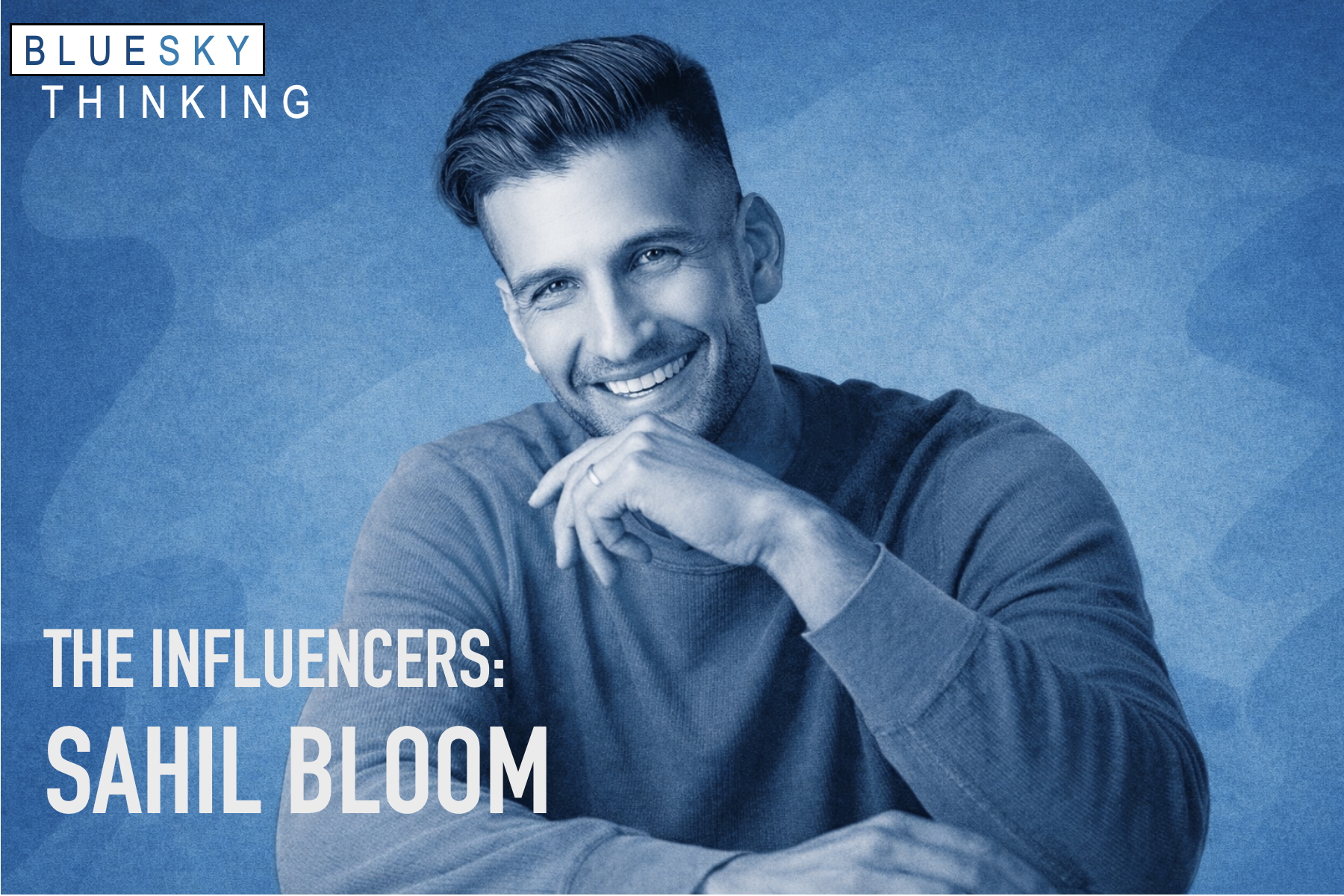
Sources: Sahil Bloom — "9 Harsh Truths Nobody Told You About Success"
https://www.sahilbloom.com/newsletter/9-harsh-truths-nobody-told-you-about-success
1 big thing: What just changed in how B2B marketers should think about success
The market for telling people what they want to hear is much larger than the market for telling people what they need to hear. That fact explains most of what you see in B2B marketing — and most of what holds marketers back.
Why it matters: The mental models that built your career to this point are not always the ones that take you further. Recognizing which ones to keep and which ones to replace is a leadership skill most people never develop deliberately.
Driving the news:
Sahil Bloom's latest piece identifies nine patterns common among people who plateau — not because they lack intelligence, but because they lack adaptability and self-awareness.
→ The most counterintuitive finding: success is a more powerful trap than failure. Once you reach a local maximum, the comfort of that position makes the descent required to reach the next peak feel unbearable.
→ With AI flattening the intelligence playing field, courage — the bias for action — is the differentiator that cannot be replicated
Zoom in:
The four principles Bloom identifies for consistent success: create value, finish things, be easy to work with, do uncomfortable things sooner.
→ In B2B marketing, that last one does the most damage when ignored. The delayed conversation, the avoided pivot, the campaign you know isn't working — the bill always comes due.
Yes, but: Simple principles and easy execution are not the same thing. The bar is low. Clearing it consistently is what most people fail to do.
Be smart: Audit your current work against those four principles. Where are you performing? Where are you hiding?
The bottom line: Intelligence is abundant. Courage is not. Act accordingly.
https://www.sahilbloom.com/newsletter/9-harsh-truths-nobody-told-you-about-success#Leadership#B2BMarketing…more
Today's post is 298 words, a 2-minute read.
Sources: Superhuman Marketing — "Reddit's ChatGPT Citation Collapse Worries Marketers"
1 big thing: What just changed in AI visibility for B2B marketers?
Reddit's share of ChatGPT citations dropped 86% in mid-August. Brands that built their AI visibility strategy around it are scrambling.
Why it matters: Platform-dependent AI visibility strategies carry the same risk as platform-dependent social strategies. When the citation model shifts, everything built on top of it shifts with it.
Driving the news:
ChatGPT reduced how often it credits Reddit in final answers — but it is still consulting the platform behind the scenes.
→ Brand websites are now being credited more frequently in ChatGPT's final responses
→ Brands that treated Reddit as their primary AI visibility channel saw immediate exposure drops
Zoom in:
Experts now recommend treating social platforms as audience-insight channels rather than citation engines.
→ The brands gaining AI visibility are publishing authoritative, original content on their own domains — content that gets cited regardless of where the question is asked
Yes, but: Most B2B marketing teams do not yet have a defined AI visibility strategy. The brands hurt most by this shift are the ones who had one built on a single platform.
Be smart: Diversify where your brand authority lives. Original thought leadership on your own domain, consistent voice, and documented expertise are the assets AI models surface — not social posts optimized for one platform's algorithm.
The bottom line: Platforms are channels. Brand authority is the asset. Build accordingly.
https://www.businessinsider.com/what-reddit-chatgpt-citation-decline-means-for-cmos-2026-8#AIMarketing#B2BMarketing…more
Your product launch timeline just became a regulatory risk surface.
Anthropic launched Claude Fable 5 on Tuesday, June 9. By Friday, June 12, the US Commerce Department had issued an export-control directive forcing the company to shut it down globally.
This is the first time an export-control directive has ever been used to pull a publicly deployed AI model mid-operation.
Here's what matters for B2B marketers in enterprise tech:
You can no longer assume your launch will stay live. Anthropic priced Fable 5, ran benchmarks, built go-to-market assets, and had three days of availability before Amazon researchers found a prompting vulnerability that triggered a government response. Commerce Secretary Howard Lutnick issued the directive at 5:21 PM ET. Because Anthropic couldn't verify user citizenship in real time, they disabled access for everyone.
I've worked on launches at Proofpoint, Druva, and MinIO where regulatory uncertainty was background noise. It's now foreground risk. The gap between launch readiness and regulatory approval is compressing, and most content strategies aren't built for that.
If you're launching a technical product in a space where compliance, export controls, or security clearances matter, your content needs to be modular enough to pivot without rewriting everything. That means scenario planning for delayed releases, restricted availability, or post-launch changes to positioning.
The discipline here is the same one I learned in the Army: you don't get to choose the conditions. You build systems that hold under pressure.
If you're launching in a regulated space and want to stress-test your content strategy for regulatory scenarios, send me a DM. I offer a 30-minute consultation where I'll review your approach and give you three actionable improvements you can implement this week. https://theaipixel.substack.com/p/claude-fable-5-launched-tuesday-by…more
Most B2B tech marketers hit a ceiling. Not from lack of effort. From optimizing the wrong variables.
I've seen this across five enterprise tech companies. A team will grind for months on a content strategy that isn't working. More blog posts. More social activity. More webinars. The output increases, but the results stay flat.
The problem isn't execution. It's what they're measuring.
Three variables I see teams optimize that rarely move the needle:
Content volume instead of resonance. Publishing 20 generic pieces won't outperform 5 that genuinely address the technical skepticism your audience brings to every vendor conversation. When you're marketing to people who evaluate infrastructure decisions or security platforms, they can smell surface-level content immediately. Optimize for depth and credibility, not frequency.
Channel spread instead of concentration. I watched a marketing team stretch across seven platforms because a framework told them to be everywhere. Their audience was almost entirely on LinkedIn and in niche technical communities. When they pulled back and focused, engagement doubled in six weeks. Your audience isn't everywhere. Find where they actually pay attention and go deep there.
Simplification instead of respect for intelligence. The instinct in B2B tech is to make everything simple. But your buyers are smart. They want to understand how your product works, not just what it does. The best content I've built didn't dumb things down. It made complexity clear and connected it to business outcomes they cared about.
When I work with teams stuck at this ceiling, the shift isn't about doing more. It's about reframing what success looks like and aligning effort with variables that actually matter.
If your content strategy feels like pushing a boulder uphill, I'm offering 30-minute strategy consultations where I'll review your current approach and give you three actionable improvements you can implement this week. DM me and we'll schedule it.
https://www.contrarianthinking.co/newsletter-articles/youre-asking-the-wrong-question…more
Most marketers hit a ceiling not because the opportunity isn't there, but because they're solving $10M problems with $1M strategies.
I see this pattern constantly in B2B tech marketing. Teams grinding harder on the same content approaches, churning out more blog posts, more social updates, more campaigns. The effort is there. The results aren't.
The issue isn't execution. It's operating system.
Your brain defaults to what worked before. Pattern recognition kept our ancestors alive, but it keeps modern marketers stuck. When you face a complex technical product that needs to reach skeptical enterprise buyers, your brain reaches for familiar tactics because they feel safe.
But safe doesn't break through noise in saturated markets.
The companies I've worked with that actually cut through are the ones willing to rewire how they approach the problem. They stop asking "what content should we create?" and start asking "what belief do we need our audience to adopt, and what would make them question their current assumptions?"
That shift requires challenging your own mental models. It means stepping back from the content calendar long enough to question whether your strategy is actually designed to scale or just designed to keep you busy.
In the military, we had a saying: slow is smooth, smooth is fast. Rushing into execution with the wrong strategy just gets you to failure faster. The same applies to marketing complex technical products.
If you're running harder but not seeing breakthrough results, the answer isn't another tactic. It's rewiring your approach to the problem itself.
Want a fresh take on your B2B content strategy? DM me and let's schedule a 30-minute consultation—I'll show you 3 things you can improve this week.
#B2BMarketing#ContentStrategyhttps://www.contrarianthinking.co/newsletter-articles/how-to-rewire-your-brain-for-business-success
The biggest obstacle to effective B2B tech marketing isn't a lack of tactics. It's the mental model you bring to the work.
I've seen talented marketers stuck in the same pattern: they know their product is complex, their audience is skeptical, and the buying cycle is long. So they default to feature lists, technical jargon, and safe messaging that checks boxes but changes nothing.
The problem isn't what they know. It's how they think about the challenge.
You can't solve $10M problems with $1M thinking. You need to fundamentally shift your operating system.
In content strategy for technical B2B, that shift looks like this:
Stop optimizing for coverage. Most marketers want content across every channel, addressing every persona, hitting every stage of the funnel. The result is diluted messaging that resonates with no one.
Start optimizing for impact. Identify the one narrative that actually matters to your audience and go deep. Build your content system around that single insight until it breaks through the noise.
This requires rewiring how you prioritize. It means saying no to requests that don't serve the core narrative. It means resisting the pressure to be everywhere and instead committing to be unforgettable in one place.
I've applied this across five enterprise tech companies. The results are always the same: fewer pieces of content, higher engagement, more qualified conversations.
The tactics matter. But the thinking behind the tactics matters more.
Want a fresh take on your B2B content strategy? DM me and let's schedule a 30-minute consultation—I'll show you 3 things you can improve this week.
#B2BMarketing#ContentStrategyhttps://www.contrarianthinking.co/newsletter-articles/how-to-rewire-your-brain-for-business-success
In the Army, we had a saying: amateurs talk strategy, professionals talk logistics.
The same is true for personal branding.
Everyone has ideas. Most people don't have a system.
I've been using Radi8 to bring some operational discipline to my content — planning, scheduling, and keeping my brand context consistent across everything I publish.
For someone who's spent their career helping enterprise tech companies tell better stories, it's been a useful forcing function to apply the same rigor to my own.
Check it out if you're building your brand in the B2B space. 🎯 …more



 View on LinkedIn
Also on

 View on YouTube
Also on