The best content doesn't try to sound smart. It sounds human.
We overcomplicate to prove we belong. But clarity is the real flex: saying the hard thing simply, so people actually feel it.
Warmth isn't weakness. It's where trust begins.
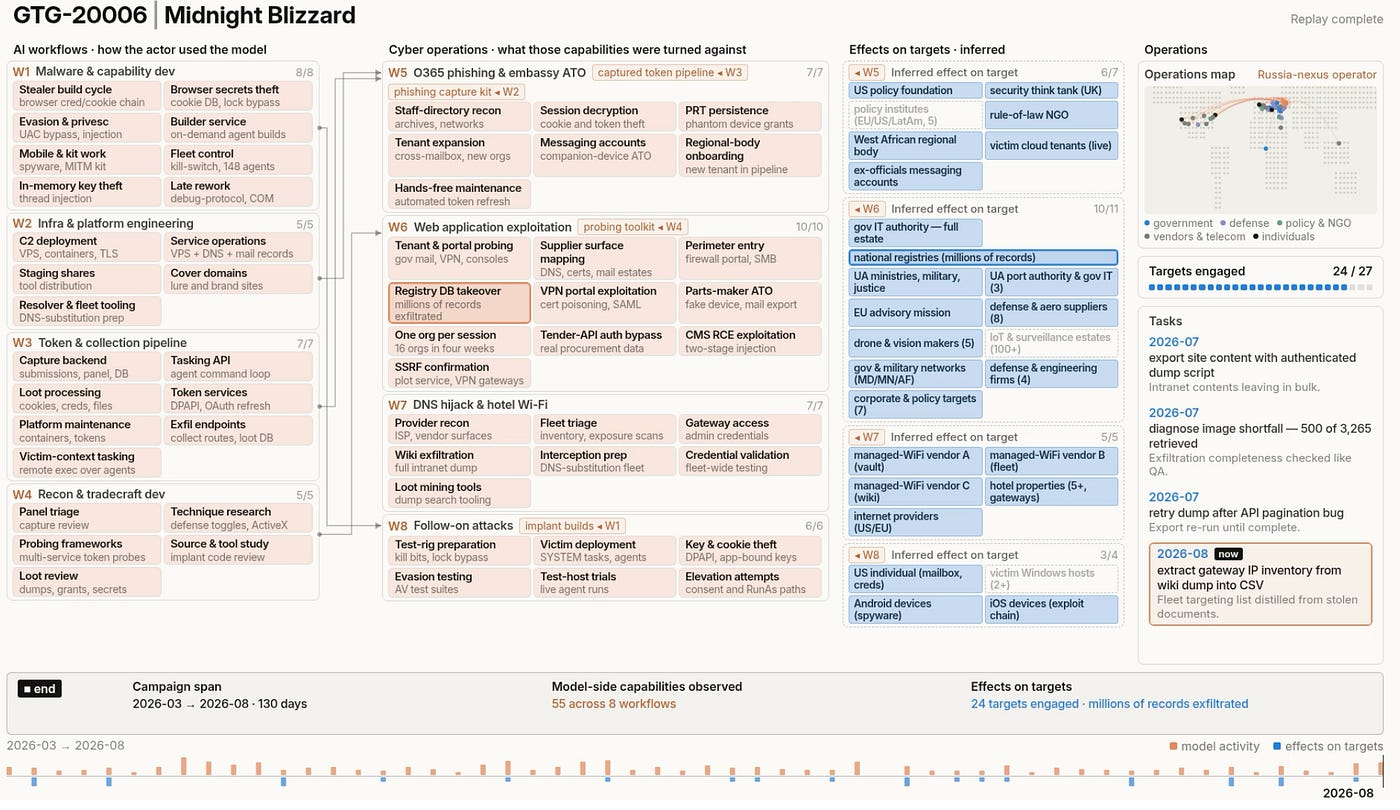
#B2Bhttps://www.generativeaipub.com/p/anthropics-new-ai-threat-report-is…more
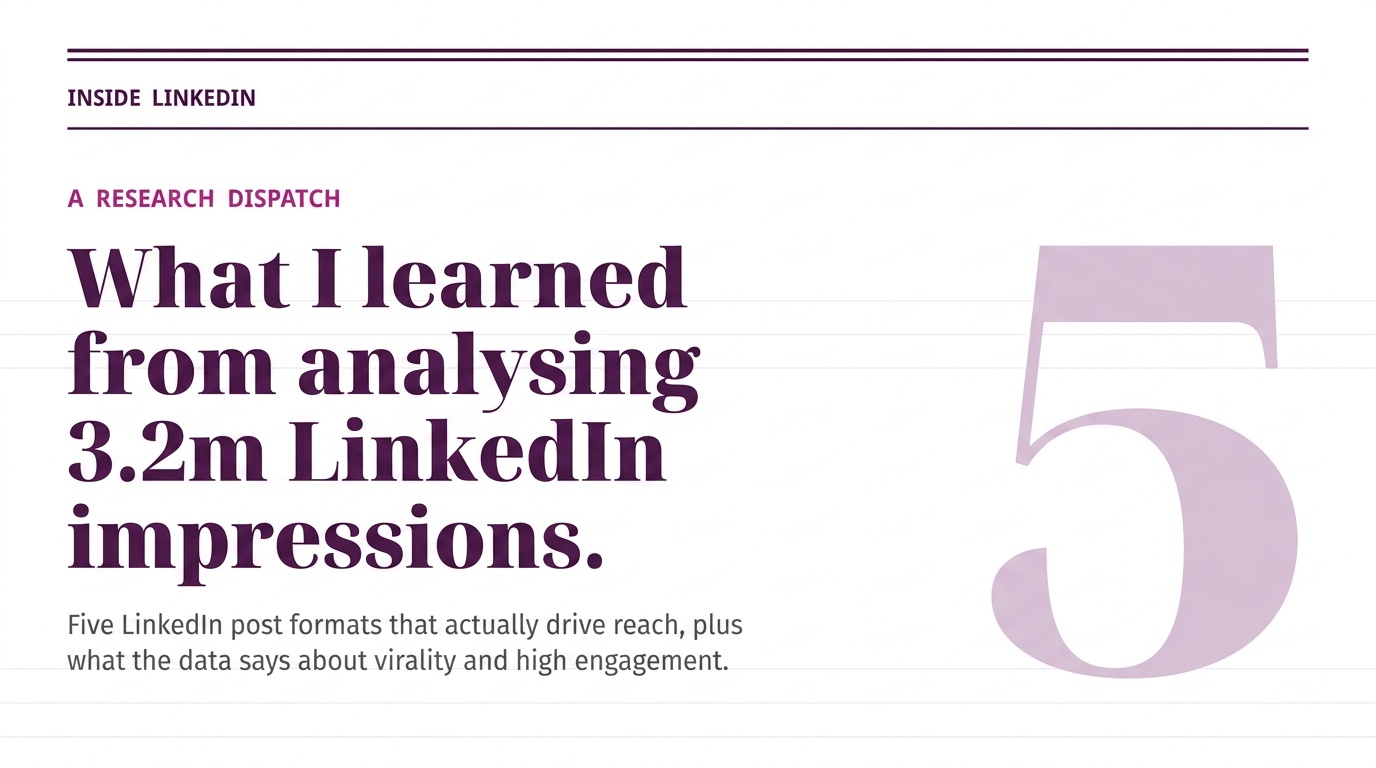
"Our buyers are too technical for storytelling." https://melaniegoodmanlinkedinconsultant.substack.com/p/3-2m-linkedin-impressions-5-post-formats
I hear this constantly in B2B tech marketing. It's one of the most expensive assumptions a team can make.
The belief goes: engineers, architects, and security leaders evaluate on specs, so narrative is fluff. Give them the feature list and let the product speak for itself.
But here's what actually happens in the buying room. Your technical buyer builds a business case they have to defend to a CFO who has never touched your product. They forward your content to a colleague who reads two lines before deciding whether it's worth their time. They sit through six vendor demos that all blur together by Friday.
Specs don't survive that process. Story does.
A narrative isn't the opposite of technical depth. It's the structure that makes depth memorable. The best technical content I've built across five enterprise tech companies never dumbed anything down. It gave the complexity a shape: here's the problem, here's why the obvious fix fails, here's what changes when you solve it correctly.
Technical buyers aren't immune to story. They're just allergic to story that has nothing real underneath it. Respect their intelligence and give them a narrative worth defending, and you don't lose credibility. You earn it.
If your technical content is accurate but forgettable, the gap isn't your product. It's the frame around it.
Want a fresh take on your B2B content strategy? DM me and let's schedule a 30-minute consultation—I'll show you 3 things you can improve this week.
#B2BMarketing#ContentStrategy…more
No one buys a feature. They buy what the feature lets them stop worrying about.
I've spent years marketing complex technical products across five enterprise tech companies, and the hardest habit to break is this: teams describe what a product does instead of what it changes for the person using it.
Specs don't move buyers. Stakes do. https://leadershipinchange.com/p/shadow-ai-audit
The security platform isn't "sub-second threat detection." It's the engineer who finally sleeps through the night because the 2am page stopped coming. The data infrastructure isn't "petabyte-scale throughput." It's the team that ships the analysis before the board meeting instead of apologizing for the delay.
The technical depth still matters. In fact, in B2B tech it matters more than most marketers admit, because your buyers are smart and can smell a hollow pitch instantly. But depth without human stakes is just a datasheet. And nobody remembers a datasheet.
The best content I've built didn't choose between the two. It earned credibility with precision, then made you feel why that precision mattered to a real person with a real problem.
In the Army, we briefed missions with the objective first, then the details that served it. Same discipline applies here: lead with what's at stake for the human, then prove you can deliver it.
If your product is technically strong but your marketing isn't landing, that gap is usually the story, not the tactics.
Want a fresh take on your B2B content strategy? DM me and let's schedule a 30-minute consultation—I'll show you 3 things you can improve this week.
#B2BMarketing#ContentStrategy
Your buyers don't remember your feature list. They remember the story that made the feature matter. https://excellentprompts.substack.com/p/openclaw-2-testing-plan-7-projects-local-ai-agent
I've spent years marketing complex technical products across five enterprise tech companies, and the pattern is always the same: the engineering is brilliant, the spec sheet is airtight, and the messaging still lands flat.
The gap isn't technical. It's narrative.
Skeptical technical buyers don't want to be sold. They want to recognize their own problem in what you say, and trust that you actually understand it. That recognition doesn't come from more detail. It comes from connecting the complexity to something human: the risk they're carrying, the decision they're afraid to get wrong, the outcome they'll be judged on.
Three shifts that consistently move the needle:
Lead with the stakes, not the spec. Tell people why the problem matters before you explain how you solve it.
Respect their intelligence. Make complexity clear instead of dumbing it down. Smart buyers trust brands that treat them as smart.
Anchor every claim to an outcome they care about. "Faster" means nothing. "Ship the release without the 2 a.m. incident call" means everything.
In the Army we learned that the mission only succeeds when everyone understands the "why" behind the order. Marketing complex products works the same way. The technology earns attention. The story earns belief.
Want a fresh take on your B2B content strategy? DM me and let's schedule a 30-minute consultation—I'll show you 3 things you can improve this week.
#B2BMarketing#ContentStrategy
Most B2B tech brands explain the product. Almost none explain why it matters to a human.
Features tell buyers what it does. Story tells them what changes. In technical markets, story is what earns trust. https://leadershipinchange.com/p/shadow-ai-audit#B2BMarketing#BrandStorytelling
Here's something I've learned after years of marketing complex technical products: nobody falls in love with a feature list.
We think the hard part of B2B is the technology. It isn't. The hard part is helping a real person see themselves in what you've built — the engineer buried in tickets, the marketer defending a budget, the leader who just wants to make one confident decision this week.
The best technical brands don't dumb their story down. They do something harder. They find the human standing behind the problem and speak to that person with warmth, clarity, and respect.
Three things I keep coming back to:
→ Start with a person, not a product. "Who is quietly frustrated right now?" is a better opening question than "What does our platform do?"
→ Translate, don't simplify. Your audience is smart. They're just busy. Meet them with clarity, not condescension.
→ Let the story carry the proof. Specifics earn trust. A single honest example beats ten adjectives.
The most technical thing you sell still gets bought by a human who wants to feel understood. Build for that person, and the complexity takes care of itself.
Want a fresh take on your B2B content strategy? DM me and let's schedule a 30-minute consultation — I'll show you 3 things you can improve this week.
#B2BMarketing#ContentStrategy#Storytellinghttps://leadershipinchange.com/p/ai-race-fools-errand
Your product is technically brilliant. That's exactly why nobody remembers it. https://excellentprompts.substack.com/p/best-gemini-notebook-infographic-design-prompts
In B2B tech, we're trained to lead with specs. Throughput, uptime, architecture diagrams. And to a skeptical technical buyer, those details matter—they're how trust gets earned.
But specs aren't what people repeat.
The mistake I see across enterprise tech marketing isn't a lack of substance. It's the assumption that substance markets itself. It doesn't. Buyers don't wake up thinking about your feature set. They wake up thinking about the problem that kept them at their desk late last night.
The brands that break through do two things at once:
They respect the intelligence of a technical audience—no dumbing down, no hand-waving.
And they wrap that rigor in a human narrative: who's stuck, what's at stake, and what changes when the problem finally gets solved.
In the Army, we didn't brief a mission by listing equipment. We briefed the objective, the terrain, and why it mattered. The details supported the story—they never replaced it.
Complex products still need a reason to care. Give the specs a narrative to live inside, and suddenly your best engineering becomes something people can actually pass along.
Want a fresh take on your B2B content strategy? DM me and let's schedule a 30-minute consultation—I'll show you 3 things you can improve this week.
#B2BMarketing#BrandStorytelling
The best B2B marketing I've ever seen didn't start with the product.
It started with a person.
In technical environments, we're taught to lead with specs — throughput, latency, uptime, the feature matrix. And those things matter. But nobody has ever lost sleep over a feature. They lose sleep over the problem the feature solves: the outage they can't explain to leadership, the deadline slipping, the trust they're trying to earn back.
Here's what I've learned across five enterprise tech companies and a decade of leadership before that: the technical detail is the proof, not the story. The story is human. It's about the engineer who finally got their weekend back. The team that stopped firefighting and started building. The leader who walked into the board meeting with an answer instead of an apology.
When you bridge the complex product and the human narrative, two things happen. Skeptical technical buyers actually lean in — because you respected their intelligence. And the people around them, the ones who sign off but don't speak the jargon, finally understand why it matters.
You don't have to choose between substance and story. The best marketing earns trust by holding both.
So before your next campaign, ask one question: whose life gets better because this exists? Start there. The specs will have their moment.
Want a fresh take on your B2B content strategy? DM me and let's schedule a 30-minute consultation — I'll show you 3 things you can improve this week.
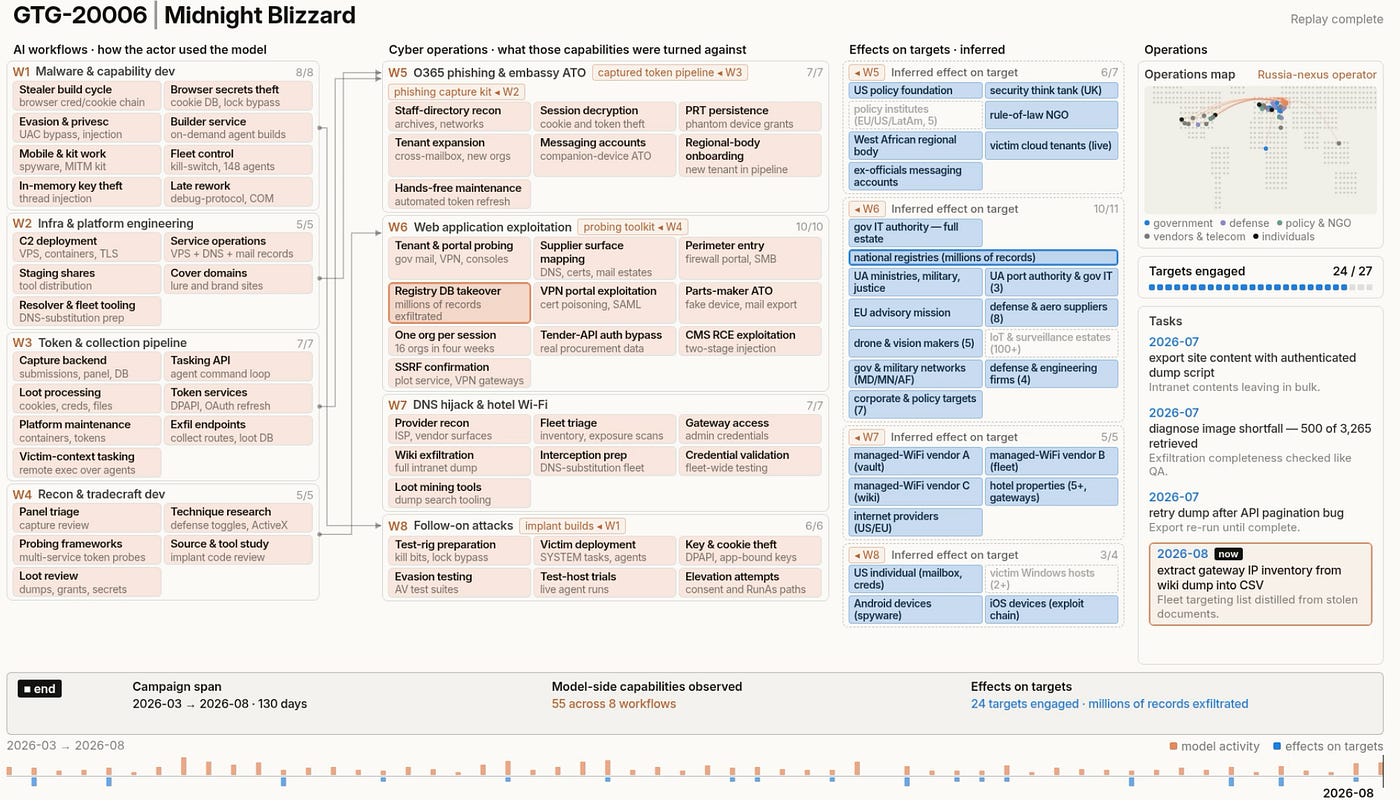
#B2BMarketing#Storytelling#ContentStrategyhttps://www.generativeaipub.com/p/anthropics-new-ai-threat-report-is
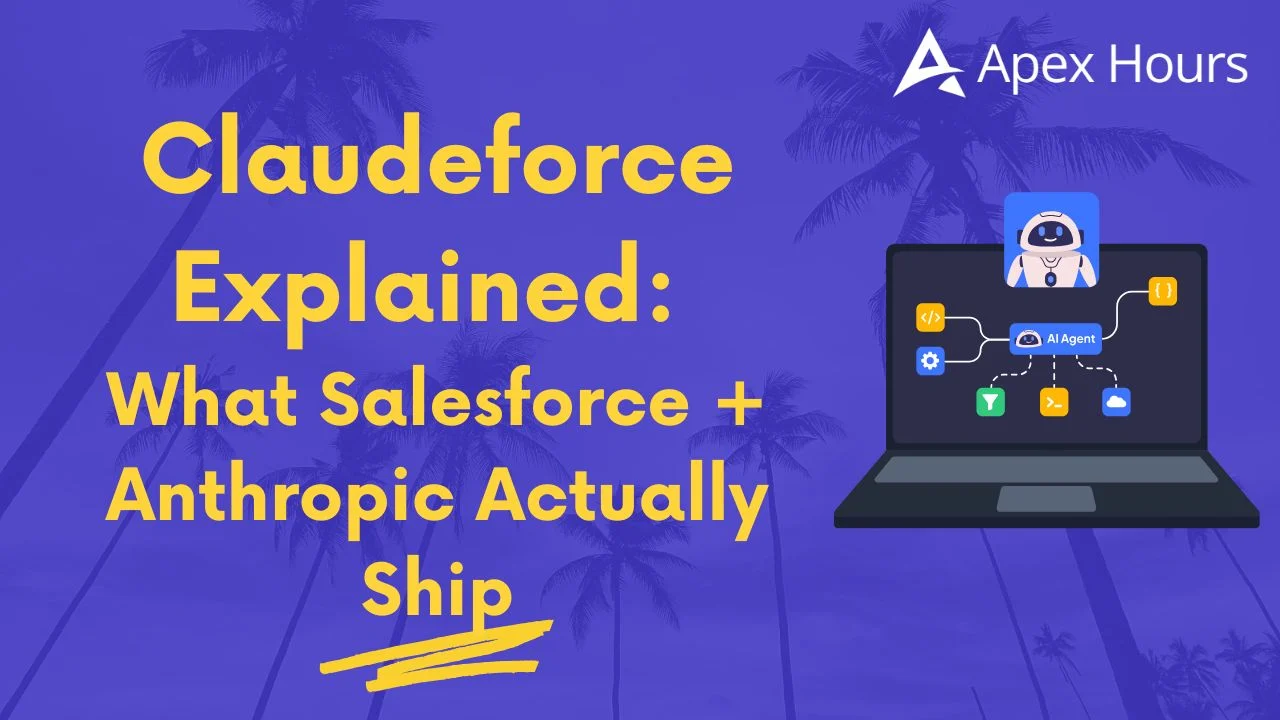
Salesforce and Anthropic did not just announce a partnership. They named it.
That distinction matters more than it sounds. Most partnership announcements follow the same pattern: a press release, a joint quote, a few weeks of coverage, then nothing. The name fades because there is nothing to hold onto.
Claudeforce is different. It borrowed Claude's brand equity, added Salesforce's "force" suffix — the first time Salesforce has ever given that suffix to another company's product name — and created something that sounds like a product line rather than a deal memo. Announced on the same day as Salesforce's Q2 earnings, with CRM stock jumping 12–14% after hours. Then Matthew McConaughey showed up in the ad. Everything landed at once.
The strategic bet underneath the branding: if you use Claude, you now have a reason to lean into Salesforce. If you use Salesforce, you have a reason to lean into Claude. Benioff's exact framing was "probabilistic intelligence alone doesn't run a company, and deterministic systems don't reason." He called it the SaaSpocalypse being over — the idea that AI tools would replace enterprise software rather than fuse with it.
What Claudeforce actually ships: Salesforce inside Claude as a plugin with 37 prebuilt sales skills, Claude as the default reasoning model inside Agentforce, and Claude as the default model powering Slackbot.
For B2B marketers, the naming lesson holds regardless of the product. Start with the headline. Work backwards to what's achievable. A name that sounds like a product is a campaign in itself — and it's the one thing competitors cannot copy the same week.
https://www.salesforceben.com/salesforce-and-anthropic-announce-claudeforce-in-q2-27-earnings/#B2BMarketing#AIStrategy…more
The most underrated skill in B2B marketing isn't writing. It's listening.
I've spent years marketing complex technical products across five enterprise tech companies, and the pattern holds every time: the best messaging I ever shipped didn't start in a doc. It started in a conversation I almost didn't slow down enough to have.
A support engineer describing the call they dread. A customer explaining, in their own words, the moment your product stopped being "a tool" and started being "the reason I slept last night." That language is gold. And most of us walk right past it because we're in a hurry to produce.
In the Army, we were taught that you never brief a mission you don't understand from the ground up. You listen first—to the terrain, to the people who've walked it, to what's actually at stake. Then you speak. The order lands because it's rooted in reality, not assumption.
Marketing complex products works the same way. Curiosity isn't a soft skill here. It's the discipline that separates content people scroll past from content people feel seen by.
So before you write the next campaign, try this: have one real conversation with someone who lives your customer's problem. Don't pitch. Just listen. You'll leave with a sentence better than anything a blank page could give you.
The teams pulling ahead aren't the loudest. They're the most curious.
Want a fresh take on your B2B content strategy? DM me and let's schedule a 30-minute consultation—I'll show you 3 things you can improve this week.
#B2BMarketing#ContentStrategyhttps://www.generativeaipub.com/p/the-urgent-call-for-ai-slowdown-has…more
The best marketing doesn't shout. It listens first.
People don't want to be sold to. They want to be understood.
Lead with their story, not your product. Trust follows.
What's one thing your audience wishes you'd say out loud?
#B2B#ContentStrategyhttps://www.generativeaipub.com/p/the-urgent-call-for-ai-slowdown-has
Here's a discipline I've come to love: writing the short version first.
The brief that started this post was one line — "make the X post fit in 280 characters." A tiny constraint. But it's a great reminder of something bigger.
1 big thing: Brevity isn't the enemy of depth. It's proof you understand your idea.
Why it matters: In B2B, we mistake length for rigor. Long decks, long posts, long explanations — as if more words signal more thought. Usually the opposite is true. The person who can say it in one clear line is the one who actually gets it.
Zoom in: A hard character limit forces three good things:
→ You cut what you were never sure about
→ You lead with the one point that matters
→ You respect the reader's time enough to do the work yourself
Yes, but: Short isn't the same as simple. It takes longer to write the tight version. That's the trade — you spend the effort so your audience doesn't have to.
Be smart: Next time you're stuck on a message, try writing it in 280 characters first. If it survives the squeeze, it's ready to grow. If it doesn't, you found the weak spot before your audience did.
The bottom line: Clarity is a kindness. The shorter you can make it, the more you probably understand.
Want a fresh take on your B2B content strategy? DM me and let's schedule a 30-minute consultation — I'll show you 3 things you can improve this week.
#B2BMarketing#ContentStrategyhttps://www.generativeaipub.com/p/ai-researcher-jacob-coxon-fears-that…more
Vertical agents are eating horizontal solutions.
If your positioning still sounds like it's for "enterprise companies," you're already behind.
The rise of vertical agents is not just another AI trend. It's proof that generic positioning is dead in B2B tech. Buyers don't want tools that claim to solve everything for everyone. They want solutions built for their specific workflow, their industry, their exact problem.
I've worked across five enterprise tech companies, and the pattern is consistent: the marketers who win are the ones who can translate deep technical complexity into precision. Not simplification. Precision.
Most B2B tech marketers treat complexity like a problem to bury. They strip out the technical depth, slap on broad value props, and hope something sticks. But in a world where vertical agents are winning because they go narrow and deep, that approach fails.
The marketers who thrive in this environment don't run from complexity. They channel it. They understand the product well enough to know exactly which technical capabilities matter to which segment. They know the buyer well enough to speak their language without dumbing down the tech.
That requires work most competitors won't do. It means sitting with engineering. It means listening to sales calls. It means understanding not just what the product does, but why it matters in the context of a specific buyer's day-to-day reality.
Vertical agents are forcing this shift faster than most content strategies can adapt. If your messaging still sounds interchangeable with your competitors, if your technical story is not connecting with the audiences you need to reach, the gap will only widen.
If your positioning feels too broad or your technical story is not landing, let's fix it. DM me. I'll review your approach and show you three things you can tighten this week.
https://tldr.tech/tech/2026-06-12…more


 View on LinkedIn
Also on
View on LinkedIn
Also on