Trying to break 90, I took the six iron. It came up short.
I'd stood there going back and forth... four hybrid or six iron. Downhill lie, so the six felt like the logical call. I had a reason. I liked my reason!
The four hybrid had worked perfectly on the previous par 3.
My honest summary: "I don't know because I thought I knew what I was doing"
Founders and CEOs, I think this shows up in business all the time. The decisions that worry me most are the ones where someone feels certain... including me. Feeling sure about a rationale and the rationale being right can be two different things. And certainty is usually the moment I stop checking.
You can watch me talk myself into the wrong club, and see where the ball ends up, here: https://youtu.be/xyXd_QSFt0I
What decision are you most confident about right now... and when did you last actually pressure-test it?
#Founders#CEO#Leadership#Strategy…more
Who have you actually watched build the startup you're trying to build?
Saeed Amidi makes a point about Stanford I keep coming back to: the reason so many students there start companies is that they grow up seeing it as normal. A graduate feels they could just as easily go build the next Google as go get a job at one. He points to the poster children — Larry Page, Sergey Brin, Bill Hewlett, Dave Packard. When you can see people like you doing it, building becomes something you can picture yourself doing.
I launched the startup incubator at San José State, where I still teach. Same engineering talent as anywhere. Far fewer startups. The gap isn't intellect... it's whether or not students believe they can do it.
The same dynamic runs for anyone starting a business. What you believe you can attempt is shaped by the peers you can watch attempting it. That's why community isn't just encouragement — it's the infrastructure your belief runs on.
Watch Saeed make the point himself here: https://youtu.be/bb9n-CnDGVA
Who in your peer group has already made this leap? And if you can't name anyone... is that why you're hesitating?
#IndependentConsultant#Coaching#Consulting…more
I heard Saeed Amidi explain why Stanford makes about 450 startups a year.
Students see founders they could become... "you could go either get a job at Google or build Google."
Who made it feel possible for you?
I don't think the plan is the hardest part of a big move.
Saeed Amidi puts a number on what is: "Believing you can build something is I would say 50% of becoming an entrepreneur."
Half. Before the market, the money, the team.
I see a version of this with founders and CEOs making a big growth move... a launch, an expansion, a new market. The plan exists. The move has been "about to start" for too long. What's missing is the belief that this team can actually build it.
None of the things I've built started with a plan that survived. They started with a direction. And I still build belief the same way... when I don't know how to do something, I find the simplest version I can actually do, do it, and learn from what happens.
The fastest way I know to believe you can build something is to finish something small.
Hear Saeed say it himself, then decide whether you'd put it higher or lower than half: https://youtu.be/vXDMfaJVcNQ
What's the small thing your team could finish this week?
#Founders#CEO#GrowthStrategy#Entrepreneurship…more
One Saeed Amidi line stuck with me:
"Believing you can build something is I would say 50% of becoming an entrepreneur."
I see it in CEOs stuck at "about to start"...
The fastest way I know to believe you can build something is to finish something small.
What could your team finish first?
One decision.
Elizabeth told me the most valuable decision she made for her business wasn't a tactic or a tool. It was leaving her day job to go all in on her practice.
While she was still in that job, she said, she wasn't all in. Now she is.
The most valuable decision might not be a tactic or a tool... it might be going all in.
Practitioners, I can't tell you whether that's the right call for you, and I'd never pretend it's an easy one. But it might be worth looking at where you're still hedging... the plan B you keep open, the second thing that quietly gets half your attention.
Thank you, Elizabeth, for saying it so plainly!
Where are you still hedging?
If you want to work out your own version of that decision, the first comment links to my site, where I help founders figure out exactly what to do next.
#GoingIndependent#Solopreneur#Entrepreneurship…more
Liz Greenfield told me this one gives her goosebumps, every time. When a client finally commits to putting themselves first, their external world starts to ease up.
Her words: "once they get to that point that they realize like, I'm actually not going to make progress until I commit to myself, everything in their external world starts to ease up."
Took me a long time to trust it. But I see the business version constantly: a half-committed practice hedges, keeps a fallback, quietly warns everyone it might not last. Full commitment changes what you notice, what you chase, and what you let people see.
What would full commitment to your practice look like — no hedging, no fallback plan? Tell me below.
#Coaching#ExecutiveCoach#CoachingBusiness#IndependentConsultant#ConsultingBusiness#GoingIndependent#Solopreneur#ThoughtLeadership
How to find your highest-leverage decision: look for where you're still hedging.
Elizabeth told me hers was leaving her day job to go all in on her practice.
The most valuable decision might not be a tactic or a tool... it might be going all in.
The one decision that moved Elizabeth Greenfield's practice more than any funnel: going all-in. Half-in is a half-result. She names the hinge moment herself... worth a watch: https://youtu.be/vXDMfaJVcNQ
A quick way to tell whether you're out of energy... or just carrying too much.
A piece on guykawasaki.substack.com makes the case that energy is the resource nobody budgets. I agree it matters. When founders tell me they're tired, I believe them.
But I'd look one layer under it.
An energy problem might really be too many priorities competing for attention.
So try this. Write down everything you're holding right now... every project, every promise, every "I should really." Then ask the same question of each one: if this moved forward, would anything else get easier? Often only one or two will. Park the rest on purpose, written down and out of your head.
Then notice how you feel. Sometimes the tiredness has less to do with the hours and more to do with holding too many things at once.
If showing up and posting is one of the things on your list, that's the piece I'm building Radi8 to make simpler. Link in the first comment.
#Founders#Startups#Entrepreneurship…more
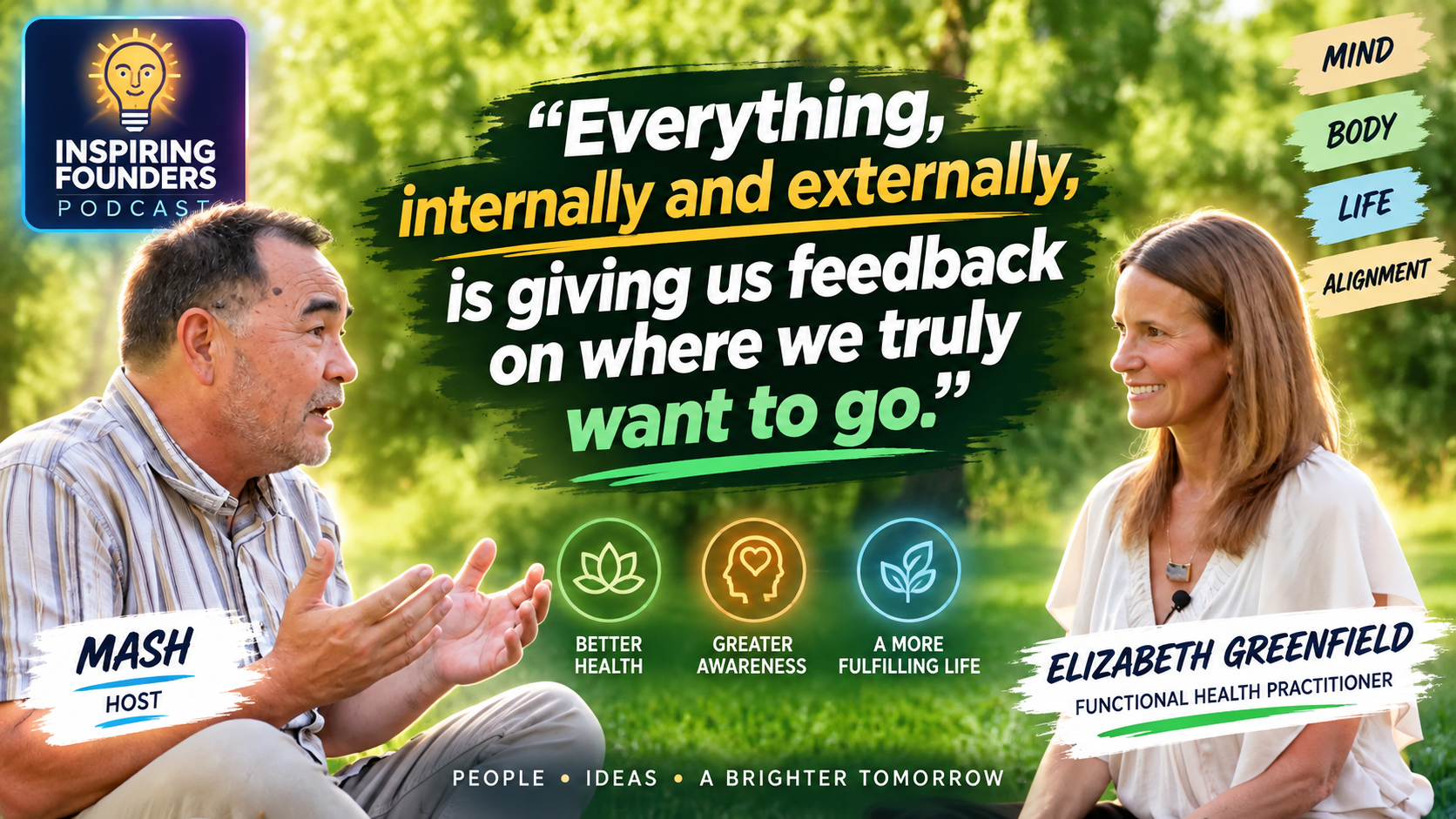
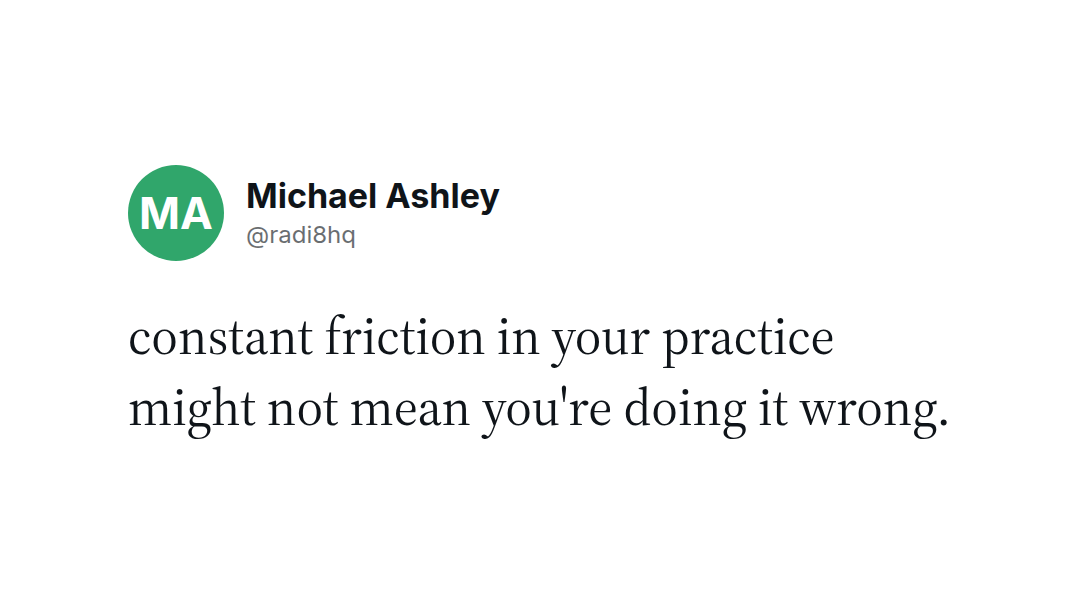
Coaches and consultants... constant friction in your practice might not mean you're doing it wrong. It might be feedback.
Elizabeth Greenfield told me: "I do believe that symptoms will show up and or the external experience is going to feel hard until we start getting in alignment with what we really want."
The friction you keep hitting might be pointing at your positioning, your audience, or your offer.
What's a recurring difficulty in your practice right now that might be pointing you somewhere?
#Coaching#CoachingBusiness#IndependentConsultant#Consultants#Solopreneur#GoingIndependent#Positioning#BuildingAPractice…more
Try this the next time a call goes sideways: separate the decision from the outcome.
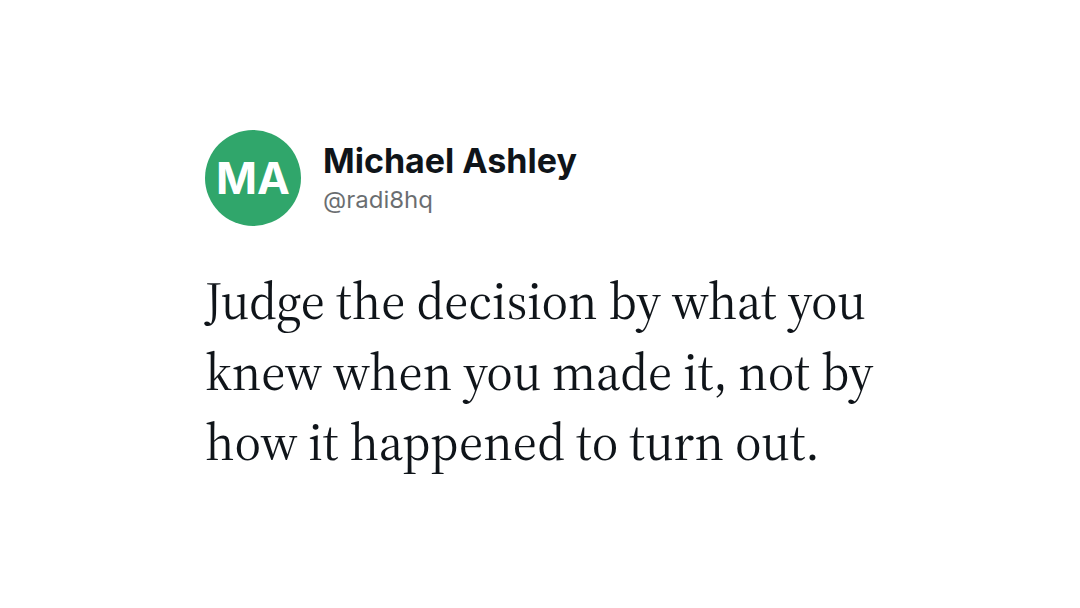
Judge the decision by what you knew when you made it, not by how it happened to turn out.
That idea comes from Annie Duke's Thinking in Bets, her Substack on deciding in an uncertain world. A sound process can still draw a bad result... that's uncertainty, not a verdict on you. The trap is the reverse too, a lucky win hiding a sloppy call.
For coaches and consultants building a practice: which call deserves a harder look, and which one just got unlucky?
#IndependentConsultant#ExecutiveCoach#CoachingBusiness#ConsultingBusiness#Solopreneur#SmallBusinessOwner#BusinessGrowth#Positioning#ThoughtLeadership#GoingIndependent…more
For SBDC advisors, SCORE mentors, and anyone who advises small business owners:
When a client says their marketing isn't working, ask three things before they spend more. Can they say who they help in one sentence? Do they know where customers drop off? Are their analytics counting real visitors, or their own?
A "not sure" on any of those is the problem to fix first, and it's usually cheaper than what they were about to buy. If a client is wrestling with one, I'm always glad to get an intro. …more
"I didn't know how to run a business."
Liz Greenfield, after 25 years as a nurse, in her first stretch out on her own.
She's honest on this episode about all of it. The morning she rolled out of bed and realized the paycheck had stopped. Undervaluing herself. A speaking coach telling her, point blank, that she wasn't ready.
None of that is a nursing problem. It's the half nobody teaches you inside an organization.
Watch the episode:
https://youtu.be/vXDMfaJVcNQ
Like it, comment, subscribe... it genuinely helps the show reach the next person who needs to hear it. All episodes at inspiringfounders.com
#IndependentConsultant#GoingIndependent#Positioning#CoachingBusiness…more
You think the thing holding your practice back is that you don't have enough. Enough budget. Enough network. Enough runway to survive a mistake.
I've told myself that story too.
Then I listened to Saeed Amidi, founder of Plug and Play. Early on, he flew to Jeddah with a borrowed suit, his father's credit card, and money for exactly one trip. No safety net. No plan to come home empty-handed. In his words: "I'm not coming back till I sell something."
Having no Plan B didn't slow him down. It focused him. He stretched that one trip into 45 days and closed his first two deals.
Comfort never makes you that sharp. Constraint does.
Watch Saeed tell it himself here: https://youtu.be/bb9n-CnDGVA. It's the clearest case I've seen for why fewer resources can make you more resourceful, not less.
What constraint have you been treating as an obstacle that might actually be your edge?
#IndependentConsultant#Coaching#GoingIndependent…more
I sat across from Saeed Amidi in San Jose, a live audience in the room with us.
Saeed founded Plug and Play Tech Centers. He also, almost as an aside, runs a plastics and bottled-water company that does a billion dollars a year... which he still calls his "day job."
He told us about a building on University Avenue in Palo Alto. His first tenant there was Peter Thiel. His third was Andy Rubin. And in that same stretch, Larry and Sergey were building Google. He calls it the lucky building, the one that got him into PayPal.
Now Plug and Play invests in about 100 startups a year. He's building an AI Center of Excellence in San Jose. He thinks the AI revolution is 10 to 20 times bigger than mobile... and still only the tip of the iceberg.
But the part that stayed with me wasn't the numbers.
It was when he talked about pressure as a prerequisite. And why he won't back a founder who has a Plan B.
Then he closed with a line, and the whole room lit up:
"You can either get a job at Google, or BUILD Google!"
Full conversation with Saeed is on the Inspiring Founders Podcast. Watch it on YouTube, or listen on Spotify.
#IndependentConsultant#GoingIndependent#Coaching#ThoughtLeadership…more


 View on LinkedIn
Also on


'/%3E%3Cpath fill='%23fff' d='M12 7.3A4.7 4.7 0 1 0 16.7 12 4.7 4.7 0 0 0 12 7.3Zm0 7.8A3.1 3.1 0 1 1 15.1 12 3.1 3.1 0 0 1 12 15.1Zm5-8a1.1 1.1 0 1 0 1.1 1.1A1.1 1.1 0 0 0 17 7.1Zm-5 1.5c-1.5 0-1.7 0-2.3.1a3.8 3.8 0 0 0-1.3.2 2.2 2.2 0 0 0-.8.5 2.2 2.2 0 0 0-.5.8 3.8 3.8 0 0 0-.2 1.3c-.1.6-.1.8-.1 2.3s0 1.7.1 2.3a3.8 3.8 0 0 0 .2 1.3 2.2 2.2 0 0 0 .5.8 2.2 2.2 0 0 0 .8.5 3.8 3.8 0 0 0 1.3.2c.6.1.8.1 2.3.1s1.7 0 2.3-.1a3.8 3.8 0 0 0 1.3-.2 2.5 2.5 0 0 0 1.3-1.3 3.8 3.8 0 0 0 .2-1.3c.1-.6.1-.8.1-2.3s0-1.7-.1-2.3a3.8 3.8 0 0 0-.2-1.3 2.2 2.2 0 0 0-.5-.8 2.2 2.2 0 0 0-.8-.5 3.8 3.8 0 0 0-1.3-.2c-.6-.1-.8-.1-2.3-.1Zm0-1.6c1.5 0 1.7 0 2.4.1a5.5 5.5 0 0 1 1.8.3 3.8 3.8 0 0 1 2.2 2.2 5.5 5.5 0 0 1 .3 1.8c.1.7.1.9.1 2.4s0 1.7-.1 2.4a5.5 5.5 0 0 1-.3 1.8 3.8 3.8 0 0 1-2.2 2.2 5.5 5.5 0 0 1-1.8.3c-.7.1-.9.1-2.4.1s-1.7 0-2.4-.1a5.5 5.5 0 0 1-1.8-.3 3.8 3.8 0 0 1-2.2-2.2 5.5 5.5 0 0 1-.3-1.8C4 13.7 4 13.5 4 12s0-1.7.1-2.4a5.5 5.5 0 0 1 .3-1.8 3.8 3.8 0 0 1 2.2-2.2 5.5 5.5 0 0 1 1.8-.3C10.3 5 10.5 5 12 5Z'/%3E%3C/svg%3E)
 View on Facebook
Also on