I stayed up until 2AM the night Grokbot launched. Not because I was using it to write content — because I couldn't stop having fun using it to research.
That's the distinction most people miss.
Using AI to write your posts gets you average posts. Average hooks. Average takes. We're on a podcast literally talking about LinkedIn adding an "AI slop" button — that's where the road leads.
But using AI to surface what's worth talking about? That's where the real leverage is.
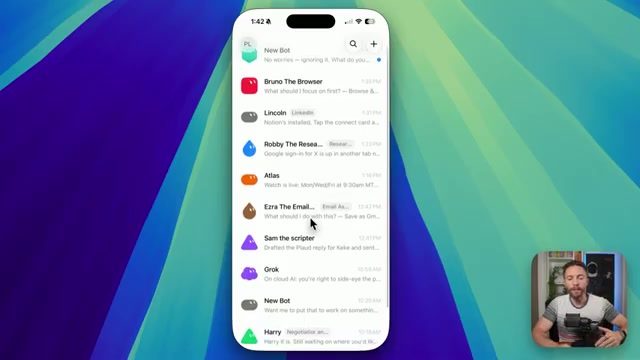
Here's how I use Grokbot: I have a podcast digest agent that pulls top moments from every podcast I'd normally listen to and summarizes what's relevant to my work. Agents for competitive monitoring, outlier post analysis, research. I take those inputs and write myself.
The result: my screen time is way down because I'm not scrolling to find signal. I let the agents find it. Then I put my own experience and perspective on it and post.
You and I are the example of this right now on the podcast. We used research tools to find the stories. But the takes come from years in the field. AI can't replicate that, and it shouldn't try.
Use AI to do more with less time. Use your brain to make it worth reading.
https://www.ayautomate.com/blog/grok-bot-xai-ai-agents-explained#AIMarketing#B2BMarketing…more
LinkedIn just added a button to flag AI slop. Then quietly nerfed two things creators have relied on for years: comment-for-lead-magnet posts and CTAs asking for reshares.
I've seen it firsthand. Posts that normally hit half a million views in a week getting capped at 500. Removed the CTA and watched it climb to 20,000.
My take on the lead magnet suppression: it's the wrong call. The only people commenting on those posts are people who actually want what you're offering. That's not spam — that's an engaged audience self-selecting. LinkedIn should think twice.
But the broader signal? It's good for those of us who do the work.
LinkedIn's own CPO called AI slop a "top priority." Over a million people clicked the new button in two weeks. Views on flagged content dropped 40%. The platform is enforcing quality now — and that means posting five times a week is only an advantage if what you're posting is worth reading.
AI can help you research, find angles, and organize your thinking. But the post itself needs to come from your brain.
Do epic things. Write about them. That's still the playbook — and now LinkedIn is enforcing it.
https://fortune.com/2026/07/31/linkedin-seems-like-ai-slop-button-billions-automated-comments-attempts/#LinkedIn#B2BMarketing…more
Founder at Radi8 // Executive Coach // Host of the Inspiring Founders Podcast
· LinkedIn
·
Who actually owns your reputation — you, or whoever has the password?
When you go independent, your reputation stops being something the company vouches for and becomes the business itself. It's the asset that wins clients. So it's worth knowing where it lives and who controls it.
Here's a small version of that question I see often. The practice grows, you need to post more, so you hand your personal LinkedIn login to an assistant or the team. Feels efficient. But now the most valuable thing you own runs on a shared password, and your identity and the company's posting sit in the same account.
The root cause isn't a weak password. It's a growth habit built on a foundation you don't fully control. The fix is to separate the two: your team posts on the company's behalf while your personal account stays entirely yours.
Durable practices run on systems you own, not favors and workarounds.
Want a second set of eyes on where your visibility actually lives? Book 30 minutes and ask me anything — no pitch, just a clear next step: https://calendly.com/foclarity/30min#IndependentConsultant#Coaching#GoingIndependent#ThoughtLeadership…more
Founder at Radi8 // Executive Coach // Host of the Inspiring Founders Podcast
· LinkedIn
·
We're halfway through the year. I've been doing a lot of thinking about what's actually worked in my marketing vs. what I thought would.
Here's my honest take.
What I expected to work: a polished content calendar, consistent posting across multiple channels, well-designed assets.
What actually moved the needle: direct conversations that started from a single, specific LinkedIn post that named an exact pain point my audience was feeling.
The post wasn't clever. It wasn't visually interesting. It was just specific and true. It got more inbound messages than anything I'd posted in the previous three months combined.
The lesson I keep relearning: marketing feedback loops are much shorter than founders think. You can know within 30 days whether a message is working — if you're watching the right signal. Not follower count. Not impressions. Conversations started.
That's the metric I watch now above everything else. How many people responded to something I wrote and said "this is exactly what I'm dealing with"? That's the leading indicator that content is building pipeline.
The other thing that worked: teaching something specific in every post instead of sharing opinions. Opinions get likes. Teaching gets DMs. DMs become customers.
My Inspiring Founders community on Skool is where I share what I'm learning as I learn it — if you want to follow along, join us. It's free: https://www.skool.com/inspiring-founders-5861/about…more
Founder at Radi8 // Executive Coach // Host of the Inspiring Founders Podcast
· LinkedIn
·
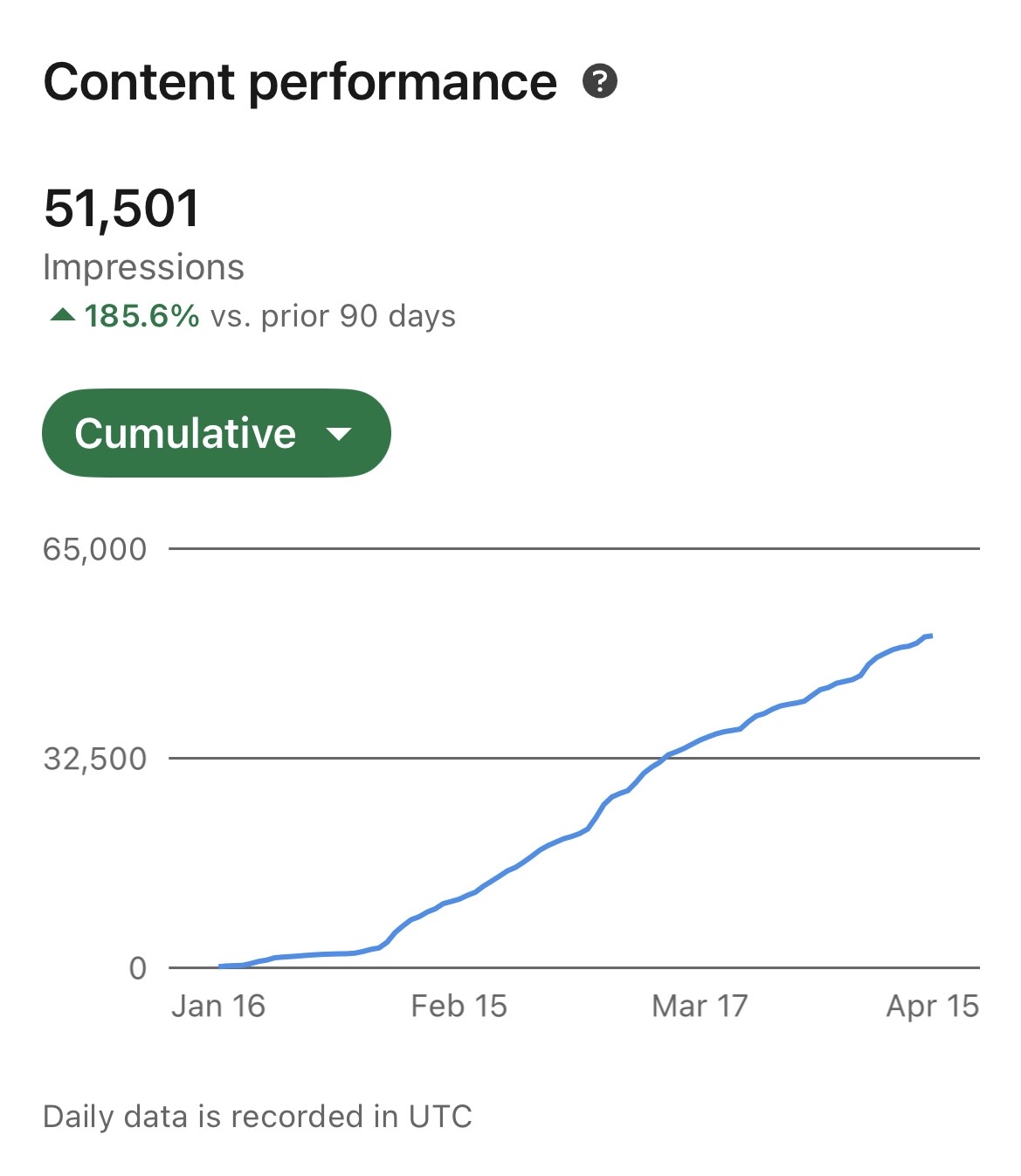
51,501 LinkedIn impressions in the last 90 days. Up 185% from the 90 days before.
Here's what actually changed: I started posting consistently. That's it. No growth hack, no algorithm trick.
The hard part isn't writing one good post. It's writing one this week, and next week, and the week after — while running a business.
That's the problem Radi8 is built to solve. Stay visible without living on social media.
Try it free → radi8.com …more
Founder at Radi8 // Executive Coach // Host of the Inspiring Founders Podcast
· LinkedIn
·
As a CEO who’s launched multiple team programs, I’ve learned three clear rules for employee advocacy on LinkedIn.
1) Reduce friction: centralize content ideas and templates so people can start quickly.
2) Teach the practice: short workshops and peer feedback work better than long manuals.
3) Protect authenticity: encourage personal voice with simple guidelines, not scripts.
We built Radi8 to help teams discover, create, and publish authentic LinkedIn content. Send me a message for a short checklist or to discuss an internal program. #employeeadvocacyhttps://www.radi8.com/…more
Founder at Radi8 // Executive Coach // Host of the Inspiring Founders Podcast
· LinkedIn
·
I ran a one-week experiment with Radi8 on my LinkedIn content.
Engagement rose 64.8%, impressions increased 55.8%, and members reached grew 78.1%.
The takeaway: Radi8 has immediate impact on your reach and engagement. …more


 View on LinkedIn