


Marketing
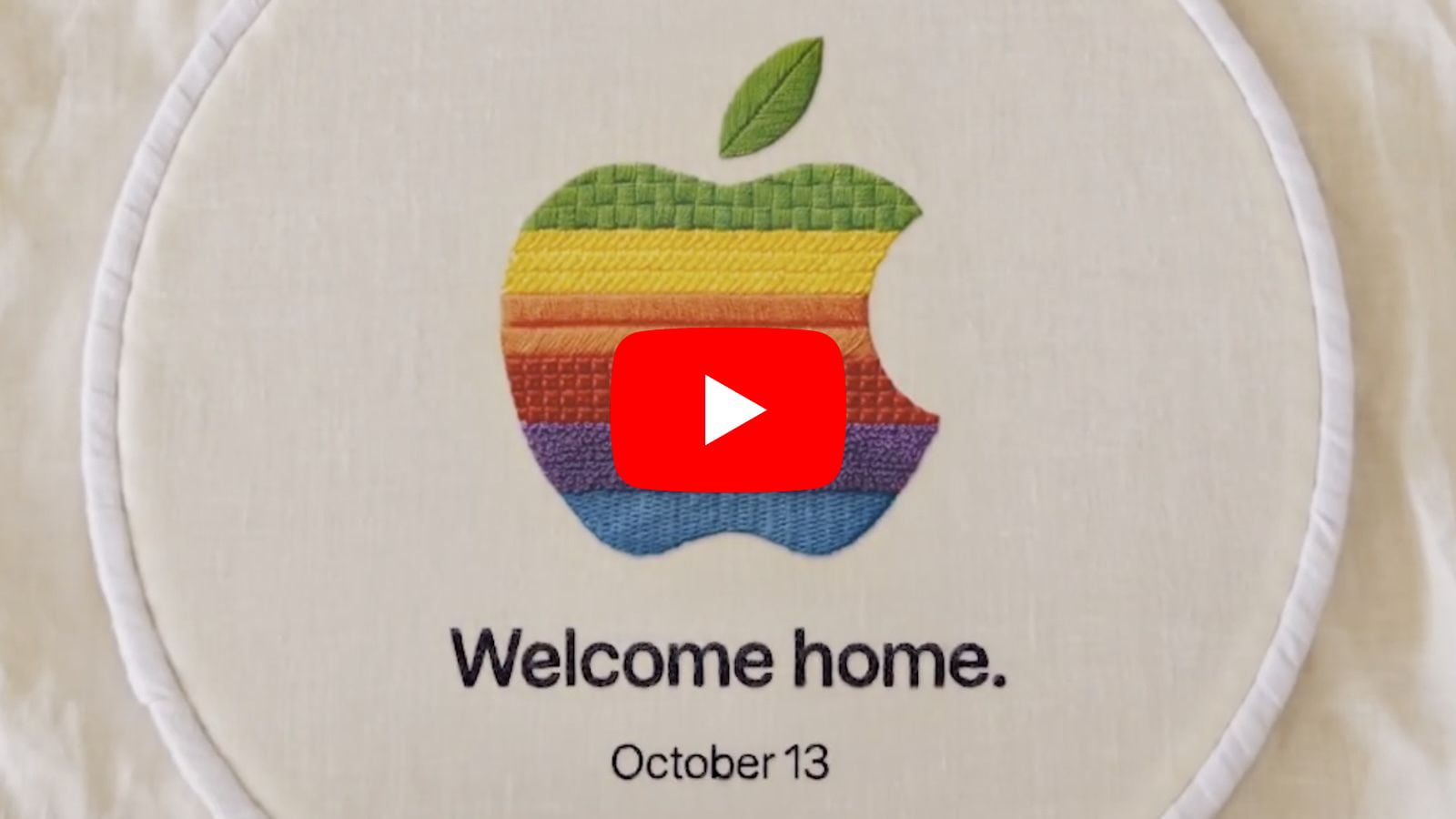
Apple ran two ads in the same week. One became a cautionary tale. One hit 2M+ views.
The HomeView ad was meant to show a $300 smart home hub taming a chaotic family morning. What viewers saw was a product that looked like part of the chaos. Ad pros said it showcased features without creating any desire. "Fire the whole marketing team" was a top comment.
One week later: a 30-second teaser showing Apple's logo being stitched by hand. Entirely different reaction. Viewers celebrated it precisely because it felt human in a feed full of synthetic content. 2M+ views, overwhelmingly positive.
Same brand. Same week. Different brief.
The HomeView brief asked: what features should we show?
The needle-and-thread brief asked: what do we want people to feel?
That difference in framing produces entirely different creative work, entirely different audience responses, and entirely different business outcomes.
The brief is the strategy. Everything downstream is just execution. …more
Told 2 times, Nov 7, 2026 – Nov 8, 2026
· X · Open
Apple ran two ads same week.
HomeView: product looks like part of the chaos. "Fire the whole marketing team."
Needle-and-thread teaser: 2M+ views, glowing reactions.
One brief asked "what to show?" The other: "what should people feel?"
https://www.businessinsider.com/apple-homeview-ad-fails-build-desire-ad-pros-say-2026-10
I stayed up until 2AM the night Grokbot launched. Not because I was using it to write content — because I couldn't stop having fun using it to research.
That's the distinction most people miss.
Using AI to write your posts gets you average posts. Average hooks. Average takes. We're on a podcast literally talking about LinkedIn adding an "AI slop" button — that's where the road leads.
But using AI to surface what's worth talking about? That's where the real leverage is.
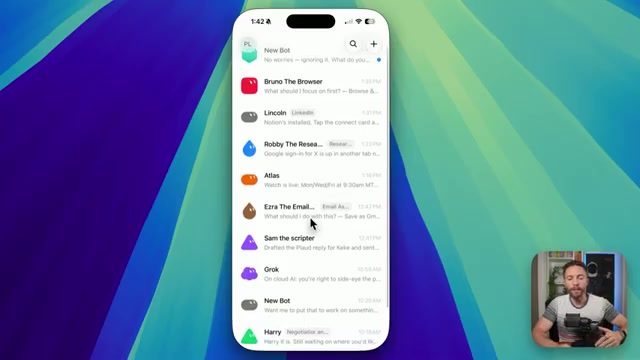
Here's how I use Grokbot: I have a podcast digest agent that pulls top moments from every podcast I'd normally listen to and summarizes what's relevant to my work. Agents for competitive monitoring, outlier post analysis, research. I take those inputs and write myself.
The result: my screen time is way down because I'm not scrolling to find signal. I let the agents find it. Then I put my own experience and perspective on it and post.
You and I are the example of this right now on the podcast. We used research tools to find the stories. But the takes come from years in the field. AI can't replicate that, and it shouldn't try.
Use AI to do more with less time. Use your brain to make it worth reading.
https://www.ayautomate.com/blog/grok-bot-xai-ai-agents-explained
#AIMarketing #B2BMarketing …more
 View on LinkedIn
Also on

Ramp built a fake Gen Z influencer called the Kumar Method, grew him to a million followers, and nobody knew a brand was behind it until they chose to reveal it. That is a legitimate masterclass in B2B brand building.
The play: go anti-finance to reach people who aren't in finance yet. Don't market to the people who already know you. Market to the people who will need you later. Genius.
But they left a lot on the table.
The biggest miss: they let people read the Kumar Method lead magnet before asking for an email. One gate before access would have captured hundreds of thousands of addresses. Instead they probably got 20,000. People will give you their email for real value — just ask.
Second miss: the reveal was too quiet. If you've been sitting on a secret that took a million followers to build, you don't just drop it. You coordinate. You seed it to every creator and podcast you know. You make the reveal as big as the build.
The actual playbook for anyone thinking about this:
→ Know exactly who you're speaking to before you build the character
→ Gate the lead magnet from the start
→ Make sure the character has somewhere to go after the reveal
→ Treat the announcement like a campaign, not a footnote
The Kumar Method strategy is brilliant. The execution had gaps. Learn from both.
https://www.trueframe.xyz/blog/kumar-method
#B2BMarketing #ContentStrategy …more
 View on LinkedIn
Also on
Wrong messaging or wrong list?
This is a common problem with startups and new businesses - is your messaging a reflection of you or your customer? If all your messaging describes you, it doesn’t matter what list you use. If your messaging describes your customer in the pain you solve, and they’re still not responding, it’s probably your list. Here’s a story I just heard from a small business owner. She got featured on a national tv show and thought it would drive sales. After the show aired she got one phone call from a guy who would never be her customer… turns out the people that watch that show are more interested in the drama of business and not her ideal customer profile. …more
This is how you create great content for your customers - be specific, generous, and valuable.
Elizabeth Greenfield runs a functional wellness practice. Her ideal clients are people dealing with exhaustion, weight gain, and feeling wired despite doing everything right. Classic signs of chronic stress.
She could post generic wellness tips. Drink more water. Get more sleep. Eat better.
Instead, she publishes content that connects stress to something most people don't know about: how cortisol alters DNA methylation and accelerates biological aging at the cellular level.
That level of specificity does two things.
First, it signals expertise. It shows she understands the root cause, not just the symptoms.
Second, it attracts the right people. Someone who's tried everything and still feels terrible is going to stop scrolling when they see content that explains why nothing has worked.
This is the pattern I see in content that actually converts.
It's not about being everywhere or posting every day. It's about understanding your audience well enough to name the problem they're experiencing in a way that makes them feel seen.
If you're struggling to figure out what to post, start here:
What's the specific problem your ideal customer is dealing with right now? Not the surface-level frustration. The underlying issue they might not even have words for yet.
Then create content that connects the dots.
You don't need a big budget or a content team. You need clarity on what your audience is trying to solve.
If you want help translating that into a repeatable content workflow, comment and I'll reach out.
https://www.lizgreenfield.com/blog-1-1/h08r5dhgllb0kfyalh0zrty7ukbgic …more

Told 3 times, May 20, 2026 – Aug 4, 2026
· LinkedIn · Open
I've launched four companies. Each one taught me something different about marketing.
But the lesson that shows up every single time is this: the product rarely loses. The story does.
At my second company, we had a genuinely better product than the competition. Better features, better pricing, better support. We still struggled to get traction for the first year.
When I finally sat down and rewrote our messaging, I realized what was wrong. Everything we said described what we built. None of it named the problem our customer was already losing sleep over.
The fix was simple but not obvious: lead with the pain, not the product.
Before: "We help companies manage distributed teams more efficiently."
After: "Your best people are burning out because they're spending half their day coordinating instead of building."
Same product. Completely different response.
The rule I now follow for every piece of marketing copy: if you could put your competitor's logo on it and it would still make sense, rewrite it. Your message should only work for you.
What's the last message you changed that had a bigger impact than you expected?
· LinkedIn · Open
The post that earns a hundred likes from other consultants is often the same one that wins zero clients.
When you're new to being visible, you write toward the approval that feels safest. Other people in your field. Former colleagues. The peers whose respect you spent a career earning. They understand your shorthand. They nod at the clever framework. They leave the generous comment that makes posting feel worth it.
But the client you want is almost never in that room.
It looks like a content problem. It's actually a customer-understanding problem. Writing for your friends, you reach for what impresses people who already know the field. Writing for your customer, you reach for the thing keeping them up at 2am — described in the plain words they'd actually use, not the vocabulary of your profession.
Those two audiences want opposite things. Your peers want to see how much you know. Your customer wants to feel understood. The more you optimize for the first, the more invisible you become to the second, because sophistication reads as noise to someone who just wants their problem named.
Read your last five posts and ask who would nod hardest. If it's people who could do your job, you're writing for the wrong room. If it's people who'd hire you, you're getting warm.
The fix isn't louder or more polished. It's a smaller, clearer picture of one person you're trying to help, and the discipline to write to them even when the applause comes from somewhere else.
When you catch yourself writing for the room instead of the client, what usually pulls you back?
#IndependentConsultant #Coaching #Positioning #CustomerDiscovery #ThoughtLeadership
Hashtags are a small thing that quietly tells you something bigger: most founders are still managing their presence one post at a time, in their head, instead of turning what they've learned into a system.
Here's what I mean. Every channel has its own unspoken rules. LinkedIn suppresses reach on posts that push people off-platform, so links belong in the first comment, not the body. Hashtags work differently on LinkedIn than they do on X — a handful of categorization tags at the end here, almost none there. None of that is complicated. It's just a set of preferences you have to remember and apply, every single time, forever. That's exactly the kind of repetitive judgment that never gets done consistently when it lives only in your head.
So I recorded a short walk-through of how I actually run this inside Claude.ai, driving Radi8 directly. In it I check how I've been using hashtags, set hashtag preferences per channel, walk through my scheduled LinkedIn and X posts to add them, and turn "move the LinkedIn link into the first comment" into a standing preference so I never have to think about it again.
The point isn't the tool. It's the shift underneath it. I'm not asking AI to decide what to say or how to sound — that's mine. I'm asking it to remember my rules and apply them the same way every time, so consistency stops depending on my memory on a busy Tuesday. AI amplifies the preferences, focus, and voice you feed it. It doesn't invent them. That's why the founders getting real leverage from it aren't the ones automating the most — they're the ones who got clear on their own rules first, then handed the execution off.
I am the founder of Radi8, so this is me sharing the journey in public, not a pitch. Happy to point anyone who's curious in the right direction.
For the founders here: how much of how you show up online lives as an actual repeatable system versus a decision you re-make from scratch every time you post?
#Founders #Startups #Entrepreneurship #AIforBusiness #MarketingSystems …more
This post has video.
Watch it on the channel.
Told 4 times, May 30, 2026 – Jul 30, 2026
· LinkedIn · Open
Thursday I was in San Jose facilitating a workshop on AI and social media marketing.
I pivoted about ten minutes in.
The room was full of aspiring and early-stage business owners — people who've been pouring everything into getting their business off the ground. As I looked around, it became obvious the AI demo wasn't what they needed most.
So we went back to basics. Brand and voice. Defining your customer. Understanding what a marketing funnel actually does — and why none of the tools matter until that foundation is solid.
After the session, several people came up and shared their stories. One founder had been trying to get his business off the ground for 18 months and couldn't figure out why nothing was gaining traction. He hadn't yet clearly defined who his customer was, what problem he was solving, or why anyone should choose him over the alternative.
I've seen this pattern for 25 years. These aren't rookie mistakes. They're the gaps that never get addressed when you're just trying to survive the launch.
The most sophisticated AI in the world won't fix a messaging problem. It'll just make the wrong message louder.
If you're an early-stage founder who needs a room of people who get it — join the Inspiring Founders community on Skool. Free, no pitch, just founders helping founders.
👇 https://www.skool.com/inspiring-founders-5861/about
· LinkedIn · Open
When Claude has an outage, I book a tee time.
That's half a joke. The other half is the actual point.
My LinkedIn presence runs on an AI system now. It drafts in my voice, stays on brand, and keeps me visible on the weeks I'm heads-down with clients. When the model goes down for an hour, nothing urgent breaks. I go hit a few balls, and it's back before I've three-putted.
Here's the part people miss when they hear that. The AI isn't what makes it work. What makes it work is everything underneath it: a clear picture of who I serve, the problems they'd describe in their own words, the way I think about their work. Feed a tool that, and it amplifies it. Feed it a vague "I help people grow," and you get vague content, faster.
I watch a lot of coaches and consultants reach for AI hoping it will hand them a strategy. It won't. It can't decide who you're for or what you stand for. That's still your job, and it's the part nobody taught you inside the org, where the brand behind you did the vouching. Get that decision sharp, and a tool can turn it into consistent visibility while you do the work you're actually great at.
The tee time is real. So is the reason I can take it.
If you've tried using AI for your own content: did it save you time, or mostly make the missing message more obvious?
#IndependentConsultant #Coaching #AIforBusiness #Positioning #PersonalBrand
· LinkedIn · Open
Most founders I talk to already know they should be more visible. What they can't do is make it sustainable.
You write one good post, it lands, and then three weeks vanish because the actual business needs you. The intention was never the problem. The system was.
I've watched this quietly stall otherwise strong companies — not because the founder has nothing worth saying, but because turning hard-won expertise into a consistent, on-brand body of work is real work, and it's the first thing to fall off a busy week.
AI changes the math here, though not the way most people assume. It won't invent your positioning or your point of view. Feed it a blurry message and it will produce blurry content faster. But once you're clear on your promise and your voice, it can take the part that used to eat your week — drafting, designing, scheduling — and compress it into something you can actually keep up with.
That's what I'm walking through in a live workshop.
📅 July 23rd, 11am
💻 Online — join from anywhere
Hands-on, we'll cover:
• Generating posts that sound like you, not like a robot
• Creating brand-aligned images without a designer
• Scheduling a full month of content in about 30 minutes
It's built for founders who are tired of starting from zero every week and want a repeatable system — not another burst of activity that never compounds.
Seats are limited. Register with the link in the comments.
#Founders #Startups #Entrepreneurship #AIforBusiness #MarketingSystems
We're halfway through the year. I've been doing a lot of thinking about what's actually worked in my marketing vs. what I thought would.
Here's my honest take.
What I expected to work: a polished content calendar, consistent posting across multiple channels, well-designed assets.
What actually moved the needle: direct conversations that started from a single, specific LinkedIn post that named an exact pain point my audience was feeling.
The post wasn't clever. It wasn't visually interesting. It was just specific and true. It got more inbound messages than anything I'd posted in the previous three months combined.
The lesson I keep relearning: marketing feedback loops are much shorter than founders think. You can know within 30 days whether a message is working — if you're watching the right signal. Not follower count. Not impressions. Conversations started.
That's the metric I watch now above everything else. How many people responded to something I wrote and said "this is exactly what I'm dealing with"? That's the leading indicator that content is building pipeline.
The other thing that worked: teaching something specific in every post instead of sharing opinions. Opinions get likes. Teaching gets DMs. DMs become customers.
My Inspiring Founders community on Skool is where I share what I'm learning as I learn it — if you want to follow along, join us. It's free: https://www.skool.com/inspiring-founders-5861/about …more
Most B2B tech marketers hit a ceiling. Not from lack of effort. From optimizing the wrong variables.
I've seen this across five enterprise tech companies. A team will grind for months on a content strategy that isn't working. More blog posts. More social activity. More webinars. The output increases, but the results stay flat.
The problem isn't execution. It's what they're measuring.
Three variables I see teams optimize that rarely move the needle:
Content volume instead of resonance. Publishing 20 generic pieces won't outperform 5 that genuinely address the technical skepticism your audience brings to every vendor conversation. When you're marketing to people who evaluate infrastructure decisions or security platforms, they can smell surface-level content immediately. Optimize for depth and credibility, not frequency.
Channel spread instead of concentration. I watched a marketing team stretch across seven platforms because a framework told them to be everywhere. Their audience was almost entirely on LinkedIn and in niche technical communities. When they pulled back and focused, engagement doubled in six weeks. Your audience isn't everywhere. Find where they actually pay attention and go deep there.
Simplification instead of respect for intelligence. The instinct in B2B tech is to make everything simple. But your buyers are smart. They want to understand how your product works, not just what it does. The best content I've built didn't dumb things down. It made complexity clear and connected it to business outcomes they cared about.
When I work with teams stuck at this ceiling, the shift isn't about doing more. It's about reframing what success looks like and aligning effort with variables that actually matter.
If your content strategy feels like pushing a boulder uphill, I'm offering 30-minute strategy consultations where I'll review your current approach and give you three actionable improvements you can implement this week. DM me and we'll schedule it.
https://www.contrarianthinking.co/newsletter-articles/youre-asking-the-wrong-question …more

Told 3 times, Jun 16, 2026 – Jun 19, 2026
· LinkedIn · Open
Most marketers hit a ceiling not because the opportunity isn't there, but because they're solving $10M problems with $1M strategies.
I see this pattern constantly in B2B tech marketing. Teams grinding harder on the same content approaches, churning out more blog posts, more social updates, more campaigns. The effort is there. The results aren't.
The issue isn't execution. It's operating system.
Your brain defaults to what worked before. Pattern recognition kept our ancestors alive, but it keeps modern marketers stuck. When you face a complex technical product that needs to reach skeptical enterprise buyers, your brain reaches for familiar tactics because they feel safe.
But safe doesn't break through noise in saturated markets.
The companies I've worked with that actually cut through are the ones willing to rewire how they approach the problem. They stop asking "what content should we create?" and start asking "what belief do we need our audience to adopt, and what would make them question their current assumptions?"
That shift requires challenging your own mental models. It means stepping back from the content calendar long enough to question whether your strategy is actually designed to scale or just designed to keep you busy.
In the military, we had a saying: slow is smooth, smooth is fast. Rushing into execution with the wrong strategy just gets you to failure faster. The same applies to marketing complex technical products.
If you're running harder but not seeing breakthrough results, the answer isn't another tactic. It's rewiring your approach to the problem itself.
Want a fresh take on your B2B content strategy? DM me and let's schedule a 30-minute consultation—I'll show you 3 things you can improve this week.
#B2BMarketing #ContentStrategy
https://www.contrarianthinking.co/newsletter-articles/how-to-rewire-your-brain-for-business-success
· LinkedIn · Open
The biggest obstacle to effective B2B tech marketing isn't a lack of tactics. It's the mental model you bring to the work.
I've seen talented marketers stuck in the same pattern: they know their product is complex, their audience is skeptical, and the buying cycle is long. So they default to feature lists, technical jargon, and safe messaging that checks boxes but changes nothing.
The problem isn't what they know. It's how they think about the challenge.
You can't solve $10M problems with $1M thinking. You need to fundamentally shift your operating system.
In content strategy for technical B2B, that shift looks like this:
Stop optimizing for coverage. Most marketers want content across every channel, addressing every persona, hitting every stage of the funnel. The result is diluted messaging that resonates with no one.
Start optimizing for impact. Identify the one narrative that actually matters to your audience and go deep. Build your content system around that single insight until it breaks through the noise.
This requires rewiring how you prioritize. It means saying no to requests that don't serve the core narrative. It means resisting the pressure to be everywhere and instead committing to be unforgettable in one place.
I've applied this across five enterprise tech companies. The results are always the same: fewer pieces of content, higher engagement, more qualified conversations.
The tactics matter. But the thinking behind the tactics matters more.
Want a fresh take on your B2B content strategy? DM me and let's schedule a 30-minute consultation—I'll show you 3 things you can improve this week.
#B2BMarketing #ContentStrategy
https://www.contrarianthinking.co/newsletter-articles/how-to-rewire-your-brain-for-business-success
Most marketers copy last quarter's playbook.
Ramp went back to the 1950s.
"Bill Pay the Musical" didn't come from a trend report. It came from an era when IBM and Ford staged full Broadway productions for product launches, complete with original songs and name actors.
Nobody's done it since. Which is exactly why it worked.
3 things Ramp got right that most B2B brands miss:
1. They picked a genuinely old idea. Not "old" like 2022. Old like Coca-Cola era. The distance is what makes it feel fresh.
2. They leaned into the niche in-joke. Finance and accounting is "boring." So they made the boring thing the punchline. That's insider humor, and insider humor gets shared.
3. They made an unsexy product interesting. Bill pay. Not AI. Not a platform. Bill pay. If Ramp can make bill pay theatrical, there's no excuse for your product to have a dull launch.
The lesson: stop scrolling your For You page for creative inspiration. Start reading trade publications from 1962.
Old plays feel brand new.
What's the 70-year-old idea your industry forgot?
#B2BMarketing …more

A note for SBDC advisors, SCORE mentors, and anyone else who advises small business owners.
When a client says their marketing isn't working, the natural move is to suggest more of it: a new website, ads, posting more often. Sometimes that's right. In my experience, more often the money goes to the wrong step.
Three questions I'd want them to answer before they spend anything:
Can they say in one sentence who they help and what changes for them?
Do they know where customers drop off... before calling, after a quote, after the first purchase?
Are their numbers real? (Analytics that count the owner's own visits as traffic is common. Mine did it for months.)
If any answer is "not sure," that's the problem to solve first, and it's usually cheaper than whatever they were about to buy.
Marketing and automation is the work I do with small business owners, and I always appreciate an intro when a client is wrestling with one of these.
What's the marketing question your clients bring you most?
#SBDC #SmallBusiness #Marketing …more
E

Erika Sanneman
The Multilingual Mind helps schools and education teams close the gap between what they know they want to do and what their people actually have the time, training, tools, systems, and support to impl
One thing I have learned about myself: daily inspiration is not a reliable operating system. 😂
If I want to post consistently, write consistently, make videos consistently, I need to batch things when I actually have the energy and ideas.
So sometimes that means sitting in the car before the gym recording three videos.
Sometimes it means talking through a blog idea while I’m driving somewhere and finishing it later.
Sometimes it means making five graphics at once because I know next Tuesday I may have absolutely no desire to open Canva.
I used to think consistency meant doing the thing every day.
Now I think sometimes consistency means building systems that account for the fact that I am, in fact, a human being. …more
 View on Facebook
Channel names and logos are trademarks of their respective owners.