Which room are you the most knowledgeable person in?
Passion isn't enough anymore. AI already knows the generalist version of what you know, and it answers instantly, which means the floor just rose for everyone. Broad knowledge is a commodity now, and the coaches and consultants who trade only on enthusiasm and general competence are getting squeezed between a search bar and a subscription.
What AI can't replicate is genuine mastery. Saeed Amidi put the bar where it belongs: "you have to be the most knowledgeable person in the room for sure more knowledge than my and George's 150 people." Not the most passionate. The most knowledgeable... deeper on your specific domain than a large, capable team.
That's the moat. Passion gets you started, depth is what a market can't get anywhere else, and it's the one thing you can defend.
Want help sharpening exactly that positioning? Click the link in the first comment to visit my site.
#IndependentConsultant#Coaching#Positioning#GoingIndependent…more
The most interesting opportunities almost never look exciting at first.
They look stuck.
Someone's been circling the same idea for years. Everyone agrees it should exist. There have been meetings, decks, maybe a failed attempt or two. And yet — nothing has moved.
That's the moment I want to walk in.
Not because I'm smarter than the people who were there before me. Usually I'm not. It's because stalled initiatives are rarely blocked by effort or talent. They're blocked by something structural: an unclear problem, too many priorities, no real owner, a foundational decision nobody's been willing to make.
Find that one thing, move it, and the whole thing starts to breathe.
After 25 years, I've stopped chasing the ideas that already have momentum. Plenty of capable people can push those forward. I'm drawn to the stuck ones — the initiatives everyone believes in but no one has been able to move.
Making those move is the most satisfying work I know.
What's the thing in your world that everyone agrees should exist — but nobody has been able to make happen yet? …more
The most interesting opportunities don't look exciting.
They look stuck.
Everyone agrees it should exist. Nobody's been able to move it.
Stalled work is rarely blocked by effort. It's blocked by structure — an unclear problem, no owner, a decision no one will make.
Co-Founder at Cora Nexus AI | Startup Ops | Force Multiplier | Project Manager | Strategic Planning | Cross-Functional Systems
· LinkedIn
·
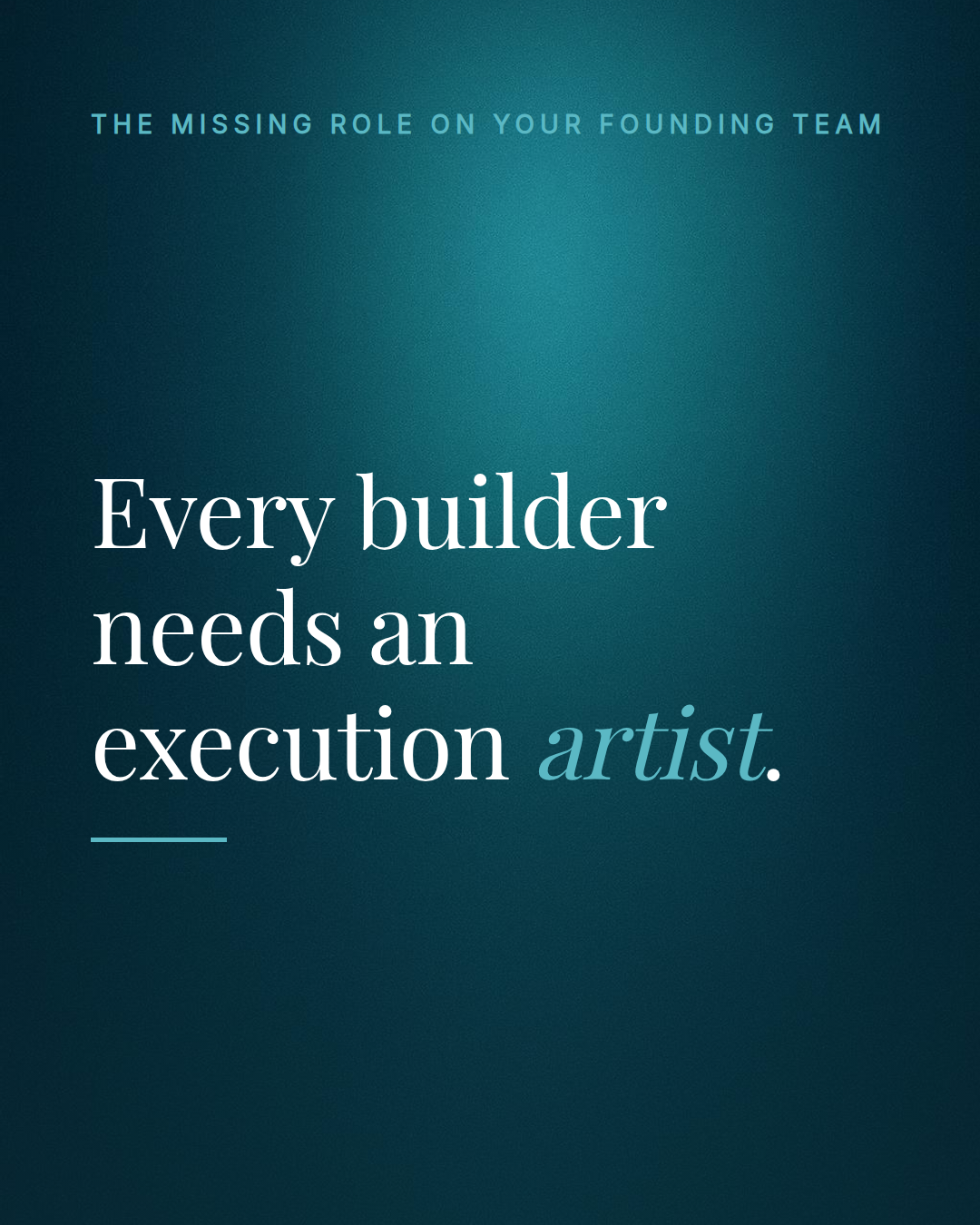
The best co-founders aren't two builders - they're a builder and an execution artist.
I've noticed the teams that struggle early often have the same problem: everyone wants to build. Nobody wants to build the systems around the building.
Which makes sense. Especially in the early stages, momentum feels like everyone sprinting in the same direction. But building the product and building the business are two different jobs.
One person is asking, "What's possible?"
The other is asking, "How do we do this 100 more times without everything catching fire?"
You don't always need another co-founder for that. Sometimes you need someone who can step in, build the operational foundation, and hand owners and founders back the time they're spending putting out fires.
That's my favorite part of the job. Ops isn't known to be glamorous - but dang, it is to me.
P.S. Did I just make up "execution artist"? I'm keeping it. It's either a COO or a Bond villain. Either way, I'm here for it and just wish it looked less sinister on a business card. …more
You think you need more work. You don't.
If you're saying yes to every client, it's usually fear talking... fear of what happens if you don't. So you take all of it, and you end up exhausted, doing work you don't even love. It was never your ideal work, so no amount of it ever feels like enough.
Ideal work comes from the opposite move. Get clear on your offer. Get laser focused on the one solution you love to deliver. Once you do, you take on less, you make more per engagement, and you deliver more valuable results for the clients you keep.
Look at your website. If you have a page that lists all your capabilities, where a client can pick from the menu à la carte, that page is telling on you. It means you're scared to commit to an outcome, so you list activities instead... some you may not even be very good at.
The fix is smaller than it sounds. One page. One offer. The solution you're actually selling. Fix that and the chasing stops... not because you got better at sales, but because qualified buyers start finding you.
So, honestly: does your offer describe an outcome, or a capability list?
#IndependentConsultant#Coaching#Positioning#GoToMarket#Solopreneur…more
When a small business owner tells me they need more marketing, the first thing I want to know is where their customers are getting stuck.
The theory of constraints, in plain terms: every process has a bottleneck, and nothing you do anywhere else speeds it up. Pour soda from a bottle and the neck sets the pace. A bigger glass doesn't help. Shaking it definitely doesn't help!
Your customers move along a path too. They find out you exist, they compare you, they buy, they start using what you sell, and if it goes well they tell people. Somewhere on that path is your bottleneck... and it's different for every business.
If nobody knows you exist, a better website won't fix it. If people visit but never call, more posts won't fix it. If customers buy once and disappear, more ads just pour more people into a leaky step.
It's easy to spend months on the stage that feels productive instead of the one that's stuck. I've done it. Find the stuck one first, then put everything there.
Where do your customers drop off?
#SmallBusiness#Marketing…more
For SBDC advisors and mentors: before a client spends on more marketing, ask three things. Can they say who they help in one sentence? Do they know where customers drop off? Are their analytics counting real visitors? A "not sure" is the problem to fix first. …more
Talent, timing, network — none of it matters if you quit before the moment arrives.
After building several companies and advising a lot of people who've struck out on their own, if you asked me for the one trait that separates the people who make it from the people who don't, it wouldn't be intelligence, or connections, or perfect timing. It's perseverance.
And I don't mean the motivational-poster version. Most people who go independent don't stop because they've failed. They stop because they haven't succeeded yet — and in a hard moment, those two things feel identical. They're not.
Real perseverance isn't blind stubbornness. It's staying in motion, adapting, and keeping the door open long enough for something to actually happen. The hardest stretch is never the leap. It's the long middle — when you've left the title behind, you're doing the work, and the clients aren't showing up yet.
What I've come to believe is that the distance between wanting to quit and the breakthrough is usually shorter than it feels in the moment — but you only find that out if you're still standing there when it comes.
If you're in that middle right now, growing a coaching or consulting business of your own: what's keeping you in the game? What would help you stay?
🎙️ From my conversation with Julia Lucidi on the Founder Tactics podcast — full episode linked in the first comment.
#IndependentConsultant#Coaching#Solopreneur#GoingIndependent#PersonalBrand…more
Most founders I work with avoid customer discovery. Not because they don't understand the theory. Because it surfaces uncomfortable truths.
When you sit down with a potential customer and ask the right questions, you're not just testing assumptions. You're inviting reality to challenge the story you've been telling yourself about your product, your positioning, and your market.
That's hard.
It's easier to keep building. Easier to refine the pitch. Easier to convince yourself that more features, better messaging, or a bigger launch will solve the problem.
But avoidance has a cost. You burn months building something nobody wants. You misread demand signals. You position yourself in a crowded space because you never learned what makes you different in the eyes of the people who matter.
I've seen this across four startups and dozens of advisory engagements. The founders who get traction fastest are not the ones with the best ideas. They're the ones willing to hear that their assumptions are wrong and adjust accordingly.
Customer discovery is not a validation exercise. It's a correction mechanism. The goal is not to hear what you want to hear. The goal is to learn what you need to know before you make expensive decisions.
That means asking questions that expose gaps in your thinking. It means listening to what customers are actually trying to solve, not what you hope they need. It means being willing to abandon ideas you were excited about yesterday.
The discomfort is the signal. If the conversation doesn't make you rethink something, you're probably asking the wrong questions.
After 25 years of building and advising startups, the pattern is clear. The founders who embrace this discomfort early save themselves time, money, and wasted opportunity. The ones who avoid it pay for it later in slower growth, misaligned product decisions, and go-to-market strategies that never gain traction.
What assumption did customer discovery force you to abandon? …more
Founders spend weeks building campaigns.
Then discover the message doesn't resonate.
I've learned to do the opposite.
Test the message first.
5 conversations will teach you more than 50 hours of campaign planning. …more
A resume is a list of claims. A body of work is evidence. The market has quietly stopped trusting the first and started reading the second.
For most of your career, your judgment was vouched for by things around you. The title said you were senior. The company's name meant the work found you and the brand stood behind it. Your reputation lived inside the building, in the heads of the people who watched you do the work. A resume was enough because it pointed back to institutions that carried the weight for you.
Then you left. The title, the brand, the internal reputation — that whole apparatus stayed behind. And a resume, on its own, is a set of assertions a stranger has no reason to believe.
Here's the shift underneath it. Professional identity moved from private to public. People used to bring you in on the strength of where you'd been. Now they want to see how you think before they ever reach out. Not a claim that you're good. Evidence, out in the open, that they can read for themselves.
That's what a body of work is. A post that walks through how you'd approach a messy problem. A talk. A teardown of something in your field. Each one is a small piece of proof, and over time they add up to something a resume can't produce: a picture of your judgment that the right client can study before they spend a dollar.
This is why visibility isn't vanity. You're not performing. You're building the evidence that used to be someone else's job to provide, so the right people can see how you think and decide they want you in the room.
What's one piece of work that brought you a client — a post, a talk, a teardown? And what made it land?
#IndependentConsultant#Coaching#GoingIndependent#PersonalBrand#ThoughtLeadership…more
The revolution of independence is starting.
For most of my career, building a successful business required assembling a company.
Employees.
Departments.
Agencies.
Specialists.
Today, AI is changing that equation.
One founder with expertise, good judgment, and the right tools can now create leverage that used to require an entire team.
That's a massive shift.
But it creates a new challenge.
If expertise is no longer scarce, what is?
Trust.
Visibility.
Reputation.
The ability to consistently show up and demonstrate how you think.
I believe we're entering an era where reputation becomes one of the most valuable business assets a person can own.
Not because everyone needs to become a creator.
Because everyone who sells expertise needs to become discoverable.
Consultants.
Advisors.
Founders.
Coaches.
Fractional executives.
The future belongs to people who can turn what they know into trust.
That's the shift I'm watching most closely. …more
A quick way to tell whether you're out of energy... or just carrying too much.
A piece on guykawasaki.substack.com makes the case that energy is the resource nobody budgets. I agree it matters. When founders tell me they're tired, I believe them.
But I'd look one layer under it.
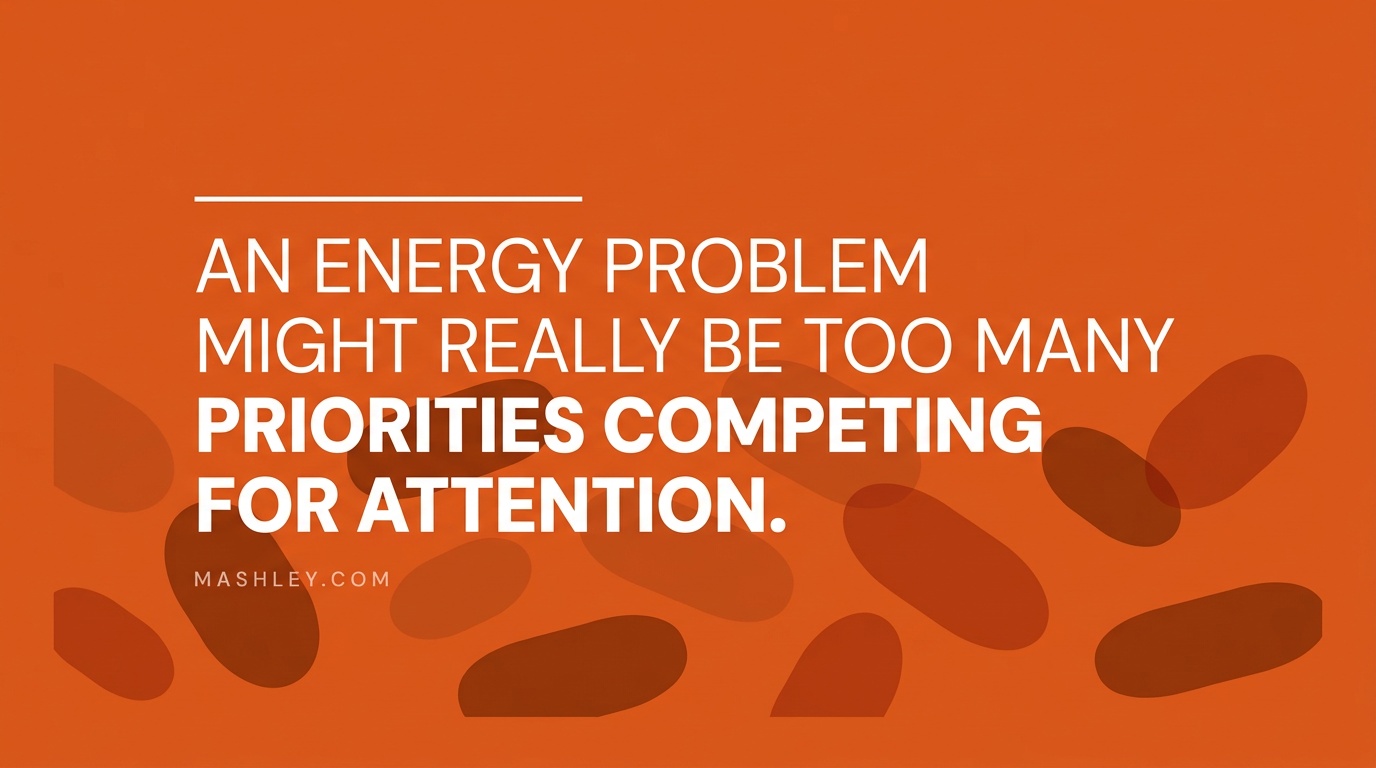
An energy problem might really be too many priorities competing for attention.
So try this. Write down everything you're holding right now... every project, every promise, every "I should really." Then ask the same question of each one: if this moved forward, would anything else get easier? Often only one or two will. Park the rest on purpose, written down and out of your head.
Then notice how you feel. Sometimes the tiredness has less to do with the hours and more to do with holding too many things at once.
If showing up and posting is one of the things on your list, that's the piece I'm building Radi8 to make simpler. Link in the first comment.
#Founders#Startups#Entrepreneurship…more



 View on LinkedIn
 View on Bluesky
 View on X
'/%3E%3Cpath fill='%23fff' d='M12 7.3A4.7 4.7 0 1 0 16.7 12 4.7 4.7 0 0 0 12 7.3Zm0 7.8A3.1 3.1 0 1 1 15.1 12 3.1 3.1 0 0 1 12 15.1Zm5-8a1.1 1.1 0 1 0 1.1 1.1A1.1 1.1 0 0 0 17 7.1Zm-5 1.5c-1.5 0-1.7 0-2.3.1a3.8 3.8 0 0 0-1.3.2 2.2 2.2 0 0 0-.8.5 2.2 2.2 0 0 0-.5.8 3.8 3.8 0 0 0-.2 1.3c-.1.6-.1.8-.1 2.3s0 1.7.1 2.3a3.8 3.8 0 0 0 .2 1.3 2.2 2.2 0 0 0 .5.8 2.2 2.2 0 0 0 .8.5 3.8 3.8 0 0 0 1.3.2c.6.1.8.1 2.3.1s1.7 0 2.3-.1a3.8 3.8 0 0 0 1.3-.2 2.5 2.5 0 0 0 1.3-1.3 3.8 3.8 0 0 0 .2-1.3c.1-.6.1-.8.1-2.3s0-1.7-.1-2.3a3.8 3.8 0 0 0-.2-1.3 2.2 2.2 0 0 0-.5-.8 2.2 2.2 0 0 0-.8-.5 3.8 3.8 0 0 0-1.3-.2c-.6-.1-.8-.1-2.3-.1Zm0-1.6c1.5 0 1.7 0 2.4.1a5.5 5.5 0 0 1 1.8.3 3.8 3.8 0 0 1 2.2 2.2 5.5 5.5 0 0 1 .3 1.8c.1.7.1.9.1 2.4s0 1.7-.1 2.4a5.5 5.5 0 0 1-.3 1.8 3.8 3.8 0 0 1-2.2 2.2 5.5 5.5 0 0 1-1.8.3c-.7.1-.9.1-2.4.1s-1.7 0-2.4-.1a5.5 5.5 0 0 1-1.8-.3 3.8 3.8 0 0 1-2.2-2.2 5.5 5.5 0 0 1-.3-1.8C4 13.7 4 13.5 4 12s0-1.7.1-2.4a5.5 5.5 0 0 1 .3-1.8 3.8 3.8 0 0 1 2.2-2.2 5.5 5.5 0 0 1 1.8-.3C10.3 5 10.5 5 12 5Z'/%3E%3C/svg%3E)