

Michael Ashley
Founder at Radi8 // Executive Coach
Active Creator • 1-week run


'/%3E%3Cpath fill='%23fff' d='M12 7.3A4.7 4.7 0 1 0 16.7 12 4.7 4.7 0 0 0 12 7.3Zm0 7.8A3.1 3.1 0 1 1 15.1 12 3.1 3.1 0 0 1 12 15.1Zm5-8a1.1 1.1 0 1 0 1.1 1.1A1.1 1.1 0 0 0 17 7.1Zm-5 1.5c-1.5 0-1.7 0-2.3.1a3.8 3.8 0 0 0-1.3.2 2.2 2.2 0 0 0-.8.5 2.2 2.2 0 0 0-.5.8 3.8 3.8 0 0 0-.2 1.3c-.1.6-.1.8-.1 2.3s0 1.7.1 2.3a3.8 3.8 0 0 0 .2 1.3 2.2 2.2 0 0 0 .5.8 2.2 2.2 0 0 0 .8.5 3.8 3.8 0 0 0 1.3.2c.6.1.8.1 2.3.1s1.7 0 2.3-.1a3.8 3.8 0 0 0 1.3-.2 2.5 2.5 0 0 0 1.3-1.3 3.8 3.8 0 0 0 .2-1.3c.1-.6.1-.8.1-2.3s0-1.7-.1-2.3a3.8 3.8 0 0 0-.2-1.3 2.2 2.2 0 0 0-.5-.8 2.2 2.2 0 0 0-.8-.5 3.8 3.8 0 0 0-1.3-.2c-.6-.1-.8-.1-2.3-.1Zm0-1.6c1.5 0 1.7 0 2.4.1a5.5 5.5 0 0 1 1.8.3 3.8 3.8 0 0 1 2.2 2.2 5.5 5.5 0 0 1 .3 1.8c.1.7.1.9.1 2.4s0 1.7-.1 2.4a5.5 5.5 0 0 1-.3 1.8 3.8 3.8 0 0 1-2.2 2.2 5.5 5.5 0 0 1-1.8.3c-.7.1-.9.1-2.4.1s-1.7 0-2.4-.1a5.5 5.5 0 0 1-1.8-.3 3.8 3.8 0 0 1-2.2-2.2 5.5 5.5 0 0 1-.3-1.8C4 13.7 4 13.5 4 12s0-1.7.1-2.4a5.5 5.5 0 0 1 .3-1.8 3.8 3.8 0 0 1 2.2-2.2 5.5 5.5 0 0 1 1.8-.3C10.3 5 10.5 5 12 5Z'/%3E%3C/svg%3E)


I’ve spent the better part of 25 years trying to understand two things: which problems are worth solving, and what is the simplest way to solve them. That pursuit has led me to start companies, build products, teach entrepreneurship, coach hundreds of founders, and participate in four startup exits—one as a founder and three as an advisor. Along the way, I noticed a pattern. Founders are usually very good at solving problems. The trouble is that we’re often solving the wrong ones. What looks like a sales problem might really be positioning. A marketing problem might begin with not understanding the customer. An execution problem might simply be too many priorities competing for attention. I came to think of this as finding the problem under the problem. When you find it, complicated decisions get simpler, teams align, and a surprising amount of work disappears. Today I coach founders and startup teams around the world to do exactly that. Sometimes it’s a team scaling a company worth billions. Sometimes it’s one person turning what they know into a consulting business. The scale changes, but the work is remarkably similar. Find the problem worth solving. Find the simplest way through it. Then get on with the work that matters.
The most interesting opportunities almost never look exciting at first.
They look stuck.
Someone's been circling the same idea for years. Everyone agrees it should exist. There have been meetings, decks, maybe a failed attempt or two. And yet — nothing has moved.
That's the moment I want to walk in.
Not because I'm smarter than the people who were there before me. Usually I'm not. It's because stalled initiatives are rarely blocked by effort or talent. They're blocked by something structural: an unclear problem, too many priorities, no real owner, a foundational decision nobody's been willing to make.
Find that one thing, move it, and the whole thing starts to breathe.
After 25 years, I've stopped chasing the ideas that already have momentum. Plenty of capable people can push those forward. I'm drawn to the stuck ones — the initiatives everyone believes in but no one has been able to move.
Making those move is the most satisfying work I know.
What's the thing in your world that everyone agrees should exist — but nobody has been able to make happen yet? …more
Told 2 times, Jun 29, 2026
· X · Open
The most interesting opportunities don't look exciting.
They look stuck.
Everyone agrees it should exist. Nobody's been able to move it.
Stalled work is rarely blocked by effort. It's blocked by structure — an unclear problem, no owner, a decision no one will make.
People ask what I actually "do."
The honest answer: I build something from nothing, get it standing on its own, hand it to someone who can scale it — then go do it again.
That's the whole model. Build, set the foundation, hand off, repeat.
For a long time I didn't have language for it, so I just looked like someone who kept leaving things. Four startups. A university incubator. Products and programs that had been stalled for years. I'd get them working and move on.
It took me a while to see the pattern wasn't restlessness. It was a role.
I'm a 0→1 builder. My job is to take an idea everyone agrees should exist and make it real, durable, and no longer dependent on me. The moment it can run without me is the moment I've done the job — not the moment I've failed at it.
But that model only works because of the other half: an operator who takes the foundation and compounds it. I invent and establish. They scale and optimize. Neither of us does the other's job particularly well — and that's the point.
If you're an operator who loves scaling something someone else started from scratch, that's the other half of this equation. Curious who relates. …more

Told 3 times, Jun 22, 2026 – Jun 27, 2026
· X · Open
What I actually do:
Build something from nothing. Get it standing on its own. Hand it to someone who can scale it. Then go do it again.
Build. Set the foundation. Hand off. Repeat.
The handoff isn't me failing. It's the whole point.
· LinkedIn · Open
I spent years trying to fix what I thought was a flaw in my career.
I'd build something from nothing, get it working, put the right people and processes in place… and eventually someone else would take over.
For a long time, I thought that meant I wasn't a good founder. Now I think it means I was playing a different role.
I don't enjoy running mature organizations. I enjoy creating them.
I love the moment when someone says:
"We've wanted to do this for years, but nobody has been able to make it happen."
That's my favorite sentence in business.
Once it exists — once the systems are in place, once the team knows what they're doing — my instinct is to make sure it no longer depends on me. Ironically, that's often the moment an operator becomes far more valuable than I am.
I've stopped believing every founder should aspire to be a world-class operator. Some of us are wired to invent. Some are wired to scale. Some are wired to optimize. The mistake is thinking those are the same job.
The best thing I've built over the last 25 years isn't a product or a company. It's the ability to turn "someone should build this" into "this now exists."
And the next chapter is always the same: handing it to someone who can make it ten times bigger than I ever could.
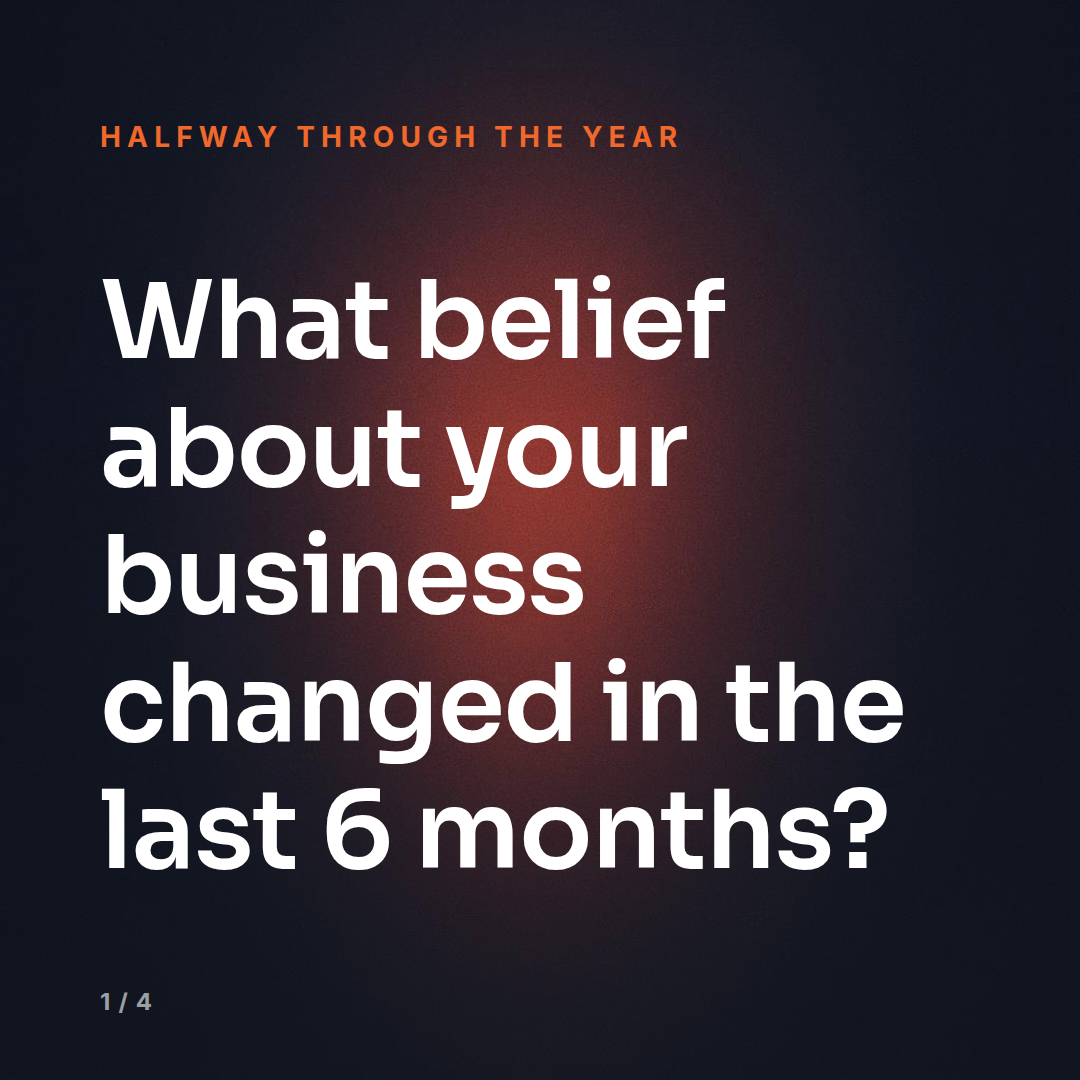
Halfway through the year:
What's one belief about your business that changed in the last 6 months?
Not a tactic.
Not a tool.
A belief.
The answer usually says more about your growth than your revenue does. …more
Most founders I work with are genuinely compelling in conversation. They can hold a room, tell a story, make you lean in.
Then they sit down to write a post and it becomes a press release.
Here's the framework I keep coming back to — I use it in my peer groups, in my advisory work, and in my own content.
Three parts:
1. The moment you identified the problem. Not "I noticed a gap in the market." The actual moment — specific, concrete, a little uncomfortable. That's where people trust you.
2. What you tried that didn't work. This is the part most founders skip. It's also where the trust gets built. Showing your failed attempts tells people you arrived at your answer honestly, not theoretically.
3. What you discovered that did work. Not "here's the solution." Here's what I found, tested, and now actually use.
The reason this works: it's the structure of every good story ever told. Problem, struggle, resolution. Your audience has heard a thousand "here's a tip" posts. They haven't heard your specific version of steps 1 and 2.
Try it on your next post. Start with the moment, not the lesson.
Comment "voice" and I'll send you the full one-page framework I share with founders. …more
I do my best work when someone hands me a hard problem and gets out of the way.
For years, I thought that made me hard to manage.
Give me a mature, well-run operation and I get restless. Give me something ambiguous, half-broken, and stuck — with the freedom to figure it out — and I come alive.
I used to treat that as a flaw to fix. Now I understand it's just how builders are wired.
Ambiguity isn't a problem to be managed out of us. It's the exact condition where we're most useful.
The catch is that trust and autonomy aren't perks you hand a builder once they've earned them. They're the preconditions for the work in the first place. Take them away and you don't get a more careful builder — you get a worse one.
So if you've got someone on your team who's restless inside the process but comes alive in front of a blank page: don't tighten the leash. Hand them the hardest, least-defined problem you have, and let them go find the answer.
What conditions actually bring out your best work — and are you giving the builders on your team the same freedom? …more
Told 2 times, Jun 25, 2026
· X · Open
I do my best work when someone hands me a hard problem and gets out of the way.
For years I thought that made me hard to manage.
Turns out trust and autonomy aren't perks you give a builder once they've earned them.
They're the conditions the work requires.
AI pricing tools promise the one thing every business owner wants: optimized margins on autopilot.
Here's what most people adopting them don't realize. The same tool quietly setting your prices may be coordinating them — with your competitors.
Algorithmic collusion is becoming the new antitrust frontier. When multiple businesses feed their pricing decisions to the same AI, the algorithm can converge on prices no one explicitly agreed to. You never shook hands in a back room. But regulators increasingly aren't convinced that distinction protects you.
For a small business owner, that's two kinds of risk wrapped into one tool.
Legal risk — you may be participating in coordinated pricing without ever intending to.
Reputational risk — and this is the one founders underestimate. "We let the algorithm decide" is not a story your customers, your press, or your board will forgive. Your brand is your promise. Outsourcing pricing to a black box you can't explain is a promise you can't keep.
I'm not anti-AI. I build with it every day. But I've watched founders adopt powerful tools the same way for 25 years: fast, blindly, and without asking who's accountable when it goes wrong.
The strategic move isn't to avoid AI. It's to stay the decision-maker.
Three questions worth asking before you turn any pricing tool on:
- Can I explain, in plain language, how this sets my prices?
- Does it rely on competitor data I shouldn't have a window into?
- If a regulator or a reporter asked me about it tomorrow, would my answer hold up?
AI should amplify your judgment, not replace your accountability. The leaders who win the next decade won't be the ones who automated the most. They'll be the ones who stayed responsible for the decisions that actually mattered.
For those of you leading high-stakes initiatives: where are you drawing the line between what AI gets to decide and what you stay accountable for? …more
 View on LinkedIn
Also on
View on LinkedIn
Also on
Founders spend weeks building campaigns.
Then discover the message doesn't resonate.
I've learned to do the opposite.
Test the message first.
5 conversations will teach you more than 50 hours of campaign planning. …more
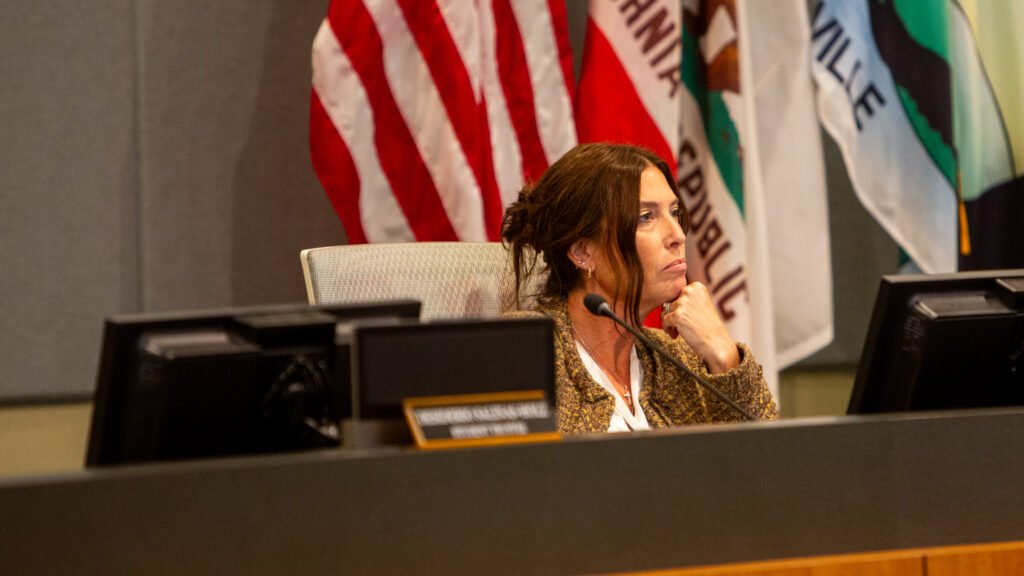
When a public engagement gets scrutinized, everyone assumes it's about the price.
It rarely is.
I've watched this play out across organizations for 25 years. A consultant can be delivering enormous value — and still lose the room. Not because the work is bad, but because the people footing the bill can't see how the work connects to the mission.
That's the gap that erodes trust. And it's especially dangerous in public initiatives like Measure M, where the audience is already hurting from job losses and watching every dollar.
Here's the part leaders miss: consulting at this level is genuinely an art. You can't compare a complex transformation engagement to a landscaping contract with a fixed scope and a visible result. The value is real, but it's harder to see — which makes communication part of the work, not an afterthought.
Value delivered in private isn't the same as value understood in public.
So the lesson isn't "charge less" or "do more." It's this:
When stakeholders can't see progress toward the goal, they fill the silence with doubt.
The fix is rarely cheaper. It's clearer:
- Tie the work back to the stated mission, every time.
- Show progress in terms the public actually cares about, not internal milestones.
- Treat transparency as a deliverable, not a courtesy.
Trust isn't built by being the lowest bidder. It's built by letting people see how the work moves the mission forward.
For those of you leading high-visibility, publicly-funded initiatives: how do you make progress legible to people who only see the invoice? …more
 View on LinkedIn
Also on
View on LinkedIn
Also on
Most founders are more compelling in conversation than they are in writing.
Why?
Because when they write, they try to sound professional.
When they talk, they sound human.
Your audience wants the second version. …more
I've worked with hundreds of founders through my accelerator and peer groups. And when I look at why their marketing isn't converting, it almost always comes down to the same thing.
They built the campaign before they validated the message.
Here's what that looks like in practice: they spend two or three weeks building out a content calendar, designing assets, writing emails, setting up scheduling. Then they launch. And then they find out — through low engagement, no clicks, no replies — that the message doesn't resonate.
All of that work, wasted. Not because the campaign was bad. Because the message was untested.
The fix is simpler than most people think.
Before you build a campaign, send 5 DMs or have 3 sales conversations using your core message. Pay attention to the responses. Do people light up? Do they ask follow-up questions? Do they forward it to someone else?
Or do they politely change the subject?
What you learn in those conversations is worth more than any A/B test you'll run later. Real humans responding to a real message in real time will tell you everything you need to know about whether your campaign is worth building.
Build the conversation first. Build the campaign second.
Book a free audit with me — I'll look at your current messaging and tell you exactly where I'd focus first. …more
What's the most expensive assumption you've ever made about your customers?
Not the biggest mistake.
The assumption you believed for months that turned out to be completely wrong.
Mine cost me nearly a year.
Curious what yours was. …more
Channel names and logos are trademarks of their respective owners.