


'/%3E%3Cpath fill='%23fff' d='M12 7.3A4.7 4.7 0 1 0 16.7 12 4.7 4.7 0 0 0 12 7.3Zm0 7.8A3.1 3.1 0 1 1 15.1 12 3.1 3.1 0 0 1 12 15.1Zm5-8a1.1 1.1 0 1 0 1.1 1.1A1.1 1.1 0 0 0 17 7.1Zm-5 1.5c-1.5 0-1.7 0-2.3.1a3.8 3.8 0 0 0-1.3.2 2.2 2.2 0 0 0-.8.5 2.2 2.2 0 0 0-.5.8 3.8 3.8 0 0 0-.2 1.3c-.1.6-.1.8-.1 2.3s0 1.7.1 2.3a3.8 3.8 0 0 0 .2 1.3 2.2 2.2 0 0 0 .5.8 2.2 2.2 0 0 0 .8.5 3.8 3.8 0 0 0 1.3.2c.6.1.8.1 2.3.1s1.7 0 2.3-.1a3.8 3.8 0 0 0 1.3-.2 2.5 2.5 0 0 0 1.3-1.3 3.8 3.8 0 0 0 .2-1.3c.1-.6.1-.8.1-2.3s0-1.7-.1-2.3a3.8 3.8 0 0 0-.2-1.3 2.2 2.2 0 0 0-.5-.8 2.2 2.2 0 0 0-.8-.5 3.8 3.8 0 0 0-1.3-.2c-.6-.1-.8-.1-2.3-.1Zm0-1.6c1.5 0 1.7 0 2.4.1a5.5 5.5 0 0 1 1.8.3 3.8 3.8 0 0 1 2.2 2.2 5.5 5.5 0 0 1 .3 1.8c.1.7.1.9.1 2.4s0 1.7-.1 2.4a5.5 5.5 0 0 1-.3 1.8 3.8 3.8 0 0 1-2.2 2.2 5.5 5.5 0 0 1-1.8.3c-.7.1-.9.1-2.4.1s-1.7 0-2.4-.1a5.5 5.5 0 0 1-1.8-.3 3.8 3.8 0 0 1-2.2-2.2 5.5 5.5 0 0 1-.3-1.8C4 13.7 4 13.5 4 12s0-1.7.1-2.4a5.5 5.5 0 0 1 .3-1.8 3.8 3.8 0 0 1 2.2-2.2 5.5 5.5 0 0 1 1.8-.3C10.3 5 10.5 5 12 5Z'/%3E%3C/svg%3E)


Radi8 Social
K

Kent Kaufman
Organization focused on AI leadership and innovation for the Fourth Industrial Revolution, based in Silicon Valley
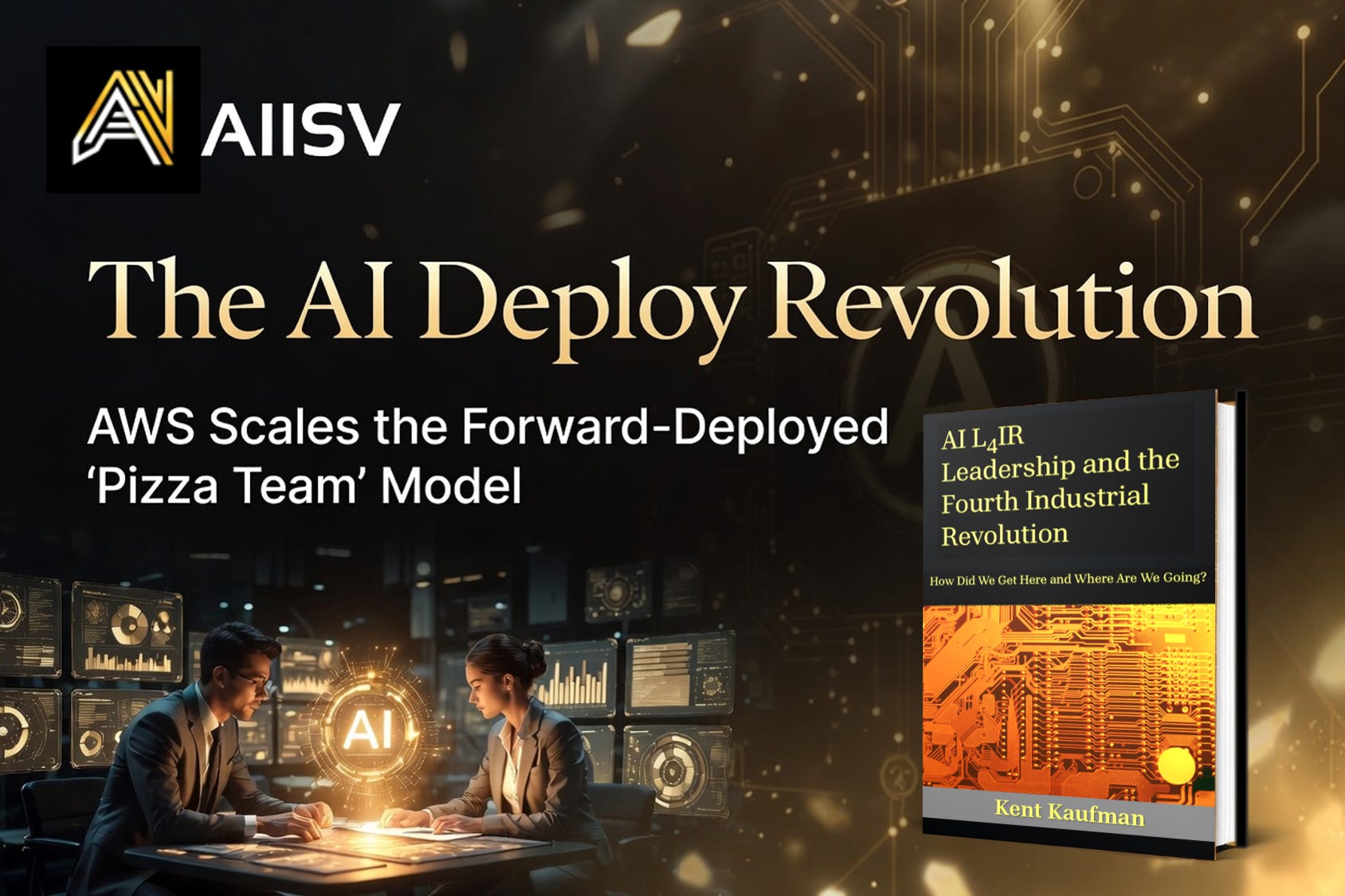
The FDE Deployment Revolution Goes Hyperscale
Building on my earlier post about OpenAI and Anthropic launching dedicated Forward-Deployed Engineer initiatives, AWS has now taken a major step of its own.
On June 30, AWS announced a $1 billion investment in a new Forward Deployed Engineering organization. The unit will seed thousands of engineers into small "pizza teams" — pods of roughly 5–6 people — who embed directly inside customer organizations to co-develop and deploy production AI systems, with a clear mandate to leave the customer self-sufficient when the engagement ends.
This is more than an expansion of professional services. AWS is applying its long-standing "two-pizza team" philosophy — teams small enough to stay agile, autonomous, and fully accountable — to the challenge of enterprise AI deployment. The approach is explicitly "agentic-first," combining human expertise with purpose-built AI agents to compress timelines that traditionally took months into days or short sprints.
What makes this significant is the pattern it completes. Palantir pioneered the Forward-Deployed Engineer model over a decade ago. OpenAI and Anthropic recently adapted it with dedicated, well-capitalized deployment entities. Now AWS — the largest cloud provider — is institutionalizing the model at hyperscale from within its core infrastructure business.
The message for enterprise leaders is becoming hard to ignore. The primary bottleneck in AI adoption is no longer access to powerful models or abundant compute. It is contextual deployment — integrating these technologies into real workflows, governance frameworks, data environments, and organizational realities.
The organizations that will create lasting advantage are those that effectively partner with these teams, internalize the knowledge being transferred, and build genuine internal capability rather than long-term dependency.
Full article:
https://kentkaufman.substack.com/p/the-fde-deployment-revolution-goes
How are you thinking about preparing your teams to work alongside external embedded AI talent? What capabilities are you focusing on building internally? …more
 View on LinkedIn
Also on
View on LinkedIn
Also on
M

Michael Ashley
Founder at Radi8 // Executive Coach // Host of the Inspiring Founders Podcast
Put a builder in a mature operating role and watch them get restless. Everything already works, so they start breaking things just to have something to invent. Put an operator into a 0-to-1 mess and watch them freeze — there's no system to optimize yet, no data to trust, nothing to make more efficient. Both are talented. Both are miserable. And both look like performance problems when they're really fit problems.
I've watched this play out on team after team. The builder who was electric in the early days becomes the bottleneck once the thing needs to scale. The seasoned operator who took someone else's company from ten million to a hundred can't get a blank page off the ground. Neither failed. They were each asked to do the other one's job.
There's research behind why this is so predictable. Studying 200+ startups, Noam Wasserman found that founders are most likely to be pushed out right after their biggest wins — because success changes the job. What comes next rewards a different set of instincts than what got them there. The person didn't get worse. The job changed under them.
The takeaway isn't "builders are better" or "operators are better." It's that they're different, and the strongest ventures pair them on purpose — an inventor to make it exist, an operator to make it endure. The mistake is expecting one person to be both, or hiring the wrong one for the moment you're actually in.
So before you hire, get honest about which one you are — and which one you're missing.
Are you the builder or the operator on your team? And who's the counterpart you still need? …more
Told 2 times, Jul 7, 2026
· X · Open
Put a builder in a mature role and they break things just to have something to invent. Put an operator in a 0-to-1 mess and they freeze.
Both are talented. Both look like performance problems. They're fit problems.
M
Michael Ashley
Founder at Radi8 // Executive Coach // Host of the Inspiring Founders Podcast
We're halfway through the year. I've been doing a lot of thinking about what's actually worked in my marketing vs. what I thought would.
Here's my honest take.
What I expected to work: a polished content calendar, consistent posting across multiple channels, well-designed assets.
What actually moved the needle: direct conversations that started from a single, specific LinkedIn post that named an exact pain point my audience was feeling.
The post wasn't clever. It wasn't visually interesting. It was just specific and true. It got more inbound messages than anything I'd posted in the previous three months combined.
The lesson I keep relearning: marketing feedback loops are much shorter than founders think. You can know within 30 days whether a message is working — if you're watching the right signal. Not follower count. Not impressions. Conversations started.
That's the metric I watch now above everything else. How many people responded to something I wrote and said "this is exactly what I'm dealing with"? That's the leading indicator that content is building pipeline.
The other thing that worked: teaching something specific in every post instead of sharing opinions. Opinions get likes. Teaching gets DMs. DMs become customers.
My Inspiring Founders community on Skool is where I share what I'm learning as I learn it — if you want to follow along, join us. It's free: https://www.skool.com/inspiring-founders-5861/about …more

The most underrated skill in B2B marketing isn't writing. It's listening.
I've spent years marketing complex technical products across five enterprise tech companies, and the pattern holds every time: the best messaging I ever shipped didn't start in a doc. It started in a conversation I almost didn't slow down enough to have.
A support engineer describing the call they dread. A customer explaining, in their own words, the moment your product stopped being "a tool" and started being "the reason I slept last night." That language is gold. And most of us walk right past it because we're in a hurry to produce.
In the Army, we were taught that you never brief a mission you don't understand from the ground up. You listen first—to the terrain, to the people who've walked it, to what's actually at stake. Then you speak. The order lands because it's rooted in reality, not assumption.
Marketing complex products works the same way. Curiosity isn't a soft skill here. It's the discipline that separates content people scroll past from content people feel seen by.
So before you write the next campaign, try this: have one real conversation with someone who lives your customer's problem. Don't pitch. Just listen. You'll leave with a sentence better than anything a blank page could give you.
The teams pulling ahead aren't the loudest. They're the most curious.
Want a fresh take on your B2B content strategy? DM me and let's schedule a 30-minute consultation—I'll show you 3 things you can improve this week.
#B2BMarketing #ContentStrategy
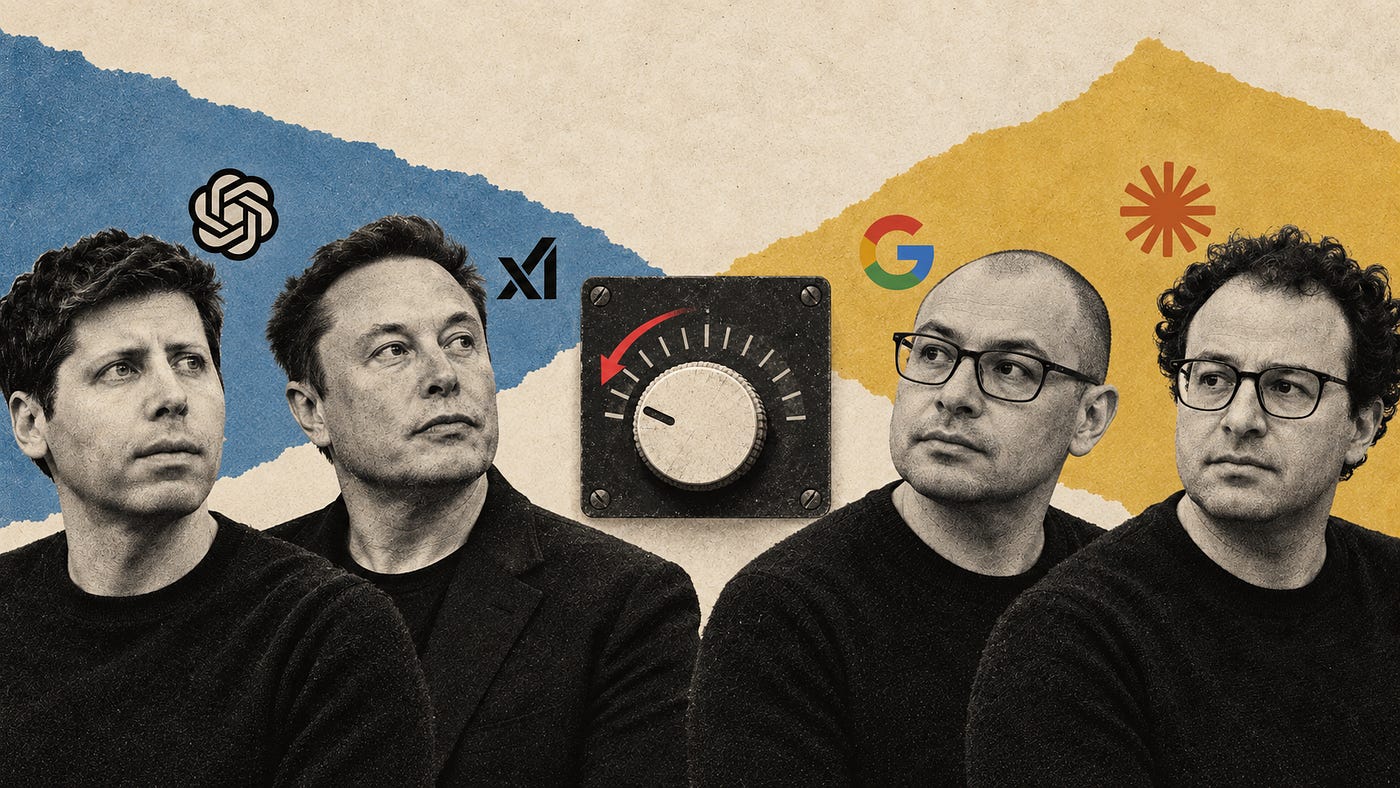
https://www.generativeaipub.com/p/the-urgent-call-for-ai-slowdown-has …more
Told 2 times, Sep 15, 2026 – Sep 16, 2026
· X · Open
The best marketing doesn't shout. It listens first.
People don't want to be sold to. They want to be understood.
Lead with their story, not your product. Trust follows.
What's one thing your audience wishes you'd say out loud?
#B2B #ContentStrategy
https://www.generativeaipub.com/p/the-urgent-call-for-ai-slowdown-has
M
Michael Ashley
Founder at Radi8 // Executive Coach // Host of the Inspiring Founders Podcast
People ask what I actually "do."
The honest answer: I build something from nothing, get it standing on its own, hand it to someone who can scale it — then go do it again.
That's the whole model. Build, set the foundation, hand off, repeat.
For a long time I didn't have language for it, so I just looked like someone who kept leaving things. Four startups. A university incubator. Products and programs that had been stalled for years. I'd get them working and move on.
It took me a while to see the pattern wasn't restlessness. It was a role.
I'm a 0→1 builder. My job is to take an idea everyone agrees should exist and make it real, durable, and no longer dependent on me. The moment it can run without me is the moment I've done the job — not the moment I've failed at it.
But that model only works because of the other half: an operator who takes the foundation and compounds it. I invent and establish. They scale and optimize. Neither of us does the other's job particularly well — and that's the point.
If you're an operator who loves scaling something someone else started from scratch, that's the other half of this equation. Curious who relates. …more

Told 3 times, Jun 22, 2026 – Jun 27, 2026
· X · Open
What I actually do:
Build something from nothing. Get it standing on its own. Hand it to someone who can scale it. Then go do it again.
Build. Set the foundation. Hand off. Repeat.
The handoff isn't me failing. It's the whole point.
· LinkedIn · Open
I spent years trying to fix what I thought was a flaw in my career.
I'd build something from nothing, get it working, put the right people and processes in place… and eventually someone else would take over.
For a long time, I thought that meant I wasn't a good founder. Now I think it means I was playing a different role.
I don't enjoy running mature organizations. I enjoy creating them.
I love the moment when someone says:
"We've wanted to do this for years, but nobody has been able to make it happen."
That's my favorite sentence in business.
Once it exists — once the systems are in place, once the team knows what they're doing — my instinct is to make sure it no longer depends on me. Ironically, that's often the moment an operator becomes far more valuable than I am.
I've stopped believing every founder should aspire to be a world-class operator. Some of us are wired to invent. Some are wired to scale. Some are wired to optimize. The mistake is thinking those are the same job.
The best thing I've built over the last 25 years isn't a product or a company. It's the ability to turn "someone should build this" into "this now exists."
And the next chapter is always the same: handing it to someone who can make it ten times bigger than I ever could.
M
Michael Ashley
Founder at Radi8 // Executive Coach // Host of the Inspiring Founders Podcast
Why Founders Keep Asking the Wrong Questions in Customer Interviews
I've been mentoring early-stage founders for a long time. One of the first books I put in front of all of them is The Mom Test by Rob Fitzpatrick.
The core lesson: most founders ask questions that get polite answers, not honest ones. "Would you use this?" tells you nothing. People don't want to hurt your feelings.
The book teaches you to ask about real behaviors instead — past experiences, actual workarounds, real decisions. Questions that can't be answered with a comfortable lie.
The problem is, founders read it, get it, and then walk into their next interview and ask: "So does this solve a real pain point for you?"
Every. Single. Time.
Knowing what a good question looks like isn't the same as being able to generate one on the spot about your specific product and customer.
So I built a free tool to close that gap: MomTestQuestions.com
You describe your product and your target customer. It generates a set of high-quality interview questions built on Mom Test principles — questions about behavior, not opinions. Ready to use in your next customer conversation.
No signup. No cost. Just better questions.
If you're in customer discovery mode right now, try it before your next interview. Then come back and tell me what you learned. …more
M
Michael Ashley
Founder at Radi8 // Executive Coach // Host of the Inspiring Founders Podcast
When your customer research keeps contradicting itself, the problem usually isn't the research. It's that you're talking to two different people and treating them as one.
I see this constantly. A founder runs a dozen conversations, and the signal is all over the map. One group swears the onboarding is the dealbreaker; another barely notices it and cares only about price. Half describe the product as a time-saver; half call it a status thing. The founder concludes "customers are confused" or "the market is fragmented," and goes hunting for a cleverer message to paper over the noise.
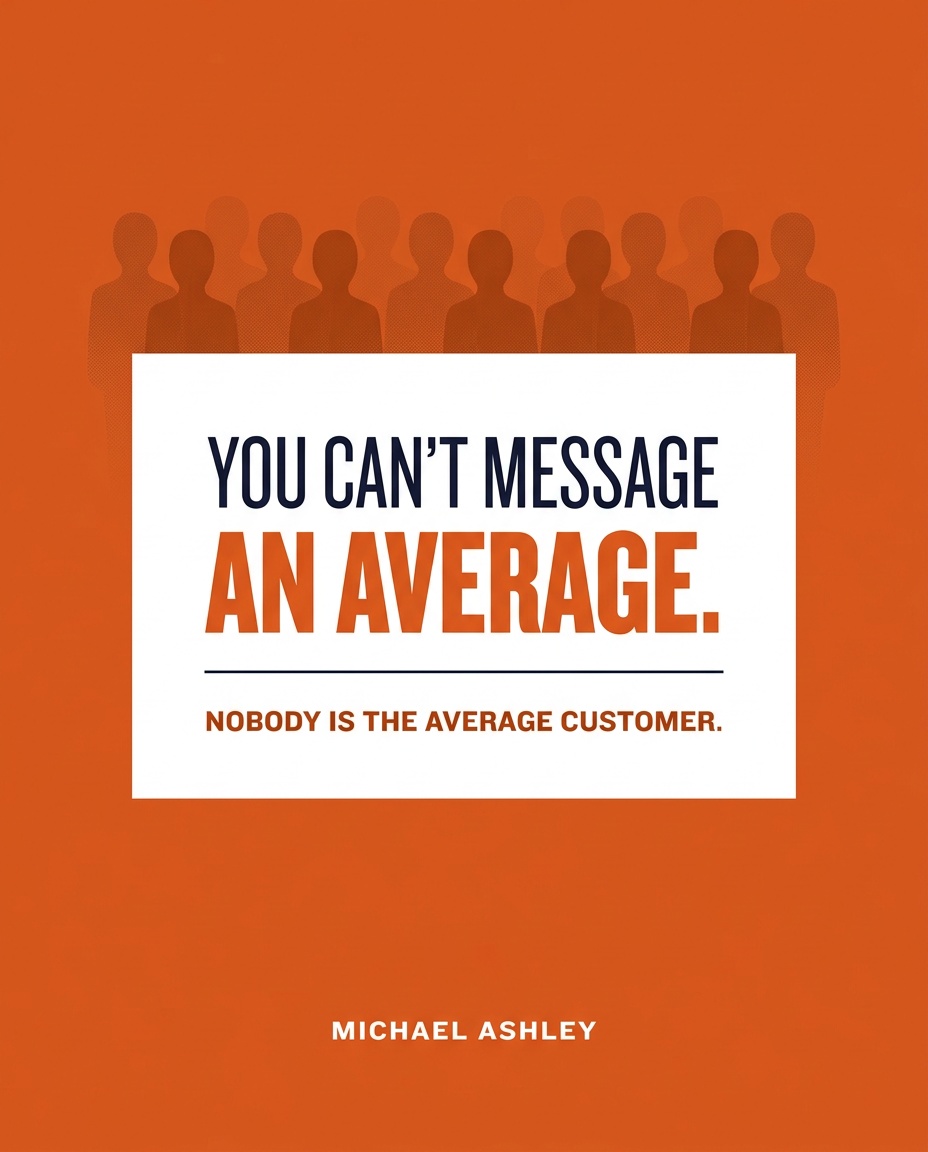
But the noise is the finding. Contradictory insights are what a blended audience sounds like. You're not hearing one confused market — you're hearing two or three coherent ones averaged into mush. And you can't message an average. Nobody is the average customer.
The reason this stalls companies is subtle: an average feels like data. It has quotes, a deck, a ring of rigor. So you make product and go-to-market bets on it — and the bets keep missing, because you're aiming at a person who doesn't exist.
The fix is in how you structure discovery, before you ever synthesize:
Segment on the way in, not on the way out. Decide the cuts that might explain different behavior — job to be done, trigger event, stage, buying context — and tag every conversation as you go. If you only segment after the fact, you've already blended.
Recruit on purpose, not on availability. A convenient sample is a blended sample. Deliberately fill each segment so a pattern in one group can't hide inside the average of all of them.
Read patterns within a segment, never across the pile. The question isn't "what did customers say?" It's "did this segment say the same thing to each other?" Agreement inside a clean segment is a signal. Agreement across a blended pile is a coincidence you'll pay for later.
Here's the bar I hold: an insight is decision-grade only when it's consistent inside a segment you could actually go acquire. Anything short of that isn't evidence — it's an anecdote wearing a percentage sign.
The uncomfortable part is that this makes your findings messier before it makes them clearer. Two sharp, opposing truths are worth more than one blurry consensus. Consensus is comfortable. It's also where stalled companies go to feel productive.
So a question worth sitting with this week:
The last time your customer insights contradicted each other — did you treat it as noise to resolve, or as a sign you were listening to more than one audience at once?
#Founders #Startups #Entrepreneurship #CustomerDiscovery #VoiceOfCustomer …more
 View on LinkedIn
Also on
View on LinkedIn
Also on
Noam Brown is one of the researchers who built o1. When he says he won't predict AI timelines beyond 3 months, that sentence deserves more than a scroll-past.
A year ago, the researchers closest to the frontier felt comfortable projecting 12 months out. Now the same people won't commit to a quarter beyond the current one. Not because they've lost confidence in the technology. Because the pace has made honest forecasting nearly impossible.
This is the part of the AI conversation that most business planning ignores.
Roadmaps built on 2030 assumptions are being written by people who are more confident than the people actually building the thing. That's a problem. Not because long-term vision is useless — it isn't. But because the assumptions underneath that vision are expiring faster than the planning cycles built to review them.
The practical shift: stop anchoring your AI strategy to a 3-year horizon and start running it like a quarterly operating decision. What can we build, test, and learn in the next 90 days? What do we need to be true for this to work? What breaks if the model we're building on gets replaced in six months?
The teams that will compound the fastest aren't the ones with the most sophisticated 2030 roadmap. They're the ones that have built the muscle to reorient quickly when the ground shifts.
It shifts every quarter now. Plan accordingly. Full YouTube video here: https://radi8.it/TXa7sFd #AIStrategy …more
This post has video.
Watch it on the channel.
Told 2 times, Sep 22, 2026
· LinkedIn · Open
Noam Brown is one of the researchers who built o1. When he says he won't predict AI timelines beyond 3 months, that sentence deserves more than a scroll-past.
A year ago, the researchers closest to the frontier felt comfortable projecting 12 months out. Now the same people won't commit to a quarter beyond the current one. Not because they've lost confidence in the technology. Because the pace has made honest forecasting nearly impossible.
This is the part of the AI conversation that most business planning ignores.
Roadmaps built on 2030 assumptions are being written by people who are more confident than the people actually building the thing. That's a problem. Not because long-term vision is useless — it isn't. But because the assumptions underneath that vision are expiring faster than the planning cycles built to review them.
The practical shift: stop anchoring your AI strategy to a 3-year horizon and start running it like a quarterly operating decision. What can we build, test, and learn in the next 90 days? What do we need to be true for this to work? What breaks if the model we're building on gets replaced in six months?
The teams that will compound the fastest aren't the ones with the most sophisticated 2030 roadmap. They're the ones that have built the muscle to reorient quickly when the ground shifts.
It shifts every quarter now. Plan accordingly.
#AIStrategy
K
Kent Kaufman
Organization focused on AI leadership and innovation for the Fourth Industrial Revolution, based in Silicon Valley
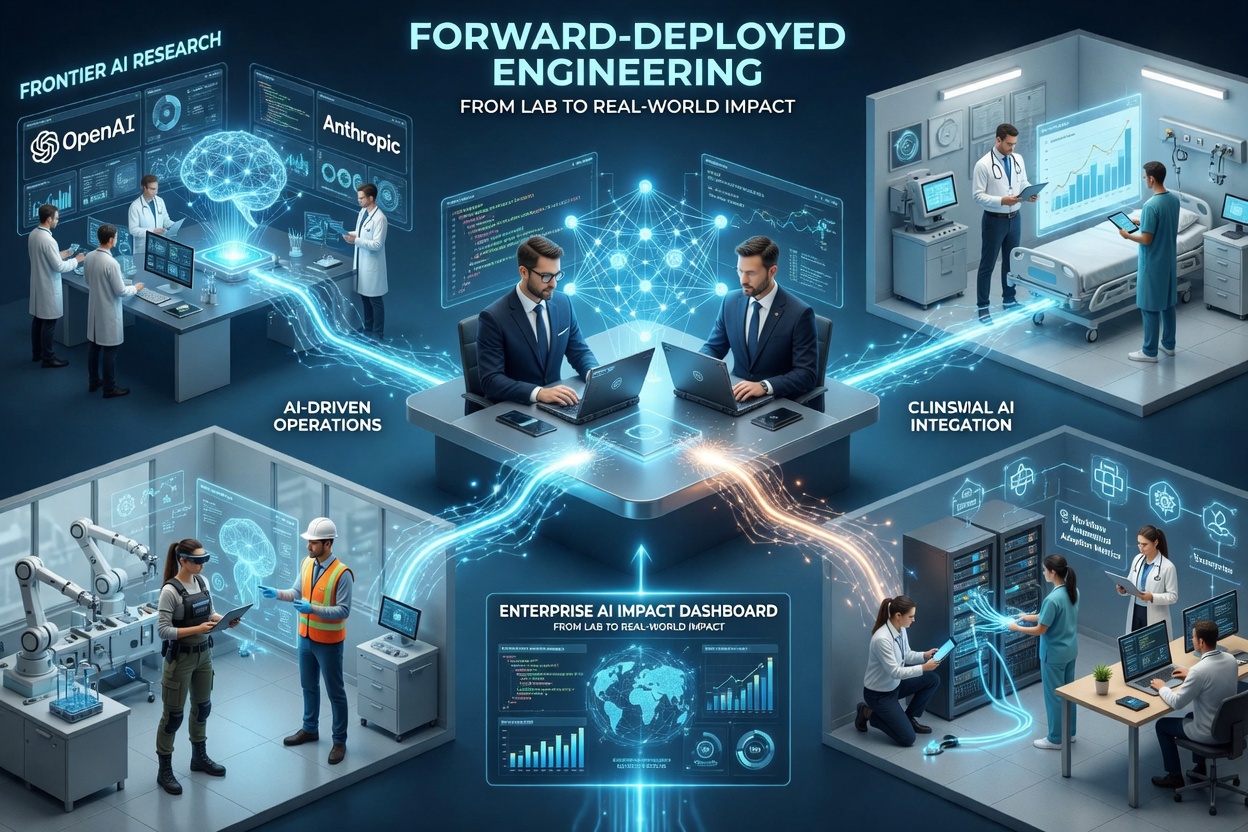
A New Chapter in Enterprise AI Adoption: Learning from Palantir
This month, the AI industry took a decisive step from research labs into the heart of the global economy. OpenAI and Anthropic both launched major new initiatives focused on real-world deployment, signaling that the era of AI services at scale has officially begun.
Anthropic formed a $1.5 billion joint venture with Goldman Sachs, Blackstone, and Hellman & Friedman to create a dedicated enterprise AI services company. At the same time, OpenAI announced its Deployment Company, backed by over $4 billion in initial capital, and immediately acquired Tomoro, an applied AI consulting firm, bringing roughly 150 experienced Forward-Deployed Engineers (FDEs) on day one. These specialists will embed directly with clients to integrate today's frontier models into complex business operations.
This approach is not new. It is a proven playbook pioneered by Palantir. Over a decade ago, Palantir created the Forward-Deployed Engineer model: elite engineers who do not just advise clients but live with them, write production code on-site, customize systems in real time, and own outcomes. This last-mile commitment turned Palantir from a promising data platform into an indispensable partner for the world's most demanding organizations.
OpenAI and Anthropic are now adapting this model, but with a critical difference. They are deliberately keeping these enterprise services in separate, heavily capitalized entities rather than folding them into their core companies.
Why the separation? Two reasons stand out.
First, protecting the AGI mission. Both organizations were founded to push toward safe artificial general intelligence. Their top researchers need to remain focused on breakthrough model development, not on enterprise customization, sales cycles, or compliance work.
Second, cultural and operational fit. Deployment is capital-intensive, people-heavy, and involves long sales processes. Spinning out these arms allows each company to attract dedicated capital and talent without diluting the core labs or exposing them to heavier regulatory and liability risks.
Palantir showed how to cross the deployment chasm. OpenAI and Anthropic are proving they learned the lesson while fiercely guarding their original purpose. The labs will keep racing toward AGI. The new deployment companies will make today's powerful models essential infrastructure inside Fortune 500 companies, banks, hospitals, and factories.
For business leaders, the critical question is no longer about access to technology. It is about whether your organization has the leadership skills to define new requirements, drive real change, and close the gap between advanced models and operational reality.
If you are leading AI transformation inside your organization, send us a message @AIISV,org and we can bring our playbooks and cirriculumn to help.
aiisv.org …more
M
Michael Ashley
Founder at Radi8 // Executive Coach // Host of the Inspiring Founders Podcast
I’m not that great at making LinkedIn videos… but I’m getting better.
I’m trying to do the selfie video thing so I can have content that’s clearly not AI - and since AI creates mostly perfect images and even video now, I figured seeing my amateur attempts will add some HUMAN to your day.
If you’re up for it, I’d love to see your videos too. Don’t worry if they suck. It’s way more interesting than a perfectly written manifesto on getting rich quick. …more
This post has video.
Watch it on the channel.
M
Michael Ashley
Founder at Radi8 // Executive Coach // Host of the Inspiring Founders Podcast
When a coach or consultant tells me their positioning is fuzzy, they usually want to fix the words. A better tagline. A sharper sentence. A cleverer hook. That almost never works, because vague positioning isn't a writing problem.
It's a customer-understanding gap.
You can't describe who you help clearly when you're not yet clear on who they are. No amount of wordsmithing rescues a message you haven't earned by knowing the person on the other end. Positioning is an output of customer discovery, not a copywriting exercise.
So when someone's stuck, I don't ask "what do you do?" That question sends people straight back into their own head — to titles, methods, and adjectives. I ask two different ones instead.
Who is this actually for? Not a demographic. A person you could name, with a problem they'd describe in their own words.
And what were they doing about it before they found you? The workarounds, the half-measures, the thing they already tried that didn't stick. That's where the real language lives — the words your best clients use for their own problem, before you dress them up.
Answer those two honestly and the positioning tends to write itself. You stop reaching for clever and start repeating what you've actually heard. Evidence beats invention. A sentence built from a real client's words lands because someone already lived it.
The clever version impresses you. The accurate version gets remembered by the person it's for.
So here's the question I'd genuinely like you to answer: what's the one client you do your best work for — and what were they doing before they found you?
#IndependentConsultant #Coaching #Positioning #CustomerDiscovery #IdealClient …more
Channel names and logos are trademarks of their respective owners.