
Your first clients came easy. That's exactly why the next ones feel impossible.
When you went independent, the phone rang. A former colleague needed help. Someone who'd watched you work for years passed your name along. Within a few months you had your first handful of clients, and it felt like proof the whole thing would work.
Here's what actually happened. You didn't build a way to win clients. You cashed in years of goodwill, all at once. Every person who'd seen you deliver inside the org, every bit of trust you'd earned over a career, converted into work the moment you were available to hire.
That's a stockpile, not a pipeline. A stock is finite. It draws down. You spend it faster than you notice, because it arrived without any effort you could repeat. When it runs low, there's nothing underneath to refill it. The well was full the day you started on your own. It doesn't refill on its own.
A pipeline is different. It refills because you built the thing that fills it. Two parts do most of that work.
Positioning people can repeat. Your old network vouched for you from memory. Strangers can't. If someone can't say in one sentence what you do and who it's for, the recommendation stops at "they're great" — which wins no one.
Visibility beyond your circle. The people who already know you are a fixed number. Growth lives with the people who don't, and they only find you if you're somewhere they can watch how you think.
The trap isn't that you did anything wrong. The first wave working is the very thing that convinces you nothing needs to change. Then it quietly runs dry, and it looks like the market cooled, when really the well just emptied.
Genuine question: how did your first three clients actually find you, and has that kept working?
#IndependentConsultant #Coaching #GoingIndependent #Positioning #PersonalBrand …more
Radi8 Social
A short one to close the month.
I've spent July writing about positioning, focus, and what it takes to turn what you know into a business that wins clients. So here's the question I'd actually like you to answer:
What did you have to unlearn when you went out on your own?
The habits that made you great inside an organization — trusting the work to find you, staying modest about your wins, letting the company's brand do the talking — are often the exact habits that stall an independent practice.
I'll go first: I had to unlearn building quietly. For years my work spoke through companies and products. On my own, invisible good work is just invisible.
Your turn. What did you have to unlearn — or what are you still unlearning? I'll read and reply to every answer.
#IndependentConsultant #Coaching #GoingIndependent #PersonalBrand …more
Reading CarbonBridge’s 2026 forecast, I’m encouraged by their shift from R&D to early commercialization. Two practical lessons for founders: secure non-dilutive reimbursements or early contracts to fund operations, and start pilot-site planning well before you expect to raise. Their first product sales to Lawrence Berkeley Lab validate the path, while fundraising and pilot timing remain bottlenecks. If you’re building pilots or need introductions, send me a message.
https://www.santacruzworks.org/news/carbonbridge-2026-forecast-emerging-revenues-clearing-product-salesnbsp …more
Your old prompts might be slowing your AI agents down.
OpenAI dropped guidance this week saying that instructions written for older, weaker models can actually hurt GPT-4o agent performance. All that scaffolding you built to babysit a less capable model? It's now dead weight that wastes memory and triggers the wrong behaviors.
Three things to fix right now:
Skills — the prompt files that load for specific tasks — need narrow, precise trigger descriptions. If they're too broad, your agent grabs the wrong one.
Your AGENTS.md file loads on every single task. Strip out anything that tells the agent to do things it already does on its own — check tests, follow conventions, run reviews. The smarter the model, the more redundant that instruction becomes.
Task prompts should clearly define what "done" looks like, so the agent knows when to stop rather than pause and ask for clarification.
The broader pattern worth internalizing: as models get smarter, the scaffolding we built around dumber ones becomes the bottleneck. Less hand-holding. Leaner prompts. More trust in the model's own judgment.
OpenAI even suggests asking the agent itself to audit your existing skills and AGENTS.md for dead weight. That's the move.
https://alphasignal.ai/newsletter/openai-gpt-4o-agent-tips
#AIMarketing #B2BMarketing …more
E
Elizabeth Greenfield Functional Wellness
· Facebook
Why did your lab number actually move? That's the question no one asked.
A flagged value is a readout, not a cause. An electrolyte that drifts or a hemoglobin that dips sits downstream of the systems that regulate it: the adrenals, the kidneys, iron status, inflammation, the quiet physiology of stress and sleep. Steadying it holds the reading in place; it doesn't tell you what your body was signaling. The why is where the real investigation begins.
If you were handed a plan to manage a number but no one looked upstream, you deserved more. The deeper version, what a root-cause investigation actually looks like, is here: https://www.lizgreenfield.com
This is educational and not intended to diagnose or treat any condition.
To Read or Not to Read the Code? https://every.to/source-code/to-read-or-not-to-read-the-code
1 big thing: Don't miss this shift — AI is ready to run your work in the dark. Don't let it turn the lights out in your head too.
Shipping more has never been easier. Understanding what you're shipping has never been more at risk.
Why it matters: B2B marketers building AI-assisted workflows face the same trap engineers do. The system gets smarter. You get faster. But the judgment that makes you valuable — knowing which of two reasonable-sounding plans will hurt you six months from now — quietly erodes if you let AI handle everything without staying in the work.
Driving the news:
Kieran Klaassen, GM of Every's AI email product Cora, found himself shipping faster than ever while feeling his own thinking get softer. Researchers Margaret Mitchell, Avijit Ghosh, and Samir Passi confirmed the pattern — extended AI agent use measurably erodes the vigilance, critical thinking, and domain skill that human oversight depends on.
→ The phenomenon dates back to 1983 — called the "irony of automation" — where the more capable the automation, the more human skill erodes
→ AI just makes it move faster
Zoom in:
Klaassen's solution: build a deliberate loop for his own learning alongside the AI.
→ His four practices: keep a list of gaps, ask for mechanics not just diffs, recover the reasoning behind the code, and let the model quiz you
Yes, but: This takes discipline most people won't apply. The excuse that you don't have time is exactly what AI removes — but the desire to learn has to come from you.
Be smart: Audit one AI-assisted workflow you run today. Can you explain why it works? Can you catch it when it fails? If not, you have a judgment gap, not a tool gap.
The bottom line: The tools that gave you an edge are becoming easy to copy. The judgment to know where to point them is not.
https://every.to/source-code/to-read-or-not-to-read-the-code
#AIMarketing #B2BMarketing …more
What would you never hand to a tool? Building Radi8, the hard part wasn't teaching it to write... it was the restraint I had to give it: it won't post a date nobody vouched for. What you refuse to delegate defines you. Grab 30 min with me: https://calendly.com/foclarity/30min …more
What did you actually keep from the last program you paid to be in?
For me it wasn't the degree. Years after my MBA, the thing that still pays off is a handful of relationships I made there, not any single lecture.
One of them started with a guest speaker. He came in, presented, and most of the room took notes and left. I introduced myself. Then I did the part almost nobody bothers with... I stayed in touch, for years. That one relationship went on to matter more to my business than anything on the syllabus.
The curriculum has a shelf life. A relationship you actually tend can compound for decades.
If you're building a practice of your own, treat the people you meet now as the asset. Positioning gets you in the room; the relationships you keep are what pay you back for years.
That's the work I help with. See how on my site, linked in the first comment.
#IndependentConsultant #Coaching #GoingIndependent #PersonalBrand #ThoughtLeadership …more
Today's post is 187 words, a 1-minute read.
Sources: @ClaudeDevs on X
1 big thing: What just changed in Claude Code for B2B teams
Anthropic is permanently adjusting Claude Code weekly limits starting September 14.
Why it matters: Teams that have built workflows and sprint cycles around current Claude Code capacity need to plan now. A 17% net reduction in weekly limits — compared to today's temporary 50% increase — is a meaningful operational change for power users.
Driving the news:
Starting September 14, standard weekly limits in Claude Code rise 25% permanently for Pro, Max, Team, and seat-based Enterprise plans.
→ The current temporary 50% increase ends on September 14
→ Net effect compared to today: a 17% reduction in weekly usage capacity
Yes, but: Anthropic says changes are coming that will make Claude feel like you're getting more value while having better visibility and control over usage. Details not yet shared.
Be smart: If your team is running heavy Claude Code workloads, audit your current weekly usage now. Know where you sit relative to the new baseline before September 14.
The bottom line: Plan for less runway. More context on usage controls is coming.
https://x.com/ClaudeDevs/status/2093742321473065266
#ClaudeCode #AIProductivity …more
AI & Tech Brief: https://www.washingtonpost.com/newsletters/ai-tech-brief/
1 big thing: Don't miss this shift — AI labs are racing to cut model transparency, and it matters for every B2B team
OpenAI is using a technique that makes its most advanced models harder to monitor. Researchers inside the company are alarmed. B2B marketing and enterprise teams should be paying attention too.
Why it matters: The ability to audit AI behavior — to see why a model did what it did — is the foundation of enterprise trust. A race to obscure that reasoning, driven by competitive economics, is a governance problem that lands on your team's doorstep.
Driving the news:
OpenAI's Astra models reportedly use a technique called "recurrent depth" that moves reasoning out of human-readable text and into hidden mathematical space inside the model.
→ Researchers rely on chain of thought to monitor agent behavior and investigate problems — including last month's Hugging Face breach
→ OpenAI's own chief scientist acknowledged the trend is "trending in a negative direction"
Zoom in:
The competitive pressure is the real story. Even labs that believe recurrent depth is unsafe may adopt it anyway because they can't afford to fall behind rivals who do.
→ Encode AI's general counsel told Washington Post that regulation or voluntary standards may be the only way to prevent a race to the bottom
Yes, but: Anthropic is moving in the opposite direction — pausing its highest-risk training environments and inviting independent evaluators for review. The contrast between the two labs is now stark and deliberate.
Be smart: Before deploying any AI agent in a customer-facing or revenue-critical workflow, ask your vendor one question: can you show me how this model reasons through a decision? If the answer is no, you have a governance gap.
The bottom line: Cheaper models with hidden reasoning aren't a bargain. They're a liability you haven't priced yet.
https://www.washingtonpost.com/newsletters/ai-tech-brief/
#AIGovernance #B2BMarketing …more
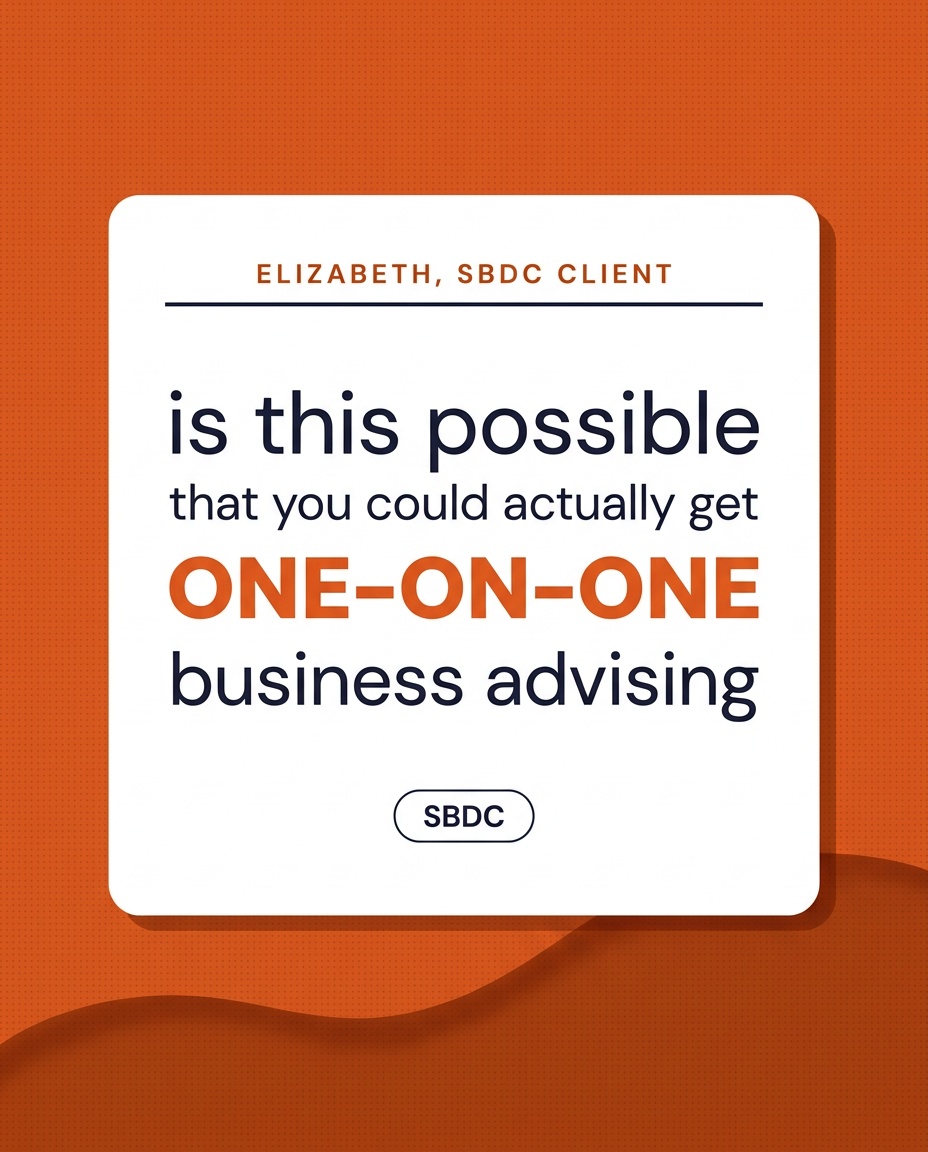
Most coaches assume the Small Business Development Center is for retail shops and restaurants, not for a consulting practice. That's a mistake.
Depending on where you're based, it can offer free, one-on-one advising on what a new practice actually needs: messaging, business strategy, and getting financially ready to borrow. Elizabeth, who I interviewed, put it this way: "I kept looking at their web page thinking is this possible that you could actually get one-on-one business advising in California."
Have you connected with your local SBDC? It's worth twenty minutes.
#IndependentConsultant #ExecutiveCoach #CoachingBusiness #ConsultingBusiness #GoingIndependent #Positioning #PersonalBrand #ThoughtLeadership …more
OpenAI just hired Patreon's top marketing execs. https://cryptobriefing.com/openai-hires-patreon-executives-creator-strategy/
Patreon does ~$200M revenue. That's a rounding error for OpenAI.
The play isn't their skills. It's their audience.
Executive hires with followings are a distribution channel now.
#Marketing …more
Channel names and logos are trademarks of their respective owners.