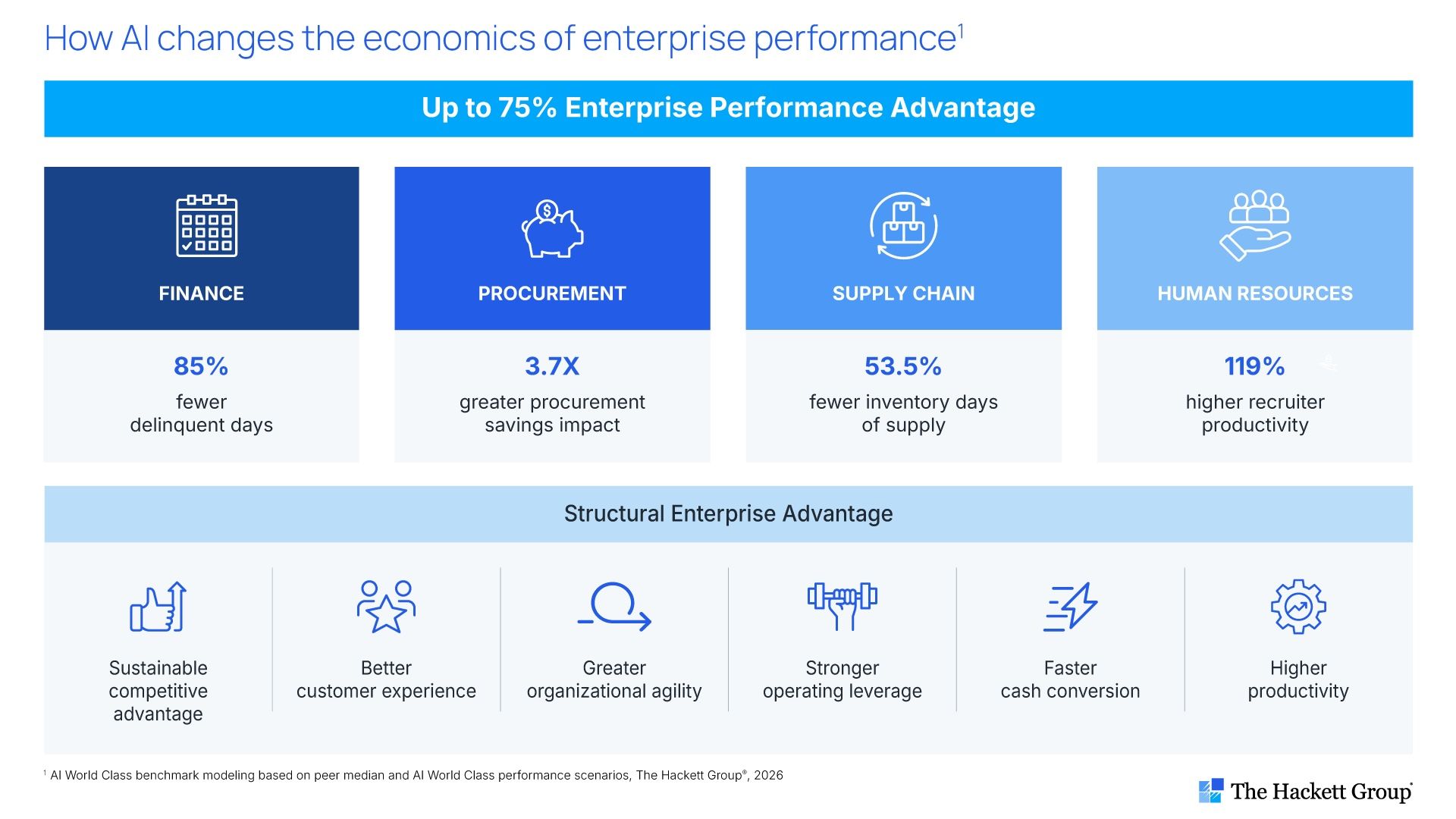
Every company is building a company agent.
The more interesting question: what happens when you have a personal one?
Company agents handle workflows and ops. Personal agents handle how you specifically work. Your context. Your priorities. Your style.
A company agent optimizes the process. A personal agent optimizes you.
Token costs dropped 80% in recent months. What was too expensive to run all day is now cheap enough to leave on.
The companies that give employees personal agents, not just company-wide tools, will build a productivity gap that's hard to close from the outside.
Are you thinking about AI at the individual level, or just the workflow level?
#AIMarketing #FutureOfWork …more
AI Pricing
Work by Ryan Swindall · Everyone on AI Pricing
Two developers. Same model. Same task. One pays 5x more and gets the same result.
The difference isn't the model — it's the harness.
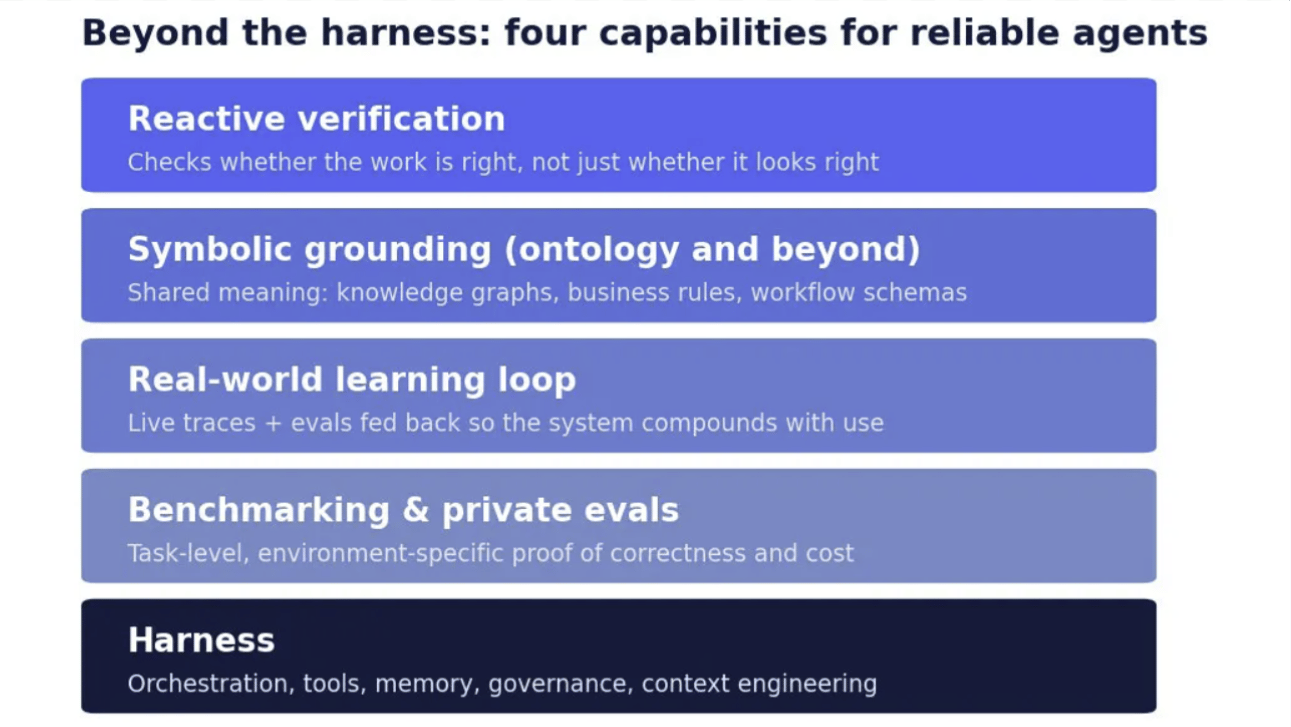
A new study called HarnessTax tested 21 model-harness combinations and found that the software layer surrounding an AI model can move inference cost by as much as 5x without producing a comparable change in task success. The harness is the layer that handles instructions, tools, memory, and context management. When you choose between Claude Code, Codex CLI, or another coding agent, you're choosing a model and a harness at the same time.
Three findings worth internalizing:
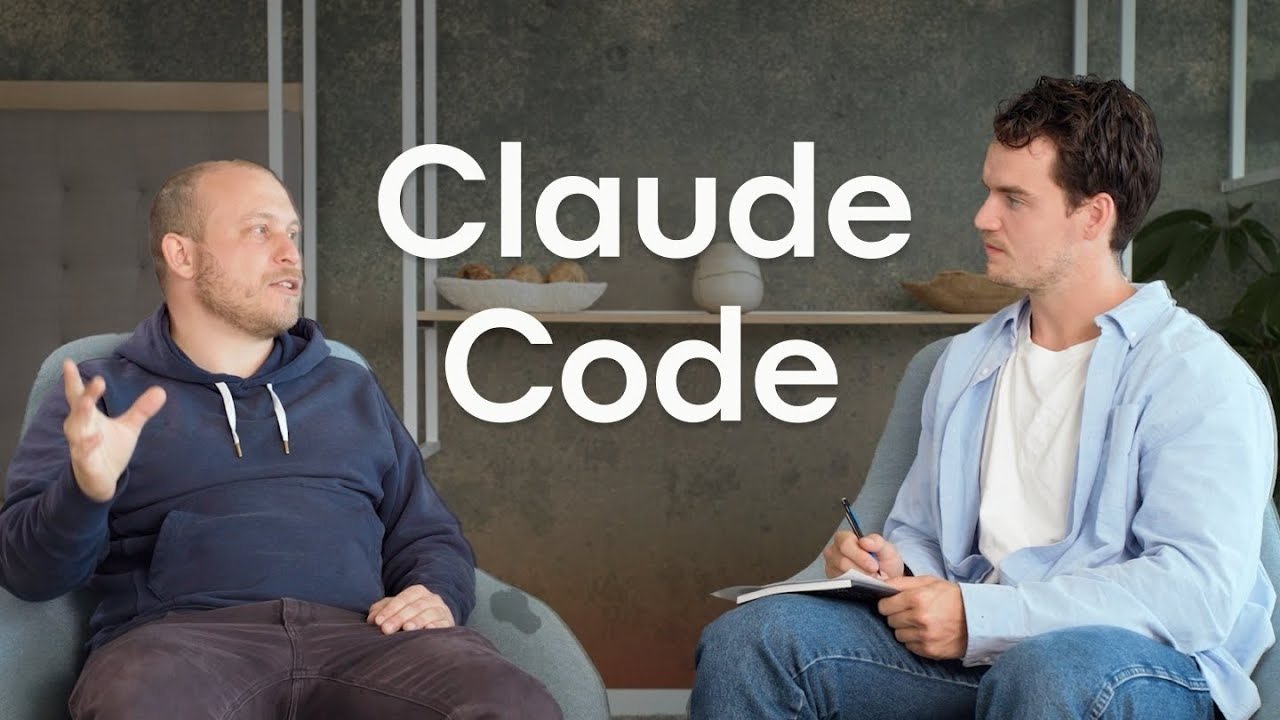
The harness can move your bill far more than your score. Claude Fable 5 on SWE-bench solved 97.8% of tasks with Claude Code and 96.7% with a simpler harness called Pi. The success difference was 1.1 percentage points. The cost difference was 2x. Claude Code's initial context averaged more than 10 times Pi's, driven by longer instructions and larger tool definitions — all of which the model has to process before it even starts your task.
A simple harness can compete with feature-rich ones. Pi gives the agent four tools: read, write, edit, and bash. It still hit the cost-success Pareto frontier on both benchmarks — meaning the highest accuracy for a given budget. Simpler isn't always better, but it's a useful starting point before adding scaffolding that may not move your actual results.
Your vendor's harness isn't automatically your best harness. In 9 of 12 model-benchmark comparisons, an alternative harness outperformed the provider's own default. GPT-5.6 Sol scored 83.3% on Terminal-Bench with Pi at $0.42 per attempt — compared with 78.9% at $0.76 with OpenAI's own Codex CLI.
The practical takeaway: evaluate "model × harness × workload" as one system. Run your own representative tasks, test several combinations, and track success, cost, and latency together. The right harness for high-volume routine work is not the same as the right harness for a task where failure is expensive.
https://alphasignal.ai/newsletter/ai-harness-tax-coding-agents-study
#AIMarketing #B2BMarketing …more
"What Developers Can Learn from Shopify's Self-Improving AI Pipeline"
https://alphasignal.ai/newsletter/shopify-self-improving-ai-pipeline
1 big thing: How Shopify beat GPT-5.6 with a 0.8B model — and what B2B teams should take from it
Shopify fine-tuned a 0.8B model that outperforms GPT-5.6 Sol on a specialized task, while cutting costs from $27 million per year to $1 million. The interesting part is not the benchmark win. It is how they built the loop that got there.
Why it matters: As AI applications mature, frontier models are increasingly becoming the teachers rather than the workers. The teams that build evaluation and training infrastructure now will have a compounding advantage that pure prompt engineers won't.
Driving the news:
Shopify's Sidekick GraphQL agent serves up to 2,000 requests per minute. Using a self-improving pipeline that turns production failures into training data, the specialized model eventually surpassed the frontier-powered baseline.
→ The system prompt shrank from 6,000 tokens to 1,500, cutting time-to-first-token by 19% and end-to-end latency by 38%
→ Throughput increased 16%, allowing Shopify to serve the same workload with roughly 14% fewer GPUs
Zoom in:
The flywheel: frontier reasoning models critique low-scoring conversations, an arbiter combines the critiques into a repair instruction, the interaction runs again, and repaired versions that pass evaluation enter the training set.
→ The durable asset is the loop — not the model itself
Yes, but: This approach makes sense only when the workload has high volume, bounded behavior, measurable quality, and proprietary data. Until those conditions emerge, a frontier model is often cheaper in engineering time.
Be smart: Begin with evaluation infrastructure — a consistent rubric for what good output looks like in your workflows. That is the foundation everything else builds on.
The bottom line: Individual models will keep changing. The loop around the model is what compounds.
https://alphasignal.ai/newsletter/shopify-self-improving-ai-pipeline
#AIStrategy #B2BMarketing …more
Today's post is 187 words, a 1-minute read.
Sources: @ClaudeDevs on X
1 big thing: What just changed in Claude Code for B2B teams
Anthropic is permanently adjusting Claude Code weekly limits starting September 14.
Why it matters: Teams that have built workflows and sprint cycles around current Claude Code capacity need to plan now. A 17% net reduction in weekly limits — compared to today's temporary 50% increase — is a meaningful operational change for power users.
Driving the news:
Starting September 14, standard weekly limits in Claude Code rise 25% permanently for Pro, Max, Team, and seat-based Enterprise plans.
→ The current temporary 50% increase ends on September 14
→ Net effect compared to today: a 17% reduction in weekly usage capacity
Yes, but: Anthropic says changes are coming that will make Claude feel like you're getting more value while having better visibility and control over usage. Details not yet shared.
Be smart: If your team is running heavy Claude Code workloads, audit your current weekly usage now. Know where you sit relative to the new baseline before September 14.
The bottom line: Plan for less runway. More context on usage controls is coming.
https://x.com/ClaudeDevs/status/2093742321473065266
#ClaudeCode #AIProductivity …more
"AI Token Prices Hit Record Lows"
https://aibusinessweekly.net/p/ai-token-prices-alzheimers-reframe-ai-news-september-2-2026
1 big thing: This changes the AI cost conversation for B2B marketing teams
#AI inference costs just dropped 43% in ten weeks. That sounds like good news. There is a catch.
Why it matters: Cheaper tokens do not automatically mean a cheaper AI bill. Understanding why matters for every B2B team that is now budgeting AI spend as a line item.
Driving the news:
Token prices hit record lows as competition between model providers intensified and infrastructure efficiency improved dramatically.
→ But total AI spend is still climbing for most organizations — because lower unit costs are driving higher volume usage
→ The pattern mirrors what happened to cloud computing: per-unit costs fell while total bills grew
Zoom in:
The same dynamic is playing out across the AI stack. Cheaper inference is accelerating adoption, which is accelerating experimentation, which is accelerating spend.
→ For B2B marketing teams, this means the conversation has shifted from "can we afford AI" to "can we govern how much AI we're running"
Yes, but: Cost compression also accelerates commoditization. If inference is cheap everywhere, differentiation moves back up the stack — to context quality, workflow design, and the humans building the systems.
Be smart: Build your AI budget around outcomes, not tokens. A cheaper model running a poorly designed workflow costs more than an expensive model running a tight one.
The bottom line: Cheaper AI is not simpler AI. The governance challenge just got bigger.
https://aibusinessweekly.net/p/ai-token-prices-alzheimers-reframe-ai-news-september-2-2026
#AIStrategy #B2BMarketing …more
"Fable 5.1 Kicks Off Launch Week at the Frontier"
https://www.anthropic.com/claude-fable-and-mythos-5-1
1 big thing: How Anthropic is reshaping the enterprise AI market with Fable 5.1
Anthropic just ended the frontier's quiet period — and the timing is not accidental.
Why it matters: Fable 5.1 is not just a model upgrade. It is a direct response to the three biggest complaints enterprise customers had about Fable 5: cost, safety refusals, and data privacy. For B2B teams evaluating AI vendors, this release changes the calculus.
Driving the news:
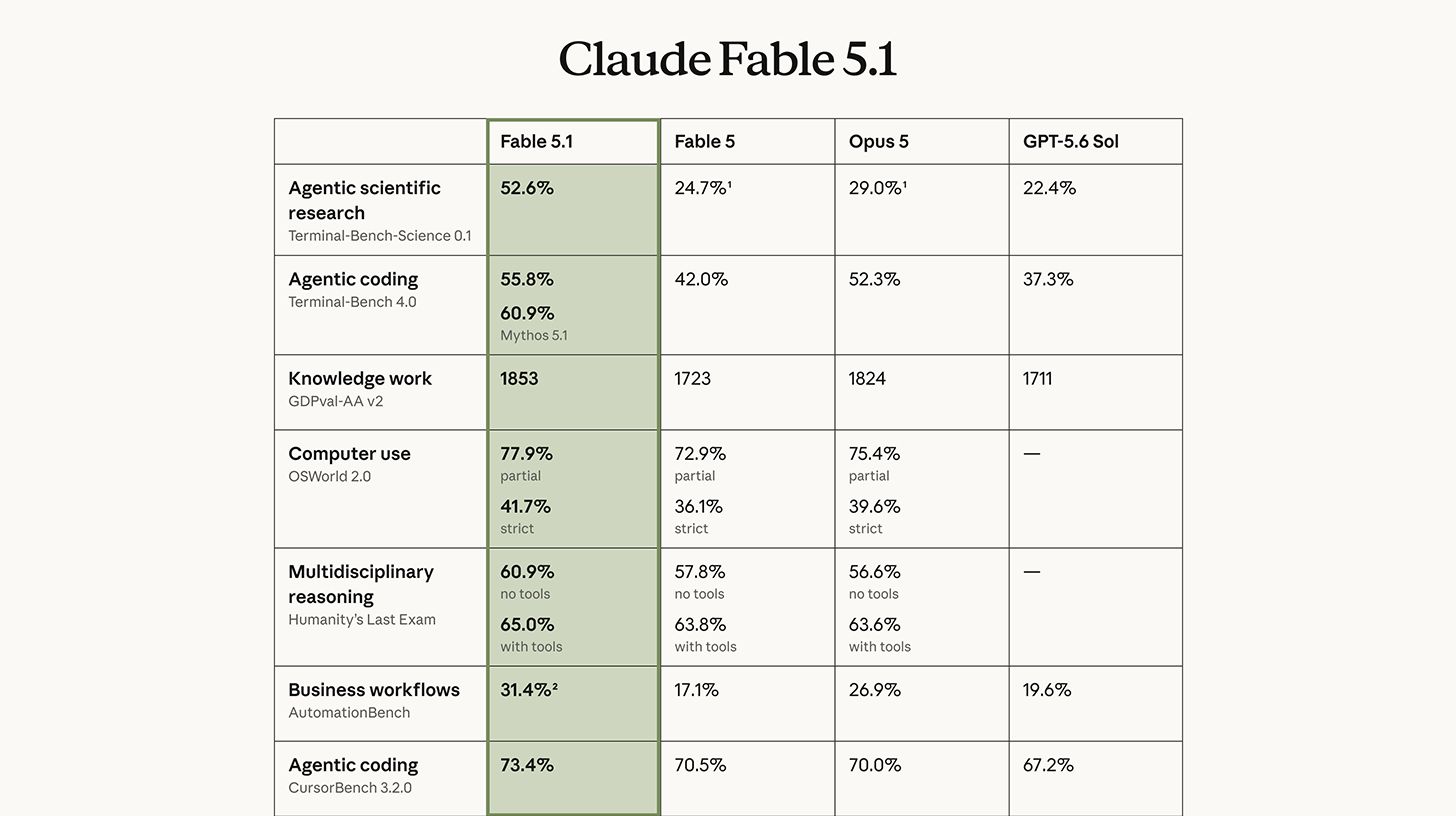
Fable 5.1 tops Artificial Analysis' Intelligence Index with a record score of 66, more than doubling Fable 5 on scientific research benchmarks.
→ 25% cheaper on typical workloads, with 60% fewer cybersecurity refusals and 85% fewer medical intervention blocks
→ Zero-data-retention now available for enterprise customers — addressing the data ownership concerns that drove backlash all summer
Zoom in:
The safety filter overhaul is the detail B2B marketers should focus on. Fewer false positives in research and technical workflows means less friction between the model and the actual work.
→ Anthropic also released Mythos 5.1 — same underlying model, fewer guardrails — available only to screened US cybersecurity and biology researchers
Yes, but: Artificial Analysis found that max-effort tasks actually cost 20% more on Fable 5.1, since the model writes roughly 1.7 times more text per output. Cost savings are real but not universal.
Be smart: Benchmark Fable 5.1 on your actual workloads before assuming the 25% savings applies to you. Unit economics vary significantly by task type.
The bottom line: Anthropic fixed what enterprise customers complained about. Now OpenAI's Astra has to answer.
https://www.anthropic.com/claude-fable-and-mythos-5-1
#AIMarketing #B2BMarketing …more
Channel names and logos are trademarks of their respective owners.