
AI Infrastructure

 View on YouTube
Jensen Huang gave the AI buildout its cleanest definition yet: "We now need a new type of infrastructure — an AI factory. Energy comes in; intelligence comes out."
His math is the part worth sitting with. Out of a $100 trillion economy, roughly $15 trillion is work that would benefit from more intelligence. Every company will tap into it. That's the real reason data centers are going up everywhere — not hype, but demand for a raw material almost every business now wants.
Here's the shift for those of us marketing complex technical products.
For years we sold intelligence as a scarce, premium thing. Something you bought carefully, deployed slowly, and defended in the budget. Huang is describing a world where intelligence behaves more like electricity — a utility you plug into, metered and abundant.
When the input gets commoditized, the story can't be "we have the smart thing." Everyone will have the smart thing.
The differentiation moves to judgment: what problem you point that intelligence at, how well you understand the human on the other end of it, and whether you can explain — in plain language — why it matters to their work this quarter.
The factory produces intelligence. It doesn't decide what's worth building. That part is still ours.
Want a fresh take on your B2B content strategy? DM me and let's schedule a 30-minute consultation — I'll show you 3 things you can improve this week.
#B2BMarketing #AIStrategy …more
This post has video.
Watch it on the channel.
CNN’s Anderson Cooper sat down with NVIDIA CEO Jensen Huang to discuss his relationship with AI regulation.
"AI is not a new species, it's software" - Jensen Huang
0:00 Why Jensen Huang isn’t worried about AI
2:30 Huang on concerned AI CEOs: “If they’re worried, they should just stop”
6:20 Do we need to slow AI development?
8:15 Should AI companies regulate themselves? …more

Told 2 times, Sep 25, 2026
· X · Open
CNN’s Anderson Cooper sat down with NVIDIA CEO Jensen Huang to discuss his relationship with AI regulation.
"AI is not a new species, it's software" - Jensen Huang
Full interview here: https://www.youtube.com/watch?v=TxyayEjTiZQ
PwC's $31.6 Trillion AI Projection: https://enterpriseaiexecutive.ai/p/pwc-s-31-6-trillion-ai-projection
1 big thing: ☑ The AI infrastructure buildout just got a number — and it dwarfs everything that came before it
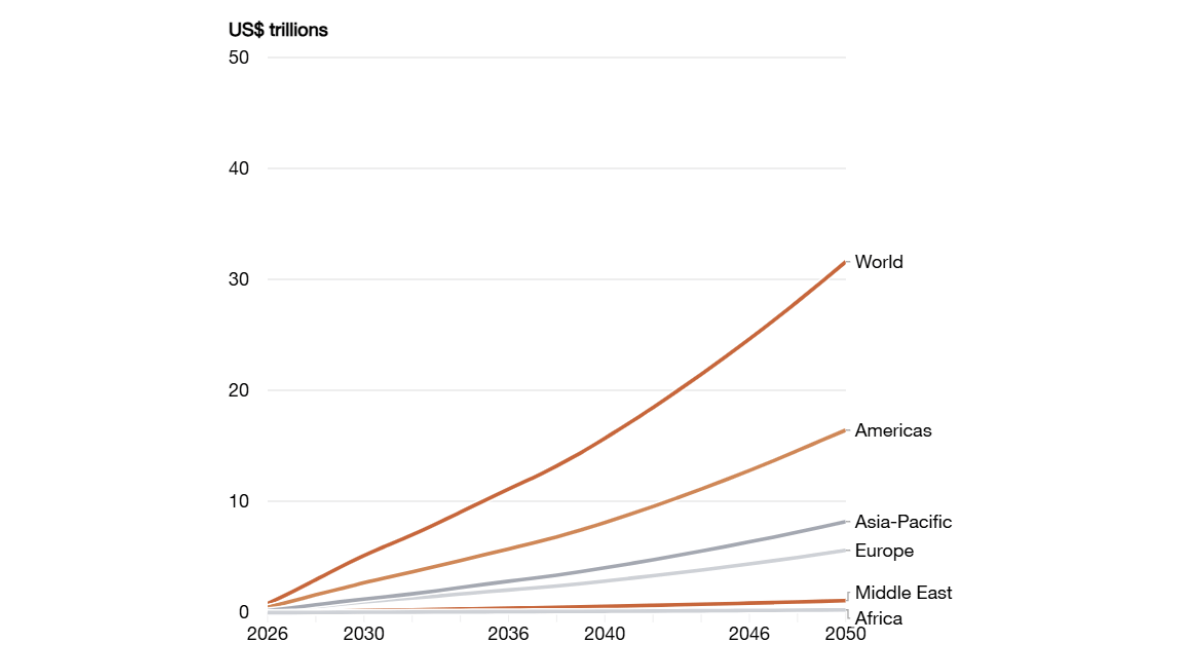
PwC projects $31.6 trillion in data center capital expenditure through 2050 to build the compute capacity AI demands. For context, that is larger than the combined investment in railways, electrification, and the internet.
Why it matters: For enterprises consuming data center compute, this signals a market shaped by scarcity rather than abundance. Where a workload runs will be determined as much by sovereignty as by price.
Driving the news:
PwC modeled the projection with Oxford Economics across 46 countries. A plausible upside scenario puts the number near $50 trillion if AI adoption accelerates further.
→ Power availability, sovereignty rules, and chip trade flows will decide where capacity gets built
→ AI inference stays close to users for latency and privacy reasons; training chases cheap power and talent
Zoom in:
OpenAI released GPT-6 Astra, landing at 61 on the Artificial Analysis Intelligence Index — behind Fable 5.1, Fable 5, Opus 5, and Muse Spark 1.3.
→ Astra is priced at $10/$50 per million tokens — roughly 2.5x GPT-5.6 Sol — though it uses tokens more efficiently per task
→ Incumbents are pushing their own agents: Salesforce/Claudeforce, Docusign's Iris, Atlassian's Rovo
Yes, but: Sequoia argues the cognitive revolution mirrors the industrial one — machines set to do 99.9% of cognitive work as prices fall. The trillion-dollar buildout is the bet on that thesis.
Be smart: The enterprises that treat AI infrastructure as a utility are not planning for the market that is actually forming. Sovereignty, latency, and refresh cycles are strategic variables now.
The bottom line: $31.6 trillion is not a forecast. It is a structural commitment. Plan accordingly.
https://enterpriseaiexecutive.ai/p/pwc-s-31-6-trillion-ai-projection
#AIStrategy #B2BMarketing …more
 View on LinkedIn
Also on
View on LinkedIn
Also on

Today's post is 187 words, a 1-minute read.
Sources: @ClaudeDevs on X
1 big thing: What just changed in Claude Code for B2B teams
Anthropic is permanently adjusting Claude Code weekly limits starting September 14.
Why it matters: Teams that have built workflows and sprint cycles around current Claude Code capacity need to plan now. A 17% net reduction in weekly limits — compared to today's temporary 50% increase — is a meaningful operational change for power users.
Driving the news:
Starting September 14, standard weekly limits in Claude Code rise 25% permanently for Pro, Max, Team, and seat-based Enterprise plans.
→ The current temporary 50% increase ends on September 14
→ Net effect compared to today: a 17% reduction in weekly usage capacity
Yes, but: Anthropic says changes are coming that will make Claude feel like you're getting more value while having better visibility and control over usage. Details not yet shared.
Be smart: If your team is running heavy Claude Code workloads, audit your current weekly usage now. Know where you sit relative to the new baseline before September 14.
The bottom line: Plan for less runway. More context on usage controls is coming.
https://x.com/ClaudeDevs/status/2093742321473065266
#ClaudeCode #AIProductivity …more
 View on LinkedIn
Also on
View on LinkedIn
Also on
K

Kent Kaufman
Organization focused on AI leadership and innovation for the Fourth Industrial Revolution, based in Silicon Valley
The AI Frontier Race Just Got Rewritten — Grok 4.5 Forces a New Tradeoff Between Intelligence, Cost, and Speed
The rules of the frontier AI race are changing in real time — and this week made that unmistakably clear.
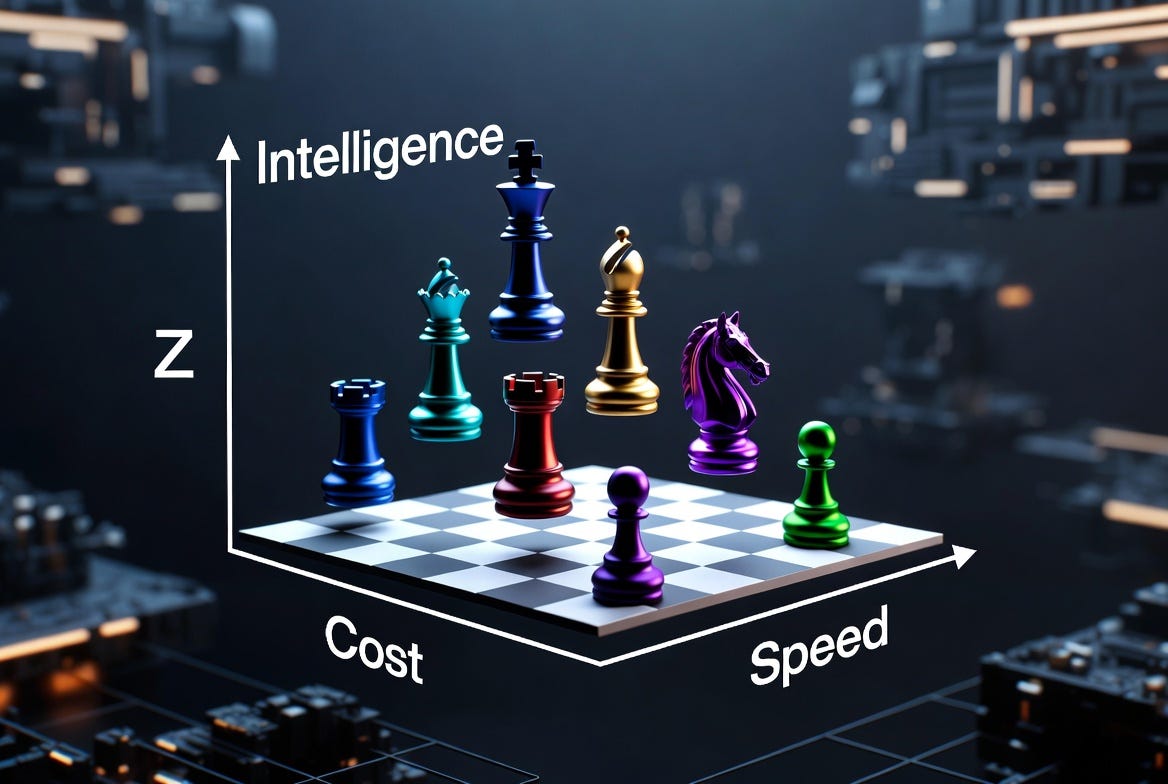
For the past two years, the prevailing assumption was straightforward: the company with the highest benchmark scores would eventually dominate. That assumption is breaking down. We're moving from a world where raw intelligence was the primary differentiator to one where the real competition is about who can best balance intelligence, cost, and speed at scale.
Grok 4.5 is the clearest signal of this shift. While it doesn't lead every benchmark, it delivers near-frontier performance with significantly better token efficiency and much lower pricing — proving more economically attractive than pricier, higher-scoring alternatives in many real-world agentic and coding workflows. xAI is betting the winning formula is no longer "maximum intelligence at any cost," but strong intelligence at the lowest cost per successful outcome.
OpenAI reached a similar conclusion. Instead of releasing GPT-5.6 as a single model, they launched it as a three-tier family (Sol, Terra, and Luna) — an acknowledgment that different customers need different points on the intelligence-cost-speed spectrum.
This reflects a deeper shift: the AI TAM is stratifying into distinct sub-markets — high-intelligence/low-volume use cases, cost-efficient/high-volume agentic work, specialized coding agents, knowledge work automation, robotics, and more. Companies that fail to define which sub-markets they're targeting risk misallocating resources in an increasingly differentiated landscape.
Structural advantages matter more too. xAI's integration into the broader SpaceX ecosystem — the Colossus supercluster, in-house chip plans, orbital data center ambitions — gives it a path to lower long-term compute costs pure software labs will find hard to match.
Three distinct approaches are emerging among the leading U.S. labs:
- Anthropic: maximum capability and safety, under greater regulatory constraints.
- OpenAI: serving multiple segments through tiering while navigating government review.
- xAI: fastest on public release, leaning hardest into efficiency, cost, and vertical integration.
The winners of this next phase won't necessarily have the smartest model on every benchmark — they'll be the ones who best combine intelligence, cost, and speed while building the infrastructure to deliver it economically at scale.
The game has moved from a simple 2D board to 3D chess.
Full analysis and benchmark comparison (Grok 4.5, Fable 5, GPT-5.6, Gemini, and others):
https://kentkaufman.substack.com/p/openais-gpt-56-strikes-back-against
How do you see this playing out over the next 12–18 months?
#AI #AIISV #Leadership …more
 View on LinkedIn
Also on
View on LinkedIn
Also on
K
Kent Kaufman
Organization focused on AI leadership and innovation for the Fourth Industrial Revolution, based in Silicon Valley
Orbital AI Unleashed: SpaceX's IPO and the Future of Compute in Space
As I wrote in my May blog right after the S-1 filing, SpaceX was already transforming from a rocket company into something much bigger. Now, officially public, that vision has real capital behind it.
SpaceX went public on June 12, 2026 (ticker SPCX) in the largest IPO in history — raising ~$75 billion at $135/share. It quickly traded up to $150–161, pushing the market cap above $2.1 trillion and making Elon Musk the world's first trillionaire. A massive vote of confidence in SpaceX's expanded AI + multiplanetary mission.
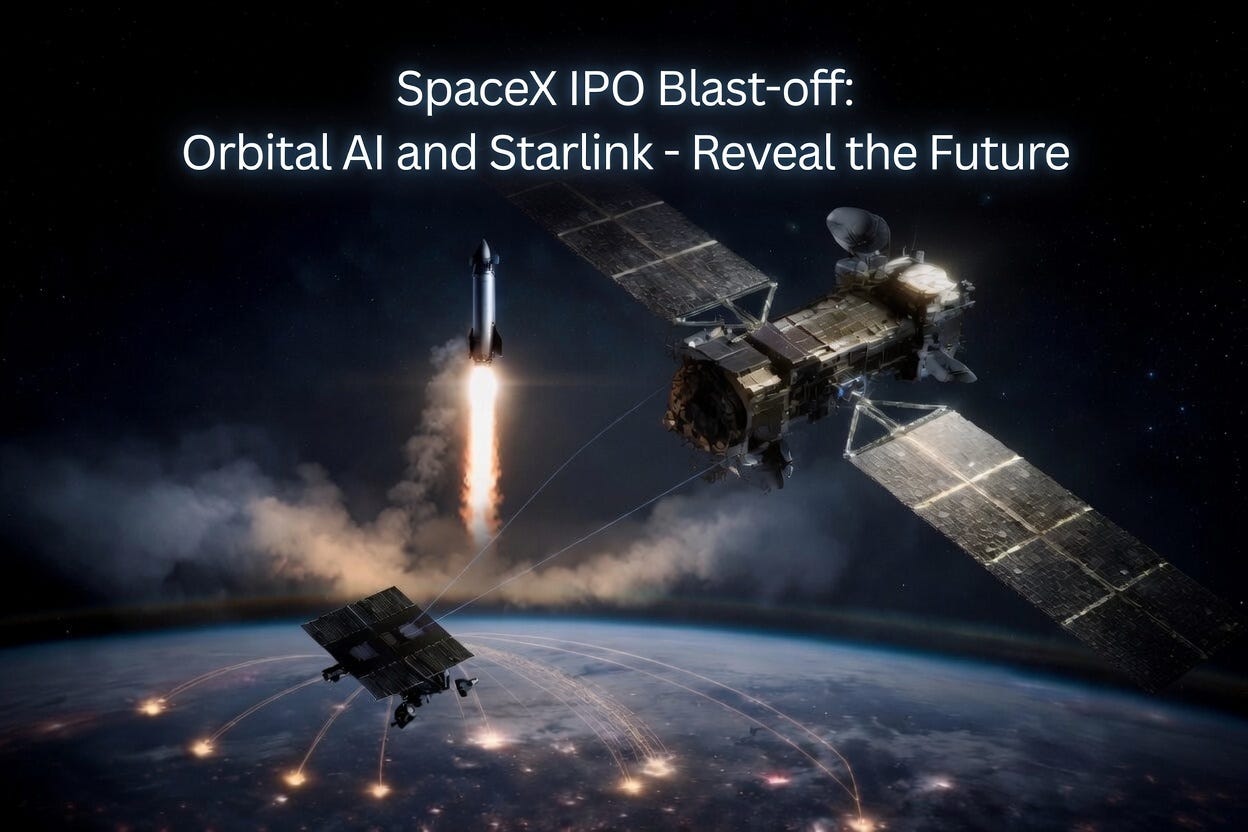
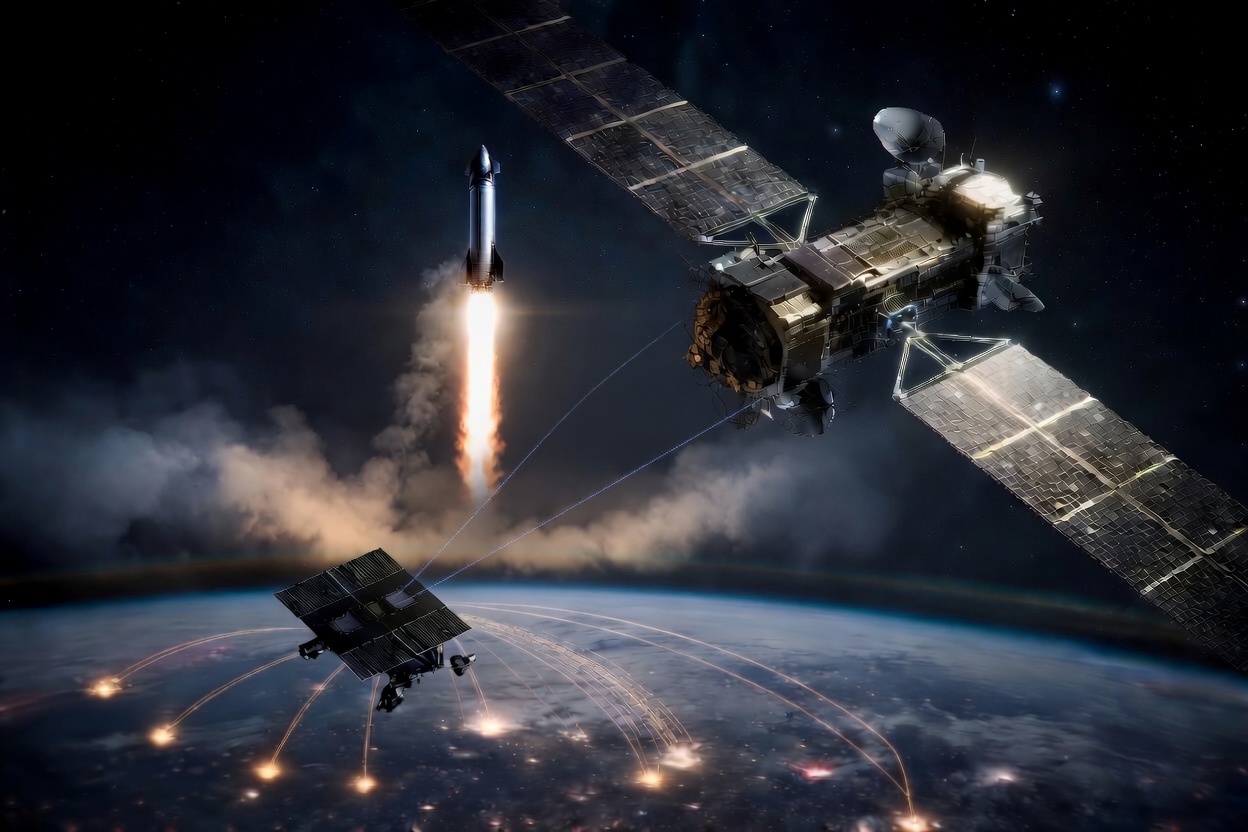
Beyond reusable rockets and Starlink, the real story is SpaceX's evolution into a vertically integrated AI infrastructure powerhouse — with plans for the world's first orbital data centers.
Why Go Orbital?
Hyperscale data centers on Earth are hitting serious walls: NIMBY resistance, zoning battles, power grid constraints, and enormous water usage have delayed or blocked tens of billions in projects in 2026 alone.
Orbital data centers sidestep all of this — unlimited solar power in constant sunlight, passive radiative cooling in the vacuum of space, and zero land or local regulatory fights.
The Vision & Economics
SpaceX aims to launch solar-powered AI compute satellites as early as 2028, scaling with Starship's payload capacity. Starlink provides the low-latency laser links back to Earth.
The model flips traditional data centers: huge upfront launch costs (targeting $100/kg or lower) but dramatically lower ongoing energy and cooling expenses. Orbital decay (5–10 year LEO lifespan) and radiation mean regular refreshes, but controlled deorbiting keeps it sustainable.
Competition & The Ultimate Moat
Starlink dominates the Low-Earth Orbit broadband market with 10M+ subscribers. Amazon's Leo (formerly Project Kuiper) is the most credible challenger, targeting commercial service later in 2026.
The real differentiator is Musk's vertical integration: SpaceX (launch + orbital infrastructure), xAI (Grok frontier models with real-time X data), Starlink (connectivity), and Tesla (Optimus robots for in-space assembly + FSD/Robotaxi data flywheel).
Competitors like Amazon rely on Anthropic and OpenAI for frontier models, while Blue Origin and legacy players (Boeing, Lockheed Martin) lag in execution speed and integration.
Bottom Line
SpaceX's IPO validates a bold bet on moving AI compute into orbit to overcome Earth's infrastructure limits. High-risk, high-reward — but the vertical moat is formidable.
Full deep-dive on economics, risks, radiation, orbital lifespan, and Tesla synergies here:
https://open.substack.com/pub/kentkaufman/p/orbital-ai-unleashed-spacexs-ipo?r=8iaf19&utm_campaign=post&utm_medium=web&showWelcomeOnShare=true
What's your take? Is moving AI infrastructure to space visionary, or too ambitious? Thoughts below.
#SpaceX #Starlink #OrbitalAI #IPO #xAI #Tesla #AI …more
 View on LinkedIn
Also on
View on LinkedIn
Also on
K
Kent Kaufman
Organization focused on AI leadership and innovation for the Fourth Industrial Revolution, based in Silicon Valley
SpaceX's S-1: From Rockets to Orbital AI
SpaceX filed its long-awaited S-1 on May 20, 2026, ahead of what could be the largest IPO in history. While headlines focus on reusable rockets and Starlink, the filing reveals a deeper transformation: the acquisition of xAI has repositioned SpaceX as a vertically integrated AI infrastructure powerhouse with plans to build the world's first orbital data centers.
This isn't just a rocket company anymore.
The xAI Merger: The Turning Point
In February 2026, SpaceX merged with Elon Musk's xAI in an all-stock deal, folding Grok, massive compute clusters (Colossus I & II), the X platform, and orbital ambitions into one entity. The S-1 now reports three segments: Space (launch), Connectivity (Starlink), and AI (xAI/Grok/X/compute).
The numbers tell the story. In 2025, the AI segment generated $3.2B in revenue but posted a $6.4B operating loss on $12.7B in capex. A major bright spot: Anthropic agreed to pay $1.25B/month for Colossus compute access through 2029.
The Orbital AI Vision
The true moonshot is orbital AI compute. SpaceX plans to deploy solar-powered "AI compute satellites" acting as orbital data centers as early as 2028, leveraging:
🔆 Unlimited solar power — no grid constraints
❄️ Radiative cooling in the vacuum of space
🔗 Starlink's inter-satellite laser links
🚀 Starship's low-cost, high-payload launches
SpaceX has filed with the FCC for up to one million such satellites, with ambitions to add tens of gigawatts of AI compute capacity annually — without terrestrial infrastructure strain.
Why It Matters
The S-1 pegs SpaceX's TAM at $28.5 trillion — 93% tied to AI. Starlink provides the backbone. Starship enables cheap access to space. xAI supplies the models. The result: unprecedented vertical integration across rockets, satellites, networking, chips, and applications.
Risks are real: unproven technology, harsh space environment, regulatory hurdles, and years until commercial viability. But the vision is clear.
SpaceX is no longer just sending payloads to orbit. It's positioning itself to host intelligence there.
The rocket rides are just the beginning.
@Manoj Fernando
#SpaceX …more
M

Michael Ashley
Founder at Radi8 // Executive Coach // Host of the Inspiring Founders Podcast
GTC 2026 will convene AI and accelerated computing leaders March 16-19 in San Jose.
As a founder building applied AI, my practical lesson is to prioritize production concerns early: efficient inference, observability, and developer tooling.
Those three levers reduce friction between prototypes and pilots. If you are tackling deployment or infrastructure tradeoffs, send me a message. #GTC2026
http://nvidianews.nvidia.com/news/nvidia-ceo-jensen-huang-and-global-technology-leaders-to-showcase-age-of-ai-at-gtc-2026 …more
Channel names and logos are trademarks of their respective owners.