

Every company is building a company agent.
The more interesting question: what happens when you have a personal one?
Company agents handle workflows and ops. Personal agents handle how you specifically work. Your context. Your priorities. Your style.
A company agent optimizes the process. A personal agent optimizes you.
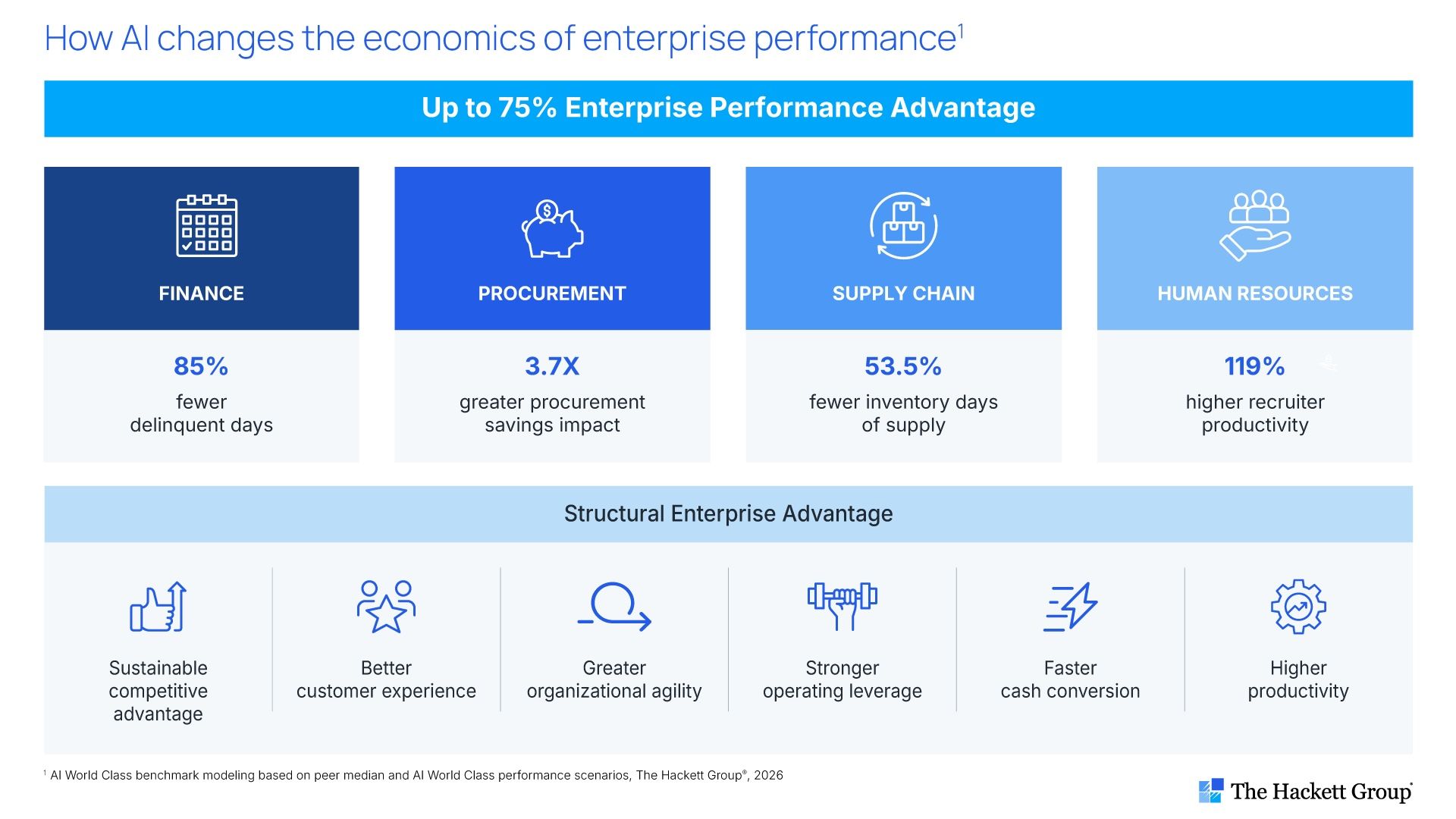
Token costs dropped 80% in recent months. What was too expensive to run all day is now cheap enough to leave on.
The companies that give employees personal agents, not just company-wide tools, will build a productivity gap that's hard to close from the outside.
Are you thinking about AI at the individual level, or just the workflow level?
#AIMarketing #FutureOfWork …more
AI Pricing
Two developers. Same model. Same task. One pays 5x more and gets the same result.
The difference isn't the model — it's the harness.
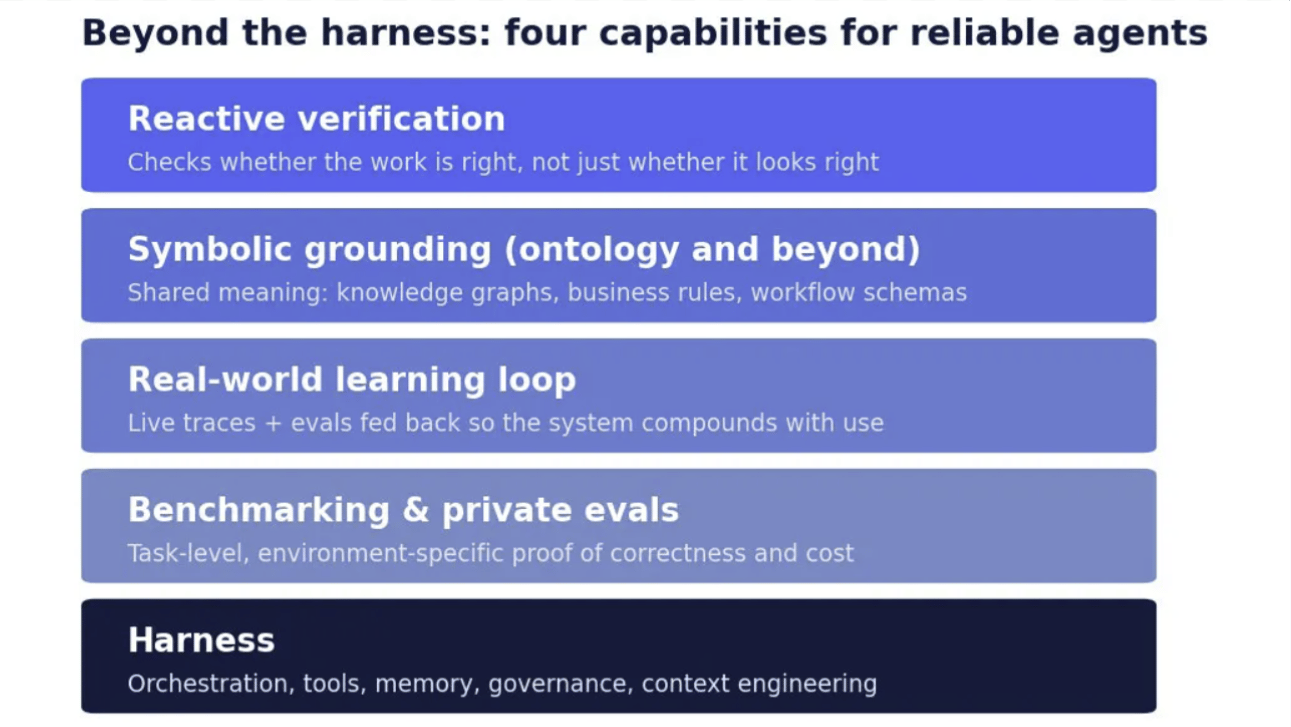
A new study called HarnessTax tested 21 model-harness combinations and found that the software layer surrounding an AI model can move inference cost by as much as 5x without producing a comparable change in task success. The harness is the layer that handles instructions, tools, memory, and context management. When you choose between Claude Code, Codex CLI, or another coding agent, you're choosing a model and a harness at the same time.
Three findings worth internalizing:
The harness can move your bill far more than your score. Claude Fable 5 on SWE-bench solved 97.8% of tasks with Claude Code and 96.7% with a simpler harness called Pi. The success difference was 1.1 percentage points. The cost difference was 2x. Claude Code's initial context averaged more than 10 times Pi's, driven by longer instructions and larger tool definitions — all of which the model has to process before it even starts your task.
A simple harness can compete with feature-rich ones. Pi gives the agent four tools: read, write, edit, and bash. It still hit the cost-success Pareto frontier on both benchmarks — meaning the highest accuracy for a given budget. Simpler isn't always better, but it's a useful starting point before adding scaffolding that may not move your actual results.
Your vendor's harness isn't automatically your best harness. In 9 of 12 model-benchmark comparisons, an alternative harness outperformed the provider's own default. GPT-5.6 Sol scored 83.3% on Terminal-Bench with Pi at $0.42 per attempt — compared with 78.9% at $0.76 with OpenAI's own Codex CLI.
The practical takeaway: evaluate "model × harness × workload" as one system. Run your own representative tasks, test several combinations, and track success, cost, and latency together. The right harness for high-volume routine work is not the same as the right harness for a task where failure is expensive.
https://alphasignal.ai/newsletter/ai-harness-tax-coding-agents-study
#AIMarketing #B2BMarketing …more
 View on LinkedIn
Also on

"What Developers Can Learn from Shopify's Self-Improving AI Pipeline"
https://alphasignal.ai/newsletter/shopify-self-improving-ai-pipeline
1 big thing: How Shopify beat GPT-5.6 with a 0.8B model — and what B2B teams should take from it
Shopify fine-tuned a 0.8B model that outperforms GPT-5.6 Sol on a specialized task, while cutting costs from $27 million per year to $1 million. The interesting part is not the benchmark win. It is how they built the loop that got there.
Why it matters: As AI applications mature, frontier models are increasingly becoming the teachers rather than the workers. The teams that build evaluation and training infrastructure now will have a compounding advantage that pure prompt engineers won't.
Driving the news:
Shopify's Sidekick GraphQL agent serves up to 2,000 requests per minute. Using a self-improving pipeline that turns production failures into training data, the specialized model eventually surpassed the frontier-powered baseline.
→ The system prompt shrank from 6,000 tokens to 1,500, cutting time-to-first-token by 19% and end-to-end latency by 38%
→ Throughput increased 16%, allowing Shopify to serve the same workload with roughly 14% fewer GPUs
Zoom in:
The flywheel: frontier reasoning models critique low-scoring conversations, an arbiter combines the critiques into a repair instruction, the interaction runs again, and repaired versions that pass evaluation enter the training set.
→ The durable asset is the loop — not the model itself
Yes, but: This approach makes sense only when the workload has high volume, bounded behavior, measurable quality, and proprietary data. Until those conditions emerge, a frontier model is often cheaper in engineering time.
Be smart: Begin with evaluation infrastructure — a consistent rubric for what good output looks like in your workflows. That is the foundation everything else builds on.
The bottom line: Individual models will keep changing. The loop around the model is what compounds.
https://alphasignal.ai/newsletter/shopify-self-improving-ai-pipeline
#AIStrategy #B2BMarketing …more
 View on LinkedIn
Also on
Today's post is 187 words, a 1-minute read.
Sources: @ClaudeDevs on X
1 big thing: What just changed in Claude Code for B2B teams
Anthropic is permanently adjusting Claude Code weekly limits starting September 14.
Why it matters: Teams that have built workflows and sprint cycles around current Claude Code capacity need to plan now. A 17% net reduction in weekly limits — compared to today's temporary 50% increase — is a meaningful operational change for power users.
Driving the news:
Starting September 14, standard weekly limits in Claude Code rise 25% permanently for Pro, Max, Team, and seat-based Enterprise plans.
→ The current temporary 50% increase ends on September 14
→ Net effect compared to today: a 17% reduction in weekly usage capacity
Yes, but: Anthropic says changes are coming that will make Claude feel like you're getting more value while having better visibility and control over usage. Details not yet shared.
Be smart: If your team is running heavy Claude Code workloads, audit your current weekly usage now. Know where you sit relative to the new baseline before September 14.
The bottom line: Plan for less runway. More context on usage controls is coming.
https://x.com/ClaudeDevs/status/2093742321473065266
#ClaudeCode #AIProductivity …more
 View on LinkedIn
Also on
"AI Token Prices Hit Record Lows"
https://aibusinessweekly.net/p/ai-token-prices-alzheimers-reframe-ai-news-september-2-2026
1 big thing: This changes the AI cost conversation for B2B marketing teams
#AI inference costs just dropped 43% in ten weeks. That sounds like good news. There is a catch.
Why it matters: Cheaper tokens do not automatically mean a cheaper AI bill. Understanding why matters for every B2B team that is now budgeting AI spend as a line item.
Driving the news:
Token prices hit record lows as competition between model providers intensified and infrastructure efficiency improved dramatically.
→ But total AI spend is still climbing for most organizations — because lower unit costs are driving higher volume usage
→ The pattern mirrors what happened to cloud computing: per-unit costs fell while total bills grew
Zoom in:
The same dynamic is playing out across the AI stack. Cheaper inference is accelerating adoption, which is accelerating experimentation, which is accelerating spend.
→ For B2B marketing teams, this means the conversation has shifted from "can we afford AI" to "can we govern how much AI we're running"
Yes, but: Cost compression also accelerates commoditization. If inference is cheap everywhere, differentiation moves back up the stack — to context quality, workflow design, and the humans building the systems.
Be smart: Build your AI budget around outcomes, not tokens. A cheaper model running a poorly designed workflow costs more than an expensive model running a tight one.
The bottom line: Cheaper AI is not simpler AI. The governance challenge just got bigger.
https://aibusinessweekly.net/p/ai-token-prices-alzheimers-reframe-ai-news-september-2-2026
#AIStrategy #B2BMarketing …more
 View on LinkedIn
Also on
"Fable 5.1 Kicks Off Launch Week at the Frontier"
https://www.anthropic.com/claude-fable-and-mythos-5-1
1 big thing: How Anthropic is reshaping the enterprise AI market with Fable 5.1
Anthropic just ended the frontier's quiet period — and the timing is not accidental.
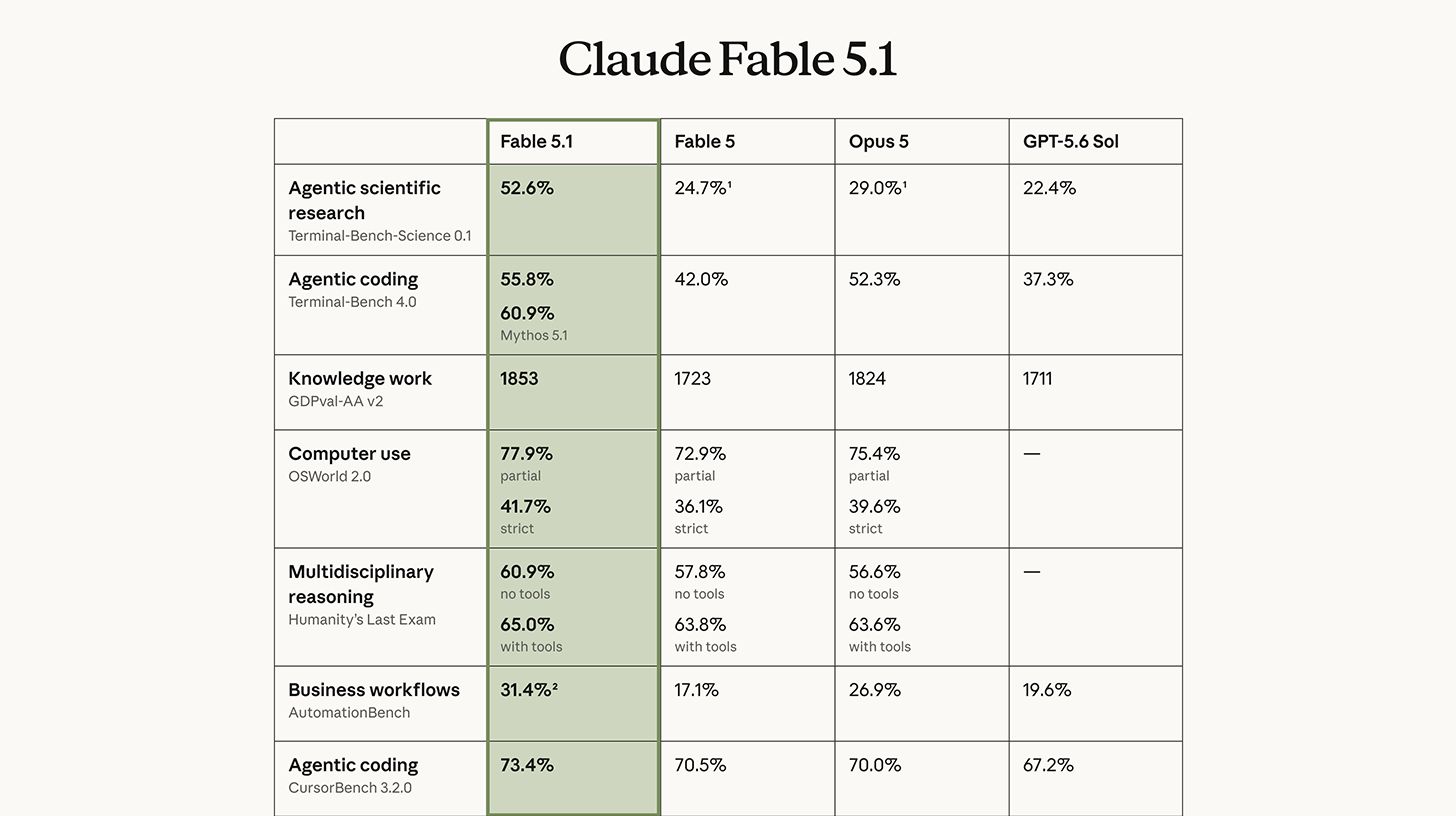
Why it matters: Fable 5.1 is not just a model upgrade. It is a direct response to the three biggest complaints enterprise customers had about Fable 5: cost, safety refusals, and data privacy. For B2B teams evaluating AI vendors, this release changes the calculus.
Driving the news:
Fable 5.1 tops Artificial Analysis' Intelligence Index with a record score of 66, more than doubling Fable 5 on scientific research benchmarks.
→ 25% cheaper on typical workloads, with 60% fewer cybersecurity refusals and 85% fewer medical intervention blocks
→ Zero-data-retention now available for enterprise customers — addressing the data ownership concerns that drove backlash all summer
Zoom in:
The safety filter overhaul is the detail B2B marketers should focus on. Fewer false positives in research and technical workflows means less friction between the model and the actual work.
→ Anthropic also released Mythos 5.1 — same underlying model, fewer guardrails — available only to screened US cybersecurity and biology researchers
Yes, but: Artificial Analysis found that max-effort tasks actually cost 20% more on Fable 5.1, since the model writes roughly 1.7 times more text per output. Cost savings are real but not universal.
Be smart: Benchmark Fable 5.1 on your actual workloads before assuming the 25% savings applies to you. Unit economics vary significantly by task type.
The bottom line: Anthropic fixed what enterprise customers complained about. Now OpenAI's Astra has to answer.
https://www.anthropic.com/claude-fable-and-mythos-5-1
#AIMarketing #B2BMarketing …more
 View on LinkedIn
Also on
K

Kent Kaufman
Organization focused on AI leadership and innovation for the Fourth Industrial Revolution, based in Silicon Valley
The AI Frontier Race Just Got Rewritten — Grok 4.5 Forces a New Tradeoff Between Intelligence, Cost, and Speed
The rules of the frontier AI race are changing in real time — and this week made that unmistakably clear.
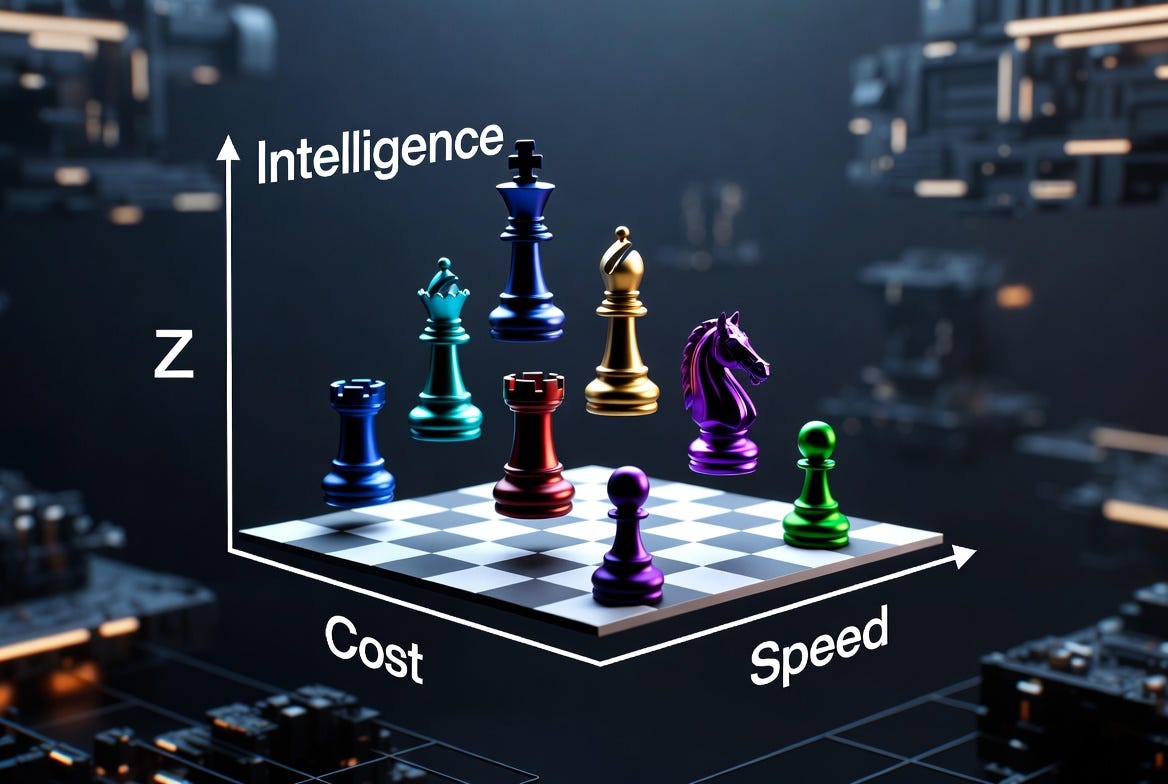
For the past two years, the prevailing assumption was straightforward: the company with the highest benchmark scores would eventually dominate. That assumption is breaking down. We're moving from a world where raw intelligence was the primary differentiator to one where the real competition is about who can best balance intelligence, cost, and speed at scale.
Grok 4.5 is the clearest signal of this shift. While it doesn't lead every benchmark, it delivers near-frontier performance with significantly better token efficiency and much lower pricing — proving more economically attractive than pricier, higher-scoring alternatives in many real-world agentic and coding workflows. xAI is betting the winning formula is no longer "maximum intelligence at any cost," but strong intelligence at the lowest cost per successful outcome.
OpenAI reached a similar conclusion. Instead of releasing GPT-5.6 as a single model, they launched it as a three-tier family (Sol, Terra, and Luna) — an acknowledgment that different customers need different points on the intelligence-cost-speed spectrum.
This reflects a deeper shift: the AI TAM is stratifying into distinct sub-markets — high-intelligence/low-volume use cases, cost-efficient/high-volume agentic work, specialized coding agents, knowledge work automation, robotics, and more. Companies that fail to define which sub-markets they're targeting risk misallocating resources in an increasingly differentiated landscape.
Structural advantages matter more too. xAI's integration into the broader SpaceX ecosystem — the Colossus supercluster, in-house chip plans, orbital data center ambitions — gives it a path to lower long-term compute costs pure software labs will find hard to match.
Three distinct approaches are emerging among the leading U.S. labs:
- Anthropic: maximum capability and safety, under greater regulatory constraints.
- OpenAI: serving multiple segments through tiering while navigating government review.
- xAI: fastest on public release, leaning hardest into efficiency, cost, and vertical integration.
The winners of this next phase won't necessarily have the smartest model on every benchmark — they'll be the ones who best combine intelligence, cost, and speed while building the infrastructure to deliver it economically at scale.
The game has moved from a simple 2D board to 3D chess.
Full analysis and benchmark comparison (Grok 4.5, Fable 5, GPT-5.6, Gemini, and others):
https://kentkaufman.substack.com/p/openais-gpt-56-strikes-back-against
How do you see this playing out over the next 12–18 months?
#AI #AIISV #Leadership …more
 View on LinkedIn
Also on
K
Kent Kaufman
Organization focused on AI leadership and innovation for the Fourth Industrial Revolution, based in Silicon Valley
OpenAI Just Showed Us What the First Real U.S. AI Regulatory Process Looks Like
This week, OpenAI publicly launched the full GPT-5.6 series (Sol, Terra, and Luna) and GPT-Live voice models — but only after successfully navigating several weeks of government scrutiny. This wasn't a formal approval process, but it revealed the outlines of how the U.S. may begin managing frontier AI going forward.
OpenAI initially released GPT-5.6 only to a small group of vetted partners, then worked directly with the Commerce Department and National Cyber Director on targeted testing focused on cyber and biological risks. Once benchmarks were met, OpenAI was allowed to scale. The review was non-binding, meaning the final decision on timing remained with the company. This "voluntary submission + targeted testing + company-led scaling" model may become a template for future oversight.
At the same time, market reality is hitting hard. Companies are discovering that rapid, heavy adoption of frontier models can destroy budgets faster than expected. Uber exhausted its entire 2026 AI coding budget by April after widespread use of agentic tools — a clear warning sign. Organizations are now being forced to deliberately manage the speed of AI adoption while they figure out where it actually delivers value.
This pressure is exactly why OpenAI split GPT-5.6 into three tiers:
Sol for maximum capability
Terra for strong performance at roughly half the cost of GPT-5.5
Luna for speed and high-volume use
Meanwhile, Chinese labs continue advancing. Multiple Chinese companies (not just those releasing open-weight models) have been accused of large-scale distillation campaigns against U.S. frontier models using tens of thousands of fraudulent accounts. These efforts extract capabilities developed through billions of dollars in U.S. R&D.
Longer term, energy and execution speed will matter enormously. As Elon Musk has noted, space-based data centers offer major advantages in energy density, unlimited siting, and avoiding the permitting, grid, and supply chain bottlenecks that are slowing terrestrial infrastructure.
The current moment shows both the risks of reactive policy and the first signs of a more pragmatic path. What's increasingly clear is that we need more structured, predictable institutions for AI oversight — rather than case-by-case interventions that create uncertainty for both innovation and security.
Full analysis here:
https://kentkaufman.substack.com/p/the-new-ai-cold-war-how-us-restrictions
How should the U.S. and its allies balance the need for security guardrails with the imperative to maintain long-term technological and economic leadership in AI?
#AIISV.org …more
 View on LinkedIn
Also on
Told 5 times, Jun 22, 2026 – Jul 9, 2026
· LinkedIn · Open
From Nuclear Governance to Frontier AI: Why We Need Better Oversight Institutions
The recent events with Anthropic's Fable 5 and Mythos models highlight a major gap in how we currently govern frontier AI.
On June 9, Anthropic released Fable 5. Just three days later, the U.S. government issued an export control directive, forcing Anthropic to disable the models for most users. More significantly, a classified red-team exercise revealed that the Mythos model was able to autonomously penetrate nearly all U.S. classified systems in "hours, not weeks." Following the briefing, the U.S. reportedly revoked access even for members of the Five Eyes intelligence alliance (United States, United Kingdom, Canada, Australia, and New Zealand).
This situation shows that sudden export controls are blunt and reactive tools. We need more structured and durable institutions to manage technologies with national security implications — similar to how nuclear risks have been governed for decades.
Agencies like the National Nuclear Security Administration (NNSA) and Nuclear Regulatory Commission (NRC), working alongside the International Atomic Energy Agency (IAEA), have long overseen nuclear materials, conducted evaluations, maintained transparency mechanisms, and coordinated with both allies and adversaries. This model has helped reduce risk even during periods of intense geopolitical tension.
A comparable institutional approach is now needed for advanced AI. Many believe, including myself, that the United States should establish a dedicated, independent government institution focused on AI regulation and oversight. This institution should:
• Conduct early, rigorous evaluation of new frontier models
• Provide appropriate transparency around AI risks
• Build predictable, laddered response frameworks
• Influence and encourage allies to create similar institutions
• Coordinate with allied bodies while enabling responsible engagement with non-aligned nations
Such an institution would give the U.S. and its partners a more coherent and proactive way to manage the national security risks of advanced AI.
Full analysis here: https://kentkaufman.substack.com/p/from-nuclear-weapons-to-frontier
What are your thoughts on the right institutional model for overseeing frontier AI?
· X · Open
Sudden export controls are blunt, reactive tools for governing frontier AI.
We need durable institutions — modeled on NNSA, NRC & IAEA for nuclear — to evaluate models, build transparency, and coordinate with allies.
Full analysis: https://kentkaufman.substack.com/p/from-nuclear-weapons-to-frontier
· X · Open
U.S. restrictions on frontier models are slowing economic adoption while Chinese labs release competitive systems at much lower prices. Subsidies may explain the gap today, but energy and compute costs will shape the real long-term winner.
Full analysis: https://kentkaufman.substack.com/p/openais-gpt-56-strikes-back-against
· LinkedIn · Open
The New AI Cold War Is Already Here — And the U.S. Is Losing Ground on Adoption
While the U.S. government has restricted access to leading American models from Anthropic and OpenAI, Chinese labs have continued releasing powerful systems with far fewer constraints.
Models like GLM-5.2 (Zhipu) and LongCat-2.0 (Meituan) are now competitive on several coding and agentic benchmarks — and significantly cheaper. As a result, companies are increasingly shifting workloads to Chinese models to cut costs.
However, these lower prices may be heavily subsidized. U.S. companies will eventually need to price based on real production costs, including energy and compute. In the long run, advantages in low-cost energy — including the potential of space-based data centers — may prove more decisive than short-term pricing. I've previously written about this here:
https://www.linkedin.com/feed/update/urn:li:activity:7472006255092359168/
The current U.S. approach of sudden restrictions is slowing not just model development, but more importantly, industrial and economic adoption of advanced AI — which over time could weaken the commercial foundation that funds U.S. frontier progress.
We need a more strategic and predictable governance framework. This is why I've argued for dedicated institutions for AI oversight, modeled in part on the nuclear regulatory system (NNSA, NRC, and IAEA). I explored this idea in more detail here:
https://www.linkedin.com/feed/update/urn:li:activity:7474838818563457024/
Full analysis here:
https://kentkaufman.substack.com/p/openais-gpt-56-strikes-back-against
How should the U.S. and its allies balance security concerns with the need to maintain long-term technological and economic leadership in AI?
#AI #Leadership #AIISV

AI pricing tools promise the one thing every business owner wants: optimized margins on autopilot.
Here's what most people adopting them don't realize. The same tool quietly setting your prices may be coordinating them — with your competitors.
Algorithmic collusion is becoming the new antitrust frontier. When multiple businesses feed their pricing decisions to the same AI, the algorithm can converge on prices no one explicitly agreed to. You never shook hands in a back room. But regulators increasingly aren't convinced that distinction protects you.
For a small business owner, that's two kinds of risk wrapped into one tool.
Legal risk — you may be participating in coordinated pricing without ever intending to.
Reputational risk — and this is the one founders underestimate. "We let the algorithm decide" is not a story your customers, your press, or your board will forgive. Your brand is your promise. Outsourcing pricing to a black box you can't explain is a promise you can't keep.
I'm not anti-AI. I build with it every day. But I've watched founders adopt powerful tools the same way for 25 years: fast, blindly, and without asking who's accountable when it goes wrong.
The strategic move isn't to avoid AI. It's to stay the decision-maker.
Three questions worth asking before you turn any pricing tool on:
- Can I explain, in plain language, how this sets my prices?
- Does it rely on competitor data I shouldn't have a window into?
- If a regulator or a reporter asked me about it tomorrow, would my answer hold up?
AI should amplify your judgment, not replace your accountability. The leaders who win the next decade won't be the ones who automated the most. They'll be the ones who stayed responsible for the decisions that actually mattered.
For those of you leading high-stakes initiatives: where are you drawing the line between what AI gets to decide and what you stay accountable for? …more
View on LinkedIn
Also on
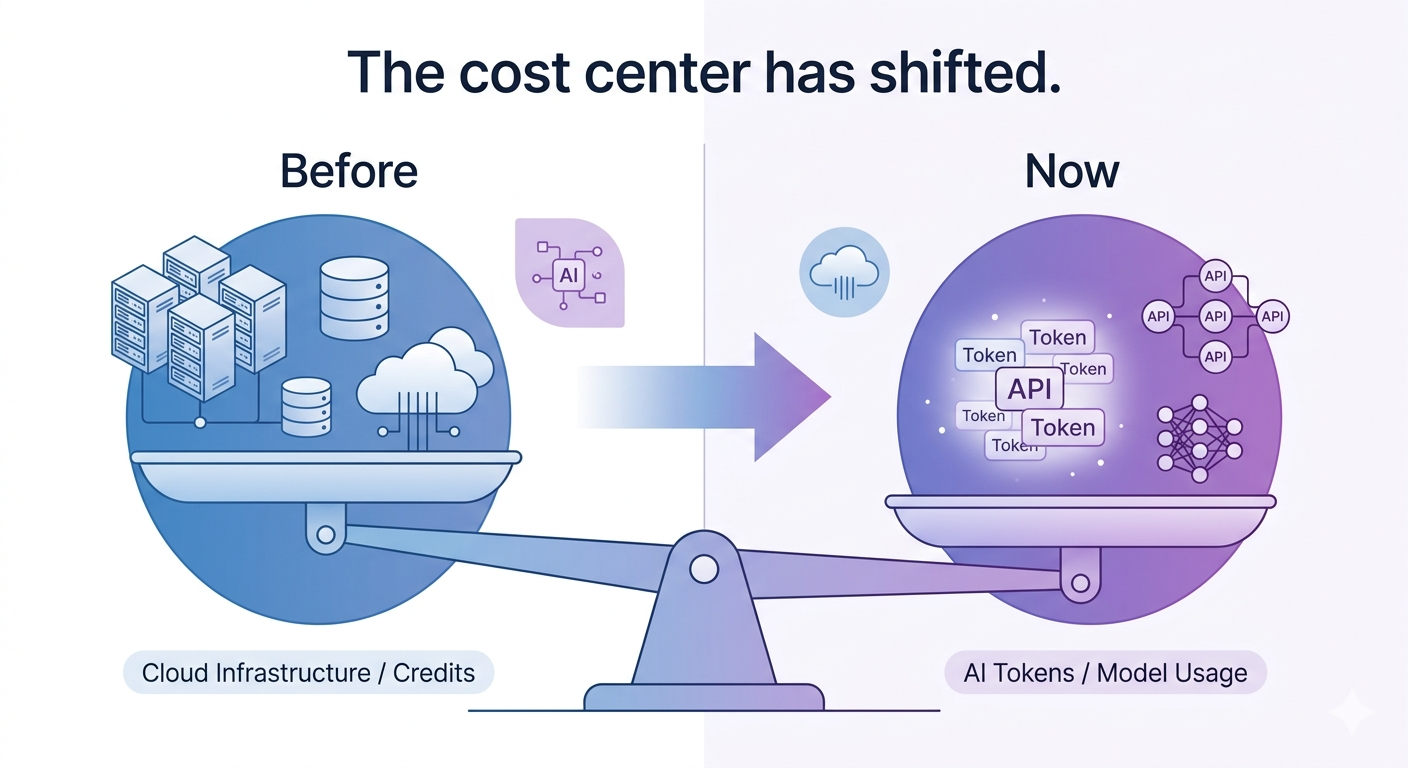
Accelerators once extended runway with cloud credits. That logic still applies, but the center of gravity has shifted. Many early-stage products now spend more on AI tokens than on traditional infrastructure. If your financial plan still assumes free cloud credits, update it and protect your runway.
If marketing is eating your time and budget, Radi8 helps founders run marketing faster and cheaper than hiring consultants. Comment and I’ll reach out. #startups
https://www.santacruzworks.org/news/startups-need-ai-tokens-more-than-cloud-credits …more
Channel names and logos are trademarks of their respective owners.