25 years building companies, and I still catch myself reading a good month as proof that everything's fine.
The speaker in the video I've linked in the first comment would push back on that, and the point is theirs, not mine. Constant achievement and striving can mask deeper physiological and psychological imbalances, and surface-level metrics, the "everything looks normal" kind, will miss the real problem. In their words: "we want to understand what's happening upstream that causes those things to change."
When everything looks normal on paper, the real question is what's happening upstream that's causing things to change.
Startup founders, this one lands close to home. The next launch, the next milestone, the next win... the numbers say normal, so we keep going, and whatever is shifting underneath, in us or in the business, might not show up in the numbers until it's expensive.
So the next time a good month tells me everything's fine, I want to ask what changed upstream first. The full conversation, and how the speaker thinks about looking upstream, is in the first comment.
#Founders #Startups #Entrepreneurship …more
Decision Ownership
Reading annieduke.substack.com on networks and decisions, I thought of my peer groups.
Founders solve problems well... peers help you notice when it's the wrong one.
Curious what one looks like? https://inspiringfounders.com …more
E
Erika Sanneman
The Multilingual Mind helps schools and education teams close the gap between what they know they want to do and what their people actually have the time, training, tools, systems, and support to impl

If you lead a school or program, you have probably lived some version of this: a strong initiative that made complete sense in August quietly stalls by October. Not because people stopped caring. Because the conditions around the work never quite caught up to the expectation.
That gap is most of what I think and write about. Before we decide a staff member is resistant or a team is underperforming, I find it is worth asking a slower question first. Is this a skill problem, a will problem, or a system problem? The answer usually changes what you should do next, and it often saves you from adding one more thing on top of an already full plate.
I have started collecting that thinking in two places, and I want to make them easy to find for the leaders following this page.
The blog is where I work through the bigger ideas with real examples: how to tell whether a problem lives in the person or the conditions, why professional development so often fails to transfer into daily practice, and what it actually takes to make a new routine stick across classrooms. It is the slower, more honest version of what I share here.
Alongside it, I keep a library of practical tools your teachers and coaches can pick up and use, things like diagnostic prompts, co-teaching agreements, and classroom language supports. Those are there for the moment you have named the problem and want something usable the next day rather than another training to schedule.
If you only have a minute today, start with the blog. I would genuinely like to know which questions are most alive in your building right now, because the patterns I hear from leaders often become the next thing I write or build.
Read the latest over at www.themultilingualmind.com, and tell me in the comments: what is the one initiative your team believes in but the current conditions do not quite make possible yet? …more
Told 7 times, Oct 6, 2026 – Oct 26, 2026
· LinkedIn · Open
Most schools I work with already believe culturally responsive teaching matters. The gap shows up somewhere else: in whether it is built into the curriculum, the calendar, and the hiring, or whether it lives on the goodwill of a few teachers who care.
When inclusion depends on individual effort rather than design, three things tend to happen.
It becomes uneven. One classroom honors students' languages, histories, and contributions, and the one next door does not, because there was no shared expectation or usable material.
It becomes fragile. The teacher who carries it leaves, and it leaves with them.
And it gets thin under pressure. A heritage month display is easier to produce than a sustained look at whose stories, authors, and experts are present in the actual content all year.
There is also a quieter risk worth naming for leaders: the difference between representing a culture with respect and borrowing its surface as decoration. The line between appreciation and appropriation is not a gotcha. It is a design question. Who chose this? Whose voices are centered? Are we teaching students to honor difference, or to consume it?
I think about this less as a values statement and more as a conditions question. If we want culturally relevant content and genuine respect for difference to be consistent, we have to design for it: in curriculum review, in which authors and experts students actually encounter, in professional learning, and in the agreements a team makes about how they handle culture with care.
Difference is data, not a deficit and not a decoration. The question is whether your systems treat it that way by default.
If you lead a school or program, I would like to hear it: where does culturally responsive practice currently depend on a few committed people rather than on your systems?
· LinkedIn · Open
Before I send another reminder, I want to understand what completing the task actually requires.
“Communicate with families” sounds clear. But who gathers the information? Who writes the update? Who arranges language support? Who responds when a family replies?
In my new video, I walk through a hypothetical co-teaching example and show how the next step changes depending on what we find.
An unclear responsibility may need an agreement. An unfamiliar task may need an example and practice. A task competing with several deadlines may need a different workflow.
More than one can be true at the same time.
I use these questions in coaching and educational consulting because I want the support to fit the work people are actually trying to do.
Watch “Before Another Reminder: What Does the Work Actually Require?” here:
https://youtu.be/YVqwKJbqvZE
What would you want to understand before repeating an expectation to your team?
· Instagram · Open
Two teachers both agree the weekly family update matters. So why does it keep getting pushed aside?
That's the hypothetical example in my new video, “Before Another Reminder.”
Instead of writing another reminder, I break the task down. Who gathers the notes? Who writes it? Who handles language access? And where, exactly, is the time to do all of that supposed to come from?
Try it with one task that keeps getting stuck on your team. You'll usually learn more from those questions than from telling people, again, that it's important.
The full walkthrough is on YouTube:
https://youtu.be/YVqwKJbqvZE
#TeacherCoaching #CoTeaching
· LinkedIn · Open
When a new practice isn’t showing up consistently, what do we need to understand before deciding why?
Do people know what to do?
Have they had a chance to practice it and get feedback?
Is there time for it in the day?
Is ownership clear?
Does another expectation make it harder to follow through?
I’m interested in the space between agreeing that something matters and being able to make it part of everyday work.
A teacher can value collaboration and still have no shared planning time. A coach can understand the importance of feedback and still be unclear about where coaching ends and evaluation begins.
That doesn’t remove accountability. It gives us more useful questions about what we’re holding people accountable for, and what support the work requires.
This is part of the thinking behind The Multilingual Mind: looking closely at the conditions around the work before choosing the next intervention.
What is something your team is expected to do that the current conditions make difficult?
· LinkedIn · Open
When a new practice isn't showing up consistently, it's tempting to jump straight to why. But there's a set of questions worth sitting with first.
Do people actually know what to do?
Have they had a real chance to practice it and get feedback?
Is there time for it in the day?
Is ownership clear?
Does another expectation quietly make it harder to follow through?
I keep coming back to the space between agreeing that something matters and being able to make it part of everyday work. Those are not the same thing, and the distance between them is where most implementation quietly stalls.
A teacher can genuinely value collaboration and still have no shared planning time. A coach can understand the importance of feedback and still be unclear about where coaching ends and evaluation begins. The commitment is real. The conditions are not there yet.
This doesn't remove accountability. If anything, it sharpens it. It gives us more useful questions about what we are actually holding people accountable for, and what support the work genuinely requires. It moves us away from treating a system problem as a motivation problem.
This is part of the thinking behind The Multilingual Mind: looking closely at the conditions around the work before choosing the next intervention. Often the most helpful move is not adding something new. It is clarifying a role, protecting time, or removing a competing expectation.
So here is my question for you. What is something your team is expected to do that the current conditions make difficult? I'd like to read what comes up.
· Instagram · Open
Slide 1
Before adding another reminder…
Check what the work requires.
Slide 2
Choose one expectation
Make it specific.
“Communicate with families” is broad.
“Send this week’s learning update by Friday” gives you something concrete to examine.
Slide 3
Check clarity
What does completing the task involve?
Who starts?
Who contributes?
Who follows up?
Compare answers before assuming everyone understands it the same way.
Slide 4
Check practice and support
Has the person had a chance to try it?
Is there an example, a useful tool, or someone who can offer feedback?
Slide 5
Check the conditions
When will it happen?
What access or resources does it require?
What other work competes for that time?
Slide 6
Choose one next move
Make an agreement.
Model the task.
Practice together.
Adjust the workflow.
Protect time.
Choose the response that fits what you found.
Slide 7
Try it with your team
“One thing we expect is ___.
One condition making it difficult is ___.
One change we’ll try is ___.
We’ll check back on ___.”
Caption
Before repeating an expectation, it can help to make the work underneath it visible.
Try this with one task your team cares about but keeps struggling to complete. Compare what each person thinks the task requires, then choose one change to test.
Save this for your next planning conversation.
People repeat 'four exits' back like it's one number. It isn't... one as a founder, three as a longtime advisor. The clean numbers are the ones I trust least. Which of yours deserves a harder look? What I'm building: https://www.radi8.com …more
E
Erika Sanneman
The Multilingual Mind helps schools and education teams close the gap between what they know they want to do and what their people actually have the time, training, tools, systems, and support to impl
How do you rebuild a co-teaching partnership when one teacher makes every decision and the other stops contributing?
I would want to understand how that pattern developed before deciding what either person needs to change.
I’ve developed a team partnership diagnostic to help coworkers examine their strengths, support needs, and assumptions about authority, workload, communication, and repair.
My starting process would be:
Each teacher completes the diagnostic independently.
A mentor or coach helps each person unpack their responses in an individual conversation. That could be me as a consultant or someone within the school who has the experience to guide the reflection.
Then we prepare for a conversation about the actual work: who leads which responsibilities, which decisions require both people’s input, and what happens when they disagree.
Different strengths can inform how responsibilities are shared. Both teachers still need a meaningful voice.
I’m developing companion guides for these conversations because taking turns, checking understanding, and raising concerns respectfully are skills people may need explicit help practicing, especially when they feel unheard or disrespected.
A facilitated conversation is available when more support is needed. A direct conversation should not be a hurdle someone must clear before leadership will help.
The agreement also needs a follow-up. Can both teachers use it? What is still unclear? Does the schedule actually allow the collaboration we agreed on?
If you support a co-teaching team, what is one decision they keep having to renegotiate? That is a concrete place to begin.
#CoTeaching #InstructionalCoaching …more
AI is everywhere except the P&L.
That's the headline from Oliver Wyman's new report. 25,000+ survey responses. 415 CEOs. 15 countries.
Five decisions most organizations are still avoiding:
1. What return should each AI investment produce, and who captures it?
2. Leaders haven't communicated a clear AI ambition. Only 11% of non-managers say they have.
3. 48% of Gen Z and 40% of millennials now go to AI first when shopping. Your brand's discoverability is already shifting.
4. How do you govern AI at the speed it actually operates?
5. Which AI dependencies are acceptable, and which are worth paying to control?
The through-line: AI creates options faster than organizations can decide what to do with them.
The models will keep improving whether or not your leadership team has figured out the strategy. The returns won't show up automatically.
Deciding is the job now.
Full report details are in the comments. …more
For SBDC advisors, SCORE mentors, and anyone who advises small business owners:
When a client says their marketing isn't working, ask three things before they spend more. Can they say who they help in one sentence? Do they know where customers drop off? Are their analytics counting real visitors, or their own?
A "not sure" on any of those is the problem to fix first, and it's usually cheaper than what they were about to buy. If a client is wrestling with one, I'm always glad to get an intro. …more
B
Beth Kukla
Co-Founder at Cora Nexus AI | Startup Ops | Force Multiplier | Project Manager | Strategic Planning | Cross-Functional Systems
Every decision routes through you. And it feels like being needed.
It isn't really, though. It's the system failing quietly.
I call it founder-as-bottleneck, and once you can see it, you can't unsee it.
The tells:
Approvals stack up on your desk while everyone waits.
The team stalls the second you're heads-down or out.
Nothing ships without your sign-off, even the small stuff.
That's not a sign you're indispensable. It's a sign the work has nowhere else to go.
Here's why it happens. No one owns ops. Nothing is written down. So the process lives in your head, and your head becomes the only door every decision has to walk through. You're not the leader in that setup. You're the choke point.
The reframe that changes everything: this is a systems gap, not a work-harder problem.
You can't out-hustle a missing structure. Longer hours don't fix an undocumented process, they just make you the bottleneck for more hours a day. The fix isn't you doing more. It's the decision having somewhere to go that isn't you. An owner. A documented path. A default that doesn't require your name on it.
Being needed for everything and being trapped by everything look identical from the inside. That's the part nobody warns you about.
Drop your take in the comments. Which of the tells hit closest to home. …more
Which decisions actually define your practice? As it grows, keep the ones only you can make: your positioning, your point of view, who you serve. That judgment is what wins clients, so protect it. Compare notes with peers doing the same: https://inspiringfounders.com …more
K
Kent Kaufman
Organization focused on AI leadership and innovation for the Fourth Industrial Revolution, based in Silicon Valley
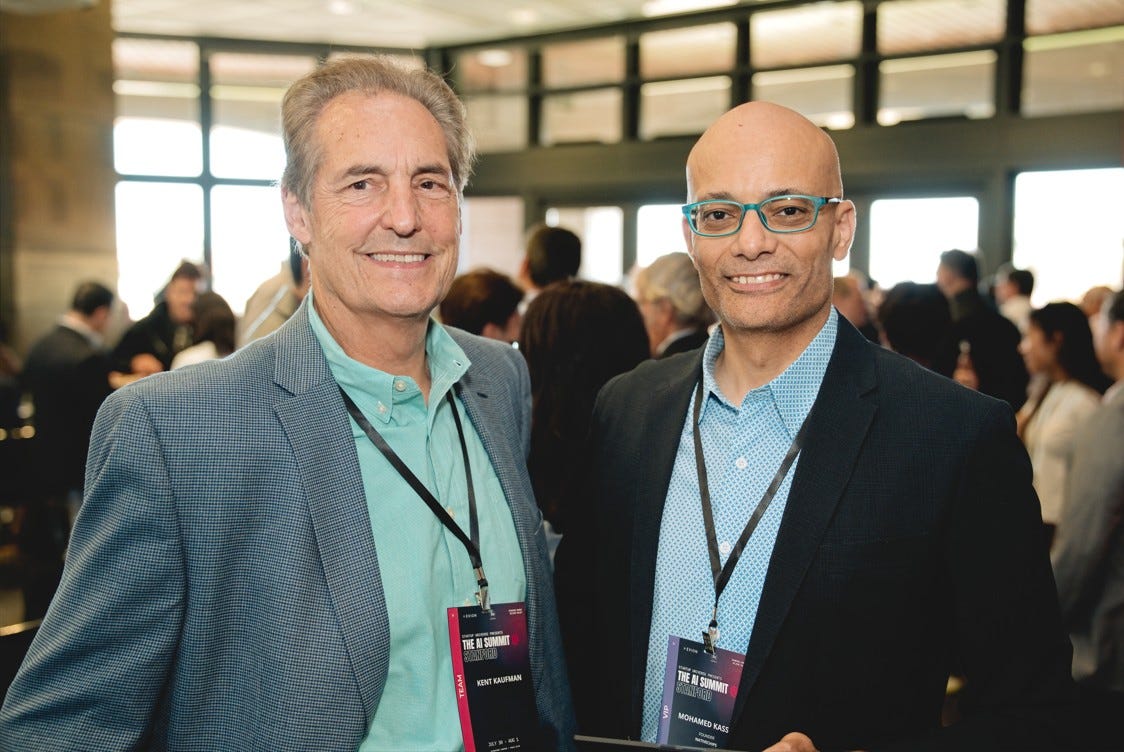
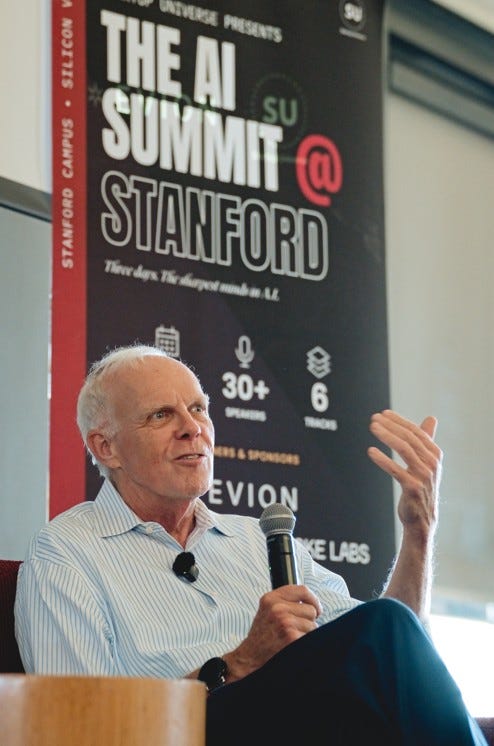
**Day 1 at the AI Summit @ Stanford: Two Presidents, One Campus, Zero Fluff**
What a day on the Farm.
Just wrapped Day 1 of the AI Summit @ Stanford (July 30 – August 1) and the energy is electric. As a Stanford alum, it felt especially meaningful to be back on campus—this time not only as a supporter, but also as a member of the speaker selection committee and liaison with sponsors and exhibitors—helping bring this gathering of founders, investors, researchers, and operators together.
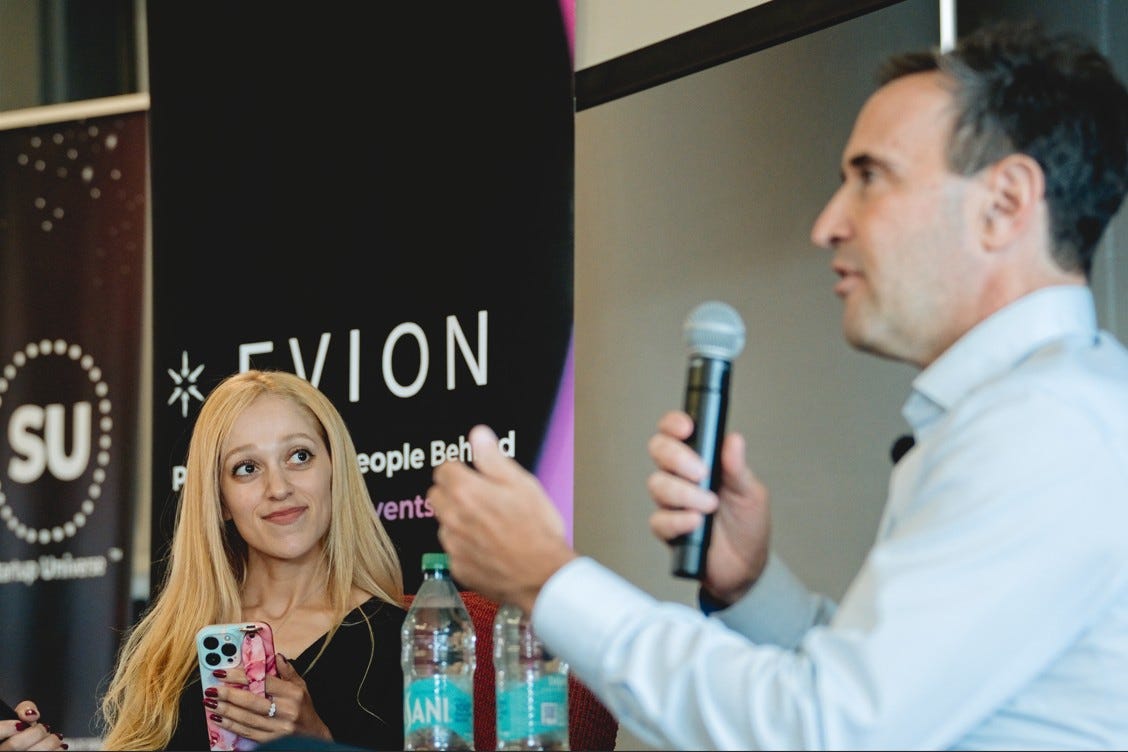
The highlight: back-to-back fireside chats moderated by the ultra-high energy Nabila Elassar (Founder & CPO, Evion / Startup Universe).
Current Stanford President Jonathan Levin spoke about the university's core mission—bringing every interdisciplinary capability together to advance the state of discovery and knowledge while educating the next generation of young people. It was a clear reminder of why Stanford remains uniquely positioned for this moment.
Then former President John Hennessy (Turing Award winner, Director of the Knight-Hennessy Scholars Program, and Chairman of Alphabet) shared a telling story from the Google boardroom. Roughly a decade ago the board was asked which technology would matter most in the future: AI or the internet. Everyone except Sergey and Larry picked the internet. At a recent board meeting—with John now as chair—the same question was asked. This time, the entire board said AI.
Two presidents. One campus. Zero fluff. Just clear-eyed conversation about the decisions being made right now that will define the next decade.
Proud to stand with fellow Stanford alumni and students as this summit unfolds. AI isn't coming—it's here. And the conversations happening in these rooms matter.
More soon. (Pics incoming!)
🔗 Event details: https://evion.app/events/ai-summit-stanford …more
Most stalled initiatives aren't stuck because people disagree. They're stuck because everyone already agrees — and nothing moves.
I've watched this for 25 years. The room nods. The strategy deck is beautiful. "Yes, we should absolutely do this." And then a month later it's exactly where you left it. Founders read that as a conviction problem and go hunting for more buy-in. But you don't need more agreement. You have plenty. What's missing is the other two ingredients: momentum and ownership.
Agreement is cheap because it costs nothing. It's a nod. Momentum and ownership are expensive because they cost something the moment they exist — a decision that can't be quietly walked back, and a name attached to it. That's exactly why they're the parts that go missing. The organization will happily agree forever precisely because agreeing commits no one.
So the job isn't to build more consensus. It's to manufacture the first irreversible step.
By irreversible I don't mean dramatic. I mean a step that changes the facts on the ground, so next week can't just be a copy of last week. A few that actually work:
Make it public. A private intention dies quietly. An external commitment — a date told to a customer, a launch announced, a demo scheduled with someone outside the building — turns "someday" into "this Thursday, in front of people."
Assign one owner, not a committee. Shared ownership is the most sophisticated way to guarantee nothing happens. It has to be one name, with the authority to move and the accountability if it doesn't. A group can hold agreement. Only a person can carry momentum.
Spend something you can't refund. Book the venue. Hire the first person. Ship the rough version. The point isn't the size of the bet — it's that reversing it now costs more than continuing. That asymmetry is what makes the step stick.
Here's the uncomfortable part: the first irreversible step is uncomfortable on purpose. If it feels safe and fully reversible, it isn't the step — it's more agreement wearing a costume. The discomfort is the signal that you've finally converted a nod into motion.
The best builders I know aren't better at getting people to agree. They're better at creating the conditions where agreement has to become action — one owner, one public commitment, one thing that can't be undone.
So a question worth sitting with:
The initiative everyone agrees on but no one has moved — what's the smallest step you could take this week that you couldn't quietly walk back, and whose name would be on it?
#Founders #Startups #Entrepreneurship #FounderLessons #GrowthStrategy …more
Told 2 times, Jul 15, 2026 – Jul 17, 2026
· X · Open
A stalled project is rarely short on effort. It's short on a decision nobody wants to own. Which decision are you avoiding?
https://www.radi8.com/blog/get-chatgpt-claude-to-sound-like-you-social-posts
"How do I keep from being the bottleneck?"
Most founders think they're the bottleneck because of how much they do. They're actually the bottleneck because of what only they're allowed to decide.
It's a subtle difference, and it's the one that keeps stalled companies stalled. You can hire more people, delegate more tasks, clear your calendar — and still be the single point of failure. Because the work moved, but the authority didn't. Every real decision still routes back to your desk for a yes. The team isn't waiting on capacity. They're waiting on permission.
I've watched this for 25 years across four startups. A founder offloads the doing and keeps the deciding, then wonders why nothing moves when they're heads-down or out of the room. It looks like a delegation problem. It's a decision-rights problem. You gave away the tasks but kept the steering wheel, and a car with one driver can only go one place at a time.
The builders I most respect design the opposite way — on purpose, early, before it's comfortable. They treat decision-rights as something you architect, not something that accumulates by default around whoever started the company. Two questions do most of the work:
For any recurring decision, who owns it — not who advises, who decides? If the honest answer is "me, eventually," you've found a place the company can only move at your speed.
And what does this person need to decide well without me — the context, the constraints, the definition of a good outcome? Authority without judgment is just a faster way to make bad calls. The transfer isn't handing over a decision. It's handing over the thinking behind it, so the call gets made the way you'd make it, whether you're there or not.
Here's the reframe I've come to believe: a venture that can't make decisions without its founder isn't a company yet. It's a talented person with help. The moment it can decide well without you is the moment it becomes durable — something built to outlive your involvement instead of depending on it.
That's not abandonment. It's the point. You're not designing yourself out because you're leaving. You're doing it because a company that needs you for every decision is fragile in exactly the place that looks like strength.
So a question worth sitting with this week:
What's one recurring decision that still routes through you by default — and what would the person closest to it need in order to own it outright?
#Founders #Startups #Entrepreneurship #VentureBuilding #FounderLessons …more
Channel names and logos are trademarks of their respective owners.