I never read estrogen without also looking at cortisol.
Estrogen, progesterone, testosterone, DHEA and cortisol are interconnected. They are not five separate stories. They are one conversation.
Here is how they connect:
• They share a common origin. All five are steroid hormones built from cholesterol through the same upstream pathway.
• DHEA, made largely in the adrenal glands, is a building block the body can convert into testosterone and estrogen.
• Testosterone can be converted into estradiol through an enzyme called aromatase.
• Progesterone sits upstream in the pathway that leads to cortisol, and it works alongside estrogen in tissues like the brain and uterus.
• Cortisol and DHEA are both produced by the adrenal glands, so sustained stress shapes the whole picture.
In perimenopause, as progesterone and estrogen shift, the rest of the system adjusts around them. That is why a single "normal" lab value rarely tells the full story behind fatigue, broken sleep, brain fog or mood changes.
When I look at hormones, I look at the relationships between them. The body is intelligent. A symptom is often the system asking, clearly and persistently, for something it has not yet received.
If you have been told your labs are normal but you know something has changed, book a discovery call to find out what is actually driving your symptoms.
#perimenopause#functionalmedicine
Here is how I start when sleep, stress and hormones all feel off.
First, I stop treating them as separate problems. Cortisol rhythms shape sleep. Sleep shapes hormonal balance. Shift one and the others feel it.
Then I look for where the pattern begins, not just the loudest symptom.
And I ask what the body is asking for, not what is wrong with it.
My free Root Cause Guide to Sleep, Stress, and Hormones walks through this way of thinking. Download it from my website and take the first step toward understanding your own biology.
After nearly 25 years in clinical practice, I start with a conversation.
Not a lab order. Not a sales pitch. A discovery call.
What it is: time to tell me what has been happening in your body, what you have already tried, and what you heard when your labs came back normal. I listen for the thread connecting your sleep, energy, hormones, gut and stress.
What it is not: a diagnosis, a protocol, or pressure to sign up. My approach is not right for every woman, and I will tell you honestly whether it fits you.
If it does, we talk about what the right data could show: functional labs, comprehensive hormone assessments, and epigenetic age testing, which measures how fast you are aging at the cellular level.
You have been guessing long enough. The first step is one honest conversation.
My website shows how I read the whole picture, and it is where you can book a discovery call to find out what is actually driving your symptoms: https://www.lizgreenfield.com
This is educational and not intended to diagnose or treat any condition.
My biological age came back 8 years older than I am.
I had nearly 25 years in clinical practice behind me, 15 of them as a nurse anesthetist, plus my IFMCP credential. I knew how to read a chart. I still had no clear answer for the fatigue and brain fog that had settled into my days.
Epigenetic age testing measures how fast you are aging at the cellular level. It didn't diagnose anything. It gave me a measurement, and you can work with a measurement.
That number was not a verdict. It was my body asking, clearly and persistently, for something it hadn't yet received.
So I looked at the whole picture together: hormones, gut, sleep, stress, nutrition. Over time, my number moved. That work became the framework I teach today. It is not a promise about anyone else's results, but it is why I know biological age is not fixed.
I tell the full story in this founders interview: https://youtu.be/vXDMfaJVcNQ
This is educational and not intended to diagnose or treat any condition.
I think "your labs are normal" is the right answer to the wrong question.
A standard panel asks one thing: does each marker fall inside the reference range? That matters, and your doctor is right to ask it. It is built to catch clear abnormalities. It was not built to explain why a woman doing everything right still sleeps poorly, loses her train of thought, and runs out of energy before the day is done.
Normal asks whether something is wrong. I ask a second question: what is your body asking for that it hasn't yet received?
Answering that takes deeper data. Advanced functional labs, comprehensive hormone assessments, and epigenetic age testing, which measures how fast you are aging at the cellular level. None of it is a diagnosis. It is an investigation, read as one connected picture.
Your normal panel is a real data point. It just isn't the whole story.
If you want to find out what is actually driving your symptoms, book a discovery call. Send me a DM and I will set one up with you.
This is educational and not intended to diagnose or treat any condition.
When I built my practice, I chose not to make nutrition a referral.
A referral hands you a plan and a phone number. The clinical picture lives in one room, food and daily habits in another, and you are left translating between them.
So I work alongside Stephanie Doty, a holistic nutritionist and precision nutrition coach. My clients receive clinical care and nutrition coaching together, not one after the other.
Data only matters when it changes what you do each day, so clinical care and nutrition coaching belong together.
If your care has come in pieces, it can come whole.
Why didn't functional medicine work for you the first time?
If you put real effort into a gut protocol or a hormone plan and still feel off, that frustration is earned. You did the work. You were not the problem.
In midlife, hormones, gut function, sleep, and stress biology are deeply interconnected. Cortisol rhythms shape sleep. Sleep shapes hormonal balance. When one system is addressed in isolation, the others can keep pulling the picture back to where it started.
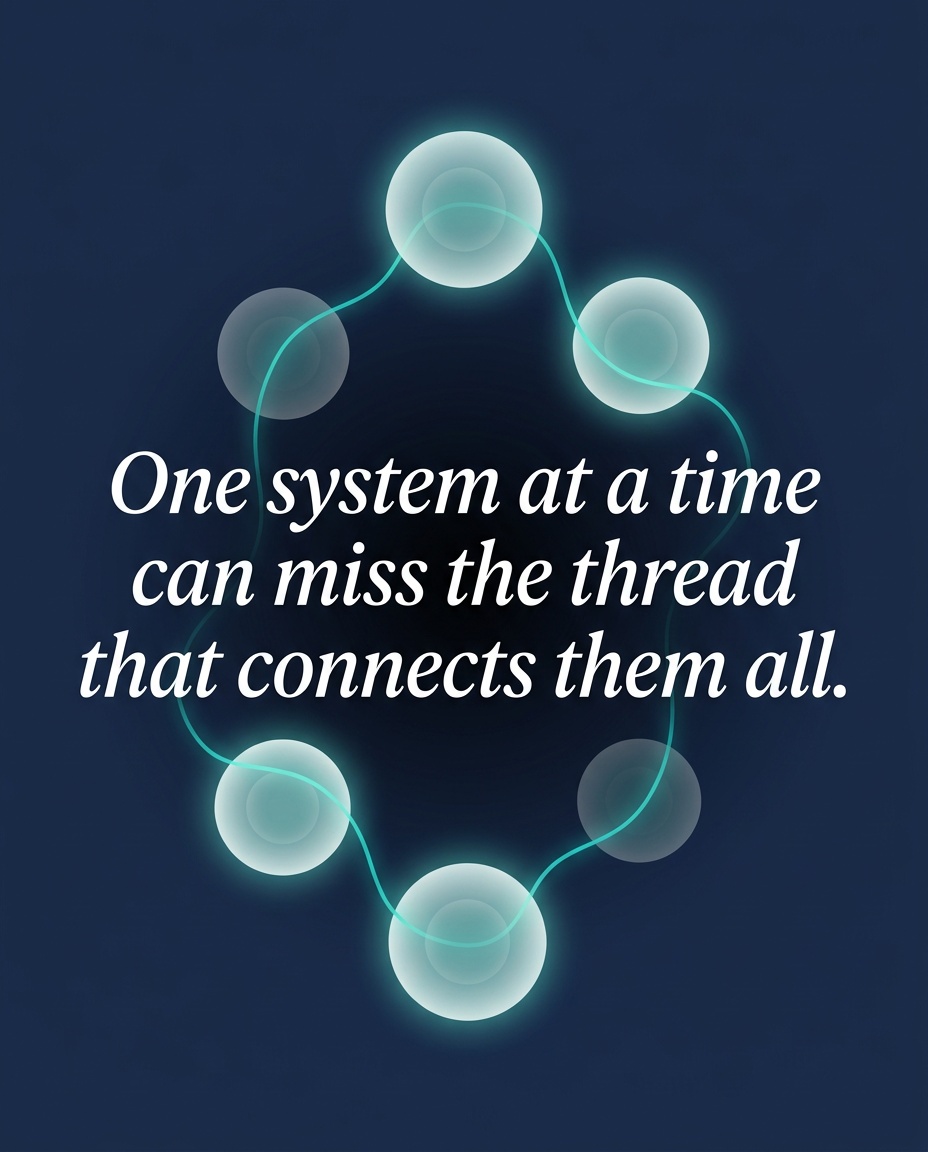
One system at a time can miss the thread that connects them all.
So I hold them together as one clinical picture, along with biological age. I measure before I decide: advanced functional labs, comprehensive hormone assessments, and epigenetic age testing, which shows how fast you are aging at the cellular level. Stephanie Doty, my precision nutrition partner, works alongside me so the data shapes what you actually eat and do each week.
If you want to see what that would look like for your biology, find out if my approach is the right fit for you: https://lizgreenfield.kartra.com/calendar/book-with-liz
This is educational and not intended to diagnose or treat any condition.
When your sodium, potassium or hemoglobin slipped out of range, did anyone ask what moved it?
Those numbers matter, and keeping them steady matters. But they are downstream signals. Something shifted earlier, often in stress physiology, gut function, hormones or sleep, long before it showed up on a lab report.
That upstream layer is where I look, because it is where nutrition and lifestyle changes can address what is driving the change.
A number held steady is not a question answered.
This is educational and not intended to diagnose or treat any condition.
I don't think perimenopause is only a hormone problem.
Hormones are where the conversation usually starts, and too often where it stops. In midlife, I think about three systems that influence one another.
Hormones: estrogen and progesterone are shifting, and cortisol, which runs on its own stress physiology, interacts with both.
DNA methylation: the chemical tags that help regulate how your genes are expressed. They are responsive to environment, including the hormonal one.
Metabolism: how your cells produce energy and how easily they switch between fuel sources. Research suggests this metabolic flexibility can decline as the hormonal landscape changes.
These systems don't work in isolation, so looking at one alone leaves the picture incomplete. A standard panel answers a narrower question, and it answers it well. It was not designed to show the rest.
Your body isn't breaking down in midlife. It is adapting on several fronts at once.
On my website I explain how I work: functional labs, comprehensive hormone assessments and epigenetic age testing, paired with precision nutrition, plus how to book a discovery call: https://www.lizgreenfield.com
One flagged lab value, and I want to know why it moved.
Sodium, potassium, hemoglobin: they get read and managed, and they matter. But they are downstream signals. Something shifted upstream long before the number did.
So I look further up: stress physiology, gut function, hormones, sleep. That is where nutrition and lifestyle changes can address what is driving it.
A managed value holds a reading in place. It doesn't answer the question underneath it.
If no one asked why yours moved, that question is worth asking.
This is educational and not intended to diagnose or treat any condition.
I spend 16 weeks building one woman's complete biological picture.
That is my Signature Program. Most women who come to me have already had a standard panel and been told it was normal. Standard panels answer a narrow question well. They were not designed to tell the whole story.
So I measure more. Advanced functional labs and comprehensive hormone assessments look for the underlying drivers a routine workup can miss. Epigenetic age testing shows how fast you are aging at the cellular level.
Then the data becomes a protocol built for your biology, not a template. Stephanie Doty, my precision nutrition partner, works alongside me, so what we learn clinically shapes what you eat and do each week.
Sixteen weeks gives us room to measure, act, and refine.
It starts with a conversation. If you want to find out what is actually driving your symptoms, book a discovery call. Send me a DM and I will set one up with you.
This is educational and not intended to diagnose or treat any condition.
I think physicians learn biological age science best on their own labs.
Clinical training teaches biology from the outside: the literature, the reference range, the person across the desk. That training matters. But DNA methylation data reads very differently when it is yours.
That is the premise of the BioAge Physician Cohort. It is a 12-week program for clinicians who want to experience the science in their own biology first: epigenetic age testing and functional medicine methodology, applied to you before you think about applying them to anyone else. (It is a peer cohort, not a CME program.)
I bring nearly 25 years of clinical experience, the IFMCP credential from the Institute for Functional Medicine, and active work as a co-investigator in a DNA methylation research study.
Data you have lived with is data you understand.
If you want to know who you would be learning from, watch my Inspiring Founders interview. In it, I talk about how I built my practice and why: https://youtu.be/vXDMfaJVcNQ



'/%3E%3Cpath fill='%23fff' d='M12 7.3A4.7 4.7 0 1 0 16.7 12 4.7 4.7 0 0 0 12 7.3Zm0 7.8A3.1 3.1 0 1 1 15.1 12 3.1 3.1 0 0 1 12 15.1Zm5-8a1.1 1.1 0 1 0 1.1 1.1A1.1 1.1 0 0 0 17 7.1Zm-5 1.5c-1.5 0-1.7 0-2.3.1a3.8 3.8 0 0 0-1.3.2 2.2 2.2 0 0 0-.8.5 2.2 2.2 0 0 0-.5.8 3.8 3.8 0 0 0-.2 1.3c-.1.6-.1.8-.1 2.3s0 1.7.1 2.3a3.8 3.8 0 0 0 .2 1.3 2.2 2.2 0 0 0 .5.8 2.2 2.2 0 0 0 .8.5 3.8 3.8 0 0 0 1.3.2c.6.1.8.1 2.3.1s1.7 0 2.3-.1a3.8 3.8 0 0 0 1.3-.2 2.5 2.5 0 0 0 1.3-1.3 3.8 3.8 0 0 0 .2-1.3c.1-.6.1-.8.1-2.3s0-1.7-.1-2.3a3.8 3.8 0 0 0-.2-1.3 2.2 2.2 0 0 0-.5-.8 2.2 2.2 0 0 0-.8-.5 3.8 3.8 0 0 0-1.3-.2c-.6-.1-.8-.1-2.3-.1Zm0-1.6c1.5 0 1.7 0 2.4.1a5.5 5.5 0 0 1 1.8.3 3.8 3.8 0 0 1 2.2 2.2 5.5 5.5 0 0 1 .3 1.8c.1.7.1.9.1 2.4s0 1.7-.1 2.4a5.5 5.5 0 0 1-.3 1.8 3.8 3.8 0 0 1-2.2 2.2 5.5 5.5 0 0 1-1.8.3c-.7.1-.9.1-2.4.1s-1.7 0-2.4-.1a5.5 5.5 0 0 1-1.8-.3 3.8 3.8 0 0 1-2.2-2.2 5.5 5.5 0 0 1-.3-1.8C4 13.7 4 13.5 4 12s0-1.7.1-2.4a5.5 5.5 0 0 1 .3-1.8 3.8 3.8 0 0 1 2.2-2.2 5.5 5.5 0 0 1 1.8-.3C10.3 5 10.5 5 12 5Z'/%3E%3C/svg%3E)