

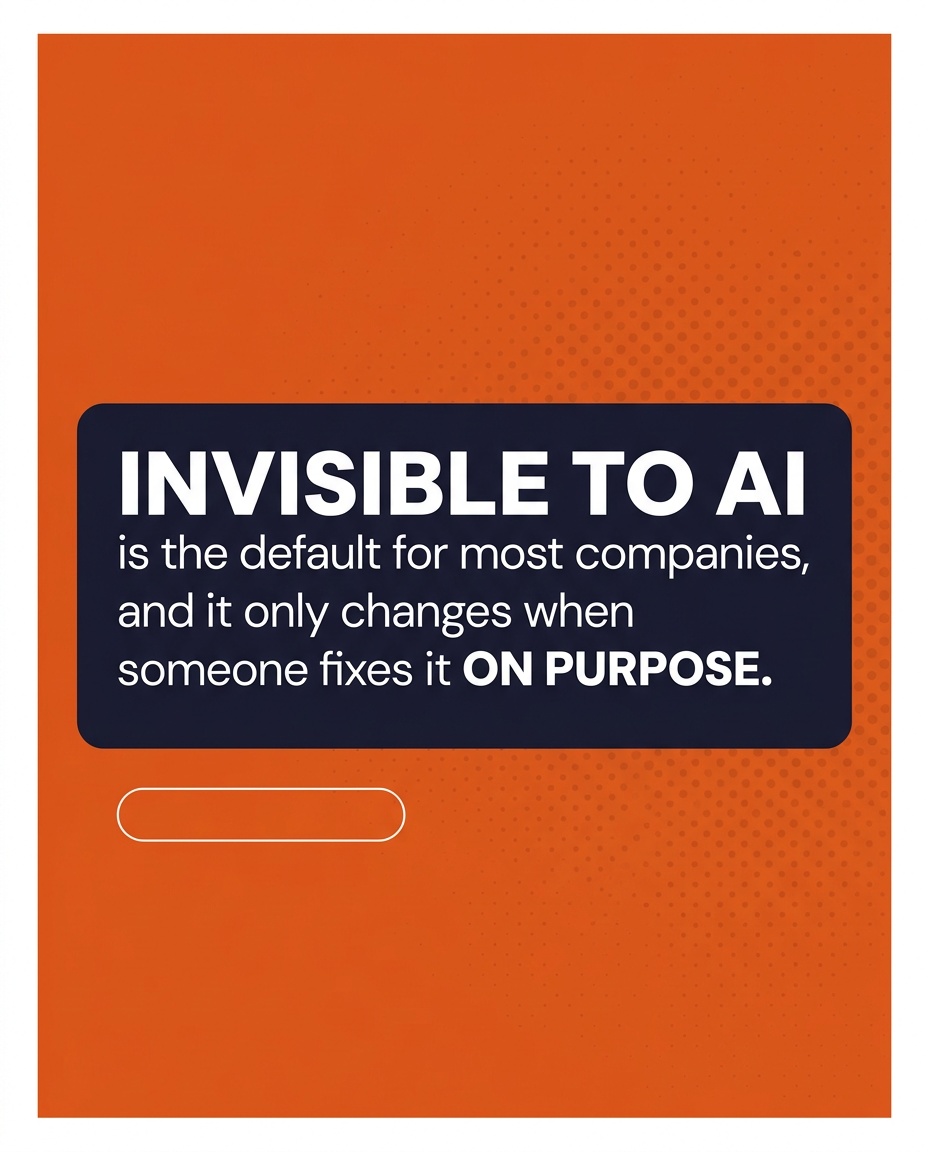
AI Search Visibility

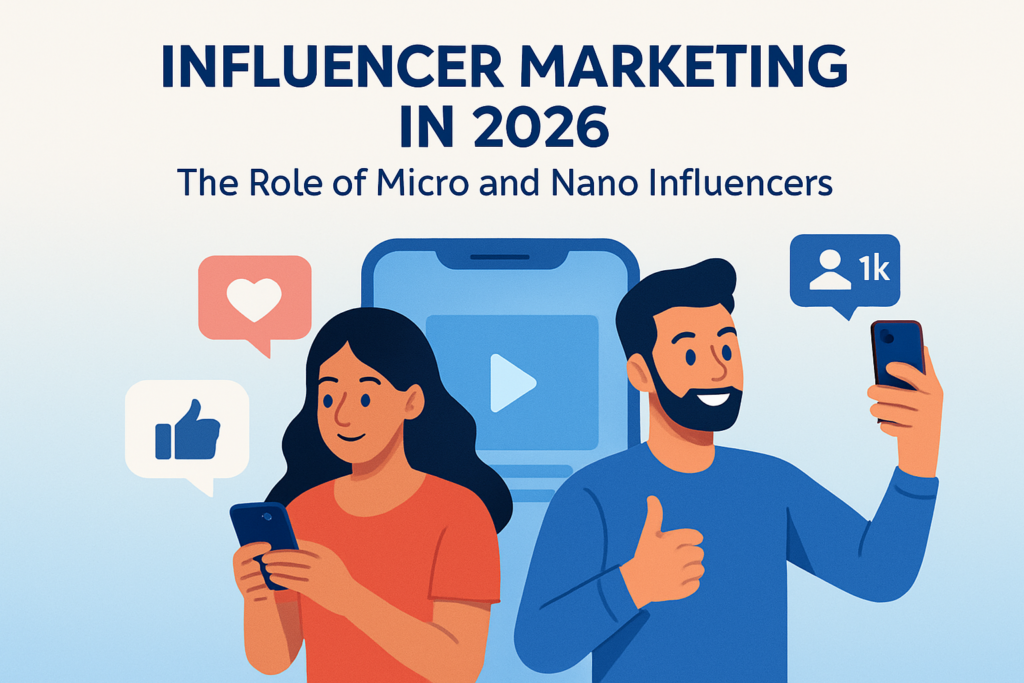
In 2026, 45% of B2B influencer marketing spend is going to creators under 20,000 followers. In 2021, that number was 19%.
That's not a trend. That's a structural reallocation of budget — and the reasons behind it are more interesting than the stat.
Macro-influencer deals feel safe because the audience numbers look impressive in a deck. But spending $50,000 on one creator with 500,000 followers is a single high-risk bet. One bad month for that creator, one off-brand take, one campaign that doesn't land — and your entire influencer budget is gone.
Spreading that same $50,000 across 20 micro-creators at roughly $400 per post does something different. It hedges your risk, drives higher feed saturation across multiple communities, and lowers your whitelisting ad costs because smaller audiences are cheaper to promote behind.
The deeper reason this is working: creators under 20,000 followers have fewer sponsored brand deals cluttering their feed. Their audience trusts them more per impression. Engagement per view is higher. The signal-to-noise ratio is better.
But the most interesting reason isn't about trust. It's about Answer Engine Optimization.
B2B CMOs are now using distributed networks of micro-creators across LinkedIn and X to post targeted keyword content at scale. That text footprint — dozens of posts across dozens of accounts hitting the same topics — is what gets brands cited inside AI answer engines like Claude, ChatGPT, and Gemini. AEO isn't just an SEO play anymore. It's an influencer play.
The allocation that's working right now: 50% of budget to macro-creators to anchor baseline brand awareness, 50% to micro-creators to drive repeated trust signals and keyword saturation across feeds.
The audience size that matters isn't the biggest one. It's the right one, repeated enough times.
#B2BMarketing #InfluencerMarketing …more
 View on LinkedIn
Also on
Told 2 times, Nov 11, 2026
· X · Open
45% of B2B influencer spend goes to creators under 20K followers. Up from 19% in 2021.
Smaller audiences. Higher trust. Cheaper ads.
Their content also helps brands get cited inside Claude, ChatGPT, and Gemini.
AEO is now an influencer strategy.
https://lseo.com/blog/influencer-marketing/influencer-marketing-in-2026-the-role-of-micro-and-nano-influencers/
#B2B
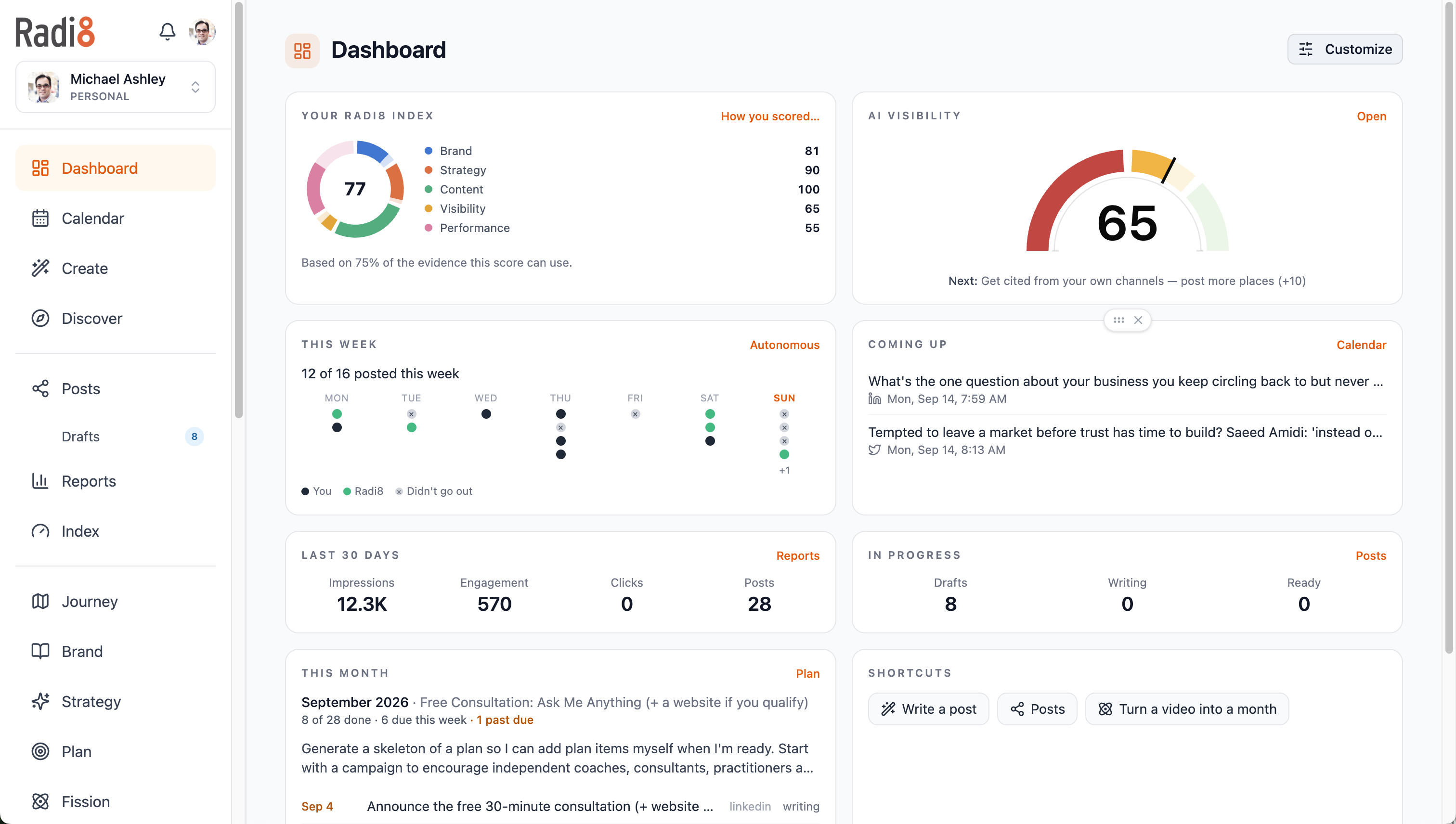
🔥 The new Radi8 Dashboard is hot, hot, hot!! 🔥
Get your Radi8 Index and AI Visibility Score at https://www.radi8.com - and start creating content that drives pipeline.
#IndependentConsultant #PersonalBrand #Positioning #ThoughtLeadership …more
Today's post is 298 words, a 2-minute read.
Sources: Superhuman Marketing — "Reddit's ChatGPT Citation Collapse Worries Marketers"
1 big thing: What just changed in AI visibility for B2B marketers?
Reddit's share of ChatGPT citations dropped 86% in mid-August. Brands that built their AI visibility strategy around it are scrambling.
Why it matters: Platform-dependent AI visibility strategies carry the same risk as platform-dependent social strategies. When the citation model shifts, everything built on top of it shifts with it.
Driving the news:
ChatGPT reduced how often it credits Reddit in final answers — but it is still consulting the platform behind the scenes.
→ Brand websites are now being credited more frequently in ChatGPT's final responses
→ Brands that treated Reddit as their primary AI visibility channel saw immediate exposure drops
Zoom in:
Experts now recommend treating social platforms as audience-insight channels rather than citation engines.
→ The brands gaining AI visibility are publishing authoritative, original content on their own domains — content that gets cited regardless of where the question is asked
Yes, but: Most B2B marketing teams do not yet have a defined AI visibility strategy. The brands hurt most by this shift are the ones who had one built on a single platform.
Be smart: Diversify where your brand authority lives. Original thought leadership on your own domain, consistent voice, and documented expertise are the assets AI models surface — not social posts optimized for one platform's algorithm.
The bottom line: Platforms are channels. Brand authority is the asset. Build accordingly.
https://www.businessinsider.com/what-reddit-chatgpt-citation-decline-means-for-cmos-2026-8
#AIMarketing #B2BMarketing …more
View on LinkedIn
Also on

A few weeks ago I ran a test on my own company.
I asked ChatGPT, Claude, and Perplexity the questions our buyers actually ask — "best AI tool for a consultant who wants to post on LinkedIn," "Hootsuite alternatives for a solo founder." Radi8 didn't come up once.
That stung. But it confirmed something I've been telling founders for a while: the way buyers form trust has changed, and most of us are still optimizing for the wrong reader.
Here's the trap. We spent months building positioning for humans — clever, memorable, deliberately set apart from the category. Great for a landing page. Invisible to the machine doing the recommending. An AI doesn't search your clever sentence. It breaks the question into plain category words and recommends whoever consistently shows up for them.
Clever positioning wins the click. Category language wins the citation.
But the real lesson isn't an AI trick. It's the thing I keep coming back to: your brand is your promise, and a visible, consistent body of work is now the evidence people — and their AI — use to decide whether to trust you, long before the first conversation. When your story isn't consistent everywhere, the machine has nothing solid to cite.
I wrote up the whole thing — what we found, why it happened, and what we're changing — in public: https://www.radi8.com/blog/show-up-when-buyers-ask-ai-for-recommendations
A question for the founders here: have you checked what the AI assistants say about your company when someone asks for a recommendation in your category? What did you find? …more
View on LinkedIn
Also on
Told 5 times, Jul 13, 2026 – Aug 13, 2026
· X · Open
What do your clients really pay for? Not hours — the decisions you can now make in minutes that once took years to learn. That judgment is the product. Book 30 minutes and we'll name yours, no pitch: https://calendly.com/foclarity/30min
· LinkedIn · Open
Have you asked an AI who it recommends in your field? Try it, then look at what comes back.
More buyers are doing exactly that. Instead of a Google search or a nudge from a former colleague, they ask an AI: "who's the best person for this?" And the AI answers with what it can retrieve — a clear, consistent body of work it can actually find and read.
That changes things for coaches and consultants. Clever branding doesn't help if there's nothing there to retrieve. Visibility isn't just how humans find you anymore. It's machine-readable reputation, and the substance you publish is what gets you named.
This is where Radi8 helps solo experts stay retrievable without the daily grind: showing up consistently so the work is there when someone, or something, goes looking.
Want to talk through what actually makes you findable? Book 30 minutes with me, no pitch, just a clear read on where you stand: https://calendly.com/foclarity/30min
#AIforBusiness #PersonalBrand #ThoughtLeadership #IndependentConsultant #Positioning
· X · Open
Which of your posts do people actually remember? Not the one you polished for hours — that you kept showing up. Consistency is the reputation. Book 30 minutes and we'll sharpen yours, no pitch: https://calendly.com/foclarity/30min
· LinkedIn · Open
What if building a public presence just turns into performative posting?
It's the worry I hear most from coaches and consultants who know they should be visible but don't want to become someone chasing reach for its own sake.
Here's the distinction that matters. Performative posting optimizes for attention this week. A body of work does something else entirely: it shows how you think, how you decide, and whether you follow through — over time. Buyers don't trust claims. They trust evidence they can watch accumulate.
So stop asking "what will get engagement?" and start asking "what would I want a skeptical buyer to find when they check whether I'm any good at this?" Then publish that, consistently. Reach becomes a byproduct. Trust is the point.
If you want help figuring out what your body of work should actually say, book 30 minutes with me and we'll map it — no pitch, just a clear read on where you stand: https://calendly.com/foclarity/30min
#IndependentConsultant #Coaching #PersonalBrand #ThoughtLeadership
Ask an AI what's best in your category. If you're not in the answer, you're not in the deal. I wrote up why: https://www.radi8.com/blog/show-up-when-buyers-ask-ai-for-recommendations …more
Visibility has become part of the job.
I don't think most founders have accepted this yet.
Twenty years ago, you could build a successful business with very little public presence.
Today, that's becoming harder.
Not because people want influencers.
Because people need signals.
Before they buy.
Before they refer.
Before they trust.
They want evidence.
How do you think?
What do you believe?
Have you solved this problem before?
The market used to discover expertise through institutions.
Today, it increasingly discovers expertise through content.
That's why visibility isn't vanity.
It's discoverability.
And for expertise-driven businesses, discoverability is becoming a competitive advantage. …more
Channel names and logos are trademarks of their respective owners.