I’ve spent the better part of 25 years trying to understand two things: which problems are worth solving, and what is the simplest way to solve them. That pursuit has led me to start companies, build products, teach entrepreneurship, coach hundreds of founders, and participate in four startup exits—one as a founder and three as an advisor.
Along the way, I noticed a pattern. Founders are usually very good at solving problems. The trouble is that we’re often solving the wrong ones. What looks like a sales problem might really be positioning. A marketing problem might begin with not understanding the customer. An execution problem might simply be too many priorities competing for attention.
I came to think of this as finding the problem under the problem. When you find it, complicated decisions get simpler, teams align, and a surprising amount of work disappears.
Today I coach founders and startup teams around the world to do exactly that. Sometimes it’s a team scaling a company worth billions. Sometimes it’s one person turning what they know into a consulting business. The scale changes, but the work is remarkably similar.
Find the problem worth solving. Find the simplest way through it. Then get on with the work that matters.
Three things I got wrong about marketing across three startups:
1. I treated it as a phase. "We'll do marketing once the product is ready." Then the product was ready, the launch window closed, and we were starting from zero on awareness with a runway clock ticking. Marketing isn't a phase. It's a habit you build before you need it.
2. I hired it out too early. The first agency we paid wrote posts that sounded nothing like us, ran ads against the wrong audience, and I spent more time briefing them than I would have spent posting myself. Outsourcing only works after you know what good looks like for your business.
3. I confused volume with consistency. We did sprints — two weeks of daily posts, then silence for a month. The algorithm punishes that pattern. So does your audience. Three posts a week, every week, beats fifteen posts in a burst followed by nothing.
What I do now is the opposite of all three. Marketing is the first habit, not the last. I run my own content with AI-assisted workflows so I know what good looks like before I delegate. And I optimize for showing up every week, not for output spikes.
That's what I'm teaching at my workshop on May 28th in San Jose at the MLK Library, hosted by the Silicon Valley Small Business Development Center. The exact workflows I use now, after three startups and one exit.
If you can't make it, book a free 15 to 20 minute marketing audit and I'll help you skip the mistakes I made.
https://www.radi8.com/free-audit?utm_source=linkedin&utm_campaign=free_audit&utm_content=post_id
DM me if you want the workshop link. …more
Founders who engage early with accelerators get more from the program.
The same is true for marketing.
Treating marketing like a deadline task costs momentum, customer insights, and time.
Start a small, consistent engine now that keeps you visible without draining budget or focus.
I help founders run their own marketing faster and for less than hiring consultants. Send me a message to schedule a free marketing audit. #startupshttps://www.santacruzworks.org/news/best-founders-apply-early
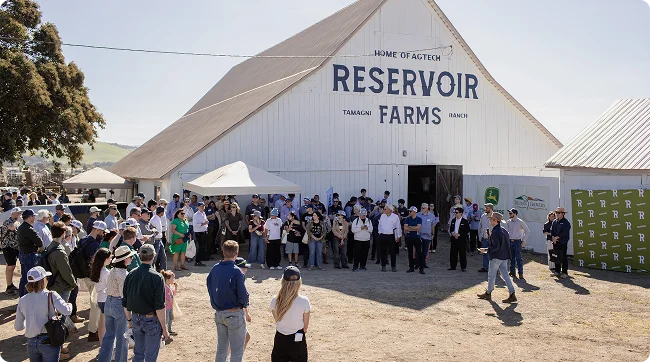
Congratulations to Western Growers and Reservoir Farms on this $1.5 million commitment.
This partnership is worth paying attention to—not because of the funding amount, but because of the structure.
Western Growers is giving its members exclusive access to robotics field trials across Salinas, Wine Country, and the Central Valley. They're not waiting for perfect technology. They're building a bridge between prototype and commercial adoption.
That's a go-to-market strategy.
Most early-stage founders I work with struggle with the same problem: they have a working product, maybe even some pilot customers, but no clear path from validation to revenue at scale.
The gap isn't always the product. It's access to the right testing ground and the right early adopters who can give real feedback under real conditions.
Western Growers is solving that for agtech companies. They're creating a repeatable environment where technology can be tested, refined, and proven before it hits the broader market. That cuts years off the adoption timeline.
If you're building a B2B product, the principle is the same.
You need a structured way to get your solution in front of the people who will actually use it. Not in a demo. Not in a pitch deck. In their workflow, solving their real problem.
That means identifying your early access group—the customers who have the problem acutely, who are willing to test, and who have enough influence to move others when it works.
Then you build the program around them. You give them something exclusive. You make the feedback loop tight. You document what works and what breaks. And you use that as proof for everyone else.
This is how you move from prototype to repeatable sales: not by perfecting the product in isolation, but by proving it works in the field.
If you're stuck between pilot customers and real traction, book a free 15-minute marketing audit and we'll map out who your early access group should be and how to structure the program around them.
https://www.radi8.com/free-audit?utm_source=linkedin&utm_campaign=free_audit&utm_content=post_idhttps://www.santacruzworks.org/news/reservoir-the-field-is-the-lab…more
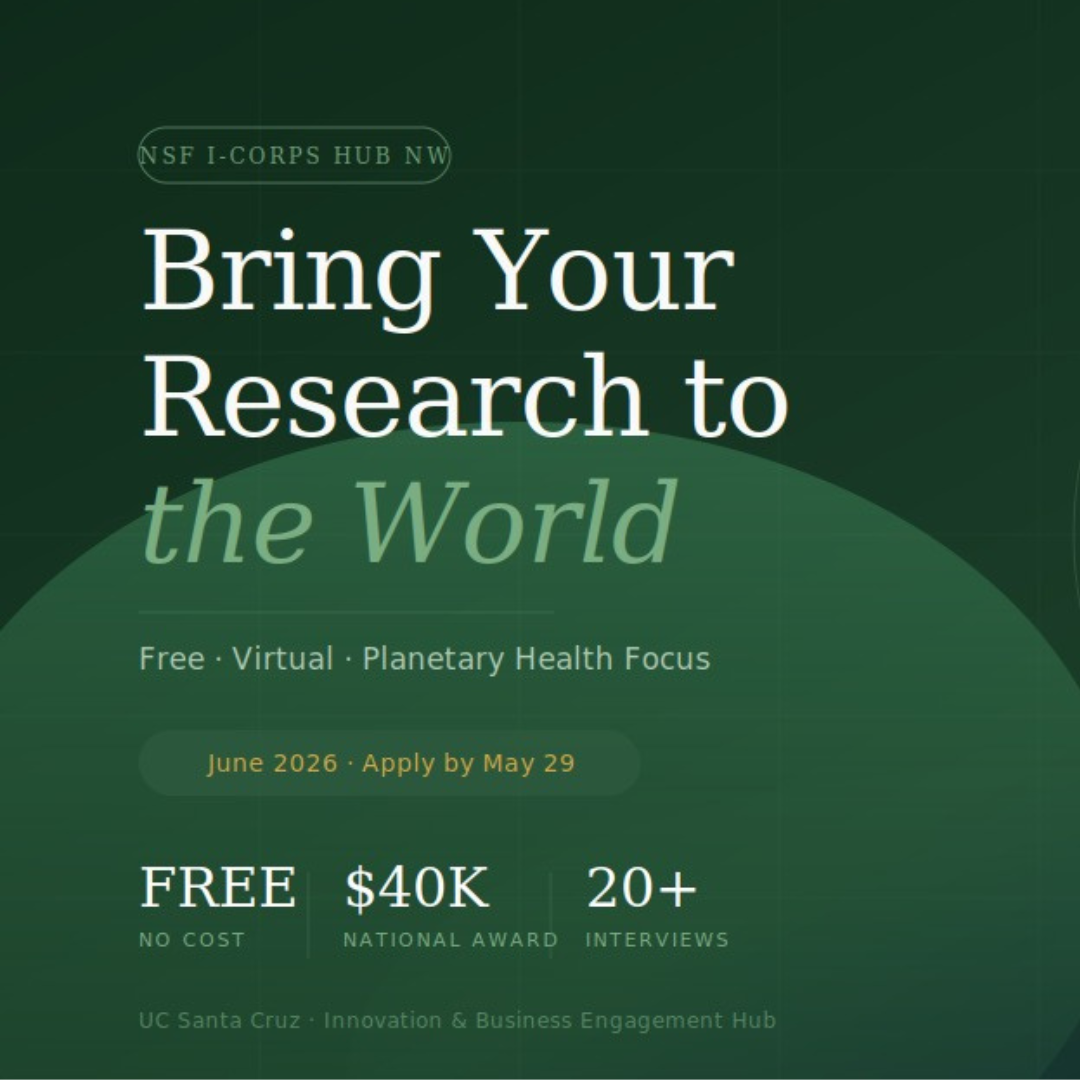
NSF I-Corps is the gold standard for customer discovery. If you have ever wanted to understand how innovation actually moves from the lab to the market, this is your chance to see the methodology up close.
The NSF I-Corps Hub Northwest is offering a free, virtual course focused on planetary health technologies. Applications are open through May 29, 2026.
Customer discovery is the single most underestimated skill in early-stage startups. Most founders skip it or do it halfway because they are eager to build. Then they spend months or years building something nobody will buy.
I-Corps teaches you how to test assumptions, talk to potential customers before you commit to a roadmap, and validate whether a real market exists for what you are building. It is structured, repeatable, and grounded in evidence.
Even if planetary health is not your focus, the frameworks and rigor you learn here apply to nearly any technology or market. The program forces you to get out of the building and run real interviews. You leave with clarity on who your customer is, what problem you are solving, and whether your solution has legs.
This is especially valuable if you are a solo founder or running a small team without access to formal mentorship or accelerator support. You get expert coaching, a proven process, and a cohort of other founders working through the same challenges.
If you are serious about bringing a new technology to market and want to build something people will actually pay for, apply. The course is free, the methodology is tested, and the insight you gain can save you years of wasted effort.
Applications close May 29. Send me a message if you want to talk through whether this is a fit for where you are in your journey.
https://www.santacruzworks.org/news/nsf-i-corps-hub-planetary-course-applications-open…more
I love seeing this.
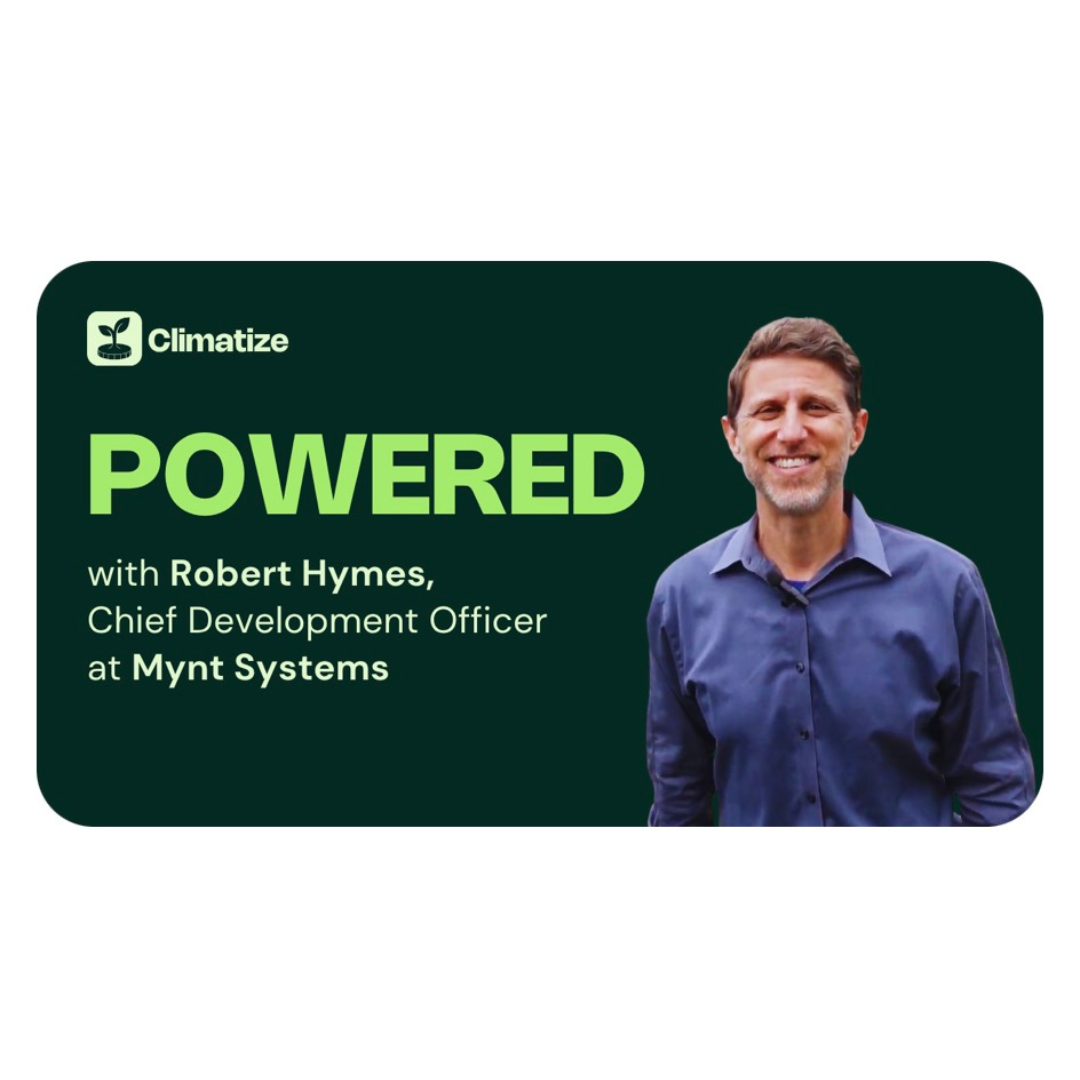
West Sacramento just cut the ribbon on community-funded EV charging infrastructure. Not a government grant. Not a big utility play. Grassroots clean energy, funded by the people who will use it.
Here's what caught my attention: they didn't wait for permission or perfect conditions. They validated demand with the community first, then built the solution.
That's exactly how early traction works.
Most founders think they need all the resources lined up before they can make a move. Full budget. Perfect messaging. Complete product. But momentum doesn't start that way.
It starts when you validate a real problem with the people who feel it most, then build the smallest version that solves it.
The West Sacramento project didn't need top-down approval or a five-year roadmap. They identified a local gap, rallied the people who needed the solution, and moved forward with what they had.
If you're stuck waiting for the perfect conditions to launch your next campaign, refine your positioning, or start building visibility, this is your reminder: traction comes from action, not preparation.
Find the smallest group that feels your solution. Validate that it matters to them. Build for that group first.
The infrastructure comes after the momentum, not before.
If you're wrestling with early go-to-market strategy or how to build traction before you have all the resources, let's talk. I run free 15-minute marketing audits for founders. Comment below and I'll send you the link.
https://www.santacruzworks.org/news/powered-by-climatize-community-funded-ev-charging-comes-to-west-sacramento…more
Most founders I talk to say the same thing: "I don't have time for marketing, and I can't afford to hire it out."
Natalia Bishop, founder of the WILD Accelerator, told me something that stuck. She said most of the founders she works with have the idea and the drive. What they don't have is a system to stay visible without burning out.
That resonated because it's the exact challenge I see with early-stage founders every week. You're building the product, closing deals, managing cash flow — and somehow you're supposed to stay top of mind with prospects and investors too.
In our conversation on the Inspiring Founders Podcast, Natalia walked through how WILD supports founders from underrepresented backgrounds with grants, mentorship, and leadership coaching. One of the most valuable things they offer isn't funding. It's helping founders build a repeatable system for showing up consistently, even when resources are tight.
You don't need a full marketing team to stay engaged with your audience. You need a workflow that's simple, repeatable, and doesn't eat your week.
If you're handling your own marketing and want a system that fits your schedule, book a free 15-minute marketing audit with me. I'll walk you through one or two quick wins and a repeatable content workflow you can run yourself.
https://www.radi8.com/free-audit?utm_source=linkedin&utm_campaign=free_audit&utm_content=podcast-8
P.S. The full conversation with Natalia about building support systems for underserved founders is live on the Inspiring Founders Podcast — on YouTube, Spotify, or Apple Podcasts.
https://www.inspiringfounders.com/podcast…more
You know LinkedIn matters for your business. You also know you're not posting enough.
The problem isn't that you don't have anything to say. It's that maintaining a consistent presence feels like a full-time job you don't have time for.
Most advice on LinkedIn growth assumes you have hours every day to scroll, engage, and post. That's not realistic if you're running a business.
Here's what actually works: a repeatable workflow that doesn't require living on social media.
The goal isn't to go viral. It's to stay visible and helpful to the people who matter to your business. Consistency beats volume every time.
If you're ready to build a practical content workflow that fits your schedule, send me a message. I'll walk you through a free 15-minute audit and show you one or two quick wins you can use right away.
https://www.radi8.com/blog/grow-your-business-on-linkedin-without-living-on-social-media-all-day
I'm offering a free audit for small business owners who need clarity on what to post and how to stay consistent — without burning hours on marketing every week.
Most founders I work with don't struggle because they lack ideas. They struggle because they don't have a repeatable system. Every post feels like starting from scratch.
After three startups and advising companies through billion-dollar exits, here's what I know: the founders who win aren't the most creative. They're the ones with systems they can run week after week.
A free 15–20 minute audit. We'll:
- Identify 1–2 quick wins you can implement this week
- Sketch a simple workflow that fits your schedule
- Give you templates you can reuse without starting from zero
Not a sales pitch. A focused conversation.
Book here: https://www.radi8.com/free-audit?utm_source=linkedin&utm_campaign=free_audit&utm_content=post_id#marketing#smallbusiness
I'm putting on a workshop for personal and small brands who want to learn how to use social media with AI.
May 28th in San Jose at the MLK Library. Hosted by the Silicon Valley Small Business Development Center.
If you run your own marketing, you know the problem. You know LinkedIn matters. You know you should be posting more. But you don't have time to spend hours on content calendars or scrolling through feeds.
Most small business owners I work with feel stuck between two options: ignore social media and lose visibility, or live on it full-time.
There's a third option: build one repeatable habit that takes 15 minutes a day.
That's what I'll walk through at the workshop. Practical workflows and time-saving templates you can use the same week. No fluff—just the steps that let you stay engaged with prospects without the time drain.
I've launched three startups with one acquisition exit. I know what works when you don't have a team or a budget.
We'll cover how to use AI tools to speed up ideation, how to structure a simple editorial calendar, and how to turn one idea into multiple posts without starting from scratch every time.
You'll walk away with workflows you can implement immediately and a clear plan for your first week of content.
If you want to stop guessing what to post and start showing up consistently without the time sink, this is built for you.
Register through the Silicon Valley Small Business Development Center.
A founder I was advising last year told me she'd written the same LinkedIn post four times and never published any of them.
Not because the post was bad. Because every time she sat down to finish it, something more urgent showed up — a customer email, a payroll question, a bug. By Friday, the draft was stale and she felt guilty, so she closed the tab.
That's the marketing problem nobody talks about. It's not that founders don't know what to say. It's that the moment between "I have something to say" and "I hit publish" is full of friction, and the friction always wins.
I've launched three startups and had one acquisition exit. I've watched smart founders let their pipeline go quiet for the same reason — not lack of ideas, lack of a repeatable system that survives a chaotic week.
That's what I'm teaching at my workshop on May 28th in San Jose at the MLK Library, hosted by the Silicon Valley Small Business Development Center. Three AI-assisted workflows that close the gap between thinking and posting:
A week of posts in 30 minutes.
Competitor research in 10.
An editorial system that runs even when your week falls apart.
If you're in the Bay Area, come. If you're not, book a free 15 to 20 minute marketing audit and I'll help you build the same system for your business.
https://www.radi8.com/free-audit?utm_source=linkedin&utm_campaign=free_audit&utm_content=post_id
DM me if you want the workshop link.
I'm running a workshop with the Silicon Valley SBDC on May 28: Marketing with AI — Digital Workforce Transformation Part 2.
If you dislike being on social media but still need to stay visible, I'll walk through a simple, repeatable process to generate content ideas, use AI to cut the time you spend posting, and turn posts into conversations that lead to customers.
Comment below and I’ll send details, or send me a message. #MarketingWithAIhttps://luma.com/mignm1bx
I'm opening up a few consulting slots for founders who need help getting their go-to-market strategy or positioning unstuck.
If you're running your own marketing and keep hitting the same walls—no time to plan campaigns, no budget for an agency, or you're not sure what message actually lands—I can help you build something practical that works without taking over your life.
I've launched three startups with one acquisition exit. I've advised three others that had billion-dollar exits: one IPO, one merger, one private equity deal. I know what it takes to position a product, build messaging that converts, and plan campaigns that don't require a full-time team to execute.
Right now, I work with founders and small business owners through Radi8, an app that makes it easier to run repeatable digital marketing campaigns. But I also take on a limited number of one-on-one consulting clients when the fit is right.
If you want to talk through your positioning, get clarity on your messaging, or map out a campaign plan you can actually stick to, send me a message.
#consulting#startupmarketing
It's competition season for university student founders.
If you're building a company while juggling exams, team schedules, and pitch decks, you already know how hard this stretch is.
The late nights refining your deck. The pressure to stand out in a room full of talent. The quiet worry that your idea won't land the way you hope.
Here's what I've seen after advising dozens of founders and helping build companies from launch to exit: the teams that do well in competitions aren't always the ones with the flashiest ideas. They're the ones who can explain their value clearly, show they understand their customer, and prove they can execute.
Competitions are a forcing function. They push you to sharpen your story, defend your assumptions, and practice delivering under pressure. Win or lose, that clarity stays with you.
So if you're in the middle of this right now, good luck. Take the feedback seriously. Use the reps. And remember that the real work starts after the competition ends.
If you're a student founder who wants a second set of eyes on your messaging or go-to-market plan, send me a message. Happy to help.
#startups#entrepreneurship…more
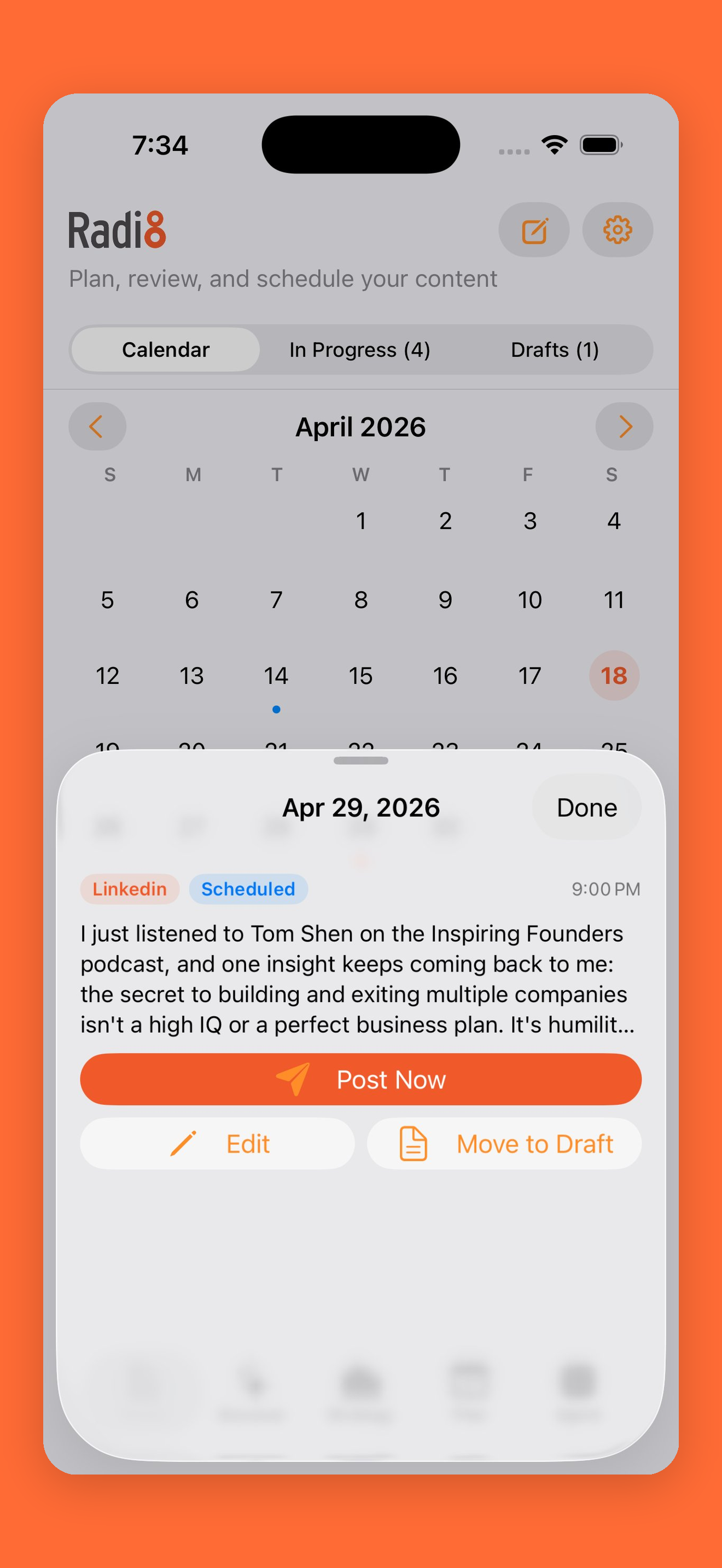
I wrote this with Claude, who scheduled it with Radi8, all from one chat on my iPhone… in bed.
That sentence used to be impossible.
In the last hour, from this exact chat, I drafted and scheduled three LinkedIn posts across two different brands — one for Radi8 and two for my personal account. Different audiences. Different voices. Different goals. All from one Claude conversation. On my phone. Under the covers.
No app-switching. No logging in and out. No copy-paste between tools. I told Claude what I wanted, it pulled the right brand context for each account, drafted the posts in the right voice, and scheduled them at the times I asked for.
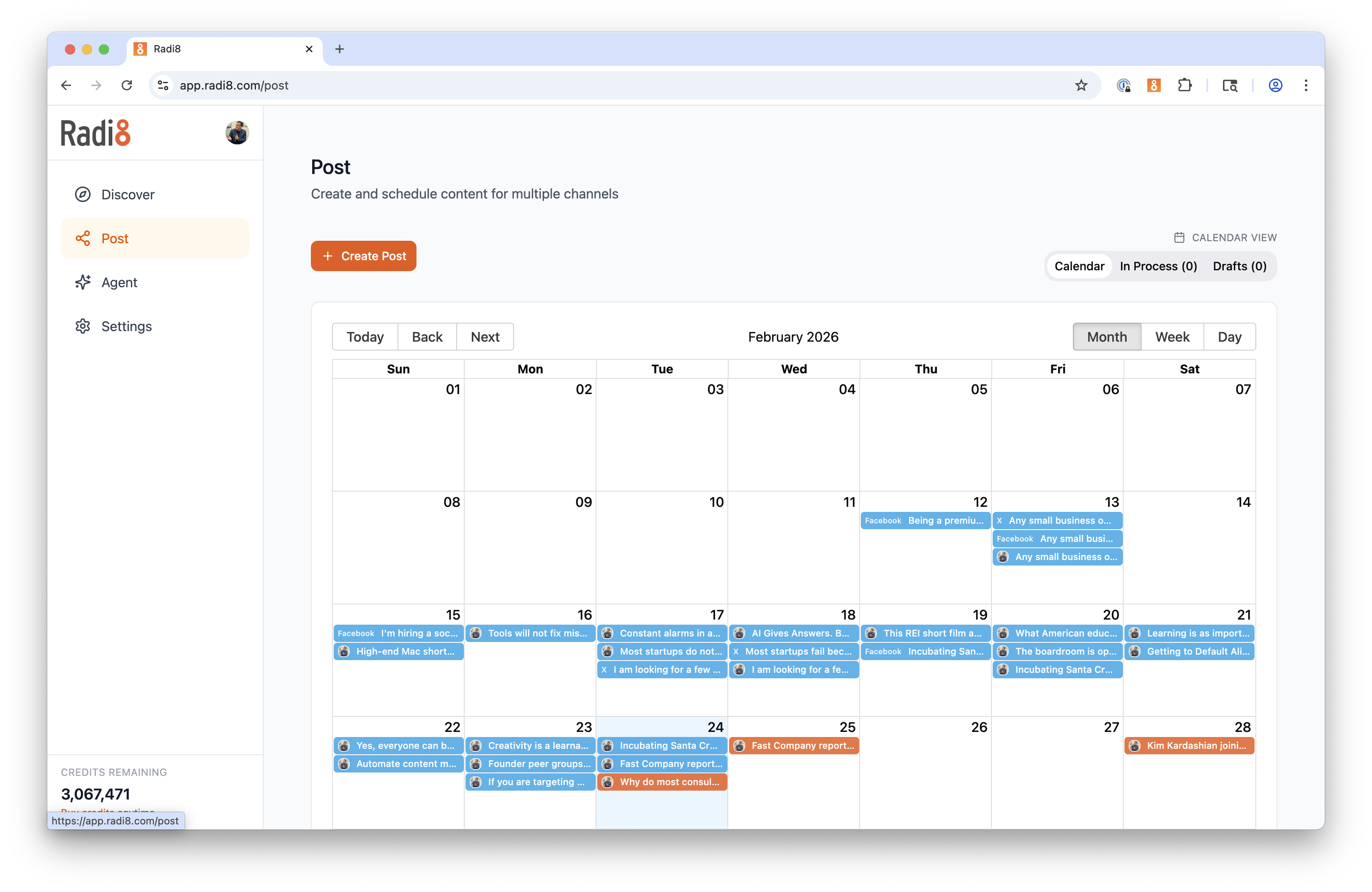
This is what we built Radi8's MCP server for.
For an agency managing 10 or 20 client brands, this is the difference between social media being a desk job and it being something you can actually run from anywhere. Waiting for a flight. Between meetings. Sunday night clearing the week ahead. Monday morning before you've even had coffee.
Each brand stays fully isolated — its own voice, its own context, its own connected channels — but every one of them is reachable from a single Claude chat on whatever device you happen to have with you.
The operational chaos that used to require a desk and six browser tabs now fits in your pocket.
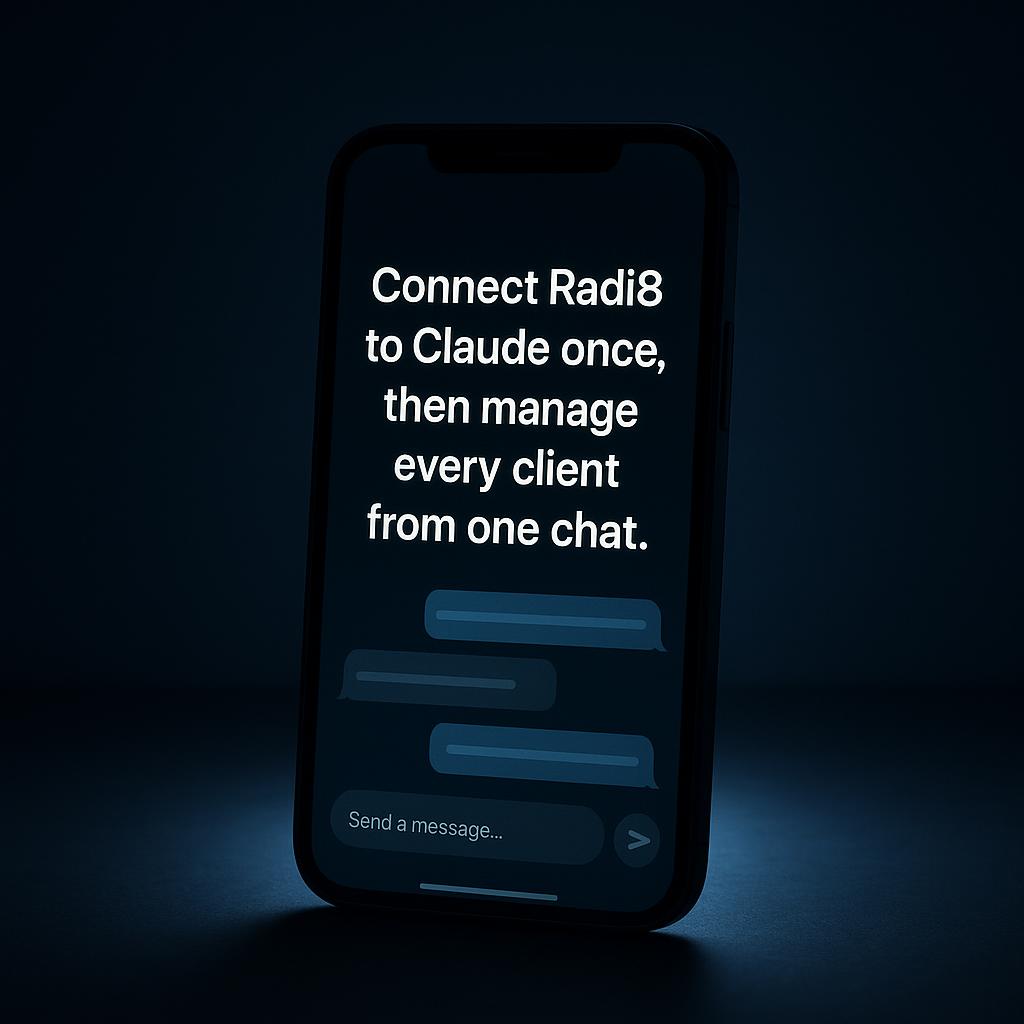
If you run an agency and this sounds like the unlock you've been waiting for, try Radi8 free for 14 days. Connect it to Claude once, and start managing every client from one chat.
https://www.Radi8.com…more
Quick ask for the agency folks in my network.
I posted yesterday about connecting Radi8 to Claude through our new MCP server, and the response from agencies has been the most fired-up part of building this so far. Turns out a lot of you are drowning in tabs and credential-swapping, and the idea of running every client brand from a single Claude chat lands hard.
So I want to show it to you directly.
If you run an agency or freelance for multiple brands, send me a DM and I'll set up a quick demo. Fifteen minutes. I'll walk you through how it works, connect it live to Claude, and you can see for yourself what it feels like to draft, schedule, and manage posts across all your clients without ever opening a separate app.
No pitch deck. No sales script. Just the product.
If it's useful, great — you can start a free 14-day trial that day. If not, you'll have seen something genuinely new in how AI and social tooling can work together, and that's worth fifteen minutes either way.
DM me to grab a slot.
I've been heads-down building Radi8 for a while now, and last week we had one of those founder moments where something big clicked.
We've been building Radi8 as an AI-native social media platform for small business owners, founders, and the agencies that support them. As part of that work, I built an MCP server for it.
If you're not deep in AI tooling, MCP (Model Context Protocol) is what lets Claude and ChatGPT actually do things in other apps — not just talk about them. Wiring Radi8 in meant our customers could now manage their entire social presence directly from a Claude conversation.
Then we tested it with agencies. That's when it clicked.
An agency managing 5, 10, 20 client brands can now run all of them from a single Claude chat. Switch from one client's content plan to another by just asking. Draft a LinkedIn post for one, schedule an X post for another, check what's queued across every account — without ever opening a tab.
Each brand stays fully isolated. Its own voice. Its own context. Its own channels. But all reachable from the same place.
For agencies that have been juggling fifteen browser tabs and six logins, this changes the math entirely. No more credential-swapping. No more accidentally posting Brand A's update to Brand B's account. No more brand bleed.
This is what we're building Radi8 for — to take the operational chaos out of social so our customers can spend their time on the work that actually matters.
If your agency manages multiple brands and you're tired of the tab chaos, give us a try. Free for 14 days.
https://www.Radi8.com
Most small business owners I talk to say the same thing about social media: they know they need to do it, but they hate being tied to their desk to do it.
You're checking email between meetings. Waiting for a call to start. Sitting in your car before walking into an appointment.
Those are the moments when you actually have time to post. But your laptop is somewhere else.
That's why we built Radi8 for iOS.
Your entire social media studio on your phone. Write, generate, schedule, and publish LinkedIn and X posts from your iPhone or iPad. Everything syncs with your Radi8 account, so you can start a post on your computer and finish it on your phone, or the other way around.
No more waiting until you're back at your desk. No more missing the window to stay visible because you didn't have the right tool at the right time.
Download Radi8 for iOS and put your marketing in your pocket: https://www.radi8.com/ios…more
Radi8 Beta is over - We are live! Try it free https://www.radi8.com
If you have been putting off consistent marketing because it felt like too much time or too much money, Radi8 is built for that exact problem.
Send me a message if you want a walkthrough or have questions about which plan makes sense for your business.
https://www.radi8.com/pricing…more
Attention restaurant owners.
Santa Cruz Works is hosting an invitation-only luncheon on May 13 at the Cocoanut Grove. It's a private introduction to AIO, an AI platform built specifically for restaurant operations.
If you run a restaurant in the Santa Cruz area, this is worth exploring.
Here's why: most restaurant owners are dealing with the same operational challenges. Scheduling, inventory, customer communication, order management. The tools built for enterprise operations don't fit the way small restaurants actually work. And generic AI platforms require too much setup to be useful when you're already stretched thin.
AIO was designed for restaurant operations from the ground up. The luncheon offers a chance to see how it works, ask questions directly, and evaluate whether it solves problems you're dealing with right now.
You'll also get insight into Launchpad 2026, Santa Cruz County's largest job fair. If hiring or talent retention is on your radar, that's a second reason to attend.
This isn't a public event. It's invitation-only, which means smaller group, direct access, and real conversation with the people building the platform and the local business community showing up to learn about it.
If you're in the area and you want to evaluate tools that could streamline how you run your restaurant, this is a solid opportunity to do that in person.
Check the Santa Cruz Works site for details and how to request an invitation.
https://www.santacruzworks.org/news/luncheon-brings-restaurant-leaders-together-for-a-look-at-aio…more
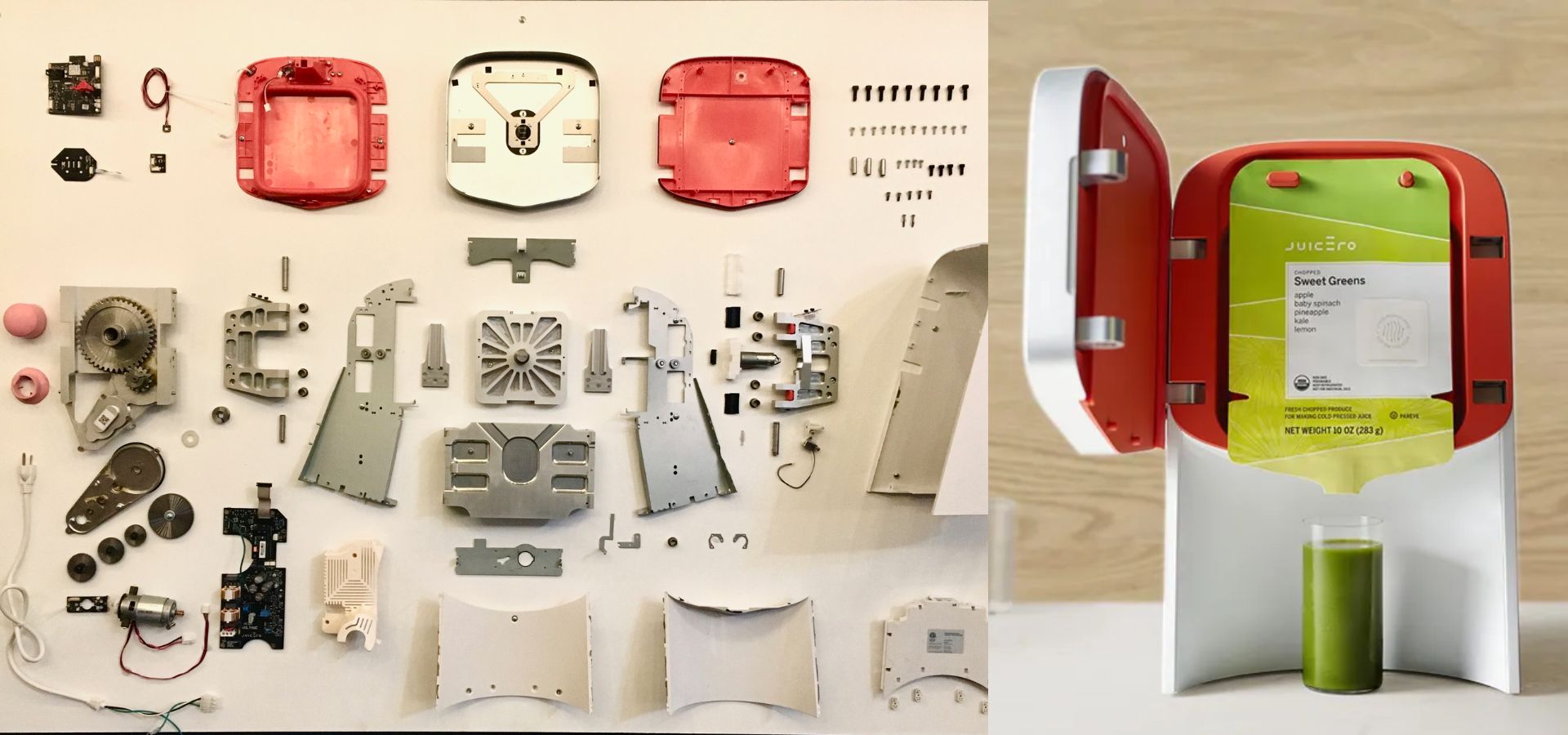
Juicero raised $120 million and shut down four years later.
The product was impressive. A beautifully engineered juicer that squeezed proprietary juice packs. The pitch was compelling. Fresh, cold-pressed juice at home with zero mess.
But none of that mattered because they misjudged the market.
They built a $400 machine for a customer who didn't exist at scale. Worse, when reporters discovered you could squeeze the packs by hand and get the same result, the entire value proposition collapsed.
This wasn't a failure of execution. It was a failure of go-to-market strategy.
If you're a small business owner handling your own marketing, the same mistake shows up in smaller ways every day.
You build something without validating whether your audience actually wants it. You position a feature instead of a benefit. You invest time creating content that sounds good internally but doesn't connect with the people you're trying to reach.
The fix starts with three questions before you build or launch anything:
Who is this for, specifically? Not a broad market. A real person with a real problem.
What job are they hiring this to do? Juicero thought people wanted convenience. Turns out they wanted juice, and convenience meant not buying a $400 machine.
How will they discover this solves their problem? If your positioning doesn't make the value obvious in seconds, you're asking too much of your audience.
Juicero had the funding, the team, and the product. What they didn't have was a clear understanding of their customer or a go-to-market strategy grounded in reality.
You don't need $120 million to learn this lesson. You just need to ask the right questions before you spend time and money on the wrong strategy.
If you're not sure whether your positioning and content strategy are connecting with your audience, book a free 15-20 minute marketing audit. I'll walk you through where to focus first.
https://www.radi8.com/free-audit?utm_source=linkedin&utm_campaign=free_audit&utm_content=post_id
Case study: https://www.smartwareadvisors.com/blogs/insights/case-study-juicero-overbuilt-mvp-amp-misjudged-market…more
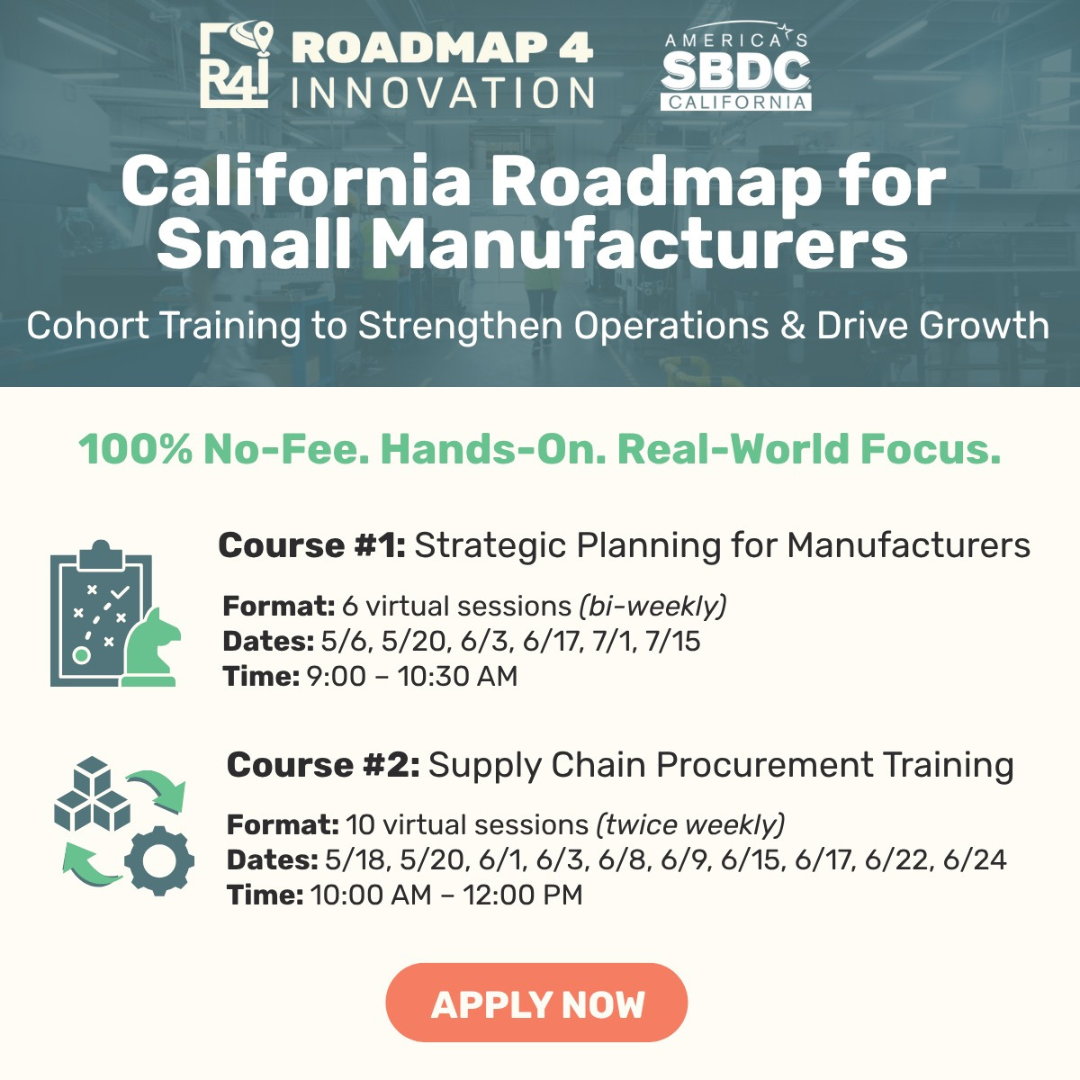
If you run a manufacturing business in California, finding time to sharpen your strategy or fix supply chain gaps often falls to the bottom of the list.
NorCal SBDC and Roadmap 4 Innovation are running two no-cost cohort courses from May through July. Both are designed for manufacturers who need practical frameworks without the typical seminar fluff.
The timing matters. These are cohort programs, which means you learn alongside other operators facing similar challenges. That peer context is often more valuable than the curriculum itself.
What makes these worth considering:
No cost. That removes the usual budget approval friction.
Cohort format. You get exposure to how other manufacturers are solving problems you might be stuck on.
Focused scope. Strategy and supply chain. Not a general business course trying to cover everything.
If you're handling operations and strategy yourself, or if you've been putting off a closer look at your supply chain because you don't have a clear starting point, this is a low-risk way to get structured guidance.
Most small business owners I work with struggle to carve out time for anything that isn't directly tied to revenue or customer delivery. But the manufacturers who consistently grow are the ones who block time to work on the business, not just in it.
Applications are open now. Courses run May through July.
If you know a California manufacturer who would benefit, share this with them.
https://www.santacruzworks.org/news/free-training-courses-now-open-for-california-manufacturers…more



'/%3E%3Cpath fill='%23fff' d='M12 7.3A4.7 4.7 0 1 0 16.7 12 4.7 4.7 0 0 0 12 7.3Zm0 7.8A3.1 3.1 0 1 1 15.1 12 3.1 3.1 0 0 1 12 15.1Zm5-8a1.1 1.1 0 1 0 1.1 1.1A1.1 1.1 0 0 0 17 7.1Zm-5 1.5c-1.5 0-1.7 0-2.3.1a3.8 3.8 0 0 0-1.3.2 2.2 2.2 0 0 0-.8.5 2.2 2.2 0 0 0-.5.8 3.8 3.8 0 0 0-.2 1.3c-.1.6-.1.8-.1 2.3s0 1.7.1 2.3a3.8 3.8 0 0 0 .2 1.3 2.2 2.2 0 0 0 .5.8 2.2 2.2 0 0 0 .8.5 3.8 3.8 0 0 0 1.3.2c.6.1.8.1 2.3.1s1.7 0 2.3-.1a3.8 3.8 0 0 0 1.3-.2 2.5 2.5 0 0 0 1.3-1.3 3.8 3.8 0 0 0 .2-1.3c.1-.6.1-.8.1-2.3s0-1.7-.1-2.3a3.8 3.8 0 0 0-.2-1.3 2.2 2.2 0 0 0-.5-.8 2.2 2.2 0 0 0-.8-.5 3.8 3.8 0 0 0-1.3-.2c-.6-.1-.8-.1-2.3-.1Zm0-1.6c1.5 0 1.7 0 2.4.1a5.5 5.5 0 0 1 1.8.3 3.8 3.8 0 0 1 2.2 2.2 5.5 5.5 0 0 1 .3 1.8c.1.7.1.9.1 2.4s0 1.7-.1 2.4a5.5 5.5 0 0 1-.3 1.8 3.8 3.8 0 0 1-2.2 2.2 5.5 5.5 0 0 1-1.8.3c-.7.1-.9.1-2.4.1s-1.7 0-2.4-.1a5.5 5.5 0 0 1-1.8-.3 3.8 3.8 0 0 1-2.2-2.2 5.5 5.5 0 0 1-.3-1.8C4 13.7 4 13.5 4 12s0-1.7.1-2.4a5.5 5.5 0 0 1 .3-1.8 3.8 3.8 0 0 1 2.2-2.2 5.5 5.5 0 0 1 1.8-.3C10.3 5 10.5 5 12 5Z'/%3E%3C/svg%3E)


 View on LinkedIn