Founder at Radi8 // Executive Coach // Host of the Inspiring Founders Podcast
· LinkedIn
·
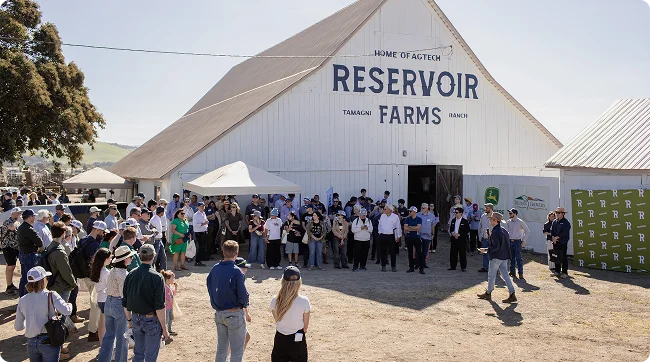
Congratulations to Western Growers and Reservoir Farms on this $1.5 million commitment.
This partnership is worth paying attention to—not because of the funding amount, but because of the structure.
Western Growers is giving its members exclusive access to robotics field trials across Salinas, Wine Country, and the Central Valley. They're not waiting for perfect technology. They're building a bridge between prototype and commercial adoption.
That's a go-to-market strategy.
Most early-stage founders I work with struggle with the same problem: they have a working product, maybe even some pilot customers, but no clear path from validation to revenue at scale.
The gap isn't always the product. It's access to the right testing ground and the right early adopters who can give real feedback under real conditions.
Western Growers is solving that for agtech companies. They're creating a repeatable environment where technology can be tested, refined, and proven before it hits the broader market. That cuts years off the adoption timeline.
If you're building a B2B product, the principle is the same.
You need a structured way to get your solution in front of the people who will actually use it. Not in a demo. Not in a pitch deck. In their workflow, solving their real problem.
That means identifying your early access group—the customers who have the problem acutely, who are willing to test, and who have enough influence to move others when it works.
Then you build the program around them. You give them something exclusive. You make the feedback loop tight. You document what works and what breaks. And you use that as proof for everyone else.
This is how you move from prototype to repeatable sales: not by perfecting the product in isolation, but by proving it works in the field.
If you're stuck between pilot customers and real traction, book a free 15-minute marketing audit and we'll map out who your early access group should be and how to structure the program around them.
https://www.radi8.com/free-audit?utm_source=linkedin&utm_campaign=free_audit&utm_content=post_idhttps://www.santacruzworks.org/news/reservoir-the-field-is-the-lab…more
Founder at Radi8 // Executive Coach // Host of the Inspiring Founders Podcast
· LinkedIn
·
Tom Shen said something in our conversation that I keep coming back to.
He drew a line between answers and questions. Answers, he said — everybody's got one:
"answers. Everybody's got one sometimes. And we've all worked with people like that. They got two or three. But questions,"
That last word hangs there for a reason. Good questions are rare. And the person who asks the right one often adds more value than the person with the ready answer.
I think about this a lot with coaches and consultants. There's a quiet pressure to prove you belong in the room by having every answer, deck loaded, solutions ready before the client finishes talking. It feels like expertise. Often it's the opposite.
The sharper move is to show up curious. A good question does more than fill a silence — it shows you already know what actually matters here. That's not uncertainty. That's judgment made visible.
Tom Shen made this point better than I can, in Episode 7 of the Inspiring Founders podcast. Worth a watch — link in the first comment.
So I'll ask you one: what's the best question you've been asked in a client conversation — one that changed how you saw the problem?
#IndependentConsultant#Coaching#ThoughtLeadership#GoingIndependent…more
Founder at Radi8 // Executive Coach // Host of the Inspiring Founders Podcast
· LinkedIn
·
Your first clients came easy. That's exactly why the next ones feel impossible.
When you went independent, the phone rang. A former colleague needed help. Someone who'd watched you work for years passed your name along. Within a few months you had your first handful of clients, and it felt like proof the whole thing would work.
Here's what actually happened. You didn't build a way to win clients. You cashed in years of goodwill, all at once. Every person who'd seen you deliver inside the org, every bit of trust you'd earned over a career, converted into work the moment you were available to hire.
That's a stockpile, not a pipeline. A stock is finite. It draws down. You spend it faster than you notice, because it arrived without any effort you could repeat. When it runs low, there's nothing underneath to refill it. The well was full the day you started on your own. It doesn't refill on its own.
A pipeline is different. It refills because you built the thing that fills it. Two parts do most of that work.
Positioning people can repeat. Your old network vouched for you from memory. Strangers can't. If someone can't say in one sentence what you do and who it's for, the recommendation stops at "they're great" — which wins no one.
Visibility beyond your circle. The people who already know you are a fixed number. Growth lives with the people who don't, and they only find you if you're somewhere they can watch how you think.
The trap isn't that you did anything wrong. The first wave working is the very thing that convinces you nothing needs to change. Then it quietly runs dry, and it looks like the market cooled, when really the well just emptied.
Genuine question: how did your first three clients actually find you, and has that kept working?
#IndependentConsultant#Coaching#GoingIndependent#Positioning#PersonalBrand…more
Founder at Radi8 // Executive Coach // Host of the Inspiring Founders Podcast
· LinkedIn
·
A short one to close the month.
I've spent July writing about positioning, focus, and what it takes to turn what you know into a business that wins clients. So here's the question I'd actually like you to answer:
What did you have to unlearn when you went out on your own?
The habits that made you great inside an organization — trusting the work to find you, staying modest about your wins, letting the company's brand do the talking — are often the exact habits that stall an independent practice.
I'll go first: I had to unlearn building quietly. For years my work spoke through companies and products. On my own, invisible good work is just invisible.
Your turn. What did you have to unlearn — or what are you still unlearning? I'll read and reply to every answer.
#IndependentConsultant#Coaching#GoingIndependent#PersonalBrand…more
Nearly half of managers are typing real employee names into public AI chatbots before difficult conversations. Barely any of their companies have a policy for it.
This is the AI governance story that's not getting enough attention.
Korn Ferry research published this week found that middle managers are already using AI to rehearse firing conversations, performance reviews, and pay discussions. The practice is spreading faster than the policy to govern it — and most of these conversations are happening in tools that aren't covered by any enterprise data agreement.
The productivity case is clear. Rehearsing a hard conversation reduces anxiety and often produces a better outcome for everyone in the room.
The governance gap is equally clear. Real employee names, salary figures, and performance details typed into public AI tools are data that don't belong there, full stop. Most enterprise AI policies don't address this use case because they were written before managers started doing it.
For B2B marketing teams, the parallel is direct. If your content team is using public AI tools to draft campaigns with real customer data, competitive intelligence, or unreleased product details, you have the same exposure.
The technology is ahead of the policy everywhere. Close the gap before someone closes it for you.
https://aibusinessweekly.net/p/managers-ai-coaching-difficult-conversations#B2BMarketing#AIGovernance…more
Half of managers type real employee names into public AI before hard conversations.
Barely any companies have a policy for it.
Productivity case: clear.
Data governance gap: clearer.
Close it before someone does it for you.
https://aibusinessweekly.net/p/managers-ai-coaching-difficult-conversations#AIGovernance
Organization focused on AI leadership and innovation for the Fourth Industrial Revolution, based in Silicon Valley
· LinkedIn
·
POV: Stop managing workers. Start augmenting them.
The biggest AI leadership failure I see isn't a bad model choice or a stalled pilot. It's treating AI as a tooling decision when it's really a mindset shift.
Here's the pattern. An organization buys the licenses, bolts AI onto its existing management paradigm, and waits for the productivity curve to bend. It doesn't. Six months later the tools are impressive and the results are flat — and everyone blames the technology.
The technology isn't the problem. The paradigm is.
Old management thinking is built around headcount: how many people do we need to get this done? AI-era thinking is built around augmentation: how much more can each person do when the work is amplified? Those are two different questions, and they lead to two different organizations.
That shift doesn't start with the workforce. It starts with leadership. Leaders set the ceiling on how much value AI can create — through the questions they ask, the workflows they're willing to rethink, and whether they see their people as costs to manage or capabilities to expand.
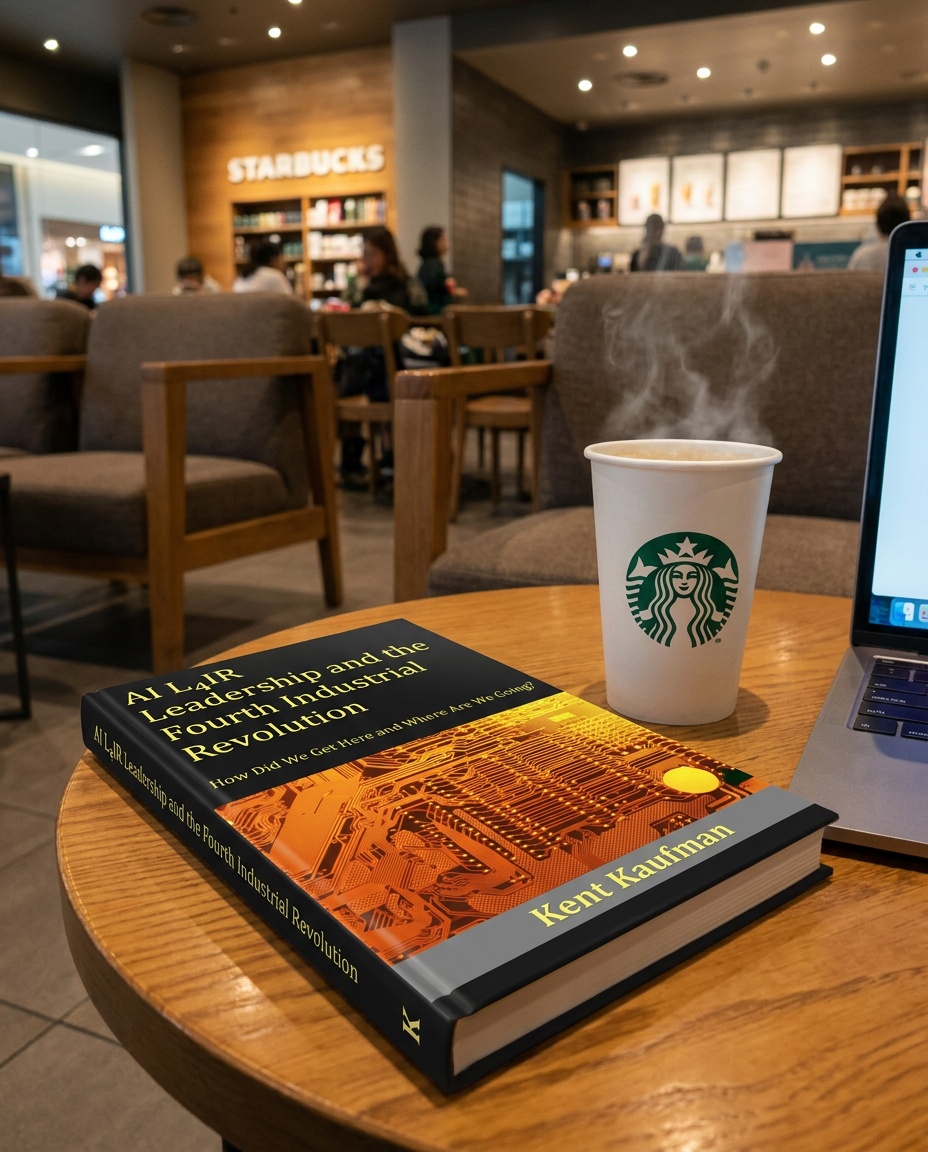
Winning in the Fourth Industrial Revolution is a leadership challenge before it's a technology one. That's the core argument I make in AI L4IR: Leadership and the 4th Industrial Revolution: https://www.amazon.com/AI-L4ir-Leadership-Industrial-Revolution/dp/B0FP2XVX21/ref=tmm_pap_swatch_0
For your team, what's the hardest part of this shift — the mindset, the workflows, or the org design underneath?
Follow along this month as I dig into each one.
#AILeadership#FourthIndustrialRevolution#FutureOfWork#AIL4IR…more
Founder at Radi8 // Executive Coach // Host of the Inspiring Founders Podcast
· LinkedIn
·
Reading CarbonBridge’s 2026 forecast, I’m encouraged by their shift from R&D to early commercialization. Two practical lessons for founders: secure non-dilutive reimbursements or early contracts to fund operations, and start pilot-site planning well before you expect to raise. Their first product sales to Lawrence Berkeley Lab validate the path, while fundraising and pilot timing remain bottlenecks. If you’re building pilots or need introductions, send me a message.
https://www.santacruzworks.org/news/carbonbridge-2026-forecast-emerging-revenues-clearing-product-salesnbsp…more
Founder at Radi8 // Executive Coach // Host of the Inspiring Founders Podcast
· LinkedIn
·
Most coaches and consultants I talk to think visibility comes in two flavors, and they hate both.
Flavor one: stay invisible. Do great work, keep your head down, hope the right clients somehow trip over you.
Flavor two: become a "LinkedIn person." Hot takes, humble-brags, a carousel about your morning routine, everything engineered for reach. For a mission-driven practitioner, that's the nightmare. It feels like performing a version of yourself you don't even like.
So they pick invisible. Because if those are the only two options, invisible at least feels honest.
Here's the thing though. That's a false choice.
There's a third option, and it's the one that actually earns trust: a body of work. Not reach-chasing. Not a highlight reel. Just your real thinking, shared consistently, so people can see how you decide before they ever reach out.
And you already produce this thinking. Every week you're diagnosing a client's real problem, talking someone off a bad decision, spotting the pattern they couldn't see. That's not content you have to manufacture. It's work you're already doing in private. Making it visible isn't performing — it's letting the right people watch how you think.
Performative posting optimizes for who's watching this week. A body of work is evidence that accumulates. Buyers don't trust claims. They trust judgment they can see demonstrated over time.
You don't have to choose between hiding and turning into someone you'd mute.
So I'm curious. What holds you back more — not knowing what to say, or not wanting to sound like a "LinkedIn person"?
#IndependentConsultant#Coaching#GoingIndependent#PersonalBrand#ThoughtLeadership…more
Why founder-led content isn't marketing.
At least not primarily.
For consultants, advisors, founders, coaches, and experts, founder-led content serves a different purpose.
It's reputation.
Every post is a tiny piece of evidence about how you think.
Your judgment.
Your experience.
Your perspective.
One post rarely matters.
But hundreds do.
Over time, people begin to recognize your name.
They understand your philosophy.
They trust your approach.
By the time they reach out, they've often already decided you're someone worth talking to.
That's not marketing.
That's reputation compounding in public.
The strongest founder-led content isn't trying to go viral.
It's helping the right people understand how you think.
Most coaches and consultants I work with hate self-promotion. Good news: what actually builds a practice is something else entirely.
Self-promotion means making claims about yourself. I'm great, hire me. Nobody wants to write that, and nobody wants to read it. A reputation gets built on evidence instead — showing your thinking in public, consistently, until people can see how you work before they ever talk to you.
One is bragging. The other is teaching.
When you share how you'd approach a problem, what a client situation taught you, or the question you'd ask before a big decision, you're demonstrating judgment. The reader draws their own conclusion, which was always the only conclusion that mattered. People trust a pattern they've watched form far more than any claim.
So "I'm uncomfortable promoting myself" doesn't have to hold your practice back. The real assignment is visibility, and visibility runs on teaching, which you already do every day. If you can explain something to a client across the table, you can explain it in a post. Same act, bigger room.
The discomfort is real. I've watched dozens of brilliant people wrestle with it. Notice what it's usually attached to, though: a picture of marketing as boasting. Replace the picture, and the rest gets easier. Evidence, shared consistently, in your own voice.
What's one thing you explained to a client this week that would have been worth sharing with a hundred more people just like them?
#IndependentConsultant#Coaching#PersonalBrand#ThoughtLeadership
Here's a way to start showing up when self-promotion feels like it's "not who I am."
Share one thing you already know. Then do it again next week. That's it... no big budget, no perfect plan required.
Most of the coaches and consultants I talk to aren't short on ability. They're brilliant at the work. That "who am I to post?" feeling might be less about whether you're good enough, and more about the title you set down when you went out on your own... the org that vouched for you, the name that said "she's the expert" before she walked in the room. Losing that stings. It isn't proof you're not ready.
Getting seen isn't bragging... it's just sharing what you know, consistently, until there's a body of work behind you. Evidence instead of claims.
I got into all of this on a recent podcast, worth a listen if you're wrestling with it. Link in the first comment.
So what's actually holding you back from posting?
#Coaching#IndependentConsultant#GoingIndependent#ThoughtLeadership#PersonalBrand
Founder at Radi8 // Executive Coach // Host of the Inspiring Founders Podcast
· LinkedIn
·
You think the thing holding your practice back is that you don't have enough. Enough budget. Enough network. Enough runway to survive a mistake.
I've told myself that story too.
Then I listened to Saeed Amidi, founder of Plug and Play. Early on, he flew to Jeddah with a borrowed suit, his father's credit card, and money for exactly one trip. No safety net. No plan to come home empty-handed. In his words: "I'm not coming back till I sell something."
Having no Plan B didn't slow him down. It focused him. He stretched that one trip into 45 days and closed his first two deals.
Comfort never makes you that sharp. Constraint does.
Watch Saeed tell it himself here: https://youtu.be/bb9n-CnDGVA. It's the clearest case I've seen for why fewer resources can make you more resourceful, not less.
What constraint have you been treating as an obstacle that might actually be your edge?
#IndependentConsultant#Coaching#GoingIndependent…more
Founder at Radi8 // Executive Coach // Host of the Inspiring Founders Podcast
· LinkedIn
·
Which room are you the most knowledgeable person in?
Passion isn't enough anymore. AI already knows the generalist version of what you know, and it answers instantly, which means the floor just rose for everyone. Broad knowledge is a commodity now, and the coaches and consultants who trade only on enthusiasm and general competence are getting squeezed between a search bar and a subscription.
What AI can't replicate is genuine mastery. Saeed Amidi put the bar where it belongs: "you have to be the most knowledgeable person in the room for sure more knowledge than my and George's 150 people." Not the most passionate. The most knowledgeable... deeper on your specific domain than a large, capable team.
That's the moat. Passion gets you started, depth is what a market can't get anywhere else, and it's the one thing you can defend.
Want help sharpening exactly that positioning? Click the link in the first comment to visit my site.
#IndependentConsultant#Coaching#Positioning#GoingIndependent…more
Founder at Radi8 // Executive Coach // Host of the Inspiring Founders Podcast
· LinkedIn
·
I'll be honest: I've never been someone who enjoys scrolling LinkedIn or crafting the perfect post.
But I've built four companies, and I know that consistent visibility is not optional if you're trying to build pipeline without a big marketing budget.
So a few years ago I stopped trying to enjoy it and started trying to systematize it.
Here's what changed everything: I stopped thinking in posts and started thinking in presence.
The insight is this — you don't need to post every day to build an audience. You need to post consistently on a rhythm your audience can predict. Two high-quality posts a week, every week, will outperform seven mediocre ones every time. Consistency at a sustainable cadence compounds. Intensity that burns out doesn't.
My system:
- One Monday morning session per week, about an hour
- I pick a theme for the week (one idea, not five)
- I draft all posts from that theme while I'm in "planning mode"
- I schedule everything before I close the laptop
- I don't touch it again until next Monday
The key is separating thinking from writing from scheduling. When you collapse them into one frantic "I need to post something" moment, it feels hard every single time.
How often are you actually posting vs. how often you think you should be? Curious what that gap looks like for people — drop it in the comments. …more
After 25+ years building companies, here's a lesson I wish I'd learned sooner:
Consistency beats intensity.
Two good posts every week for a year will outperform a burst of daily posting followed by silence.
Visibility compounds. Burnout doesn't.
How do you stay visible without posting every single day?
A client asked me that this week. She's a coach, brilliant at the work, and convinced consistency meant a daily grind she couldn't keep up around real client work.
Here's what I told her. It looks like a volume problem. It's actually a system problem. Showing up consistently isn't about posting more. It's about setting your voice once, planning a few weeks ahead, and drafting in minutes so a busy stretch doesn't knock you off the map. Consistency beats frequency. Three good posts a week you can sustain will always outrun a daily sprint you abandon by Thursday.
That's the reason Radi8 exists for solo experts: to make showing up practical instead of exhausting.
Want to map a cadence that actually fits your practice? Book 30 minutes with me and we'll work it out, no pitch: https://calendly.com/foclarity/30min
What's your realistic cadence — and what makes it stick when you're busy with client work?
#PersonalBrand#Coaching#IndependentConsultant#ThoughtLeadership#AIforBusiness
Coaches and consultants: does staying visible really mean posting daily? It doesn't. Clients trust judgment they see over time, not volume. See how peers keep it consistent in my community: https://inspiringfounders.com
Founder at Radi8 // Executive Coach // Host of the Inspiring Founders Podcast
· LinkedIn
·
I've worked with hundreds of founders through my accelerator and peer groups. And when I look at why their marketing isn't converting, it almost always comes down to the same thing.
They built the campaign before they validated the message.
Here's what that looks like in practice: they spend two or three weeks building out a content calendar, designing assets, writing emails, setting up scheduling. Then they launch. And then they find out — through low engagement, no clicks, no replies — that the message doesn't resonate.
All of that work, wasted. Not because the campaign was bad. Because the message was untested.
The fix is simpler than most people think.
Before you build a campaign, send 5 DMs or have 3 sales conversations using your core message. Pay attention to the responses. Do people light up? Do they ask follow-up questions? Do they forward it to someone else?
Or do they politely change the subject?
What you learn in those conversations is worth more than any A/B test you'll run later. Real humans responding to a real message in real time will tell you everything you need to know about whether your campaign is worth building.
Build the conversation first. Build the campaign second.
Book a free audit with me — I'll look at your current messaging and tell you exactly where I'd focus first. …more

 View on LinkedIn
Also on
View on LinkedIn
Also on


'/%3E%3Cpath fill='%23fff' d='M12 7.3A4.7 4.7 0 1 0 16.7 12 4.7 4.7 0 0 0 12 7.3Zm0 7.8A3.1 3.1 0 1 1 15.1 12 3.1 3.1 0 0 1 12 15.1Zm5-8a1.1 1.1 0 1 0 1.1 1.1A1.1 1.1 0 0 0 17 7.1Zm-5 1.5c-1.5 0-1.7 0-2.3.1a3.8 3.8 0 0 0-1.3.2 2.2 2.2 0 0 0-.8.5 2.2 2.2 0 0 0-.5.8 3.8 3.8 0 0 0-.2 1.3c-.1.6-.1.8-.1 2.3s0 1.7.1 2.3a3.8 3.8 0 0 0 .2 1.3 2.2 2.2 0 0 0 .5.8 2.2 2.2 0 0 0 .8.5 3.8 3.8 0 0 0 1.3.2c.6.1.8.1 2.3.1s1.7 0 2.3-.1a3.8 3.8 0 0 0 1.3-.2 2.5 2.5 0 0 0 1.3-1.3 3.8 3.8 0 0 0 .2-1.3c.1-.6.1-.8.1-2.3s0-1.7-.1-2.3a3.8 3.8 0 0 0-.2-1.3 2.2 2.2 0 0 0-.5-.8 2.2 2.2 0 0 0-.8-.5 3.8 3.8 0 0 0-1.3-.2c-.6-.1-.8-.1-2.3-.1Zm0-1.6c1.5 0 1.7 0 2.4.1a5.5 5.5 0 0 1 1.8.3 3.8 3.8 0 0 1 2.2 2.2 5.5 5.5 0 0 1 .3 1.8c.1.7.1.9.1 2.4s0 1.7-.1 2.4a5.5 5.5 0 0 1-.3 1.8 3.8 3.8 0 0 1-2.2 2.2 5.5 5.5 0 0 1-1.8.3c-.7.1-.9.1-2.4.1s-1.7 0-2.4-.1a5.5 5.5 0 0 1-1.8-.3 3.8 3.8 0 0 1-2.2-2.2 5.5 5.5 0 0 1-.3-1.8C4 13.7 4 13.5 4 12s0-1.7.1-2.4a5.5 5.5 0 0 1 .3-1.8 3.8 3.8 0 0 1 2.2-2.2 5.5 5.5 0 0 1 1.8-.3C10.3 5 10.5 5 12 5Z'/%3E%3C/svg%3E)