Marketing and branding consultant with over 20 years of experience helping purpose-driven and socially responsible companies launch their products and build their brands
· Bluesky
·
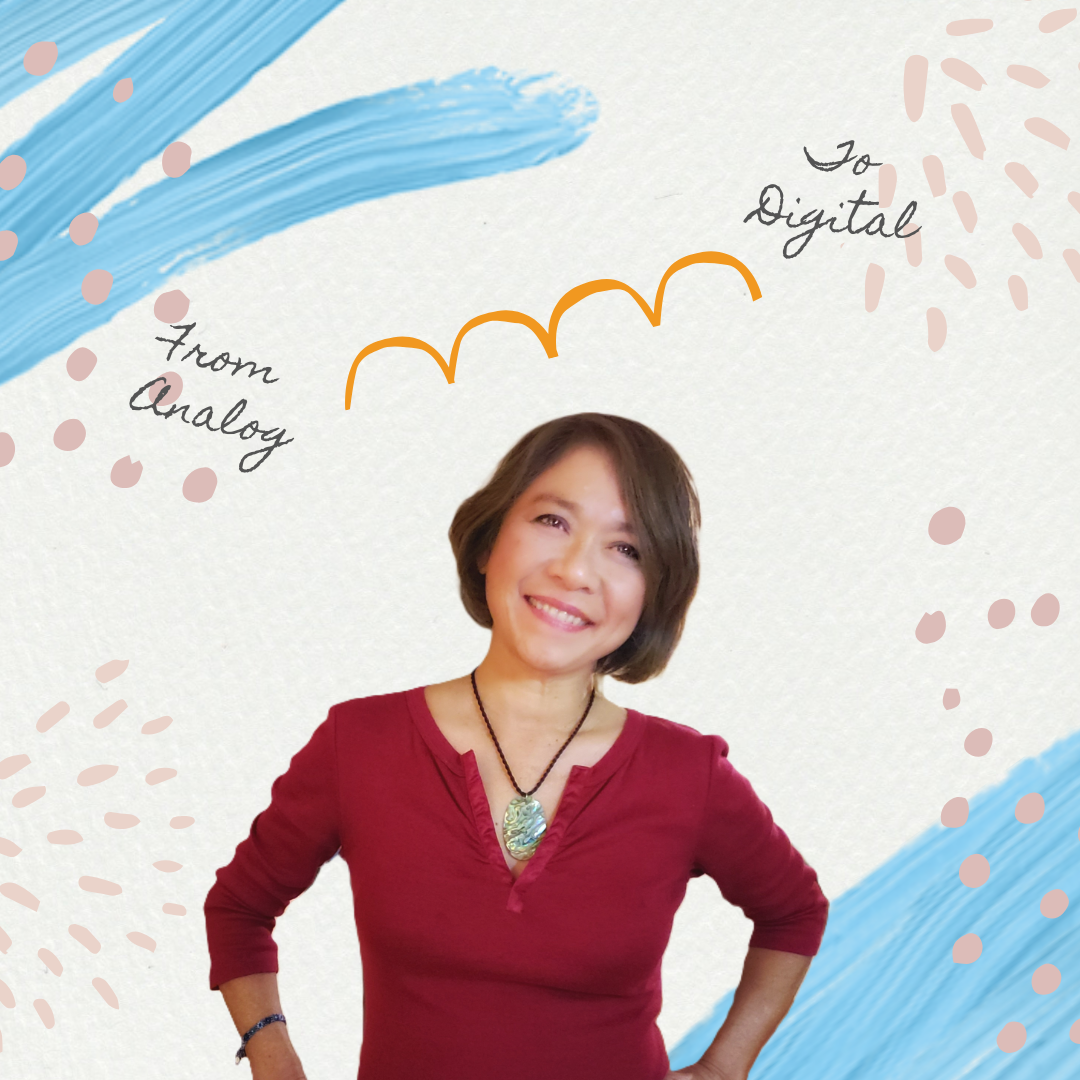
Wrapping up my analog marketing series. Word of mouth and partnerships teach you who your people are, faster than any dashboard. Then social and AI have something real to work with. Analog first. Digital second. Rethinking your mix? DM me. My inbox is open. #AnalogMarketing#SmallBusiness…more
Who have you actually watched build the startup you're trying to build?
Saeed Amidi makes a point about Stanford I keep coming back to: the reason so many students there start companies is that they grow up seeing it as normal. A graduate feels they could just as easily go build the next Google as go get a job at one. He points to the poster children — Larry Page, Sergey Brin, Bill Hewlett, Dave Packard. When you can see people like you doing it, building becomes something you can picture yourself doing.
I launched the startup incubator at San José State, where I still teach. Same engineering talent as anywhere. Far fewer startups. The gap isn't intellect... it's whether or not students believe they can do it.
The same dynamic runs for anyone starting a business. What you believe you can attempt is shaped by the peers you can watch attempting it. That's why community isn't just encouragement — it's the infrastructure your belief runs on.
Watch Saeed make the point himself here: https://youtu.be/bb9n-CnDGVA
Who in your peer group has already made this leap? And if you can't name anyone... is that why you're hesitating?
#IndependentConsultant#Coaching#Consulting…more
I heard Saeed Amidi explain why Stanford makes about 450 startups a year.
Students see founders they could become... "you could go either get a job at Google or build Google."
Who made it feel possible for you?
Marketing and branding consultant with over 20 years of experience helping purpose-driven and socially responsible companies launch their products and build their brands
· LinkedIn
·
In my last post, I shared why organic reach can't carry a small business on its own, and why word of mouth is making a comeback. Your customers become your storytellers.
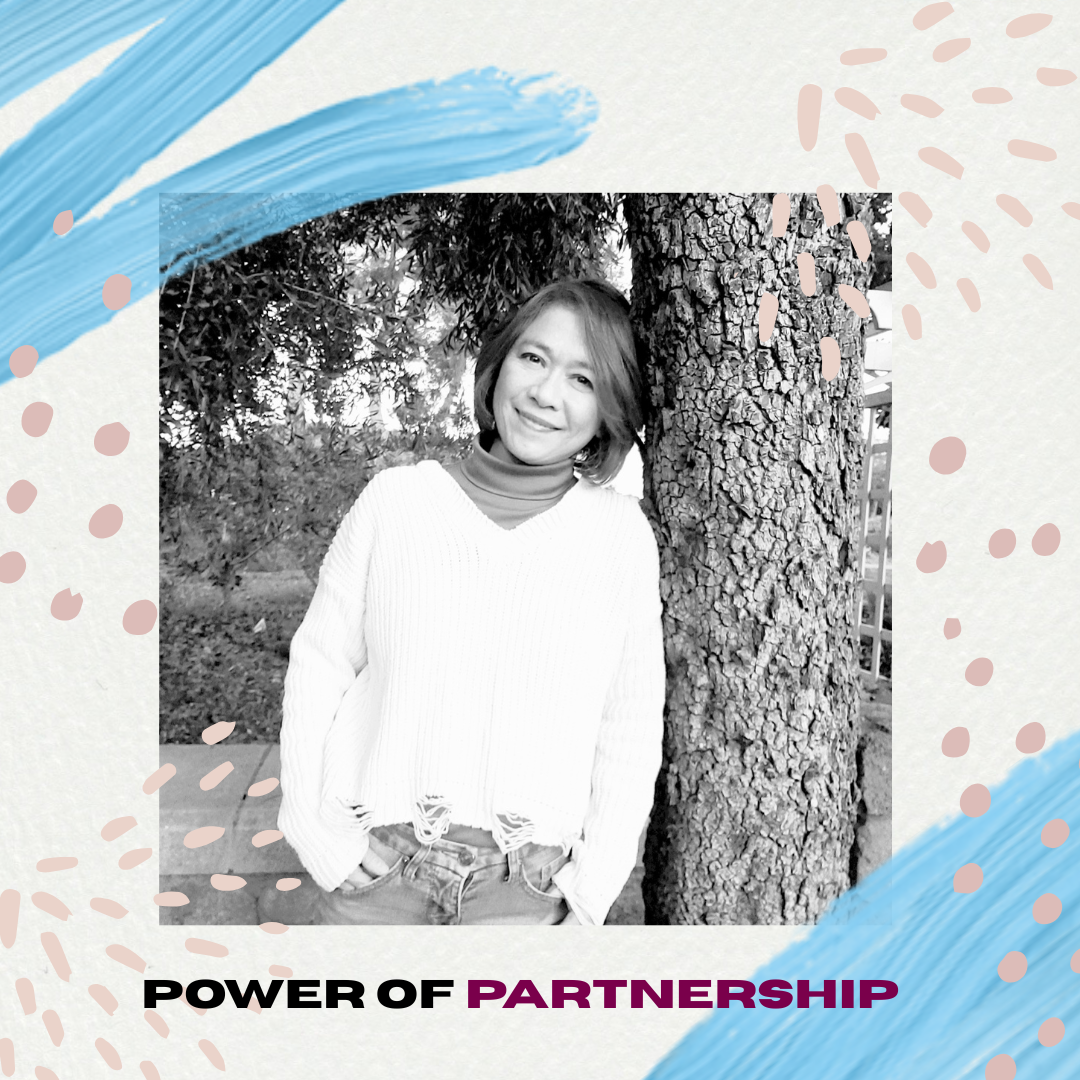
Now let's talk about the power of partnership marketing.
Two businesses. Two audiences each has earned. One shared goal. A co-hosted workshop. A bundled offer. A feature in each other's newsletters. No ad spend, and twice the reach.
Even though partnership marketing is free, good partnerships require:
→ A shared vision. A yoga studio and a local juice bar. A sustainability consultant and a B Corp accountant. Do you care about the same customer outcome?
→ Trust and appreciation. You lend your reputation, and so does your partner. Say thank you often.
→ Deeper relationship building. Partnerships rarely come from a cold pitch. They grow from coffee chats and showing up before there's anything to gain.
→ High effort from both sides. Agree upfront on who does what and what success looks like.
→ Start small. One joint project first. A small win builds momentum for the next.
Which business would you love to partner with, and why?
Final post coming up: how to carry all of this from analog to digital.
#PartnershipMarketing#WordOfMouthMarketing#SmallBusinessMarketing#RelationshipMarketing#PurposeDrivenBrands…more
Last post: word of mouth. Today: its natural partner. Partnership marketing is two businesses sharing audiences they've each earned. No ad spend, twice the reach. Start small with one joint project, and let a small win build momentum. #PartnershipMarketing#SmallBusiness
A 100% referral-based practice can look like a finished business... every client arriving through word of mouth, no marketing required. Usually it means the work is genuinely good, because people don't refer you unless you've earned it.
But it's a position you can't forecast. You can't schedule referrals, speed them up, or refill them on command... they arrive on their own timing, in their own volume, and you're not the one holding the dial.
A reputation the market can actually find does two jobs at once. It makes the referrals you've already earned move faster, and it lets new clients reach you directly... without waiting for someone to make the introduction.
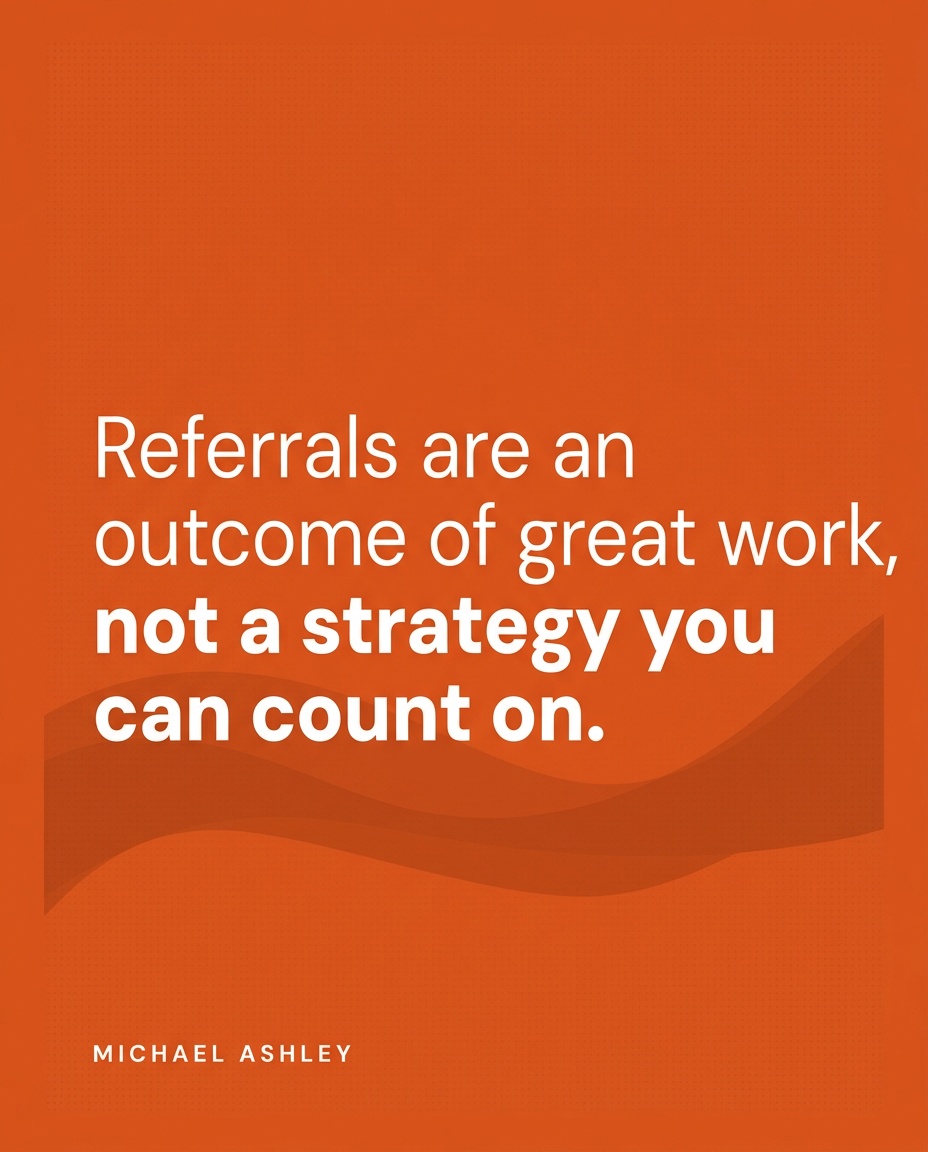
Referrals are an outcome of great work, not a strategy you can count on.
One question I'd ask: if your referrals went quiet for 60 days, what would you do? That answer tells you how much proactive strategy you actually have.
My community where coaches and consultants get in the room with the founders they want as clients is linked in the first comment.
#Coaching#IndependentConsultant#GoingIndependent#Positioning#ConsultingBusiness…more
A coach I interviewed told me, "even to this day I'm a 100% referral-based practice." That reflects genuinely great work. It's also a risk you can't forecast... you can't speed referrals up, control their timing, or refill them on command.
A reputation the market can find does two things at once: it makes referrals accelerate, and it lets new clients reach you directly.
Referrals are an outcome of great work, not a strategy you can count on.
If your referrals went quiet for 60 days, what would you do? That answer tells you how much proactive strategy you actually have.
#ExecutiveCoach#CoachingBusiness#IndependentConsultant#ConsultingBusiness#GoingIndependent#Positioning#PersonalBrand#Solopreneur#SmallBusinessOwner#BusinessGrowth
Y Combinator filled the Chase Center. Sam Altman. Jensen Huang. Jeff Dean. Alexandr Wang. Six thousand founders selected from 30,000 applicants. You couldn't pay to get in. Everyone who made it walked out with over $25,000 in compute credits from OpenAI, Anthropic, Cursor, xAI, AWS, and Azure.
People online called it the MegaChurch of Tech. That's not a criticism — it's a signal.
Jensen Huang's talk already has 200,000 views three weeks after being posted. The asset they created is enormous. And yet — no dedicated videographer for the individual speakers. No coordinated influencer seeding before the event. No clear criteria for who got accepted.
Here's what I keep coming back to: in-person events right now are not just about the room. They're about the content machine they create after. Every panel, every conversation, every moment on stage is potential fuel for months of social. If you're spending to put on an event and not spending to capture it, you're leaving most of the value on the floor.
And the bigger point: as AI makes it easier for anyone to build anything, in-person becomes your moat. The brands people feel close to are the ones they keep paying. You can vibe-code a feature. You can't vibe-code trust.
If you don't have in-person in your strategy, start building it now.
https://startupfortune.com/y-combinator-fills-an-nba-arena-with-ai-founders-as-sam-altman-and-jensen-huang-tell-6000-applicants-the-window-is-now/#B2BMarketing#EventMarketing…more
Grokbot shot 3 days of content building a company live. https://beincrypto.com/grok-bot-livestream-72-hour-startup/
Posted it once on X. Clipped none of it.
Big stunt. No afterplay.
Same mistake Ramp made with Bill Pay the Musical.
Spend big. Go dark.
#B2BMarketing
Rockstar isn't advertising GTA 6.
It turned Miami into Vice City. Police Lamborghinis. A blimp. A $1M rooftop sign. Zero traditional ads, millions of views.
Fans became the distribution. Most brands run ads about experiences. Rockstar created one.
https://archive.superhuman.ai/2110898507448254774
Reading annieduke.substack.com on networks and decisions, I thought of my peer groups.
Founders solve problems well... peers help you notice when it's the wrong one.
Curious what one looks like? https://inspiringfounders.com…more
When business is good, marketing is the first thing to go. I know because I did it.
In 1998 I spent months building relationships with ad agencies, looking for work. It paid off. I landed a big contract building web apps for PayPal, HP, and a handful of other big names, so I stopped going out and buried myself in the projects.
Then the agency lost its contracts, and my projects ended with them.
It took me a year to get back to where I'd been... and a lot of that year was spent explaining to people why I'd disappeared.
If you run a small business, the slow months usually start in the busy ones. Customers come from relationships, and relationships need you to keep showing up. It doesn't have to be much. A couple of posts a week and a quick note to past customers now and then is enough to survive a busy month.
What's the first thing you drop when you get busy?
#SmallBusiness#Marketing…more
What did you actually keep from the last program you paid to be in?
For me it wasn't the degree. Years after my MBA, the thing that still pays off is a handful of relationships I made there, not any single lecture.
One of them started with a guest speaker. He came in, presented, and most of the room took notes and left. I introduced myself. Then I did the part almost nobody bothers with... I stayed in touch, for years. That one relationship went on to matter more to my business than anything on the syllabus.
The curriculum has a shelf life. A relationship you actually tend can compound for decades.
If you're building a practice of your own, treat the people you meet now as the asset. Positioning gets you in the room; the relationships you keep are what pay you back for years.
That's the work I help with. See how on my site, linked in the first comment.
#IndependentConsultant#Coaching#GoingIndependent#PersonalBrand#ThoughtLeadership…more
“Vitamin or pain killer?” - advisors love to ask this question about your product. And they love to tell you it has to be a pain killer, because it’s easier to sell. But the truth is less about pain and more about understanding your customer.
When I was 23 I worked at Threshold, one of the largest distributors of vitamins and supplements to the industry. They easily sold hundreds of millions of dollars every year into supplement stores all over the country.
What made them special wasn’t their inventory. It was their sales organization.
Every sales rep would spend time on the phone with their customers, they knew them by name, they talked like old friends. But more than that they spent time educating. And in turn their customers, the shop owners, educated their own customers.
What they created was an environment of conscious empathy and learning for people who didn’t want pain killers.
So here’s the question for your business: Are you chasing the same customers as all your competitors? The ones looking for pain killers?
Or are you building a community that’s tired of popping pills and wants a real, long-term solution?
Selling “vitamins” isn’t bad, it’s just very different from selling “pain killers” …more
Organization focused on AI leadership and innovation for the Fourth Industrial Revolution, based in Silicon Valley
· LinkedIn
·
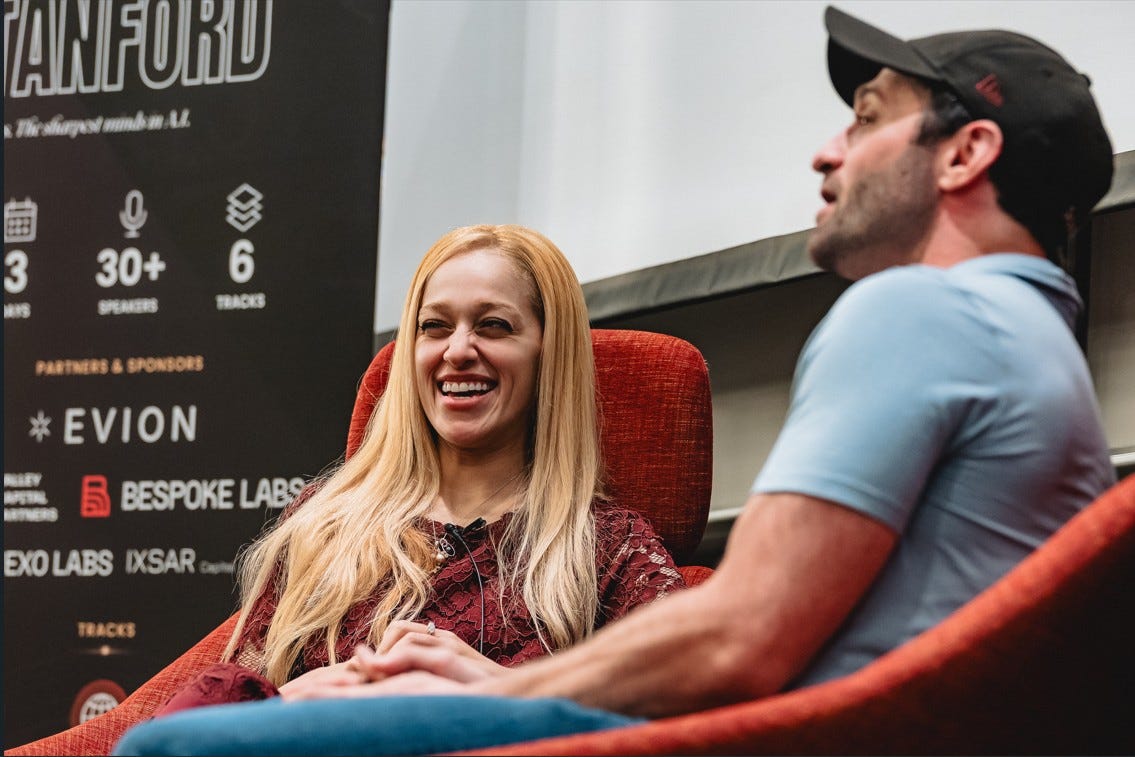
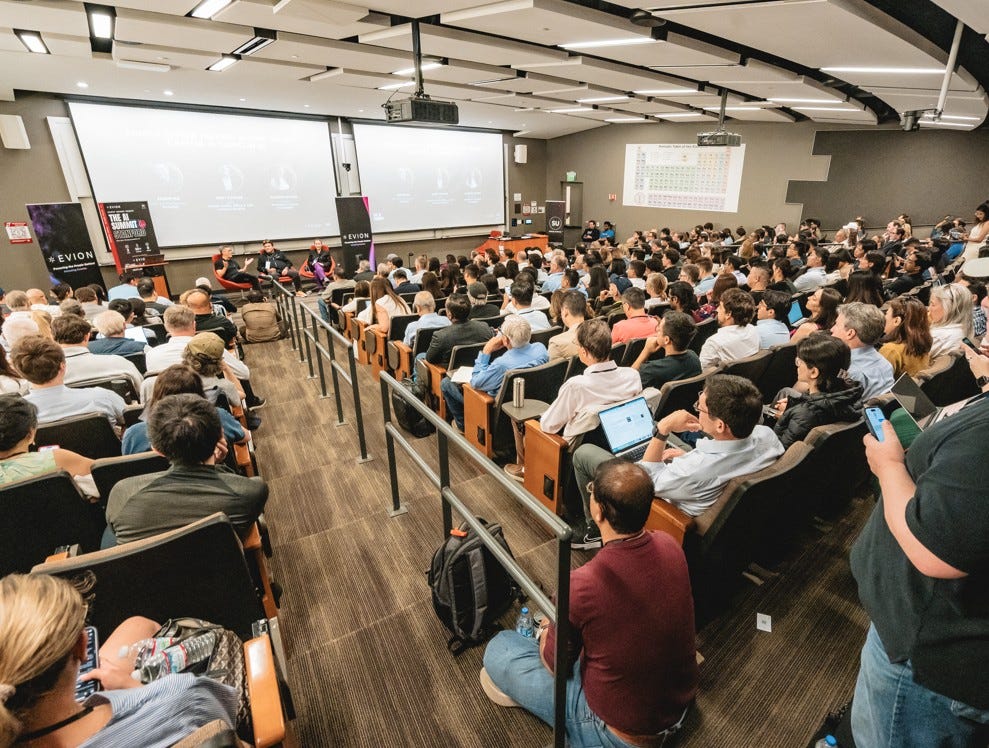
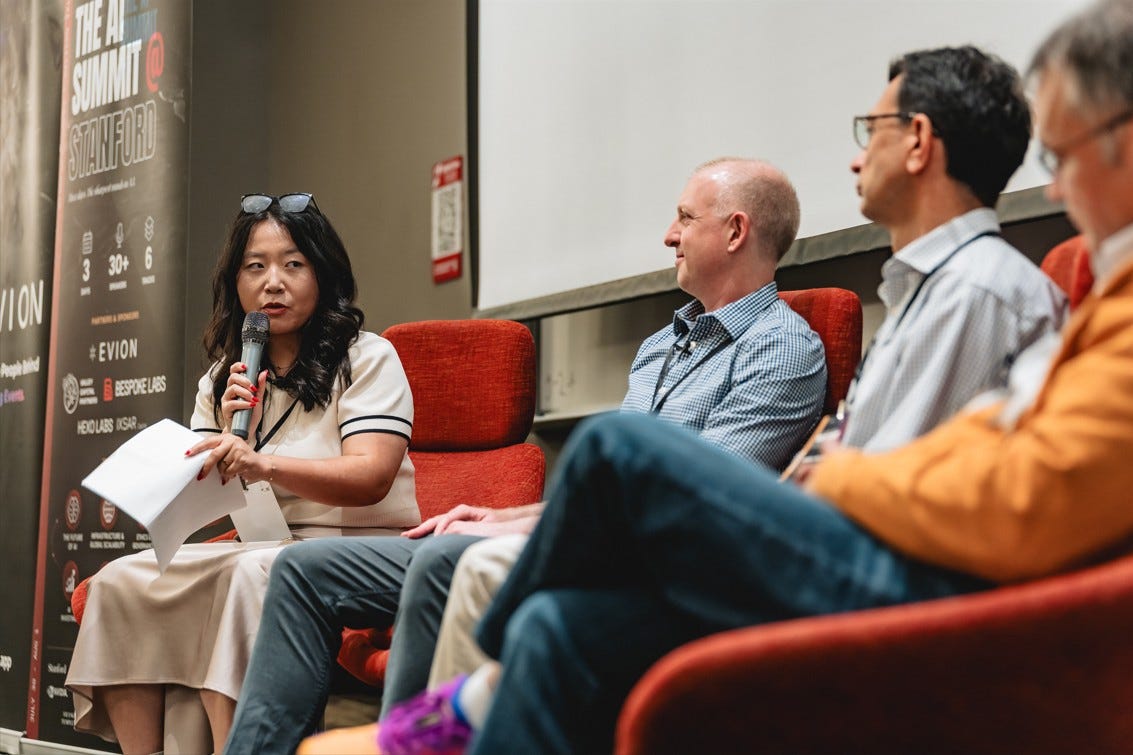
**Day 2 at the AI Summit @ Stanford: New Friends, Extended Conversations**
Another great day on the Farm.
The formal sessions delivered strong substance—building defensible AI startups when code is free, the future of human intelligence in the age of AI, the next big data layer for frontier systems, two paths for AI in education (automation vs. augmentation), family office capital trends, and the new rules of venture for finding outliers. The conversations stayed sharp and practical throughout the day.
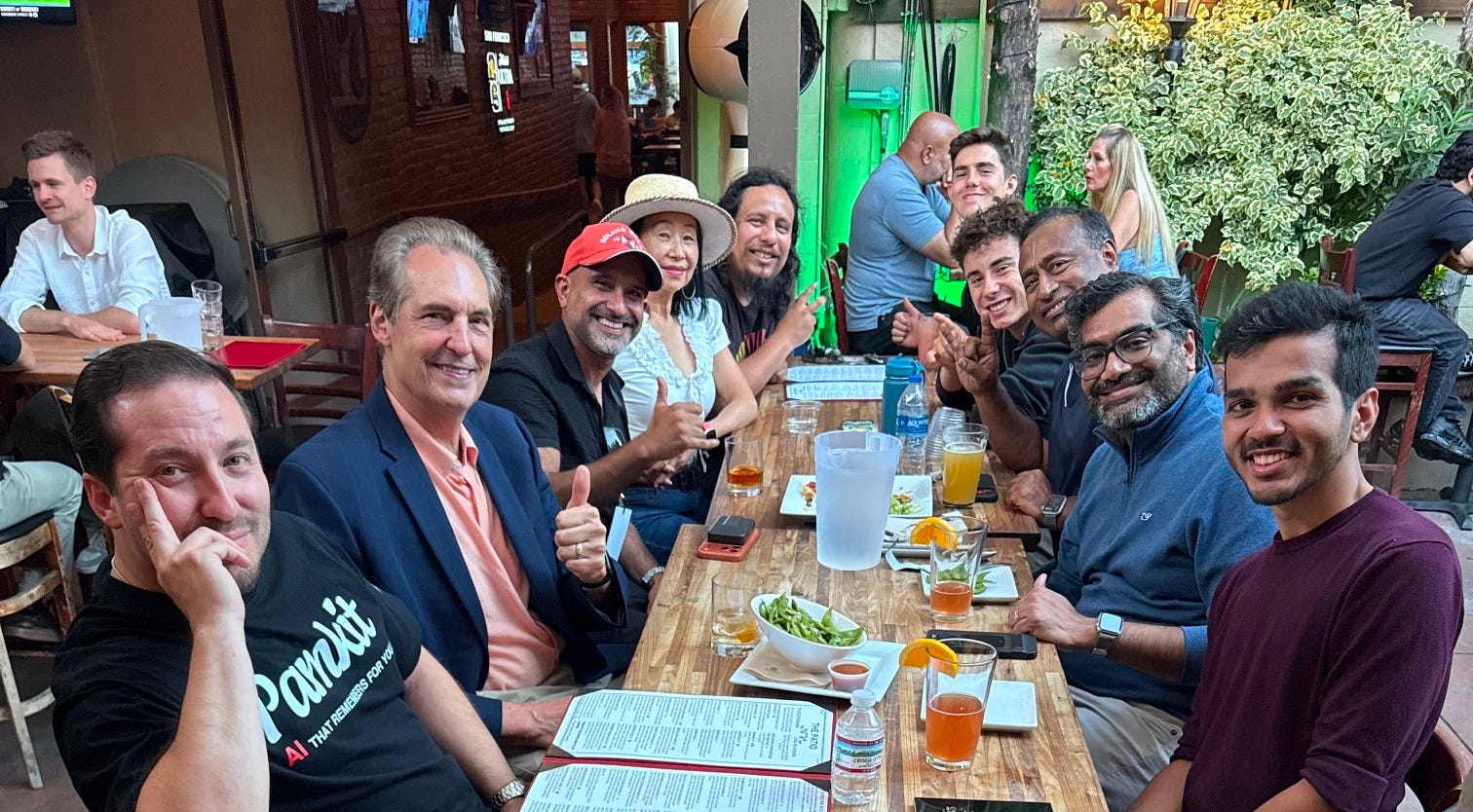
But some of the best moments happened after the official program. A group of us ended up at Rudy's Patio, still deep in the AI conversation long after the last session. New friendships formed quickly—the kind of easy camaraderie that only happens when people are genuinely excited about the same ideas.
Stanford once again proved itself a natural catalyst for innovation and ideation. The campus, the people, and the conversations just seem to spark something extra.
Grateful to be part of it.
🔗 Event details: https://evion.app/events/ai-summit-stanford…more
After working with hundreds of founders, one pattern keeps repeating.
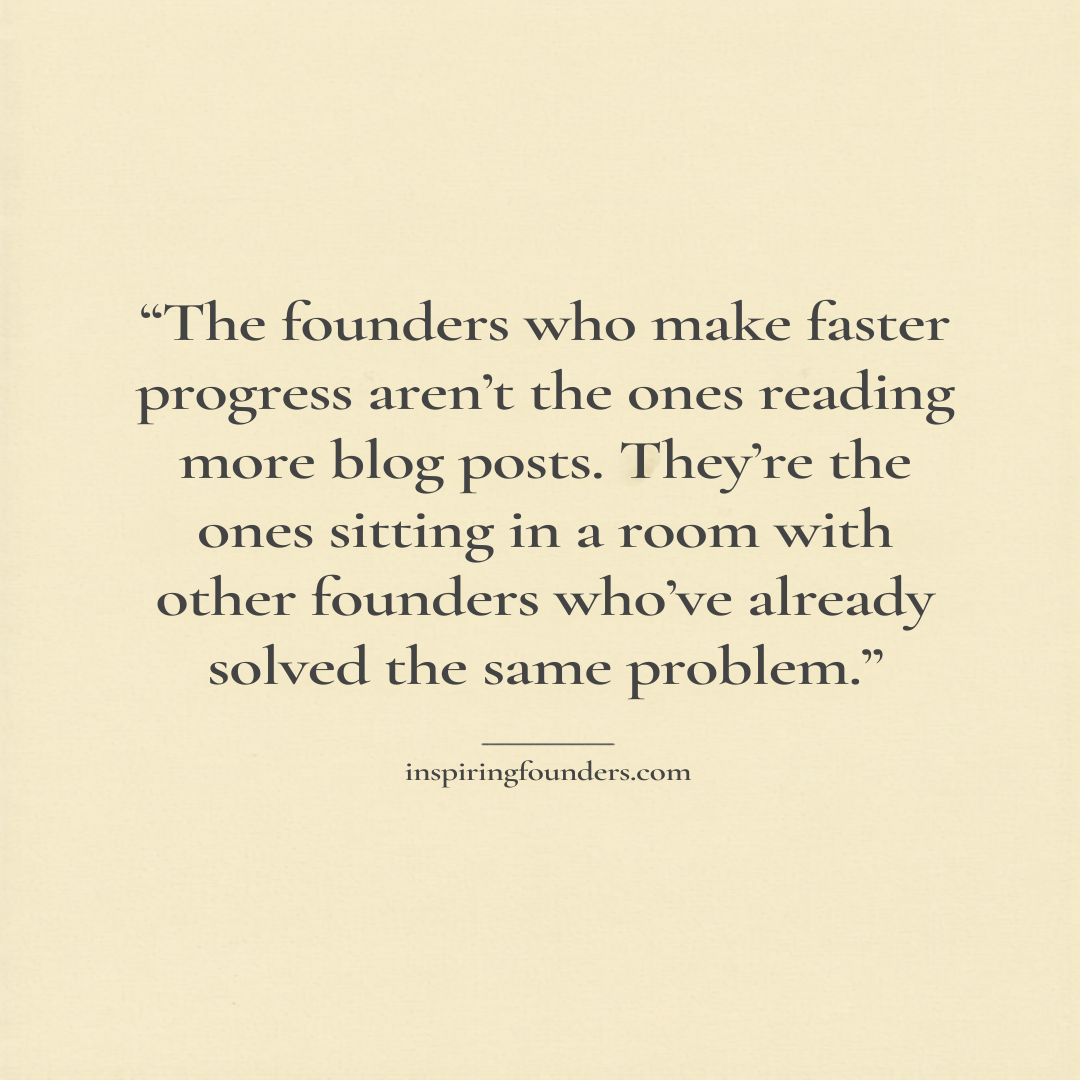
The ones who make faster progress are not the ones reading more blog posts or watching more tutorials. They are the ones sitting in a room with other founders who have already solved the same problem.
You skip the trial and error. You see what actually works. You adapt it to your business and move forward.
That is exactly why I created the Inspiring Founders Peer Group.
It is built for founders who want to build a valuable business without burning cash on marketing or headcount. We meet once a month in person in San Jose or Santa Cruz. The focus is on practical problems, real workflows, and honest feedback from people who understand the tradeoffs you are making.
You do not need to have everything dialed in. You just need to be willing to show up, ask good questions, and apply what you learn.
If this sounds like your next step, apply to join the next meeting at inspiringfounders.com.
https://www.inspiringfounders.com/#Founders#PeerGroup#BayArea…more
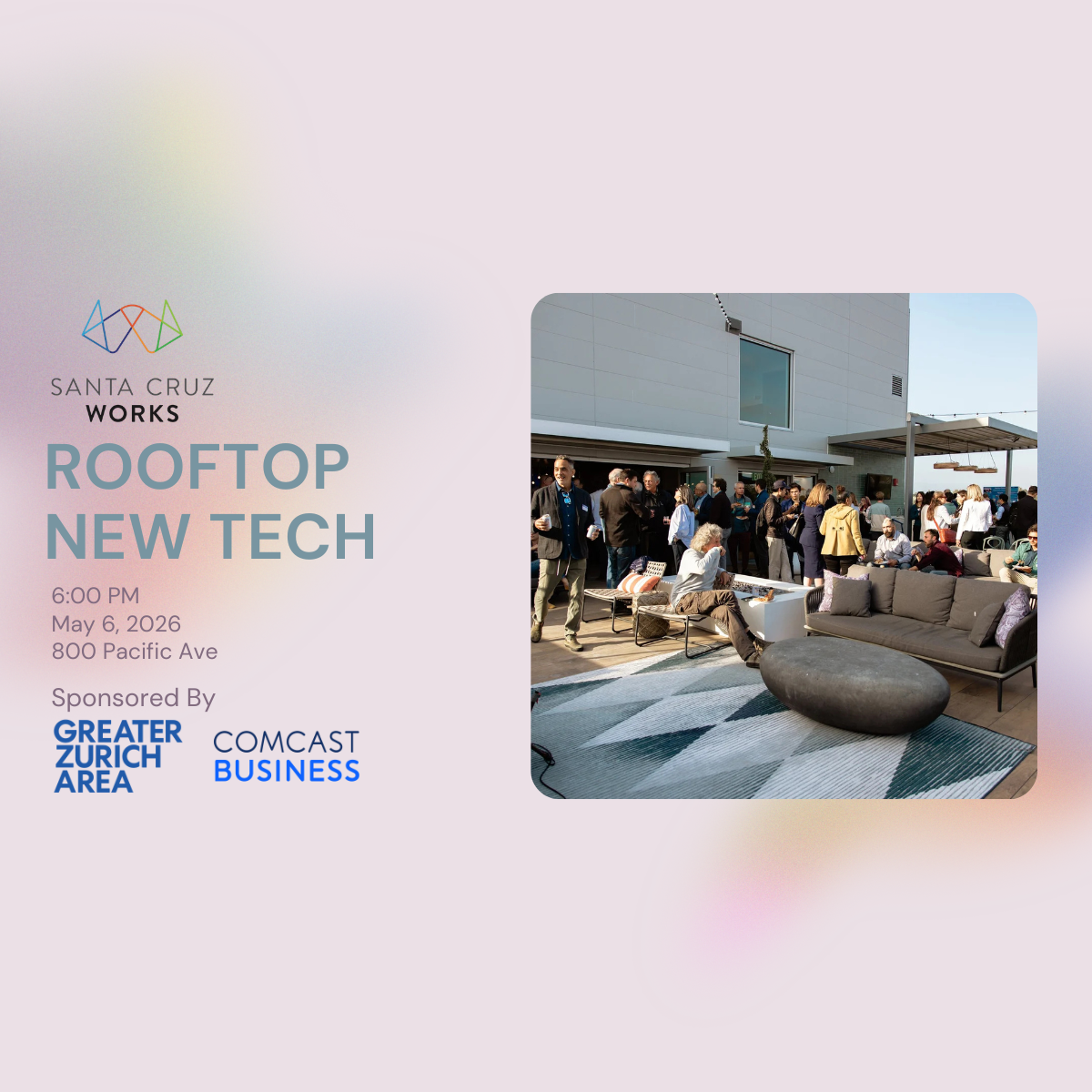
Santa Cruz Works Rooftop New Tech is back on May 6, and I'll be there.
If you're a founder working on something in tech, this is one of the best nights to show up. Six startups will present on the rooftop at Anton Pacific. Solid food and drinks. Great views. Real conversations with other builders.
I've advised and invested in startups for years. Three of those companies had billion-dollar exits. I've also launched three of my own, with one major acquisition. The early stages are hard when you're doing everything yourself—go-to-market, messaging, content—all while trying to build product.
The best part of events like this isn't the presentations. It's the conversations between them. The founder who's stuck on messaging and finally gets clarity. The team that's been guessing at go-to-market and walks away with a plan.
I'll be there between presentations. If you want to talk through your go-to-market strategy, your messaging, or how to build a content system that doesn't eat your week, come find me. I'm happy to walk through what's working and where you can get a quick win.
https://www.santacruzworks.org/news/santa-cruz-works-rooftop-new-tech-may-6…more


 View on Bluesky

 View on LinkedIn
Also on

'/%3E%3Cpath fill='%23fff' d='M12 7.3A4.7 4.7 0 1 0 16.7 12 4.7 4.7 0 0 0 12 7.3Zm0 7.8A3.1 3.1 0 1 1 15.1 12 3.1 3.1 0 0 1 12 15.1Zm5-8a1.1 1.1 0 1 0 1.1 1.1A1.1 1.1 0 0 0 17 7.1Zm-5 1.5c-1.5 0-1.7 0-2.3.1a3.8 3.8 0 0 0-1.3.2 2.2 2.2 0 0 0-.8.5 2.2 2.2 0 0 0-.5.8 3.8 3.8 0 0 0-.2 1.3c-.1.6-.1.8-.1 2.3s0 1.7.1 2.3a3.8 3.8 0 0 0 .2 1.3 2.2 2.2 0 0 0 .5.8 2.2 2.2 0 0 0 .8.5 3.8 3.8 0 0 0 1.3.2c.6.1.8.1 2.3.1s1.7 0 2.3-.1a3.8 3.8 0 0 0 1.3-.2 2.5 2.5 0 0 0 1.3-1.3 3.8 3.8 0 0 0 .2-1.3c.1-.6.1-.8.1-2.3s0-1.7-.1-2.3a3.8 3.8 0 0 0-.2-1.3 2.2 2.2 0 0 0-.5-.8 2.2 2.2 0 0 0-.8-.5 3.8 3.8 0 0 0-1.3-.2c-.6-.1-.8-.1-2.3-.1Zm0-1.6c1.5 0 1.7 0 2.4.1a5.5 5.5 0 0 1 1.8.3 3.8 3.8 0 0 1 2.2 2.2 5.5 5.5 0 0 1 .3 1.8c.1.7.1.9.1 2.4s0 1.7-.1 2.4a5.5 5.5 0 0 1-.3 1.8 3.8 3.8 0 0 1-2.2 2.2 5.5 5.5 0 0 1-1.8.3c-.7.1-.9.1-2.4.1s-1.7 0-2.4-.1a5.5 5.5 0 0 1-1.8-.3 3.8 3.8 0 0 1-2.2-2.2 5.5 5.5 0 0 1-.3-1.8C4 13.7 4 13.5 4 12s0-1.7.1-2.4a5.5 5.5 0 0 1 .3-1.8 3.8 3.8 0 0 1 2.2-2.2 5.5 5.5 0 0 1 1.8-.3C10.3 5 10.5 5 12 5Z'/%3E%3C/svg%3E)