Two places I've been building Radi8 to live... ChatGPT and Claude.
Building inside a chat, the question became... what would someone actually type?
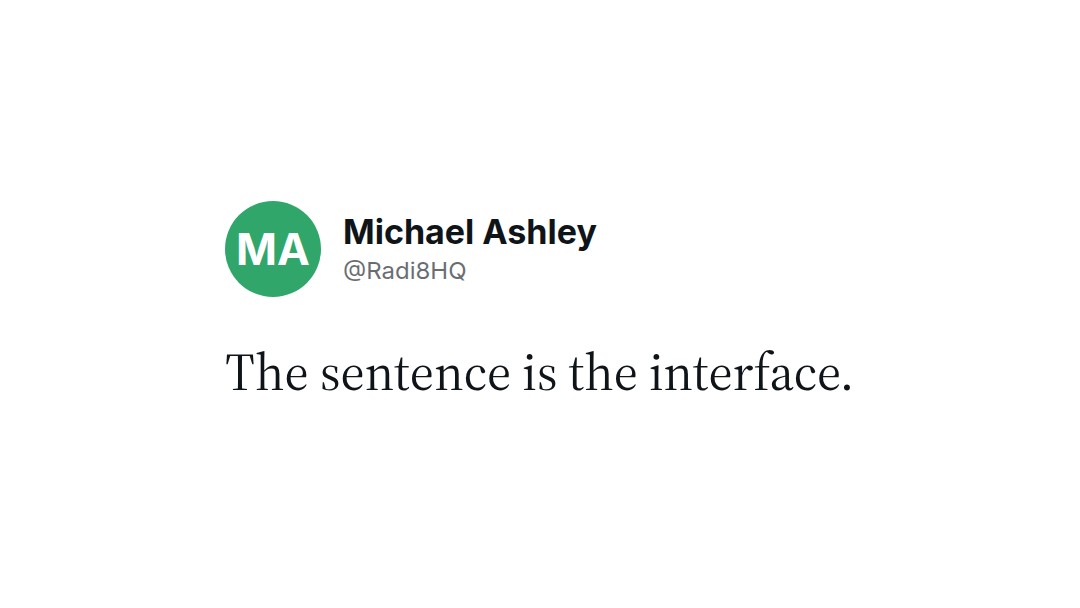
The sentence is the interface.
I don't always have a good answer to that question yet, and I've come to think that's useful information. If I can't write the sentence a person would type to ask for something, I might not understand what they want well enough.
First-time founders, you can try this on whatever you're building, with or without AI anywhere near it. Write the sentence your customer would type to ask for it. If it comes out vague, the problem might be upstream of the product... in how well you know the customer.
mashiam's Substack walks through how Radi8 works inside ChatGPT and Claude. If you'd rather see it than read about it, there's a video of how it works in the first comment.
What sentence would your customer type?
#FirstTimeFounder #Founders #CustomerDiscovery #Startups …more
Human-AI Collaboration
E
Erika Sanneman
The Multilingual Mind helps schools and education teams close the gap between what they know they want to do and what their people actually have the time, training, tools, systems, and support to impl

I went into a conversation with ChatGPT thinking I needed help writing a comment.
There was a post I wanted to support. Parts of the experience were familiar to me, and other parts were not. I was trying to figure out how to participate without making the conversation about me.
Normally I might ask AI to help me word the comment.
This time I asked it to ask ME questions.
What did I want to accomplish? Was I trying to share my own experience, or was I trying to support the people sharing theirs? And did I actually need to comment to do that?
That's when we started talking about liking the post, saving it, sharing it where appropriate, and helping the original message travel without putting myself in front of it.
I hadn't started out thinking of those as my options. I was so focused on what to SAY.
I think about that now whenever I'm tempted to ask AI for the finished answer. Sometimes the more useful thing is another question.
Have you ever decided that the best way to support a conversation was not to add your own voice to it? …more
J
Jenny Huang
Marketing and branding consultant with over 20 years of experience helping purpose-driven and socially responsible companies launch their products and build their brands
Last week I shared Tip #3 from my early process to help us navigate what we want to own as humans, and what we can work together with AI to do our best work.
This week, I'm looking at how to keep human values relevant and grow together with AI.
The human values are values that we bring for being humans -- they don't stay sharp with less practice, and can be strengthened when we become more aware of what they are.
Tip #4: Creating and Amplifying Human Values to Grow Together with AI
Here's a mindset that we need to continue to practice:
* Continue practicing your human values; values that go unused don't stay sharp.
* Like any skill, they need growth and repetitions, especially human judgement and human intuition, which can become rusty if we don't continue to exercise and use those muscles.
A few ways to keep building:
💥Practice human judgement calls on purpose: Before reaching for an AI draft, sit with the ambiguity for a few minutes first. Make the call yourself, then compare what you come up with vs. what AI has assisted.
💥Seek feedback from real people: Not just engagement metrics. Metrics tell you what worked. People tell you why, and that "why" is rooted in human emotions.
💥Stay curious about the "why": It's easy to see that something resonated. It's more valuable to understand what made it resonate, which usually traces back to human perspectives you hadn't considered.
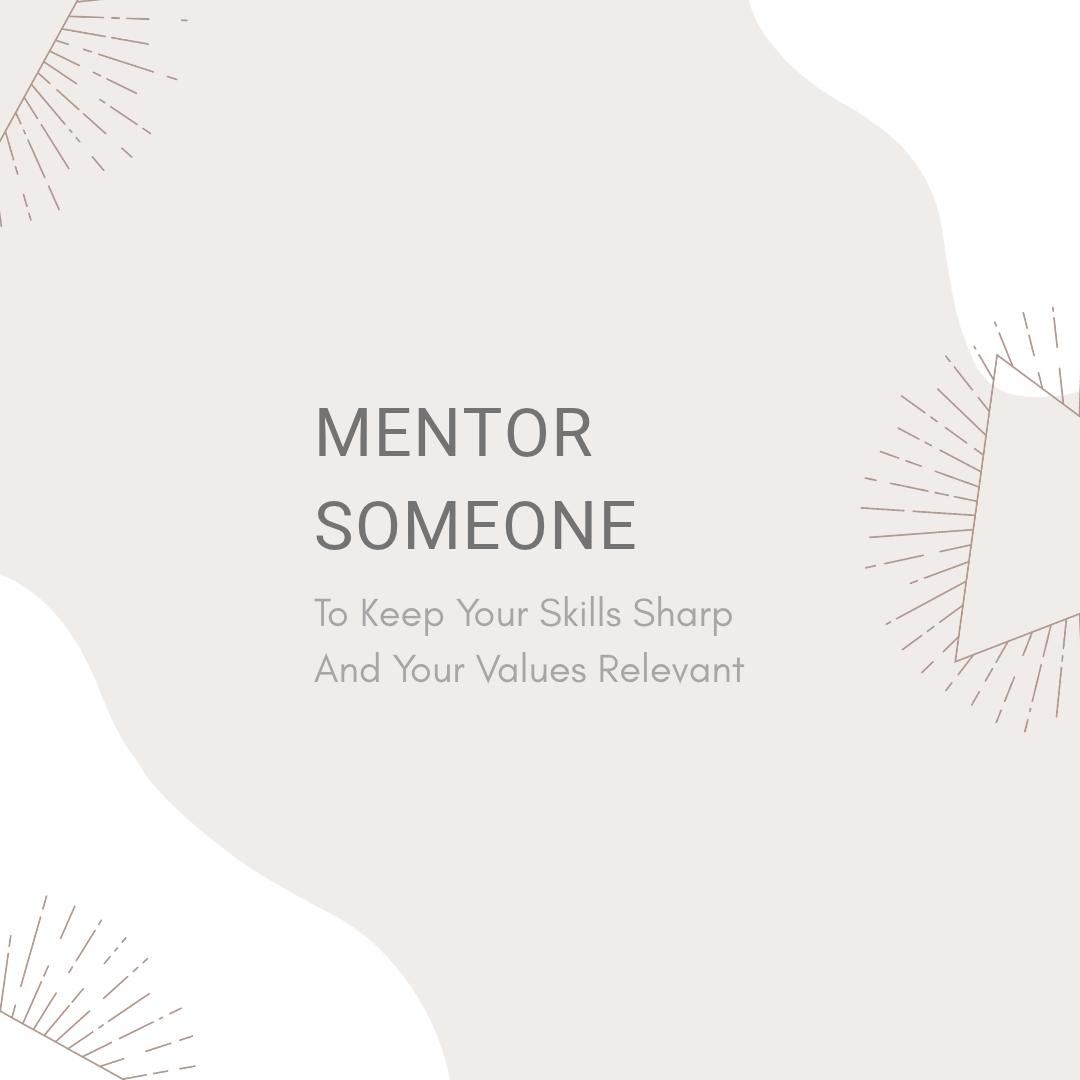
💥Mentor someone: Teaching a skill is one of the fastest ways to keep your skills and values fresh and sharpened.
💥Revisit your non-negotiables list regularly: As AI capabilities shift, what you choose to own might shift too. Don't let that list go stale.
One thing that Seth Godin reminded us is that the "more human you can be, the harder you are to be replicated."
Having a healthy mindset that embrace technology, knowing your superpowers and constraints will keep you at pace and stay relevant in this modern world.
Next week: the key takeaways to keep you grounded as AI keeps evolving -- the final piece of this series.
Which of these do you already practice, and which one you might need to build back up a bit?
Love to hear your thoughts in comments below. …more
Told 2 times, Oct 21, 2026
· Bluesky · Open
A few ways to keep building them:
* Practice judgement calls on purpose
* Seek feedback from real people, not just metrics
* Stay curious about the "why"
* Mentor someone
* Revisit your non-negotiables list regularly with intentions
The tool that gets used is the one that comes to where you already work.
I keep relearning this. I spent 25 years around software, and most of it asks the same thing of you first: learn the tool. Find the menu. Remember where the setting lives. Click through four screens to do the one thing you came to do.
Radi8 is now a connector inside Claude and ChatGPT, and getting into the Claude for Startups program this week made me look hard at why that matters, beyond the badge.
It's this. When the work happens in chat, and the chat already has your voice, your audience, your plan, and your channels behind it, there's no second place to go. "Draft a post about my next workshop and schedule it for Thursday" is a sentence, not a software session. The sentence is the interface.
For an independent consultant or fractional exec, that's not a small convenience. Most tools quietly hand you a second job: you were great at the work, and now you're also supposed to master the software to do the work. Every tab between you and the client is friction, and friction is where consistency goes to die.
The connector doesn't add a place. It removes one.
Where does your work actually happen now, in the apps, or in the chat? …more
Told 2 times, Oct 5, 2026 – Oct 15, 2026
· Facebook · Open
“I don’t want another dashboard.”
I suspect we’re going to hear some version of that sentence a lot more.
For twenty years, software has mostly been somewhere you go. Need CRM? Go to the CRM. Need analytics? Open analytics. Need social media? Open the scheduler.
But if ChatGPT or Claude is already where I’m thinking, writing, researching and making decisions, why should I leave it just to operate another piece of software?
New subscribers are using Radi8 specifically because it works inside ChatGPT and Claude.
The connector isn’t merely convenient distribution, it IS the product.
AI becomes the interface and Radi8 becomes the specialized application underneath it.
This changes everything.
J
Jenny Huang
Marketing and branding consultant with over 20 years of experience helping purpose-driven and socially responsible companies launch their products and build their brands
Amplifying Human Values in the Age of AI
Recently, I've been doing more incremental training on Claude as a marketer. While I am learning to test and re-test if Claude’s AI approach can help me be more efficient in my workshop training and writing projects, I also learn that it takes quite a bit of time and patience to train AI to think like me.
As I'm going through my AI training, I pause from time to time to reflect on my philosophy about how we should integrate AI into our daily work and personal tasks.
I have always been a believer in keeping skills and superpowers that I own and not outsource them because they are non-negotiables – something that I continue to see as values that I bring to do my best work.
My values are my own experiences, struggles, intuition, perspectives, judgement, and stories that come to shape how I see things, hear things, learn things, feel things, analyze things, and connect with others.
While I'm getting better at working together with AI to do great work, I've been reminded by an interview clip of Seth Godin, who raised the message about creating values in our human work.
Godin is an American author, entrepreneur, and marketing expert known for changing how people think about modern marketing, leadership, and work. I've been following Godin because of his worldly wisdom and interesting things he said that wake people up.
What Godin said in that interview clip woke me up; it landed with me because I think we all need to be more aware and conscious of our superpowers, what we are good at that comes easily, and what we love to do that we don’t want to have someone else do it for us.
This thinking is what has prompted me to develop an early process to help us continue strengthening the values in our human work as technology evolves over time.
My intention is to help us start recognizing what we want to own as humans, and what we can work with AI together to do our best work.
Keep an eye on the next few posts where I will be sharing out my early process that you can use as a framework to work alongside with AI.
.
.
. …more
Told 6 times, Sep 23, 2026 – Oct 14, 2026
· Bluesky · Open
Been training Claude to think more like me lately in my workshops, my writing, my client work.
A Seth Godin clip on creating values in our human work stopped me mid-scroll and led me to a bigger question: what am I not willing to hand off, no matter how good AI gets?
· Bluesky · Open
None of this is about resisting technology. It's about protecting what depends on being human in the first place and being honest about what that is for you.
More on this next week: what AI is actually good at.
· Bluesky · Open
Last week: Tip #1 — the human values I'm not handing off to AI, no matter what.
This week, Tip #2 — the other half of the question: where AI actually earns its place. 🧵
· Bluesky · Open
Just because AI *can* do something doesn't mean it *should*. Trust is built in the small moments that are easiest to automate away. Protect those on purpose.
Next Tip: Keep values you bring as humans sharp as AI evolves
· Bluesky · Open
Before you blend human + AI strengths, you need to know what you're not willing to hand off, no matter how good the tech gets. For me, that list includes:
* Judgement under ambiguity
* Empathy built over time
* Ethical accountability
* Intuition in the room
* Perspective from lived experience
J
Jenny Huang
Marketing and branding consultant with over 20 years of experience helping purpose-driven and socially responsible companies launch their products and build their brands
Last Tip #2: what AI is actually good at.
Next, Tip #3: Putting the two pieces together: when human leads, and when AI can step in to assist. …more
K
Kent Kaufman
Organization focused on AI leadership and innovation for the Fourth Industrial Revolution, based in Silicon Valley

POV: Stop managing workers. Start augmenting them.
The biggest AI leadership failure I see isn't a bad model choice or a stalled pilot. It's treating AI as a tooling decision when it's really a mindset shift.
Here's the pattern. An organization buys the licenses, bolts AI onto its existing management paradigm, and waits for the productivity curve to bend. It doesn't. Six months later the tools are impressive and the results are flat — and everyone blames the technology.
The technology isn't the problem. The paradigm is.
Old management thinking is built around headcount: how many people do we need to get this done? AI-era thinking is built around augmentation: how much more can each person do when the work is amplified? Those are two different questions, and they lead to two different organizations.
That shift doesn't start with the workforce. It starts with leadership. Leaders set the ceiling on how much value AI can create — through the questions they ask, the workflows they're willing to rethink, and whether they see their people as costs to manage or capabilities to expand.
Winning in the Fourth Industrial Revolution is a leadership challenge before it's a technology one. That's the core argument I make in AI L4IR: Leadership and the 4th Industrial Revolution: https://www.amazon.com/AI-L4ir-Leadership-Industrial-Revolution/dp/B0FP2XVX21/ref=tmm_pap_swatch_0
For your team, what's the hardest part of this shift — the mindset, the workflows, or the org design underneath?
Follow along this month as I dig into each one.
#AILeadership #FourthIndustrialRevolution #FutureOfWork #AIL4IR …more
Brian Solis argued at SXSW that augmentation is the new productivity: most people use AI to do what they already know. For founders this matters because the biggest gains come from changing how decisions are made, not just automating tasks.
Three practical steps I use with startups:
1) Map core decisions and the inputs that drive them.
2) Prototype one augmented workflow in two weeks and measure decision speed and quality.
3) Standardize prompts, tests, and handoffs so the capability scales.
If you want templates or pilot intros, send me a message. #AI
https://briansolis.com/2026/03/worth-magazine-covers-brian-solis-keynote-at-sxsw-2026-augmentation-is-the-new-productivity/ …more
Told 2 times, Mar 24, 2026 – Apr 9, 2026
· LinkedIn · Open
Spent today in a workshop with Kent Kaufman, Manoj, and their Silicon Valley AI team. Farooq walked us through Spec Driven Development with AI Agents and how it produces stronger, more reliable code.
The session reinforced something I've been thinking about: the best tools don't just automate tasks. They change how we approach the work itself.
For founders building products while also trying to stay visible and engaged with customers, that shift matters. You need systems that help you think clearly, not just move faster.
If you're wrestling with how to stay consistent with marketing without it consuming all your time, send me a message.
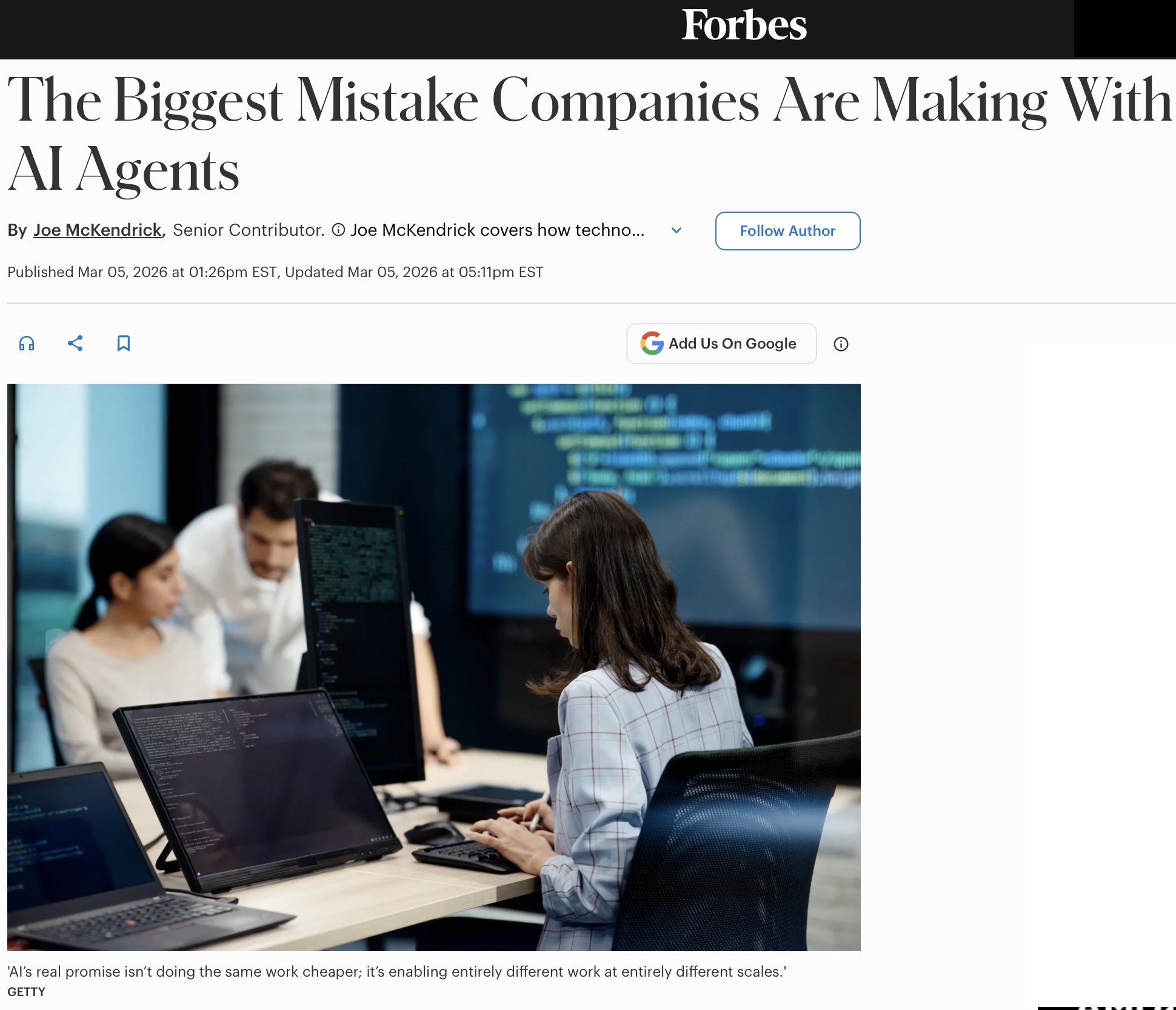
As covered in Forbes, Joe McKendrick summarizes Brian Solis' ServiceNow research on human + AI. The core mistake I see is treating AI agents only as task replacers instead of partners. From building startups and launching programs I learned three practical steps: map workflows to define human/agent decision points; measure quality and trust, not just speed; run small frontline pilots with clear handoffs and governance. Send me a message to discuss pilot designs. #AI
https://briansolis.com/2026/03/forbes-publishes-brian-solis-latest-ai-research-the-biggest-mistake-companies-are-making-with-ai-agents/ …more
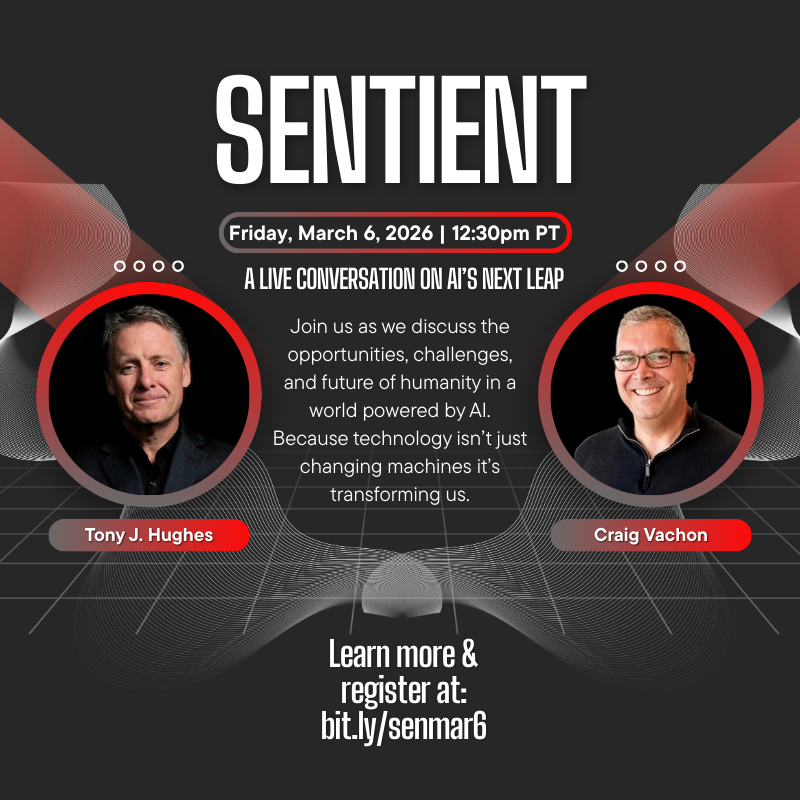
The webinar recording "Sentient and Us" is available now. It explores how AI is reshaping work, entrepreneurship, ethics, and human agency, and highlights that curiosity, critical thinking, and values will matter more than ever.
https://www.santacruzworks.org/news/recording-sentient-and-us …more
Channel names and logos are trademarks of their respective owners.