Founder at Radi8 // Executive Coach // Host of the Inspiring Founders Podcast
· X
·
I understood distribution before I'd ever heard the word. I was a kid selling gum out of a locker.
Entrepreneurship isn't a boardroom skill. It's noticing where you can add value — and most founders were doing it long before they had a name for it. …more
Founder at Radi8 // Executive Coach // Host of the Inspiring Founders Podcast
· X
·
My first business got me sent to the principal's office.
Bought Hubba Bubba for 25¢, split the pack, sold each for 25¢. A quarter became $1.25.
A teacher saw me moving product and assumed I was dealing. It was gum.
Entrepreneurship is just noticing where you can add value. …more
Founder at Radi8 // Executive Coach // Host of the Inspiring Founders Podcast
· LinkedIn
·
People ask what I actually "do."
The honest answer: I build something from nothing, get it standing on its own, hand it to someone who can scale it — then go do it again.
That's the whole model. Build, set the foundation, hand off, repeat.
For a long time I didn't have language for it, so I just looked like someone who kept leaving things. Four startups. A university incubator. Products and programs that had been stalled for years. I'd get them working and move on.
It took me a while to see the pattern wasn't restlessness. It was a role.
I'm a 0→1 builder. My job is to take an idea everyone agrees should exist and make it real, durable, and no longer dependent on me. The moment it can run without me is the moment I've done the job — not the moment I've failed at it.
But that model only works because of the other half: an operator who takes the foundation and compounds it. I invent and establish. They scale and optimize. Neither of us does the other's job particularly well — and that's the point.
If you're an operator who loves scaling something someone else started from scratch, that's the other half of this equation. Curious who relates. …more
What I actually do:
Build something from nothing. Get it standing on its own. Hand it to someone who can scale it. Then go do it again.
Build. Set the foundation. Hand off. Repeat.
The handoff isn't me failing. It's the whole point.
I spent years trying to fix what I thought was a flaw in my career.
I'd build something from nothing, get it working, put the right people and processes in place… and eventually someone else would take over.
For a long time, I thought that meant I wasn't a good founder. Now I think it means I was playing a different role.
I don't enjoy running mature organizations. I enjoy creating them.
I love the moment when someone says:
"We've wanted to do this for years, but nobody has been able to make it happen."
That's my favorite sentence in business.
Once it exists — once the systems are in place, once the team knows what they're doing — my instinct is to make sure it no longer depends on me. Ironically, that's often the moment an operator becomes far more valuable than I am.
I've stopped believing every founder should aspire to be a world-class operator. Some of us are wired to invent. Some are wired to scale. Some are wired to optimize. The mistake is thinking those are the same job.
The best thing I've built over the last 25 years isn't a product or a company. It's the ability to turn "someone should build this" into "this now exists."
And the next chapter is always the same: handing it to someone who can make it ten times bigger than I ever could.
Founder at Radi8 // Executive Coach // Host of the Inspiring Founders Podcast
· X
·
What's the most expensive assumption you've ever made about your customers?
Not the biggest mistake.
The assumption you believed for months that turned out to be completely wrong.
Mine cost me nearly a year.
Curious what yours was. …more
Founder at Radi8 // Executive Coach // Host of the Inspiring Founders Podcast
· LinkedIn
·
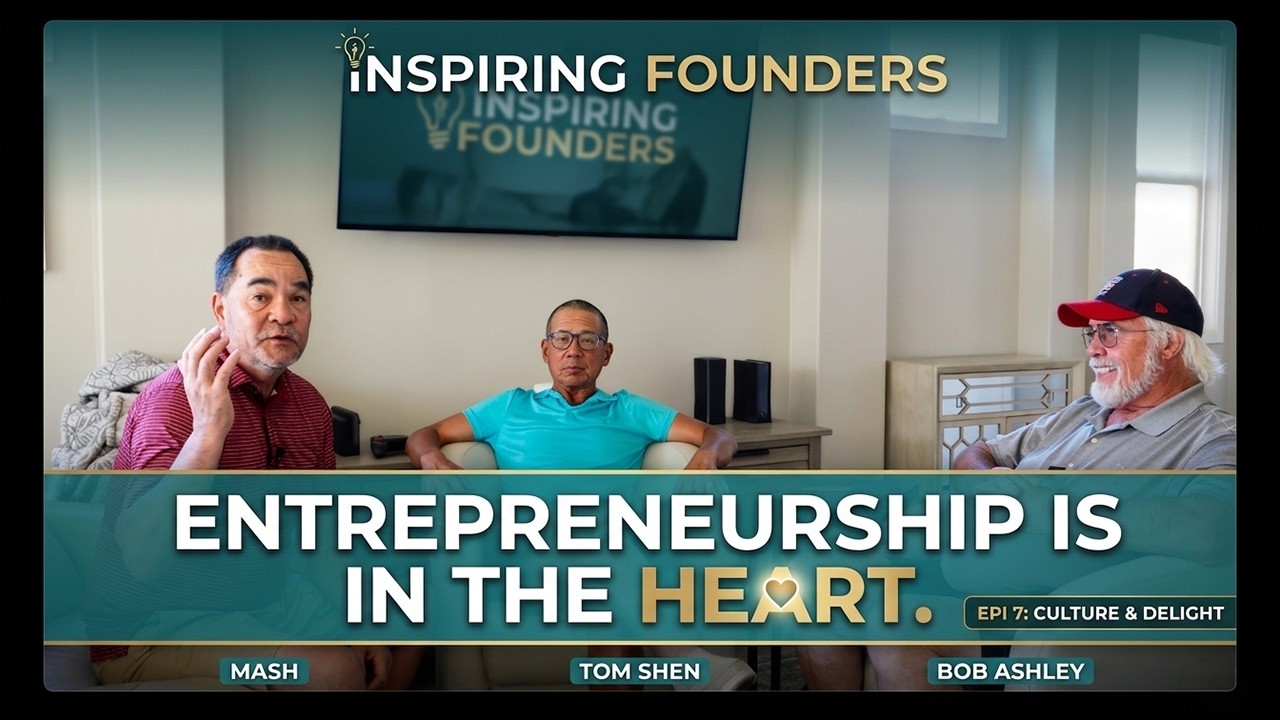
What does it take to build, grow, and exit multiple companies? For serial entrepreneur Tom Shen, the secret isn't a high IQ or a perfect business plan—it’s humility.
In this episode of Inspiring Founders, host Mash sits down with Tom Shen and Bob Ashley to discuss the "heart" of entrepreneurship. They move past the spreadsheets and exit strategies to talk about what actually builds a legacy: servant leadership, creating a culture where people want to stay for 20+ years, and why the "smartest person in the room" is usually the one who loses.
Key Takeaways:
The Humility Edge: Why being the "dumbest person in the room" is your greatest competitive advantage.
Culture over Strategy: How Tom and Bob built a 23-year partnership based on trust and a "can-do" spirit.
EQ vs. IQ: Why emotional intelligence is the most critical skill for the future of leadership.
Leading with Heart: Lessons from the basketball court to the boardroom.
https://www.youtube.com/watch?v=Vl0VydscpGo…more
Founder at Radi8 // Executive Coach // Host of the Inspiring Founders Podcast
· LinkedIn
·
I host the Inspiring Founders Podcast. Every Thursday we publish a new episode where founders share practical lessons from building companies.
A brief lesson from launching programs: define one clear success metric per horizon, limit concurrent initiatives, and align resources to the highest-priority horizon. That clarity reduces friction and improves decision speed.
If you want to discuss this or be on the podcast, send me a message. #foundershttps://www.inspiringfounders.com/podcast…more
Founder at Radi8 // Executive Coach // Host of the Inspiring Founders Podcast
· LinkedIn
·
Inspiring Founders Podcast is available on Apple Podcasts. If you want to learn from other founders, check it out.
I learned early that a good idea rarely guarantees survival. After launching early initiatives I found two practical levers that matter: repeatable operational rhythms and access to mentors who help navigate inevitable pivots.
The Inspiring Founders Podcast digs into these realities with founders who share what actually worked and what didn’t. If you want practical takeaways, subscribe and listen. If you want to get more involved in the startup ecosystem, send me a message. #foundershttps://podcasts.apple.com/us/podcast/inspiring-founders-podcast/id1847207641…more


 View on X

 View on LinkedIn