Founder at Radi8 // Executive Coach // Host of the Inspiring Founders Podcast
· LinkedIn
·
Why Founders Keep Asking the Wrong Questions in Customer Interviews
I've been mentoring early-stage founders for a long time. One of the first books I put in front of all of them is The Mom Test by Rob Fitzpatrick.
The core lesson: most founders ask questions that get polite answers, not honest ones. "Would you use this?" tells you nothing. People don't want to hurt your feelings.
The book teaches you to ask about real behaviors instead — past experiences, actual workarounds, real decisions. Questions that can't be answered with a comfortable lie.
The problem is, founders read it, get it, and then walk into their next interview and ask: "So does this solve a real pain point for you?"
Every. Single. Time.
Knowing what a good question looks like isn't the same as being able to generate one on the spot about your specific product and customer.
So I built a free tool to close that gap: MomTestQuestions.com
You describe your product and your target customer. It generates a set of high-quality interview questions built on Mom Test principles — questions about behavior, not opinions. Ready to use in your next customer conversation.
No signup. No cost. Just better questions.
If you're in customer discovery mode right now, try it before your next interview. Then come back and tell me what you learned. …more
Founder at Radi8 // Executive Coach // Host of the Inspiring Founders Podcast
· LinkedIn
·
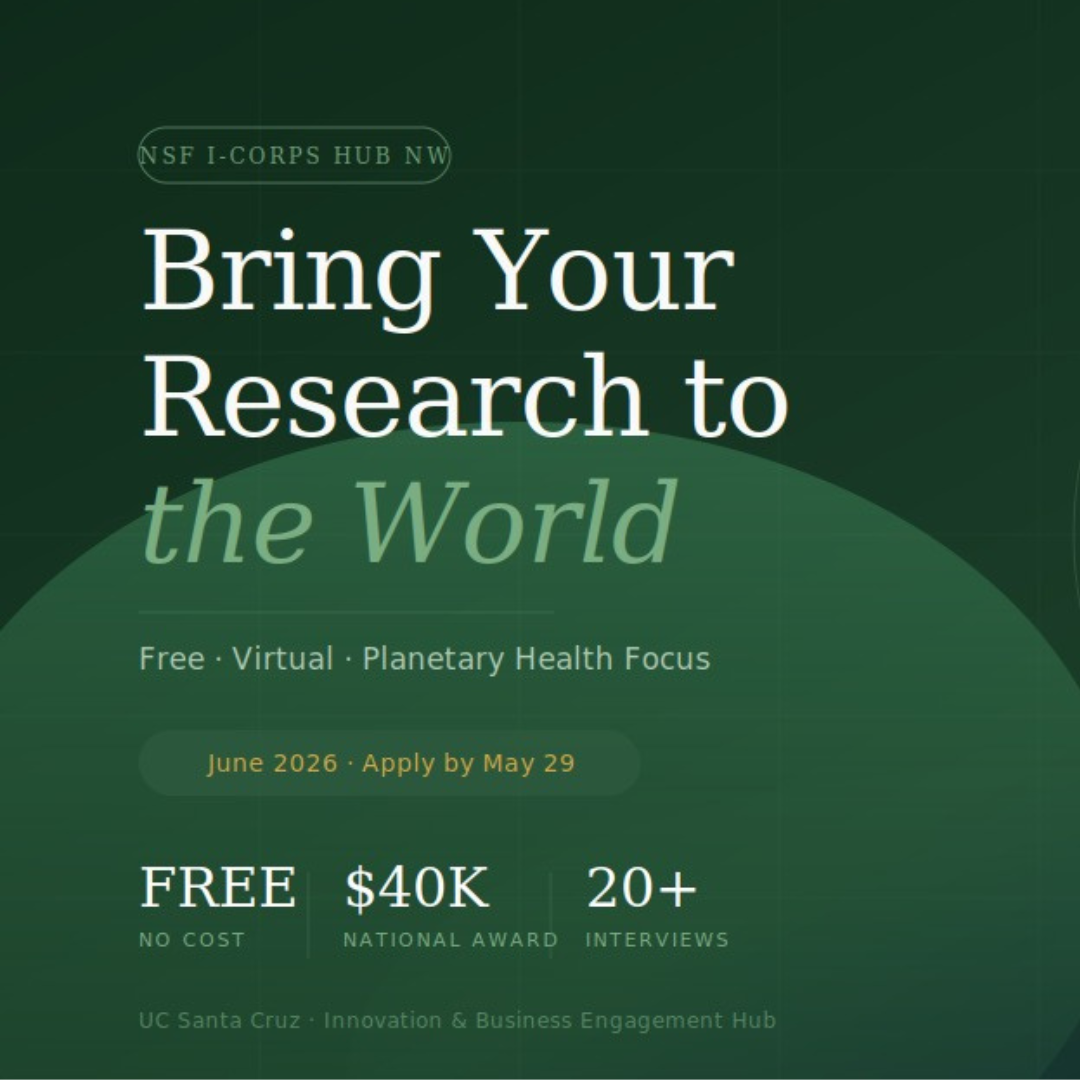
NSF I-Corps is the gold standard for customer discovery. If you have ever wanted to understand how innovation actually moves from the lab to the market, this is your chance to see the methodology up close.
The NSF I-Corps Hub Northwest is offering a free, virtual course focused on planetary health technologies. Applications are open through May 29, 2026.
Customer discovery is the single most underestimated skill in early-stage startups. Most founders skip it or do it halfway because they are eager to build. Then they spend months or years building something nobody will buy.
I-Corps teaches you how to test assumptions, talk to potential customers before you commit to a roadmap, and validate whether a real market exists for what you are building. It is structured, repeatable, and grounded in evidence.
Even if planetary health is not your focus, the frameworks and rigor you learn here apply to nearly any technology or market. The program forces you to get out of the building and run real interviews. You leave with clarity on who your customer is, what problem you are solving, and whether your solution has legs.
This is especially valuable if you are a solo founder or running a small team without access to formal mentorship or accelerator support. You get expert coaching, a proven process, and a cohort of other founders working through the same challenges.
If you are serious about bringing a new technology to market and want to build something people will actually pay for, apply. The course is free, the methodology is tested, and the insight you gain can save you years of wasted effort.
Applications close May 29. Send me a message if you want to talk through whether this is a fit for where you are in your journey.
https://www.santacruzworks.org/news/nsf-i-corps-hub-planetary-course-applications-open…more
Founder at Radi8 // Executive Coach // Host of the Inspiring Founders Podcast
· LinkedIn
·
Juicero raised $120 million and shut down four years later.
The product was impressive. A beautifully engineered juicer that squeezed proprietary juice packs. The pitch was compelling. Fresh, cold-pressed juice at home with zero mess.
But none of that mattered because they misjudged the market.
They built a $400 machine for a customer who didn't exist at scale. Worse, when reporters discovered you could squeeze the packs by hand and get the same result, the entire value proposition collapsed.
This wasn't a failure of execution. It was a failure of go-to-market strategy.
If you're a small business owner handling your own marketing, the same mistake shows up in smaller ways every day.
You build something without validating whether your audience actually wants it. You position a feature instead of a benefit. You invest time creating content that sounds good internally but doesn't connect with the people you're trying to reach.
The fix starts with three questions before you build or launch anything:
Who is this for, specifically? Not a broad market. A real person with a real problem.
What job are they hiring this to do? Juicero thought people wanted convenience. Turns out they wanted juice, and convenience meant not buying a $400 machine.
How will they discover this solves their problem? If your positioning doesn't make the value obvious in seconds, you're asking too much of your audience.
Juicero had the funding, the team, and the product. What they didn't have was a clear understanding of their customer or a go-to-market strategy grounded in reality.
You don't need $120 million to learn this lesson. You just need to ask the right questions before you spend time and money on the wrong strategy.
If you're not sure whether your positioning and content strategy are connecting with your audience, book a free 15-20 minute marketing audit. I'll walk you through where to focus first.
https://www.radi8.com/free-audit?utm_source=linkedin&utm_campaign=free_audit&utm_content=post_id
Case study: https://www.smartwareadvisors.com/blogs/insights/case-study-juicero-overbuilt-mvp-amp-misjudged-market…more
Founder at Radi8 // Executive Coach // Host of the Inspiring Founders Podcast
· LinkedIn
·
The objection I keep hearing about startup marketing, and why I still disagree
Common pushback: “You cannot start marketing until the go-to-market is nailed.” That mindset keeps early-career professionals waiting instead of building skills that prove them. After 20 years working with startups, I use a simple alternative: treat early marketing as a learning engine.
Three practical moves:
1) Run a 2–4 week micro-project tied to one customer hypothesis.
2) Run two low-cost channel tests and capture outcomes.
3) Document a one-page case study that shows insight and decisions.
These deliver portfolio-ready work, mentorship opportunities, and clear next steps into product, operations, or startup roles.
Send me a message if you want a one-page template or to talk through an idea. Ask me about Radi8 if you want help automating this into ongoing content. …more
Founder at Radi8 // Executive Coach // Host of the Inspiring Founders Podcast
· LinkedIn
·
The framework I use to help founders and early-stage startups make progress on marketing strategies.
1) Target outcome: pick one measurable user action and a 30 to 60 day deadline.
2) Customer evidence: run 10 targeted conversations to validate the offer and surface objections.
3) Channel tests: run three focused experiments with the same offer, track cost per acquisition and conversion steps.
4) Systemize: codify the winning sequence into a weekly playbook and handoff checklist.
I use this with early-stage teams to turn uncertainty into repeatable demand. If you want a 20-minute review to map this to your launch, send me a message. #startups…more
Founder at Radi8 // Executive Coach // Host of the Inspiring Founders Podcast
· LinkedIn
·
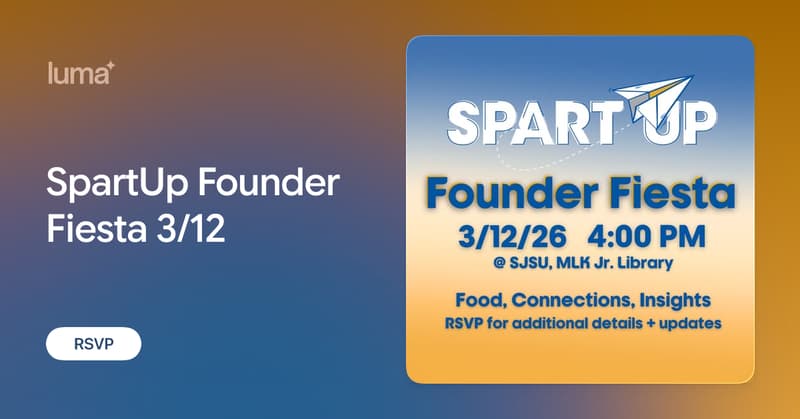
SJSU students: this is a practical way to get involved and experience entrepreneurship while you're in college. If you're an early-stage founder or curious about startups, join SpartUp Founder Fiesta on 3/12 for a panel discussion hosted by the SpartUp Incubator.
As a founder and long-time mentor, I've learned that early customer feedback and mentorship shape are the fastest way to go to market.
Want to connect there? Send me a message. #startupshttps://luma.com/nnxlhtzj…more


 View on LinkedIn