
Entrepreneurship
M

Michael Ashley
Founder at Radi8 // Executive Coach // Host of the Inspiring Founders Podcast
Everyone building something of their own is told to be the visionary. Set the standard. Be the culture. Tom Shen spent nearly 20 years running SDI and holds almost the opposite as a core principle of building something that lasts.
His point: build a culture that can push back on you. Every person you bring in should enrich the culture, not just fit it. And the ones worth having are the ones who will say, plainly and kindly, "I know you believe that — but here's why you're wrong."
Here's why it matters. If you're the ceiling, a single bad decision can bring the whole thing down. A culture that can correct you is insurance against your own worst call.
It's easy to file this under big-company problems. It isn't one. If you're running a small practice, you may not have employees, but you have advisors, partners, and communities you've chosen to surround yourself with. The real question is whether any of them can actually tell you no.
Tom put it better than I can, in Episode 7 of the Inspiring Founders podcast: "The culture needs to be better and richer than the founder." Worth a watch — link in the first comment.
So here's mine to you: who in your world will tell you plainly when you're wrong? If you can't name someone, that's the gap to fill.
#IndependentConsultant #Coaching #GoingIndependent #ThoughtLeadership …more
M
Michael Ashley
Founder at Radi8 // Executive Coach // Host of the Inspiring Founders Podcast
Smashburger with Marcelo today!
Years of friendship, and somehow every story we tell starts the same way... a motorcycle.
The crazy ones. The stupid ones. The ones we probably shouldn't repeat in public.
And today there's a new one for the pile — Marcelo completed the Baja rally and came home with the King of the Cactus award. Congratulations, my friend!
Here's the thing about Baja. You can't talk your way through it. You can't negotiate with the desert. You prepare, you show up, and then you keep going long after the fun part ends. (Marcelo was the only one to finish - out of 9 riders.)
I’ve taken my moto all the way to the tip of Baja and it’s not easy.
I've watched Marcelo do exactly that for years. And it's the same thing I keep seeing in the people I work with now — coaches, consultants, folks who walked away from a title to build a practice of their own.
You don't get to control the outcome. You get to control whether you prepare, whether you show up, and whether you finish.
Marcelo finished. King of the Cactus… and he wouldn’t even let me buy the burgers.
Who's the friend who taught you what finishing actually looks like?
#GoingIndependent #Solopreneur #Coaching #IndependentConsultant #PersonalBrand …more

They told me I couldn't wear shorts to school, so I invented a new kind of pants.
Dress code said no shorts, so we made something that technically wasn't: clam diggers. Everyone wanted a pair.
Build a workaround for yourself — everyone stuck behind the same wall is your market. …more
M
Michael Ashley
Founder at Radi8 // Executive Coach // Host of the Inspiring Founders Podcast
Put a builder in a mature operating role and watch them get restless. Everything already works, so they start breaking things just to have something to invent. Put an operator into a 0-to-1 mess and watch them freeze — there's no system to optimize yet, no data to trust, nothing to make more efficient. Both are talented. Both are miserable. And both look like performance problems when they're really fit problems.
I've watched this play out on team after team. The builder who was electric in the early days becomes the bottleneck once the thing needs to scale. The seasoned operator who took someone else's company from ten million to a hundred can't get a blank page off the ground. Neither failed. They were each asked to do the other one's job.
There's research behind why this is so predictable. Studying 200+ startups, Noam Wasserman found that founders are most likely to be pushed out right after their biggest wins — because success changes the job. What comes next rewards a different set of instincts than what got them there. The person didn't get worse. The job changed under them.
The takeaway isn't "builders are better" or "operators are better." It's that they're different, and the strongest ventures pair them on purpose — an inventor to make it exist, an operator to make it endure. The mistake is expecting one person to be both, or hiring the wrong one for the moment you're actually in.
So before you hire, get honest about which one you are — and which one you're missing.
Are you the builder or the operator on your team? And who's the counterpart you still need? …more
Told 2 times, Jul 7, 2026
· X · Open
Put a builder in a mature role and they break things just to have something to invent. Put an operator in a 0-to-1 mess and they freeze.
Both are talented. Both look like performance problems. They're fit problems.
M
Michael Ashley
Founder at Radi8 // Executive Coach // Host of the Inspiring Founders Podcast
People ask what I actually "do."
The honest answer: I build something from nothing, get it standing on its own, hand it to someone who can scale it — then go do it again.
That's the whole model. Build, set the foundation, hand off, repeat.
For a long time I didn't have language for it, so I just looked like someone who kept leaving things. Four startups. A university incubator. Products and programs that had been stalled for years. I'd get them working and move on.
It took me a while to see the pattern wasn't restlessness. It was a role.
I'm a 0→1 builder. My job is to take an idea everyone agrees should exist and make it real, durable, and no longer dependent on me. The moment it can run without me is the moment I've done the job — not the moment I've failed at it.
But that model only works because of the other half: an operator who takes the foundation and compounds it. I invent and establish. They scale and optimize. Neither of us does the other's job particularly well — and that's the point.
If you're an operator who loves scaling something someone else started from scratch, that's the other half of this equation. Curious who relates. …more

Told 3 times, Jun 22, 2026 – Jun 27, 2026
· X · Open
What I actually do:
Build something from nothing. Get it standing on its own. Hand it to someone who can scale it. Then go do it again.
Build. Set the foundation. Hand off. Repeat.
The handoff isn't me failing. It's the whole point.
· LinkedIn · Open
I spent years trying to fix what I thought was a flaw in my career.
I'd build something from nothing, get it working, put the right people and processes in place… and eventually someone else would take over.
For a long time, I thought that meant I wasn't a good founder. Now I think it means I was playing a different role.
I don't enjoy running mature organizations. I enjoy creating them.
I love the moment when someone says:
"We've wanted to do this for years, but nobody has been able to make it happen."
That's my favorite sentence in business.
Once it exists — once the systems are in place, once the team knows what they're doing — my instinct is to make sure it no longer depends on me. Ironically, that's often the moment an operator becomes far more valuable than I am.
I've stopped believing every founder should aspire to be a world-class operator. Some of us are wired to invent. Some are wired to scale. Some are wired to optimize. The mistake is thinking those are the same job.
The best thing I've built over the last 25 years isn't a product or a company. It's the ability to turn "someone should build this" into "this now exists."
And the next chapter is always the same: handing it to someone who can make it ten times bigger than I ever could.
M
Michael Ashley
Founder at Radi8 // Executive Coach // Host of the Inspiring Founders Podcast
Why Founders Keep Asking the Wrong Questions in Customer Interviews
I've been mentoring early-stage founders for a long time. One of the first books I put in front of all of them is The Mom Test by Rob Fitzpatrick.
The core lesson: most founders ask questions that get polite answers, not honest ones. "Would you use this?" tells you nothing. People don't want to hurt your feelings.
The book teaches you to ask about real behaviors instead — past experiences, actual workarounds, real decisions. Questions that can't be answered with a comfortable lie.
The problem is, founders read it, get it, and then walk into their next interview and ask: "So does this solve a real pain point for you?"
Every. Single. Time.
Knowing what a good question looks like isn't the same as being able to generate one on the spot about your specific product and customer.
So I built a free tool to close that gap: MomTestQuestions.com
You describe your product and your target customer. It generates a set of high-quality interview questions built on Mom Test principles — questions about behavior, not opinions. Ready to use in your next customer conversation.
No signup. No cost. Just better questions.
If you're in customer discovery mode right now, try it before your next interview. Then come back and tell me what you learned. …more
M
Michael Ashley
Founder at Radi8 // Executive Coach // Host of the Inspiring Founders Podcast
Who have you actually watched build the startup you're trying to build?
Saeed Amidi makes a point about Stanford I keep coming back to: the reason so many students there start companies is that they grow up seeing it as normal. A graduate feels they could just as easily go build the next Google as go get a job at one. He points to the poster children — Larry Page, Sergey Brin, Bill Hewlett, Dave Packard. When you can see people like you doing it, building becomes something you can picture yourself doing.
I launched the startup incubator at San José State, where I still teach. Same engineering talent as anywhere. Far fewer startups. The gap isn't intellect... it's whether or not students believe they can do it.
The same dynamic runs for anyone starting a business. What you believe you can attempt is shaped by the peers you can watch attempting it. That's why community isn't just encouragement — it's the infrastructure your belief runs on.
Watch Saeed make the point himself here: https://youtu.be/bb9n-CnDGVA
Who in your peer group has already made this leap? And if you can't name anyone... is that why you're hesitating?
#IndependentConsultant #Coaching #Consulting …more
This post has video.
Watch it on the channel.
 View on LinkedIn
Also on
View on LinkedIn
Also on

M
Michael Ashley
Founder at Radi8 // Executive Coach // Host of the Inspiring Founders Podcast
When your customer research keeps contradicting itself, the problem usually isn't the research. It's that you're talking to two different people and treating them as one.
I see this constantly. A founder runs a dozen conversations, and the signal is all over the map. One group swears the onboarding is the dealbreaker; another barely notices it and cares only about price. Half describe the product as a time-saver; half call it a status thing. The founder concludes "customers are confused" or "the market is fragmented," and goes hunting for a cleverer message to paper over the noise.
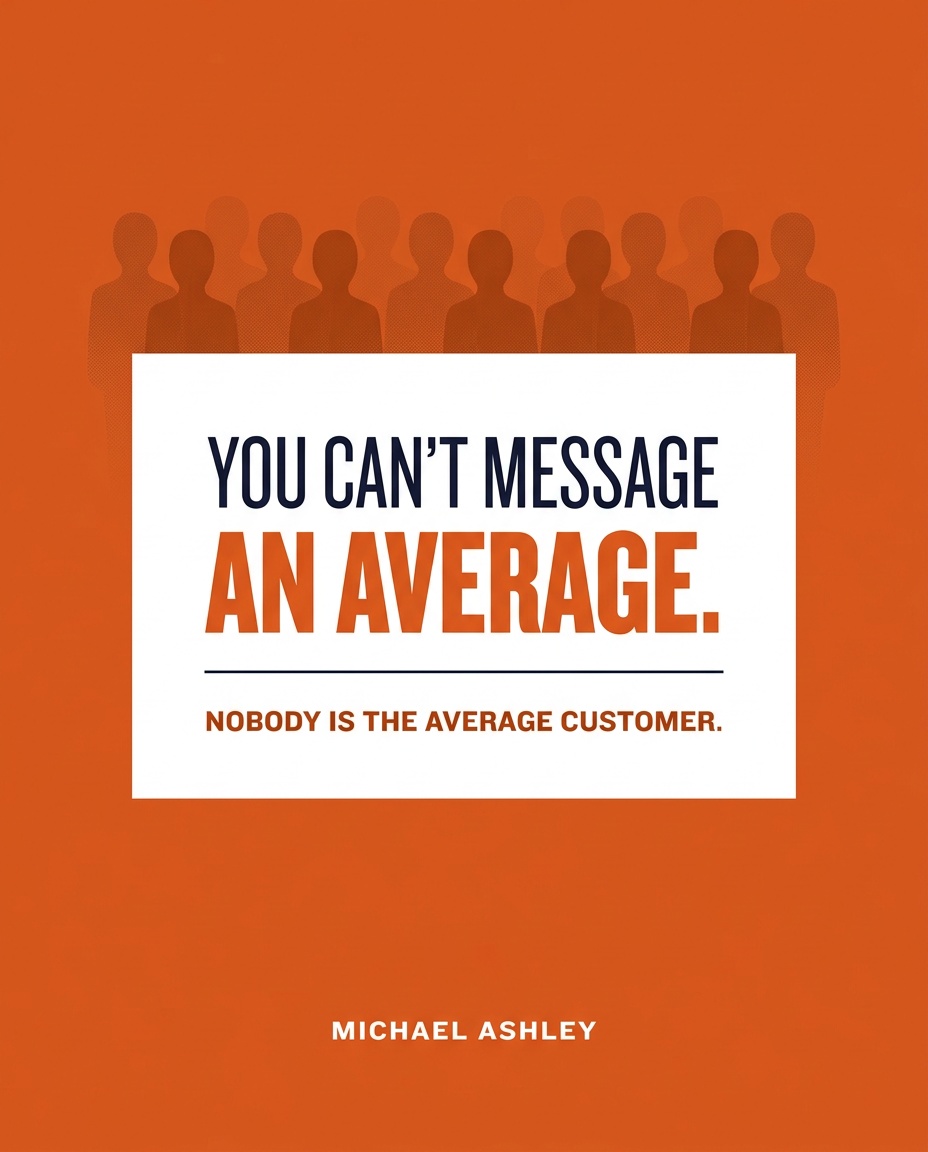
But the noise is the finding. Contradictory insights are what a blended audience sounds like. You're not hearing one confused market — you're hearing two or three coherent ones averaged into mush. And you can't message an average. Nobody is the average customer.
The reason this stalls companies is subtle: an average feels like data. It has quotes, a deck, a ring of rigor. So you make product and go-to-market bets on it — and the bets keep missing, because you're aiming at a person who doesn't exist.
The fix is in how you structure discovery, before you ever synthesize:
Segment on the way in, not on the way out. Decide the cuts that might explain different behavior — job to be done, trigger event, stage, buying context — and tag every conversation as you go. If you only segment after the fact, you've already blended.
Recruit on purpose, not on availability. A convenient sample is a blended sample. Deliberately fill each segment so a pattern in one group can't hide inside the average of all of them.
Read patterns within a segment, never across the pile. The question isn't "what did customers say?" It's "did this segment say the same thing to each other?" Agreement inside a clean segment is a signal. Agreement across a blended pile is a coincidence you'll pay for later.
Here's the bar I hold: an insight is decision-grade only when it's consistent inside a segment you could actually go acquire. Anything short of that isn't evidence — it's an anecdote wearing a percentage sign.
The uncomfortable part is that this makes your findings messier before it makes them clearer. Two sharp, opposing truths are worth more than one blurry consensus. Consensus is comfortable. It's also where stalled companies go to feel productive.
So a question worth sitting with this week:
The last time your customer insights contradicted each other — did you treat it as noise to resolve, or as a sign you were listening to more than one audience at once?
#Founders #Startups #Entrepreneurship #CustomerDiscovery #VoiceOfCustomer …more
 View on LinkedIn
Also on
View on LinkedIn
Also on
M
Michael Ashley
Founder at Radi8 // Executive Coach // Host of the Inspiring Founders Podcast
When a coach or consultant tells me their positioning is fuzzy, they usually want to fix the words. A better tagline. A sharper sentence. A cleverer hook. That almost never works, because vague positioning isn't a writing problem.
It's a customer-understanding gap.
You can't describe who you help clearly when you're not yet clear on who they are. No amount of wordsmithing rescues a message you haven't earned by knowing the person on the other end. Positioning is an output of customer discovery, not a copywriting exercise.
So when someone's stuck, I don't ask "what do you do?" That question sends people straight back into their own head — to titles, methods, and adjectives. I ask two different ones instead.
Who is this actually for? Not a demographic. A person you could name, with a problem they'd describe in their own words.
And what were they doing about it before they found you? The workarounds, the half-measures, the thing they already tried that didn't stick. That's where the real language lives — the words your best clients use for their own problem, before you dress them up.
Answer those two honestly and the positioning tends to write itself. You stop reaching for clever and start repeating what you've actually heard. Evidence beats invention. A sentence built from a real client's words lands because someone already lived it.
The clever version impresses you. The accurate version gets remembered by the person it's for.
So here's the question I'd genuinely like you to answer: what's the one client you do your best work for — and what were they doing before they found you?
#IndependentConsultant #Coaching #Positioning #CustomerDiscovery #IdealClient …more
K

Kent Kaufman
Organization focused on AI leadership and innovation for the Fourth Industrial Revolution, based in Silicon Valley
What Happens When Venture Meets AI-First Startups: Notes from a Half-Day of Real Debate
Just left a half-day that felt more like the beginning of something than a standard investor event.
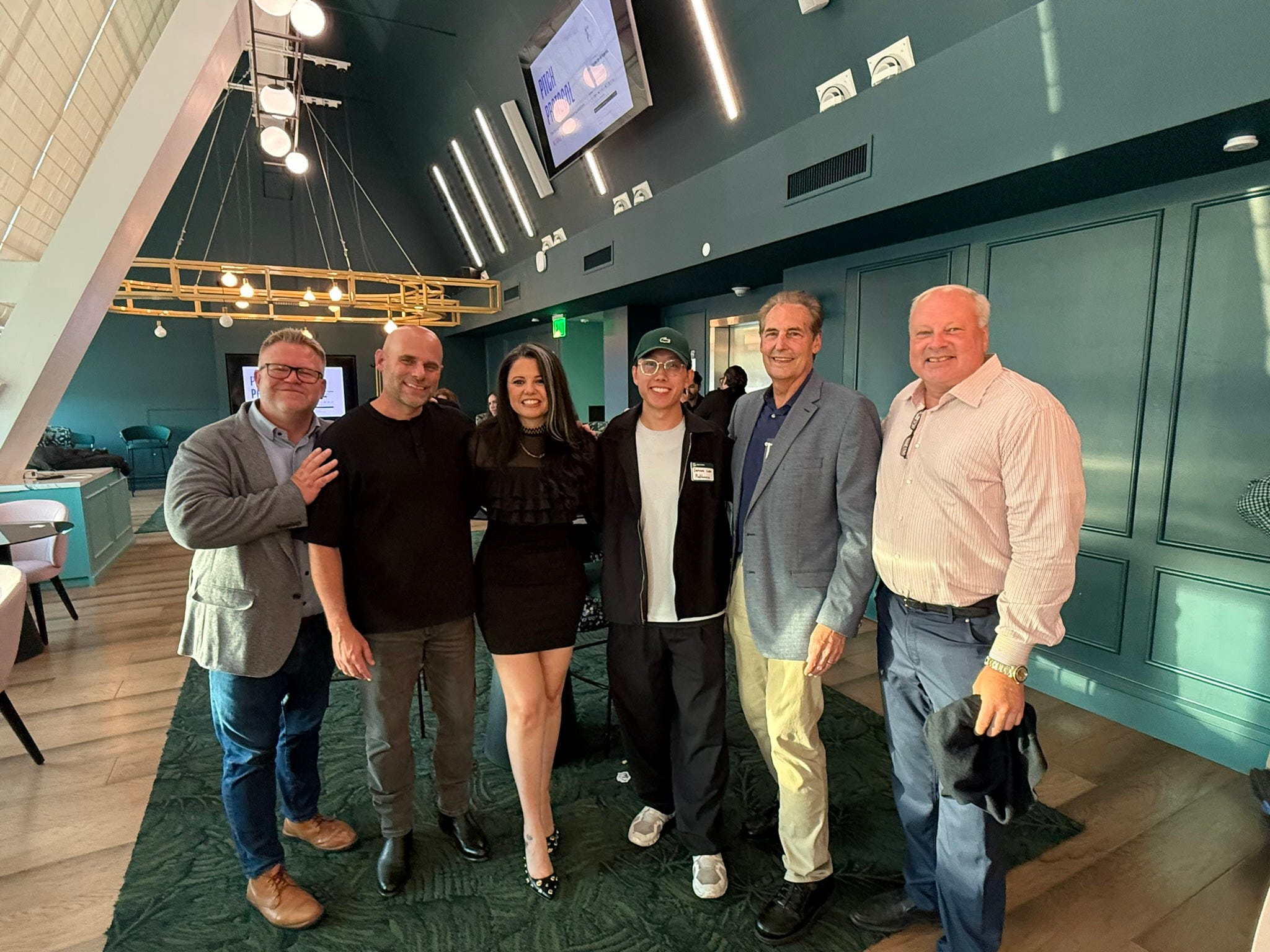
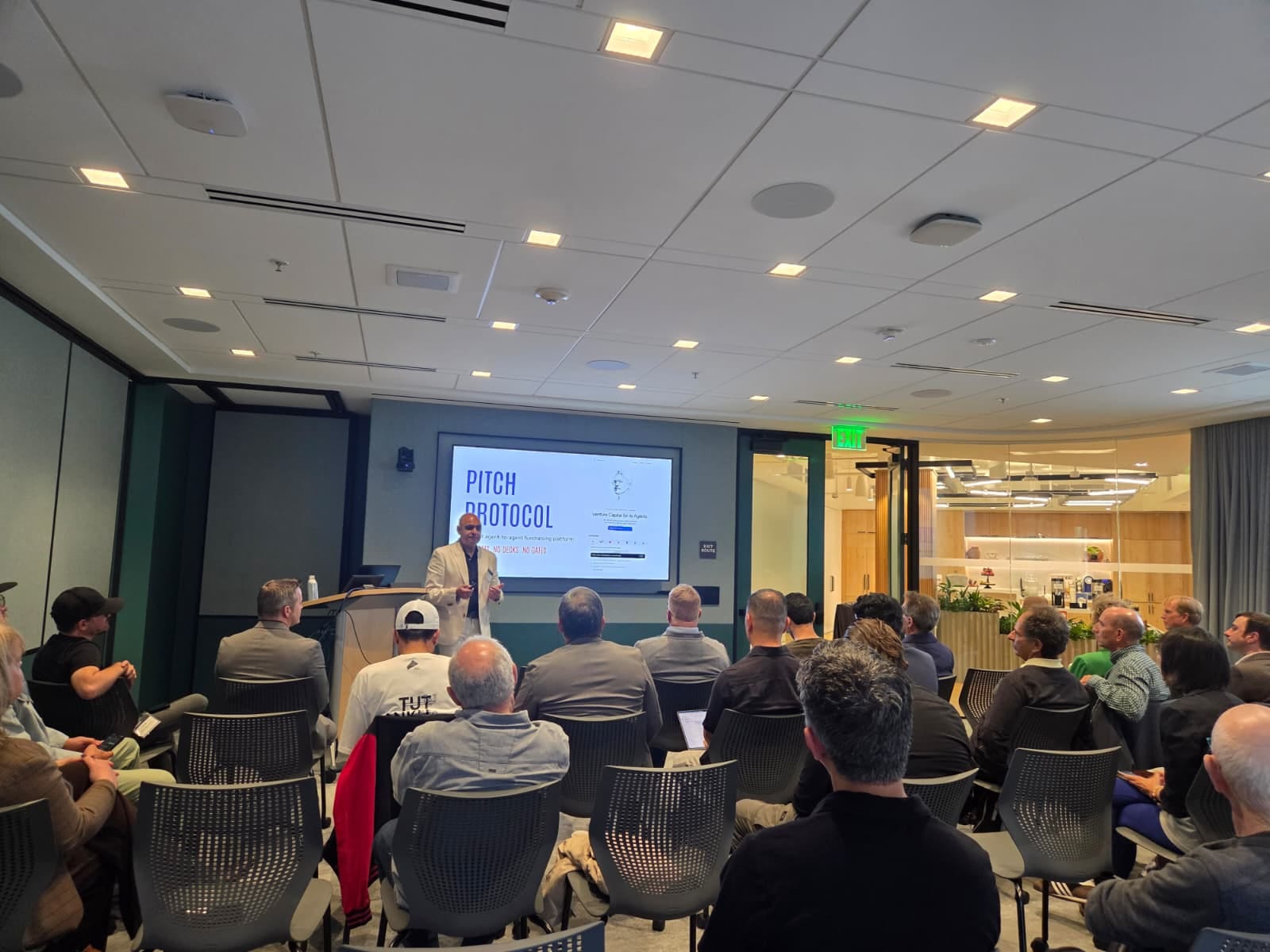
Growth Factory Ventures' 2026 AGM in San Francisco brought together outspoken VCs, operators, entrepreneurs, and Silicon Valley thought leaders for real, respectful, and surprisingly sharp debate on the future of venture for AI-first startups.
The central idea in the room was clear: traditional venture is being forced to reinvent itself. The firms that will matter over the next decade won't just pick winners — they'll help create the conditions for them.
This hits directly on themes I explore in AI L4IR: Leadership and the 4th Industrial Revolution. The time it takes to go from idea to working product has collapsed. What used to take months or years can now happen in weeks. That speed is already rewriting what "early-stage" means and putting pressure on how capital is raised, allocated, and deployed.
Some of the most interesting tensions that surfaced:
→ Speed vs. governance — and why pure velocity without structure creates real risk
→ Who owns the IP and data when founders engage with these new AI-native platforms
→ How AI might help balance founder claims against investor skepticism (while introducing its own questions around bias and judgment)
→ Whether the traditional pitch deck is quietly becoming less relevant
This is not a settled conversation. It's the start of a debate that will run for years.
For the builders in the mix, the practical implication is powerful: entrepreneurs who combine AI speed with sound best practices can move past proof-of-concepts and ship real, scalable, production-ready applications. That's the focus of the AI-SDLC / Spec-Driven Development work we teach at the AI Institute of Silicon Valley.
The current cohort is still open for mid-stream joiners — catch up on the recordings and labs here:
https://aiisv.org/workshops/ai-sdlc
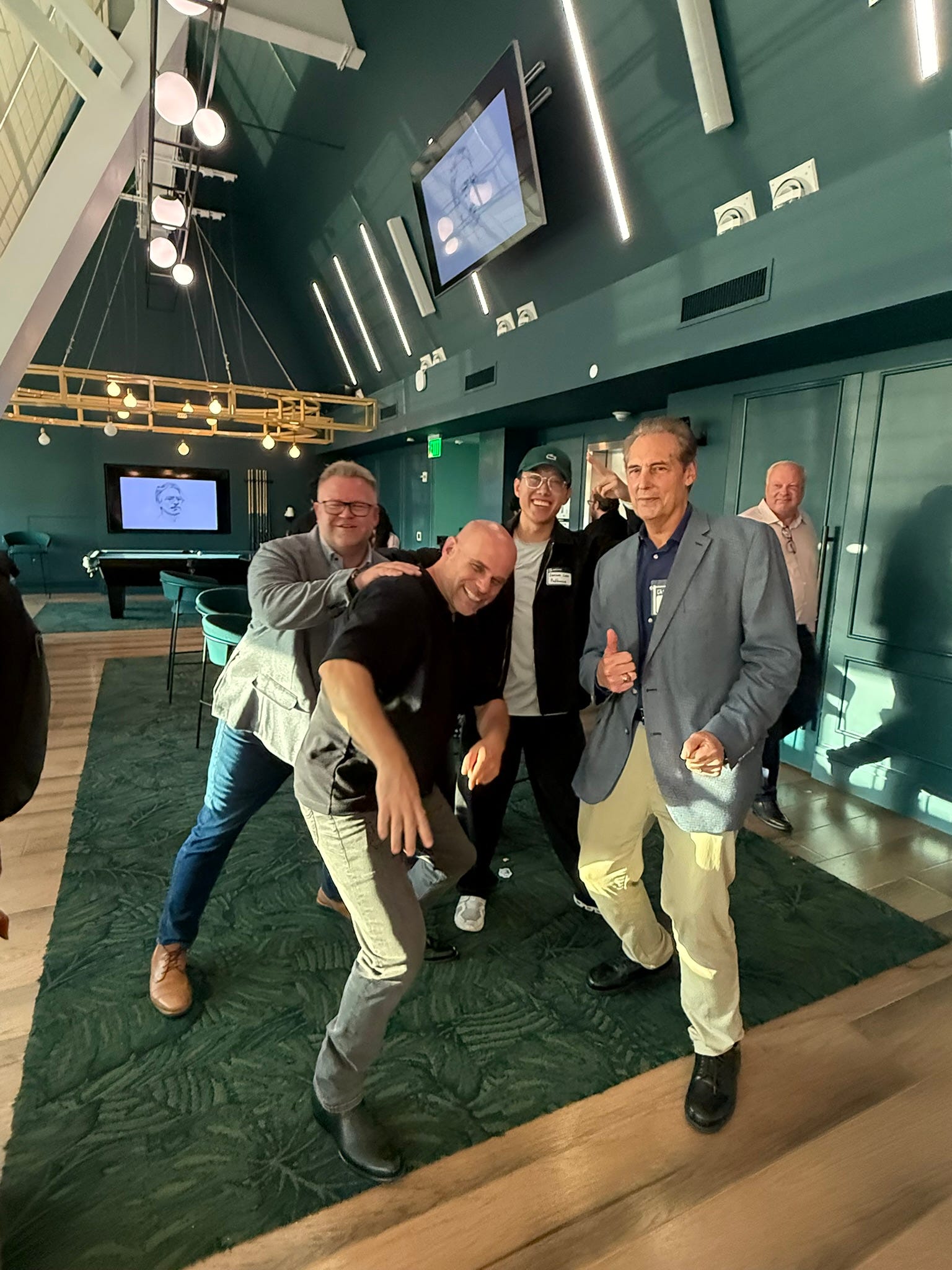
The energy in the room (and later at the penthouse networking) made one thing obvious: the old playbook is under real pressure. The next version of venture is being written in real time.
More detailed post is found at:
https://kentkaufman.substack.com/p/what-happens-when-venture-meets-ai
What transformations are you seeing in how capital, founders, and AI-native teams are interacting right now?
#AI #VC #AIISV #Leadership #SF Events …more
 View on LinkedIn
Also on
View on LinkedIn
Also on
M
Michael Ashley
Founder at Radi8 // Executive Coach // Host of the Inspiring Founders Podcast
Tom Shen has spent decades building companies. When I talked with him, he said something refreshingly honest for someone with that kind of track record:
"much of it is retrospective of having experienced the journey. If you interviewed me 20 years ago, I might have said something different."
Sit with that for a second, because it reframes what your career is actually worth.
The value was never in having the right ideas early. Plenty of people had smart ideas 20 years ago. The value is in having tested ideas long enough to know which ones hold up and which ones quietly fall apart. That's not something you can read your way into. You earn it by living through it.
I think about this a lot with coaches and consultants who've gone independent. Many of them undervalue the exact thing clients want most. They worry they're selling opinions, so they hedge, and they price like it. But you're not selling theory. You're selling pattern recognition — the ability to look at a situation and know how it tends to play out, because you've watched it play out before.
Clients don't just want smart. Smart is everywhere. They want someone who's been through it and came out the other side with a clearer read.
That gap between what you believed then and what you know now isn't background noise. It's the asset. It's the reason to charge a premium instead of apologizing for your rates.
Tom Shen sparked this one, in Episode 7 of the Inspiring Founders podcast. Worth a watch — link in the first comment.
So here's my question: what's one thing you believe now that you'd have argued against 10 years ago? That gap is your IP.
#IndependentConsultant #Coaching #GoingIndependent #PersonalBrand #ThoughtLeadership …more
Channel names and logos are trademarks of their respective owners.