Tom Shen has spent decades building companies. When I talked with him, he said something refreshingly honest for someone with that kind of track record:
"much of it is retrospective of having experienced the journey. If you interviewed me 20 years ago, I might have said something different."
Sit with that for a second, because it reframes what your career is actually worth.
The value was never in having the right ideas early. Plenty of people had smart ideas 20 years ago. The value is in having tested ideas long enough to know which ones hold up and which ones quietly fall apart. That's not something you can read your way into. You earn it by living through it.
I think about this a lot with coaches and consultants who've gone independent. Many of them undervalue the exact thing clients want most. They worry they're selling opinions, so they hedge, and they price like it. But you're not selling theory. You're selling pattern recognition — the ability to look at a situation and know how it tends to play out, because you've watched it play out before.
Clients don't just want smart. Smart is everywhere. They want someone who's been through it and came out the other side with a clearer read.
That gap between what you believed then and what you know now isn't background noise. It's the asset. It's the reason to charge a premium instead of apologizing for your rates.
Tom Shen sparked this one, in Episode 7 of the Inspiring Founders podcast. Worth a watch — link in the first comment.
So here's my question: what's one thing you believe now that you'd have argued against 10 years ago? That gap is your IP.
#IndependentConsultant#Coaching#GoingIndependent#PersonalBrand#ThoughtLeadership…more
Organization focused on AI leadership and innovation for the Fourth Industrial Revolution, based in Silicon Valley
· LinkedIn
·
Two AI Stumbles in One Week: Why Values-Based Leadership Must Be Distributed
In the space of just three days this month, two major AI companies highlighted a critical weakness in how leadership is practiced today.
On July 10, Apple filed a lawsuit alleging that OpenAI's hardware division, led by former Apple executive Tang Tan, engaged in a coordinated effort to steal trade secrets. Just three days earlier, Meta launched a feature in its new Muse Image tool that allowed users to generate AI images of people by simply tagging their public Instagram accounts — with the feature turned on by default and no notification to the person whose likeness was used. Meta removed the feature days later after widespread backlash.
These incidents are very different in nature. The allegations against OpenAI, if true, point to something deeper than a miscalculation. They suggest a potential breakdown in ethical boundaries at a leadership level inside a high-growth organization. Meta's case, while serious, looks more like a failure of judgment — moving fast under competitive pressure without properly accounting for user expectations around consent and likeness rights.
What connects both cases is this: when the financial and competitive stakes are extremely high, internal pressure can distort decision-making. Even experienced leaders are influenced by the culture and incentives around them. Company culture is not neutral — it either reinforces ethical guardrails or makes it easier to overlook them.
In my book AI L4IR: Leadership and the 4th Industrial Revolution, I argue that ethical leadership in this era cannot remain concentrated at the top. It must be highly distributed — embedded in how product teams, engineers, recruiters, and middle managers make decisions every day.
When billions of dollars and strategic positioning are on the line, relying on a small group of senior leaders to catch every ethical risk is unrealistic. Organizations that build cultures where people at all levels feel empowered (and expected) to ask "Should we?" — not just "Can we?" — will be far better positioned to innovate responsibly and maintain trust.
I explore both incidents and the broader leadership implications in more detail here:
https://kentkaufman.substack.com/p/two-ai-stumbles-in-one-week-why-values
How are you thinking about building stronger ethical decision-making into your teams as AI capabilities continue to advance? …more
When Pope Leo XIV released his first encyclical, Magnifica Humanitas, he deliberately connected the Church's response to artificial intelligence with the 135th anniversary of Rerum Novarum.
He calls for AI to be "disarmed" of logics of domination, insists that lethal decisions must never be fully delegated to machines, and contrasts the prideful Tower of Babel with the patient, collaborative rebuilding of Jerusalem — where every person contributes their section of the wall.
This is not only a religious document. It is a profound leadership text for our time.
In the Second Edition of my book, AI L4IR: Leadership and the Fourth Industrial Revolution – How Did We Get Here and Where Are We Going? (releasing later in 2026), I've expanded Chapter 14 to explore the powerful convergence between Pope Leo XIV's vision and the model of highly distributed ethical leadership that runs throughout the book.
Both traditions — one rooted in formal religious teaching, the other in secular ethical reasoning — arrive at the same essential conclusion: Human agency must remain central. Truth must be actively protected. Responsibility must be widely shared. And technological power must be oriented toward human flourishing rather than domination.
As we move deeper into the cognitive industrial revolution, leaders will need more than technical skill. We will need moral clarity, critical thinking, and the humility to keep asking: What kind of humanity are we building?
I'm excited to share the full Second Edition later this year.
What are your thoughts on the intersection of faith traditions, ethical leadership, and AI governance?
#AI#Leadership#Ethics#ArtificialIntelligence#FourthIndustrialRevolution
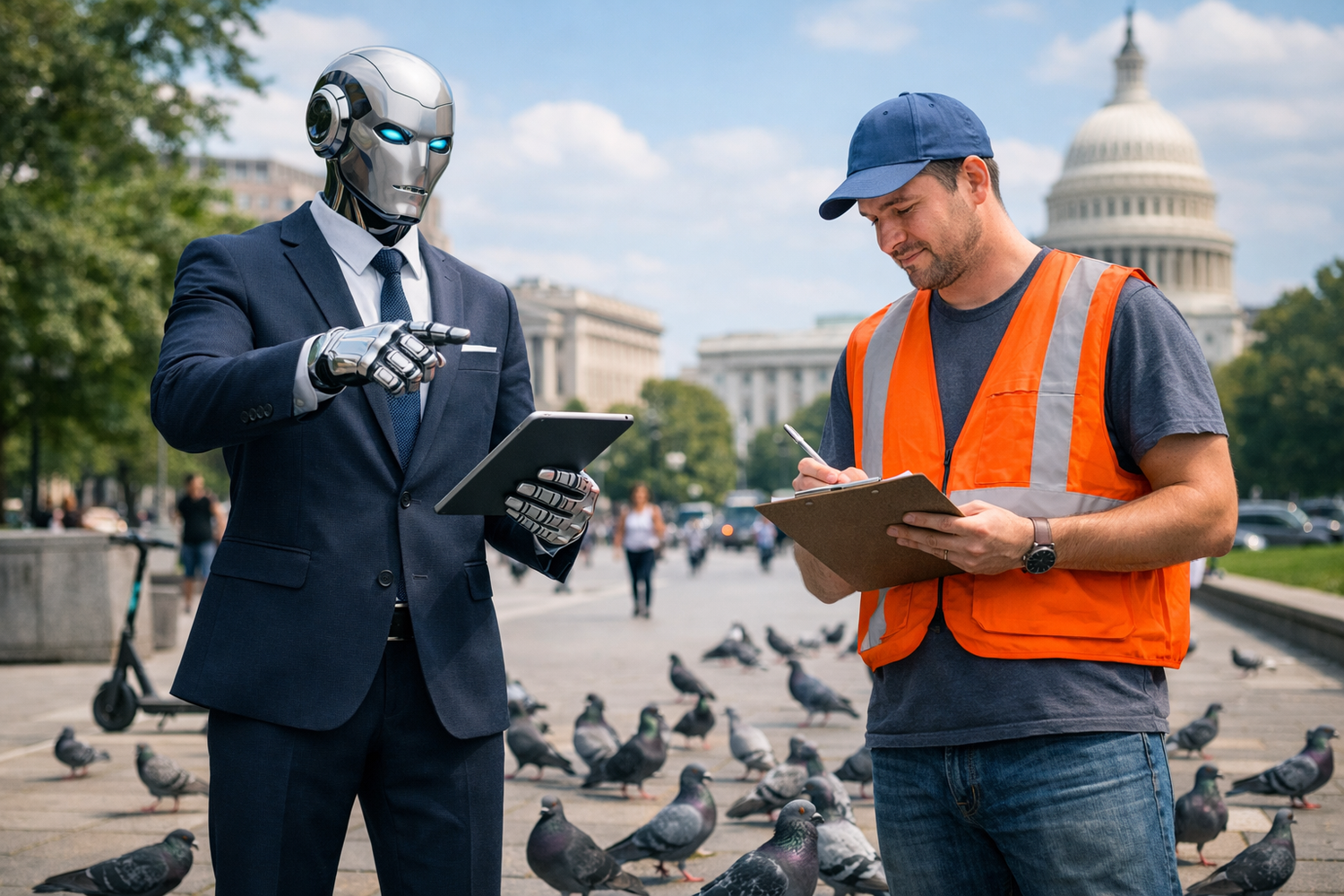
A recent piece from Santa Cruz Works flipped the AI debate: instead of replacing people, some bots are now hiring humans for on-site tasks. From program launches I worked on, two practical lessons stand out: 1) prioritize skills that require presence and judgment, like operations and customer-facing problem solving; 2) practice turning manual work into repeatable processes that pair with automation. Want help mapping concrete projects to build those skills? Send me a message. #careershttps://www.santacruzworks.org/news/rent-a-human-because-the-future-finally-realized-it-still-needs-legs…more
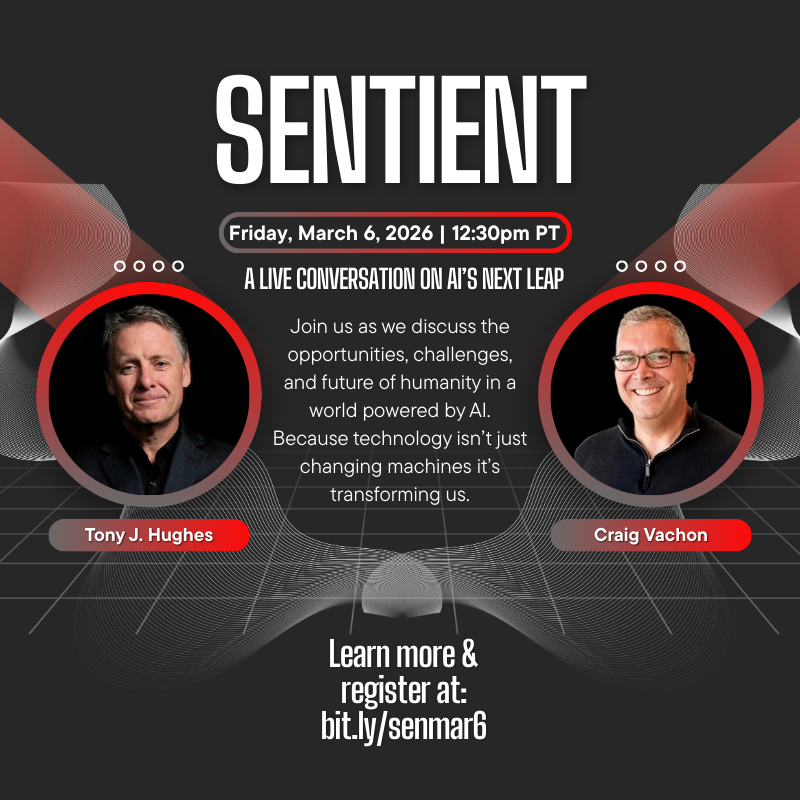
The webinar recording "Sentient and Us" is available now. It explores how AI is reshaping work, entrepreneurship, ethics, and human agency, and highlights that curiosity, critical thinking, and values will matter more than ever.
https://www.santacruzworks.org/news/recording-sentient-and-us…more


 View on LinkedIn