

British workers are spending £958 million of their own money per year on AI tools their employers won't buy them.
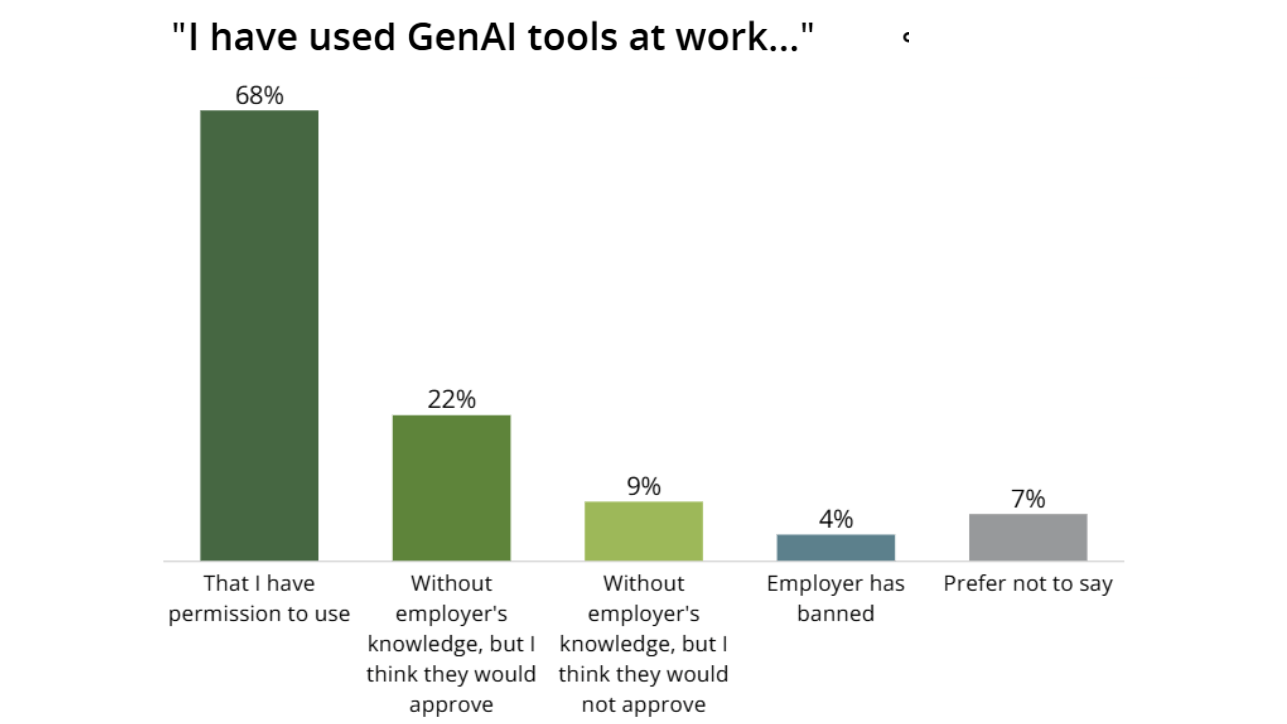
That's the headline from Deloitte's largest-ever single-country study of workplace AI use — 25,000 UK workers surveyed. But the number that should actually keep enterprise leaders up at night is the one underneath it: 31% of workers using AI at work are doing it without their employer knowing.
Shadow AI is not a future risk. It is a present reality.
The study found that 63% of UK workers have used generative AI, but half have received no training for it, and 65% say their leaders discuss AI without a clear understanding of what it actually does. Workers report saving 70 minutes a week on average — but nearly a quarter still sense a stigma attached to using it at work.
The pattern that emerges: GenAI use is widespread but shallow. People have tried it. Few use it daily. Most stick to familiar tasks like writing emails and searching for information rather than rethinking how work is done.
The implication for enterprise marketing and B2B teams is direct. If your employees are spending their own money on AI tools because your company hasn't provided sanctioned ones, two things are true simultaneously. Your people are motivated enough to self-fund productivity tools. And you have no visibility into what data is going into those tools, what outputs are being used, or what liability you're accumulating.
The technology investment conversation has shifted. The question is no longer whether your team is using AI. It's whether they're using yours.
https://www.deloitte.com/uk/en/issues/generative-ai/genai-workforce-survey.html
#AIGovernance #B2BMarketing …more
 View on LinkedIn
Also on
View on LinkedIn
Also on
