The Multilingual Mind helps schools and education teams close the gap between what they know they want to do and what their people actually have the time, training, tools, systems, and support to impl
· Facebook
·
If you teach in an immersion or world language classroom, you already know the moment. You ask a question in the target language, and the answers come back in English.
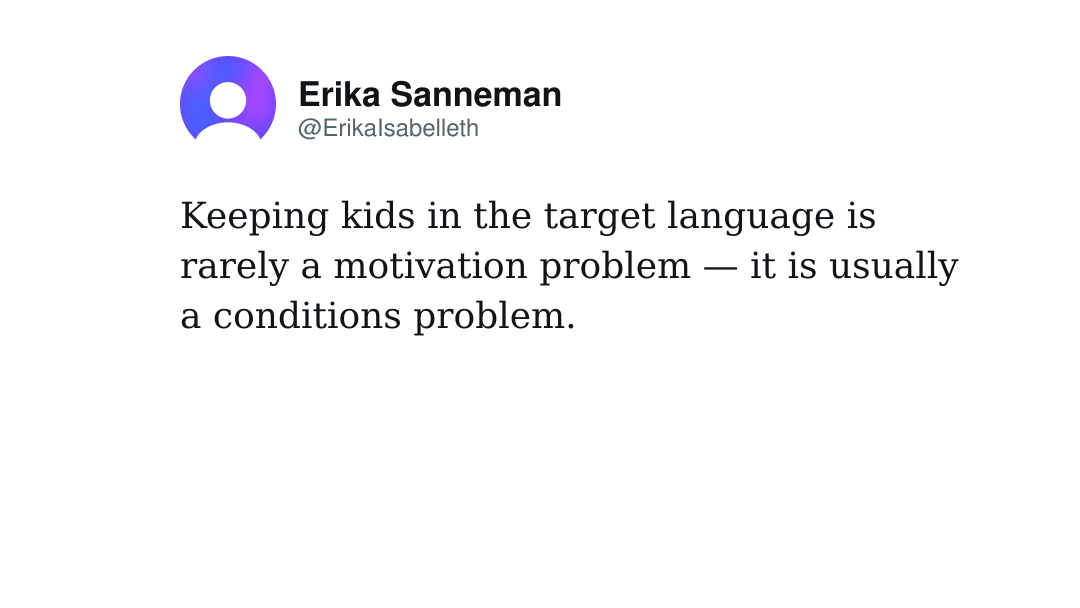
It is easy to read that as students not trying hard enough. More often, it is a conditions problem. When reverting to English is the path of least resistance, students will take it. Our job is to make staying in the language the easier, more supported choice, not just the expected one.
That is what my newest blog post is about: practical ways to maintain target language use that work in real classrooms, with real time constraints, without adding more improvising to your day. And because routines stick better when students have a reason to lean in, I am building a companion card deck for kids to play that reinforces the same language habits through fun, not pressure.
For the instructional coaches and teacher leaders reading this: what is one move that has actually helped your teachers hold the target language without it feeling like a battle? I would love to hear what is working in your buildings.
Read the full post through the link in the comments, and keep an eye out for the card deck.
https://www.themultilingualmind.com/cultivating-bilinguals/knowing-the-past-tense-is-not-the-same-as-knowing-how-to-tell-a-story…more


 View on Facebook
Also on
View on Facebook
Also on
