The Multilingual Mind helps schools and education teams close the gap between what they know they want to do and what their people actually have the time, training, tools, systems, and support to impl
· LinkedIn
·
People ask me what I actually *do* through The Multilingual Mind, and I understand why. The answer is not one neat little job title.
I've done translation and live interpretation, led PD, designed a school PBIS system, helped design and implement a Spanish immersion program, and built a Montessori inventory system that I also help schools put into practice.
I also coach teachers one-on-one. Some are in their practicum year working toward certification. Others are brand-new teachers who came into the profession through a different route.
On paper, those sound like pretty different kinds of work.
But in all of them, I'm trying to understand what people need and help build something they can actually use, whether that's language access, a curriculum, a clearer system, or the chance to practice a new teaching skill.
That's what my work looks like right now. And yes, sometimes that means a day spent happily sorting Montessori materials! …more
The Multilingual Mind helps schools and education teams close the gap between what they know they want to do and what their people actually have the time, training, tools, systems, and support to impl
· LinkedIn
·
Sometimes the most useful intervention is waiting long enough to actually see what is happening.
Observation is one of the Montessori ideas I keep carrying into coaching too.
Adults can be very quick to step in because something looks inefficient, imperfect, uncomfortable, or simply different from what we expected.
But if I intervene before I understand what I am seeing, I may solve the wrong problem.
What happens if I watch for another moment?
What is the child already trying?
What is the teacher noticing?
What changes without my help?
Observation is not passivity. It is information gathering.
And then, when intervention is actually needed, we have a much better chance of choosing one that fits.
What helps you decide when to step in and when to keep watching? …more
The Multilingual Mind helps schools and education teams close the gap between what they know they want to do and what their people actually have the time, training, tools, systems, and support to impl
· Facebook
·
What’s something you rediscovered in a classroom cupboard or supply closet and thought, “Wait, we could actually be using this”?
I’ve been sorting Montessori materials lately, and one of my favorite parts is seeing something move from a mixed box onto a shelf where children can find and use it.
It has me wondering what useful things we already have that have become hard to find.
A material? A book? A game? Something you’d completely forgotten about? …more
The Multilingual Mind helps schools and education teams close the gap between what they know they want to do and what their people actually have the time, training, tools, systems, and support to impl
· X
·
Reading a word, building it with a movable alphabet, and using it in a sentence ask different things of a child.
When I sequence materials, I want to see what each task adds and what the child can do beyond one familiar set. …more
The Multilingual Mind helps schools and education teams close the gap between what they know they want to do and what their people actually have the time, training, tools, systems, and support to impl
· LinkedIn
·
Independence does not always mean doing something the exact same way as everyone else.
I once had a kindergartener with cerebral palsy who had a hard time lifting and pouring from the classroom water pitcher.
So we experimented.
We filled the pitcher less so it was lighter.
We tried one with a lid.
We moved the pouring to the lower snack table, where the child had more support and control.
After talking with the OT, we actually rotated among those approaches because each one supported different movements and strengths.
The goal was never "pour the water exactly like every other child."
The goal was meaningful independence while continuing to build capacity.
That distinction matters to me in Montessori. The environment is supposed to support the child in front of us, not require the child to fit one idealized version of independence. …more
The Multilingual Mind helps schools and education teams close the gap between what they know they want to do and what their people actually have the time, training, tools, systems, and support to impl
· Facebook
·
Independence does not have to mean everyone doing something in exactly the same way.
I once worked with a kindergartener with cerebral palsy who had a hard time lifting the classroom water pitcher.
So we experimented.
Less water so it was lighter.
A pitcher with a lid.
Pouring at a lower table where the child had more support.
After talking with the OT, we actually rotated approaches because each one helped build something different.
The goal was never "do it exactly like everyone else."
The goal was access, autonomy, and continued growth.
I think about that distinction a lot when we talk about independence with children. …more
The Multilingual Mind helps schools and education teams close the gap between what they know they want to do and what their people actually have the time, training, tools, systems, and support to impl
· Instagram
·
Between “we have that material” and “children can use that material,” there can be a surprising amount of work.
Separate the mixed pieces.
Identify the set.
Check what’s there and what’s missing.
Work out where it belongs in the sequence.
Label it.
Record it.
Place it where someone can find it.
That’s part of what I’m doing in my current Montessori inventory contract.
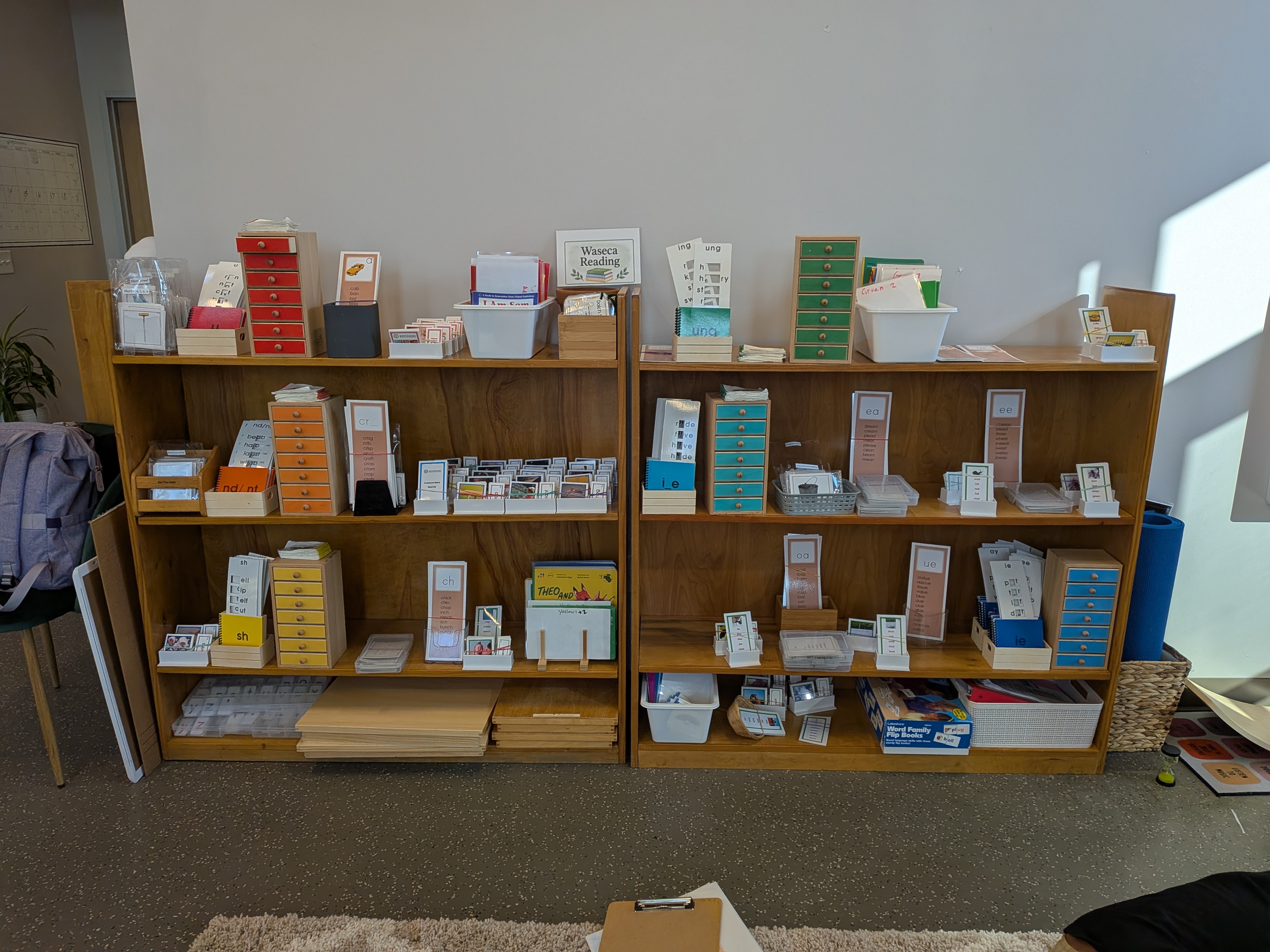
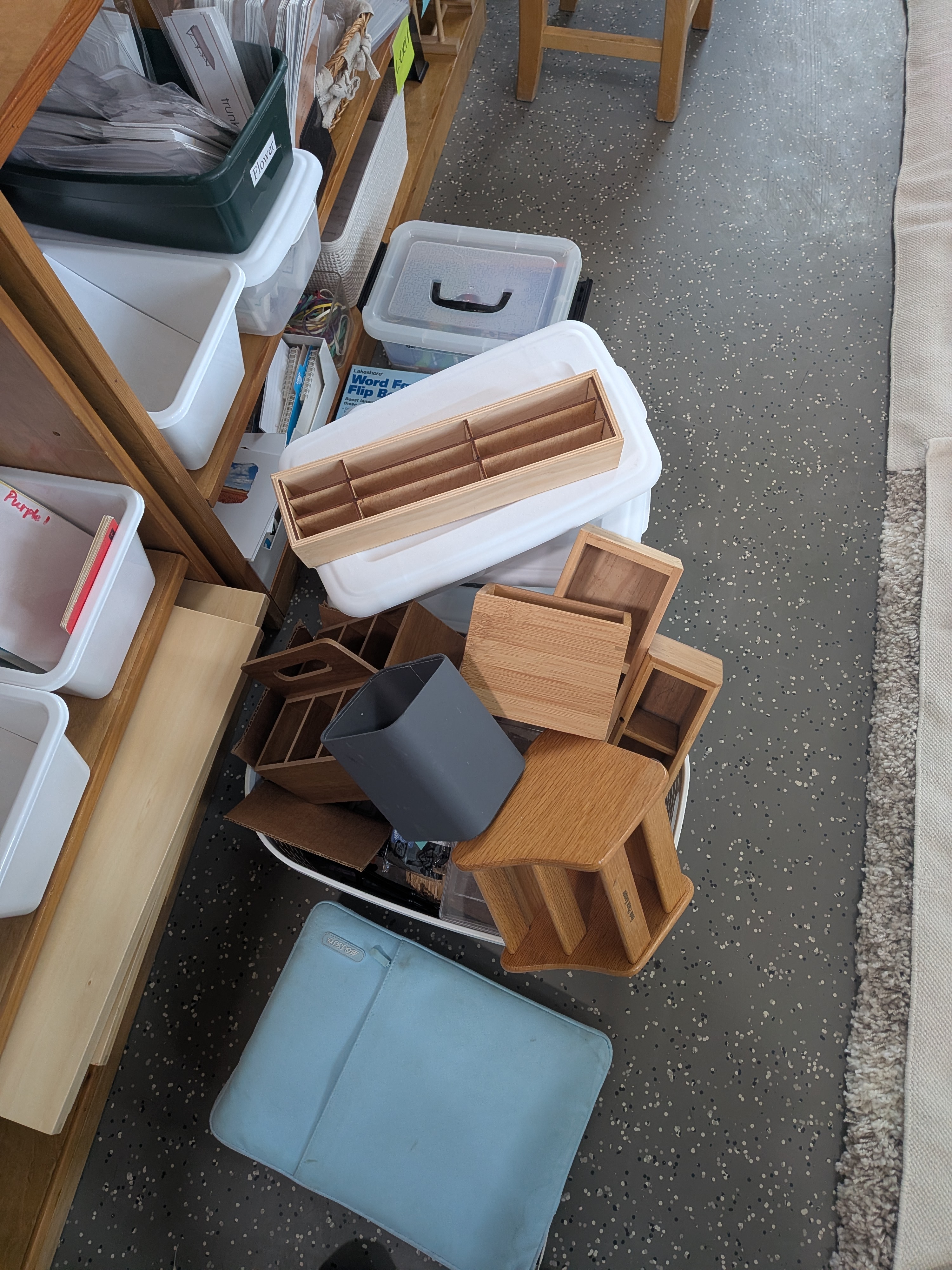
These photos show the language materials before organizing and the language shelves afterward.
The finished shelves show one part of the work. Behind it are decisions about completeness, sequence, access, and what the school may need to purchase.
I’m proud of this process. It takes patience, and it’s so gratifying to see children working with materials that had been packed away.
What helps you keep a learning space usable after the initial organizing is finished? …more
The Multilingual Mind helps schools and education teams close the gap between what they know they want to do and what their people actually have the time, training, tools, systems, and support to impl
· LinkedIn
·
One question I keep asking during this Montessori inventory project is: which parts need my expertise, and which parts could someone else do with clear information?
Putting a label on a box is one task. Identifying a mixed set, figuring out what it asks a child to do, and checking whether it is complete are different tasks.
A volunteer can help prepare materials without knowing the entire language sequence. But I need to give that person enough information to return the work to its actual location. The material's name, its inventory number, and its shelf location need to agree.
That is one reason I care about the handoff as much as the initial organizing. I do not want the system to depend on me being there to answer every question.
Where does a process in your school still depend on one person's memory? …more
The Multilingual Mind helps schools and education teams close the gap between what they know they want to do and what their people actually have the time, training, tools, systems, and support to impl
· Instagram
·
Sometimes the best teaching move is to wait.
One of my favorite Montessori reminders is that not every unexpected moment needs an immediate correction.
Sometimes a child uses something differently than I expected, and my first job is simply to watch for another second before I step in.
What are they noticing? What are they trying? What might I miss if I interrupt too quickly?
Observation first. Then decide what the moment actually needs.
#Montessori#MontessoriEducation#Observation#ChildDevelopment#TheMultilingualMind…more
The Multilingual Mind helps schools and education teams close the gap between what they know they want to do and what their people actually have the time, training, tools, systems, and support to impl
· LinkedIn
·
One of the trickier decisions in a Montessori inventory sounds ridiculously small: what number goes on the material?
I like to start at the beginning of a subject area and work along the shelves. But I also know what happens when you finish numbering and then discover another set tucked away in a box.
I don't want to renumber half a school because we found one missing piece of the puzzle.
So I keep two things separate: the inventory number identifies the material; the recorded shelf location tells us where it belongs in the sequence.
When another set turns up, it gets the next available inventory number. It can still go between two earlier-numbered materials on the shelf.
I do the same with completeness. “Complete,” “incomplete,” and “unknown” mean different things. And a complete set might still need laminating, so that goes in the notes.
This is exactly the kind of detail I wanted the spreadsheet to handle when I designed it. Schools can use it independently, while consulting a trained guide or the relevant references for materials they need help identifying.
Here's the Lower Elementary version:
https://www.teacherspayteachers.com/Product/AMS-Aligned-Montessori-Materials-Inventory-Lower-Elementary-17834885…more
The Multilingual Mind helps schools and education teams close the gap between what they know they want to do and what their people actually have the time, training, tools, systems, and support to impl
· LinkedIn
·
I've spent a LOT of time lately sorting, sequencing, and labeling Montessori materials. And it's funny how quickly a conversation about an organized shelf turns into a conversation about the child.
Can the child see what work is available?
Can they take it out independently?
Can they return it without needing an adult to direct every move?
That's what I actually care about when I talk about order in the Montessori environment.
It's not about a shelf that looks beautiful in a photograph. It needs to make sense to the people using it.
I made a short, slightly silly video about the Montessori teacher in me and what happens when that love of order meets everyday life. Here's the video:
https://youtu.be/4cW5h0SsyAg
I'm curious how other Montessori educators distinguish order that supports independence from order that's really just an adult preference. …more
The Multilingual Mind helps schools and education teams close the gap between what they know they want to do and what their people actually have the time, training, tools, systems, and support to impl
· Facebook
·
I made a new little YouTube Short about the Montessori teacher in me, who genuinely loves an orderly shelf... and the reality of a toy dinosaur turning up where it absolutely does not belong. 😂
Here's the thing: I love Montessori order, but not because everything needs to look perfect.
The materials are arranged so a child can see their options, choose something, use it independently, and actually know where to return it.
That's the purpose. If the adult's idea of a perfect shelf becomes more important than the child's ability to use the space, we've missed something.
Montessori parents and teachers, does your Montessori brain follow you home, too? Here's the Short:
https://youtu.be/4cW5h0SsyAg…more


 View on LinkedIn

 View on X
'/%3E%3Cpath fill='%23fff' d='M12 7.3A4.7 4.7 0 1 0 16.7 12 4.7 4.7 0 0 0 12 7.3Zm0 7.8A3.1 3.1 0 1 1 15.1 12 3.1 3.1 0 0 1 12 15.1Zm5-8a1.1 1.1 0 1 0 1.1 1.1A1.1 1.1 0 0 0 17 7.1Zm-5 1.5c-1.5 0-1.7 0-2.3.1a3.8 3.8 0 0 0-1.3.2 2.2 2.2 0 0 0-.8.5 2.2 2.2 0 0 0-.5.8 3.8 3.8 0 0 0-.2 1.3c-.1.6-.1.8-.1 2.3s0 1.7.1 2.3a3.8 3.8 0 0 0 .2 1.3 2.2 2.2 0 0 0 .5.8 2.2 2.2 0 0 0 .8.5 3.8 3.8 0 0 0 1.3.2c.6.1.8.1 2.3.1s1.7 0 2.3-.1a3.8 3.8 0 0 0 1.3-.2 2.5 2.5 0 0 0 1.3-1.3 3.8 3.8 0 0 0 .2-1.3c.1-.6.1-.8.1-2.3s0-1.7-.1-2.3a3.8 3.8 0 0 0-.2-1.3 2.2 2.2 0 0 0-.5-.8 2.2 2.2 0 0 0-.8-.5 3.8 3.8 0 0 0-1.3-.2c-.6-.1-.8-.1-2.3-.1Zm0-1.6c1.5 0 1.7 0 2.4.1a5.5 5.5 0 0 1 1.8.3 3.8 3.8 0 0 1 2.2 2.2 5.5 5.5 0 0 1 .3 1.8c.1.7.1.9.1 2.4s0 1.7-.1 2.4a5.5 5.5 0 0 1-.3 1.8 3.8 3.8 0 0 1-2.2 2.2 5.5 5.5 0 0 1-1.8.3c-.7.1-.9.1-2.4.1s-1.7 0-2.4-.1a5.5 5.5 0 0 1-1.8-.3 3.8 3.8 0 0 1-2.2-2.2 5.5 5.5 0 0 1-.3-1.8C4 13.7 4 13.5 4 12s0-1.7.1-2.4a5.5 5.5 0 0 1 .3-1.8 3.8 3.8 0 0 1 2.2-2.2 5.5 5.5 0 0 1 1.8-.3C10.3 5 10.5 5 12 5Z'/%3E%3C/svg%3E) View on Instagram