Have you ever been handed a "normal" lab result and somehow felt more alone than before you walked in?
I hear this from women who track their sleep, their training, their nutrition — and still lose a handful of days every cycle to a version of themselves they don't recognize. The bloodwork says fine. Their lived experience says otherwise. Both are telling the truth.
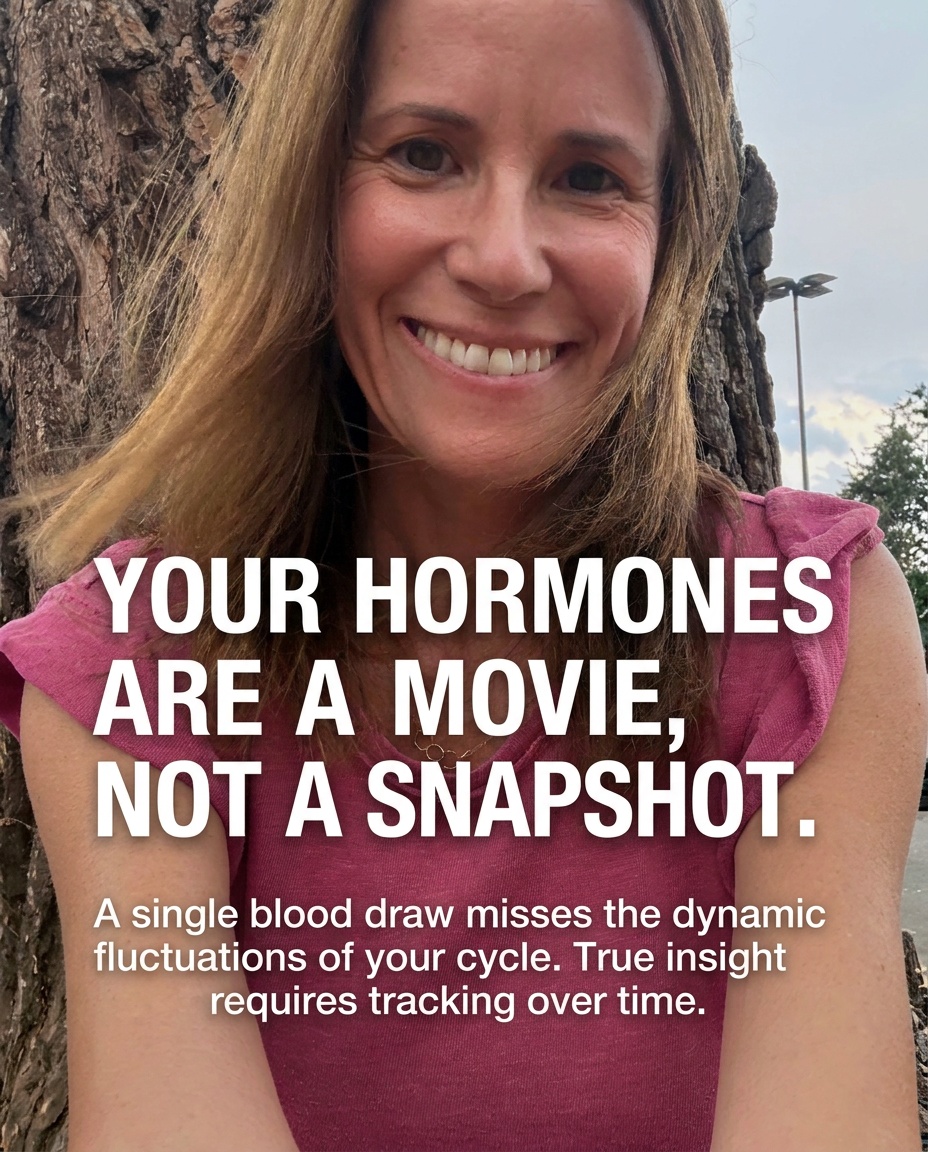
Here's the piece that reconciles them: a single blood draw measures one point in time. But hormones don't sit still. They build, convert, and clear across the whole month — and what your body does with them matters as much as how much you have. Measure a moving system at one frame and you learn almost nothing about the arc.
That's the gap the DUTCH Plus test was built for: a 24-hour view of your hormone metabolites, including how your body is processing and clearing them — the part that so often lines up with how you actually feel.
Your symptoms aren't a character flaw. They're data waiting to be read. Find out what yours are saying — start at https://www.lizgreenfield.com.
This is educational and not intended to diagnose or treat any condition.
What if the number that reassured you was captured at the one moment your body had nothing to say?
Here's something Elizabeth Greenfield Functional Wellness keeps returning to when women describe the days before their period quietly undoing them: hormones are not a fixed quantity. They rise, fall, convert, and clear across the whole month. A standard blood draw asks about a single morning — and a single morning can't describe a system that never holds still.
That's how "normal" and "not myself" end up both being true. The level looked fine; the pattern was never measured. The DUTCH Plus test was designed around exactly that gap — a 24-hour average of your hormone metabolites, showing not just how much is present but how your body is processing and clearing it.
Cyclical mood swings aren't a character flaw. They're your biology asking for something it hasn't yet received.
Ready to see the pattern beneath your symptoms? Start at https://www.lizgreenfield.com.
Source: https://www.linkedin.com/feed/update/urn:li:share:7503100806578106368
This is educational and not intended to diagnose or treat any condition.
Why can your labs come back "normal" while the week before your period still costs you the week?
Elizabeth Greenfield Functional Wellness offers a reframe worth sitting with: cyclical mood swings and PMS aren't a flaw in your character or a stretch of days you're supposed to grit through. They're information — about how your body is balancing and metabolizing hormones as they move across the whole month.
And movement is the key word. A standard blood draw captures one moment on one morning. Your hormones don't hold still for it. So the number can look reassuring while the pattern underneath — the part that actually tracks with how you feel — goes unseen. The DUTCH Plus test was built to look at that fuller picture: a 24-hour average of your hormone metabolites, not a single frame.
That's the difference between being told you're fine and understanding what your body has been asking for.
Book an honest conversation about what's actually driving your symptoms: https://lizgreenfield.kartra.com/calendar/book-with-liz
Source: https://www.linkedin.com/feed/update/urn:li:share:7502746341194784768
This is educational and not intended to diagnose or treat any condition.
What if the hardest days of your month aren't your personality — but a pattern you can actually see?
That's the reframe from Elizabeth Greenfield Functional Wellness on cyclical mood swings and PMS. The tears that come from nowhere, the irritability you can feel rising and can't quite stop — they aren't a character flaw or something to willpower your way through. They're a signal about how your body balances and metabolizes hormones across the month.
Here's the frustrating part: a single blood draw is one moment on one day, while your hormones are moving all month long. The number can read "normal" while the pattern underneath tells a very different story. The DUTCH Plus test was built to see more of that story — capturing a 24-hour average of your hormone metabolites, a fuller picture rather than a single frame.
This is what root-cause work looks like. Want to understand the pattern underneath your PMS? Learn how advanced hormone testing reveals it at https://www.lizgreenfield.com.
Source: https://www.linkedin.com/feed/update/urn:li:share:7501655395380183040
This is educational and not intended to diagnose or treat any condition.
The week before your period shouldn't cost you the week.
But if you're one of the women I'm thinking of, it does. The tears that come out of nowhere. The irritability you can feel rising and can't quite stop. The sense that for a few days every month, you're not quite yourself — and everyone around you can tell.
And then it lifts, and you're left cleaning up. The email you shouldn't have sent. The argument that didn't need to happen. The quiet worry that maybe this is just who you are.
So let me say the thing you may not have been told: this isn't a character flaw. It isn't something you should be able to willpower your way through. And it isn't "just hormones you have to ride out."
Cyclical mood swings and PMS are a signal. Your body is telling you something — usually about the balance between your hormones and how your body is metabolizing them across the month. It's not only how much estrogen and progesterone you have. It's the relationship between them, and what your body is doing with them as it processes and clears them. That's the part that so often lines up with how you actually feel in those days before your period.
Here's the frustrating piece: a single blood draw is one moment on one day. Your hormones are moving all month long. Catch them at one quiet moment and the number can read "normal" while the pattern underneath tells a very different story.
The DUTCH Plus test was built to see more of that story. It captures an average of your hormone metabolites across a full 24 hours — a fuller picture of both your hormone balance and how your body is processing it, not a single frame. (One honest note, because accuracy matters: for your sex hormones that's a 24-hour average, a fuller picture — not a minute-by-minute readout. I'd rather tell you exactly what it does than oversell it.)
This is what root-cause work actually looks like. We stop treating the monthly toll as your personality and start asking what your body has been trying to tell you all along — with data that can finally show the pattern.
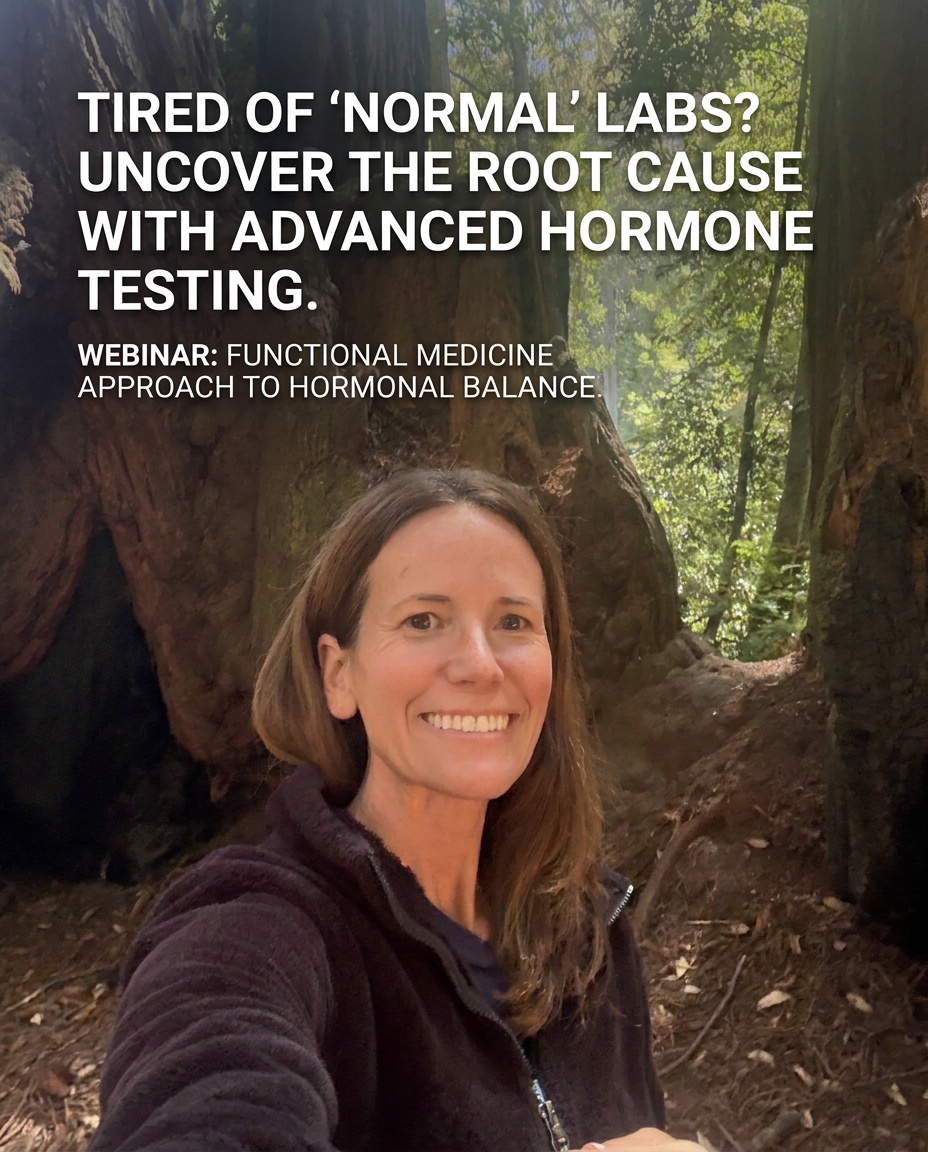
Learn what the DUTCH Plus test can reveal about the hormone pattern underneath your PMS at my advanced hormone testing webinar on September 21 at 5:30 pm PST. Link in the comments.
This is educational and not intended to diagnose or treat any condition.
Let's put them side by side, the plain way — because once you see it, you can't unsee it.
A standard blood panel and the DUTCH test aren't rivals. They answer different questions. The trouble starts when you ask one of them a question it was never built to answer, get a "normal," and walk out still feeling like something's off.
Here's the honest comparison.
A standard blood panel:
→ One time point. A single moment, on a single morning.
→ Tells you the level — how much is in your blood right then.
→ Genuinely useful. Just partial for the questions below.
The DUTCH test:
→ A 24-hour average of your hormone metabolites — not just how much you have, but how your body is processing and clearing it. That processing story is often where the bloating, the PMS, the painful or heavy periods, the poor response to HRT finally start to make sense.
→ A true multi-point daily cortisol curve — measured across the day, including the cortisol awakening response, that first surge after you open your eyes. This is the piece that so often explains the wired-and-tired, the 3 am wake-ups.
One honest distinction, because accuracy matters more than a tidy pitch: the true moment-to-moment daily rhythm is the cortisol part. For your sex hormones, DUTCH gives you that 24-hour average — a fuller picture than a single point-in-time blood draw.
None of this means your bloodwork was wrong. It means a snapshot and a full day are two different things. Different questions. Different answers. And if you've been told everything looks "normal" while your body clearly disagrees, the gap was never in you — it was in what got measured.
This is educational and not intended to diagnose or treat any condition..
Have you ever been handed a label for your hormones — PCOS is a common one — and left the appointment still not knowing what your body was actually doing?
Let me be clear about my lane: I don't diagnose or treat conditions. What I do is investigate the mechanism underneath the hormonal symptoms so many midlife women are told to simply accept.
Take androgens — hormones every woman makes and needs. Your body produces them, then metabolizes them down specific pathways. Two women can be handed the same label and be running completely different machinery underneath: different production, different processing, different downstream metabolites. Same word, different story.
Here's how I hold it: your body isn't malfunctioning. It's asking, clearly and persistently, for something it hasn't yet received. The DUTCH Plus test is how I start to hear that ask — it measures androgen metabolites, not just how much is there, but how your body produces and clears them. That's the difference between naming a pattern and seeing the mechanism. This sits alongside your medical care, never replaces it.
Book an honest conversation about what's actually driving your symptoms: https://lizgreenfield.kartra.com/calendar/book-with-liz
This is educational and not intended to diagnose or treat any condition.
"Your labs are normal." You've heard it. And you walked out still exhausted, still foggy by 2pm, still wondering why the body you've relied on your whole career suddenly feels like a stranger.
Here's what that appointment didn't give you: the right test.
Standard bloodwork is a single snapshot — one moment on one morning, in a body whose hormones are moving all day long. It can read perfectly "normal" while completely missing the pattern underneath what you're feeling. That's not a contradiction. It's a testing gap.
Advanced hormone testing closes it. Instead of one frame, it captures a fuller picture of what your body is actually doing across a full day — including the true cortisol rhythm behind the tired-but-wired mornings, the 3am wake-ups, and the fatigue a good night's sleep doesn't resolve.
On September 21 at 5:30pm PST, I'm hosting a free webinar on exactly this: advanced hormone testing for women, and how to read what your body has been trying to tell you all along — with data, not another supplement or willpower plan.
This is for the high-achieving woman who's done everything right and is tired of guessing. You were right to keep asking. Join me to learn more.
The link is in the comments.
This is educational and not intended to diagnose or treat any condition.
You were handed a word — PCOS — and sent on your way. Maybe a prescription. Maybe a "lose some weight and come back." But no one actually explained what your body was doing, or why.
Let me say this first: a label is not an answer. PCOS names a pattern. It doesn't tell you how your own body is making androgens, or what it's doing with them once they're made. And that "how" is the part that actually matters for you.
Here's the piece so often left out at the appointment.
Androgens — the hormones people tend to file under "male," even though every woman makes and needs them — don't just sit at one level. Your body produces them, then metabolizes them down specific pathways. Two women can carry the same PCOS label and be running completely different machinery underneath: different production, different processing, different downstream metabolites. Same word. Different story.
This is where the DUTCH Plus test does something a single blood draw usually can't. It measures androgen metabolites — not just how much is there, but how your body is producing and breaking them down. That's the difference between a name for the pattern and a look at the mechanism driving it.
And seeing the mechanism is what makes a path personal. Not a generic protocol built for "PCOS." One that reflects how your biology, specifically, is working.
One honest note, because accuracy matters: this doesn't replace your medical care. It sits alongside it — more information for you and the people looking after you, not a substitute for either.
You were right to want more than a label. Your body has been telling a fuller story the whole time.
See what the DUTCH Plus test can reveal about your androgens — link in the comments.
This is educational and not intended to diagnose or treat any condition.
Let's put them side by side, the plain way — because once you see it, you can't unsee it.
A standard blood panel and the DUTCH test aren't rivals. They answer different questions. The trouble starts when you ask one of them a question it was never built to answer, get a "normal," and walk out still feeling like something's off.
Here's the honest comparison.
A standard blood panel:
→ One time point. A single moment, on a single morning.
→ Tells you the level — how much is in your blood right then.
→ Genuinely useful. Just partial for the questions below.
The DUTCH test:
→ A 24-hour average of your hormone metabolites — not just how much you have, but how your body is processing and clearing it. That processing story is often where the bloating, the PMS, the painful or heavy periods, the poor response to HRT finally start to make sense.
→ A true multi-point daily cortisol curve — measured across the day, including the cortisol awakening response, that first surge after you open your eyes. This is the piece that so often explains the wired-and-tired, the 3 am wake-ups.
One honest distinction, because accuracy matters more than a tidy pitch: the true moment-to-moment daily rhythm is the cortisol part. For your sex hormones, DUTCH gives you that 24-hour average — a fuller picture than a single point-in-time blood draw.
None of this means your bloodwork was wrong. It means a snapshot and a full day are two different things. Different questions. Different answers. And if you've been told everything looks "normal" while your body clearly disagrees, the gap was never in you — it was in what got measured.
Link in bio 🔗
This is educational and not intended to diagnose or treat any condition..
A single blood draw is a photograph. A DUTCH test is a time-lapse.
Here's what I mean. When your hormones are measured from one blood sample, you're seeing a single moment — one frame, taken at whatever hour you happened to be in the chair. Helpful, but it can't show you how your body actually moves through a day.
The DUTCH test works differently. It collects urinary hormone metabolites — the "breakdown products" that show not just how much of a hormone you have, but how your body is processing and using it — across a full 24 hours. Alongside that, it maps your cortisol (your primary stress hormone) at five points from morning to night in saliva.
Why that matters in perimenopause and beyond: your hormones don't work in isolation. Cortisol talks to estrogen. Estrogen talks to progesterone. Sleep, stress, and energy all sit in that conversation. A single snapshot can miss the pattern entirely — which is often why "your labs are normal" and "I don't feel like myself" can both be true at the same time.
Seeing the full 24-hour picture is how we stop guessing and start asking better questions about what your body is actually doing.
I'm going deeper on this in my advanced hormone testing webinar — Sept 21st at 5:30 PM PST. If you've ever been told everything looks fine but you know something is off, please join me.
Link in bio 🔗.
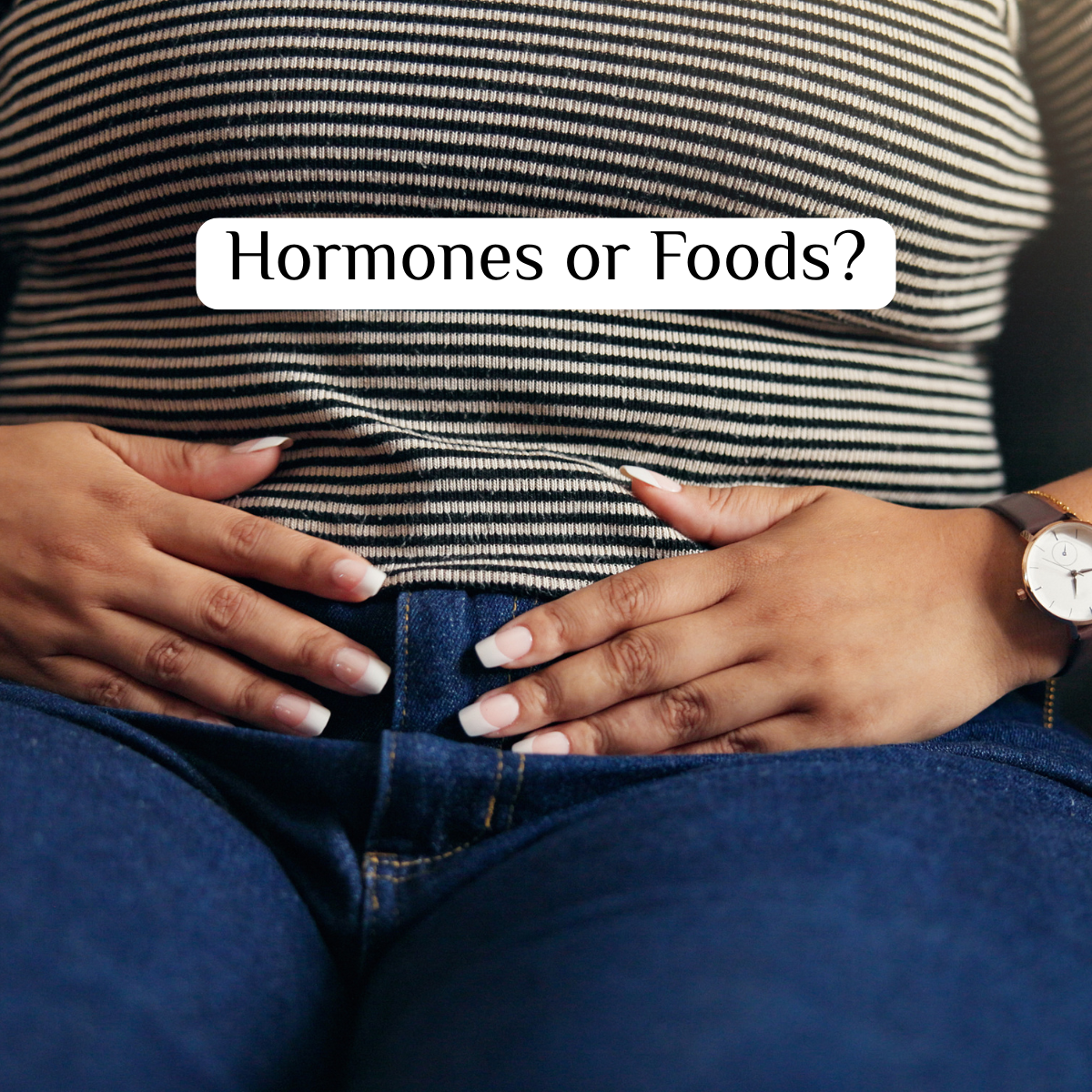
You cut out gluten. Then dairy. Then the raw veggies, the beans, the wine, the "healthy" smoothie that somehow made it worse. And still — some weeks — you bloat like you swallowed a balloon, no matter how clean you eat.
If that's you, you're not doing it wrong, and you're not imagining it. When bloating tracks with your cycle or shows up despite an almost spotless diet, that's a clue. It's usually not just about food. It's about hormones too.
Here's the piece that so often gets missed.
Estrogen and progesterone don't only orchestrate your period. They talk directly to your gut. They influence how quickly food moves through you, how much fluid you hold onto, and even the balance of the bacteria living in your digestive tract. So when those hormones shift across the month — the way they're supposed to — your digestion shifts with them. That's why the bloating can feel cyclical, predictable, almost clockwork. And it's why eliminating one more food rarely fixes it. You're chasing the symptom while the driver goes unexamined.
This is where I want you to stop chasing and start investigating.
The DUTCH test gives a fuller picture of your hormones than a single blood draw can. Instead of one snapshot at one moment, it looks at your hormone metabolites averaged across a full 24 hours — not just how much of a hormone you have, but how your body is processing and clearing it. That "how you metabolize it" piece is often exactly where the bloating, the fluid, the cyclical misery starts to make sense.
For your sex hormones, DUTCH gives you that 24-hour average — a fuller picture than a single point in time.
Bloating isn't a character flaw or a willpower gap. It's your body asking a question. Let's finally give it a way to answer — with data, not another food you have to give up.
See what the DUTCH Plus test can reveal about the pattern underneath your bloating — link in the comments.
This is educational and not intended to diagnose or treat any condition.



'/%3E%3Cpath fill='%23fff' d='M12 7.3A4.7 4.7 0 1 0 16.7 12 4.7 4.7 0 0 0 12 7.3Zm0 7.8A3.1 3.1 0 1 1 15.1 12 3.1 3.1 0 0 1 12 15.1Zm5-8a1.1 1.1 0 1 0 1.1 1.1A1.1 1.1 0 0 0 17 7.1Zm-5 1.5c-1.5 0-1.7 0-2.3.1a3.8 3.8 0 0 0-1.3.2 2.2 2.2 0 0 0-.8.5 2.2 2.2 0 0 0-.5.8 3.8 3.8 0 0 0-.2 1.3c-.1.6-.1.8-.1 2.3s0 1.7.1 2.3a3.8 3.8 0 0 0 .2 1.3 2.2 2.2 0 0 0 .5.8 2.2 2.2 0 0 0 .8.5 3.8 3.8 0 0 0 1.3.2c.6.1.8.1 2.3.1s1.7 0 2.3-.1a3.8 3.8 0 0 0 1.3-.2 2.5 2.5 0 0 0 1.3-1.3 3.8 3.8 0 0 0 .2-1.3c.1-.6.1-.8.1-2.3s0-1.7-.1-2.3a3.8 3.8 0 0 0-.2-1.3 2.2 2.2 0 0 0-.5-.8 2.2 2.2 0 0 0-.8-.5 3.8 3.8 0 0 0-1.3-.2c-.6-.1-.8-.1-2.3-.1Zm0-1.6c1.5 0 1.7 0 2.4.1a5.5 5.5 0 0 1 1.8.3 3.8 3.8 0 0 1 2.2 2.2 5.5 5.5 0 0 1 .3 1.8c.1.7.1.9.1 2.4s0 1.7-.1 2.4a5.5 5.5 0 0 1-.3 1.8 3.8 3.8 0 0 1-2.2 2.2 5.5 5.5 0 0 1-1.8.3c-.7.1-.9.1-2.4.1s-1.7 0-2.4-.1a5.5 5.5 0 0 1-1.8-.3 3.8 3.8 0 0 1-2.2-2.2 5.5 5.5 0 0 1-.3-1.8C4 13.7 4 13.5 4 12s0-1.7.1-2.4a5.5 5.5 0 0 1 .3-1.8 3.8 3.8 0 0 1 2.2-2.2 5.5 5.5 0 0 1 1.8-.3C10.3 5 10.5 5 12 5Z'/%3E%3C/svg%3E)