Most women are told that managing perimenopause symptoms means waiting them out.
That's not a plan. That's guessing.
My Hormone Balance Mini-Course is a 5-day functional medicine framework built to show you what's actually shifting in your hormones, why it matters, and exactly what to do about it.
$49, lifetime access: https://www.lizgreenfield.com/hormone-balance/
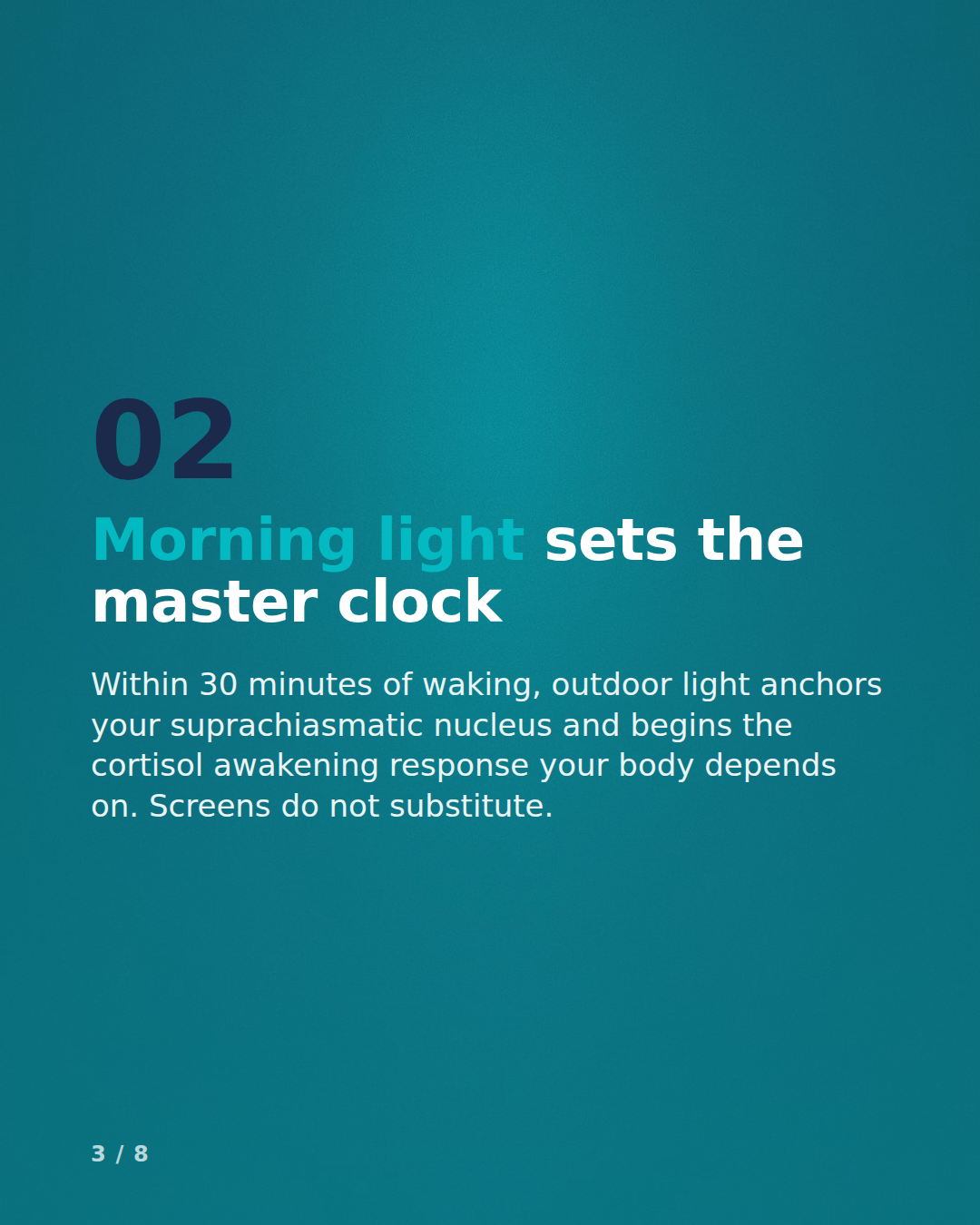
Your hormones respond to the rhythm of your day: the light you see in the morning, when you eat, how you move, when you wind down.
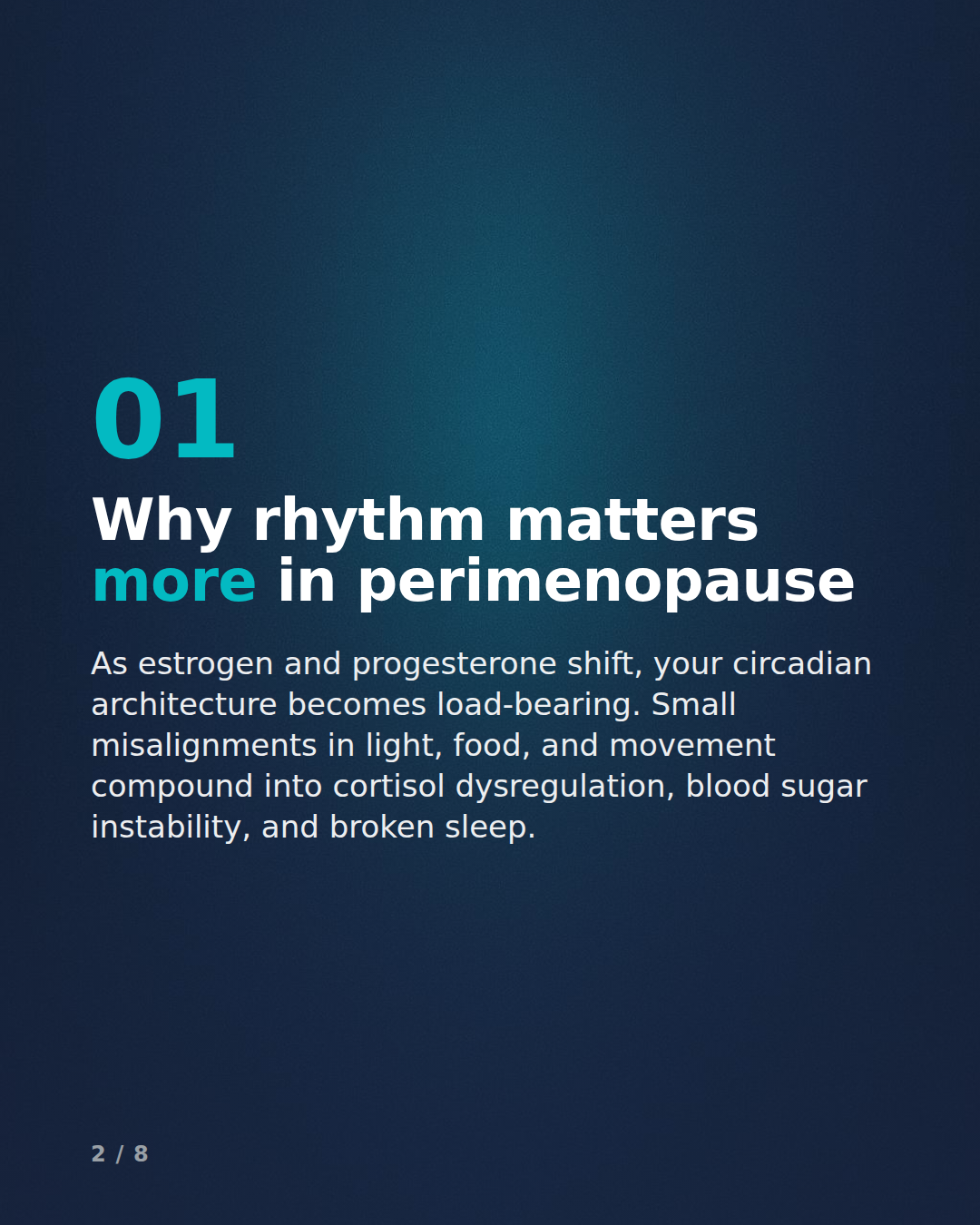
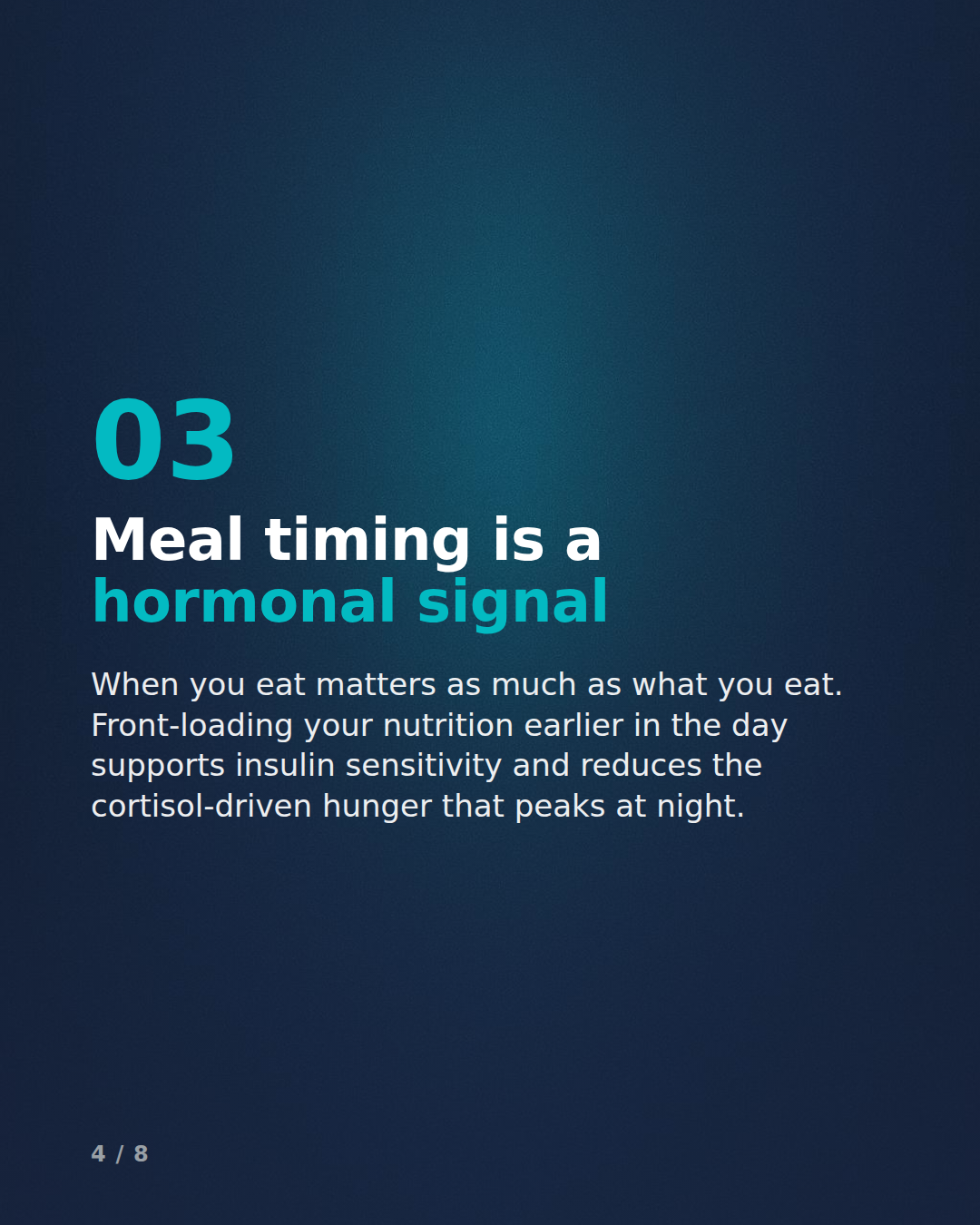
In perimenopause, that rhythm matters more, not less. Small shifts in structure change how your body regulates cortisol, blood sugar, and sleep.
My nutrition partner Stephanie Doty put together a free guide on structuring your day so your body can do what it's designed to do. No overhaul required, just alignment.
Link in bio.
Your hormones respond to the rhythm of your day: the light you see in the morning, when you eat, how you move, when you wind down.
In perimenopause, that rhythm matters more, not less. Small shifts in structure change how your body regulates cortisol, blood sugar, and sleep.
My nutrition partner Stephanie Doty put together a free guide on structuring your day so your body can do what it's designed to do. No overhaul required, just alignment.
Download it here: https://www.lizgreenfield.com/free-resources/
If you've spent years eating less and still can't understand why your body won't respond, I want to offer you a different frame.
The problem was never that you needed more discipline. It's that restriction is the wrong tool for the job.
My nutrition partner, Stephanie, made a point in a recent video that I keep coming back to — because it quietly dismantles everything diet culture taught us: "food isn't just fuel it's the key to achieving the results you want."
Read that again. Not fuel to be minimized. The key.
Here's what that looks like clinically. A structured approach to eating isn't about eating less — it's about eating with precision: the right foods, in the right amounts, at the right times, so your body gets exactly what it needs to thrive. Nutrient density, not calorie counting, is the foundation. Because your metabolism, your hormones, and your energy are not asking you to deprive them. They are asking to be fed well.
This is the reframe so many high-achieving women in their 40s and 50s have never been offered: food is not something to limit. It is your most powerful, most precise tool.
Watch Stephanie make the case here: https://youtu.be/QN3gH5dCtf8?si=KPvDuU_SaAICeG0K
So let me ask you: What would change if you stopped thinking about food as something to limit — and started thinking about it as your most powerful tool?
Fatigue. Brain fog. Sleep that won't cooperate. Mood swings that don't feel like you.
These symptoms have more than one possible driver, and perimenopause is one of the most commonly missed.
I built a short quiz to help you assess whether what you're experiencing fits the hormonal pattern of perimenopause, so you can stop guessing and start asking the right questions.
Link in bio.
Fatigue. Brain fog. Sleep that won't cooperate. Mood swings that don't feel like you.
These symptoms have more than one possible driver, and perimenopause is one of the most commonly missed.
I built a short quiz to help you assess whether what you're experiencing fits the hormonal pattern of perimenopause, so you can stop guessing and start asking the right questions.
Take it here: https://www.lizgreenfield.com/resources/perimenopause-quiz/
If you've been told your labs are normal but you know something has shifted — this is for you.
Here is the gap most midlife women run into: conventional medicine stops at "your labs are normal" instead of asking the deeper question. But the body is intelligent. There is never anything wrong — only a body asking, clearly and persistently, for something it hasn't yet received. Perimenopause is not a decline to be managed. It is a biological leverage point, and it is far more investigable than most women are told.
The Hormone Balance Mini-Course is a self-paced 5-day program built on the functional medicine framework I use with every client in my private practice. Five days. Five focused topics. The clinical framework for understanding what is actually happening in your body during perimenopause — and what to do about it.
✦ Day 1: How hormones work and why they shift in perimenopause
✦ Day 2: The stress-hormone connection and cortisol's role
✦ Day 3: Nutrition and blood sugar for hormone balance
✦ Day 4: Sleep, detoxification, and hormonal recovery
✦ Day 5: Building your personal hormone balance protocol
Video lessons, downloadable PDF resources, and a bonus 5-day hormone-supportive meal plan are included. Lifetime access. Go at your own pace. $49.
If you've spent years being dismissed, this is a place to start with real clinical depth — not another band-aid.
One thing I wish every woman in perimenopause knew:
Your cortisol and your estrogen are in constant conversation.
When cortisol is chronically elevated — which it often is for high-achieving women who have been running on adrenaline for years — it competes directly with progesterone, disrupts thyroid conversion, and accelerates the hormonal shifts already happening in perimenopause.
This is why managing stress isn't a soft recommendation. It's a clinical one.
The rhythm of your day — when cortisol naturally peaks, when it should be declining, how it interacts with blood sugar and sleep — is something you can actually work with, once you understand it.
That's what the Design Your Day in Perimenopause guide is built around.
If you haven't grabbed it yet, it's free and waiting for you here:
https://www.lizgreenfield.com/free-resources/
And if you have — I'd love to hear what landed for you. Drop it in the comments.
If you've been struggling with hormonal symptoms and want to understand what's actually driving them — not a generic overview, but a real look at the science behind hormone balance — I built something for you.
The Hormone Balance Mini-Course at lizgreenfield.com/hormone-balance is a self-paced, $49 course designed to give you the clinical foundation that most women never get from their doctors.
You'll understand how estrogen, progesterone, cortisol, and insulin interact — and why treating one without the others rarely works.
You'll learn what functional hormone testing actually reveals that standard panels miss.
And you'll leave with a framework for understanding your own biology more clearly than you ever have.
This is not a quick-fix protocol. It is the education that makes everything else make sense — and that makes you a more informed advocate for your own care.
If you're in your 40s, feeling off, and tired of being told everything is fine — this is a place to start.
Link in bio. $49. Self-paced. Start today.
Sleep is not passive recovery.
Between 11 PM and 2 AM, your body is running its most active repair processes — clearing metabolic waste from the brain, consolidating memory, regulating cortisol for the next day, and producing the growth hormone that drives tissue repair and body composition.
When that window is disrupted — whether by a cortisol spike at 2 AM, low progesterone, blood sugar instability, or an overactive nervous system — the downstream effects are not just fatigue. They are accelerated biological aging, impaired glucose metabolism, hormonal dysregulation, and cognitive decline over time.
This is why I don't treat sleep as a lifestyle issue. I treat it as a clinical one.
Before recommending magnesium or melatonin or a sleep hygiene protocol, I want to know what is waking you up. Is it cortisol? Blood sugar? Progesterone? Estrogen? A nervous system that never fully downregulates?
Because the intervention is completely different depending on the answer — and guessing wastes time you don't have.
If your sleep has changed in the last few years and you can't explain why, that deserves a root cause investigation. Not another sleep app.
Follow for more on sleep physiology, stress biology, and what functional medicine reveals when we actually look.
Perimenopause is not a hormone deficiency.
It is a transition — a sophisticated biological recalibration that begins, for most women, somewhere in their late 30s or early 40s, years before their last period.
What drives the symptoms — the sleep disruption, the mood shifts, the brain fog, the weight changes, the fatigue that doesn't make sense — is not simply "low estrogen." It is the fluctuation. The unpredictability. The way estrogen and progesterone stop moving in their familiar patterns before they decline.
This matters clinically because it changes what we look for and when.
A single hormone panel taken on day 21 of a cycle that is no longer predictable tells us very little. A DUTCH Complete — measuring hormones and their metabolites across time — tells us something much more useful: how your body is making, using, and clearing its hormones.
That is a root cause conversation. Not a symptom management conversation.
Most women reach me after years of being told their hormones are "fine for your age." What they needed was a test that actually captured the complexity of what their body was doing — and a clinician willing to interpret it.
If you're in your 40s and something feels off, your hormones are worth a second look. The right look.
Follow for weekly content on perimenopause, functional hormone testing, and what midlife health can actually look like.
There is a particular kind of exhaustion that comes from being dismissed.
You've done everything right. You've tracked your symptoms. You've pushed for tests. You've brought your data to the appointment. And you've been told, again, that everything looks normal.
What you know — in your body, in your bones — is that something is not right.
You are correct.
"Normal" on a standard lab panel means you don't have a diagnosable disease by conventional criteria. It does not mean your biology is optimized. It does not mean there is nothing to find. It means the test being run is not designed to find what you're looking for.
Functional medicine asks a different question. Not "what disease do you have?" but "what is your body asking for that it hasn't yet received?"
That reframe changes everything — because it opens a conversation that conventional medicine closed.
If you have been dismissed and you know something is wrong, trust that. The data to explain it may simply require someone willing to look for it.
Follow for more on root-cause medicine, functional lab work, and what becomes possible when someone finally looks at the whole picture.



'/%3E%3Cpath fill='%23fff' d='M12 7.3A4.7 4.7 0 1 0 16.7 12 4.7 4.7 0 0 0 12 7.3Zm0 7.8A3.1 3.1 0 1 1 15.1 12 3.1 3.1 0 0 1 12 15.1Zm5-8a1.1 1.1 0 1 0 1.1 1.1A1.1 1.1 0 0 0 17 7.1Zm-5 1.5c-1.5 0-1.7 0-2.3.1a3.8 3.8 0 0 0-1.3.2 2.2 2.2 0 0 0-.8.5 2.2 2.2 0 0 0-.5.8 3.8 3.8 0 0 0-.2 1.3c-.1.6-.1.8-.1 2.3s0 1.7.1 2.3a3.8 3.8 0 0 0 .2 1.3 2.2 2.2 0 0 0 .5.8 2.2 2.2 0 0 0 .8.5 3.8 3.8 0 0 0 1.3.2c.6.1.8.1 2.3.1s1.7 0 2.3-.1a3.8 3.8 0 0 0 1.3-.2 2.5 2.5 0 0 0 1.3-1.3 3.8 3.8 0 0 0 .2-1.3c.1-.6.1-.8.1-2.3s0-1.7-.1-2.3a3.8 3.8 0 0 0-.2-1.3 2.2 2.2 0 0 0-.5-.8 2.2 2.2 0 0 0-.8-.5 3.8 3.8 0 0 0-1.3-.2c-.6-.1-.8-.1-2.3-.1Zm0-1.6c1.5 0 1.7 0 2.4.1a5.5 5.5 0 0 1 1.8.3 3.8 3.8 0 0 1 2.2 2.2 5.5 5.5 0 0 1 .3 1.8c.1.7.1.9.1 2.4s0 1.7-.1 2.4a5.5 5.5 0 0 1-.3 1.8 3.8 3.8 0 0 1-2.2 2.2 5.5 5.5 0 0 1-1.8.3c-.7.1-.9.1-2.4.1s-1.7 0-2.4-.1a5.5 5.5 0 0 1-1.8-.3 3.8 3.8 0 0 1-2.2-2.2 5.5 5.5 0 0 1-.3-1.8C4 13.7 4 13.5 4 12s0-1.7.1-2.4a5.5 5.5 0 0 1 .3-1.8 3.8 3.8 0 0 1 2.2-2.2 5.5 5.5 0 0 1 1.8-.3C10.3 5 10.5 5 12 5Z'/%3E%3C/svg%3E)