Your chronological age is a fact. Your biological age is a variable.
DNA methylation testing — specifically the kind that measures epigenetic clocks — gives us a number that reflects how fast your cells are actually aging. Not how old your birthday says you are. How old your biology is behaving.
I've seen women in their late 40s with a biological age 8 years younger than their chronological age. I've also seen women in their early 40s whose biological age is tracking nearly a decade older — driven by unaddressed gut dysfunction, hormonal imbalance, chronic stress, and poor sleep.
The gap between those two numbers is not fixed.
Biological age is one of the most responsive biomarkers we have. With the right interventions — rooted in functional lab data, not guesswork — it moves. We have measured it moving.
This is what longevity medicine looks like when it's applied specifically to women: not generic anti-aging protocols, but a precision picture of what is accelerating your biology and a plan to change it.
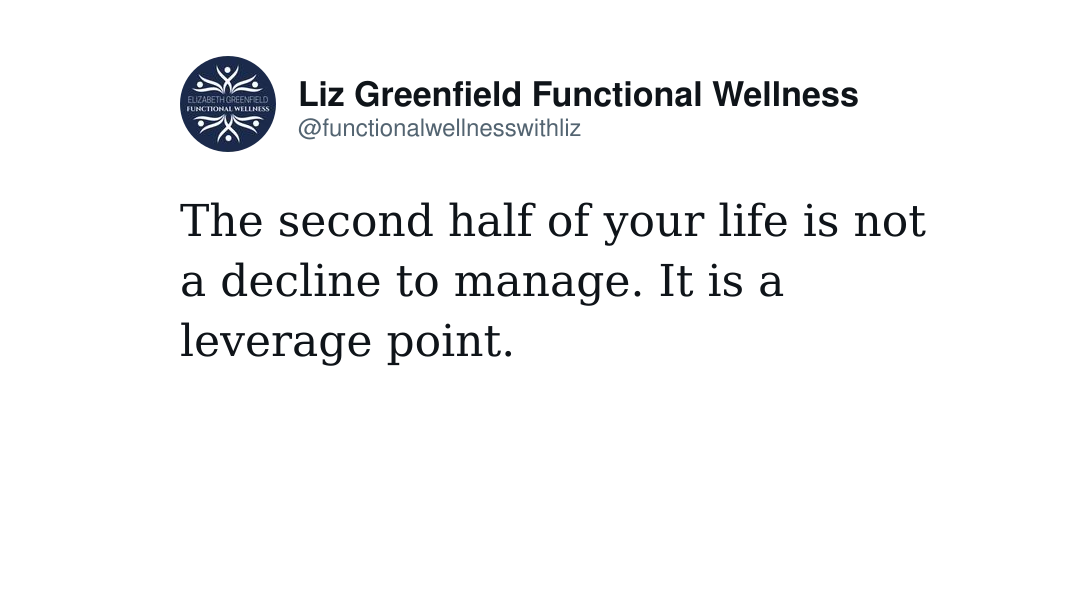
The second half of your life is not a decline to manage. It is a leverage point.
Follow to go deeper on biological age science, epigenetics, and what midlife can actually look like with the right data.
Your continuous glucose monitor is showing you something most doctors won't tell you.
A fasting glucose of 94 is technically "normal."
But 94 every morning, with spikes after meals and a slow return to baseline — that is your body showing you insulin is working harder than it should be.
Hemoglobin A1C tells you your three-month average. It does not tell you about the 40-point spikes after lunch, the 2 AM dips that fragment your sleep, or the glucose variability that drives inflammation and accelerates biological aging.
Time in range matters. Glucose variability matters. The shape of your curve matters.
Women in perimenopause are particularly vulnerable to glucose dysregulation — estrogen plays a direct role in insulin sensitivity, and as levels shift, blood sugar control often shifts with it. This is not a coincidence. It is physiology.
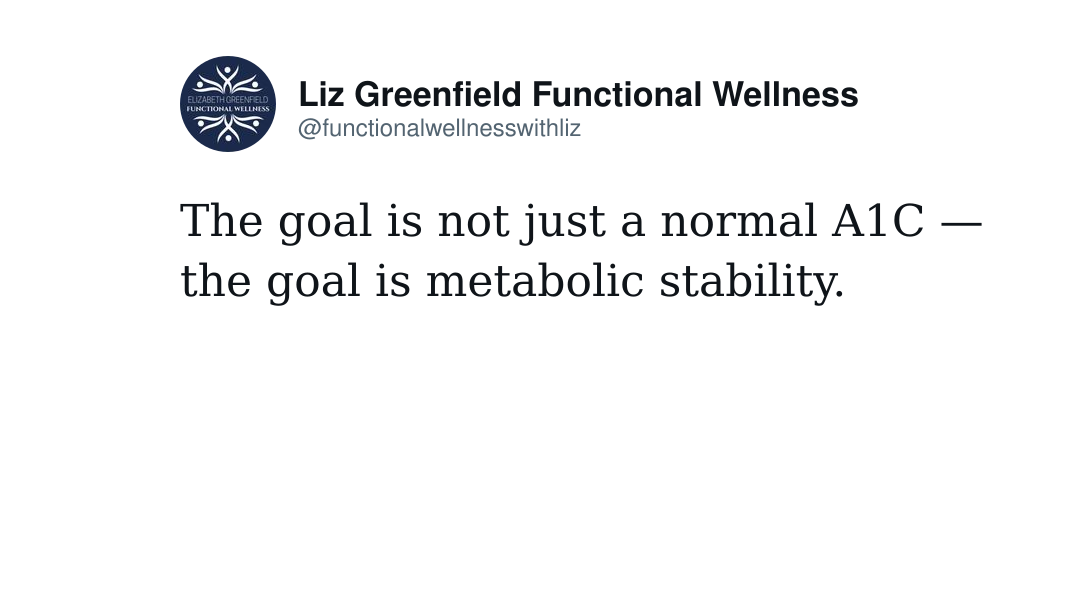
The goal is not just a normal A1C. The goal is metabolic stability — because stable glucose means stable energy, stable mood, stable sleep, and a slower biological clock.
If you've been wearing a CGM and feeling confused about what the data means, that's worth a deeper conversation.
Follow for more on metabolic health, hormones, and what your data is actually telling you.
Two tests that conventional medicine almost never runs together — but that explain more about a midlife woman's metabolism and hormonal health than almost anything else I use.
Continuous glucose monitoring. And a comprehensive hormone panel that actually goes beyond the basics.
On CGM first.
Most people associate glucose monitoring with diabetes. But in my practice, I use it with women who have never had an abnormal fasting glucose in their life — because what a CGM reveals is not whether you are diabetic. It is how your metabolism is actually responding to food, stress, sleep disruption, and exercise in real time.
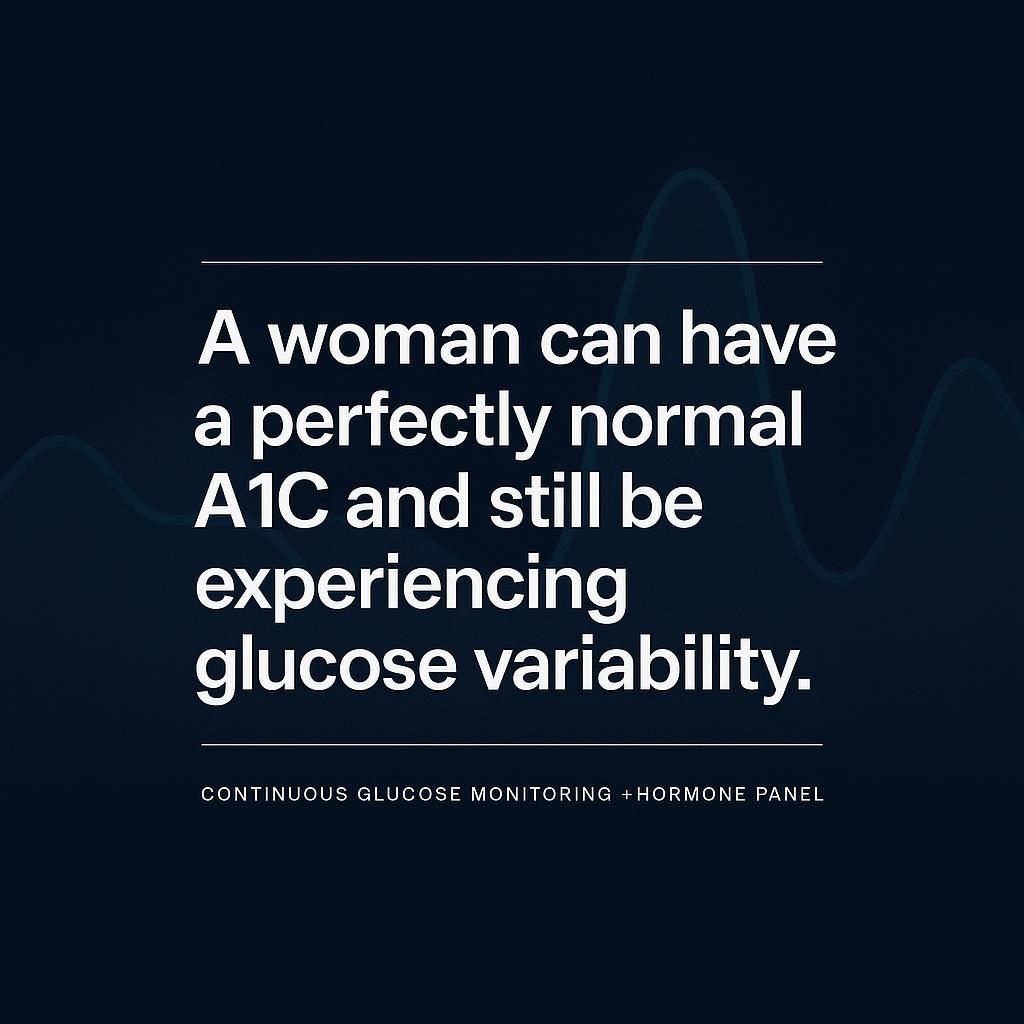
Perimenopause drives significant changes in insulin sensitivity. Estrogen plays a direct role in glucose regulation, and as it fluctuates, so does metabolic stability. A woman can have a perfectly normal A1C and still be experiencing glucose variability that is contributing to her fatigue, her afternoon energy crashes, her brain fog, and her inability to shift body composition despite doing everything right.
Two weeks of continuous glucose data tells that story clearly. And it gives us a precision nutrition target we could not reach without it.
On hormone panels.
A standard hormone workup in conventional medicine typically includes estradiol, FSH, and maybe progesterone. For a woman in perimenopause, that is the beginning of the picture — not the whole one.
In my practice, I assess sex hormone binding globulin alongside estradiol, because SHBG determines bioavailability. I look at free and total testosterone. I evaluate DHEA-S as an adrenal reserve and sex hormone precursor marker. I run a full thyroid panel including free T3, free T4, reverse T3, and antibodies. I assess cortisol across the day, not just at a single morning draw.
Individually, each marker adds information. Together, they explain what no single test could.
This is what advanced testing looks like. Not more tests for the sake of more. The right tests, interpreted together, by someone trained to read the pattern.
If you want to understand what your metabolism and your hormones are actually doing, book a discovery call. The data is available. You just need someone who knows how to find it.
#CGM#HormoneHealth#FunctionalMedicine#WomensHealth#Perimenopause#MetabolicHealth#InsulinSensitivity#ThyroidHealth#AdvancedTesting#MidlifeWomen
Most women with SIBO don't know they have it.
They know they have bloating that makes them look six months pregnant by 3 PM.
They know they have fatigue that sleep doesn't fix.
They know their hormones feel off — even though their labs say "normal."
What they don't know is that methane-dominant SIBO — an overgrowth of archaea in the small intestine — drives insulin resistance, disrupts estrogen metabolism, and contributes to the exact hormonal chaos they're trying to solve.
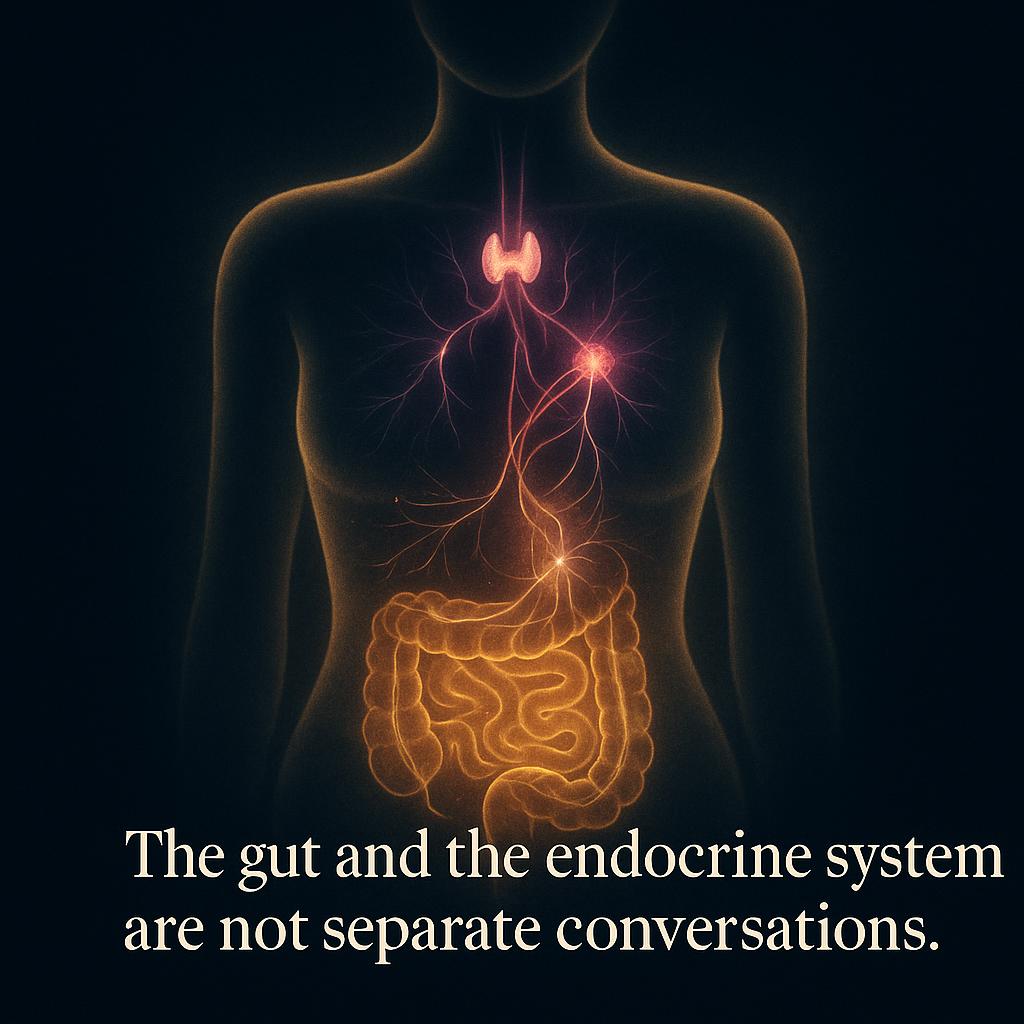
The gut and the endocrine system are not separate conversations. They are the same conversation.
When we look at a woman's hormone picture in isolation, we miss half the story. When we look at her gut — with the right testing, not a standard stool culture — we often find the root of what's been driving her symptoms for years.
This is what functional medicine is designed to do: hold the whole picture, run the right tests, and find what conventional medicine missed.
If you've been told your hormones are fine but you still feel off — the answer may be somewhere your doctor hasn't looked yet.
Follow for more on the gut-hormone connection and what functional lab work actually reveals.
I want to tell you about a number most physicians have never discussed with their patients.
Your biological age.
Not your chronological age — the number on your driver's license. Your biological age: how old your cells are actually performing, measured at the level of your DNA.
DNA methylation testing — epigenetic age testing — is one of the most clinically significant advances in longevity medicine in the last decade. It works by measuring methylation patterns across thousands of sites in your genome. Those patterns shift in predictable ways as we age, but they also shift in response to everything we experience: hormonal transitions, chronic stress, sleep disruption, inflammatory load, nutritional status.
What that means is that biological age is not fixed. It moves. And we can measure the movement.
In my practice, I use epigenetic age testing as both a baseline and an outcome measure. When we start working together, it tells us where your biology actually stands relative to your chronological age. After targeted interventions — hormonal optimization, precision nutrition, sleep and stress physiology work — it tells us whether what we are doing is working at the cellular level.
This is not about vanity. It is not anti-aging in the aesthetic sense. It is about understanding that the fatigue, the brain fog, the body composition changes you are experiencing may have a measurable cellular correlate — and that correlate can be moved.
I am also a co-investigator in an active research study on psilocybin microdosing and DNA methylation markers. The science of what is possible here is still unfolding. That is what makes this moment in longevity medicine so significant.
You are not simply aging. You are aging at a rate that is partly within your control.
If you want to know where you stand, book a discovery call. Let's look at your biological age together.
#BiologicalAge#EpigeneticAge#LongevityMedicine#DNAMethylation#FunctionalMedicine#WomensHealth#HealthyAging#HormoneHealth#Perimenopause#PrecisionMedicine
Your hormones don't operate in a vacuum.
They respond to light, food, movement, stress, and sleep — in a precise, rhythmic sequence that shifts throughout the day.
Most women in perimenopause are told their symptoms are about estrogen. And estrogen matters. But what I see in clinical practice, over and over, is that the architecture of the day is just as important as the hormone level itself.
When you eat. When you move. When you expose yourself to light. When you wind down. These aren't lifestyle preferences — they're biological inputs.
The Design Your Day in Perimenopause guide walks you through exactly how to structure those inputs in a way that works with your hormonal biology, not against it.
It's built from 25 years of clinical experience and the functional medicine framework I use with every client.
It's free. And it's a genuinely useful place to start.
https://www.lizgreenfield.com/free-resources/
Your labs came back normal.
But normal is not the same as optimal. And for a woman in perimenopause, it is not even close to the same thing.
Functional lab interpretation is one of the most underutilized clinical tools in midlife women's health — not because the tests don't exist, but because reading them requires a different framework than conventional medicine applies.
Here is what I mean.
A TSH of 3.8 falls within the standard reference range. But a woman with fatigue, hair loss, cold intolerance, and difficulty losing weight with a TSH of 3.8 often has subclinical hypothyroidism that is driving every one of those symptoms. The lab will not flag it. Her physician will tell her her thyroid is fine. And she will spend another year managing symptoms that have a clear physiological explanation.
This pattern repeats across every system I evaluate:
Ferritin at 15 — technically normal, functionally insufficient for brain health and hair follicle integrity. Homocysteine at 11 — within range, but elevated enough to suggest methylation impairment and early cardiovascular risk. DHEA-S trending low for her age — not flagged, but telling a complete story about adrenal reserve and sex hormone precursor availability.
Functional lab interpretation means understanding what the full pattern of results says together — not whether each individual value clears a threshold. It means reading labs against what optimal physiology requires, not just against a population average that includes people who are already unwell.
In my practice, I run comprehensive panels and then I sit with the results long enough to understand what they are saying.
Most women have never experienced that kind of clinical attention directed at their own data.
If you have results and questions that have never quite been answered, book a discovery call. Let's read them together.
#FunctionalMedicine#LabWork#WomensHealth#ThyroidHealth#HormoneHealth#Perimenopause#OptimalHealth#RootCauseMedicine#FunctionalLabs#MidlifeWomen
The body is not failing you.
It is asking for something it has not yet received.
This is the foundational belief underneath every clinical decision I make. And it is the thing that changes everything for the women I work with — because most of them have spent years interpreting their symptoms as evidence that something is wrong with them.
Nothing is wrong with them. Their biology is responding intelligently to inputs — hormonal, metabolic, nutritional, environmental, psychological — that have not been correctly identified or addressed.
Functional medicine is how we identify them.
In my practice, I work with women who are high-functioning by every external measure and struggling by every internal one. Executives who are pushing through brain fog in leadership meetings. Clinicians who are treating their own colleagues while their own fatigue goes uninvestigated. Athletes whose recovery has changed in ways no one can explain.
What they share is this: they have not yet had a clinical partner who took the time to understand how their individual systems work together.
That is the work. Understanding the interconnection. Using precise testing to build a picture that is specific to this woman, this body, this moment in her biology. And then designing a protocol that meets her exactly there.
I also work in partnership with a holistic nutritionist and precision nutrition coach, which means clients receive clinical depth and real-world behavior change support as an integrated experience — not a referral, not a handoff, but a unified team.
Because the science of why matters. And so does the support of how.
If you are ready for a clinical partnership that takes your biology seriously, I would like to hear your story.
Book a discovery call. Let's find what has been missing.
#FunctionalMedicine#WomensHealth#HolisticHealth#PrecisionNutrition#HormoneHealth#RootCauseMedicine#MidlifeWomen#IntegrativeHealth#WomensWellness#HealthCoaching
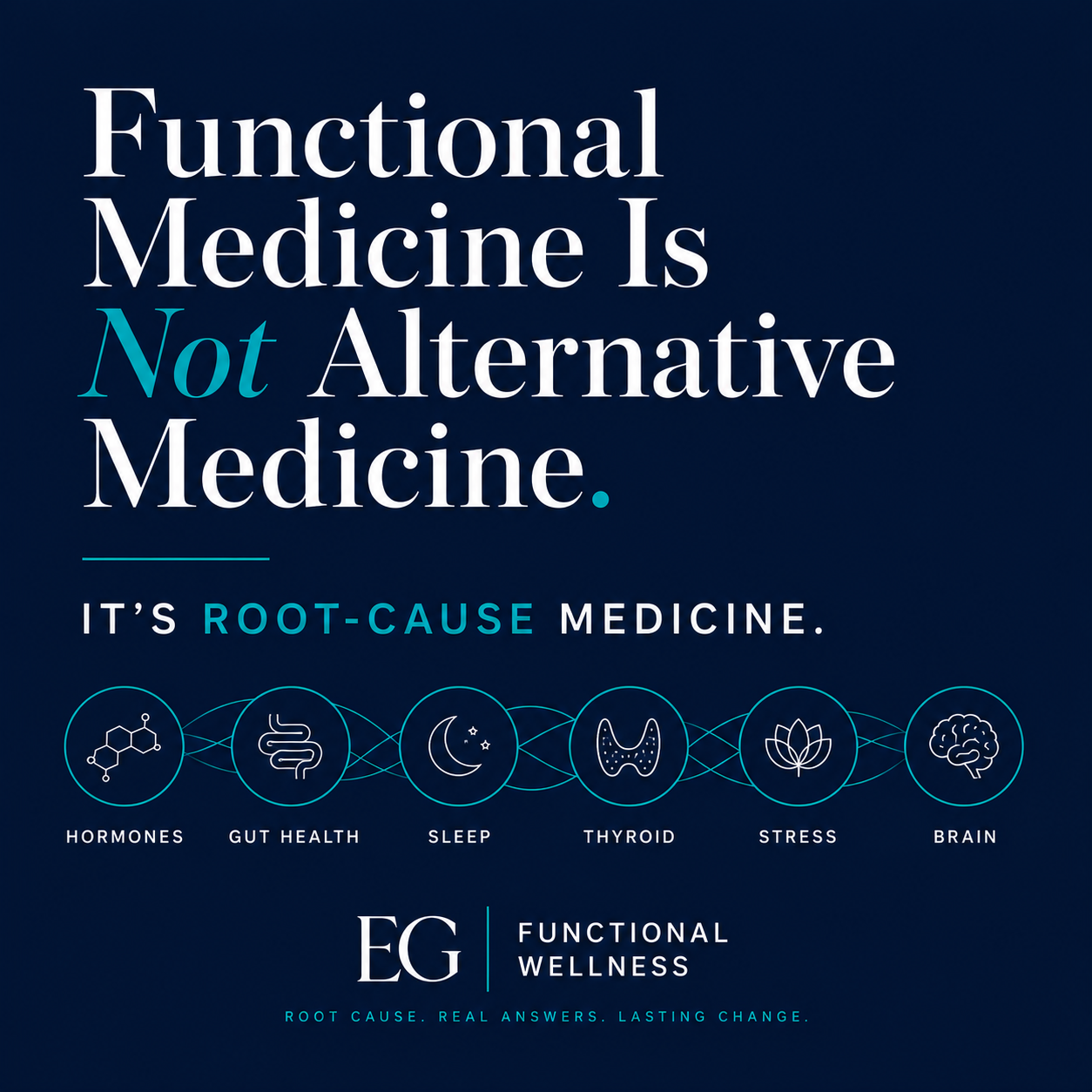
Functional medicine is not alternative medicine.
It is not a rejection of science. It is not supplements instead of treatment. It is not wellness culture with a clinical veneer.
It is a methodology. A framework for asking why — systematically, rigorously, with data.
Here is what that looks like in practice:
A woman comes in with fatigue, brain fog, and weight gain she cannot explain. Her previous workups were normal. She has been told it is stress, or perimenopause, or just getting older.
In a functional medicine model, we do not start with the symptom. We start with the system.
What is her cortisol rhythm doing across the day — not just whether her morning cortisol is in range, but how it patterns across four time points and what that tells us about her HPA axis? What does her gut microbiome look like, and is microbial dysbiosis contributing to the systemic inflammation that is slowing her thyroid conversion? What are her sex hormone binding globulin levels doing to the bioavailability of the estradiol her labs show is technically adequate?
These are not exotic questions. They are the questions that explain what is happening.
Root cause medicine takes more time. It requires more sophisticated testing. It demands a clinician who can hold the full picture and read the pattern across systems.
That is the work I do. And the reason I do it is because the women who find me have already tried everything else.
If you are ready to stop managing symptoms and start understanding your biology at a level that actually leads somewhere, I would like to talk.
Book a discovery call. The whole picture is worth looking at.
#FunctionalMedicine#RootCauseMedicine#WomensHealth#HormoneHealth#GutHealth#Perimenopause#ThyroidHealth#IntegrativeHealth#MidlifeWomen#AdvancedTesting
Most women don't need another prescription.
They need someone to finally ask the right question.
Conventional medicine is extraordinary at crisis care. It was built for it — acute illness, emergencies, clear diagnoses with clear treatments.
But it was not built for the woman who wakes up exhausted after eight hours of sleep. Who gains weight despite eating carefully and exercising consistently. Who sits in a board meeting and cannot find words she knew yesterday. Whose labs come back normal. Again.
That woman is not sick in the way the system knows how to see. But she is not well. And somewhere between those two things is where millions of high-achieving women in midlife are living.
Functional medicine starts with a different premise: the body is always communicating. There is no symptom without a signal underneath it. The work is to listen precisely enough to hear what the signal actually is.
That means treating the whole system — hormones, gut, sleep, stress physiology, nutrition, epigenetic aging, environmental inputs — as interconnected. Because they are. You cannot optimize a woman's hormones while ignoring her gut microbiome. You cannot address her fatigue while overlooking her cortisol rhythm and her sleep architecture.
Everything is connected. And the connections are where the answers live.
After nearly 25 years in clinical practice, this is the thing I am most certain of: when we stop chasing individual symptoms and start reading the whole picture, the body tells us exactly what it needs.
If you are a woman who has been told everything is fine and you know something is not — that knowing is worth listening to.
Book a discovery call. Let's find out what your body is actually asking for.
#FunctionalMedicine#WomensHealth#HormoneHealth#BrainFog#Fatigue#Perimenopause#RootCauseMedicine#IntegrativeHealth#MidlifeWomen#WomensWellness
She spent years caring for patients before realizing she wasn't listening to her own body.
Before founding Elizabeth Greenfield Functional Wellness, Liz spent years in one of the most demanding areas of healthcare. As a nurse anesthetist, she worked in a high-pressure environment where long hours, constant responsibility, and caring for others always came first.
Like many high-achieving women, Liz became so focused on helping everyone else that she stopped listening to what her own body was trying to tell her.
The fatigue, stress, and warning signs were easy to dismiss as part of a busy career. She pushed through exhaustion, ignored symptoms, and continued operating at full speed because that's what healthcare professionals are trained to do.
Then came a wake-up call.
Through advanced testing, Liz discovered that while she was only 45 years old chronologically, her biological age was measuring much older. Her body had been carrying the burden of years of chronic stress, inflammation, and imbalance.
That moment changed everything.
Instead of accepting declining health as a normal part of aging, Liz began searching for answers. Through functional medicine, personalized testing, and targeted lifestyle changes, she was able to reverse her biological age and reclaim her energy, health, and vitality.
Today, her mission is to help other women avoid the same path. She empowers women to stop ignoring their symptoms, understand what their bodies are telling them, and take action before stress and burnout become their new normal.
Because two women can be the same age on paper—and be aging in completely different ways.
#BiologicalAge#FunctionalMedicine#WomensHealth#Burnout#HormoneHealth#LongevityMedicine#Perimenopause#WomensWellness#RootCauseMedicine#HealthyAging
The moment Liz found her calling didn't happen in a classroom—it happened at a patient's bedside.
Long before Liz Greenfield became a Functional Medicine practitioner, she was a 20-year-old nursing student completing her clinical rotations.
One day, she sat beside a woman who was nearing the end of her life. The woman's daughter lived far away and was unable to be there during her final moments.
So Liz did something simple, yet profound.
She held her hand.
As she sat with her, offering comfort and presence, Liz learned something she would never forget: the woman's daughter's name was Elizabeth.
In that moment, she felt a deep calling toward a life of service and healing.
It wasn't just about medicine. It was about being there for people during their most vulnerable moments. It was about helping others feel seen, supported, and cared for.
That experience became one of the defining moments that shaped her career in healthcare.
Today, through Elizabeth Greenfield Functional Wellness, Liz continues that same mission. She helps women understand their health, uncover root causes, and make informed choices that support longevity, vitality, and well-being.
While the tools and science have evolved over the years, the heart behind her work remains the same:
Helping people live healthier lives and supporting them through every stage of their journey.
#FunctionalMedicine#WomensHealth#HealingJourney#RootCauseMedicine#IntegrativeHealth#HealthAndWellness#FunctionalWellness#LizGreenfield#WomensWellness#HolisticHealth



'/%3E%3Cpath fill='%23fff' d='M12 7.3A4.7 4.7 0 1 0 16.7 12 4.7 4.7 0 0 0 12 7.3Zm0 7.8A3.1 3.1 0 1 1 15.1 12 3.1 3.1 0 0 1 12 15.1Zm5-8a1.1 1.1 0 1 0 1.1 1.1A1.1 1.1 0 0 0 17 7.1Zm-5 1.5c-1.5 0-1.7 0-2.3.1a3.8 3.8 0 0 0-1.3.2 2.2 2.2 0 0 0-.8.5 2.2 2.2 0 0 0-.5.8 3.8 3.8 0 0 0-.2 1.3c-.1.6-.1.8-.1 2.3s0 1.7.1 2.3a3.8 3.8 0 0 0 .2 1.3 2.2 2.2 0 0 0 .5.8 2.2 2.2 0 0 0 .8.5 3.8 3.8 0 0 0 1.3.2c.6.1.8.1 2.3.1s1.7 0 2.3-.1a3.8 3.8 0 0 0 1.3-.2 2.5 2.5 0 0 0 1.3-1.3 3.8 3.8 0 0 0 .2-1.3c.1-.6.1-.8.1-2.3s0-1.7-.1-2.3a3.8 3.8 0 0 0-.2-1.3 2.2 2.2 0 0 0-.5-.8 2.2 2.2 0 0 0-.8-.5 3.8 3.8 0 0 0-1.3-.2c-.6-.1-.8-.1-2.3-.1Zm0-1.6c1.5 0 1.7 0 2.4.1a5.5 5.5 0 0 1 1.8.3 3.8 3.8 0 0 1 2.2 2.2 5.5 5.5 0 0 1 .3 1.8c.1.7.1.9.1 2.4s0 1.7-.1 2.4a5.5 5.5 0 0 1-.3 1.8 3.8 3.8 0 0 1-2.2 2.2 5.5 5.5 0 0 1-1.8.3c-.7.1-.9.1-2.4.1s-1.7 0-2.4-.1a5.5 5.5 0 0 1-1.8-.3 3.8 3.8 0 0 1-2.2-2.2 5.5 5.5 0 0 1-.3-1.8C4 13.7 4 13.5 4 12s0-1.7.1-2.4a5.5 5.5 0 0 1 .3-1.8 3.8 3.8 0 0 1 2.2-2.2 5.5 5.5 0 0 1 1.8-.3C10.3 5 10.5 5 12 5Z'/%3E%3C/svg%3E)