Ever had the useful insight sitting right there in a Claude or ChatGPT chat, and still not posted it?
The usual answer is another app. Fair enough, a good one helps. The bigger cost is the switch: another tab, re-explaining your voice from scratch... so it waits, and client work eats the week.
Radi8 works inside Claude and ChatGPT. It keeps your voice and strategy on hand, so you can ask for a post mid-conversation and schedule it there. Nothing publishes until you approve it. There's a short video on YouTube showing it.
To see it write in your own voice: https://www.radi8.com/welcome
Two chats, Claude and ChatGPT. If that's where you work through client problems, it's a fine place to write the post too.
Radi8 works inside both, and nothing publishes until you approve it. YouTube has a short video of it in action.
Getting consistent on LinkedIn usually gets framed as a tooling problem. Find the right app, build the habit of opening it, and the posts will follow.
I'd push back on that. A good app helps, fair enough. The bigger cost is the switch. You're mid-conversation in Claude or ChatGPT working through a client problem, the useful insight is sitting right there, and posting it means another tab and re-explaining your voice from scratch... so it waits. Then client work eats the week.
The chat where you already think through client work is a perfectly good place to write the post about it.
That's where Radi8 works, inside Claude and ChatGPT. It keeps your voice and strategy on hand, so you can ask for a LinkedIn post mid-conversation and schedule it without leaving. Nothing publishes until you approve it. There's a short video on YouTube showing it in action.
For the full setup, step by step, read the walkthrough on Substack. Link's in the first comment.
Most of us assume running social media means sitting at a desk with yet another dashboard open. It doesn't have to.
If you already use ChatGPT or Claude, Radi8 works inside both. Talk to your phone, and Radi8 creates, manages, schedules, and publishes your posts right from that chat... and you approve each one before it goes anywhere.
There's a short on YouTube that walks through it. The fuller picture of how Radi8 works is here: https://www.radi8.com
The usual advice for staying consistent on LinkedIn is to find a better tool. Another dashboard, another login to remember.
I'd push back on that. If you went independent recently, you already have plenty of apps, and chances are one of them is ChatGPT or Claude. A new place to go is exactly the kind of thing that slips the moment client work gets busy... you mean to open it, and then it's three weeks later.
Radi8 works inside both of them. You talk to your phone, say what you want to post, and Radi8 creates it, then manages, schedules, and publishes it for you. You read each post first, and nothing goes out until you approve it.
So the habit you need is one you already have. Open the chat and talk.
There's a short video on YouTube that walks through it, if you'd like to watch it happen.
And if you want the fuller picture of how Radi8 works, the link is in the first comment.
Two AI chats you already use, ChatGPT and Claude, and Radi8 works inside both (our video on YouTube walks through it). Talk to your phone, and Radi8 creates, manages, schedules, and publishes your posts.
You approve each one first.
How to market from inside ChatGPT or Claude without re-explaining your brand every chat: let Radi8 hold the context for you.
Usually that means pasting the same voice notes in again... every new conversation.
With Radi8 connected, you ask for a post mid-conversation, get a version for each channel, schedule it, and nothing goes out without your approval.
Claude and ChatGPT already know how to write, and Radi8 gives them your voice and strategy so every chat starts on brand.
Mashiam's Substack has a clear walkthrough of how it works.
Writing the post probably isn't what's eating your content time.
It feels like it is, and some weeks it really is (the blank page is real). But in a busy client week, the hour usually goes somewhere less obvious: the second pass. You trim the idea down so it fits one place, then stretch it back out for another, and somewhere in the middle of that, client work wins again.
That's a systems problem. It doesn't need more discipline from you.
Radi8 holds your voice, audience, and strategy, so one idea comes back shaped for each channel you've connected, ready to schedule. You stay the editor. Write the idea once, then read every version in your own voice before anything goes out.
The link to the Radi8 homepage is in the first comment. Click it and hit Get Started to set up your account, then try it with your next idea.
What do you post when client calls have eaten the whole week?
Here's how to make posting easy in a busy client week: write down the answer to one question a client asked you on a call. Stop there.
That answer is the post. You already said it out loud, so there's no blank page to stare at.
A video on YouTube got me thinking about this one. Radi8 shapes that answer for each channel you've connected, in your voice, and nothing publishes until you approve it.
How it works inside ChatGPT and Claude: https://mashiam.substack.com/p/radi8-in-chatgpt-and-claude
How much of every AI chat goes to explaining your business before you even get to the thing you wanted?
If you went independent recently, you know the routine. Open ChatGPT or Claude, paste in who you serve and how you sound, then a paragraph on what you're trying to get done, and only after all that, ask for the post. Next week, all over again. Somewhere in there the posting slips, because client work wins that fight almost every time.
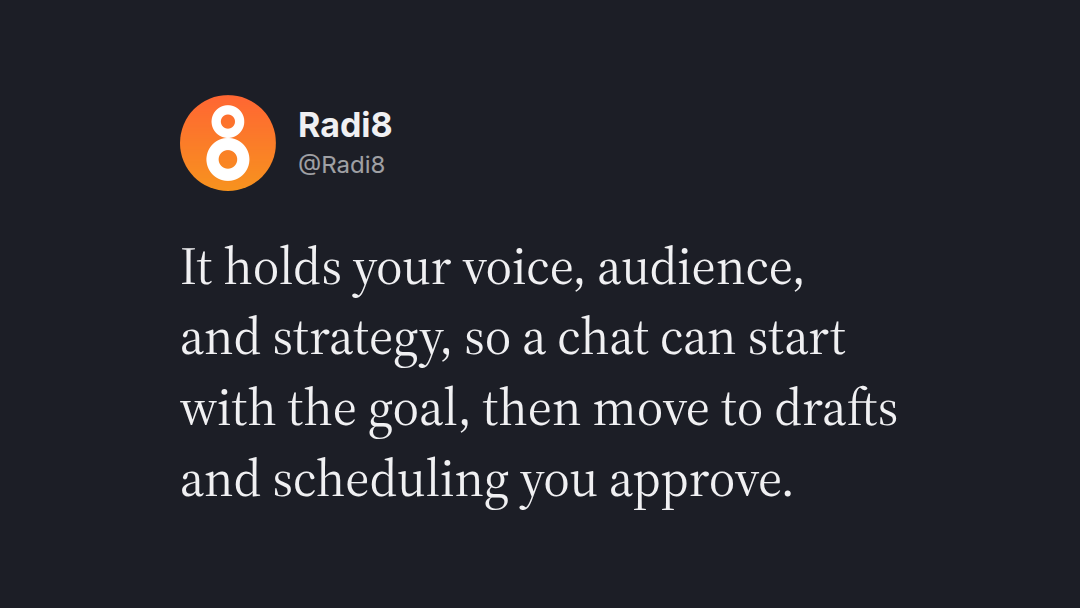
Radi8 works right inside ChatGPT and Claude. It holds your voice, audience, and strategy, so a chat can start with the goal, then move to drafts and scheduling you approve.
So your first message can be the outcome you want. Something like: two LinkedIn posts this week on the question clients ask me most. You read what comes back, fix what's off, and nothing goes out until you say yes.
If you want to see how it works in more detail, the link's in the first comment.
Here's a practical way to keep your footing while the platforms keep moving.
A newsletter headline stopped my scroll: an invite to a call with Instagram's VP of Product about the future of entertainment on the platform.
Interesting, and also a reminder that what gets rewarded is decided somewhere else, by someone else, and it shifts. If everything you post is built around the format of the moment, every shift sends you back to a blank page.
So start from the other end. Write down the questions clients actually ask you, the ones you answer on calls without thinking. Turn one of them into a post. When the format changes, reshape that same answer to fit it and leave the substance where it was.
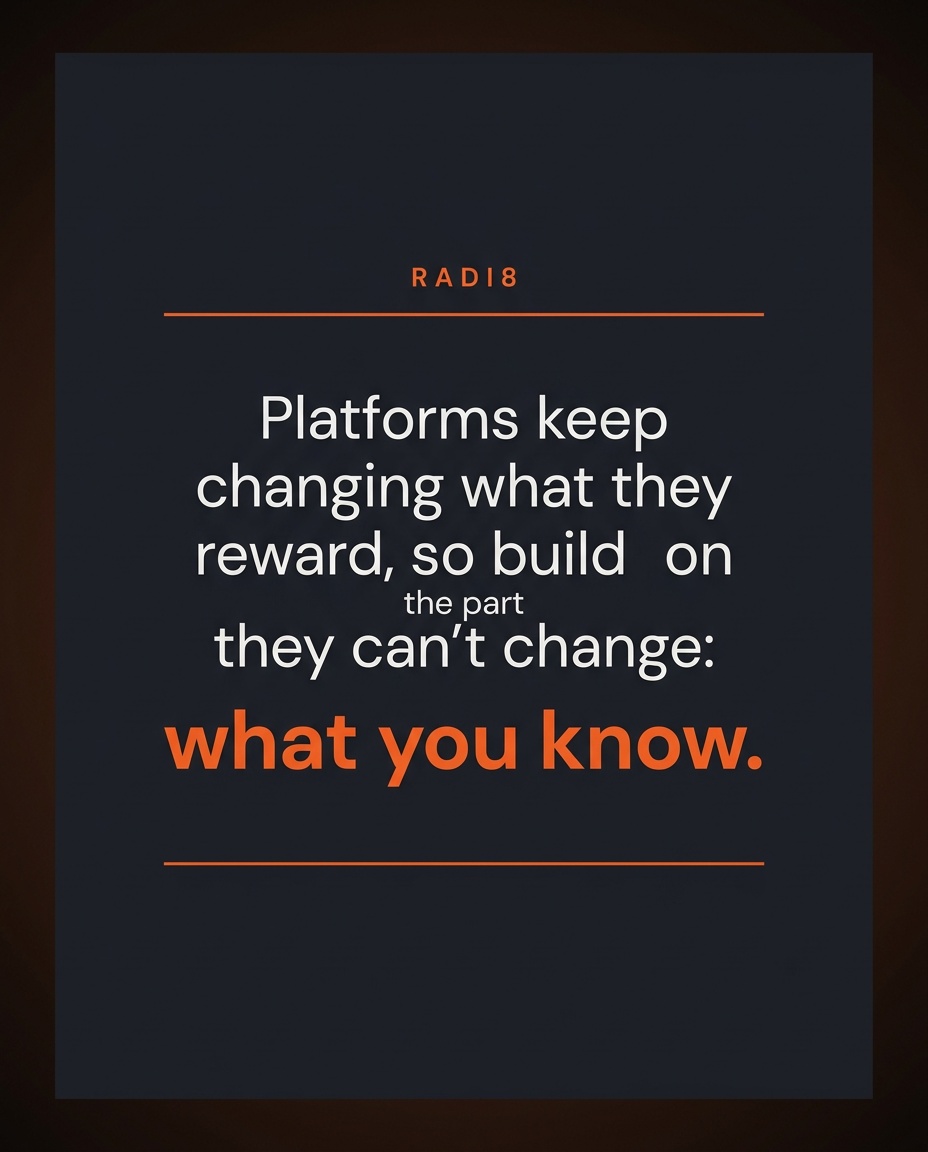
Platforms keep changing what they reward, so build on the part they can't change: what you know.
That part travels to every channel, and it gets easier to say the more often you say it.
If you're curious what it looks like when your voice and expertise live in one place that remembers them, the link's in the first comment.
How long should one LinkedIn post actually take?
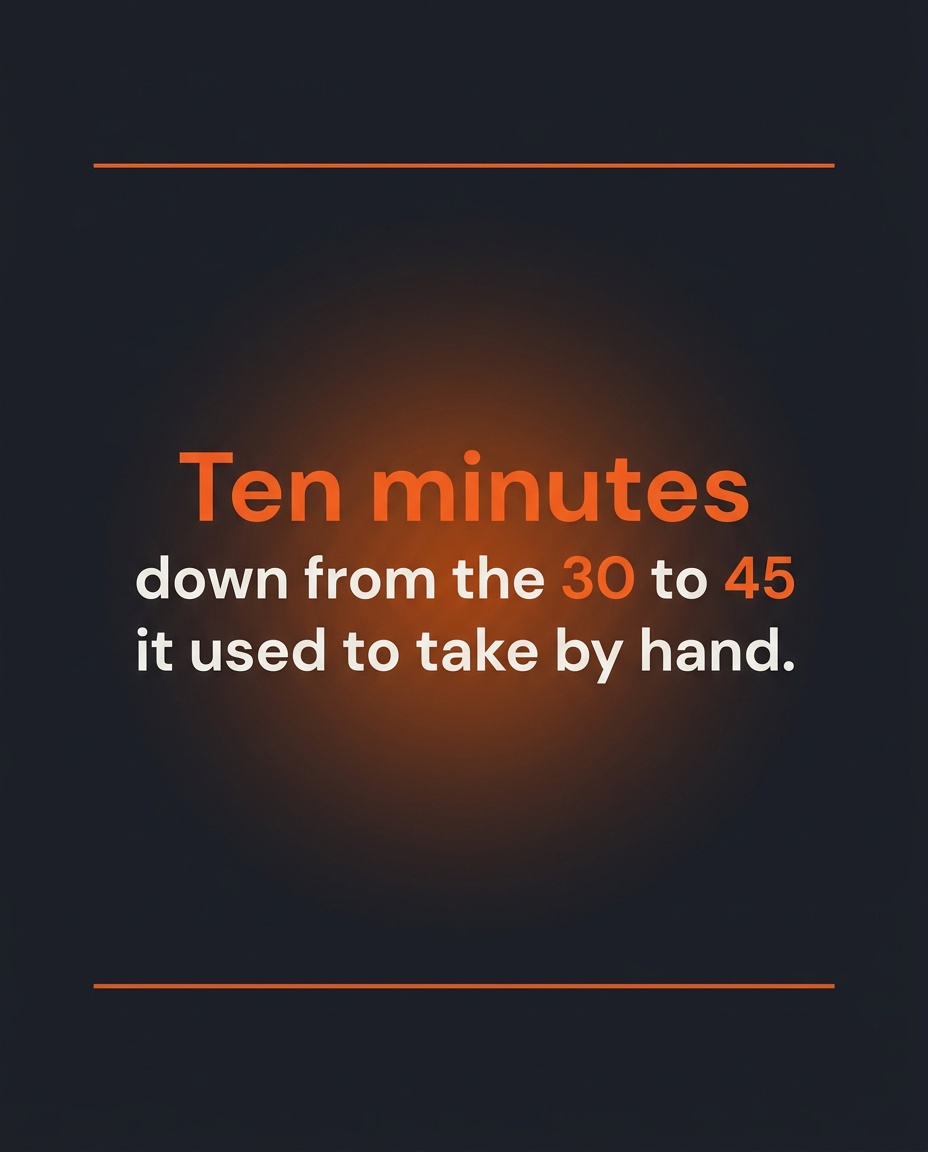
For people using Radi8, the measured answer is short. Ten minutes, down from the 30 to 45 it used to take by hand. That's one post, written in your own voice, not a template.
Here's why it moves that fast: Radi8 already holds your brand voice and strategy, so you're not re-explaining yourself to a blank page every time. You work inside the chat you already use, Claude or ChatGPT, say what you want to get across, read it back, keep what's right, and approve before anything publishes. The context doesn't reset between posts, so the next one starts from everything the last one already knew instead of from scratch.
That's the useful part, and you can act on it without reading a word more. If you want the longer version, where you get to see your own voice before you pay anything, the link is in the first comment.


 View on Facebook
Also on




'/%3E%3Cpath fill='%23fff' d='M12 7.3A4.7 4.7 0 1 0 16.7 12 4.7 4.7 0 0 0 12 7.3Zm0 7.8A3.1 3.1 0 1 1 15.1 12 3.1 3.1 0 0 1 12 15.1Zm5-8a1.1 1.1 0 1 0 1.1 1.1A1.1 1.1 0 0 0 17 7.1Zm-5 1.5c-1.5 0-1.7 0-2.3.1a3.8 3.8 0 0 0-1.3.2 2.2 2.2 0 0 0-.8.5 2.2 2.2 0 0 0-.5.8 3.8 3.8 0 0 0-.2 1.3c-.1.6-.1.8-.1 2.3s0 1.7.1 2.3a3.8 3.8 0 0 0 .2 1.3 2.2 2.2 0 0 0 .5.8 2.2 2.2 0 0 0 .8.5 3.8 3.8 0 0 0 1.3.2c.6.1.8.1 2.3.1s1.7 0 2.3-.1a3.8 3.8 0 0 0 1.3-.2 2.5 2.5 0 0 0 1.3-1.3 3.8 3.8 0 0 0 .2-1.3c.1-.6.1-.8.1-2.3s0-1.7-.1-2.3a3.8 3.8 0 0 0-.2-1.3 2.2 2.2 0 0 0-.5-.8 2.2 2.2 0 0 0-.8-.5 3.8 3.8 0 0 0-1.3-.2c-.6-.1-.8-.1-2.3-.1Zm0-1.6c1.5 0 1.7 0 2.4.1a5.5 5.5 0 0 1 1.8.3 3.8 3.8 0 0 1 2.2 2.2 5.5 5.5 0 0 1 .3 1.8c.1.7.1.9.1 2.4s0 1.7-.1 2.4a5.5 5.5 0 0 1-.3 1.8 3.8 3.8 0 0 1-2.2 2.2 5.5 5.5 0 0 1-1.8.3c-.7.1-.9.1-2.4.1s-1.7 0-2.4-.1a5.5 5.5 0 0 1-1.8-.3 3.8 3.8 0 0 1-2.2-2.2 5.5 5.5 0 0 1-.3-1.8C4 13.7 4 13.5 4 12s0-1.7.1-2.4a5.5 5.5 0 0 1 .3-1.8 3.8 3.8 0 0 1 2.2-2.2 5.5 5.5 0 0 1 1.8-.3C10.3 5 10.5 5 12 5Z'/%3E%3C/svg%3E)