Thought leadership vs. self-promotion — the actual difference 👇
A lot of founders don't post because they're afraid it'll sound like bragging. So let's draw the line.
Self-promotion: "I'm the best at what I do. Hire me."
Thought leadership: "Here's how I think about this — and why most people get it wrong."
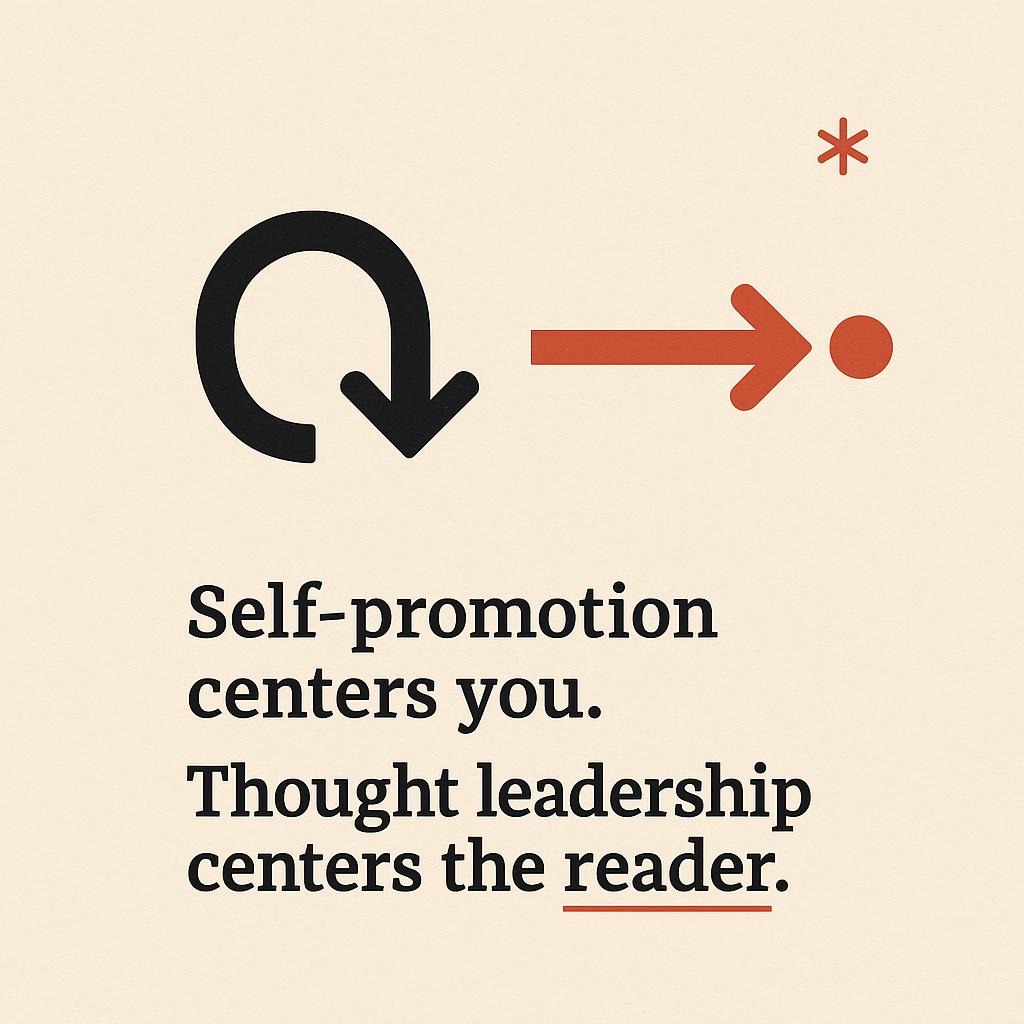
Self-promotion centers you. Thought leadership centers the reader.
One asks for something. The other gives first.
Sharing a framework, a hard-won lesson, a real perspective on your industry? That's not bragging. That's contribution.
Show up consistently and share what you know, and you won't need to hard sell. By the time someone reaches out, the trust is already there. 🔗 Link in bio.
#thoughtleadership#founderledmarketing#personalbranding#contentstrategy#solopreneur
Random posting doesn't build an audience. Here's what does.
Posting when you feel inspired isn't a strategy. It's a mood. And moods are unreliable.
Here's what random posting actually produces: random results. Some weeks you're everywhere. Some weeks you vanish. Your audience notices — even if they never say so. The algorithm notices too.
Consistency isn't about posting every single day. It's about showing up on a predictable cadence your audience can rely on.
The founders who build real visibility aren't the ones with the most to say. They're the ones who say it regularly.
2–3 posts a week, every week, for 90 days beats 10 posts in one week followed by silence.
Marketing shouldn't depend on inspiration. It should run like a system.
Start your free trial — radi8.com (no credit card required)
Posting when you feel inspired isn't a strategy. It's a mood.
And moods are unreliable.
Random posting = random results.
Consistency is a system.
radi8.com
Random posting doesn't build an audience. Here's what does.
Posting when you feel inspired isn't a strategy. It's a mood. And moods are unreliable.
Here's what random posting actually produces: random results. Some weeks you're everywhere. Some weeks you vanish. Your audience notices — even if they never say so. The algorithm notices too.
Consistency isn't about posting every single day. It's about showing up on a predictable cadence your audience can rely on.
The founders who build real visibility aren't the ones with the most to say. They're the ones who say it regularly.
2–3 posts a week, every week, for 90 days beats 10 posts in one week followed by silence.
Marketing shouldn't depend on inspiration. It should run like a system.
Start your free trial — radi8.com (no credit card required)
How long does it take you to create one post?
For most founders, the honest answer is somewhere between 30 minutes and never.
You open a blank doc. Stare at it. Write something. Delete it. Come back later. Wonder if it's good enough. Close the tab.
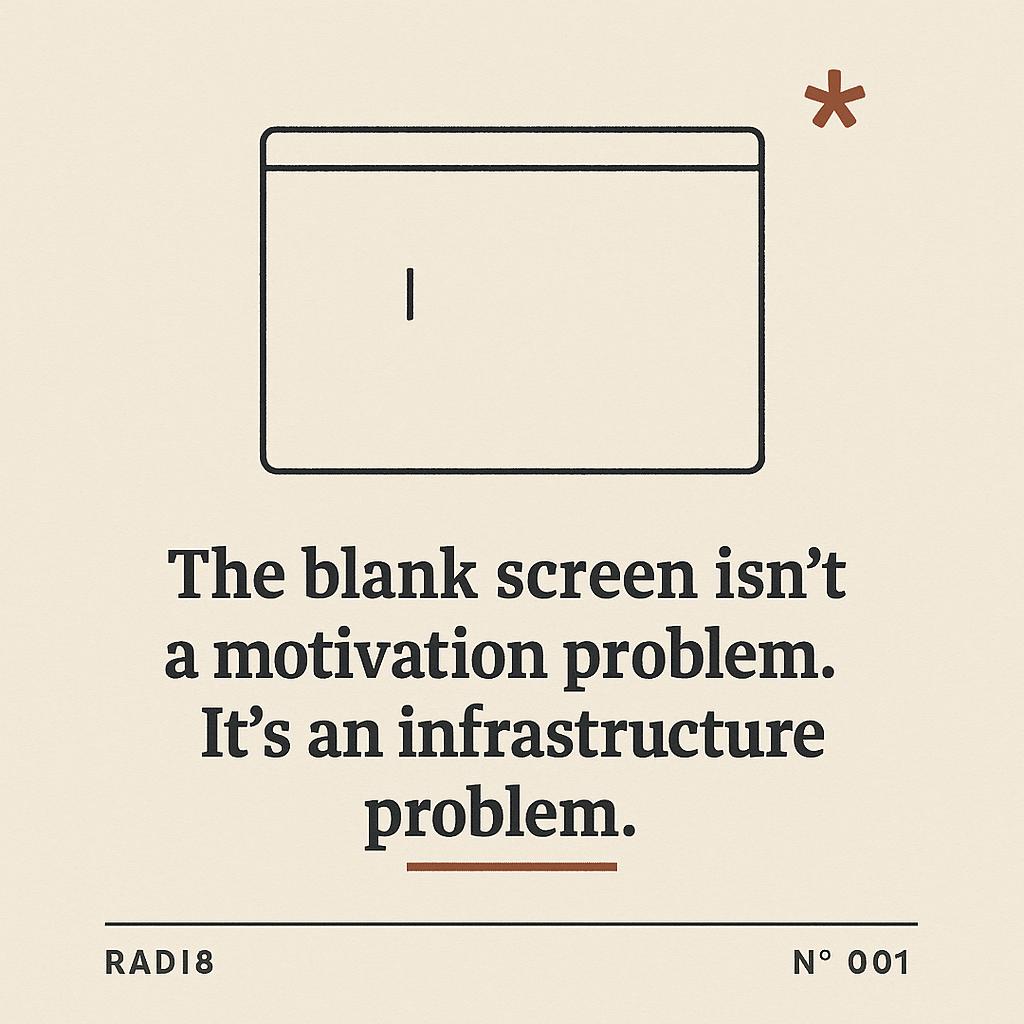
That's not a discipline problem. It's a systems problem.
When your tools don't know your voice, your audience, or what you actually sell, you start from zero every single time.
Radi8 starts from your brand context instead — your voice, your offers, your audience, already loaded. First draft in under 10 minutes, sounding like you from the start.
Stop starting from scratch. 🔗 Link in bio.
#founderledmarketing#contentstrategy#solopreneur#personalbranding#aimarketing#marketingtips
Thought leadership vs. self-promotion — here's the actual difference.
A lot of founders don't post because they're afraid it'll come across as bragging.
So let's draw the line clearly.
Self-promotion: "I'm the best at what I do. Hire me."
Thought leadership: "Here's how I think about this problem — and why most people get it wrong."
Self-promotion centers you. Thought leadership centers the reader.
Self-promotion asks for something. Thought leadership gives something first.
Self-promotion is a transaction. Thought leadership builds trust over time — and trust is what drives inbound.
If you're sharing a framework, a hard-won lesson, a perspective on your industry, or a counterintuitive take — that's thought leadership. It's not bragging. It's contribution.
The founders who show up consistently and share what they know don't need to hard sell. By the time someone reaches out, the trust is already there.
Start your free trial — radi8.com (no credit card required)
Thought leadership vs. self-promotion:
Self-promotion centers you.
Thought leadership centers the reader.
One asks. The other gives first.
That's what builds trust.
radi8.com
Thought leadership vs. self-promotion — here's the actual difference.
A lot of founders don't post because they're afraid it'll come across as bragging.
So let's draw the line clearly.
Self-promotion: "I'm the best at what I do. Hire me."
Thought leadership: "Here's how I think about this problem — and why most people get it wrong."
Self-promotion centers you. Thought leadership centers the reader.
Self-promotion asks for something. Thought leadership gives something first.
Self-promotion is a transaction. Thought leadership builds trust over time — and trust is what drives inbound.
If you're sharing a framework, a hard-won lesson, a perspective on your industry, or a counterintuitive take — that's thought leadership. It's not bragging. It's contribution.
The founders who show up consistently and share what they know don't need to hard sell. By the time someone reaches out, the trust is already there.
Start your free trial — radi8.com (no credit card required)
3 reasons founders stop posting consistently.
It's not what most people think.
1. Every post feels like it has to be perfect.
You're not just writing — you're representing your brand, your expertise, your reputation. The stakes feel high, so you wait until you have something "worth saying." Which means you rarely post.
2. The blank screen has no memory.
Your AI tool doesn't know what you do, who you serve, or how you sound. Every session starts from scratch. That friction adds up fast.
3. Client work always wins.
Marketing is important but not urgent — until it is. The pipeline dries up, and you scramble to get visible again.
None of these are motivation problems. They're design problems.
A system that already knows your voice removes #1 and #2 instantly. A content plan removes #3.
That's what Radi8 is built for.
Start your free trial — radi8.com (no credit card required)
3 reasons founders stop posting:
1. Every post has to feel perfect.
2. The blank screen has no memory.
3. Client work always wins.
Design problems, not motivation.
radi8.com
3 reasons founders stop posting consistently.
It's not what most people think.
1. Every post feels like it has to be perfect.
You're not just writing — you're representing your brand, your expertise, your reputation. The stakes feel high, so you wait until you have something "worth saying." Which means you rarely post.
2. The blank screen has no memory.
Your AI tool doesn't know what you do, who you serve, or how you sound. Every session starts from scratch. That friction adds up fast.
3. Client work always wins.
Marketing is important but not urgent — until it is. The pipeline dries up, and you scramble to get visible again.
None of these are motivation problems. They're design problems.
A system that already knows your voice removes #1 and #2 instantly. A content plan removes #3.
That's what Radi8 is built for.
Start your free trial — radi8.com (no credit card required)
One webinar. 10+ pieces of content. Here's exactly how.
Most founders treat a webinar as a one-time event. It's not. It's a content library hiding in plain sight.
Here's how to turn one 60-minute session into 10+ pieces:
1. Social post — the single biggest insight
2. Social post — a contrarian take that got a reaction
3. Carousel — the step-by-step framework you walked through
4. Short video — 60–90 seconds from the most quotable moment
5. Email — what you covered and what they missed
6. Newsletter — go deeper on one concept
7. Blog post — the long-form version of your main argument
8. Instagram carousel — a simplified version of the framework
9. Q&A post — the best question someone asked, and your answer
10. Teaser — what you're covering next time
One session. Ten touchpoints. All sounding like you.
The bottleneck was never ideas. It's execution. That's exactly what Radi8 is built to remove.
Start your free trial — radi8.com (no credit card required)




'/%3E%3Cpath fill='%23fff' d='M12 7.3A4.7 4.7 0 1 0 16.7 12 4.7 4.7 0 0 0 12 7.3Zm0 7.8A3.1 3.1 0 1 1 15.1 12 3.1 3.1 0 0 1 12 15.1Zm5-8a1.1 1.1 0 1 0 1.1 1.1A1.1 1.1 0 0 0 17 7.1Zm-5 1.5c-1.5 0-1.7 0-2.3.1a3.8 3.8 0 0 0-1.3.2 2.2 2.2 0 0 0-.8.5 2.2 2.2 0 0 0-.5.8 3.8 3.8 0 0 0-.2 1.3c-.1.6-.1.8-.1 2.3s0 1.7.1 2.3a3.8 3.8 0 0 0 .2 1.3 2.2 2.2 0 0 0 .5.8 2.2 2.2 0 0 0 .8.5 3.8 3.8 0 0 0 1.3.2c.6.1.8.1 2.3.1s1.7 0 2.3-.1a3.8 3.8 0 0 0 1.3-.2 2.5 2.5 0 0 0 1.3-1.3 3.8 3.8 0 0 0 .2-1.3c.1-.6.1-.8.1-2.3s0-1.7-.1-2.3a3.8 3.8 0 0 0-.2-1.3 2.2 2.2 0 0 0-.5-.8 2.2 2.2 0 0 0-.8-.5 3.8 3.8 0 0 0-1.3-.2c-.6-.1-.8-.1-2.3-.1Zm0-1.6c1.5 0 1.7 0 2.4.1a5.5 5.5 0 0 1 1.8.3 3.8 3.8 0 0 1 2.2 2.2 5.5 5.5 0 0 1 .3 1.8c.1.7.1.9.1 2.4s0 1.7-.1 2.4a5.5 5.5 0 0 1-.3 1.8 3.8 3.8 0 0 1-2.2 2.2 5.5 5.5 0 0 1-1.8.3c-.7.1-.9.1-2.4.1s-1.7 0-2.4-.1a5.5 5.5 0 0 1-1.8-.3 3.8 3.8 0 0 1-2.2-2.2 5.5 5.5 0 0 1-.3-1.8C4 13.7 4 13.5 4 12s0-1.7.1-2.4a5.5 5.5 0 0 1 .3-1.8 3.8 3.8 0 0 1 2.2-2.2 5.5 5.5 0 0 1 1.8-.3C10.3 5 10.5 5 12 5Z'/%3E%3C/svg%3E)