
Elizabeth Greenfield Functional Wellness


'/%3E%3Cpath fill='%23fff' d='M12 7.3A4.7 4.7 0 1 0 16.7 12 4.7 4.7 0 0 0 12 7.3Zm0 7.8A3.1 3.1 0 1 1 15.1 12 3.1 3.1 0 0 1 12 15.1Zm5-8a1.1 1.1 0 1 0 1.1 1.1A1.1 1.1 0 0 0 17 7.1Zm-5 1.5c-1.5 0-1.7 0-2.3.1a3.8 3.8 0 0 0-1.3.2 2.2 2.2 0 0 0-.8.5 2.2 2.2 0 0 0-.5.8 3.8 3.8 0 0 0-.2 1.3c-.1.6-.1.8-.1 2.3s0 1.7.1 2.3a3.8 3.8 0 0 0 .2 1.3 2.2 2.2 0 0 0 .5.8 2.2 2.2 0 0 0 .8.5 3.8 3.8 0 0 0 1.3.2c.6.1.8.1 2.3.1s1.7 0 2.3-.1a3.8 3.8 0 0 0 1.3-.2 2.5 2.5 0 0 0 1.3-1.3 3.8 3.8 0 0 0 .2-1.3c.1-.6.1-.8.1-2.3s0-1.7-.1-2.3a3.8 3.8 0 0 0-.2-1.3 2.2 2.2 0 0 0-.5-.8 2.2 2.2 0 0 0-.8-.5 3.8 3.8 0 0 0-1.3-.2c-.6-.1-.8-.1-2.3-.1Zm0-1.6c1.5 0 1.7 0 2.4.1a5.5 5.5 0 0 1 1.8.3 3.8 3.8 0 0 1 2.2 2.2 5.5 5.5 0 0 1 .3 1.8c.1.7.1.9.1 2.4s0 1.7-.1 2.4a5.5 5.5 0 0 1-.3 1.8 3.8 3.8 0 0 1-2.2 2.2 5.5 5.5 0 0 1-1.8.3c-.7.1-.9.1-2.4.1s-1.7 0-2.4-.1a5.5 5.5 0 0 1-1.8-.3 3.8 3.8 0 0 1-2.2-2.2 5.5 5.5 0 0 1-.3-1.8C4 13.7 4 13.5 4 12s0-1.7.1-2.4a5.5 5.5 0 0 1 .3-1.8 3.8 3.8 0 0 1 2.2-2.2 5.5 5.5 0 0 1 1.8-.3C10.3 5 10.5 5 12 5Z'/%3E%3C/svg%3E)

Posts
E
Elizabeth Greenfield Functional Wellness
· LinkedIn
Nearly 25 years in clinical practice, and one myth still comes up constantly: that perimenopause means hot flashes.
Hot flashes are one signal. The hormonal shifts of midlife reach much further.
Sleep. Progesterone has a calming effect on the brain through GABA signaling. As it declines, sleep can become lighter and more fragmented.
Cognition. Estrogen helps regulate neurotransmitter signaling and how the brain uses glucose.
Mood. Estrogen also influences serotonin activity, so emotional steadiness can shift as levels fluctuate.
Body composition and metabolism. Changing estrogen levels affect insulin sensitivity and where the body stores fat.
None of these systems works alone. Disrupted sleep affects glucose regulation. Glucose swings affect focus and mood. It is one conversation happening across your whole biology.
Perimenopause is not a punchline. It is a precise biological transition, and what is happening in each of these systems can be investigated and measured.
Follow for the science every week.
This is educational and not intended to diagnose or treat any condition.
E
Elizabeth Greenfield Functional Wellness
· LinkedIn
Let me be honest about something.
Success does not make self-doubt disappear. 25 years in clinical practice, real outcomes, clients who get their lives back, and there are still mornings the inner critic is louder than any of it.
What I've learned is that confidence isn't a feeling you wait to arrive. On the hard days, it's a practice. And the practice I return to is evidence.
"I'm going to go to my Google review page today and I'm going to look at what people have said about working with me. And that can just kind of really recenter me."
That's it. Not a mindset trick. A reality check. The written record of other people's experiences is an objective counterweight to mood and memory. Something outside my own head that says, clearly, this is working.
This isn't ego. It's the same principle I offer my clients on their hardest health days: remember where you started. Look at the tangible proof. Let the data steady you when the mood won't.
So gather it. Written testimonials. A note a client sent. The before-and-after you almost forgot. Keep it somewhere you can find it, because you will need it, and memory is not reliable when the doubt sets in.
What evidence do you have, right now, that what you're doing is working? Write it down somewhere you can find it.
I talked about all of this with Fission in "Everything is giving us feedback!!" Worth a watch if this resonates: https://youtu.be/vXDMfaJVcNQ
E
Elizabeth Greenfield Functional Wellness
· Facebook
Why does the energy crash hit mid-afternoon, then your eyes snap open in the middle of the night?
Cortisol follows a daily rhythm: high in the morning to get you moving, tapering toward evening so you can sleep. Chronic stress can shift that curve through the HPA axis, the signaling loop between your brain and adrenal glands.
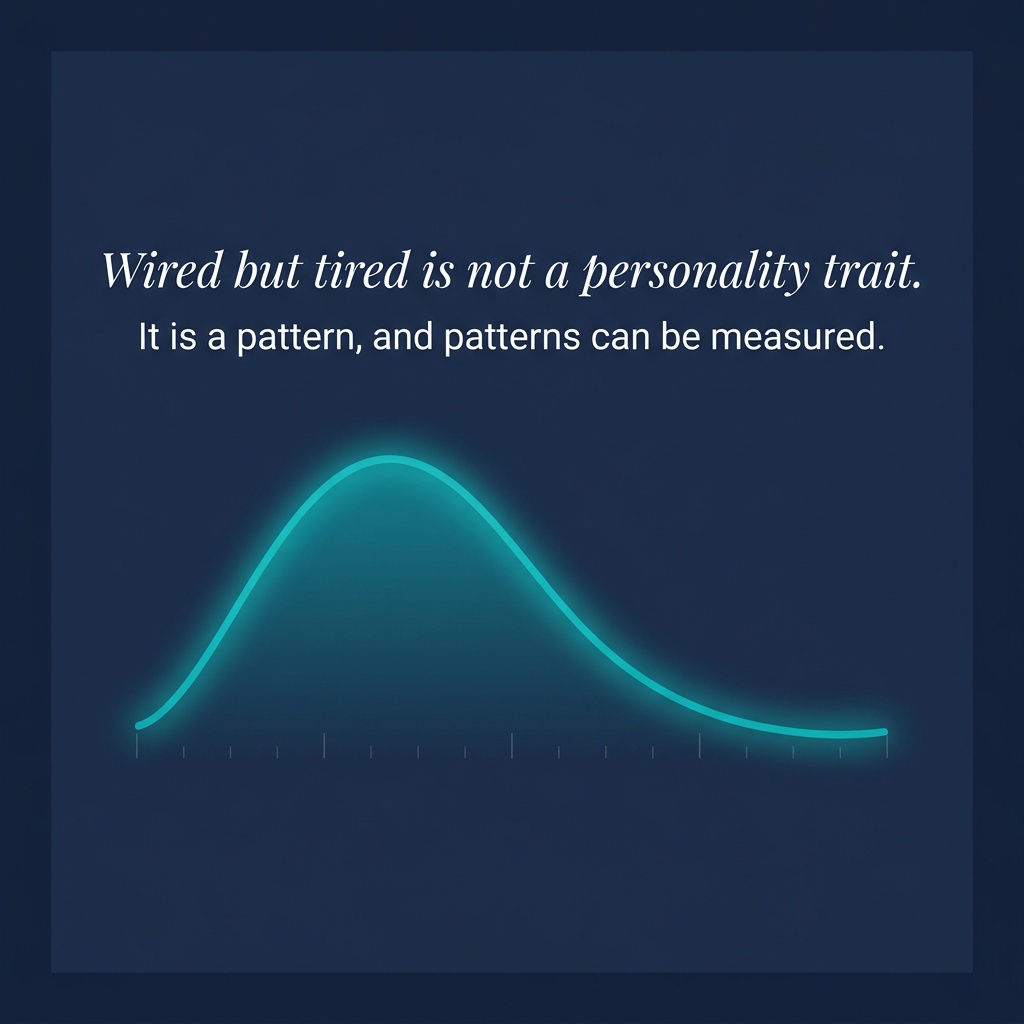
Wired but tired is not a personality trait. It is a pattern, and patterns can be measured.
It isn't something to self-diagnose. It is something to investigate with functional testing.
This is educational and not intended to diagnose or treat any condition.
E
Elizabeth Greenfield Functional Wellness
· LinkedIn
I was a highly trained clinician sitting on the other side of the conversation, describing symptoms I knew were real. And I watched them get minimized.
I had spent years in clinical medicine, including 15 as a Certified Registered Nurse Anesthetist. I knew how to read a chart. I knew how to describe precisely what my body was doing. It still wasn't enough to be taken seriously.
That experience is the reason my practice exists.
When I approached my own IBS through a functional medicine lens, asking what my gut was actually asking for rather than how to quiet it, I resolved it. Not because conventional care had nothing to offer, but because someone needed to ask a deeper question.
Nearly 25 years into clinical practice, I bring that question to every woman I work with. Your symptoms are information, not an inconvenience. You were right to keep asking.
If you have been dismissed and this resonates, send me a DM. I would like to hear your story.
This is educational and not intended to diagnose or treat any condition.
E
Elizabeth Greenfield Functional Wellness
· LinkedIn
Going all in was the business decision.
For a while, I was running a functional medicine practice on the side while still working 24-hour emergency shifts. On paper, it looked prudent: keep one foot in the old while I built the new. In practice, it meant neither one had my full attention. The shifts asked for my body and my hours. The practice asked for my time, my clarity, my heart. I was giving each of them a fraction and calling it balance.
It wasn't balance. It was misalignment. And misalignment always costs something. Usually your best work, sometimes your health.
The environment I was working in and the thing I was trying to build wanted opposite things from me. That gap is not sustainable. You can hold it for a season, but not without paying for it in energy, in focus, in the quality of what you're able to offer the people who came to you for help.
Here is how I named it at the time, exactly: "when I was working in the hospital I was not all in and now that I have gone all in... I've just got to double down and really invest the time that is needed, my heart, get clear on my message."
Going all in doesn't mean certainty. I didn't have a guarantee. What I had was clarity about the cost of hedging, and the cost was my best work. Full commitment of time, of heart, of message, of values is not the reward you get once things feel safe. It's the prerequisite. It's what the work, and the clients, actually require.
The decision to stop hedging was itself a form of alignment. And alignment, as this work shows me again and again, is what produces results.
If you're a founder, a practitioner, a woman building something new with one foot still in the old, I understand the instinct to hold both. I also know what it costs.
Watch the full conversation here: https://youtu.be/vXDMfaJVcNQ
What are you still half-committed to, and what would change if you went fully in?
E
Elizabeth Greenfield Functional Wellness
· LinkedIn
Brain fog in midlife is not a willpower problem. And "it's just stress" or "it's just your age" is not an explanation.
Those phrases end the conversation. Physiology starts it.
Three mechanisms worth investigating:
Estrogen. It helps regulate neurotransmitter signaling and how the brain takes up and uses glucose. As levels fluctuate in perimenopause, the brain's signaling and fuel supply can shift with them.
Cortisol. Dysregulated stress hormone output has documented effects on working memory and focus, the exact capacities high performers rely on most.
Nutrient status. B12 and iron both support cognitive function, and both can be measured.
None of these is a guaranteed cause, and no single change promises to move a lab value. They are questions worth asking, and the way to ask them is to measure.
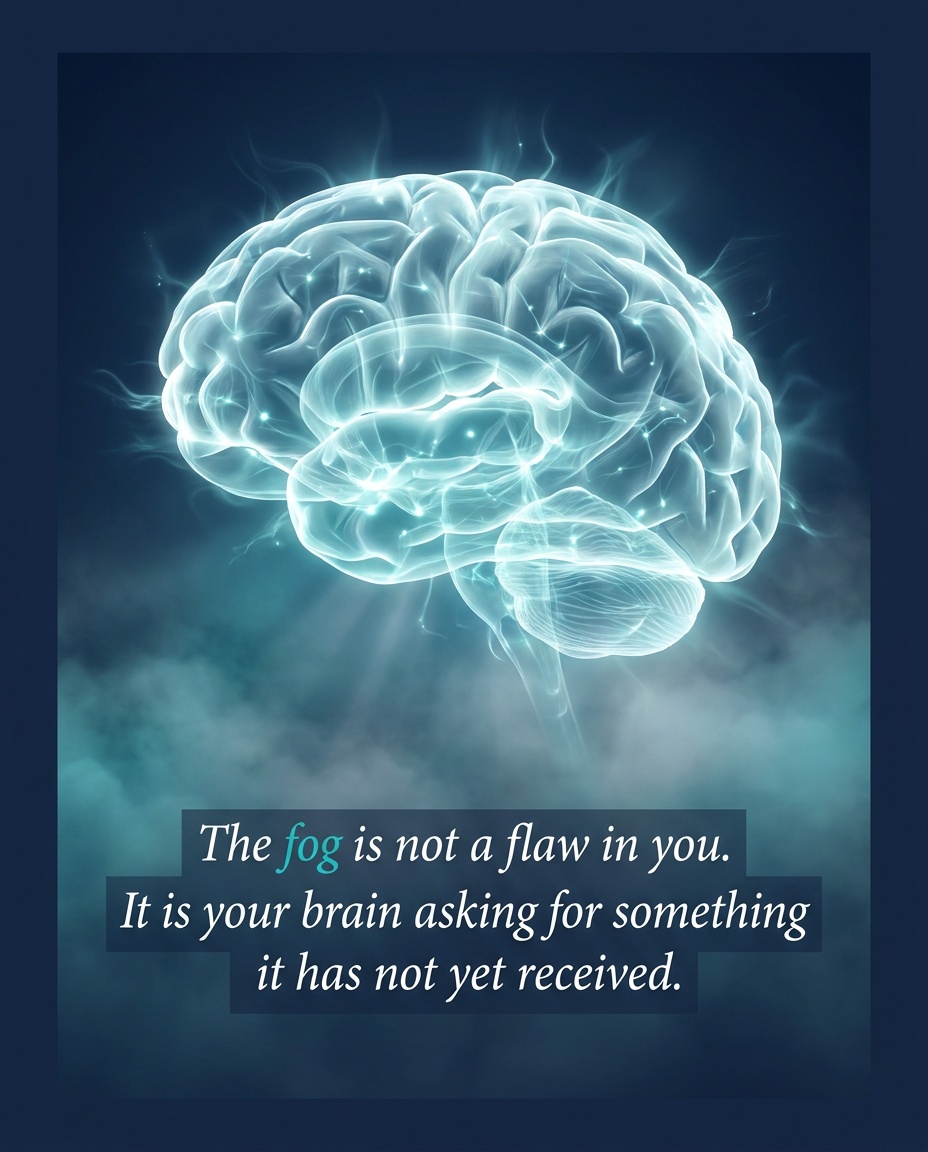
The fog is not a flaw in you. It is your brain asking for something it has not yet received.
Share this with a woman who has been told her fog is just part of getting older.
This is educational and not intended to diagnose or treat any condition.
E
Elizabeth Greenfield Functional Wellness
· LinkedIn
Even to this day, I'm a 100% referral-based practice.
No advertising has ever driven a single client through my door. Every woman I work with arrived because another woman, a current or former client, told her about the work we did together.
I don't say that to impress you. I say it because of what it actually means.
A referral is a signal. It tells you that something happened in this work that made someone want to share it, unprompted, with no incentive, at the risk of her own credibility. That only happens when the outcome is real and the care is deep. You can't manufacture it, and you can't buy it.
It's also the most honest form of accountability I know. When your entire practice depends on whether the last woman felt genuinely seen and genuinely helped, the bar of care stays exactly where it belongs. There's nowhere to hide behind a marketing budget.
So if you're reading this because someone you trust sent you here, I want you to know what you're holding. That referral carries everything I'd ever say in an ad, and more. It's her word, not mine.
I'd be honored to have you experience the same thing she did.
If this resonates and you'd like to know more, book an honest conversation about your health: https://lizgreenfield.kartra.com/calendar/book-with-liz
Watch the full conversation with Fission here: https://youtu.be/vXDMfaJVcNQ
This is educational and not intended to diagnose or treat any condition.
E
Elizabeth Greenfield Functional Wellness
· LinkedIn
What if "your labs are normal" is the right answer to a different question?
A standard reference range is built from population data. It tells you whether a value falls where most people land. That is useful information. It is not the same as asking whether that value is optimal for you and the level you need to operate at.
So when you hear "normal" and still feel the fatigue, the brain fog, the sleep that never restores you, you are not imagining it. You are asking a more specific question than the range was designed to answer.
Normal is where the investigation begins, not proof that nothing is happening.
Your body is not failing you. It is asking, clearly and persistently, for something it has not yet received. Hearing that ask means looking at markers, history, and symptoms together, not one value at a time.
Follow for weekly content on what midlife can actually look like.
This is educational and not intended to diagnose or treat any condition.
E
Elizabeth Greenfield Functional Wellness
· LinkedIn
For years, the part of building a practice I resisted most was selling.
Early on, I watched how health programs were often sold: the pressure, the artificial deadlines, the manufactured urgency. It felt completely at odds with who I am. Everything in my training said: take the time, look at the whole picture, meet the person in front of you. None of that squares with a countdown timer.
So I did what a lot of thoughtful practitioners do. I stayed quiet about my work. I let "I don't want to be salesy" become a reason not to say much at all.
What changed wasn't a script or a tactic. It was outcomes. Slowly, as the results accumulated and I watched what happened when someone finally got real answers about their own biology, the value of the work became undeniable. And once you genuinely believe that what you offer can help someone, staying silent stops feeling humble. It starts feeling like withholding.
That's the reframe that moved me: the shift from a sales mindset into "a mindset of service." When you know exactly who you help, how, and with what outcomes, telling someone about it isn't a pitch. It's a responsibility.
I'll be honest. The discomfort doesn't fully vanish. But it changes shape. It stops being "how do I convince this person" and becomes "this person is struggling with something I can actually help with, and it would be a failure of care to not tell them."
This isn't only about practitioners. It's true for any coach, researcher, or expert building something of their own who has real value to offer and freezes when it's time to say so out loud.
If you've ever felt uncomfortable sharing what you do, is it because you're trying to sell, or because you haven't yet fully claimed how much it helps?
The full conversation with Fission is here: https://youtu.be/vXDMfaJVcNQ
E
Elizabeth Greenfield Functional Wellness
· LinkedIn
Nearly 25 years in clinical practice, and the pattern I see most often is this: a woman who knows something is off, holding a stack of results labeled "normal."
That gap is why I built my new website around measurement rather than guesswork. The work now lives in one place:
• Biological age science: what DNA methylation testing actually measures, and why it can tell a different story than the number of birthdays you have had
• Functional labs that look beyond standard reference ranges to the physiology underneath
• The integrated model I share with Stephanie Doty, where clinical care and precision nutrition coaching happen together, not as a hand-off
I wrote it for intelligent readers who want the real science, not wellness slogans.
If you have wondered what working together actually looks like, from the first conversation to the data we gather and how we use it, the full picture is there.
And if this resonates and you want to know more, send me a DM.
E
Elizabeth Greenfield Functional Wellness
· LinkedIn
Your Body Speaks Before You Listen
The decision to leave a high-stress anesthesia career didn't start with a rational choice. It started with symptoms. With friction. With a hundred small things that kept compounding until they couldn't be ignored.
For a long time I read that difficulty as a personal failing. Proof I wasn't tough enough, disciplined enough, grateful enough. It took me years to understand what was actually happening: "I was like subconsciously creating difficulty at work until finally I was like, I can't work here anymore."
That's not a story about burnout. It's a story about feedback.
Here is the reframe I wish someone had offered me sooner. Nothing happening in the body, or in the life, is "bad." It is all directional information worth decoding. Subconscious misalignment tends to show up as difficulty first: in the body, in relationships, in the work. The clarity comes later. The friction comes early, and it comes on purpose.
The body is a feedback system. So is your environment. When something keeps feeling hard (not the good-hard of a real challenge, but the grinding kind that never resolves), that difficulty is data. It is your biology and your life pointing in the same direction, asking for something they haven't yet received.
Most of us are trained to push through it. To out-discipline the signal. High-achieving women are especially good at this. We can override almost anything. But overriding a signal is not the same as decoding it, and the body keeps its own records.
Learning to read that feedback instead of powering past it is a skill. And it changes everything. It's the same skill whether the decision in front of you is a health question, a career transition, or a life you've outgrown. The work of recovering your health and the work of aligning your life turn out to be the same work.
I made the entire interview about this. You can watch it here: https://youtu.be/vXDMfaJVcNQ
So here's the question I'll leave you with: Where in your life right now is something consistently feeling hard? What if that friction isn't a problem to fix, but a pointer to follow?
Channel names and logos are trademarks of their respective owners.