The Multilingual Mind helps schools and education teams close the gap between what they know they want to do and what their people actually have the time, training, tools, systems, and support to impl
· LinkedIn
I wish we'd stop treating support for multilingual learners as something that happens only in the language classroom.
A student might understand the science but struggle to explain it in the language of instruction. Another student might still be figuring out the science itself. Those are different situations, even if both students have trouble answering the same question.
So before choosing an intervention, I want to see what students actually know and can do.
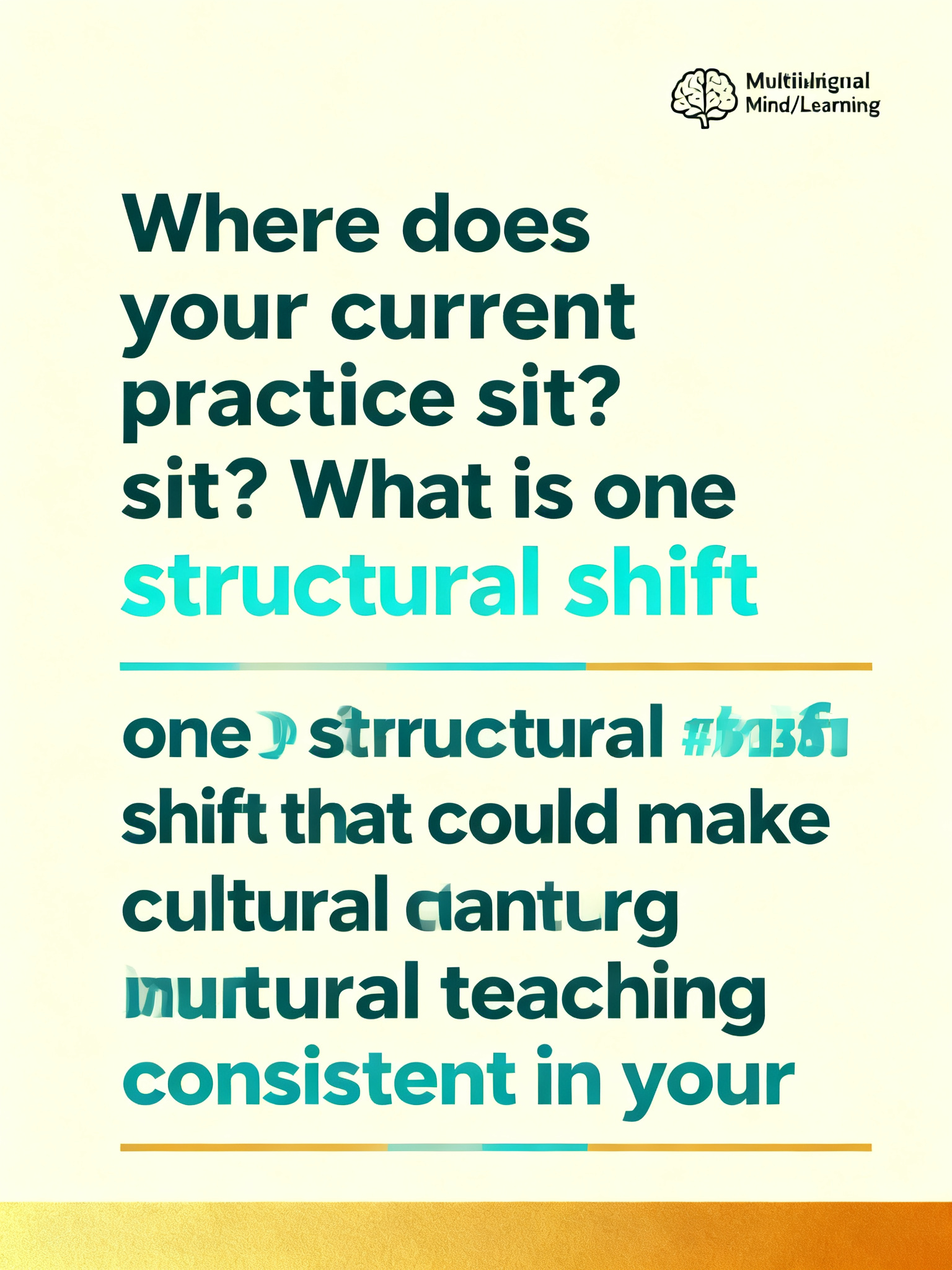
Look at one lesson. Which words or language structures are essential? What could students show with a visual, a model, or a conversation before writing a full response? Whose languages and experiences are already represented in the materials?
And then we have to look at the adults' side of the equation.
Do content teachers have examples they can adapt? Time to plan together? Someone to help them look at student work and figure out whether the support helped?
That's where my Spanish immersion, curriculum, and coaching work intersect. I don't want “support multilingual learners” to become one more broad instruction teachers are left to interpret by themselves.
If you lead a school, where does this get hardest: knowing what students understand, designing language supports, or making time for teachers to work on it together?





 View on LinkedIn
Also on

'/%3E%3Cpath fill='%23fff' d='M12 7.3A4.7 4.7 0 1 0 16.7 12 4.7 4.7 0 0 0 12 7.3Zm0 7.8A3.1 3.1 0 1 1 15.1 12 3.1 3.1 0 0 1 12 15.1Zm5-8a1.1 1.1 0 1 0 1.1 1.1A1.1 1.1 0 0 0 17 7.1Zm-5 1.5c-1.5 0-1.7 0-2.3.1a3.8 3.8 0 0 0-1.3.2 2.2 2.2 0 0 0-.8.5 2.2 2.2 0 0 0-.5.8 3.8 3.8 0 0 0-.2 1.3c-.1.6-.1.8-.1 2.3s0 1.7.1 2.3a3.8 3.8 0 0 0 .2 1.3 2.2 2.2 0 0 0 .5.8 2.2 2.2 0 0 0 .8.5 3.8 3.8 0 0 0 1.3.2c.6.1.8.1 2.3.1s1.7 0 2.3-.1a3.8 3.8 0 0 0 1.3-.2 2.5 2.5 0 0 0 1.3-1.3 3.8 3.8 0 0 0 .2-1.3c.1-.6.1-.8.1-2.3s0-1.7-.1-2.3a3.8 3.8 0 0 0-.2-1.3 2.2 2.2 0 0 0-.5-.8 2.2 2.2 0 0 0-.8-.5 3.8 3.8 0 0 0-1.3-.2c-.6-.1-.8-.1-2.3-.1Zm0-1.6c1.5 0 1.7 0 2.4.1a5.5 5.5 0 0 1 1.8.3 3.8 3.8 0 0 1 2.2 2.2 5.5 5.5 0 0 1 .3 1.8c.1.7.1.9.1 2.4s0 1.7-.1 2.4a5.5 5.5 0 0 1-.3 1.8 3.8 3.8 0 0 1-2.2 2.2 5.5 5.5 0 0 1-1.8.3c-.7.1-.9.1-2.4.1s-1.7 0-2.4-.1a5.5 5.5 0 0 1-1.8-.3 3.8 3.8 0 0 1-2.2-2.2 5.5 5.5 0 0 1-.3-1.8C4 13.7 4 13.5 4 12s0-1.7.1-2.4a5.5 5.5 0 0 1 .3-1.8 3.8 3.8 0 0 1 2.2-2.2 5.5 5.5 0 0 1 1.8-.3C10.3 5 10.5 5 12 5Z'/%3E%3C/svg%3E)