
K

Kent Kaufman
· LinkedIn
Organization focused on AI leadership and innovation for the Fourth Industrial Revolution, based in Silicon Valley
**Distillation, Efficiency, and State Power: How China Is Closing the AI Gap — and Why the US Is Moving to Restrict Chinese Models**
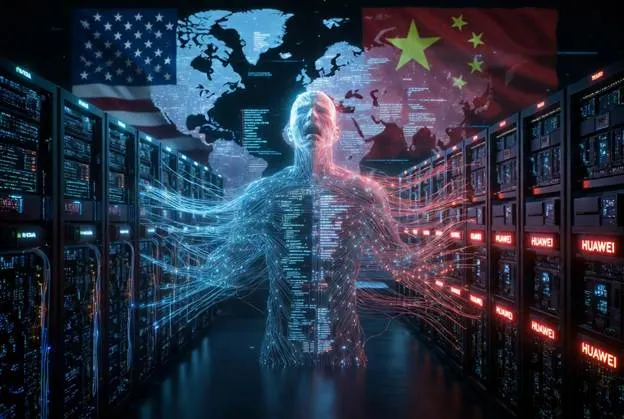
Caught between two superpowers, many scientists and business leaders today are carrying a burden that rarely gets discussed publicly.
As the United States and China compete for leadership in artificial intelligence, the people actually building these systems are finding themselves in an increasingly difficult position — one where technical excellence, commercial pressures, ethical responsibility, and national interests are pulling in different directions at once.
In my latest essay, I explore how Chinese AI labs have managed to close the performance gap with the West despite facing significant restrictions on advanced chips. Through highly efficient architectures like Mixture-of-Experts, aggressive quantization, and deep hardware-software optimization for domestic accelerators, they are delivering frontier-level capabilities at a fraction of the cost. At the same time, close coordination between the Chinese government and its leading AI companies has created structural advantages in data access, strategic focus, and speed of execution.
This progress has not gone unnoticed in Washington. Concerns about large-scale model distillation, the stripping of safety guardrails, and the potential national security implications of widely adopted Chinese models have led to growing calls for restrictions on how U.S. organizations use these systems. The debate is no longer just about chips and compute — it now extends to which models American companies and institutions should be allowed to rely on.
What often gets lost in these strategic discussions is the human dimension. Engineers, researchers, and executives are being asked to navigate an environment where every technical decision can carry geopolitical weight. The pressure to move fast, stay competitive, and deliver value to customers exists alongside growing expectations around security, ethics, and alignment with national interests. For many, this creates a quiet but real strain.
The image attached tries to capture something of this tension.
I wrote this piece because I believe we need a more honest conversation about the real trade-offs involved — not just in terms of technology and policy, but in terms of the people doing the work. If we want responsible AI development, we need to create conditions where those building it can operate with clarity rather than constant conflict.
#AI #Policy #Leadership #AIISV
You can read the full essay here:
https://kentkaufman.substack.com/p/distillation-efficiency-and-state
I'd be interested in your thoughts — especially from those working directly in AI development or policy.
 View on LinkedIn
Also on
View on LinkedIn
Also on
